
- Atomic number
- 1
- Atomic mass
- 1.01
- Shells
- 1
- Configuration
- 1s¹
- In the table
- period 1, group 1 (IA), s-block
- Kind
- Non-metal
- Valency
- 1 (H⁺, as in acids; H⁻, hydride, as in NaH)
- State at 25 °C
- gas
- Melts · boils
- −259 °C · −253 °C
- Density
- lighter than air
- Known since
- 1766
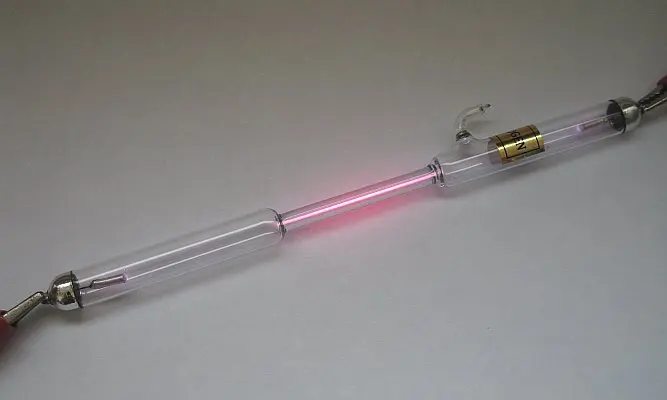
Every glass of water you drink is mostly hydrogen atoms: two in every water molecule, H₂O. So is the gas in a biogas stove (methane, CH₄), the sugar in your tea and the fat in your ghee. Look up on a clear night and almost everything you see is hydrogen too: the stars are made mainly of it, and the Sun shines by burning it in a way no fire on Earth can.
Hydrogen is the first element in the periodic table, the lightest, and the most common in the universe. Yet there is almost none of it as a gas in the air around you. Here is why, and the rest of its story.
The hydrogen atom
A hydrogen atom is the simplest atom there is: one proton in the nucleus and one electron around it. So its atomic number is 1. Most hydrogen atoms have no neutron at all; hydrogen is the only element with atoms like that.
With one electron, the K shell holds it alone: the electronic configuration is simply 1 in shells Grade 8: Bohr and Bury’s rule, and 1s¹ in subshells Grade 10: Shells, subshells and orbitals.
The K shell is full with two electrons (a duplet, like helium’s). Hydrogen has one, so it is one short Grade 9: Duplet rule. It can reach a duplet in three ways:
- share its electron with another atom: two hydrogen atoms share a pair and make a hydrogen molecule, H₂ (a covalent bond);
- lose it, leaving a bare proton, the hydrogen ion, H⁺;
- gain one from a very reactive metal, making the hydride ion, H⁻, as in sodium hydride (NaH).
Either way, hydrogen joins with one atom at a time, so its valency is 1.
Its place in the periodic table
- Period 1, because its electron is in one shell. Period 1 has only two elements: hydrogen and helium.
- Group 1 (IA), because it has one outer electron, like lithium and sodium Grade 8: Position of hydrogen.
- s-block, because that electron is in an s subshell.
But hydrogen is a gas and a non-metal, nothing like the soft, shiny alkali metals below it. In some ways it is more like the halogens of group 17, which are also one electron short of a full shell. That is why some tables draw hydrogen a little apart, or even float it above the middle of the table.
Hydrogen is in group 1. Is it an alkali metal?
Pick an answer to see why.
How hydrogen was found and named
People made hydrogen long before anyone knew what it was. In the early 1500s the Swiss doctor and alchemist Paracelsus noticed that iron dissolving in acid gave off bubbles that burned. In 1671 the Irish scientist Robert Boyle saw the same.
In 1766 the English scientist Henry Cavendish collected the gas from metals and acids, weighed it, and showed that it was a different substance from air, very light, that burned. He called it “inflammable air”. Later he found that when it burns, it makes water. That was a shock: for two thousand years water had been thought of as an element itself.
In the 1780s the French chemist Antoine Lavoisier named the gas hydrogène, from the Greek hydro (water) and genes (making): the “water-maker”. Its symbol is H.
Nepali books write हाइड्रोजन, but Nepali also has a word of its own, उदजन, built from Sanskrit roots in the same way: उद् (water) and जन (giving birth). Like the Greek name, it means “water-maker”.
Where hydrogen is found
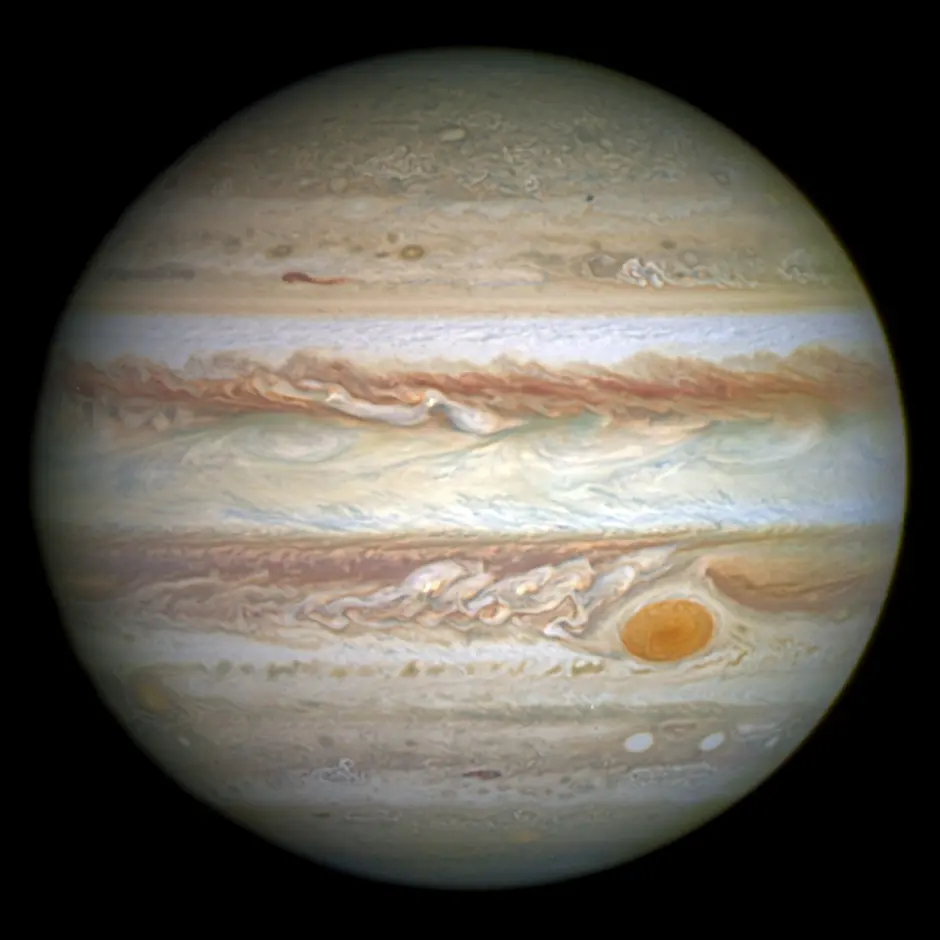
In the universe. Hydrogen is about three-quarters of the mass of all the ordinary matter in the universe, and about nine atoms in every ten. Nearly all of it was made in the first few minutes after the Big Bang, 13.8 billion years ago (Hydrogen and helium: the first minutes). New stars are born from great clouds of it Grade 9: Birth of a star. The Sun is about three-quarters hydrogen, and so is the giant planet Jupiter.
On the Earth. There is almost no hydrogen gas in the air: less than one part in a million. Hydrogen molecules are so light that they move very fast (about 2 km every second at room temperature), and over time they escape from the Earth into space. Instead, the Earth’s hydrogen is locked up in compounds. The biggest store by far is water: oceans, ice, rivers and the water in rocks. Petroleum, natural gas and coal are compounds of hydrogen and carbon (hydrocarbons) Grade 10: Hydrocarbons.
In your body. About a tenth of your mass is hydrogen, mostly in the water you are made of, and the rest in your proteins, fats, sugars and DNA. Because its atoms are so light, that tenth is a lot of atoms: about six of every ten atoms in your body are hydrogen.
What hydrogen is like
- A colorless gas with no smell and no taste, made of two-atom molecules, H₂.
- The lightest of all substances. A liter of hydrogen weighs about 0.09 g, about 14 times less than a liter of air Grade 9: Physical properties of hydrogen.
- Hardly dissolves in water, which is why it can be collected over water in the laboratory.
- Very cold to liquefy: it turns liquid only at −253 °C and freezes at −259 °C. Liquid hydrogen is the lightest liquid there is: a whole liter weighs only about 71 g.
- Leaks easily. Its tiny, fast molecules slip through gaps that would hold other gases, and spread quickly through a room.
Why is it so light? Its molecule is made of the two lightest atoms possible, each one proton and one electron: the mass of H₂ is just 2, against 32 for oxygen (O₂) and 28 for nitrogen (N₂).
How hydrogen reacts
Hydrogen gas is quite calm at room temperature, but give it a spark and it reacts strongly. The Grade 9 book covers its reactions in detail Grade 9: Chemical properties of hydrogen; here are the most important.
It burns in oxygen to make water, with a pale blue flame that is almost invisible in daylight:
2H₂ + O₂ → 2H₂O
A jet of pure hydrogen burns quietly. But a mixture of hydrogen and air explodes when lit, anywhere between about 4% and 75% hydrogen. A small test tube of the mixture goes off with the famous “pop” of the hydrogen test Grade 9: Test for hydrogen gas.
Water is made of hydrogen, and hydrogen burns very well. Why doesn’t water burn?
Pick an answer to see why.
It takes oxygen away from the oxides of less reactive metals. Passed over hot black copper oxide, hydrogen leaves shiny copper and water:
CuO + H₂ → Cu + H₂O
Removing oxygen like this is reduction Grade 10: Reduction, and hydrogen is a reducing agent.
It joins with nitrogen to make ammonia, NH₃, in the Haber process, with an iron catalyst, high pressure and about 450 °C Grade 10: Uses of ammonia:
N₂ + 3H₂ ⇌ 2NH₃
In acids, it is the hydrogen ion that matters. Every acid gives H⁺ ions in water: that is what makes lemon juice sour and turns blue litmus red Grade 8: Acids give hydrogen ions in water. When a reactive metal such as zinc or magnesium meets a dilute acid, it turns those ions back into hydrogen gas, which is how hydrogen is made in a school laboratory Grade 9: Laboratory preparation:
Zn + 2HCl → ZnCl₂ + H₂
How hydrogen is made
The world uses about 97 million tonnes of hydrogen a year (2023, International Energy Agency). Almost all of it is made from natural gas (methane) and coal: the methane is heated with steam, and the carbon ends up as carbon dioxide, a greenhouse gas:
CH₄ + 2H₂O → CO₂ + 4H₂
The clean way is to split water with electricity, electrolysis. Pass a current through water with a little acid in it, and hydrogen bubbles off at the negative electrode, oxygen at the positive one, always twice as much hydrogen as oxygen by volume:
2H₂O → 2H₂ + O₂
If the electricity comes from water, wind or sunlight, no carbon dioxide is made at all: this is called green hydrogen. It costs more, and in 2023 it was still less than 1% of all hydrogen made.
Green hydrogen in Nepal
Nepal has a lot of hydropower, and in the monsoon its rivers can make more electricity than the country uses. Could some of it be stored as hydrogen? At Kathmandu University in Dhulikhel, a Green Hydrogen Lab, set up in 2020, made Nepal’s first green hydrogen by electrolysis in 2023. In August 2024 it opened a small hydrogen production and refueling station, with Nepal Oil Corporation, for a car that runs on hydrogen. One hope is to make fertilizer at home some day: urea is made from ammonia, ammonia from hydrogen, and Nepal now imports all of its urea.
Hydrogen in daily life
- Fertilizer. A large share of all hydrogen becomes ammonia, and most ammonia becomes fertilizer such as urea. Roughly half the people alive eat food grown with its nitrogen.
- Oil refineries use hydrogen to remove sulphur from petrol and diesel, so the fumes have less sulphur dioxide.
- Vanaspati ghee. Hydrogen turns liquid vegetable oils into solid fat Grade 10: Hydrogenation.
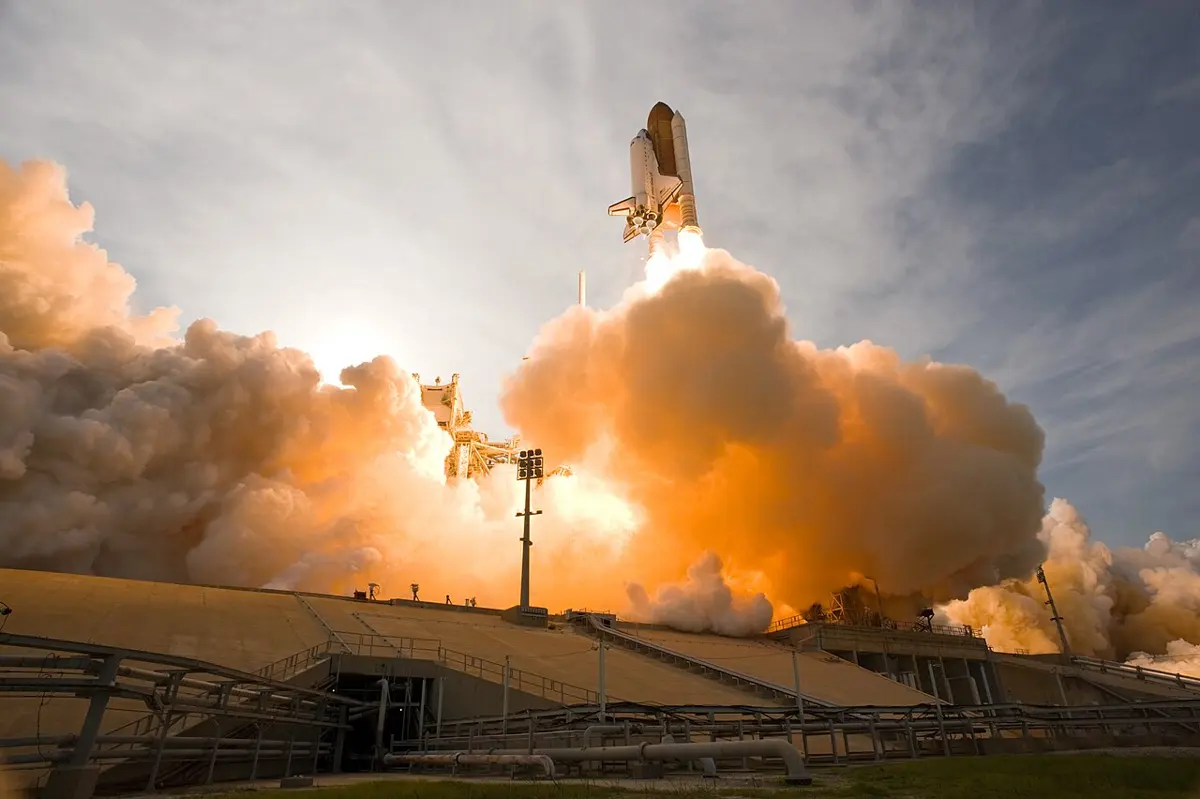
- Rockets. Liquid hydrogen burning with liquid oxygen gives more push for each kilogram of fuel than any other common rocket fuel. The Space Shuttle’s three main engines burned it, and so does the upper stage of India’s GSLV rocket. The “smoke” from those engines is mostly steam.
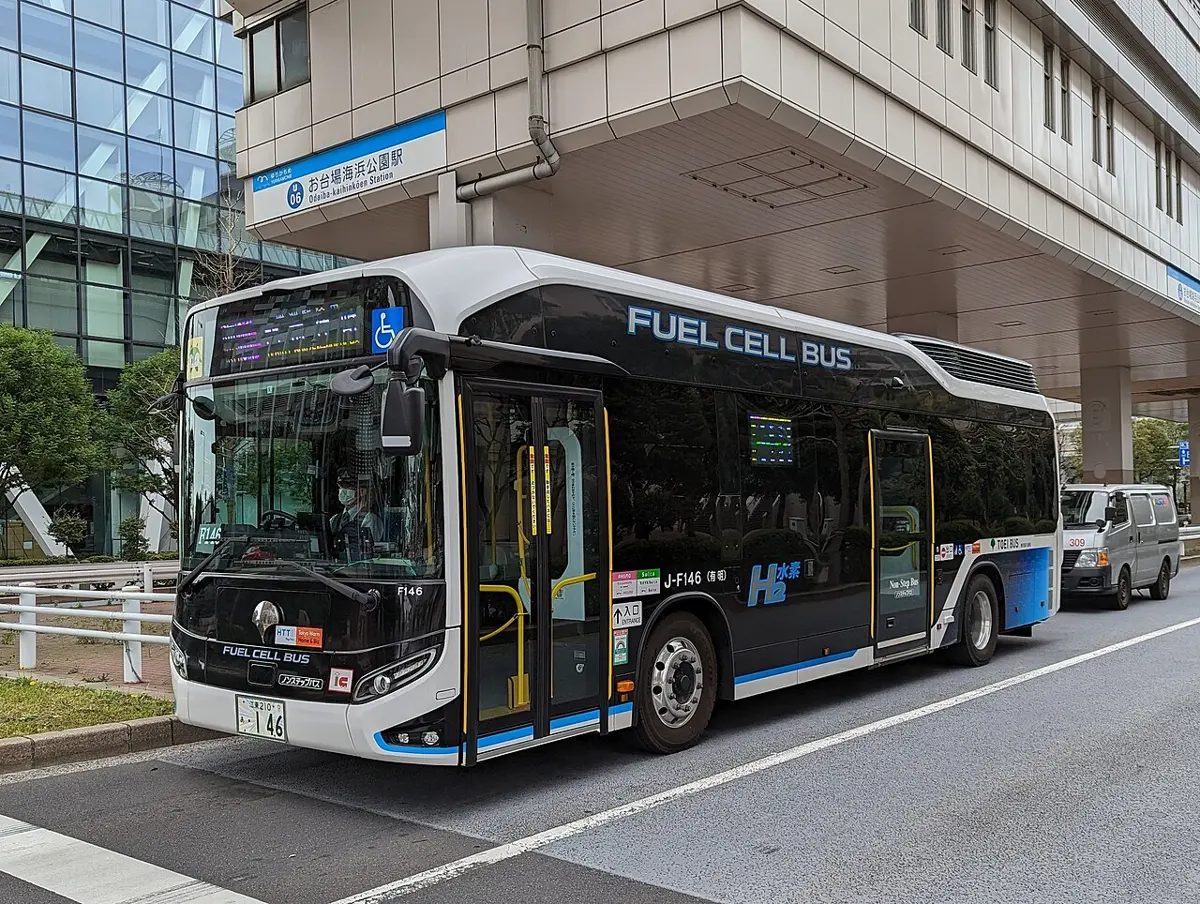
- Fuel cells join hydrogen and oxygen without a flame, making electricity directly. A fuel-cell car or bus runs an electric motor, and its only exhaust is water.
Isotopes of hydrogen
Hydrogen has three isotopes, atoms with the same one proton but different numbers of neutrons. They are the only isotopes that have names of their own.
- Protium (¹H), no neutron, is almost all hydrogen.
- Deuterium (²H, also written D), with one neutron, is rare: only 1 or 2 atoms in every 10,000. It was found in 1931 by the American chemist Harold Urey. Water made of deuterium, heavy water (D₂O), is about 11% denser than ordinary water: an ice cube of it sinks in a glass of ordinary water.
- Tritium (³H), with two neutrons, is radioactive, with a half-life of about 12 years. Tiny amounts are made in the upper air by rays from space.
Deuterium and tritium are also the fuel of fusion, the reaction that powers the Sun and that scientists are trying to tame on Earth.
The Sun runs on hydrogen
In the Sun’s core, at about 15 million °C, hydrogen nuclei (protons) crash together so hard that they fuse: four of them end up as one helium nucleus, and a little of their mass becomes a great deal of energy Grade 9: Nuclear reaction in the Sun. The Sun fuses about 600 million tonnes of hydrogen every second, and it has enough to keep going for about another 5 billion years (A tank of hydrogen).
Hydrogen and your health
Your body doesn’t need hydrogen gas; it gets all its hydrogen from water and food. But hydrogen ions are always at work in it: the acid in your stomach (hydrochloric acid) is full of them, and your blood must keep just the right, very small number of them, or you would fall ill.
Hydrogen gas is not poisonous. Its dangers are that it burns and explodes easily, and that in a closed space it can push out the air you need to breathe.
Surprising facts and records
- The commonest element. Hydrogen is about three-quarters of the ordinary matter in the universe.
- The lightest. It is the lightest gas and, as a liquid, the lightest liquid.
- Older than the stars. The hydrogen atoms in the water you drink were made in the first minutes of the universe, 13.8 billion years ago.
- A radio signal from space. Cold hydrogen gas between the stars gives out a faint radio signal at a wavelength of 21 cm. Radio telescopes use it to map our galaxy, the Milky Way.
In your science books
- Grade 8: the 2n² rule, the position of hydrogen, acids give hydrogen ions and acids react with metals.
- Grade 9: the duplet rule, covalent bonds, hydrogen gas (its preparation, test, properties and uses), fusion in the Sun and nuclear fusion.
- Grade 10: subshells, ammonia, reduction, floating in the air and hydrogenation.
- Going further: where hydrogen came from, how long the Sun will shine, hydrogen’s colors in starlight and making ammonia in a factory.
More to explore
- Nobel Prizes with hydrogen in them: Bohr’s atom (1922, worked out from hydrogen’s one electron), making ammonia (1918, nitrogen and hydrogen), neutrinos from the Sun (2002, proof that the Sun fuses hydrogen) and MRI (2003, pictures made from the hydrogen nuclei in your body’s water).
- Play: make water, ammonia and methane in Molecule Kitchen, or find hydrogen in Guess the Element.
- Read more: hydrogen at the Royal Society of Chemistry and at PubChem.