
- Atomic number
- 91
- Atomic mass
- 231.04
- Shells
- 2, 8, 18, 32, 20, 9, 2
- Configuration
- 1s² 2s² 2p⁶ 3s² 3p⁶ 4s² 3d¹⁰ 4p⁶ 5s² 4d¹⁰ 5p⁶ 6s² 4f¹⁴ 5d¹⁰ 6p⁶ 7s² 5f² 6d¹
- In the table
- period 7, group none (f-block), f-block
- Kind
- Actinide
- Valency
- 5 (as in Pa₂O₅); also 4
- State at 25 °C
- solid
- Melts · boils
- 1,572 °C · not known
- Density
- 15.4 × as heavy as water
- Known since
- 1913
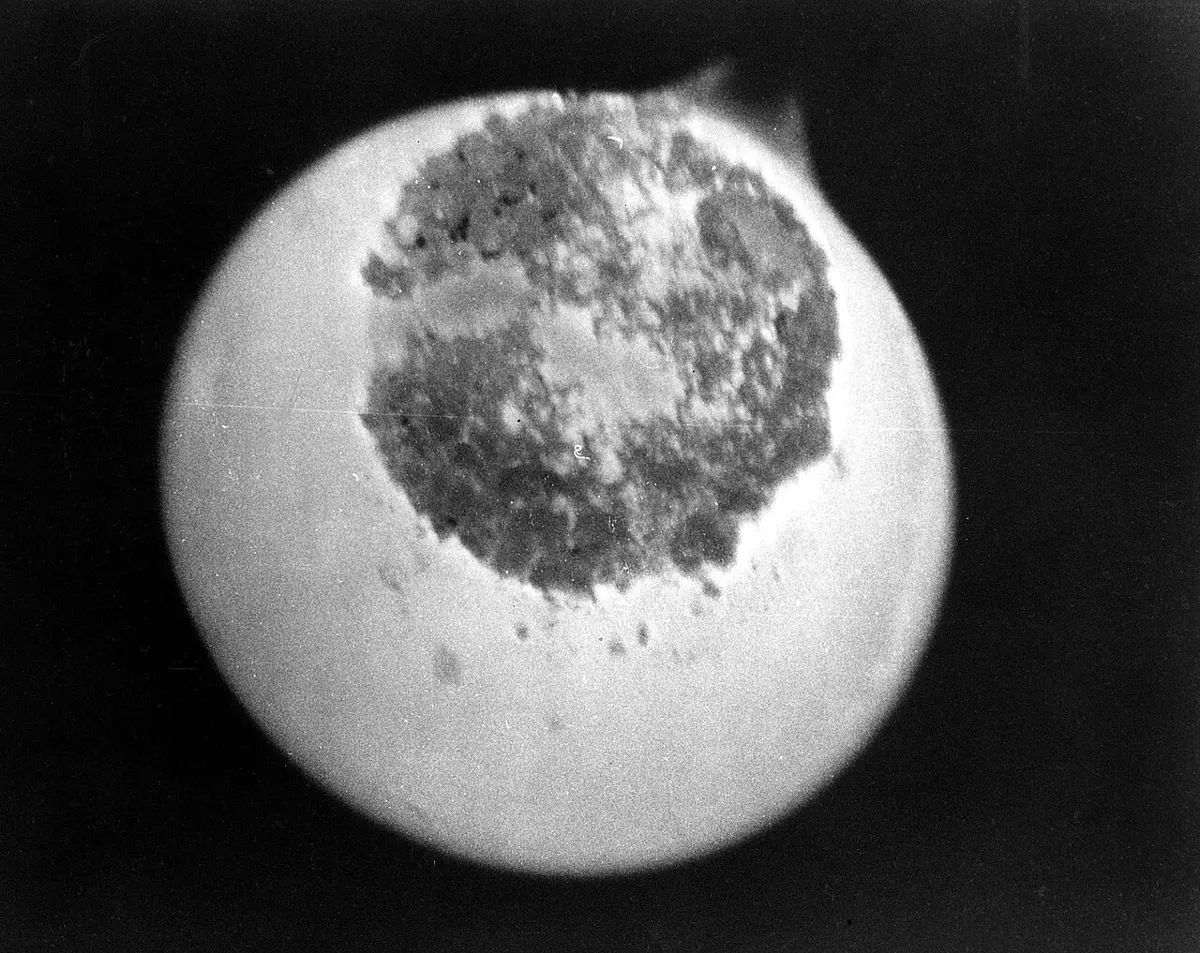
Very few people have ever seen protactinium. It is one of the rarest elements found in nature, it is radioactive and poisonous, and almost all the world’s pure protactinium came from one British project in about 1960. It has no use outside research. Yet it fills a gap that chemists hunted for nearly fifty years, and it helps scientists read the history of the oceans.
The protactinium atom
A protactinium atom has 91 protons (atomic number 91) and 91 electrons. Its longest-lasting kind, protactinium-231, has 140 neutrons: 91 + 140 = 231. By shells, the electrons are 2, 8, 18, 32, 20, 9, 2.
In subshells, thorium before it ended 7s² 6d² with no f electrons. In protactinium the 5f subshell starts to fill Grade 10: The Aufbau principle:
… 6p⁶ 7s² 5f² 6d¹
The 5f and 6d subshells are so close in energy that the last three electrons are shared between them, an exception, like thorium and uranium beside it.
It is in period 7 (seven shells), the third of the actinides in the f-block Grade 10: Features of the modern periodic table. It usually gives away five electrons, so its valency is usually 5, as in its white oxide, Pa₂O₅. In this it behaves much like tantalum, the metal above its place in older tables.
Protactinium has a valency of 5 and oxygen a valency of 2. What is the formula of protactinium oxide?
Pick an answer to see why.
How protactinium was found and named
In 1871 Dmitri Mendeleev left a gap in his table between thorium and uranium, for an element he expected to be like tantalum. It took over forty years to fill.
- 1900. William Crookes in London separated a strongly radioactive substance from uranium, which he called “uranium X”, without knowing what it was.
- 1913. Kasimir Fajans and Oswald Göhring in Germany showed that part of it was element 91. Their kind of atom lasts only about a minute (its half-life is 1.17 minutes), so they named it brevium, “the brief one”.
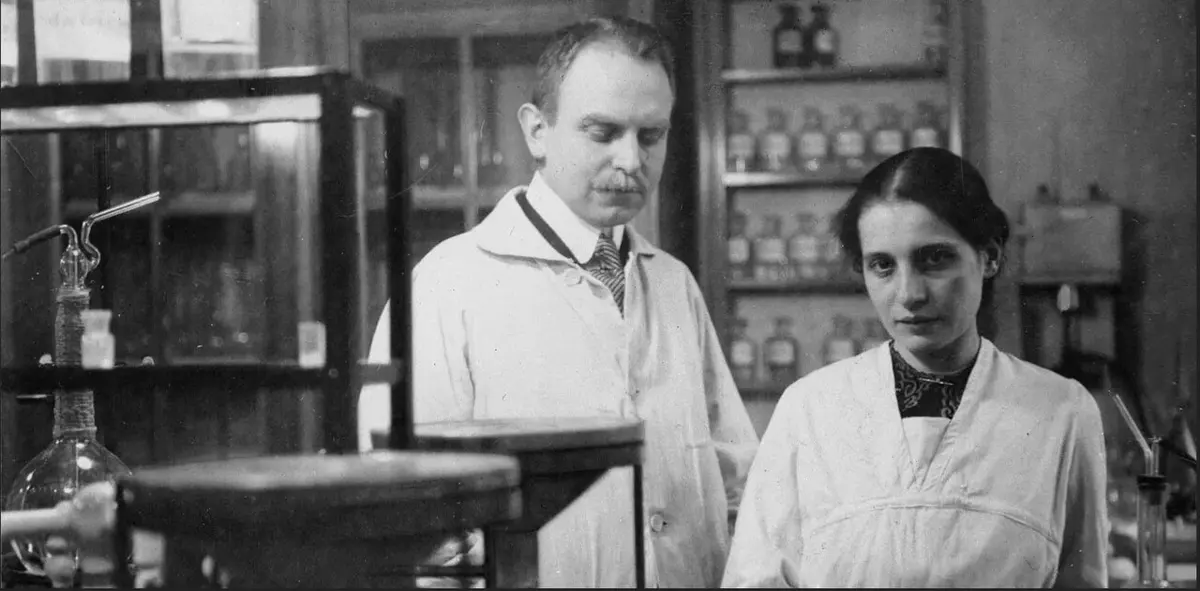
- 1917–1918. Otto Hahn and Lise Meitner in Berlin, and, separately, Frederick Soddy and John Cranston in Scotland, found a far longer-lasting kind in uranium ore: protactinium-231. Hahn and Meitner named it protoactinium, from the Greek protos, “first”: it comes just before actinium, because when it decays it becomes actinium. In 1949 the name was shortened to protactinium, symbol Pa.
- 1934. Aristid von Grosse made the first protactinium metal.
Why it is so rare
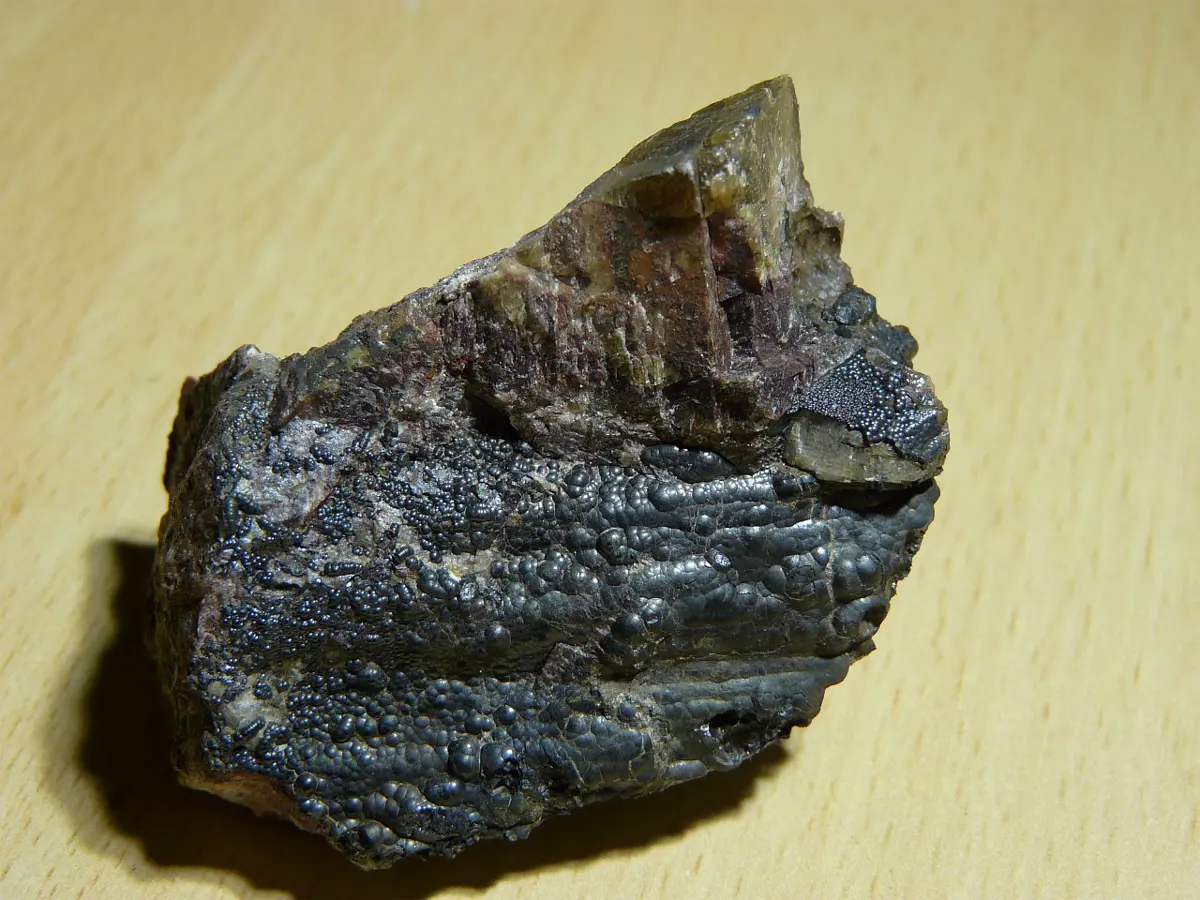
Protactinium-231 has a half-life of about 33,000 years, a blink compared with the age of the Earth. So none of the protactinium the Earth was born with is left. All of it is made, all the time, by the slow decay of uranium-235 (Figure 2), and it decays again almost as fast as it forms. Uranium ore holds only about one part of protactinium in ten million.
Around 1960 the UK Atomic Energy Authority worked through about 60 tonnes of waste left over from making uranium and got about 125 grams of protactinium out of it. For many years that was almost the whole world’s supply.
What protactinium is like
What has been measured, on tiny samples:
- It is a shiny, silvery metal that keeps its shine in air for a while.
- It melts at about 1,570 °C (measurements differ by a few degrees).
- Its density is about 15.4 g/cm³, worked out from the spacing of its atoms in the crystal.
- It is strongly radioactive: protactinium-231 gives out alpha particles (Alpha decay), and the actinium it becomes is more radioactive still.
What is only estimated: its boiling point. Nobody has ever had enough to boil it; tables give about 4,000 °C, from how its neighbors behave.
Protactinium at work
A clock in the ocean floor
Seawater holds a little dissolved uranium, which keeps making protactinium-231 and thorium-230 at a steady rate. Neither stays dissolved: both stick to falling specks of dust and shells and sink into the mud on the sea floor. Once buried, they decay: protactinium-231 halves every 33,000 years, thorium-230 more slowly, every 75,000 years. So the deeper and older a layer of mud, the smaller its share of protactinium compared with thorium, and scientists can read its age. Protactinium also stays dissolved a little longer than thorium before it sinks, so deep ocean currents can carry some of it away; comparing the two in old mud shows how strongly those currents flowed during the last Ice Age.
A step in thorium fuel
Another kind, protactinium-233, is the middle step when thorium is turned into a nuclear fuel: thorium-233 becomes protactinium-233, which becomes uranium-233 (Thorium as a nuclear fuel).
Protactinium and your health
Protactinium has no use in the body. It is both poisonous, like other heavy metals, and strongly radioactive: taken in, it settles in the bones and its alpha particles damage the cells around it. It is handled only in sealed glove boxes, and no one outside a laboratory will meet it.
In your science books
- Grade 9: radioactive elements and the criss-cross method.
- Grade 10: the actinides and the Aufbau principle.
- Going further: alpha decay, beta decay (with thorium-234 becoming protactinium) and decay chains.
More to explore
- Its neighbors: actinium, which it becomes, thorium and uranium.
- Nobel Prizes: hunting elements by their rays (1911) and radioactivity (1903).
- Play: find protactinium in Guess the Element and the Periodic Table Jigsaw.
- Read more: protactinium at the Royal Society of Chemistry and at PubChem.