
- Atomic number
- 107
- Atomic mass
- 270.13
- Shells
- 2, 8, 18, 32, 32, 13, 2
- Configuration
- 1s² 2s² 2p⁶ 3s² 3p⁶ 4s² 3d¹⁰ 4p⁶ 5s² 4d¹⁰ 5p⁶ 6s² 4f¹⁴ 5d¹⁰ 6p⁶ 7s² 5f¹⁴ 6d⁵
- In the table
- period 7, group 7 (VIIB), d-block
- Kind
- Transition metal
- Valency
- 7 (as in BhO₃Cl)
- State at 25 °C
- solid
- Melts · boils
- not known · not known
- Known since
- 1976
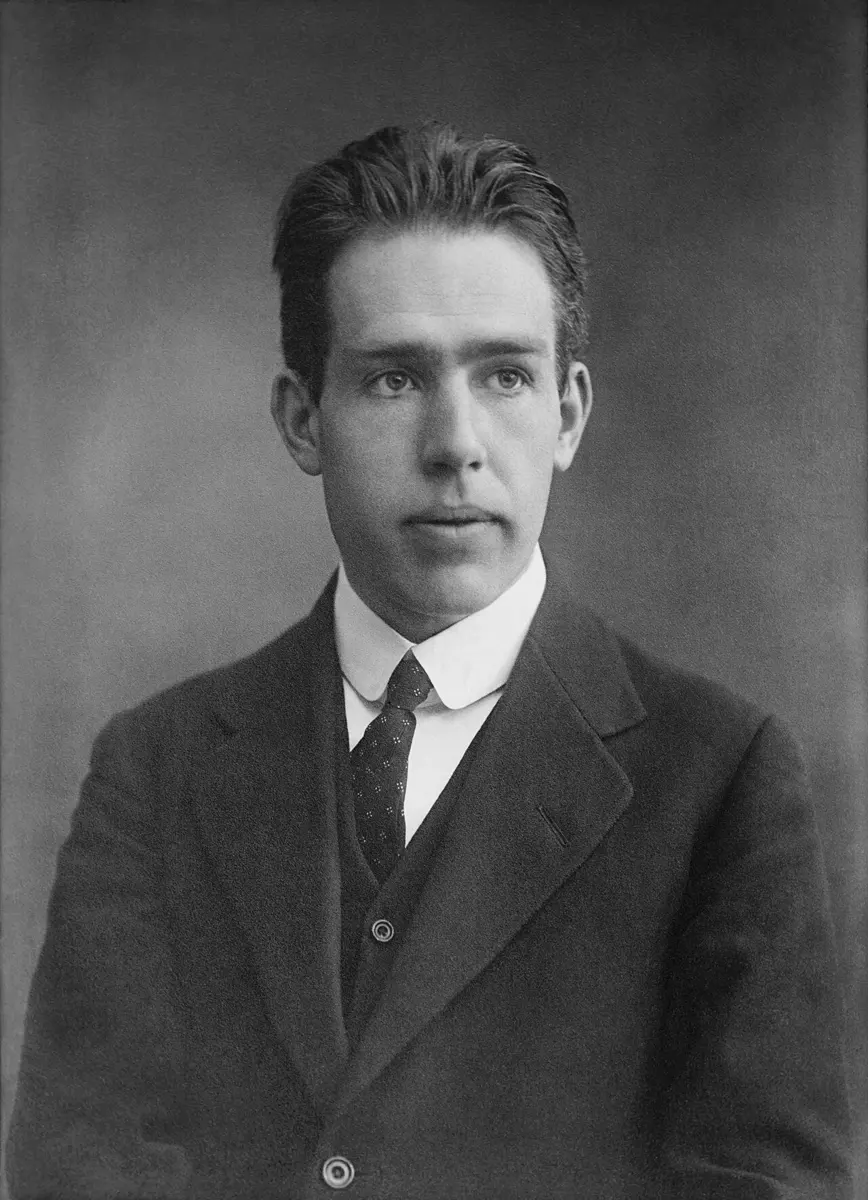
Every time you draw an atom with its electrons in rings, 2 in the first, 8 in the next, you are drawing Niels Bohr’s idea. Element 107, bohrium, is named after him. It was made a few atoms at a time in Germany, and its chemistry was tested, years later in Switzerland, with just six atoms.
The bohrium atom
A bohrium atom has 107 protons (atomic number 107) and 107 electrons. Its first known kind, bohrium-262, has 262 − 107 = 155 neutrons. By shells the electrons are 2, 8, 18, 32, 32, 13, 2, and in subshells Grade 10: The Aufbau principle:
… 7s² 5f¹⁴ 6d⁵
It is a transition metal in period 7 and group 7, under manganese, technetium and rhenium Grade 10: Features of the modern periodic table. It has seven electrons outside the full subshells, and is expected to use all of them, like manganese in potassium permanganate, KMnO₄, the purple crystals used to wash vegetables.
Rhenium, above bohrium, forms the oxide Re₂O₇, with valency 7. What would you expect bohrium’s oxide to be?
Pick an answer to see why.
Made in Darmstadt
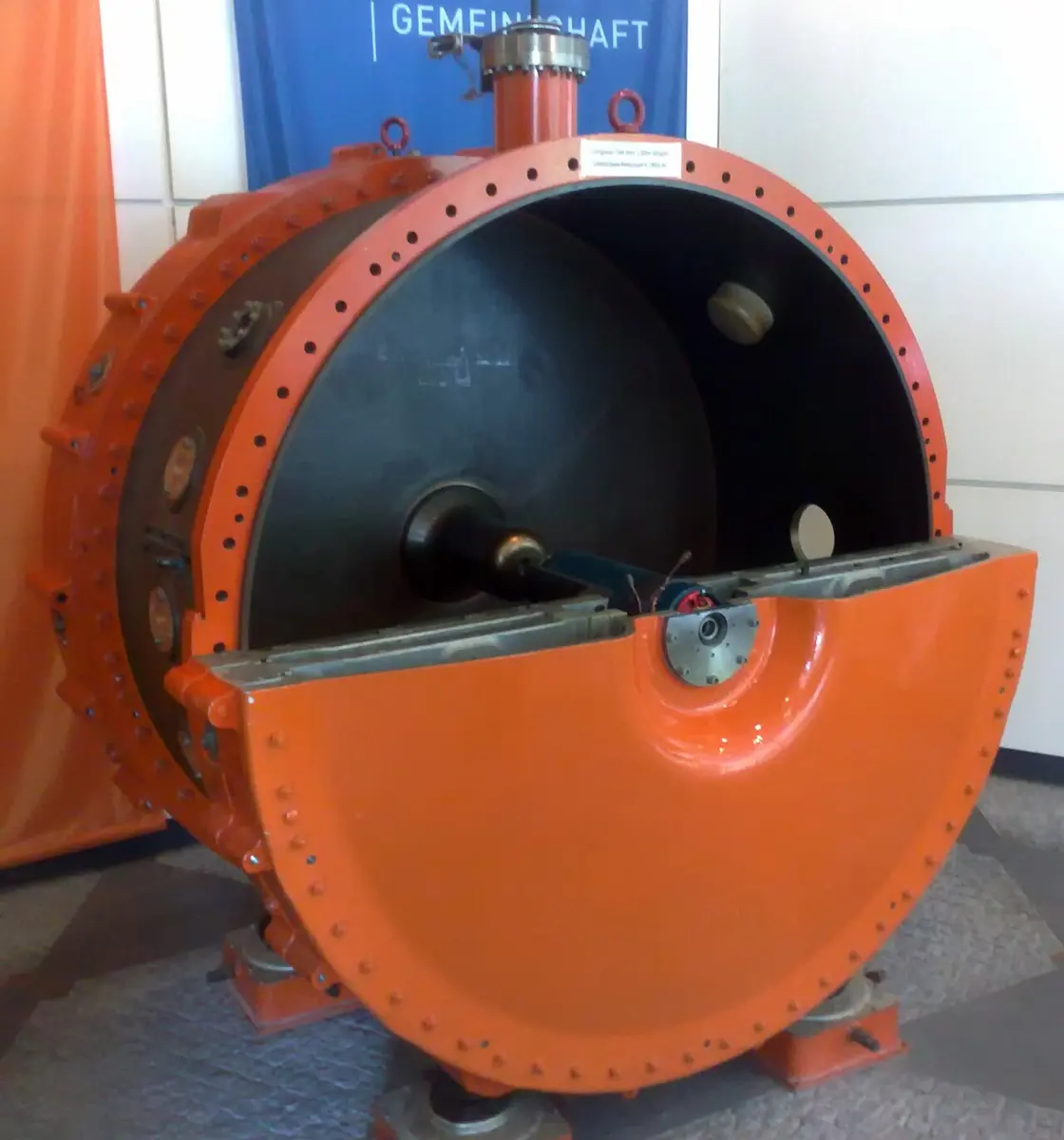
In 1976, Yuri Oganessian’s team at Dubna, near Moscow, reported element 107. They had fired chromium nuclei (24 protons) at bismuth (83): 83 + 24 = 107. Their way of making it was new: a beam of middle-sized nuclei fired at a target of lead or bismuth, gently enough that the new nucleus did not at once fall apart.
In 1981, a team led by Peter Armbruster and Gottfried Münzenberg at the GSI laboratory in Darmstadt, Germany, used the same reaction. A machine called SHIP sorted the few new atoms out of the beam and fired them into a detector. Each one gave out an alpha particle, becoming dubnium, then lawrencium, and so on down a chain of atoms that were already known, so the team could be sure where the chain had started. In 1992, the international working group gave the discovery to Darmstadt, though it said Dubna had probably made the element first.
Nielsbohrium or bohrium?
The Darmstadt team proposed nielsbohrium, symbol Ns. It was the name the Dubna team had wanted for element 105, so it honored both Bohr and Dubna, whose way of making element 107 Darmstadt had used. IUPAC preferred bohrium, because no element had ever been named with a person’s first and last names. The discoverers worried that bohrium would be mixed up with boron, and that a salt called a “bohrate” would sound just like a “borate”. In 1997 the name bohrium, symbol Bh, was made official.
Who was Niels Bohr?
Niels Bohr (1885–1962) was a Danish physicist. In 1913 he showed that the electrons of an atom can move only in certain shells, each with a fixed energy, and he explained the lines of light given out by hydrogen Grade 9: Shells and their energy. With Charles Bury, he worked out how many electrons each shell can hold, the 2n² rule you use in Grade 8 Grade 8: Bohr and Bury’s 2n² rule. He won the 1922 Nobel Prize in Physics (Bohr’s prize).
Six atoms of chemistry
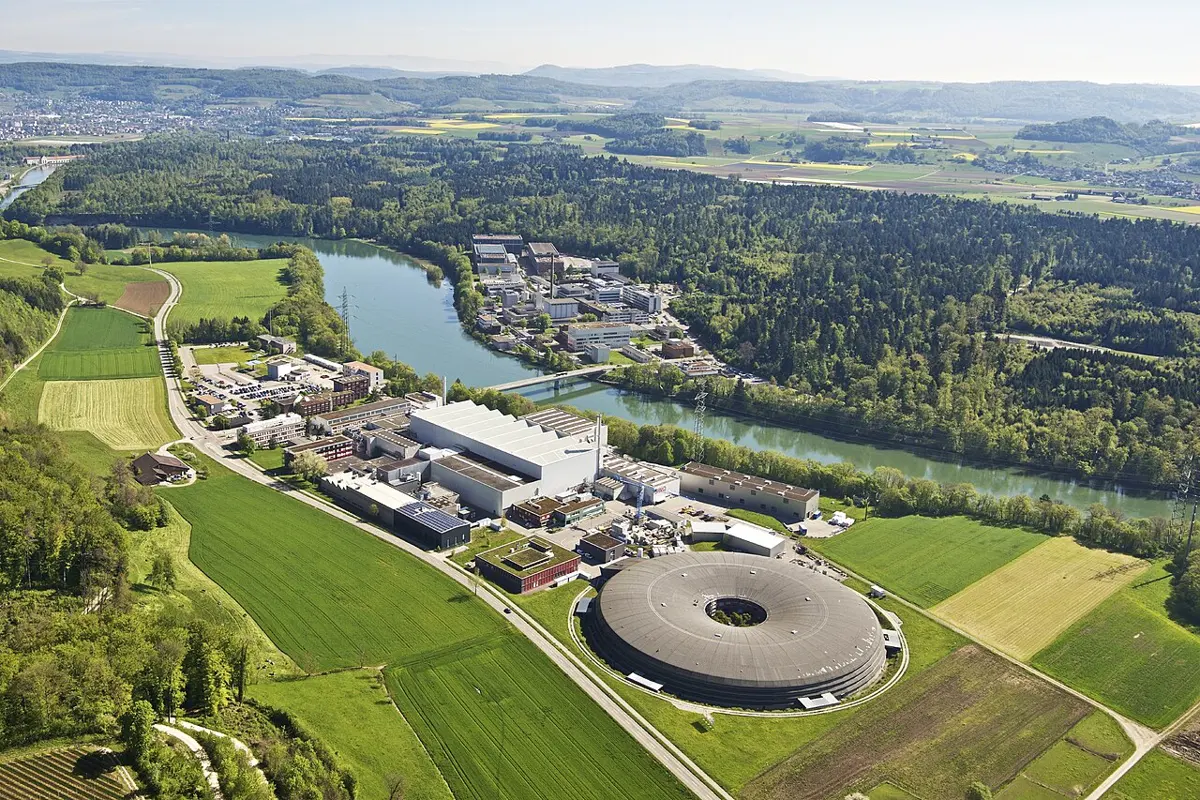
The kinds of bohrium made in Darmstadt lasted only thousandths of a second, too short for chemistry. In 2000, at the Paul Scherrer Institute in Switzerland, a team made bohrium-267, which lasts some seconds, by firing neon (10) at berkelium (97). Each atom was carried by gas into a stream of oxygen and hydrogen chloride, where it formed the oxychloride BhO₃Cl. The molecules then passed along a quartz tube, and from how long they stayed in it the team could tell how firmly they stuck to the wall. In the whole experiment, six atoms of bohrium were detected.
What has been measured:
- Bohrium forms BhO₃Cl, like technetium’s TcO₃Cl and rhenium’s ReO₃Cl, so it belongs in group 7.
- Its oxychloride sticks to quartz more firmly than rhenium’s, which sticks more firmly than technetium’s: the trend down the group.
- Its longest-lasting known kinds, made at the end of the decay of heavier elements, have half-lives of about a minute or two. (One reported kind may last about 11 minutes, but it has been seen too rarely to be sure.)
What is only predicted: that bohrium is a solid, very dense metal (about 26–27 g/cm³ by recent calculations, more than rhenium’s 20.8), and its melting and boiling points.
In your science books
- Grade 8: Bohr and Bury’s 2n² rule.
- Grade 9: shells and their energy, variable valency and radioactive elements.
- Grade 10: features of the modern periodic table and the Aufbau principle.
- Going further: alpha decay.
More to explore
- Nobel Prizes: Bohr’s prize (1922), the full story.
- Its neighbors: seaborgium, the element before it, hassium, the element after it, and rhenium, technetium and manganese, above it in group 7.
- Play: find bohrium in Guess the Element and the Periodic Table Jigsaw.
- Read more: bohrium at the Royal Society of Chemistry and at PubChem.