
- Atomic number
- 92
- Atomic mass
- 238.03
- Shells
- 2, 8, 18, 32, 21, 9, 2
- Configuration
- 1s² 2s² 2p⁶ 3s² 3p⁶ 4s² 3d¹⁰ 4p⁶ 5s² 4d¹⁰ 5p⁶ 6s² 4f¹⁴ 5d¹⁰ 6p⁶ 7s² 5f³ 6d¹
- In the table
- period 7, group none (f-block), f-block
- Kind
- Actinide
- Valency
- 4 and 6 (UO₂, UF₆); also 3 and 5
- State at 25 °C
- solid
- Melts · boils
- 1,135 °C · 4,131 °C
- Density
- 19.1 × as heavy as water
- Known since
- 1789
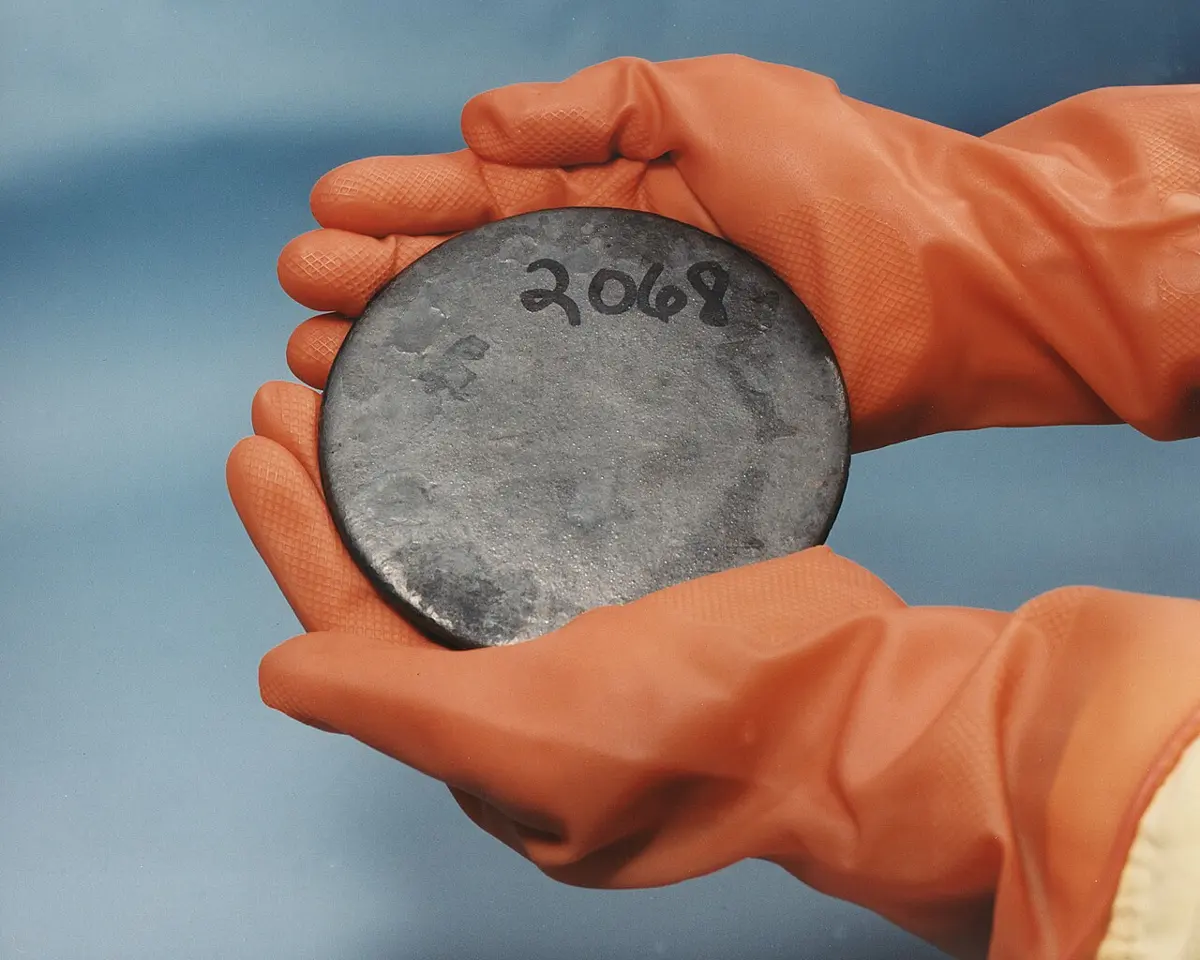
Almost all of Nepal’s electricity comes from falling water. But our neighbors, India and China, also run nuclear power stations, as do about thirty countries in all. Their fuel is uranium. A pellet of uranium fuel no bigger than your fingertip can give as much energy as a tonne of coal.
The same element made the bomb that destroyed the city of Hiroshima in 1945. It glows green in old glassware under ultraviolet light, it keeps the inside of the Earth hot, and it is the clock that told us how old the Earth is. And it is found in the rocks of Upper Mustang. Here is its story.
The uranium atom
Every uranium atom has 92 protons, so uranium’s atomic number is 92: the highest of all the elements found in nature in large amounts. A neutral atom has 92 electrons. Most uranium atoms have 146 neutrons, so their mass number is 92 + 146 = 238 (uranium-238).
The electrons fill seven shells: 2, 8, 18, 32, 21, 9, 2. The first four are full (2n² gives 2, 8, 18 and 32: Bohr and Bury’s rule); the rest are only partly filled, because of the order in which the subshells fill.
In subshells, in the Aufbau order Grade 10: The Aufbau principle, you would expect uranium to end 7s² 5f⁴. The real atom ends:
… 6p⁶ 7s² 5f³ 6d¹
One electron goes into 6d instead of 5f, because the 5f and 6d subshells have almost the same energy. Like copper’s, it is an exception to learn, not to work out.
Its place in the periodic table
- Period 7, because its electrons are in seven shells.
- f-block, because its last electrons go into the 5f subshell. It is one of the actinides, the 15 elements from actinium (89) to lawrencium (103), printed in the second row below the table Grade 10: Features of the modern periodic table. They have no group number of their own.
- It is a metal.
All the actinides are radioactive. Only thorium and uranium, whose most common isotopes decay very slowly, are found in large amounts in the Earth; the actinides after uranium are made in nuclear reactors.
In compounds, uranium usually shows a valency of 4, as in the black uranium dioxide (UO₂) of reactor fuel, or 6, as in the gas uranium hexafluoride (UF₆) and the yellow-green uranyl compounds.
Uranium is in period 7. Why?
Pick an answer to see why.
How uranium was found and named
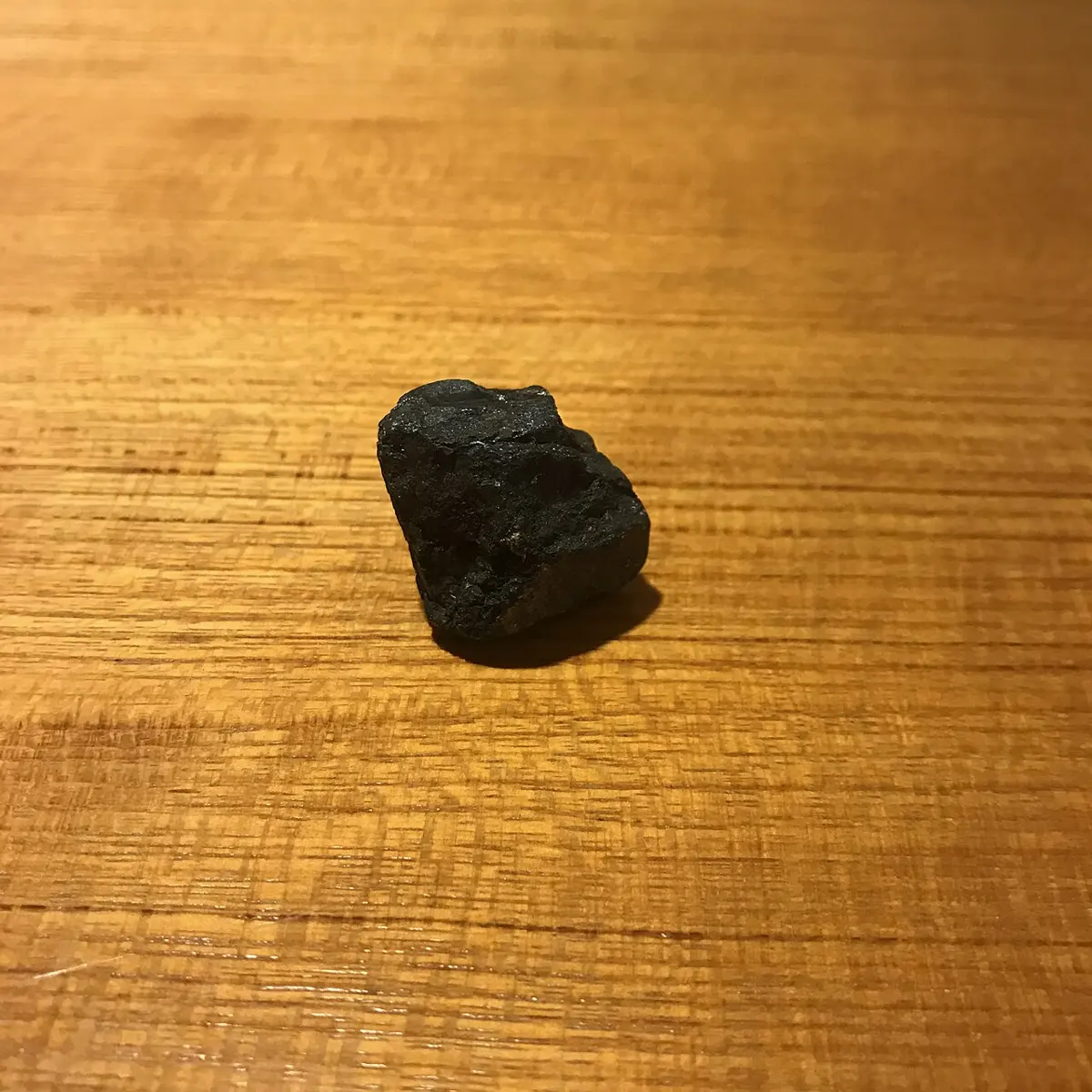
For hundreds of years, silver miners in the mountains between Germany and what is now the Czech Republic dug up a heavy, black, shiny mineral they found useless. They called it pitchblende (“pitch-black ore”).
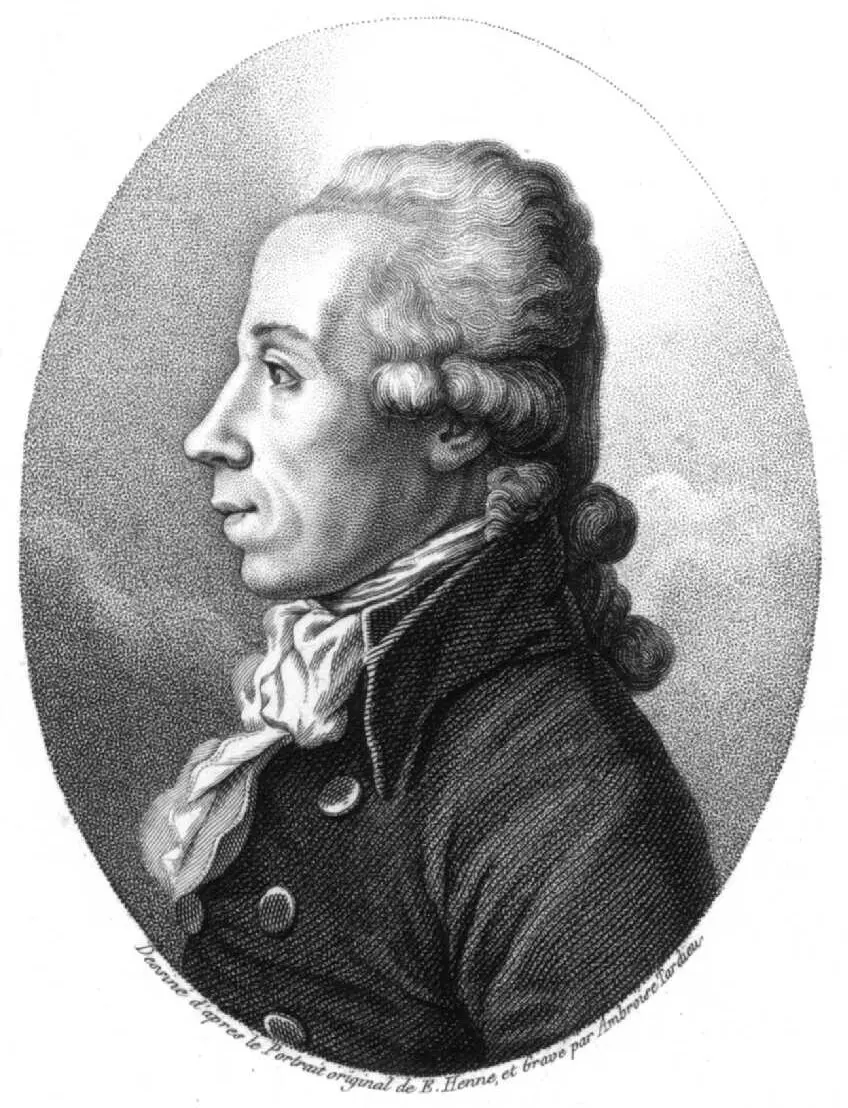
In 1789, the German chemist Martin Heinrich Klaproth in Berlin dissolved pitchblende in acid and got a yellow compound. He decided it was the oxide of a new element. Eight years earlier, in 1781, William Herschel had discovered a new planet, Uranus, the first found since ancient times, and Klaproth named his element after it: uranium, symbol U. Klaproth heated his yellow oxide with charcoal and got a black powder he took for the metal; it was really another oxide. The metal itself was first made in 1841, by the French chemist Eugène Péligot. In Nepali it is युरेनियम, a borrowed name.
For a hundred years uranium was a curiosity, used to color glass and pottery. Then, in 1896, the French scientist Henri Becquerel found that uranium salts in a dark drawer had fogged a wrapped photographic plate: uranium was sending out invisible rays all by itself. This was the discovery of radioactivity Grade 9: Becquerel’s fogged plate, and it won the Nobel Prize in Physics in 1903. Marie Curie went on to find polonium and radium in tonnes of pitchblende (Nobel Prize in Chemistry, 1911).
Where uranium is found
In the universe. Uranium is the heaviest element made in nature. It was made, together with gold and platinum, in a flash of neutron-catching when neutron stars collided, or perhaps in rare exploding stars, billions of years ago (In a flash when dead stars collide).
In the Earth. Uranium is not as rare as you might think. Ordinary rock holds about 2 to 3 grams per tonne, about as much as tin, and far more than silver or gold. Seawater holds about 3 milligrams in every thousand liters. It is mined where water has gathered it into richer ores, such as pitchblende. In 2024 the world mined about 60,000 tonnes: about two-fifths in Kazakhstan, a quarter in Canada, and much of the rest in Namibia and Australia (World Nuclear Association).
In Nepal. Uranium minerals have been found in Upper Mustang, near Lo Manthang, where a survey by the Department of Mines and Geology in the 2010s mapped them over about 30 square kilometers Grade 8: Minerals in Nepal. The department has also reported uranium in Makwanpur, Baitadi and Bajhang. None of it is mined: Nepal has no law for mining uranium yet, and no nuclear power station.
Inside the Earth, the slow decay of uranium, thorium and potassium-40 in the rocks gives off heat, about half of the heat flowing out of the Earth. It helps keep the inside of our planet hot enough to move the plates that are still pushing up the Himalaya.
What uranium is like
- A silvery-gray metal, which slowly darkens in air as an oxide layer forms.
- Very heavy: its density is about 19 g/cm³, about 1.7 times that of lead and about the same as gold. A piece the size of a 1-liter milk packet would weigh 19 kg.
- Melts at 1,135 °C.
- Weakly radioactive: natural uranium sends out mostly alpha rays, which a sheet of paper or your skin stops Grade 9: Radioactive emission. It decays so slowly that a lump of it is barely warm.
- Reactive: uranium powder can catch fire in air by itself; the metal reacts slowly with hot water and dissolves in acids.
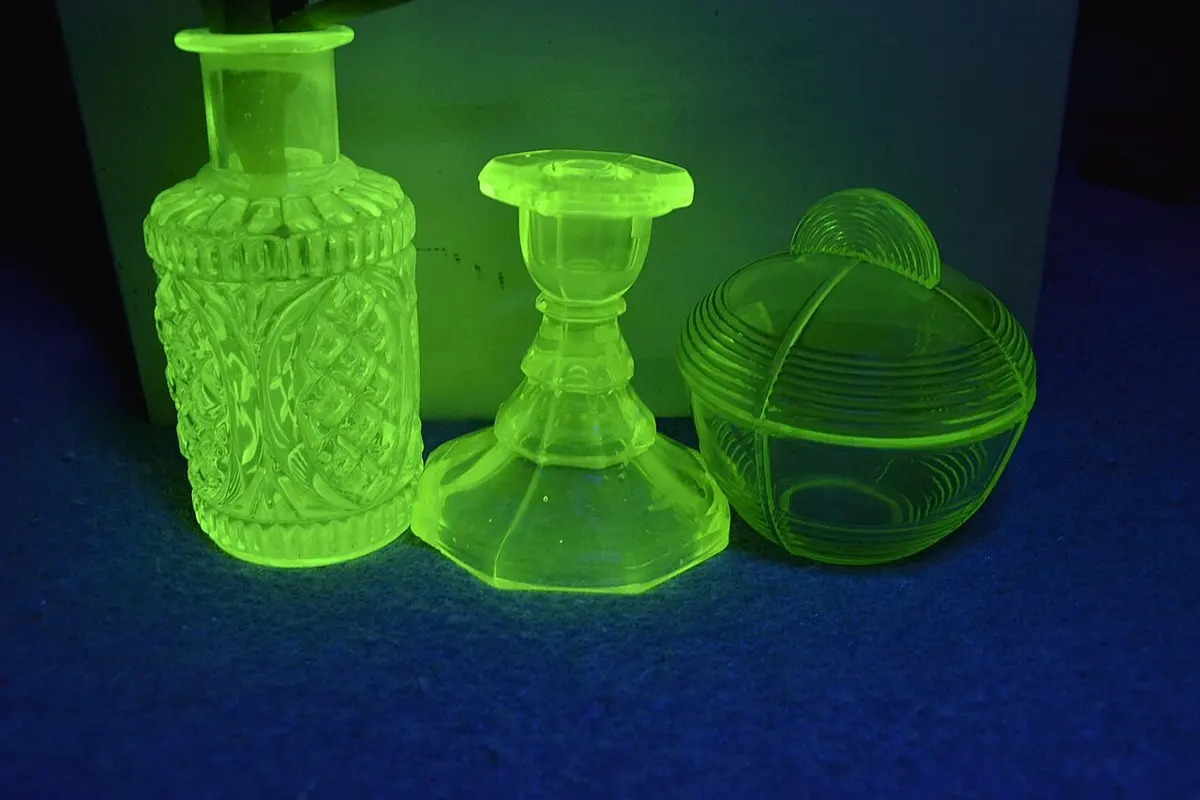
Uranium glass. A little uranium makes glass a pale yellow-green. Under ultraviolet light, the uranium in it takes in the invisible light and gives out a bright green glow: it fluoresces. Uranium glass was popular for bowls and beads from the 1830s; the radiation from it is very small.
How uranium splits: fission
Natural uranium is a mixture of two main isotopes: uranium-238 (146 neutrons, 99.3%) and uranium-235 (143 neutrons, only 0.7%). They behave the same in chemistry, but their nuclei are very different.
When a slow neutron hits a uranium-235 nucleus, the nucleus takes it in, wobbles and splits into two middle-sized nuclei, throwing out 2 or 3 new neutrons and a great deal of energy. This is nuclear fission Grade 9: Nuclear fission. The new neutrons can split more uranium-235 nuclei: a chain reaction.
The energy comes from mass: the pieces weigh very slightly less than the uranium and neutron did, and the lost mass becomes energy, by Einstein’s E = mc² (Where fission’s energy goes). Fission of 1 kg of uranium-235 gives about as much heat as burning some 3,000 tonnes of coal.
Why is uranium for a power station enriched before it is used?
Pick an answer to see why.
Enrichment
The two isotopes can’t be separated by chemistry, since both are uranium. So uranium is turned into the gas uranium hexafluoride, UF₆, and spun in thousands of fast centrifuges: the slightly heavier molecules with uranium-238 drift outwards, and the gas near the middle gets a little richer in uranium-235 each time.
Uranium in a nuclear power station
A nuclear power station works like a coal power station, except for what boils the water Grade 10: Large-scale sources of electricity. The fuel is uranium dioxide, pressed into small black pellets and sealed in long metal tubes, the fuel rods.
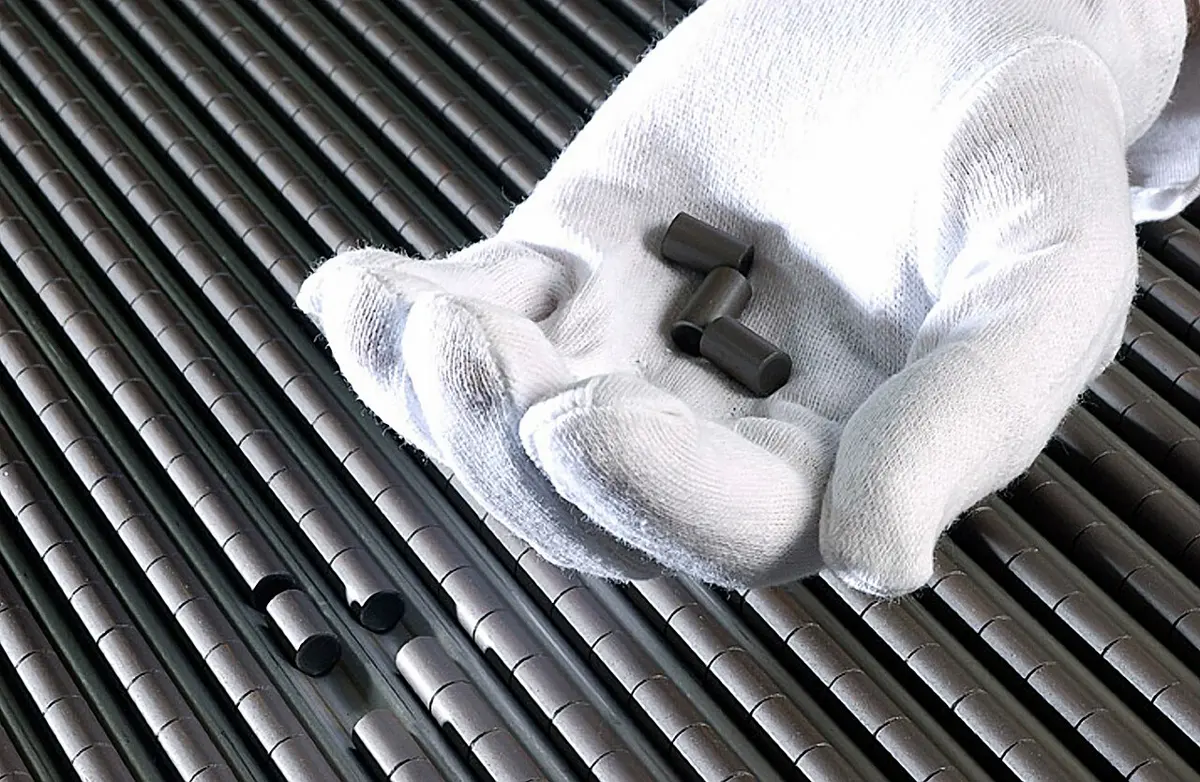
In the reactor, fission heats water. Control rods, made of materials that soak up neutrons (such as boron), are raised or lowered between the fuel rods, so that on average each fission causes exactly one more: the chain reaction stays steady. Pushed fully in, they stop it. The heat makes steam, the steam spins a turbine, and the turbine turns a generator.
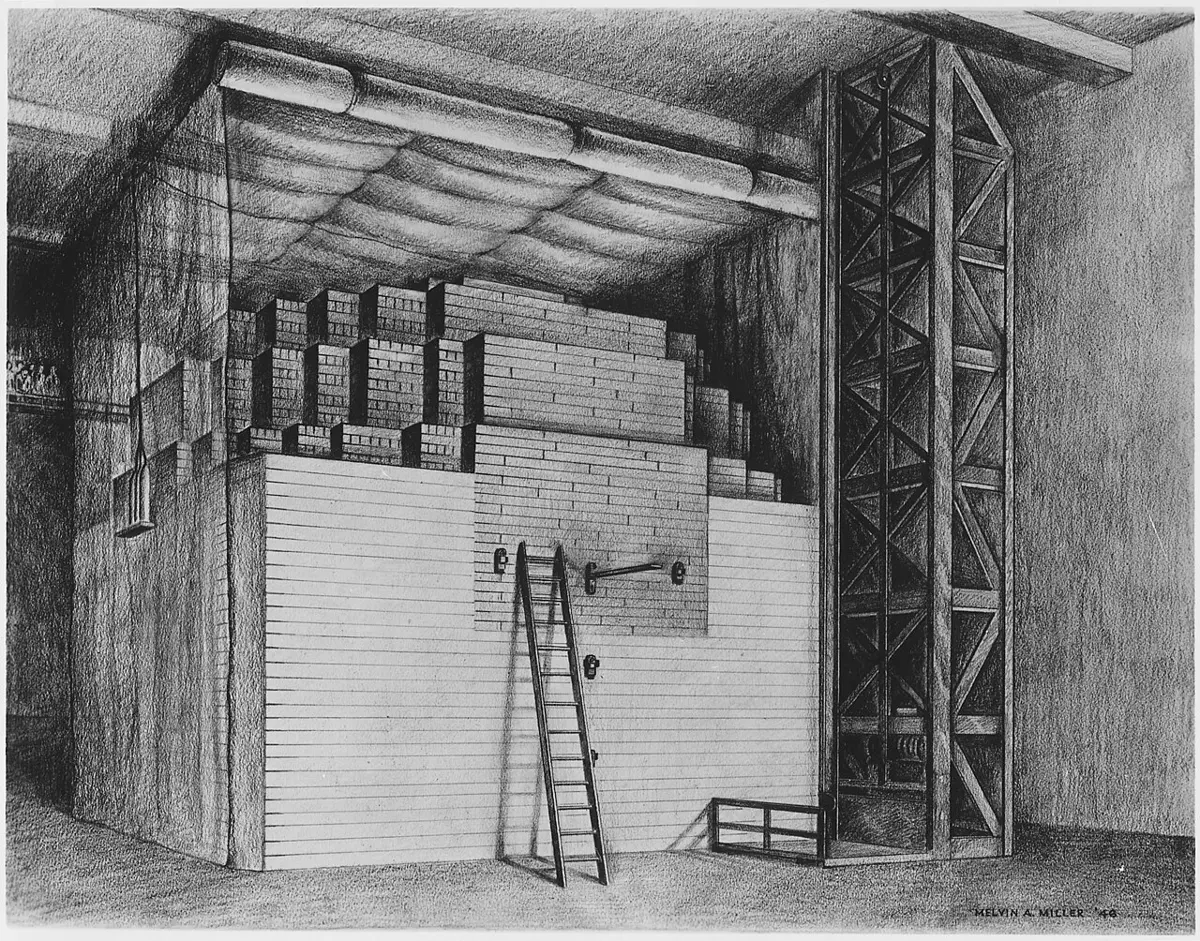
- The first reactor, Chicago Pile-1, a pile of graphite blocks and uranium built by Enrico Fermi under a sports stadium, started its chain reaction on 2 December 1942.
- The first nuclear power station to supply electricity to a grid opened at Obninsk, near Moscow, in 1954.
- Today about 440 reactors make roughly a tenth of the world’s electricity, with almost no carbon dioxide.
Nuclear power has two big problems. Its used fuel stays dangerously radioactive for thousands of years and must be stored safely, and a serious accident can spread radioactive material far: at Chernobyl in Ukraine (1986), and at Fukushima in Japan (2011), after an earthquake and tsunami.
Bombs. In an atomic bomb, the chain reaction is not controlled: each fission causes two or three more, and the energy of trillions of fissions is released in a millionth of a second. The bomb dropped on Hiroshima on 6 August 1945 used about 64 kg of highly enriched uranium; it killed tens of thousands of people at once, and many more died later of injuries and radiation.
Uranium, the clock in the rocks
Uranium-238 decays, step by step, through a chain of other radioactive elements, until it becomes stable lead-206 (From uranium to lead). It does so very slowly: its half-life, the time for half of it to decay, is about 4.5 billion years. Uranium-235’s is about 700 million years.
So a crystal that held uranium but no lead when it formed is a clock: the more lead it now has, the older it is. Tiny zircon crystals from Australia, dated this way, are almost 4.4 billion years old, and meteorites 4.57 billion. That is how we know the Earth is about 4.54 billion years old (A clock inside the atom).
Uranium and your health
Your body has no use for uranium. Taken in, it is a poison to the kidneys, like lead, and dust breathed in can harm the lungs. Its own radiation is weak, and the rays stop at the skin, so a sealed piece of uranium is not very dangerous to hold for a while; the danger is in swallowing or breathing it.
The bigger danger of uranium in the ground comes from what it turns into. One of the steps in its decay chain is radon, a radioactive gas, which seeps out of rocks and soil. In mines, and in closed rooms in some places, radon builds up, and breathing it for years raises the risk of lung cancer. Uranium miners in the past suffered badly from it; mines today must be well ventilated.
Surprising facts and records
- The heaviest natural element. Uranium has the most protons of any element found in nature in large amounts. Every element after it, from neptunium (named after Neptune, the next planet) onwards, is made mostly by people.
- Depleted uranium, left over after enrichment, is so dense that it is used as weights in aircraft and ships, and in armor.
- Yellow paint and orange plates. Before its radioactivity mattered, uranium oxide gave a bright orange-red glaze to dinner plates and a yellow color to glass.
In your science books
- Grade 8: minerals in Nepal (uranium in Upper Mustang), energy minerals and the age of the Earth.
- Grade 9: nuclear stability, radioactive elements, nuclear fission and dating fossils and rocks.
- Grade 10: the Aufbau principle, the actinides and nuclear power.
- Going further: what happens inside a nucleus when it decays, how old the Earth is and where uranium was made.
More to explore
- Nobel Prizes with uranium in them: radioactivity (1903, Becquerel’s uranium rays), radium (1911, Marie Curie’s hunt through pitchblende), Rutherford’s elements that transform (1908), the first radioactive atoms made by people (1935), neutrons (1994, beams from uranium reactors) and catching the neutrino (1995, from a reactor).
- Play: find uranium in Guess the Element and the Periodic Table Jigsaw.
- Read more: uranium at the Royal Society of Chemistry and at PubChem.