
Neutrinos and X-rays from the sky
Nobel Prize in Physics, 2002: Raymond Davis Jr., Masatoshi Koshiba, and Riccardo Giacconi
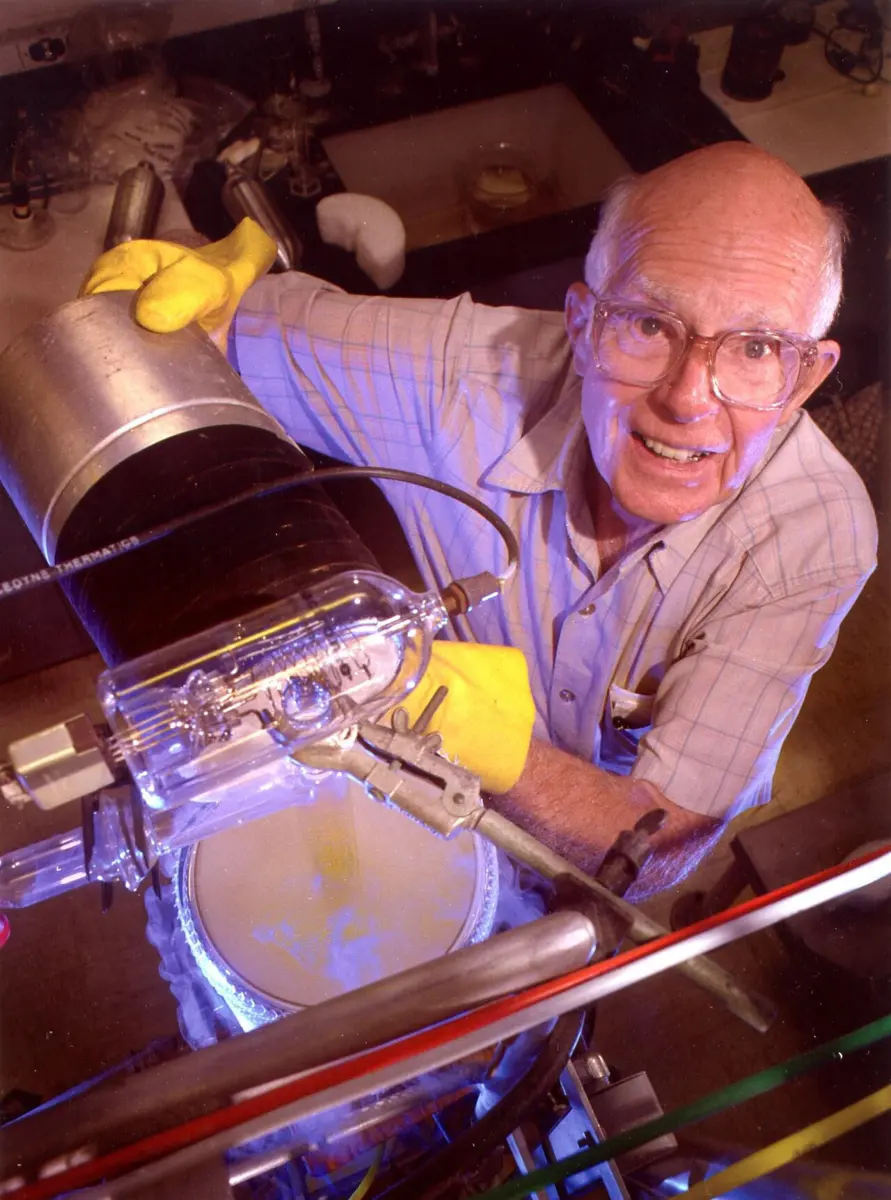
Raymond Davis Jr.
1914–2006, born in Washington, D.C., United States
A chemist, not a physicist. He counted single atoms in a tank the size of a house, and won his prize at 87.
Photo: U.S. Department of Energy from United States, Public domain

Masatoshi Koshiba
1926–2020, born in Toyohashi, Japan
He built a detector to look for one thing, never found it, and turned it into a telescope for neutrinos instead.
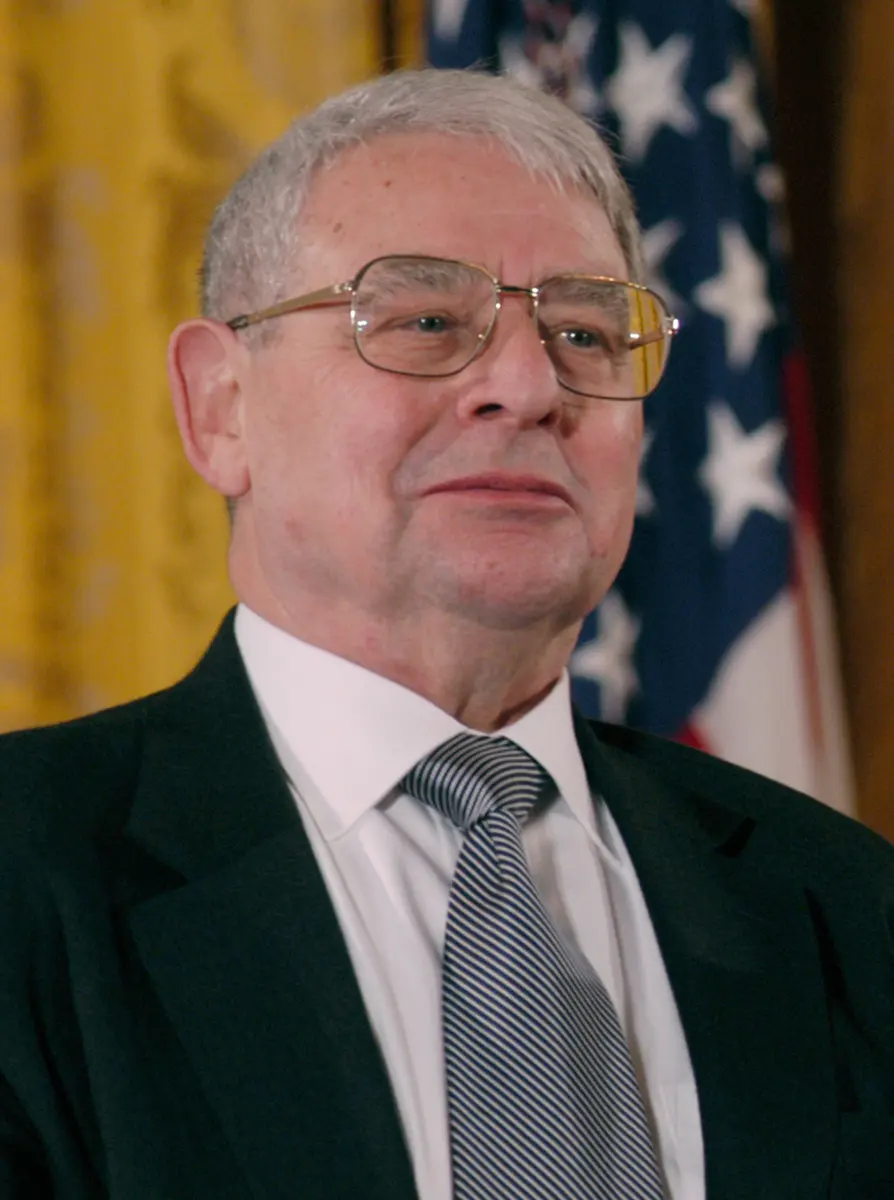
Riccardo Giacconi
1931–2018, born in Genoa, Italy
He went on to run the institute behind the Hubble Space Telescope, and then Europe’s great observatory in Chile.
Photo: IMAGE: Ryan K. Morris (Ryan K Morris Photography), Public domain
On a clear night above the hills, you can see thousands of stars. But your eyes see only one kind of light, and for most of history astronomers studied the sky through that one window.
The 2002 Nobel Prize in Physics was for opening two new windows. Raymond Davis and Masatoshi Koshiba caught neutrinos, ghostly particles that come straight out of the center of the Sun and of exploding stars. Riccardo Giacconi built instruments that see the sky in X-rays, the same rays a hospital uses to photograph your bones, and found that the universe is full of things far more violent than anyone had imagined.
The problem: two things nobody could see
The Sun’s hidden engine
By the 1930s scientists believed the Sun shines by nuclear fusion: deep in its core, at about 15 million °C, hydrogen nuclei join to make helium, and a little mass becomes a great deal of energy Grade 9: Nuclear fusion. But nobody could look inside the Sun to check. The sunlight that warms you today was made in the core long ago, and took more than 100,000 years to work its way out through the Sun’s dense layers (From the core to your skin).
There was one possible messenger. Every time four hydrogen nuclei become one helium nucleus, two neutrinos are made. A neutrino is a tiny particle with no charge and almost no mass. It hardly ever hits anything, so it flies straight out of the Sun and reaches us about 8 minutes later. About 65 billion of the Sun’s neutrinos pass through every square centimeter of your body every second, day and night. At night they come up through the ground, having passed through the whole Earth.
That is also the problem. A neutrino passes through the Earth as if it were empty space. Only about one in a million million (10¹²) is stopped on the way. How do you catch something like that?
The X-ray sky behind a blanket of air
X-rays easily pass through skin and flesh, which is why a doctor can photograph your bones with them Grade 9: X-rays. But they can’t get through the Earth’s thick atmosphere. X-rays from space are soaked up by the air long before they reach the ground. That is lucky for life on Earth, but until the age of rockets, nobody knew what the X-ray sky looked like.
In 1949 an American team sent detectors up on a rocket and found X-rays from the Sun. But the Sun is very close. Ordinary stars are so far away that, if they shone in X-rays only as weakly as the Sun does, no instrument could pick them up. Most astronomers expected to find almost nothing.
Why can’t X-ray telescopes work on the ground?
Pick an answer to see why.
How to catch a ghost
Chlorine into argon
In 1946 the Italian physicist Bruno Pontecorvo suggested a way. Once in a very long while, a neutrino from the Sun hits an atom of chlorine and turns it into an atom of argon. (Inside the nucleus, a neutron becomes a proton, so the element changes; it is like beta decay run another way, Beta decay.) This argon is radioactive: half of it decays in 35 days, giving a tiny flash that a counter can detect. So if you take a huge amount of chlorine, wait, and then find and count the argon atoms, you know how many neutrinos were caught.
Flashes of light in water
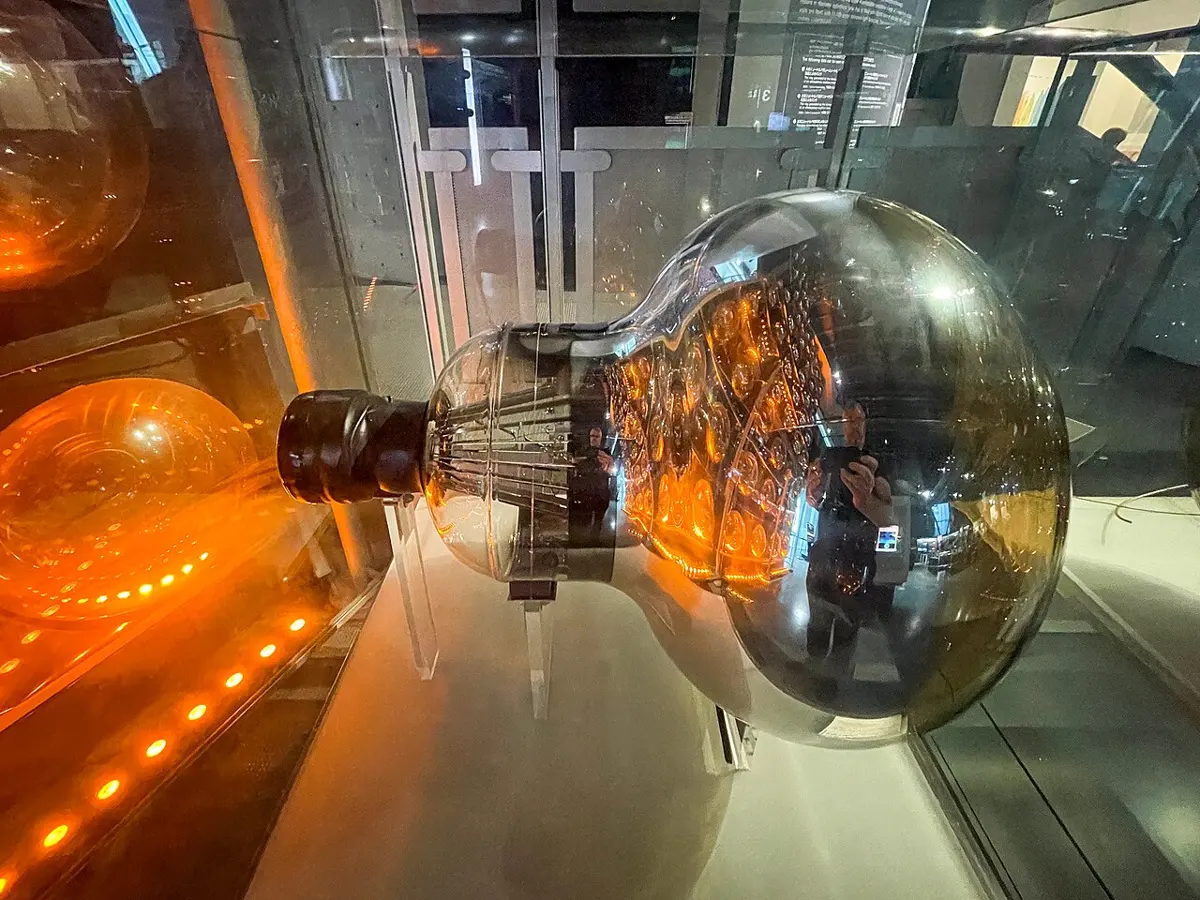
Koshiba’s detector worked differently. It was a giant tank of very pure water, its walls lined with large, very sensitive light detectors called photomultiplier tubes. When a neutrino hits an electron in the water, the electron is knocked forward so fast that it gives off a faint cone of blue light, like the bow wave of a boat. The tubes catch the ring of light where the cone meets the wall. From which tubes fire, and when, the scientists can tell when the neutrino arrived and which direction it came from.
Why it was hard
- Hardly any catches. Davis’s tank held about 600 tonnes of liquid, containing some 2 × 10³⁰ chlorine atoms. Even so, he expected only about 20 argon atoms a month. Finding them was, as the Nobel committee put it, harder than finding one particular grain of sand in the whole Sahara desert.
- Everything else gets in the way. Cosmic rays, fast particles from space, rain down on the Earth all the time, and they too can turn chlorine into argon. So the detectors had to go deep underground, where the rock above stops cosmic rays but not neutrinos. Davis’s tank was 1,478 m down, in the Homestake gold mine in South Dakota, USA. Kamiokande was 1,000 m down, in a mine at Kamioka in Japan.
- X-rays need rockets. In the early 1960s, a rocket could carry instruments above the air for only about five minutes before falling back. Ordinary mirrors and lenses don’t work for X-rays either: X-rays shot straight at a mirror go into it instead of bouncing off.
What they did, step by step
Davis: counting atoms in a mine
Raymond Davis trained as a chemist and worked at the Brookhaven National Laboratory near New York. He was one of very few people who thought catching the Sun’s neutrinos was worth trying.
- 1950s, the method. He tested the chlorine idea, first next to nuclear reactors.
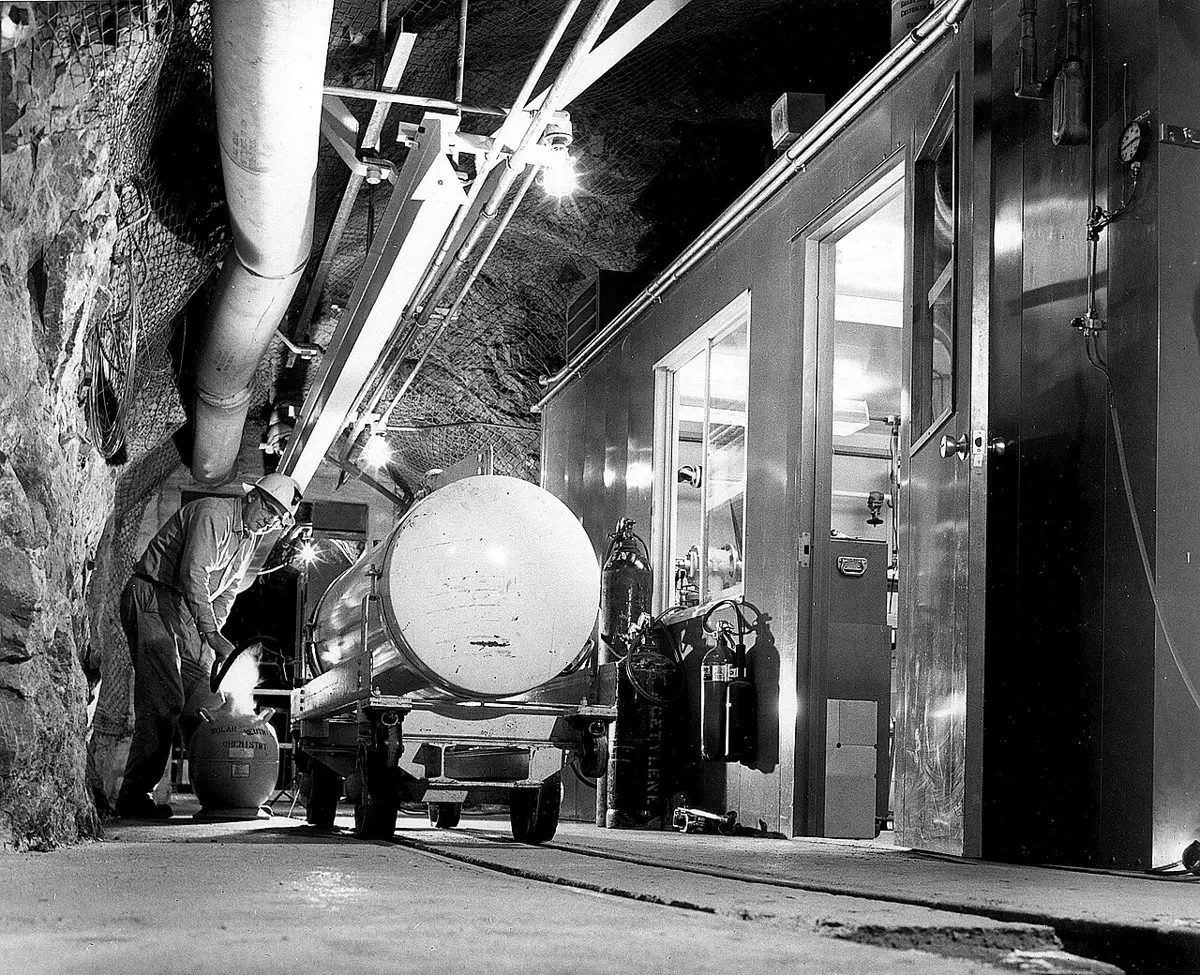
- 1960s, the tank. He had a steel tank 14.6 m long and 6.1 m across built deep in the Homestake mine, and filled it with about 600 tonnes of tetrachloroethylene, a common dry-cleaning fluid that is rich in chlorine.
- About ten times a year, for 25 years. He bubbled helium gas through the tank. The few argon atoms went with the helium, were collected, and were counted as they decayed. To prove his method didn’t miss any, he added a known amount of ordinary, non-radioactive argon to the tank each time and checked that he got it all back.
- 1968, the result. The first results proved that neutrinos really come from the Sun, so fusion really is going on in its core right now. But there was a puzzle: he found only about one third as many as the theory predicted. The experiment ran until 1994 and caught about 2,000 neutrinos in all.
For decades many physicists thought either Davis’s experiment or the theory of the Sun must be wrong. Neither was. This was the solar neutrino problem, and its answer turned out to be a discovery about neutrinos themselves.
Koshiba: a detector built for something else
Masatoshi Koshiba was a professor at the University of Tokyo, who had built detectors for cosmic rays for years.
- 1983, Kamiokande. His team built a tank of about 3,000 tonnes of pure water, 1,000 m underground, lined with about 1,000 large photomultiplier tubes. It was built to look for something else: whether protons ever break up. (They never saw one do so.)
- 1985, a new purpose. Koshiba saw that the tank could catch neutrinos instead, and had it made far more sensitive.
- 23 February 1987, a star explodes. At 07:35 (world time), in a burst of about 13 seconds, Kamiokande caught 12 neutrinos. They came from a supernova, a giant star whose core had collapsed and exploded, in the Large Magellanic Cloud, a small galaxy next to our own, about 170,000 light years away Grade 9: Nova, supernova, and what is left. About 10¹⁶ of its neutrinos passed through the tank; 12 were caught. They arrived about three hours before the star’s light was seen.
- 1989–1990, the Sun’s direction. Kamiokande showed that its neutrinos really came from the Sun’s direction, and that there were fewer than predicted, as Davis had found.
- 1996, Super-Kamiokande. Koshiba had proposed a much bigger tank, which started work in 1996: 50,000 tonnes of water and more than 11,000 photomultiplier tubes. In 1998 it found that neutrinos can change from one kind into another on their journey.
Giacconi: the X-ray sky
Riccardo Giacconi was born in Genoa, studied physics in Milan, and moved to the United States in 1956. In 1959, aged 28, he joined a small company near Boston, American Science and Engineering, to start a space research group with the physicist Bruno Rossi.
- 1960, the X-ray telescope. He and Rossi worked out how a telescope in space could focus X-rays. Shot straight at a mirror, X-rays go in; but if they skim the surface at a very shallow angle, they bounce off. So an X-ray telescope uses mirrors shaped like long, slightly curved tubes, which the X-rays graze, like a stone skimming off a pond.
- June 1962, the rocket. His team launched a rocket with three X-ray counters. It was meant to look for X-rays from the Moon. In its six minutes above the air it found none from the Moon, but it found a very bright X-ray source far beyond the Solar System, in the constellation Scorpius, and a faint glow of X-rays from every direction in the sky. The source was named Scorpius X-1: the first X-ray source in Scorpius.
- 1970, Uhuru. Rockets gave only minutes. Giacconi led the building of the first satellite made for X-ray astronomy, launched from a platform off the coast of Kenya and named Uhuru, “freedom” in Swahili, to thank Kenya. Every week it collected more than all the earlier rocket flights together. It found hundreds of X-ray sources.
- 1978, the Einstein Observatory. He built the first X-ray telescope in space to take sharp pictures, using grazing mirrors. It could see sources a million times fainter than Scorpius X-1.
- 1976 to 1999, Chandra. In 1976 he proposed a much larger X-ray telescope. It was launched in 1999, named Chandra after the Indian-born astrophysicist Subrahmanyan Chandrasekhar.
How it works now
What the X-ray sky showed
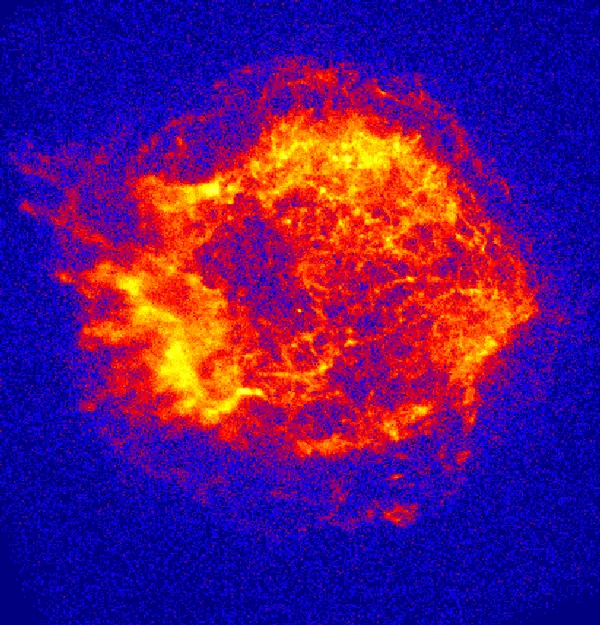
Most of the bright X-ray sources turned out to be pairs of stars: an ordinary star and a dead star crushed into a tiny ball, a neutron star or a black hole. Gas pulled off the ordinary star falls onto the dead one and is heated to millions of degrees, so hot that it glows in X-rays. Cygnus X-1, found in the early surveys, was one of the first objects that astronomers came to believe holds a black hole. X-ray telescopes also see the hot gas left by exploding stars and the gas between galaxies.
What the neutrinos showed
The solar neutrino problem was solved in 2001–2002 by a detector in Canada, which could catch all three kinds of neutrino. Neutrinos made in the Sun are all of one kind, but on the way to the Earth many of them change into the other two kinds, which Davis’s chlorine couldn’t catch. Adding them up gave exactly the number the theory of the Sun predicted. So the Sun was fine, and Davis had been right all along. Changing kind is only possible if neutrinos have some mass, so a particle once thought to weigh nothing must weigh a little.
Davis caught only about a third of the neutrinos the theory of the Sun predicted. What was the explanation, found about 30 years later?
Pick an answer to see why.
In your life today
- The Sun is burning now. The neutrinos prove that fusion is going on in the Sun’s core today, not just long ago. The Sun has burnt for about 4.6 billion years and has about 5 billion more to go (How long will the Sun shine?).
- Neutrinos through you. About 65 billion neutrinos from the Sun pass through each square centimeter of you every second, through your thumbnail as you read this. In your whole life, perhaps one will hit an atom in your body.
- You are made of star dust. Supernovae like 1987A scatter the elements made inside stars into space. Much of the oxygen you breathe and the calcium in your bones was made in stars that exploded before the Sun was born (Getting the atoms out).
What came next
- Another Nobel Prize. In 2015 the Physics prize went to Takaaki Kajita, of Super-Kamiokande, and Arthur McDonald, of the detector in Canada, for showing that neutrinos change kind and so have mass.
- Bigger detectors. IceCube, a cubic kilometer of ice at the South Pole fitted with light detectors, now catches neutrinos from far beyond our galaxy. In Japan, Hyper-Kamiokande, several times bigger than Super-Kamiokande, is being built. Detectors around the world are linked to warn astronomers the moment a burst of supernova neutrinos arrives.
- Open questions. Nobody yet knows exactly how heavy a neutrino is, only that it is less than a millionth of the mass of an electron. Physicists also want to know whether a neutrino is its own antiparticle: if it is, it may help explain why the universe is made of matter at all.
In your science books
- Grade 9: nuclear fusion, X-rays, the electromagnetic spectrum, and nova, supernova, and what is left.
- Grade 10: the life of a star and our galaxy, the Milky Way.
- Going further: a message from the core, today (Davis’s tank), beta decay, fusion and getting the atoms out of stars.
Learn more
- The Nobel Prize’s own explanation: Two new windows on the universe (nobelprize.org).
- The Nobel lectures: Davis, Koshiba and Giacconi.
The official reason
The prize was given “for pioneering contributions to astrophysics, in particular for the detection of cosmic neutrinos.”
The prize was given “for pioneering contributions to astrophysics, which have led to the discovery of cosmic X-ray sources.”