
- Atomic number
- 93
- Atomic mass
- 237.05
- Shells
- 2, 8, 18, 32, 22, 9, 2
- Configuration
- 1s² 2s² 2p⁶ 3s² 3p⁶ 4s² 3d¹⁰ 4p⁶ 5s² 4d¹⁰ 5p⁶ 6s² 4f¹⁴ 5d¹⁰ 6p⁶ 7s² 5f⁴ 6d¹
- In the table
- period 7, group none (f-block), f-block
- Kind
- Actinide
- Valency
- 3 to 7; 5 is the most stable in water (as in NpO₂⁺)
- State at 25 °C
- solid
- Melts · boils
- 644 °C · 3,902 °C
- Density
- 20.3 × as heavy as water
- Known since
- 1940
For a long time, uranium, element 92, was the end of the periodic table: the heaviest element anyone had found. In 1940 two American scientists made an atom with 93 protons, the first element beyond uranium. They named it after Neptune, the planet beyond Uranus.
Neptunium is almost absent from nature and has few uses, but it opened the way to plutonium and all the heavier elements made since.
The neptunium atom
A neptunium atom has 93 protons (atomic number 93) and 93 electrons. Its longest-lasting kind, neptunium-237, has 144 neutrons: 93 + 144 = 237. By shells, the electrons are 2, 8, 18, 32, 22, 9, 2, and in subshells Grade 10: The Aufbau principle:
… 6p⁶ 7s² 5f⁴ 6d¹
As in uranium just before it, one electron sits in 6d instead of 5f, because the two subshells have almost the same energy.
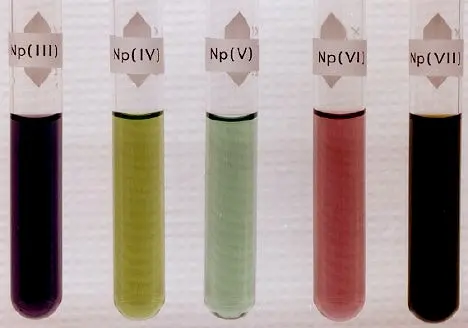
It is in period 7 (seven shells), the fifth of the actinides in the f-block Grade 10: Features of the modern periodic table, and a metal. Its outer electrons are held so loosely that neptunium can give away 3, 4, 5, 6 or even 7 of them: few elements show so many valencies Grade 9: Variable valency. Each gives its compounds a different color in solution.
How many neutrons are in a neptunium-237 nucleus?
Pick an answer to see why.
How neptunium was made and named
In 1934 the Italian physicist Enrico Fermi fired neutrons at uranium and thought he had made elements 93 and 94. The German chemist Ida Noddack doubted it: perhaps, she wrote, the uranium nucleus had broken into large pieces. She was right. Fermi had split uranium without knowing it, which was understood only in 1938, when fission was discovered Grade 9: Nuclear fission.
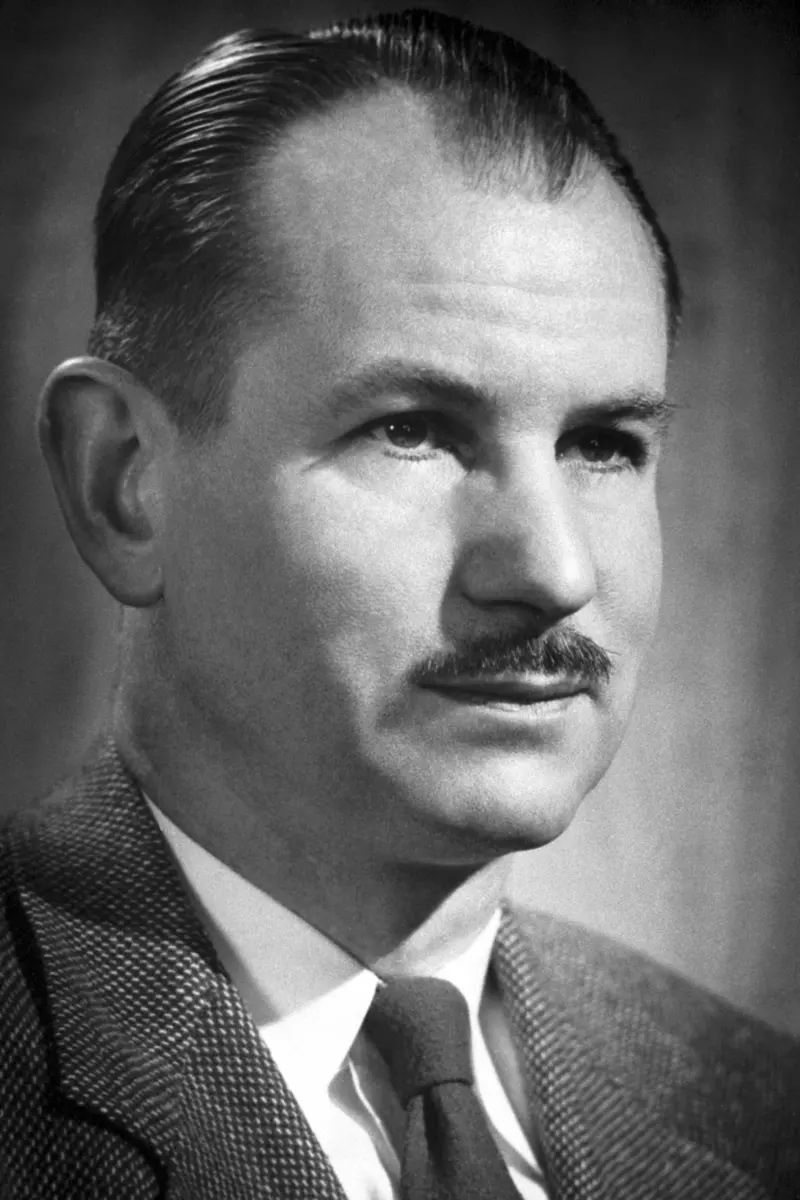
In 1940, at the University of California in Berkeley, Edwin McMillan noticed that among the products of uranium hit by neutrons was one that did not fly apart like the fission pieces, and gave out beta rays with a half-life of about two days. With Philip Abelson, he proved it was a new element:
- A uranium-238 nucleus catches a neutron and becomes uranium-239.
- Within about half an hour, one of its neutrons turns into a proton and an electron flies out (beta decay, A neutron becomes a proton). The nucleus now has 93 protons: it is neptunium-239.
Uranium was named after the planet Uranus, so McMillan named the next element after the next planet, Neptune: neptunium, symbol Np. Months later, element 94 followed, and was named plutonium, after Pluto.
Neptunium-239 gives out a beta particle. What does it become?
Pick an answer to see why.
Where neptunium is found
Neptunium-237, the longest-lasting kind, has a half-life of 2.1 million years. That sounds long, but since the Earth formed, more than 2,000 half-lives have passed, and any neptunium the Earth was born with is gone (see the chart on the thorium page). Only tiny traces are found in uranium ores, made where a uranium nucleus caught a stray neutron.
Nearly all neptunium is made in nuclear reactors, where uranium nuclei catch neutrons. It is taken out of used fuel in small amounts, for research and for one important job (below).
In your home? Many smoke alarms hold a tiny speck of americium-241, element 95. Americium-241 has a half-life of 432 years, and when it decays it becomes neptunium-237. So, very slowly, the speck in a smoke alarm turns into neptunium: after ten years, under 2% of it.
What neptunium is like
What has been measured:
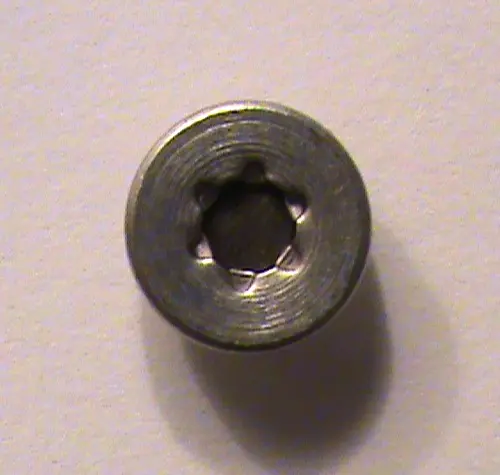
- It is a silvery metal that tarnishes in air.
- It melts at 644 °C, low for such a heavy metal.
- It is one of the densest of all elements: about 20 g/cm³, heavier than gold (19.3). Sources give 20.2 to 20.5, for different crystal forms.
- It is radioactive: neptunium-237 gives out alpha particles.
What is only estimated: its boiling point. Tables give anything from about 3,900 to 4,200 °C, worked out from measurements at lower temperatures; no one has boiled it.
Neptunium at work: batteries for space
Spacecraft that travel far from the Sun, such as Voyager and the Mars rovers Curiosity and Perseverance, cannot rely on sunlight for power. They carry a nuclear battery: a block of plutonium-238 that stays hot from its own decay for decades, with devices that turn the heat into electricity. Plutonium-238 is made by putting neptunium-237 into a reactor, where it catches a neutron and becomes plutonium-238.
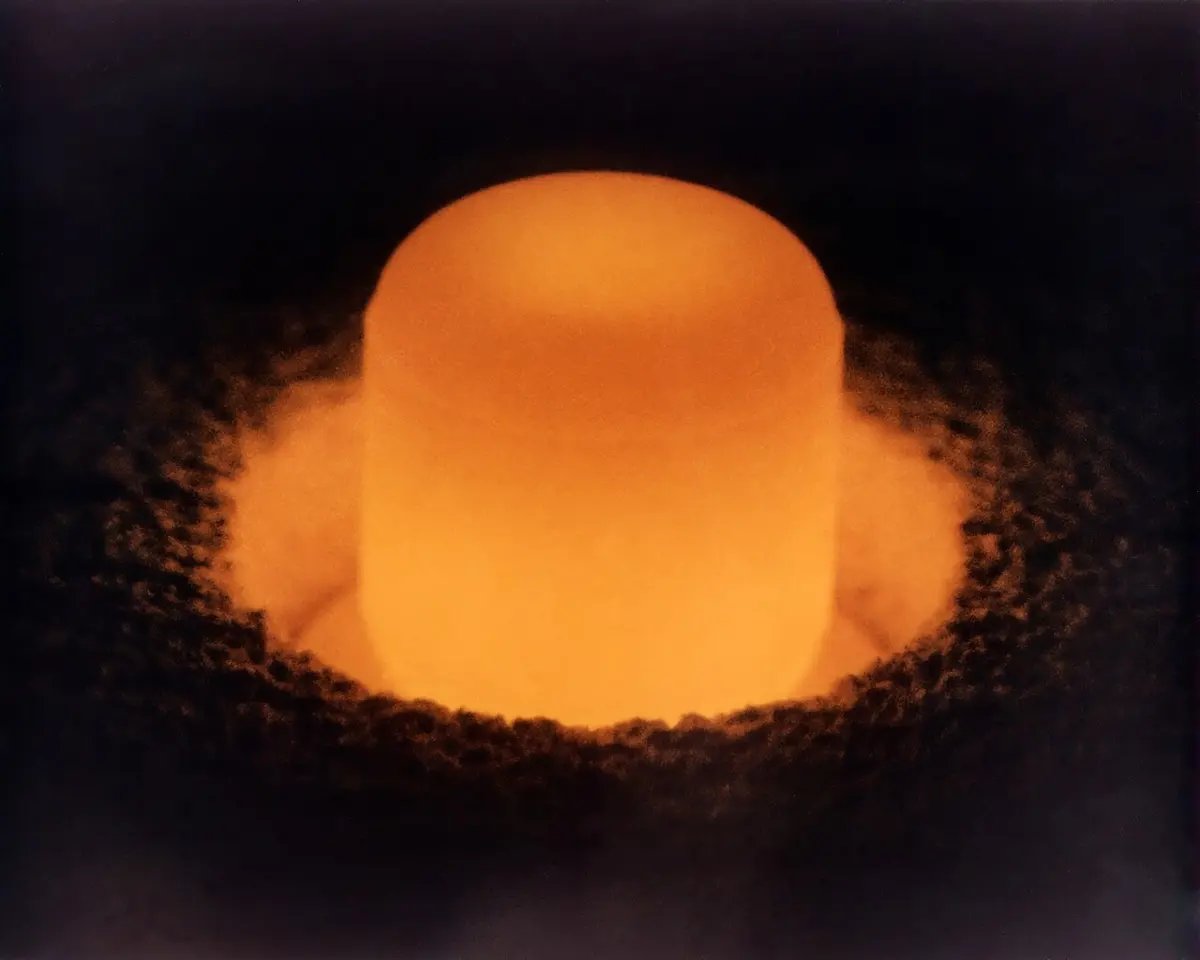
Neptunium-237 is also one of the materials whose nuclei can keep a chain reaction going, so, like uranium and plutonium, it is closely watched by the International Atomic Energy Agency.
Neptunium and your health
The body has no use for neptunium. Like the other actinides, if it is swallowed or breathed in it settles in the bones and liver, where its alpha particles damage the cells around it. It is handled only in sealed glove boxes. The amount in a smoke alarm is far too small to matter, as long as the alarm is not broken open.
In your science books
- Grade 9: radioactive elements, nuclear fission and variable valency.
- Grade 10: the actinides and the Aufbau principle.
- Going further: beta decay, alpha decay and fission.
More to explore
- Nobel Prizes: the first radioactive atoms made by people (1935), the work that led Fermi to fire neutrons at uranium.
- Its neighbors: uranium, from which it is made, and protactinium and thorium, the actinides before it.
- Play: find neptunium in Guess the Element and the Periodic Table Jigsaw.
- Read more: neptunium at the Royal Society of Chemistry and at PubChem.