
- Atomic number
- 105
- Atomic mass
- 268.13
- Shells
- 2, 8, 18, 32, 32, 11, 2
- Configuration
- 1s² 2s² 2p⁶ 3s² 3p⁶ 4s² 3d¹⁰ 4p⁶ 5s² 4d¹⁰ 5p⁶ 6s² 4f¹⁴ 5d¹⁰ 6p⁶ 7s² 5f¹⁴ 6d³
- In the table
- period 7, group 5 (VB), d-block
- Kind
- Transition metal
- Valency
- 5 (as in DbOCl₃)
- State at 25 °C
- solid
- Melts · boils
- not known · not known
- Known since
- 1967
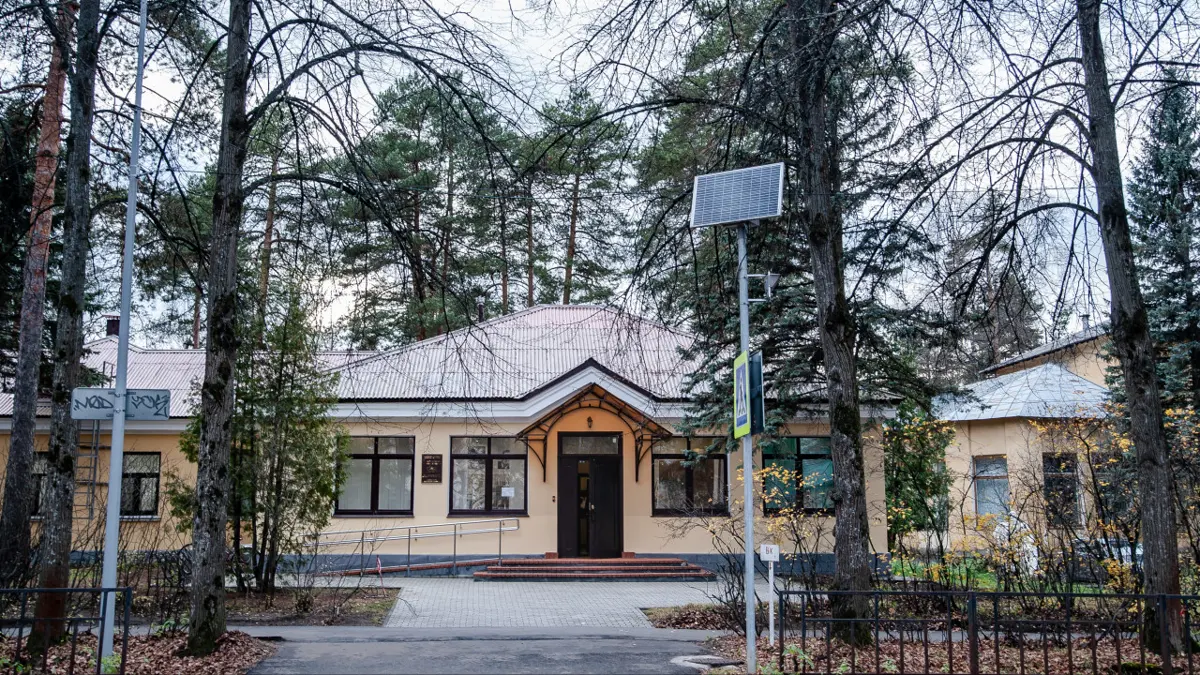
Only a few towns in the world have an element named after them. Dubnium, element 105, is named after Dubna, a town on the Volga river in Russia that grew up around a laboratory for nuclear research. Getting there took almost thirty years of argument between two laboratories, and on the way element 105 was given four different names.
The dubnium atom
A dubnium atom has 105 protons (atomic number 105) and 105 electrons. Its longest-lasting known kind, dubnium-268, has 268 − 105 = 163 neutrons. By shells the electrons are 2, 8, 18, 32, 32, 11, 2, and in subshells Grade 10: The Aufbau principle:
… 7s² 5f¹⁴ 6d³
It is a d-block element, a transition metal, in period 7 and group 5, under vanadium, niobium and tantalum Grade 10: Features of the modern periodic table. Like them it has five electrons outside the full subshells (two 7s and three 6d), so its valency should be 5, as in tantalum’s chloride, TaCl₅.
Dubnium-268 has 163 neutrons. Dubnium-260, the kind Berkeley made in 1970, has how many?
Pick an answer to see why.
Two claims and many names
In 1968, Georgy Flerov’s team at the Joint Institute for Nuclear Research in Dubna fired neon nuclei (10 protons) at americium (95): 95 + 10 = 105. In 1970, Albert Ghiorso’s team at Berkeley, California, fired nitrogen (7) at californium (98): 98 + 7 = 105. Each team doubted the other’s results, and each wanted to name the element.
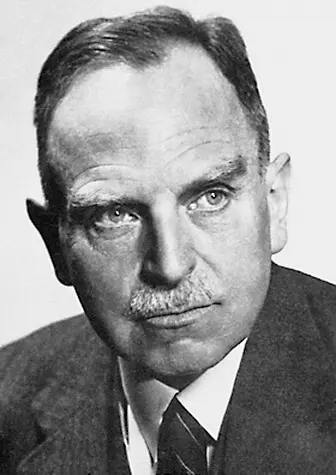
The Dubna team proposed nielsbohrium, after Niels Bohr. Berkeley proposed hahnium, after Otto Hahn, the German chemist who, with Fritz Strassmann, discovered nuclear fission. For years, books in the Soviet Union and in the West used different names, and a neutral list of stand-in names, unnilpentium (un-nil-pent: 1-0-5) for element 105, was widely ignored.
In 1993, a working group of IUPAC and IUPAP, the international unions of chemists and physicists, decided that the Berkeley and Dubna teams should share the credit. Then came the names. In 1994, IUPAC suggested a list that moved names from one element to another and gave element 105 a new one, joliotium, after the French physicist Frédéric Joliot-Curie. Many scientists, especially in the USA, protested. In 1997, IUPAC settled on the names we use today, and element 105 became dubnium, symbol Db: Berkeley’s names were kept for elements 104 and 106, and this one went to Dubna. The American Chemical Society accepted it “reluctantly”.
A heavier tantalum?
Dubnium sits under tantalum, so you might expect it to behave like a heavier tantalum. Chemists have tested this with single atoms, many thousands of times over, in experiments that each last about as long as the atoms do.
What has been measured:
- In 1988, at Berkeley, dubnium stuck to glass like niobium and tantalum, and unlike zirconium and hafnium in group 4. So it belongs in group 5, and it shows a valency of 5 in water.
- In some acid solutions, though, it behaved like niobium, and sometimes like protactinium, but not like tantalum, the element right above it. A team in Japan found the same in 2009.
- In 2021, in Japan, its oxychloride, DbOCl₃, traveled through a hot tube as a vapor a little less easily than TaOCl₃, which goes less easily than NbOCl₃: the trend the periodic table predicts.
- Its longest-lasting kind, dubnium-268, has a half-life of about 16 hours (the latest value, from 2022; earlier measurements with fewer atoms gave more than a day). It was found in 2004 among the decay products of a heavier element, moscovium.
What is only predicted: that dubnium is a solid, shiny metal, very dense (about 21.6 g/cm³ by one calculation, more than tantalum’s 16.4), and its melting and boiling points. The facts card leaves them out because none has been measured.
Why does it not copy tantalum exactly? In such a heavy atom, the electrons nearest the nucleus move so fast that their energy changes, and that shifts the outer electrons a little. Each heavy element has to be tested, because the periodic table’s pattern, while still right, is not exact this far down.
In your science books
- Grade 9: the structure of an atom, variable valency and radioactive elements.
- Grade 10: features of the modern periodic table, the Aufbau principle and how properties change down groups.
- Going further: alpha decay and fission, Otto Hahn’s discovery.
More to explore
- Nobel Prizes: Hahn’s prize (1944) for the discovery of fission.
- Its neighbors: rutherfordium, the element before it, seaborgium, the element after it, and tantalum and niobium, above it in group 5.
- Play: find dubnium in Guess the Element and the Periodic Table Jigsaw.
- Read more: dubnium at the Royal Society of Chemistry and at PubChem.