
- Atomic number
- 85
- Atomic mass
- 209.99
- Shells
- 2, 8, 18, 32, 18, 7
- Configuration
- 1s² 2s² 2p⁶ 3s² 3p⁶ 4s² 3d¹⁰ 4p⁶ 5s² 4d¹⁰ 5p⁶ 6s² 4f¹⁴ 5d¹⁰ 6p⁵
- In the table
- period 6, group 17 (VIIA), p-block
- Kind
- Halogen
- Valency
- 1 (astatide, At⁻), like the other halogens; positive states up to +7 seen in experiments
- State at 25 °C
- solid
- Melts · boils
- 302 °C · not known
- Density
- 7.0 × as heavy as water
- Known since
- 1940
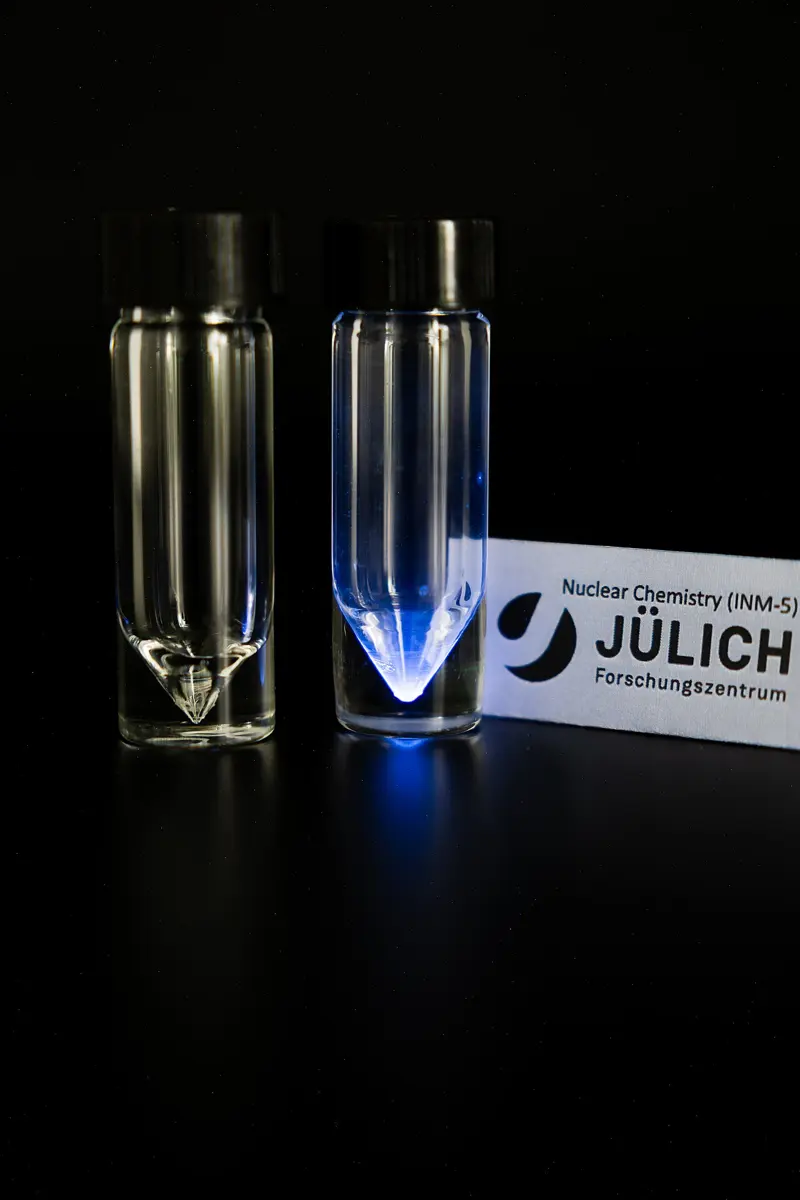
You know the halogens from your science book: chlorine in bleach and in the water tanks of a city supply, iodine in the salt in your kitchen. Below iodine in the periodic table sits a fifth natural halogen, astatine. No one has ever seen a piece of it. All of it on Earth at any moment would fit in a spoon, and most estimates say much less. Almost everything “known” about how it looks is a prediction, worked out from the halogens above it.
Yet a few billionths of a gram at a time, astatine is being tested in hospitals as a way to kill cancer cells.
The astatine atom
An astatine atom has 85 protons, so its atomic number is 85, and a neutral atom has 85 electrons. Every kind of astatine atom is radioactive. The longest-lasting, astatine-210, has 125 neutrons: 85 + 125 = 210.
The electrons fill six shells: 2, 8, 18, 32, 18, 7 Grade 8: Bohr and Bury’s rule. In subshells Grade 10: The Aufbau principle, it ends:
… 6s² 4f¹⁴ 5d¹⁰ 6p⁵
- Period 6, because its electrons are in six shells.
- Group 17, called VIIA in the older naming, because it has seven outer electrons (6s² 6p⁵), like every halogen.
- p-block, because its last electron goes into a p subshell.
Like the other halogens, astatine can take one electron to complete its outer shell, forming the astatide ion, At⁻: its valency is 1 Grade 9: Anions. But it holds electrons less tightly than any halogen above it, so it sometimes behaves a little like a metal too.
Which element is astatine most like in its chemistry?
Pick an answer to see why.
How astatine was found and named
When Mendeleev made his periodic table, the space below iodine was empty. Chemists called the missing element eka-iodine, “one below iodine”, with the Sanskrit word eka that Mendeleev used for his missing elements Grade 10: Mendeleev’s gaps. For years people searched for it in minerals and announced it several times, always wrongly: there is far too little of it in any rock to find.
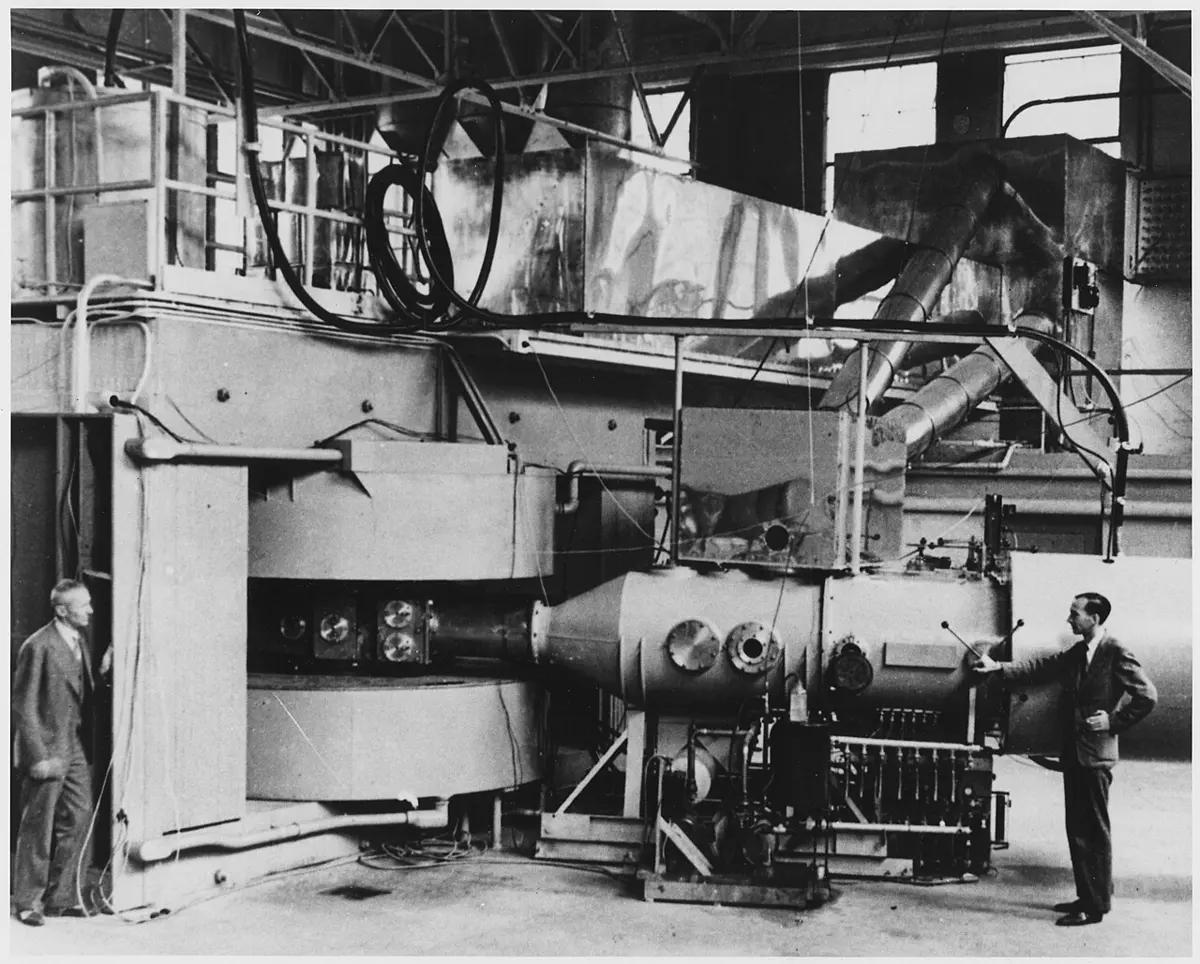
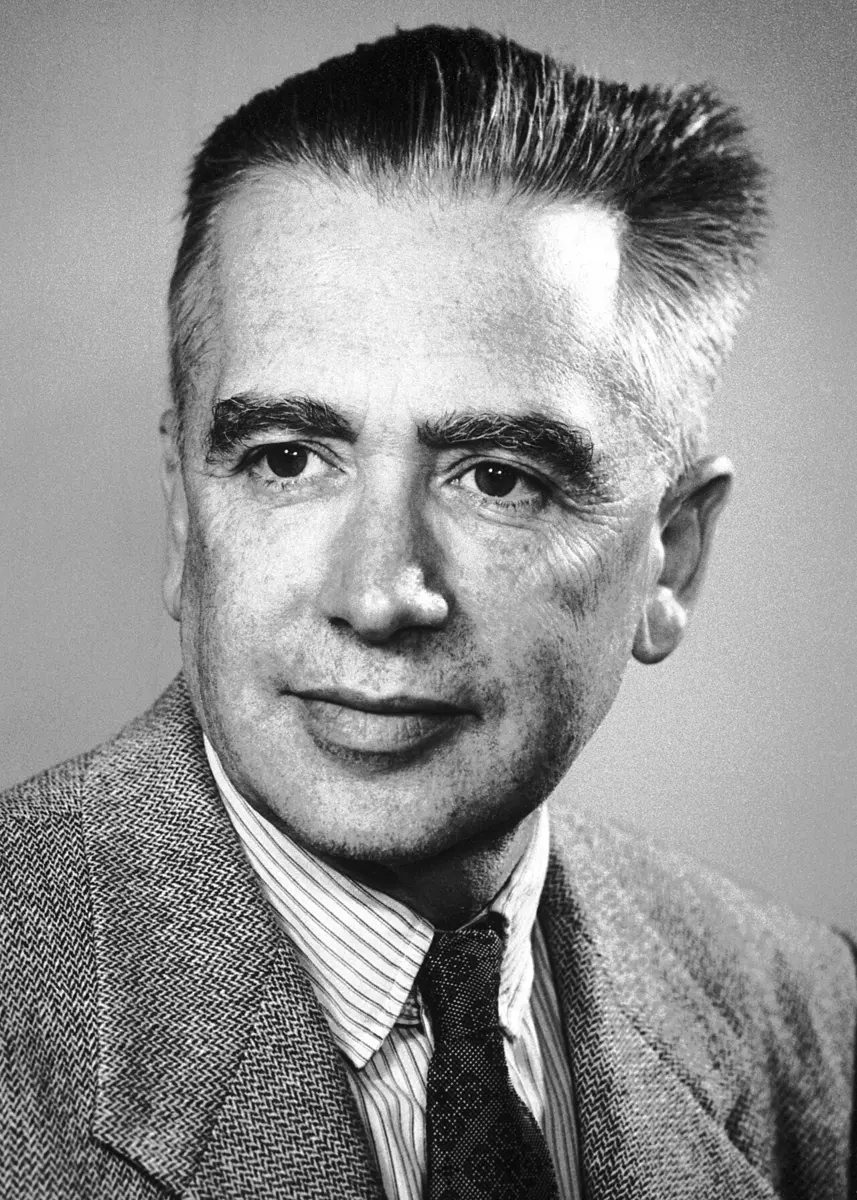
In 1940, at the University of California in Berkeley, Dale Corson, Kenneth MacKenzie and Emilio Segrè stopped searching and made it. In a cyclotron, a machine that speeds up charged particles, they fired alpha particles (helium nuclei) at the metal bismuth. A bismuth-209 nucleus (83 protons) that swallows an alpha particle (2 protons) becomes a nucleus with 85 protons: element 85. It throws out two neutrons and is left as astatine-211. This is still how astatine is made today.
The Second World War stopped their work, and only in 1947 did they suggest a name: astatine, from the Greek astatos, “unstable”. The symbol is At.
Where astatine is found
There is astatine in the ground right now, but almost none. Uranium and thorium in rocks break down step by step into lead (From uranium to lead), and a few rare side branches of those chains pass through astatine, which lasts less than a minute before decaying again. That makes astatine the rarest element found in nature. Estimates of how much is in the whole of the Earth’s crust at any moment range from less than a gram to about 30 grams.
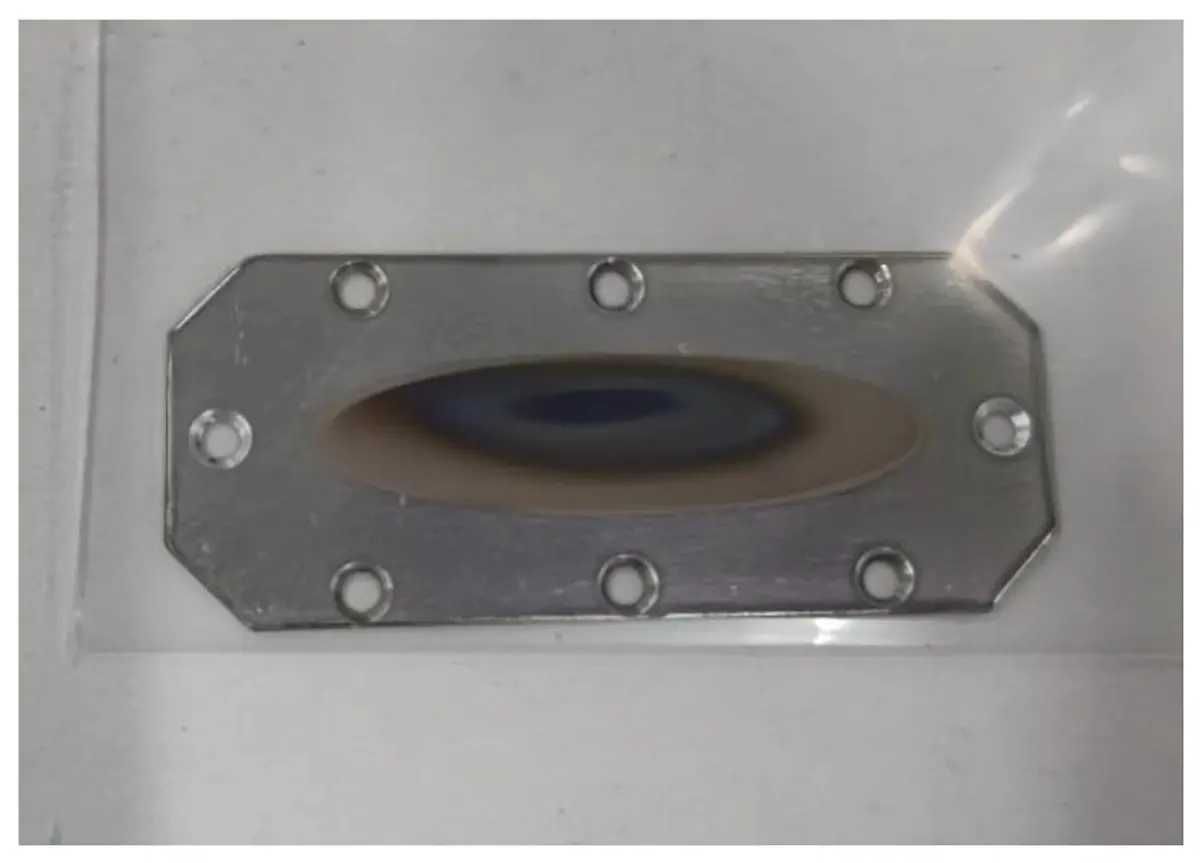
All the astatine used in laboratories is made in cyclotrons, a little at a time. One production run makes less than a millionth of a gram.
What we know, and what we only predict
A piece of astatine big enough to see would destroy itself: the heat from its radioactivity would turn it straight into vapor. So every experiment works with a few billion atoms or fewer, mixed in a liquid. That gives two kinds of fact:
- Measured: it is radioactive, and how fast each isotope decays; it forms the astatide ion, At⁻, and joins with iodine as astatine iodide, AtI; like iodine, it collects in the thyroid gland of animals; in 2013 a team at CERN measured the energy needed to pull one electron off an astatine atom.
- Predicted: what solid astatine looks like (probably dark, perhaps shiny like a metal), its melting point (about 300 °C) and its density. The facts card on this page shows these estimates. Some scientists even predict that solid astatine would be a metal, the first metal among the halogens.
Why has nobody ever seen a piece of astatine?
Pick an answer to see why.
Astatine against cancer
Astatine-211 halves every 7.2 hours and gives out alpha particles (Alpha decay). Inside the body, an alpha particle travels less than a tenth of a millimeter, only a few cells, but wrecks each cell it crosses.
Doctors want exactly that. If astatine is joined to a molecule that seeks out cancer cells, its alpha particles kill the cancer cells it sticks to and hardly reach the healthy cells around them. Because astatine behaves like iodine, the thyroid gland takes it up, so one of the first tests in patients, started in 2021 at Osaka University in Japan, gives astatine to people with thyroid cancer that ordinary treatment with radioactive iodine-131 did not cure.
In your science books
- Grade 8: the 2n² rule and non-metals in the periodic table.
- Grade 9: anions and radioactive elements.
- Grade 10: Mendeleev’s periodic table, electronic configuration, non-metals and reactivity down a group.
- Going further: alpha decay and from uranium to lead.
More to explore
- Nobel Prizes: the first radioactive atoms made by people (1935), the idea behind making astatine.
- Its relatives: iodine, above it in group 17, bismuth, from which it is made, and polonium, its neighbor; francium, the second-rarest element in nature.
- Play: find astatine in Guess the Element and the Periodic Table Jigsaw.
- Read more: astatine at the Royal Society of Chemistry and at PubChem.