
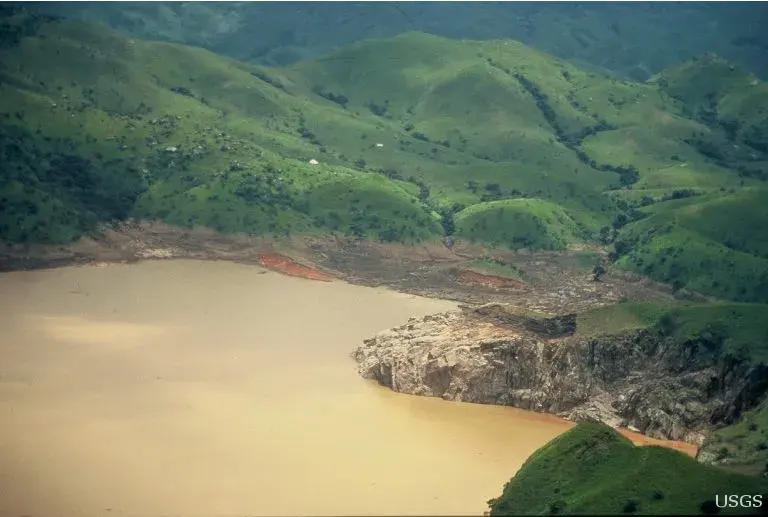
Every few months a Nepali newspaper carries the same sad story: a man climbs down an old well to clean it or to fix a pump, and collapses at the bottom. A friend climbs down to help him, and collapses too. The air at the top of the well was fine. What was waiting at the bottom?
The answer is a gas you breathe out about twenty times a minute: carbon dioxide. In this unit you will meet two gases that every chemistry lab makes, carbon dioxide and ammonia. You will learn how to make them, how to catch them (one sinks, one floats), how to tell which is which, and why the world couldn’t feed itself or put out a fire without them. Then we look at what carbon dioxide does to the whole planet: the greenhouse effect, and acid rain.
16.1 Carbon dioxide gas
Where carbon dioxide comes from
Carbon dioxide (CO₂) is made whenever something containing carbon burns: coal, wood, kerosene, fat, oil, candle wax, LPG. It is also made by the respiration of every plant and animal (including you), by volcanoes, and by the decay of dead plants and animals. Cutting down forests and burning fuels are the human-made sources that add the most.
Clean air is about 0.04% carbon dioxide by volume: about 425 parts per million, or 0.0425%, as of 2025. Sixty years ago it was about 0.03%; burning fuels has raised it.
| Fact | Carbon dioxide |
|---|---|
| Formula | CO₂ |
| Molecular mass | 12 + 2 × 16 = 44 |
| Mass of 1 liter (room temperature) | about 1.8 g (air: about 1.2 g) |
Laboratory preparation of carbon dioxide
In the lab, carbon dioxide is made by the reaction of limestone or marble (both are calcium carbonate, CaCO₃) with dilute hydrochloric acid:
calcium carbonate + dilute hydrochloric acid → calcium chloride + water + carbon dioxide
Check the balance atom by atom: Ca 1 = 1; C 1 = 1; O 3 = 1 + 2; H 2 = 2; Cl 2 = 2. ✓
Two precautions, and why:
- The bottom end of the thistle funnel must be under the acid. Otherwise the gas escapes up the funnel instead of going through the delivery tube. The acid acts as a door that lets acid in but no gas out.
- The end of the delivery tube inside the bottle must be above the acid (not dipped into it). Otherwise the gas pressure would push acid up the delivery tube and into the jar.
Carbon dioxide is collected in an upright gas jar by upward displacement of air. Why does this work?
Pick an answer to see why.
Tests for carbon dioxide
- A burning splint (or match) goes out. Carbon dioxide neither burns nor helps things burn. (But careful: nitrogen also puts out a flame, so this test alone doesn’t prove the gas is CO₂.)
- Damp blue litmus turns red. Carbon dioxide dissolves in the water on the paper and makes a weak acid, carbonic acid. Phenolphthalein stays colorless, because it turns pink only in a base.
- Lime water turns milky. This is the test that really proves it: of the common colorless, odorless gases, only carbon dioxide does it. (Sulphur dioxide turns lime water milky too, but you would know it at once by its sharp, choking smell.) Lime water is a clear solution of calcium hydroxide. Carbon dioxide reacts with it to make calcium carbonate, which doesn’t dissolve; its tiny white specks make the water look like milk.
Keep bubbling, and something surprising happens: the milkiness disappears. The extra carbon dioxide and water turn the chalky calcium carbonate into calcium hydrogencarbonate (calcium bicarbonate), which dissolves:
Properties of carbon dioxide
Physical properties
- It is a colorless and odorless gas.
- It dissolves only slightly in water (about one liter of the gas in one liter of water at room temperature). What dissolves makes carbonic acid, which tastes slightly sour: that is the bite of soda water.
- It is about 1.5 times heavier than air (44 ÷ 29 ≈ 1.5).
- It is an acidic oxide (the oxide of a non-metal): it turns damp blue litmus red.
- It is not poisonous in small amounts: you breathe it out all day. But in large amounts it is dangerous. It pushes oxygen out of a closed space, and at about 10% in the air it makes people unconscious within minutes, even before the oxygen runs out. (See the well story below.)
- Under high pressure and cooling, it turns into a liquid.
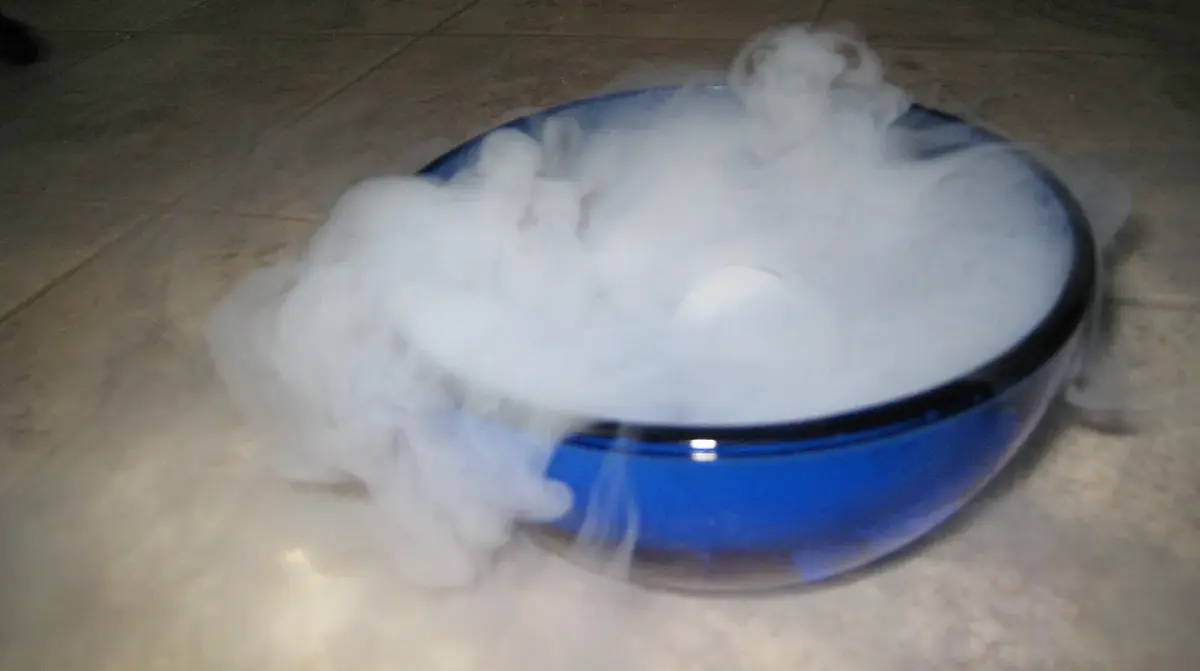
- Cooled below −78 °C, it becomes a white solid called dry ice. At normal air pressure, dry ice never melts into a liquid: it turns straight into gas. This is called sublimation, and that is why it is “dry”.
- It neither burns nor helps other things burn.
Chemical properties
- It doesn’t burn, and puts out most flames, but not burning magnesium. Burning magnesium is so hot that it can pull the oxygen out of carbon dioxide. It keeps burning in a jar of CO₂ with a brilliant white light, leaving white magnesium oxide and black specks of carbon. This shows that carbon dioxide contains carbon.
- It dissolves in water to form carbonic acid, a weak acid. In soft drinks, CO₂ is dissolved under high pressure; when you open the bottle, the pressure drops and the gas escapes as bubbles.
It turns lime water milky, and with more CO₂, clear again (the two equations above).
It is absorbed by alkalis. Fill a test tube with carbon dioxide, put in a few drops of potassium hydroxide solution, and turn it upside down in water. The water climbs up the tube: the KOH has taken the CO₂ out of the gas, the pressure inside falls, and the air pressing on the water outside pushes water in.
- Plants make food from it. In photosynthesis, green leaves use the energy of sunlight, caught by chlorophyll, to turn carbon dioxide from the air and water from the soil into glucose, and give out oxygen:
- With red-hot coke (carbon) at about 900–1000 °C it forms carbon monoxide, a poisonous gas. This happens in a coal stove or a brick kiln when air is short, and is why a makal (charcoal brazier) in a closed room can kill.
A gas puts out a burning splint. Which of these proves the gas is carbon dioxide?
Pick an answer to see why.
Uses of carbon dioxide
- Soft drinks and soda water: CO₂ is dissolved under high pressure to give the fizz and sour taste.
- Photosynthesis: green plants use it as the raw material for their food.
- Fire extinguishers (below).
- Dry ice keeps fruit, vegetables, meat, ice cream and medicines (some vaccines) cold, without leaving a wet mess.
- Sugar mills use it to purify sugar cane juice (the carbonation process): lime is added to the juice, and carbon dioxide bubbled in makes calcium carbonate, which carries the impurities down as it settles.
- Making chemicals: urea (NH₂CONH₂), washing soda (Na₂CO₃) and baking soda (NaHCO₃).
- Carbogen, a mixture of 95% oxygen and 5% carbon dioxide, was given to patients to make them breathe more deeply (for example after carbon monoxide poisoning). Doctors use it rarely today.
- Baking: bread and sel roti rise because carbon dioxide from yeast or baking powder makes bubbles in the dough.
The fire extinguisher
A fire needs three things: fuel, heat and oxygen. Take any one away and it goes out. Carbon dioxide, being heavier than air, settles over the fire like a blanket and keeps the oxygen away.
In the old soda-acid extinguisher, the cylinder holds a strong solution of sodium bicarbonate (sodium hydrogencarbonate). A small glass bottle of concentrated sulphuric acid hangs near the top, under a plunger. Strike the plunger, the bottle breaks, the acid mixes with the solution, and carbon dioxide is made so fast that it forces a jet of liquid and gas out of the nozzle onto the fire.
Check: Na 2 = 2; H 2 + 2 = 4 = 4; C 2 = 2; O 6 + 4 = 10 = 4 + 2 + 4; S 1 = 1. ✓
16.2 Ammonia gas
Open the door of a cowshed in the morning, or walk past a public toilet, and you’ll smell it: a sharp smell that stings your nose and makes your eyes water. That is ammonia (NH₃).
Ammonia is found in nature both free (as the gas) and combined (in salts such as ammonium chloride and ammonium sulphate). It is made when things containing nitrogen, such as urine, dung and dead plants and animals, decay without enough oxygen. Ammonia gas was first collected by Joseph Priestley in 1774, by heating ammonium chloride with lime; he called it “alkaline air”.
| Fact | Ammonia |
|---|---|
| Formula | NH₃ |
| Molecular mass | 14 + 3 × 1 = 17 |
| Compared with air (about 29) | lighter: 17 ÷ 29 ≈ 0.6 |
The molecular mass of ammonia (17) is less than that of nitrogen (28), oxygen (32) and carbon dioxide (44), so ammonia is lighter than air.
Laboratory preparation of ammonia
In the lab, ammonia is made by heating a mixture of ammonium chloride (NH₄Cl) and calcium hydroxide (slaked lime, Ca(OH)₂) in a hard-glass test tube.
ammonium chloride + calcium hydroxide → calcium chloride + water + ammonia
Check: N 2 = 2; H 8 + 2 = 10 = 4 + 6; Cl 2 = 2; Ca 1 = 1; O 2 = 2. ✓
The two are mixed in the ratio 2 : 1, as the equation says: two units of ammonium chloride for each one of calcium hydroxide.
Precautions, and why:
- The test tube slopes slightly down towards its mouth. The reaction makes water. If the tube sloped up, drops of cool water would run back onto the hot glass at the bottom and crack it.
- All the corks must be airtight, or the gas escapes into the room.
- The gas is dried by passing it through a lime tower (quicklime, calcium oxide, CaO, takes up water). Ammonia can’t be collected over water, because it dissolves in water extremely well: the water would swallow it.
Why is ammonia collected in a gas jar held upside down?
Pick an answer to see why.
Tests for ammonia
- Damp red litmus turns blue. Ammonia is the only common gas that is a base: it dissolves in the water on the paper and makes an alkali.
- White fumes with hydrochloric acid. Bring a glass rod dipped in concentrated hydrochloric acid near the mouth of the jar: thick white fumes appear. These are tiny specks of solid ammonium chloride, made where ammonia meets hydrogen chloride gas in the air:
Properties of ammonia
Physical properties
- It is a colorless gas with a strong, pungent (sharp, stinging) smell. Ammonia smells like a dirty toilet or a cowshed. (The rotten-egg smell is hydrogen sulphide, H₂S, a different gas.)
- It is lighter than air.
- It is extremely soluble in water: at 20 °C, one liter of water dissolves about 700 liters of ammonia gas.
- It is the only common basic gas: it turns damp red litmus blue.
- It turns into a liquid at −33.4 °C, and freezes to a solid at about −78 °C. Under pressure it becomes liquid at room temperature, which is how it is stored and sold.
Chemical properties
- It dissolves in water to make ammonium hydroxide (also called liquor ammonia or ammonia solution), a weak alkali:
- Ammonia reacts with acids to make ammonium salts, with nothing else formed:
- Ammonia solution reacts with acids to make a salt and water (neutralization):
- With carbon dioxide, at high temperature and pressure, it makes urea, the most used fertilizer in Nepal:
It needs two ammonia molecules, as the atom count shows: N 2 = 2, H 6 = 4 + 2, C 1 = 1, O 2 = 1 + 1. Factories run it at about 180–200 °C and 150 or more times the pressure of the air.
- It burns in pure oxygen (not in air) with a yellowish flame, making nitrogen and water:
- With a platinum catalyst at about 800 °C, ammonia and oxygen make nitric oxide (NO). This is the first step in making nitric acid:
Count the nitrogen atoms to check the balance: 4 on the left, so 4NO on the right.
- With molten sodium it makes sodamide and hydrogen:
Uses of ammonia
- Making fertilizers: urea, ammonium sulphate, ammonium nitrate, ammonium phosphate.
- Making nitric acid, plastics, nylon and explosives.
- Making washing soda (by the Solvay process, which uses ammonia and carbon dioxide).
- Making medicines of ammonium salts (ammonium chloride in some cough syrups; smelling salts that wake up someone who has fainted).
- Making blueprints of maps and building plans: in the diazo (“whiteprint”) copying process, ammonia vapor brings out the copied lines.
- As a refrigerant: liquid ammonia takes in a lot of heat when it evaporates. Large cold stores for potatoes, apples and meat, and ice factories, use ammonia. (Home fridges use other gases, such as isobutane or R-134a, because ammonia is poisonous if it leaks.)
- As a cleaning agent for grease and oil stains, as in some glass cleaners.
Activity 16.1: the ammonia fountain
Greenhouse effect
Have you noticed that a cloudy night is warmer than a clear night? Or that a car parked in the sun becomes much hotter inside than the air outside? Or seen the plastic tunnels on farms around Kathmandu, where tomatoes and cucumbers grow even in winter?
These houses of glass or transparent plastic, used to grow plants, are called greenhouses. Sunlight gets in easily, but the heat it brings can’t get out easily, so the inside stays warmer than the outside. Trapping the Sun’s heat in this way is called the greenhouse effect. Greenhouses can be artificial (made of glass or plastic) or natural: the whole Earth is a natural greenhouse.
The Earth as a natural greenhouse
Here is what happens to sunlight, step by step:
- The Sun is very hot, so most of its energy comes as short waves (visible light). Air lets these through easily. About 30% of the sunlight is reflected straight back to space by clouds, ice and the ground.
- The rest is absorbed by the ground and the sea, which warm up.
- The warm Earth gives out its energy again, but a much cooler body gives out long waves: invisible infrared rays (heat radiation, the warmth you feel from a hot iron without touching it).
- Some gases in the air absorb infrared rays, and send much of that energy back down to the ground. These are the greenhouse gases: water vapor, carbon dioxide (CO₂), methane (CH₄), nitrous oxide (N₂O), ozone (O₃) and chlorofluorocarbons (CFCs).
- So the ground is warmed twice: by the Sun, and by the heat sent back from the air.
A cloudy night is warmer for the same reason: clouds (water) absorb the infrared from the ground and send it back down, while on a clear night it escapes to space.
Consequences of a stronger greenhouse effect
- a.The average temperature rises (global warming).
- b.The water cycle changes: heavier rain in some places, droughts in others, more floods and landslides.
- c.Human health suffers: heat waves, and diseases like dengue and malaria spreading to places that used to be too cold for mosquitoes (dengue has reached the hills of Nepal, even Kathmandu).
- d.Farm harvests fall in many places.
- e.Snow and glaciers melt: Himalayan glaciers are shrinking, and new glacial lakes form behind walls of loose rock that could burst. (In 2016 the Nepal Army lowered Imja Lake, below Everest, by 3.4 m to make it safer.)
- f.Sea level rises, flooding low coasts and islands.
- g.Biodiversity declines as plants and animals can’t move or adapt fast enough.
- h.Deserts spread (desertification).
- i.Ecosystems lose their balance.
Artificial greenhouses
An artificial greenhouse, or hot house, is a building of transparent glass or plastic where plants are kept. Short-wave sunlight enters and is absorbed by the soil, the plants and the floor, which warm up and give out long-wave infrared. Glass doesn’t let much of the infrared through, so it stays inside as heat, and the temperature rises. This is the artificial greenhouse effect.
Why artificial greenhouses are useful
It is warm inside a greenhouse, so plants can be grown in any season, and farmers can earn more by selling vegetables out of season. Plants that would die in a cold climate, and rare plants of cold places, can be kept alive in them.
- a.Plants of any season can be grown all year round.
- b.Food crops can be grown in very cold places (in Mustang and Jumla, high in the mountains, plastic tunnels let farmers grow vegetables).
- c.Flowers, leafy green vegetables, fruits and seedlings can be produced.
- d.The plants inside take up carbon dioxide and so help, a little, against pollution.
- e.Summer crops can be grown in winter.
- f.Plants of the summer season can be grown in cold places too.
How the Earth is a natural greenhouse
The Earth is wrapped in air containing carbon dioxide, water vapor, ozone and other greenhouse gases. Like the glass of a greenhouse, they let sunlight in but don’t let all the heat escape back to space. So the Earth stays warmer than it otherwise would be. That is why the Earth is called a natural greenhouse.
Ways to reduce the greenhouse effect
To slow down global warming, we must make and release less of the greenhouse gases:
- Stop making and using chlorofluorocarbons. (This is largely done: under the Montreal Protocol of 1987, almost every country, Nepal included, has stopped making and importing CFCs, because they also destroy the ozone layer.)
- Use less petrol, diesel and coal, and more renewable energy.
- Promote hydroelectricity, solar and wind energy; Nepal makes almost all its electricity from water, so an electric vehicle or an induction stove in Nepal runs on clean energy instead of imported fuel.
- Plant trees, and protect forests (thanks largely to community forests, Nepal’s forest cover has grown from about 29% of its land in the mid-1990s to about 40% in the 2015 national forest survey).
- Reduce the release of carbon dioxide in every way: walk, cycle, use public transport, waste less.
On a clear winter night in Kathmandu the ground gets much colder than on a cloudy night. Why?
Pick an answer to see why.
Acid rain
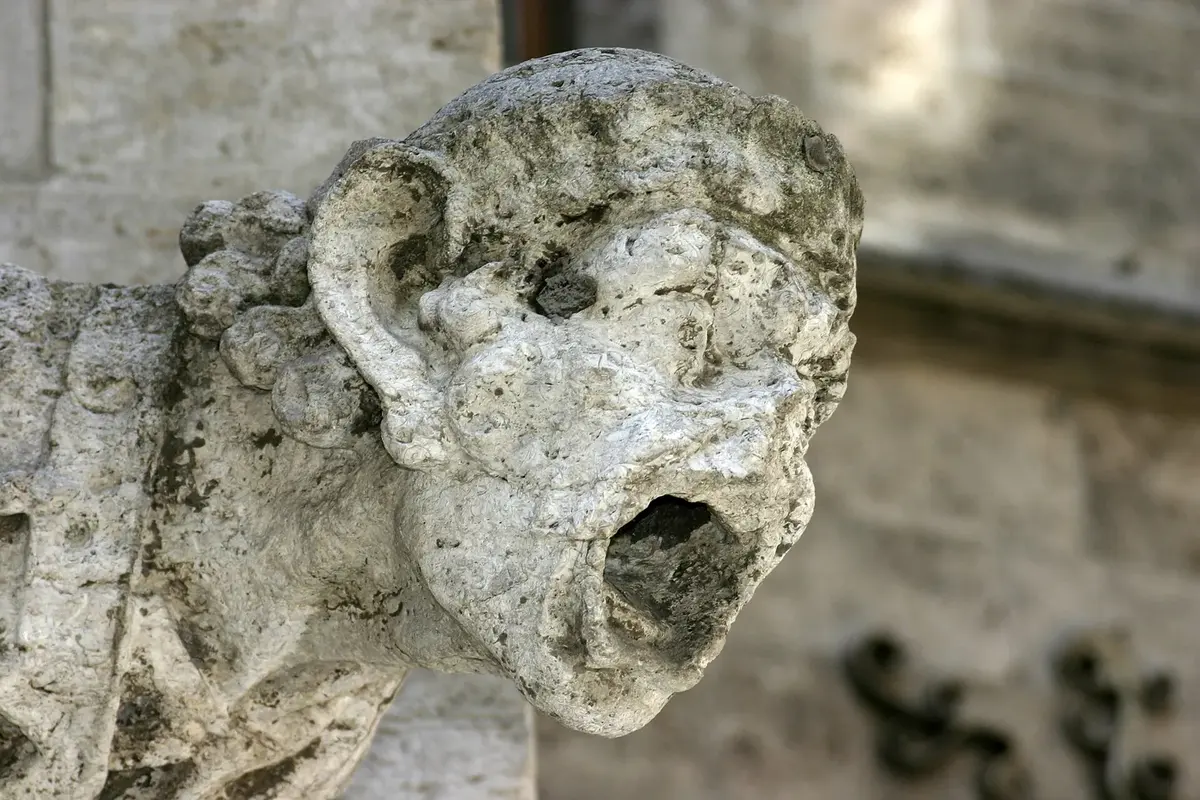
What happens if acid falls on a leaf, or on a marble statue? Stone temples and statues in many cities of the world are slowly losing their faces and fine carving. Why is this happening, and what can we do?
What acid rain is
Burning coal, diesel and other fuels, and some factories, release gases such as sulphur dioxide (SO₂), oxides of nitrogen (nitric oxide, NO, and nitrogen dioxide, NO₂, from hot engines and kilns; some books say “nitrous oxide”, but nitrous oxide, N₂O, is a greenhouse gas, not a cause of acid rain), carbon dioxide and chlorine. In the air these gases react with oxygen and water vapor to make acids: sulphuric acid, nitric acid, carbonic acid and hydrochloric acid. These acids come down with the rain. This is acid rain.
Even clean rain is slightly acidic, because it dissolves a little carbon dioxide from the air: its pH is about 5.6. Rain with a pH below 5.6 is called acid rain; it is usually between 4 and 5, and has been measured as low as 3 or less, as sour as vinegar.
Effects of acid rain
- It eats away buildings, temples and statues made of marble or limestone (calcium carbonate), and corrodes metal, such as iron bridges and the copper and brass of temple roofs:
The white marble of the Taj Mahal in India turned yellowish partly because of air pollution from factories and an oil refinery nearby; the government had to close or move many of them.
- 2.It makes the soil acidic, washing away the nutrients plants need, so crops and forests grow poorly.
- 3.It makes lakes and rivers acidic; fish eggs and many water animals die.
- 4.It can irritate the skin and eyes.
- 5.It harms human health in other ways: the same pollutant gases that make acid rain cause asthma and other lung diseases.
Ways to prevent acid rain
- Release less sulphur dioxide and oxides of nitrogen: use low-sulphur fuels, fit factories and power stations with scrubbers, and keep vehicle engines tuned (catalytic converters in car exhausts remove oxides of nitrogen).
- Use renewable energy (water, sun, wind) in place of fossil fuels.
- Raise awareness about the causes and effects of acid rain.
Exercise
1. Choose the correct option
a. What products are formed when limestone is heated to a high temperature using coal?
Pick an answer to see why.
b. Which of the following statements is true?
Pick an answer to see why.
c. Which compound is formed when carbon dioxide gas is passed through lime water for some time?
Pick an answer to see why.
d. In what ratio should ammonium chloride and calcium hydroxide be mixed for the laboratory preparation of ammonia gas?
Pick an answer to see why.
2. Give reasons
Carbon dioxide can be collected in an open gas jar.
Answer
Carbon dioxide (molecular mass 44) is about 1.5 times heavier than air (about 29). It sinks to the bottom of an upright jar and pushes the lighter air out at the top. It doesn’t rise and escape through the open mouth, so the jar fills with it, and it can be collected by the upward displacement of air.
The bottle of liquid ammonia should be placed in cold water or ice for some time before its lid is opened.
Answer
Ammonia is very soluble in water, but less soluble in warm water. In a warm bottle, ammonia gas comes out of the solution and builds up a high pressure under the lid; when the lid is opened, gas and solution can spurt out and hurt the eyes and nose. Cooling makes the gas dissolve back into the liquid, which lowers the pressure, so the bottle can be opened safely.
3. Answer the following questions
Describe the laboratory preparation of carbon dioxide with a labeled diagram.
Answer
Principle: carbon dioxide is made by the reaction of marble or limestone (calcium carbonate) with dilute hydrochloric acid:
Apparatus: Woulfe’s bottle, thistle funnel, delivery tube, rubber corks, gas jar.
Method: Put marble pieces in the Woulfe’s bottle. Fit the thistle funnel and the delivery tube airtight with corks. Pour dilute HCl through the thistle funnel until the marble and the end of the funnel are covered. The carbon dioxide made passes through the delivery tube into an upright gas jar, where it is collected by the upward displacement of air, as it is heavier than air.
Diagram: as in Figure 16.2, labeling the thistle funnel, dilute HCl, Woulfe’s bottle, marble pieces, delivery tube, gas jar and CO₂.
Precautions: the lower end of the thistle funnel must dip into the acid; the end of the delivery tube must be above the acid; the apparatus must be airtight.
Test: the gas turns lime water milky.
The figure shows the laboratory preparation of a gas from a Woulfe’s bottle with a thistle funnel, collected in an upright gas jar.
- i.Which gas is being collected in the gas jar?
- ii.Write a balanced chemical equation for the preparation of this gas.
- iii.Which litmus paper is used to identify the gas?
- iv.Why is this gas collected in a gas jar kept straight upright?
Answer
- i.Carbon dioxide.
- ii.
- iii.Damp blue litmus paper: it turns red, as CO₂ is an acidic gas. (The surer test is lime water turning milky.)
- iv.Because carbon dioxide is heavier than air. In an upright jar it settles at the bottom and pushes the air out at the top (upward displacement of air).
Write any three properties of carbon dioxide gas.
Answer
- It is a colorless, odorless gas, about 1.5 times heavier than air.
- It neither burns nor supports burning, so it puts out fires.
- It turns lime water milky, by forming insoluble calcium carbonate: .
(Also: it is an acidic oxide that turns damp blue litmus red; it is slightly soluble in water, forming carbonic acid; it forms dry ice below −78 °C.)
Write any four uses of carbon dioxide gas.
Answer
- To put out fires (fire extinguishers).
- In soft drinks and soda water, for fizz.
- As dry ice, to keep food and medicines cold.
- By green plants, to make food in photosynthesis.
(Also: making urea, washing soda and baking soda; purifying sugar; in baking.)
Describe the laboratory preparation of ammonia gas with a labeled diagram.
Answer
Principle: ammonia is made by heating a mixture of ammonium chloride and calcium hydroxide in the ratio 2 : 1:
Apparatus: hard-glass test tube, stand, burner, delivery tubes, corks, lime tower, gas jar.
Method: Put the mixture in the hard-glass test tube and clamp it sloping slightly down towards its mouth. Fit a cork and delivery tube leading to a lime tower filled with quicklime (CaO), which dries the gas. From the top of the tower, lead the gas into a gas jar held upside down. Heat gently. Ammonia, being lighter than air, collects in the inverted jar by the downward displacement of air.
Diagram: as in Figure 16.7, labeling the mixture of NH₄Cl and Ca(OH)₂, the hard-glass test tube, burner, stand, delivery tube, lime tower (CaO), inverted gas jar and ammonia.
Precautions: the test tube slopes downwards so water can’t run back and crack it; the apparatus is airtight; the gas is not collected over water, as it is very soluble.
Test: damp red litmus turns blue; a rod dipped in concentrated HCl gives white fumes.
The figure shows the preparation of a gas by heating a mixture in a sloping test tube, with a tower, and the gas collected in an inverted gas jar.
- i.Which gas is being collected in the gas jar?
- ii.Write the balanced chemical equation for the preparation of this gas.
- iii.Which litmus is used to identify this gas?
- iv.Why is the hard-glass test tube slightly inclined?
- v.What is the use of the lime tower?
Answer
- i.Ammonia.
- ii.
- iii.Damp red litmus: it turns blue, as ammonia is a basic gas.
- iv.So that the water formed in the reaction runs out towards the mouth instead of flowing back onto the hot bottom of the tube, which would crack it.
- v.The lime tower is filled with quicklime (calcium oxide), which absorbs the water vapor, so we get dry ammonia. (Quicklime is used because it is basic and doesn’t react with ammonia.)
Write any four uses of ammonia gas.
Answer
- To make fertilizers such as urea, ammonium sulphate and ammonium nitrate.
- As a refrigerant in cold stores and ice factories.
- To make nitric acid, plastics and washing soda.
- As a cleaning agent to remove grease and oil stains.
(Also: medicines of ammonium salts; blueprints.)
What happens in the following processes? Write with a balanced chemical equation.
- i.Carbon dioxide is passed through lime water for some time.
- ii.Carbon dioxide is passed through lime water for a long time.
- iii.A burning magnesium ribbon is put into a jar full of carbon dioxide.
- iv.A mixture of ammonium chloride and calcium hydroxide is heated.
- v.Ammonia is mixed with water.
- vi.Ammonia reacts with hydrochloric acid.
Answer
(i) The lime water turns milky, because insoluble calcium carbonate forms:
(ii) The milkiness disappears, because the calcium carbonate turns into soluble calcium hydrogencarbonate:
(iii) The magnesium keeps burning brightly, leaving white magnesium oxide and black specks of carbon:
(iv) Ammonia gas is given off, with calcium chloride and water:
(v) It dissolves readily, making ammonium hydroxide, a weak alkali:
(vi) Ammonium chloride forms; as gases, they make dense white fumes:
Practice every question in the book, and keep track of the ones you miss →