
- Atomic number
- 87
- Atomic mass
- 223.02
- Shells
- 2, 8, 18, 32, 18, 8, 1
- Configuration
- 1s² 2s² 2p⁶ 3s² 3p⁶ 4s² 3d¹⁰ 4p⁶ 5s² 4d¹⁰ 5p⁶ 6s² 4f¹⁴ 5d¹⁰ 6p⁶ 7s¹
- In the table
- period 7, group 1 (IA), s-block
- Kind
- Alkali metal
- Valency
- 1 (Fr⁺), like every alkali metal
- State at 25 °C
- solid
- Melts · boils
- 27 °C · not known
- Known since
- 1939
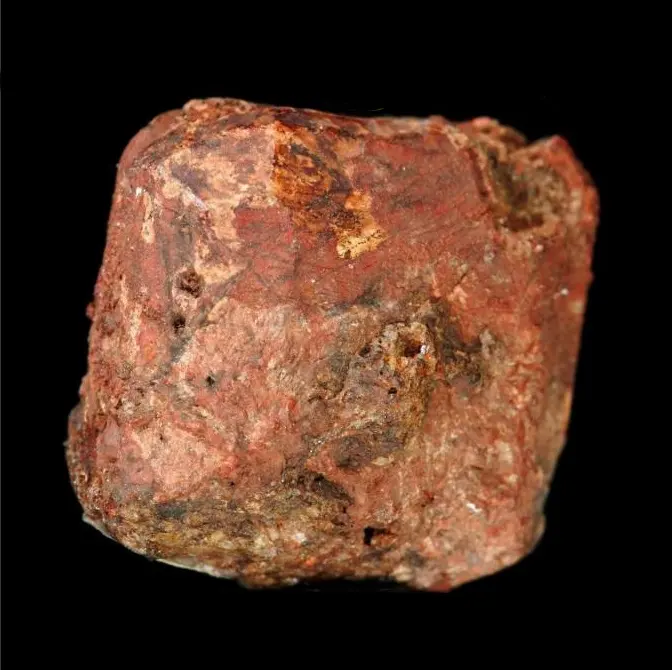
Your science book shows the alkali metals getting more and more reactive down group 1: lithium fizzes in water, sodium races around, potassium bursts into a lilac flame. At the very bottom of the group is the last of the family, francium. You might expect it to be the most spectacular of all. Nobody knows, because nobody has ever had enough francium to drop into water, or even to see.
Francium is so radioactive that half of any sample is gone in 22 minutes. Most of what is said about it as a metal is predicted, not measured. But its story includes one of the great finds of 20th-century chemistry, made by a young laboratory assistant without a university degree.
The francium atom
A francium atom has 87 protons, so its atomic number is 87, and 87 electrons. Every kind of francium atom is radioactive. The longest-lasting, francium-223, has 136 neutrons: 87 + 136 = 223.
The electrons fill seven shells: 2, 8, 18, 32, 18, 8, 1 Grade 8: Bohr and Bury’s rule. In subshells Grade 10: The Aufbau principle, it ends:
… 6s² 4f¹⁴ 5d¹⁰ 6p⁶ 7s¹
- Period 7, because its electrons are in seven shells.
- Group 1, called IA in the older naming, because it has one outer electron (7s¹).
- s-block, because its last electron goes into an s subshell.
Like lithium, sodium, potassium, rubidium and cesium above it, francium gives away its single outer electron to form the ion Fr⁺: its valency is 1 Grade 9: Cations.
How are francium’s 87 electrons arranged in shells?
Pick an answer to see why.
How francium was found and named
Mendeleev left a space below cesium, and chemists called the missing metal eka-cesium. Through the 1920s and 1930s, several scientists claimed to have found it in minerals and gave it names of their own countries. All of them were wrong.
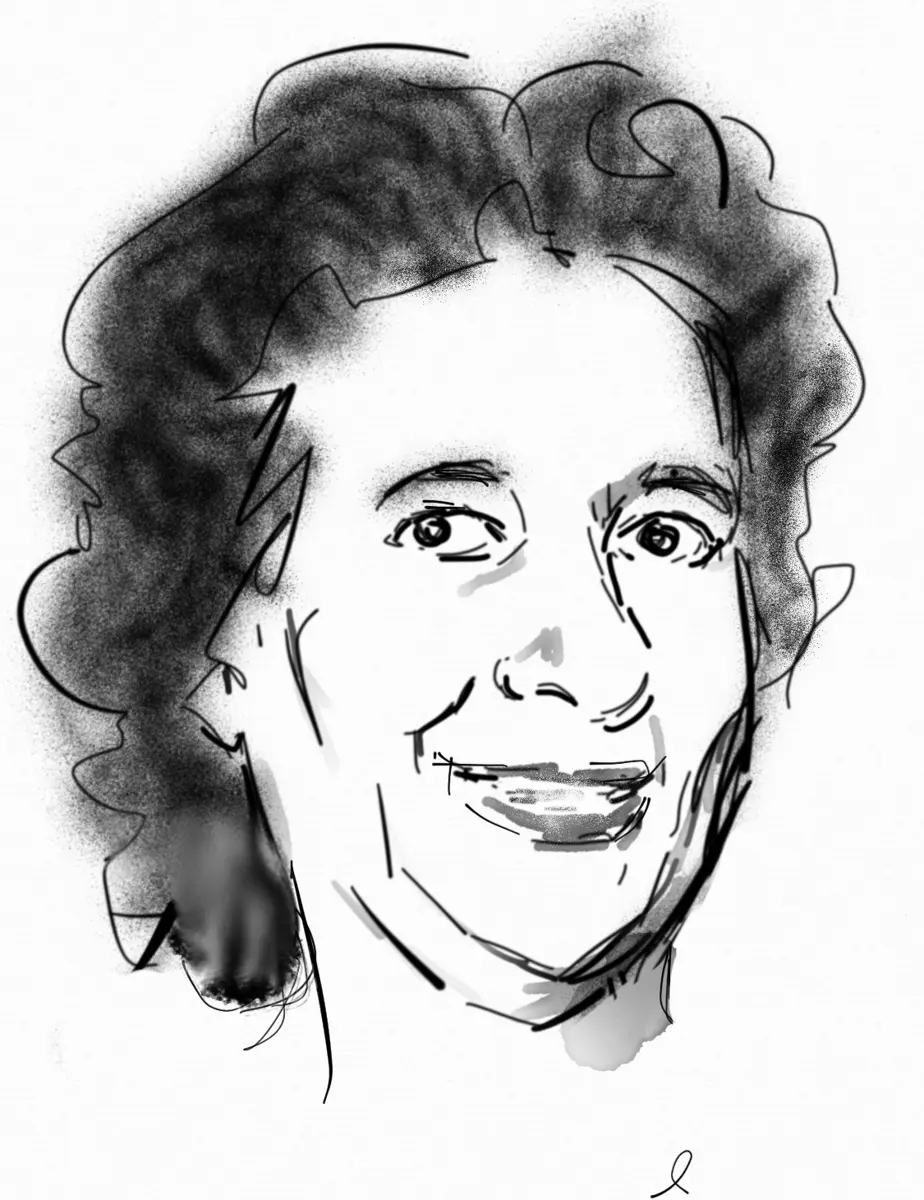
The real discovery came from Marguerite Perey, at the Radium Institute in Paris. She joined it in 1929, at 19, as Marie Curie’s assistant, with only a technician’s diploma, and spent years purifying the radioactive metal actinium. In 1939 she noticed something odd: right after her actinium had been made completely pure, rays appeared from it that actinium itself does not give. Something new was being born from it and decaying within minutes.
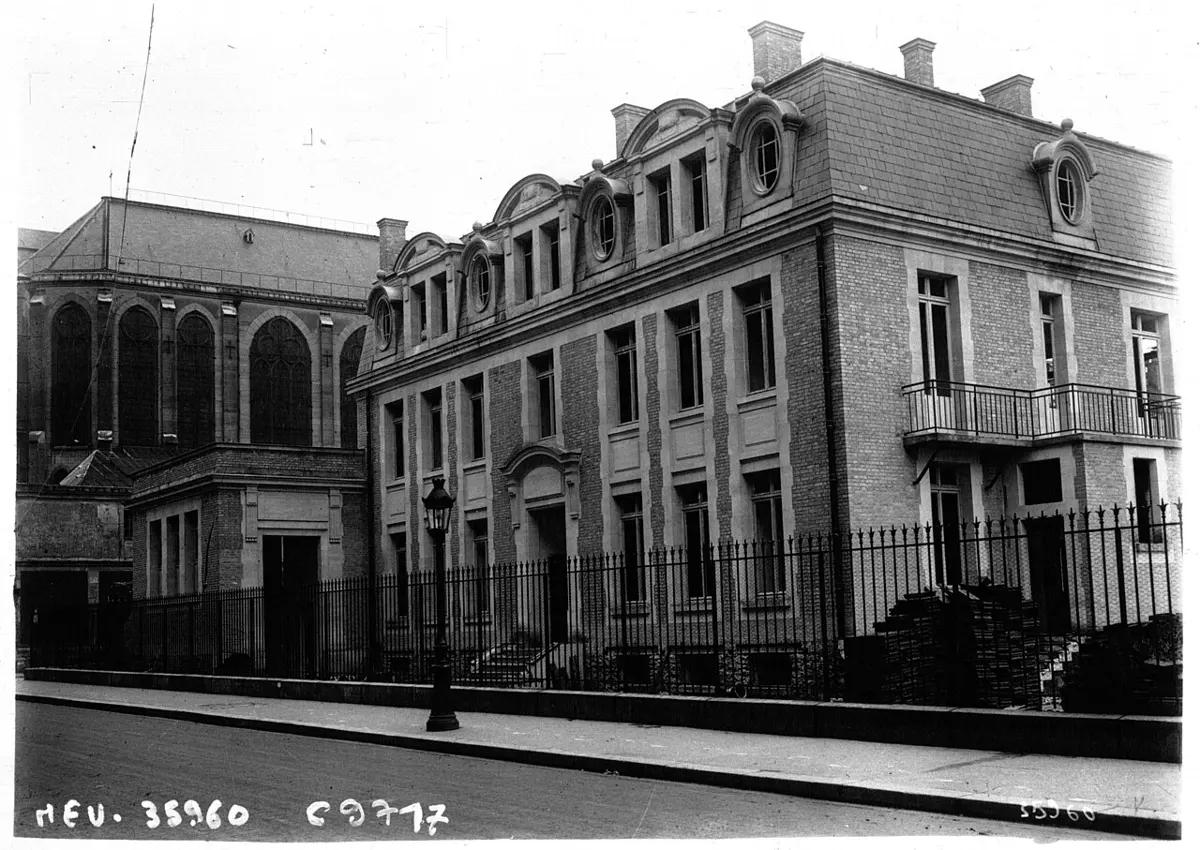
She showed that a small share of actinium atoms decay by throwing out an alpha particle, 2 protons and 2 neutrons (Alpha decay). That takes actinium, element 89, down to element 87. The new substance behaved like cesium in every test: it was the missing alkali metal.
Perey named it francium, after France, her country. The symbol is Fr. It was the last element discovered in nature: every element found since has first been made by people.
Where francium is found
All the francium on Earth is made fresh, in rocks that hold uranium. Uranium-235 breaks down step by step into lead, and one of its steps is actinium, whose rare alpha branch makes francium (From uranium to lead). Each francium atom lasts only minutes, so at any moment there is very little: about 30 grams in the whole of the Earth’s crust by the usual estimate, though some sources give more. Only astatine is rarer.
For experiments, physicists make francium in particle accelerators, for example by firing oxygen nuclei at gold. In the mid-1990s a team at Stony Brook University in the USA caught thousands of francium atoms at a time in a trap made of laser beams and magnets: a glowing cloud smaller than a pinhead. Later traps have held over a million atoms, still far too little to weigh.
What we know, and what we only predict
- Measured: how fast it decays; that it behaves in solution like the other alkali metals, coming down with cesium salts; and, from the light its atoms give out, how much energy it takes to pull off its outer electron.
- Predicted: that it is a metal, how it looks, and its melting point (estimates run from about 8 °C to 27 °C, so it might even be a liquid on a warm day), its density and how it would react with water. The facts card on this page shows such estimates.
One measured fact upset the expected pattern. Down group 1, the outer electron is farther and farther from the nucleus, so it gets easier to pull off, and the metals get more reactive Grade 10: Reactivity down a group. By that rule francium should be the most reactive metal of all. But francium’s outer electron turns out to be held a little more tightly than cesium’s. In so heavy an atom, electrons close to the huge nucleus move at more than half the speed of light. An effect explained by Einstein’s theory of relativity then draws francium’s outer s electron in closer, and holds it more firmly. So the title of the most reactive metal probably stays with cesium.
Why is cesium, not francium, probably the most reactive metal?
Pick an answer to see why.
Uses and safety
Francium has no uses outside research: it decays too fast and there is far too little. Physicists study the light from trapped francium atoms to test the laws of physics with great precision. Like every strongly radioactive substance it would be harmful in the body, but no one outside a laboratory will ever meet it.
In your science books
- Grade 8: the 2n² rule and metals in the periodic table.
- Grade 9: cations, very reactive metals and water and radioactive elements.
- Grade 10: Mendeleev’s periodic table, electronic configuration, the alkali metals and reactivity down a group.
- Going further: alpha decay and from uranium to lead.
More to explore
- Nobel Prizes: hunting elements by their rays (1911), Marie Curie’s, whose laboratory Perey worked in.
- Its relatives: cesium, above it in group 1, actinium, from which it is born, radium, into which it decays, and astatine, the only rarer element in nature.
- Play: find francium in Guess the Element and the Periodic Table Jigsaw.
- Read more: francium at the Royal Society of Chemistry and at PubChem.