
- Atomic number
- 60
- Atomic mass
- 144.24
- Shells
- 2, 8, 18, 22, 8, 2
- Configuration
- 1s² 2s² 2p⁶ 3s² 3p⁶ 4s² 3d¹⁰ 4p⁶ 5s² 4d¹⁰ 5p⁶ 6s² 4f⁴
- In the table
- period 6, group none (f-block), f-block
- Kind
- Lanthanide
- Valency
- 3 (Nd³⁺)
- State at 25 °C
- solid
- Melts · boils
- 1,021 °C · 3,074 °C
- Density
- 7.0 × as heavy as water
- Known since
- 1885
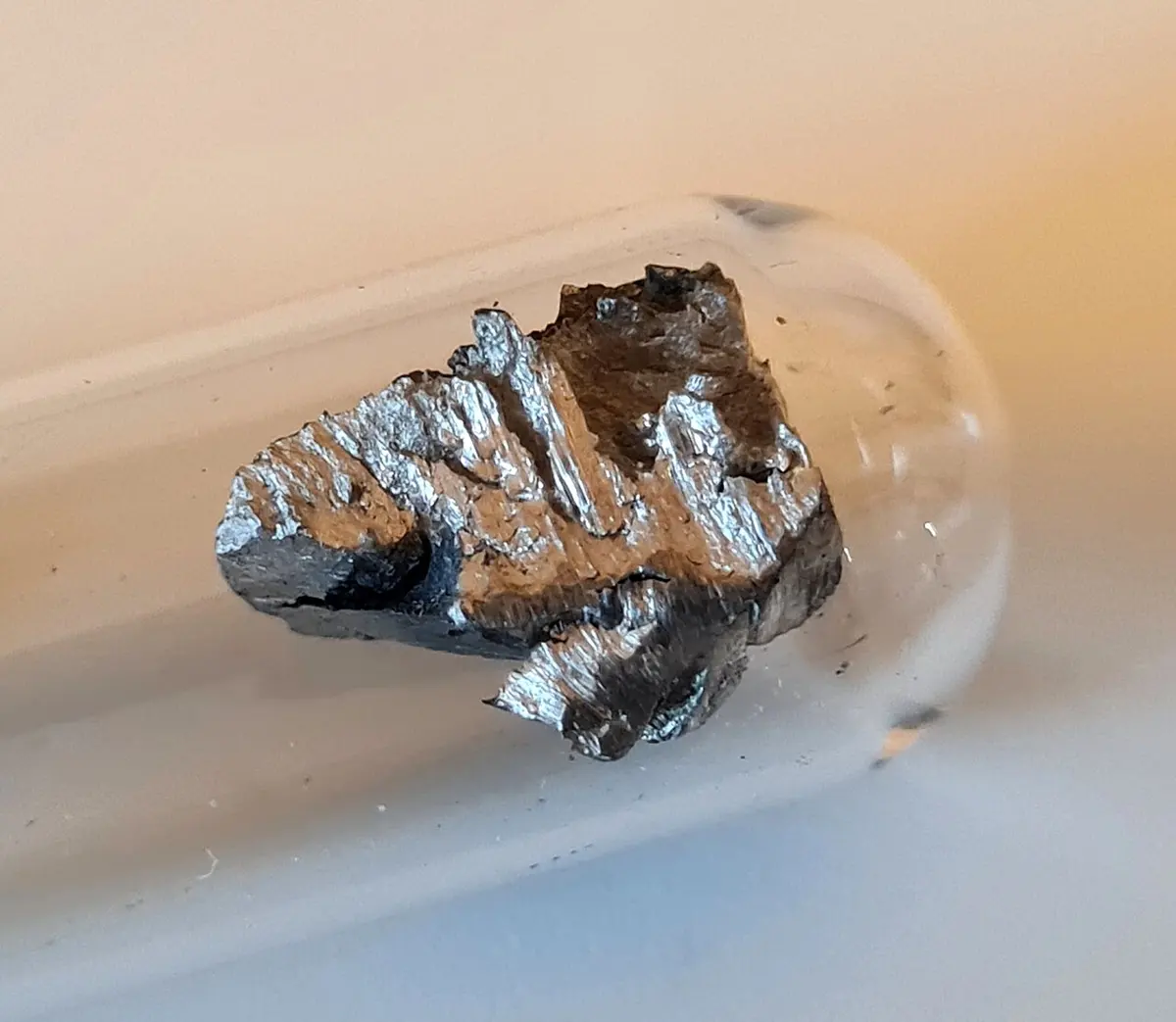
Put your earbuds in and press play. The sound comes from a tiny loudspeaker, and at its heart is a magnet smaller than a grain of rice. It is a neodymium magnet (say nee-oh-DIM-ee-um), the strongest kind of permanent magnet there is. The same magnets spin the motors of electric cars, turn the generators of many wind turbines and swing the arm that reads a computer’s hard disk.
Neodymium is the fourth lanthanide, one of the fifteen near-twin elements of lanthanum’s row. This page is about what makes it special: its magnets.
The neodymium atom
A neodymium atom has 60 protons and 60 electrons. Natural neodymium is a mixture of seven kinds of atom (isotopes); the commonest, about 27% of them, is neodymium-142, with 82 neutrons: mass number 60 + 82 = 142.
By shells its electrons are 2, 8, 18, 22, 8, 2. In subshells Grade 10: The Aufbau principle it ends 6s² 4f⁴: four electrons in the 4f subshell, deep inside the atom, and none in 5d, as in praseodymium before it.
The 4f subshell has seven boxes (orbitals). Electrons go into empty boxes one at a time before any box takes a second, and these unpaired electrons all spin the same way. Every spinning electron is a tiny magnet, so an atom with many unpaired electrons is a strong little magnet itself. That is where neodymium’s magnetic power begins.
How are neodymium’s 60 electrons arranged in shells?
Pick an answer to see why.
Its place and valency
- Period 6, the fourth lanthanide (f-block), between praseodymium (59) and promethium (61). Why all fifteen are so alike: fifteen near-twins.
- It loses its two 6s electrons and one 4f electron to become Nd³⁺: its valency is 3 Grade 9: Cations. So its oxide is Nd₂O₃ and its chloride NdCl₃ Grade 9: The criss-cross method.
How neodymium was found and named
In 1841 the Swedish chemist Carl Gustaf Mosander took an earth he called didymium, “the twin”, out of lanthana (the whole family tree is on the lanthanum page). For forty years it was listed as an element. Then, in 1885 in Vienna, Carl Auer von Welsbach crystallized didymium’s salts again and again, until they parted into a green salt and a pink one (the story). The green part was praseodymium. The larger, pink part he called neodidymium, the “new twin”, from the Greek neos, new, and didymos, twin, soon shortened to neodymium, symbol Nd.
Fairly pure neodymium metal was first made in 1925.
Where neodymium is found
In the universe, like its neighbors, it is made in stars by catching neutrons (Catching neutrons).
In the Earth’s crust there are about 41 grams in every tonne of rock, slightly more than lanthanum, and it is the second commonest rare earth after cerium. It is mined with the other light rare earths from bastnäsite and monazite (where the rare earths come from). In 2025 China mined about 70% of the world’s rare earths (USGS, 2026), and it does most of the separating and refining too. Because magnets need so much of it, neodymium is one of the costly lanthanides: in 2025 a kilogram of neodymium oxide cost about 73 US dollars, against about 1 dollar for lanthanum oxide (USGS, 2026).
In Nepal and in your body. Nepal mines no rare earths. Your body has no use for neodymium.
What neodymium is like and how it reacts
- A silvery metal that soon tarnishes in air. The oxide flakes off and lets the air reach fresh metal, so it is kept under oil or sealed away. Density 7.01 g/cm³, about the same as iron.
- Burns when heated, to neodymium oxide Grade 9: Metals react with oxygen:
4Nd + 3O₂ → 2Nd₂O₃ - Reacts with water, slowly when cold, faster when hot Grade 9: Very reactive metals and water:
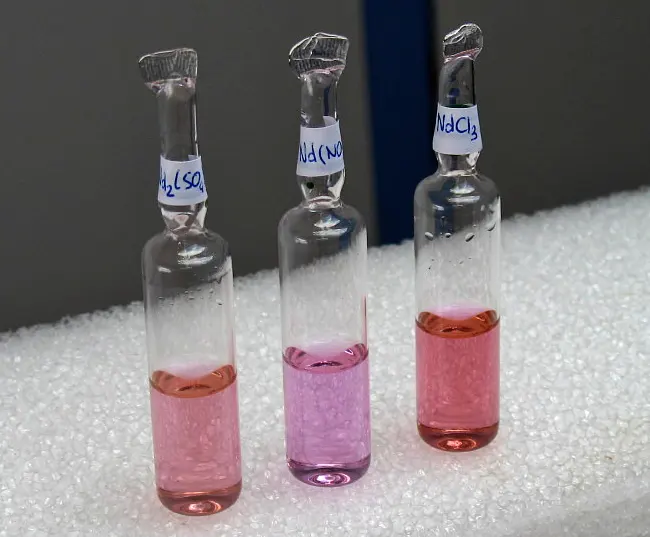
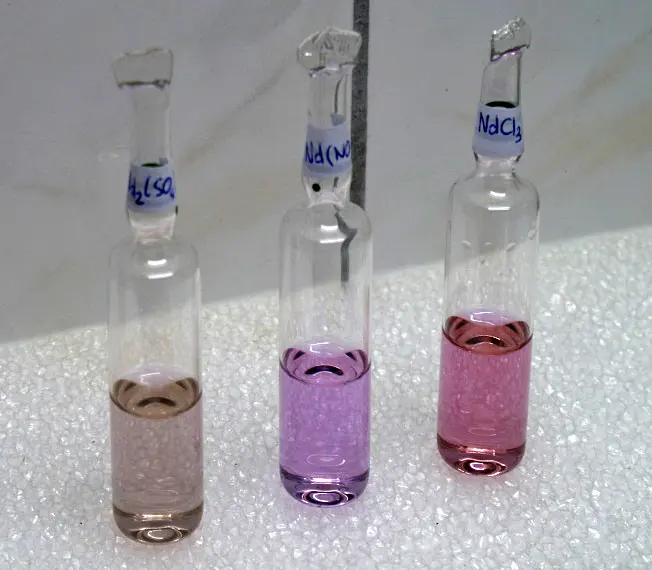
2Nd + 6H₂O → 2Nd(OH)₃ + 3H₂ - Its salts are pink to violet, the color Auer von Welsbach saw. Like praseodymium’s green, it comes from the 4f electrons of Nd³⁺, which soak up a few narrow bands of color, mostly yellow and green.
The bands are so narrow that neodymium salts and glass change color with the light. Under sunlight, which has every color, they look violet-pink. Under some fluorescent tubes, whose light is a few bright colors, what is left after they take out their bands is different, and the same solutions can look gray, violet or pink.
Neodymium has a valency of 3. What is the formula of neodymium oxide?
Pick an answer to see why.
The strongest magnets
A permanent magnet keeps its magnetism Grade 8: Natural and artificial magnets. Inside it, the tiny magnets of its atoms all point the same way Grade 8: Molecular theory of magnetism. For a strong one you need two things:
- Many tiny magnets in each atom. Iron is good at this.
- A material that holds them in line, so that they don’t swing round when the magnet is knocked, heated or pushed by another magnet. Iron alone is poor at this: it is easy to magnetize and just as easy to demagnetize, which is why soft iron is used in electromagnets.
In 1982, at the company Sumitomo in Japan, Masato Sagawa found a compound that does both: Nd₂Fe₁₄B, two neodymium atoms for every fourteen iron atoms and one boron atom. He announced it in 1983. John Croat, at General Motors in the United States, had found the same compound on his own at about the same time. The iron gives the strength. The neodymium atoms, with their 4f electrons, make the crystal hold that magnetism along one direction and resist being turned. A neodymium magnet is about two-thirds iron, nearly a third neodymium (often with some praseodymium in its place) and only about 1% boron.
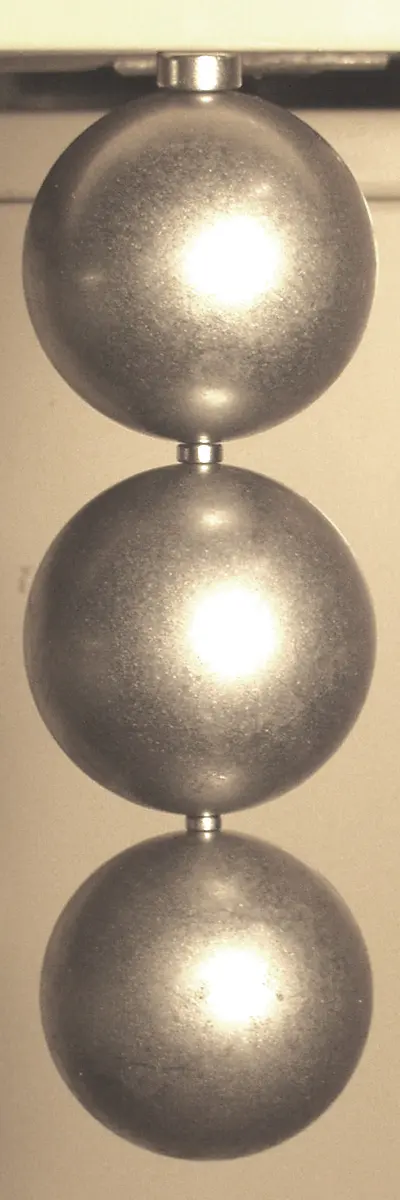
So a small neodymium magnet does the work of a much bigger old one, and that made many things possible:
- Earbuds, headphones, phone speakers and microphones, small and light.
- Hard disks: a pair of neodymium magnets swings the arm that reads the disk (how hard disks are read).
- Electric motors Grade 10: The electric motor in many electric cars, like those you see more and more of on Nepal’s roads, and in e-bikes, drones, fans and washing machines. A stronger magnet gives a smaller, lighter, more efficient motor.
- Generators of many wind turbines Grade 10: The a.c. generator, and smaller, cheaper MRI scanners in hospitals.
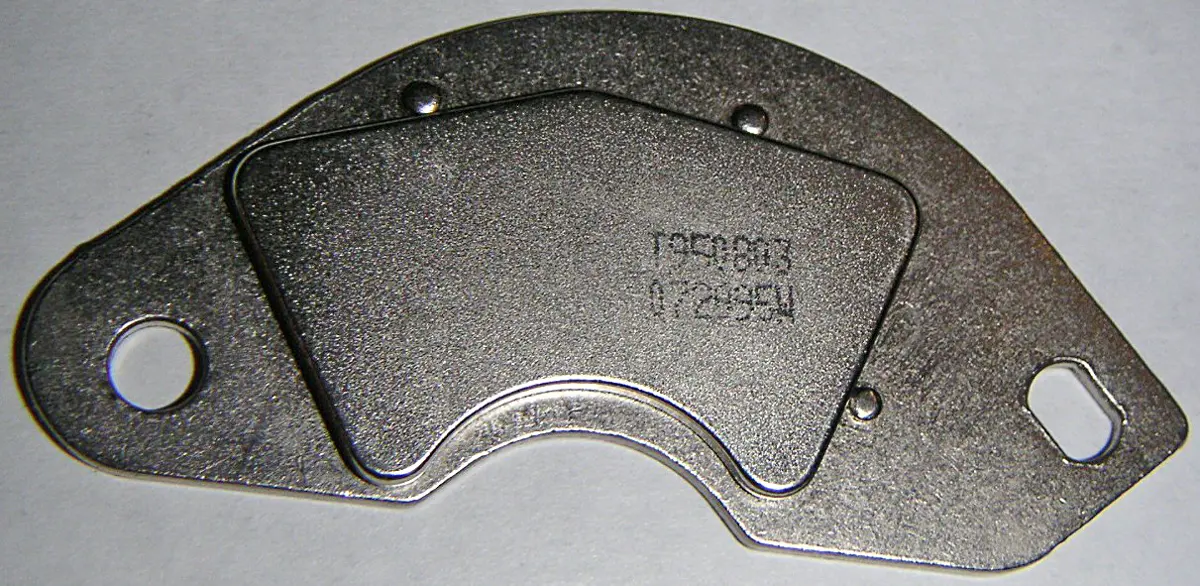
Neodymium magnets have two weak points. They rust easily, so they are nearly always plated with a thin coat of nickel (that is why they look silvery) or zinc. And they lose their magnetism when heated Grade 8: Demagnetization by heating: ordinary ones above about 80 °C. For the hot motors of cars, a little of the neodymium is replaced by dysprosium or terbium, two heavier lanthanides, and such magnets work up to about 200 °C. For hotter places still, engineers use samarium–cobalt magnets.
Glass and lasers
Neodymium gives glass a soft violet color that changes with the light, and with praseodymium it makes the goggles of glassblowers. A crystal with a little neodymium in it makes the Nd:YAG laser, used to cut metal and in eye surgery (yttrium’s lasers).
Isotopes and health
Natural neodymium has seven isotopes, from neodymium-142 (27%) to neodymium-150 (6%), so its atomic mass, 144.24, is an average and not close to a whole number Grade 9: Atomic mass. Two of them, neodymium-144 and neodymium-150, are radioactive, but so slowly that their half-lives are more than a hundred thousand times the age of the universe. One of them, neodymium-143, grows very slowly in rocks from the decay of samarium, which lets geologists date them (samarium’s rock clock).
Neodymium has no known job in the body. Its compounds are only mildly harmful; its dust can irritate the eyes, and fine powder of the metal can catch fire.
In your science books
- Grade 8: natural and artificial magnets, the molecular theory of magnetism and demagnetization by heating.
- Grade 9: cations, the criss-cross method, atomic mass and metals and water.
- Grade 10: the Aufbau principle, the lanthanides, the electric motor and the a.c. generator.
- Going further: what makes a magnetic push stronger, how magnets push without touching and where neodymium is made.
More to explore
- Nobel Prizes: giant magnetoresistance (2007, reading the hard disks that neodymium magnets help to run) and neural networks (2024, ideas borrowed from the tiny magnets inside materials like these).
- See magnets at work at Science Playground: the Magnetic Braking and Magnetic Pull exhibits.
- Its neighbors: praseodymium, its twin, before it, promethium after it, samarium with the other rare-earth magnet, and lanthanum, with the story of the whole row.
- Play: find neodymium in Guess the Element, the Periodic Table Jigsaw and Higher or Lower.
- Read more: neodymium at the Royal Society of Chemistry and at PubChem.