
- Atomic number
- 30
- Atomic mass
- 65.38
- Shells
- 2, 8, 18, 2
- Configuration
- 1s² 2s² 2p⁶ 3s² 3p⁶ 4s² 3d¹⁰
- In the table
- period 4, group 12 (IIB), d-block
- Kind
- Transition metal
- Valency
- 2 (Zn²⁺)
- State at 25 °C
- solid
- Melts · boils
- 420 °C · 907 °C
- Density
- 7.1 × as heavy as water
- Known since
- 1746
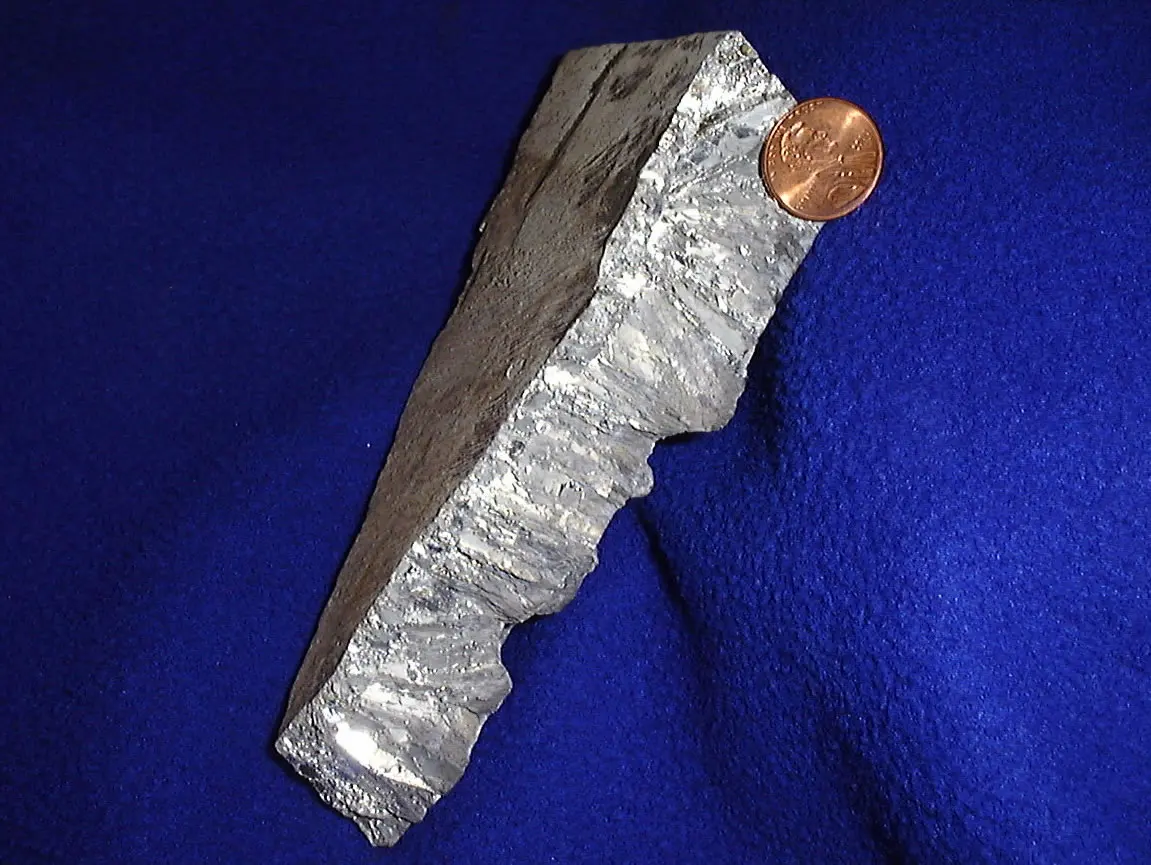
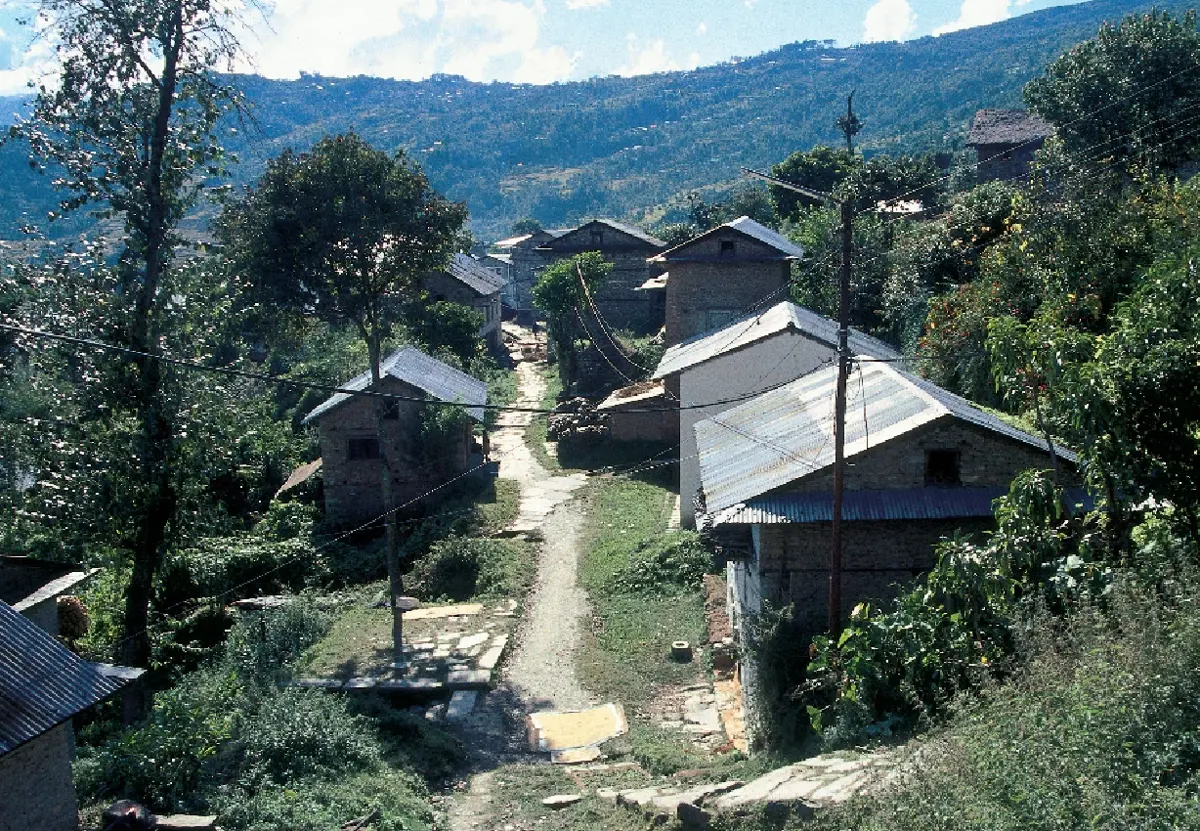
Look up at the roofs of a village in the hills, or the sheds of a city bazaar: many of them are जस्तापाता, the wavy gray roofing sheets. They are thin sheets of steel, but the gray coat that keeps them from rusting is zinc, and जस्ता is Nepali for zinc. The same metal is inside a torch battery, mixed with copper in a brass (पित्तल) gagri, and in the tablets doctors give children with diarrhea.
Zinc is the fourth most used metal in the world, after iron, aluminium and copper. Here is its story.
The zinc atom
A zinc atom has 30 protons, so zinc’s atomic number is 30, and 30 electrons. The commonest kind of zinc atom has 34 neutrons, so its mass number is 30 + 34 = 64.
By the 2n² rule Grade 8: Bohr and Bury’s rule the K, L and M shells fill up with 2, 8 and 18 electrons, and the last 2 go into the N shell: 2, 8, 18, 2.
In subshells Grade 10: The Aufbau principle, 4s fills before 3d, and zinc is exactly what the rule predicts:
1s² 2s² 2p⁶ 3s² 3p⁶ 4s² 3d¹⁰
Zinc is the element that completes the 3d subshell: all ten places are full. (Copper, just before it, borrows an electron from 4s to fill 3d; zinc doesn’t need to.)
How many electrons are in the outermost shell of a zinc atom?
Pick an answer to see why.
Its place in the periodic table
- Period 4, because its electrons are in four shells. It sits between copper (29) and gallium (31).
- Group 12, called IIB in the older naming many books use.
- d-block, because its last electrons went into a d subshell.
Your books count zinc among the transition metals, groups IIIB to IIB Grade 10: Metals, and that is the answer to give in an exam. Some chemists leave zinc out, because its d subshell is always full, so it behaves more simply than iron or copper: it is the only transition metal in your books with just one valency.
Below zinc in group 12 are cadmium and mercury. All three have full d subshells and two outer s electrons, and all three melt at low temperatures for metals (mercury is even a liquid).
A zinc atom gives away its two outer electrons and becomes the zinc ion, Zn²⁺: 30 protons and 28 electrons. So zinc’s valency is 2, always Grade 8: Valency: ZnO, ZnCl₂, ZnSO₄, Zn(NO₃)₂.
How zinc was found and named
People used zinc long before they could make it. The Romans made brass by heating copper with a zinc ore, calamine, and charcoal: zinc vapor from the ore soaked into the copper and turned it yellow. But nobody could collect the zinc itself. Why?
To get zinc out of its oxide, you heat it with carbon to over 1,000 °C. But zinc boils at 907 °C. So in an ordinary furnace the zinc comes off as a vapor, meets the air, and burns straight back into zinc oxide. Zinc escapes as a gas before anyone can catch it.
Metalworkers in India solved this. At Zawar, in Rajasthan, they packed zinc ore and charcoal into hundreds of small clay retorts (closed pots), turned them upside down over a cooler chamber and heated them. The zinc vapor went down into the cool chamber and condensed into metal, out of reach of the air: a distillation Grade 10: Distillation. Huge heaps of used retorts show that zinc was made there on a large scale from about the 12th century to the 1500s. China was making zinc in large amounts by the 1500s too, and Europe bought Asian zinc for years before it could make its own.
In Europe, the German chemist Andreas Marggraf made pure zinc in 1746 and showed that it was a new metal, so 1746 is often given as zinc’s date of discovery.
The name. The Swiss doctor Paracelsus wrote of zincum in the 1500s. It may come from the German Zinke, a prong or tooth, after the spiky crystals zinc forms; another idea is the Persian sing, stone. Nobody is sure. The symbol Zn comes from the same name. Nepali’s जस्ता comes from Sanskrit जसद, zinc, and a corrugated roofing sheet is a जस्तापाता (or simply a जस्ता).
Where zinc is found
In the universe. Like copper, zinc was made inside stars and in the explosions at the end of their lives (Heavier than iron).
In the Earth’s crust. Zinc is fairly common: about 70 grams in every tonne of ordinary rock, more than copper. Its main ore is zinc blende, or sphalerite, zinc sulphide (ZnS), usually found together with galena, lead sulphide (PbS). Another is calamine, zinc carbonate (ZnCO₃). In 2024 the world mined about 12 million tonnes of zinc, a third of it in China; Peru, Australia and India came next.
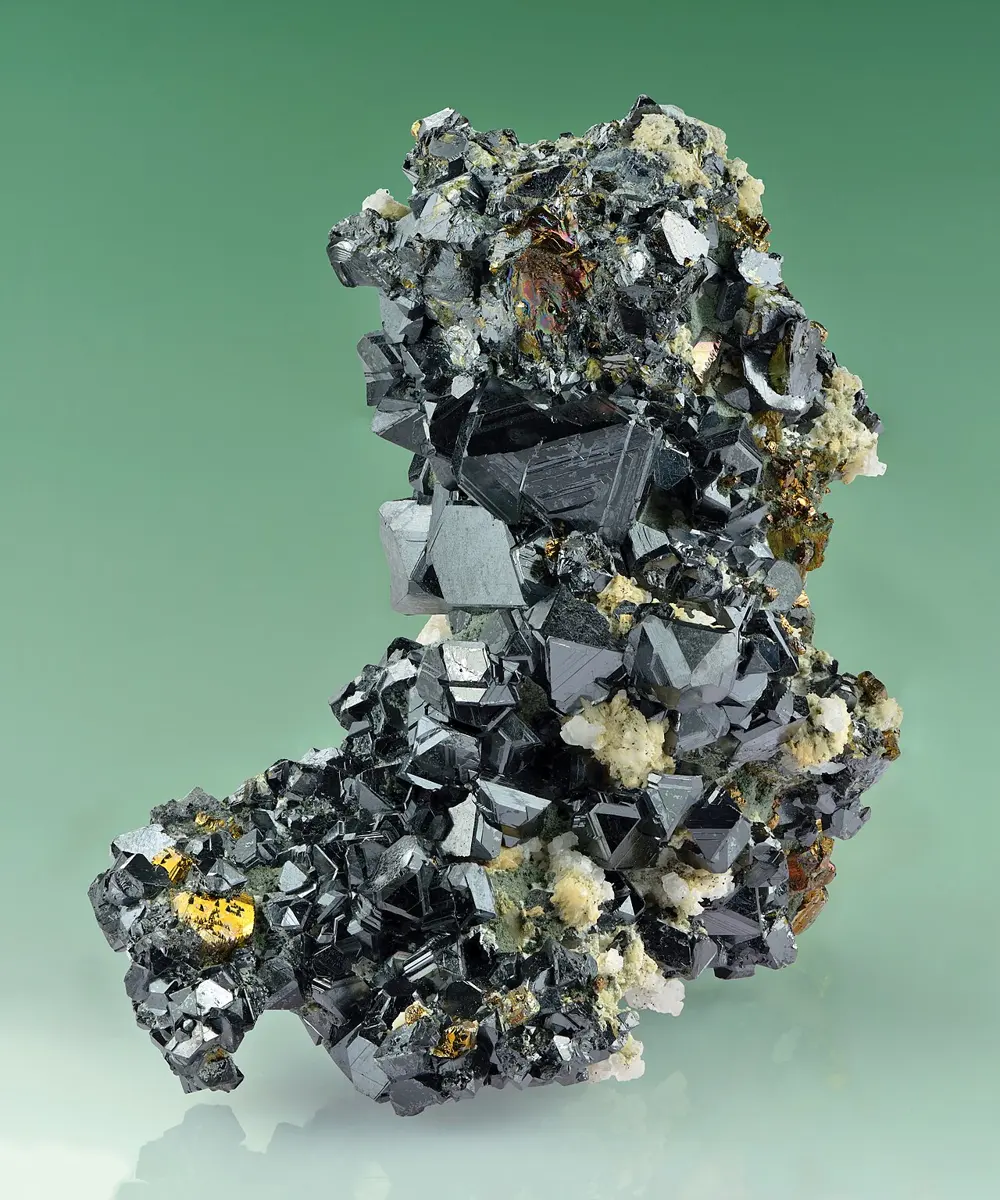
In Nepal. Zinc and lead ores have been found in more than 50 places in Nepal Grade 8: Minerals in Nepal. The best known is at Lari, at the foot of Ganesh Himal in Rasuwa, where geologists measured more than a million tonnes of ore with about 16% zinc. A government company was set up to mine it, but it has stood closed for years, and Nepal imports its zinc.
In your body. An adult holds about 2 to 3 grams of zinc, more than any trace metal except iron.
What zinc is like
- Color. Bluish-white and shiny when fresh. In air it soon gets a thin, dull gray coat (of zinc oxide and carbonate) that sticks tightly and protects the metal underneath.
- Brittle when cold. At room temperature a bar of zinc snaps instead of bending, unusual for a metal. Between about 100 and 150 °C it becomes malleable and can be rolled into sheets Grade 9: Malleable.
- Low melting and boiling points: it melts at 420 °C and boils at 907 °C, low for a metal (iron melts at 1,538 °C). That is why zinc is easy to cast into shapes and easy to purify by distillation.
- Density 7.1 g/cm³, a little less than iron.
- Conducts electricity, though only about a quarter as well as copper.
Why the low melting point? In most transition metals, some d electrons join the “sea” of free electrons and help hold the atoms together Grade 9: What is inside a metal. Zinc’s full 3d subshell keeps its electrons to itself, so only the two 4s electrons bond the atoms, and they come apart more easily.
How zinc reacts
Zinc is a fairly reactive metal. In the reactivity series it comes after aluminium and before iron Grade 9: The reactivity series:
K > Na > Ca > Mg > Al > Zn > Fe > Pb > (H) > Cu > Hg > Ag > Au
With dilute acids it gives a salt and hydrogen Grade 9: Metals and dilute acids:
Zn + 2HCl → ZnCl₂ + H₂↑
Zn + H₂SO₄ → ZnSO₄ + H₂↑
This is how hydrogen is made in the school laboratory, from granulated zinc and dilute hydrochloric acid Grade 9: Laboratory preparation of hydrogen.
Why does the laboratory make hydrogen from zinc and dilute acid, and not from sodium or copper?
Pick an answer to see why.
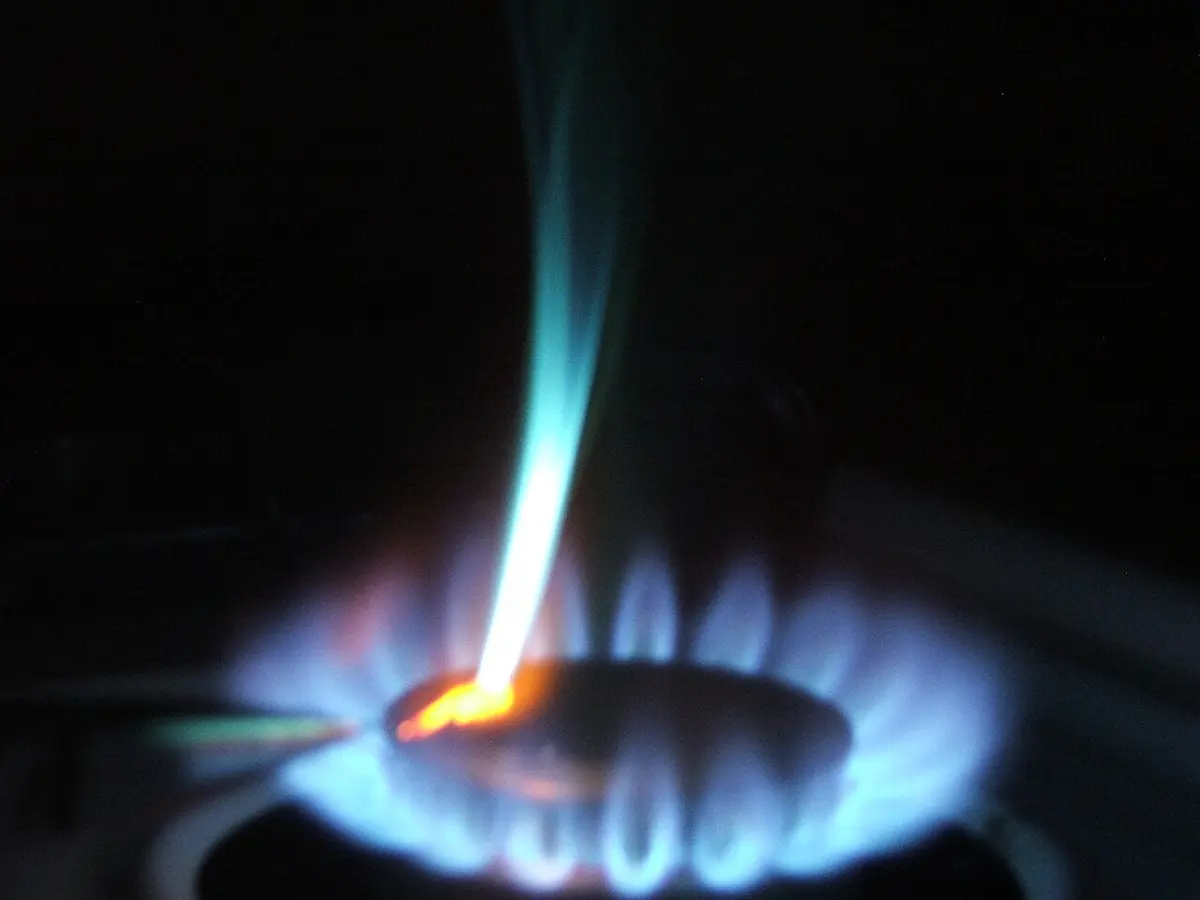
With air. Heated strongly, zinc burns with a bluish-green flame and forms white zinc oxide:
2Zn + O₂ → 2ZnO
Zinc oxide has a party trick: it is yellow when hot and turns white again as it cools, a color change chemists use to recognize it.
With copper sulphate. Zinc is more reactive than copper, so it displaces copper Grade 10: Single displacement reaction. A strip of zinc in blue copper sulphate solution gets a reddish-brown coat of copper, and the blue fades to colorless zinc sulphate:
Zn + CuSO₄ → ZnSO₄ + Cu
Zinc guards iron: galvanizing
Iron and steel rust in damp air. Dip a steel sheet in molten zinc (at about 450 °C) and it comes out with a thin, tight coat of zinc: it is galvanized. You can often see the zinc’s crystals on a galvanized sheet or pole as gray patches, called spangle. More than half of all the zinc the world uses goes into galvanizing.
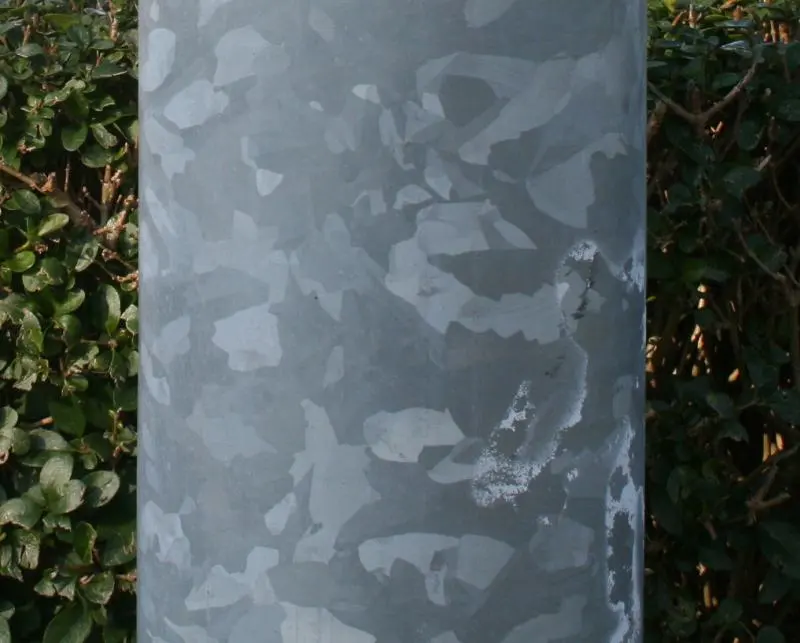
The zinc protects the steel in two ways:
- As a coat, like paint: air and water can’t reach the iron.
- By sacrifice. If the coat is scratched down to the steel, the iron still doesn’t rust. Zinc is more reactive than iron, so where the two metals meet in rainwater, the zinc gives up its electrons and corrodes instead of the iron. The zinc is used up slowly, and the iron is saved.
That is why a galvanized roof lasts many years, but a scratched tin can (steel coated with tin, which is less reactive than iron) rusts quickly at the scratch. The same idea protects ships: blocks of zinc bolted to a steel hull, called sacrificial anodes, corrode away instead of the ship.
A nail scratches a galvanized roofing sheet down to the steel. What happens at the scratch?
Pick an answer to see why.
From ore to metal
Sphalerite is a sulphide, so its zinc is got by the steps of metallurgy Grade 10: Metallurgy:
- The ore is crushed and concentrated by froth flotation, which also separates it from the lead ore beside it.
- It is roasted in air to turn the sulphide into oxide Grade 10: Roasting: 2ZnS + 3O₂ → 2ZnO + 2SO₂. (Calamine, a carbonate, is calcined instead: ZnCO₃ → ZnO + CO₂.) The sulphur dioxide is caught and made into sulphuric acid.
- The oxide is reduced with carbon Grade 10: Reduction: ZnO + C → Zn + CO. The zinc comes off as a vapor and is condensed, just as at Zawar.
Today most zinc is made a different way, by electrolysis: the roasted ore is dissolved in sulphuric acid, and an electric current coats aluminium sheets with very pure zinc.
Zinc in daily life
Batteries. An ordinary torch battery, the dry cell, is built inside a can of zinc. The zinc is the negative terminal: its atoms give up electrons (Zn → Zn²⁺ + 2e⁻), which flow out through your torch to the carbon rod in the middle and back. Look inside a dead one and the zinc can is often eaten through. Alkaline cells use zinc powder, and the tiny batteries of hearing aids are zinc–air cells, which use oxygen from the air.
Brass. Copper and zinc make brass (पित्तल), golden yellow, easy to cast and slow to corrode: puja items, gagri, lota, taps and the parts of locks Grade 8: Brass. Adding more zinc makes brass paler and harder.
Die-casting. Because it melts at only 420 °C, zinc alloys are poured into steel molds to make door handles, zips, toy cars and parts of machines.
Zinc oxide, a white powder, is in many things: white paint, the rubber of tyres, nappy creams, calamine lotion (zinc oxide with a pinch of iron oxide, which makes it pink) for itchy skin, and sunscreens, where it stops the Sun’s ultraviolet rays.
Farming. Zinc is a plant micronutrient Grade 9: Micronutrients. Rice grown on zinc-poor soil gets the disease called khaira, with rusty brown spots on its leaves, and farmers add zinc sulphate to the field.
Zinc and your health
Your body needs a little zinc every day: about 8 milligrams for a woman and 11 mg for a man, about the same for teenagers Grade 9: Some metals required for the human body. Zinc sits at the heart of hundreds of enzymes and proteins, which:
- let the body grow and wounds heal;
- help the immune system fight bacteria and viruses;
- let you taste and smell;
- help proteins called “zinc fingers” grip DNA and switch genes on and off.
Pumpkin and sesame seeds, chickpeas, lentils, nuts, whole grains, milk, eggs and meat give zinc. Too little makes children grow slowly and fall ill more often, and makes diarrhea last longer.
That last fact saves lives. Since 2004 the World Health Organization and UNICEF have advised that a child with diarrhea get zinc tablets for 10 to 14 days along with ORS (the salt-and-sugar drink, जीवनजल): the diarrhea is shorter and milder, and less likely to come back in the next few months. Nepal was one of the first countries to bring this into its health services across the country, starting in 2005.
Surprising facts and records
- A zinc coin with a copper coat. Since 1982 the United States one-cent coin, the penny, has been 97.5% zinc, with a thin skin of copper to keep the color.
- Five kinds of atoms. Natural zinc is a mix of five stable isotopes, from zinc-64 (about half of all zinc atoms) to zinc-70, which is why its atomic mass, 65.4, is not a whole number Grade 9: Atomic mass.
- A Nobel Prize partner. Zinc helped join carbon atoms in the work behind the Nobel Prize in Chemistry 2010: Ei-ichi Negishi found that a carbon atom carried by zinc hands itself over neatly to palladium.
In your science books
- Grade 8: the 2n² rule, acids react with metals, brass and minerals in Nepal.
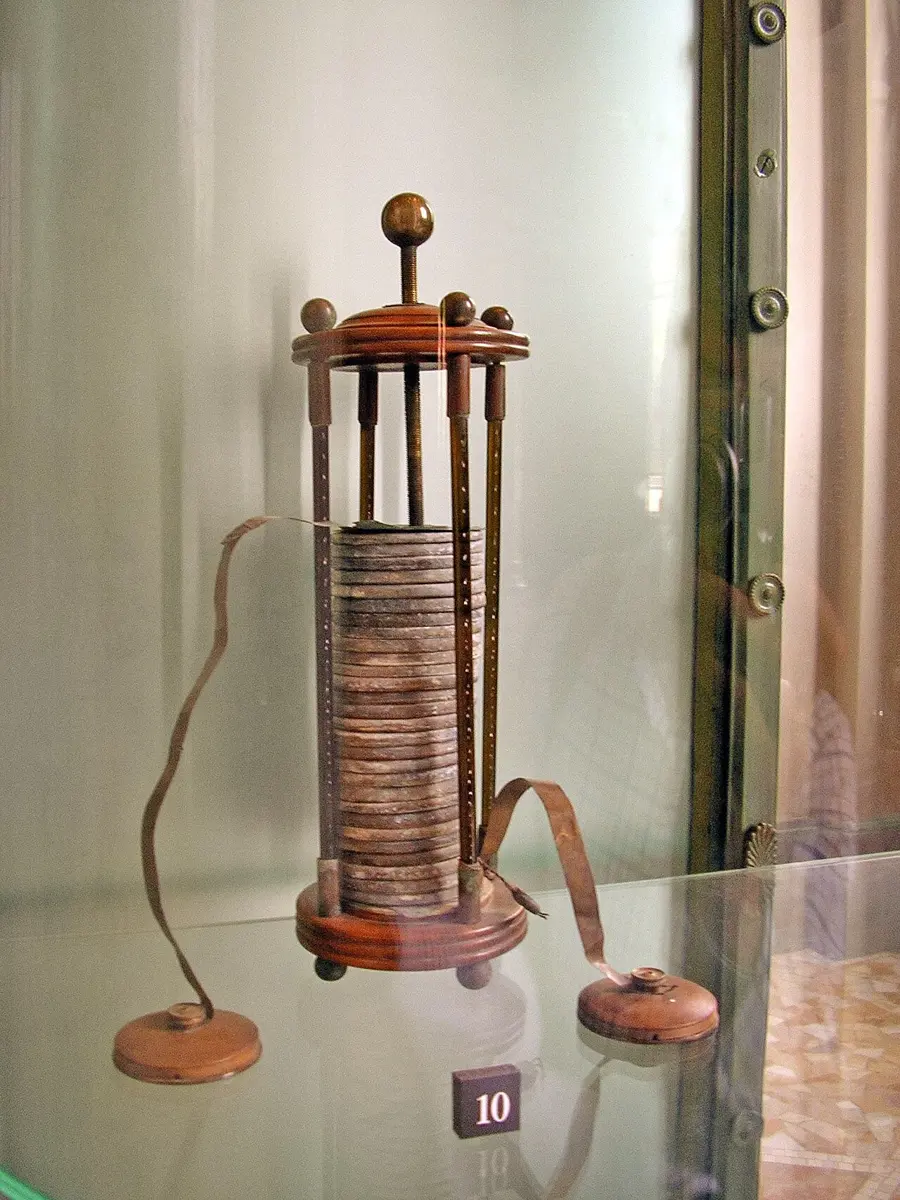
- Grade 9: metals and dilute acids, the reactivity series, making hydrogen, metals your body needs, Volta’s pile and plant micronutrients.
- Grade 10: electronic configuration, transition metals, roasting, reduction, distillation and single displacement.
- Going further: the photoelectric effect (first seen with a zinc plate) and where the atoms in your body came from.
More to explore
- Nobel Prizes with zinc in them: joining carbon atoms with palladium (2010, Negishi’s zinc), Einstein and the photoelectric effect (light knocking electrons out of zinc), MOFs (2025, the famous MOF-5 is built on zinc) and how an electron jumps (1992, the electron transfers behind rust and batteries).
- Play: find zinc in Guess the Element, Higher or Lower and the Periodic Table Jigsaw.
- Read more: zinc at the Royal Society of Chemistry and at PubChem.