
- Atomic number
- 56
- Atomic mass
- 137.33
- Shells
- 2, 8, 18, 18, 8, 2
- Configuration
- 1s² 2s² 2p⁶ 3s² 3p⁶ 4s² 3d¹⁰ 4p⁶ 5s² 4d¹⁰ 5p⁶ 6s²
- In the table
- period 6, group 2 (IIA), s-block
- Kind
- Alkaline earth metal
- Valency
- 2 (Ba²⁺, as in BaCl₂ and BaSO₄)
- State at 25 °C
- solid
- Melts · boils
- 727 °C · 1,897 °C
- Density
- 3.6 × as heavy as water
- Known since
- 1808
Before an X-ray of the stomach, a patient in hospital is given a glass of thick, white, chalky liquid to drink. Minutes later, the stomach and gut, normally almost invisible on an X-ray, show up white and sharp, every fold of them. The drink is barium sulphate, and it is perfectly safe, though barium chloride, barium carbonate and most other barium compounds are poisonous.
Barium is in the green of fireworks too, in the heavy mud pumped down oil wells, and in the white paint on cars. It was the clue that led to the splitting of the atom. Here is its story.
The barium atom
A barium atom has 56 protons, so barium’s atomic number is 56, and 56 electrons. Natural barium is a mixture of seven isotopes. Most barium atoms (about 72%) have 82 neutrons, so their mass number is 56 + 82 = 138.
By the 2n² rule Grade 8: Bohr and Bury’s rule, the K, L and M shells take 2, 8 and 18 electrons. The N shell reaches 18 and the O shell 8, and the last 2 start the sixth shell, P: 2, 8, 18, 18, 8, 2.
In subshells Grade 10: The Aufbau principle, after xenon (element 54) the next subshell is 6s, lower in energy than 4f and 5d. So, just as calcium puts its last two electrons in 4s and strontium in 5s, barium puts them in 6s:
1s² 2s² 2p⁶ 3s² 3p⁶ 4s² 3d¹⁰ 4p⁶ 5s² 4d¹⁰ 5p⁶ 6s²
Barium gives away these two outer electrons. What is left, 2, 8, 18, 18, 8, has a full outer shell, like the noble gas xenon. So barium forms the barium ion, Ba²⁺, and its valency is 2 Grade 8: Valency.
How many electrons does a barium ion, Ba²⁺, have?
Pick an answer to see why.
With the criss-cross method Grade 9: The criss-cross method you can write barium’s compounds just like calcium’s: BaCl₂ (barium chloride), BaO (oxide), BaCO₃ (carbonate), BaSO₄ (sulphate), Ba(OH)₂ (hydroxide) and Ba(NO₃)₂ (nitrate).
Its place in the periodic table
- Period 6, because its electrons are in six shells.
- Group 2 (IIA), because it has two outer electrons.
- s-block, because they are in the 6s subshell.
Barium is an alkaline earth metal, below beryllium, magnesium, calcium and strontium, and above radioactive radium Grade 8: Characteristics of groups. Its outer electrons are the farthest from the nucleus of any stable group 2 metal, so they are the easiest to give away, and barium is the most reactive of them Grade 10: Chemical reactivity.
How barium was found and named
The story starts with a glowing stone. Around 1603, Vincenzo Casciarolo, an alchemist in Bologna, Italy, found some heavy, pale pebbles on a hill nearby and roasted them with charcoal, hoping to make gold. He got no gold, but the roasted stones did something magical: after lying in sunlight, they glowed in the dark. The “Bologna stone” became famous across Europe. We now know the pebbles were baryte, barium sulphate; roasting with charcoal turned some of it into barium sulphide, which stores light and gives it out slowly.
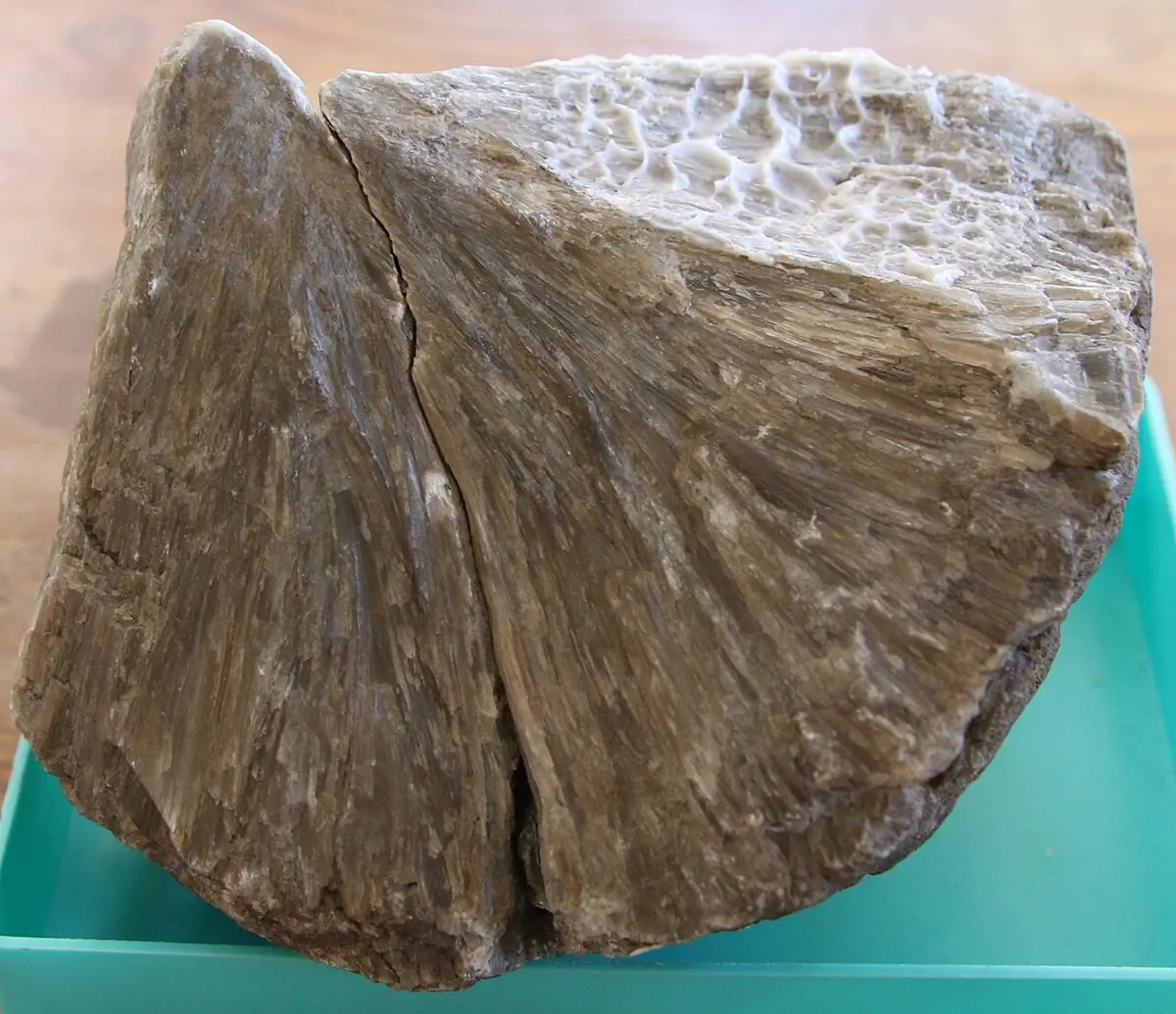
- 1774. The Swedish chemist Carl Wilhelm Scheele showed that baryte held the oxide of a new metal, a new “earth”, which came to be called baryta, from the Greek barys, “heavy”: baryte is unusually heavy for a white stone.
- Later in the 1700s. The English doctor William Withering studied another heavy mineral from the lead mines of northern England. It turned out to be barium carbonate, and it is called witherite after him.
- 1808. In London, Humphry Davy made the metal itself with electricity, the same year he freed strontium, calcium and magnesium. He named it barium, symbol Ba. In Nepali it is simply बेरियम.
The name is a little unfair: barium metal (density 3.6 g/cm³) is not especially heavy. It is its minerals, baryte (4.5 g/cm³) and witherite, that are heavy.
Where barium is found
In the universe. Most barium is made slowly, in old giant stars, as lighter nuclei catch neutrons one at a time (Slowly, in giant stars).
In the Earth’s crust. Barium is fairly common: about 400 to 500 grams in every tonne of rock, more than zinc, copper and lead put together. Because it reacts with air and water, it is never found as the metal. Its main minerals are:
- baryte (or barite), barium sulphate, BaSO₄: white or colorless, sometimes tinted, and heavy;
- witherite, barium carbonate, BaCO₃.
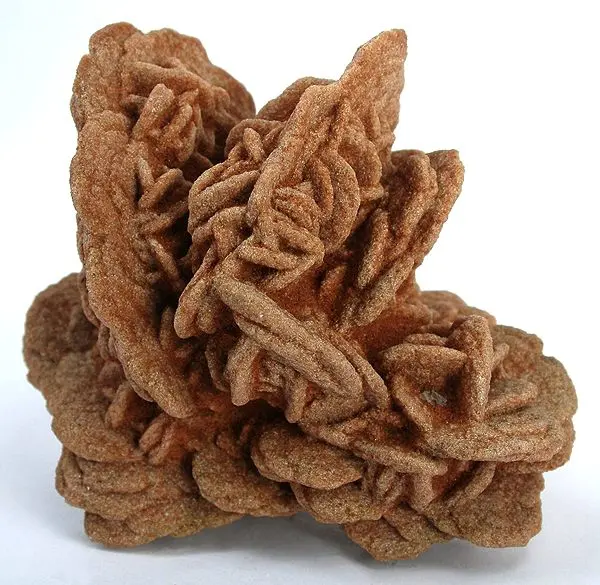
In 2025 the world mined about 8.7 million tonnes of baryte. The biggest producer was India (about 3 million tonnes), followed by China and Morocco (USGS, 2026).
In the sea. Sea water holds about 13 micrograms of barium in a liter. Tiny crystals of baryte form in the sea and settle on the deep sea floor.
What barium is like
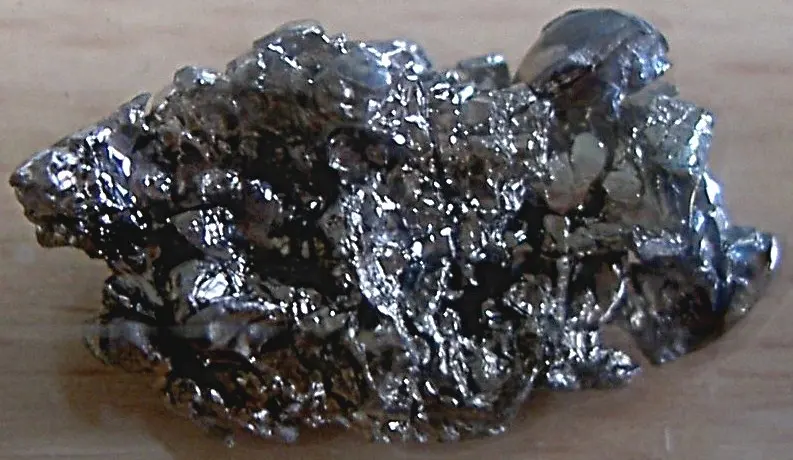
- A soft, silvery-white metal, which quickly darkens in air as a coat of oxide forms. It is kept under oil or in argon gas.
- Density 3.6 g/cm³, the heaviest of the stable group 2 metals.
- Melts at 727 °C, lower than calcium (842 °C) and strontium (777 °C).
In group 2, the atoms get bigger going down, and the outer electrons are easier to pull off. So barium reacts faster than strontium, which reacts faster than calcium.
How barium reacts
With water. Barium reacts quickly with cold water, fizzing and giving hydrogen and barium hydroxide, an alkali Grade 9: Very reactive metals react with water:
Ba + 2H₂O → Ba(OH)₂ + H₂
With oxygen. It burns in air, leaving white barium oxide Grade 9: Metals react with oxygen:
2Ba + O₂ → 2BaO
With dilute acids, it gives a salt and hydrogen:
Ba + 2HCl → BaCl₂ + H₂
The green flame
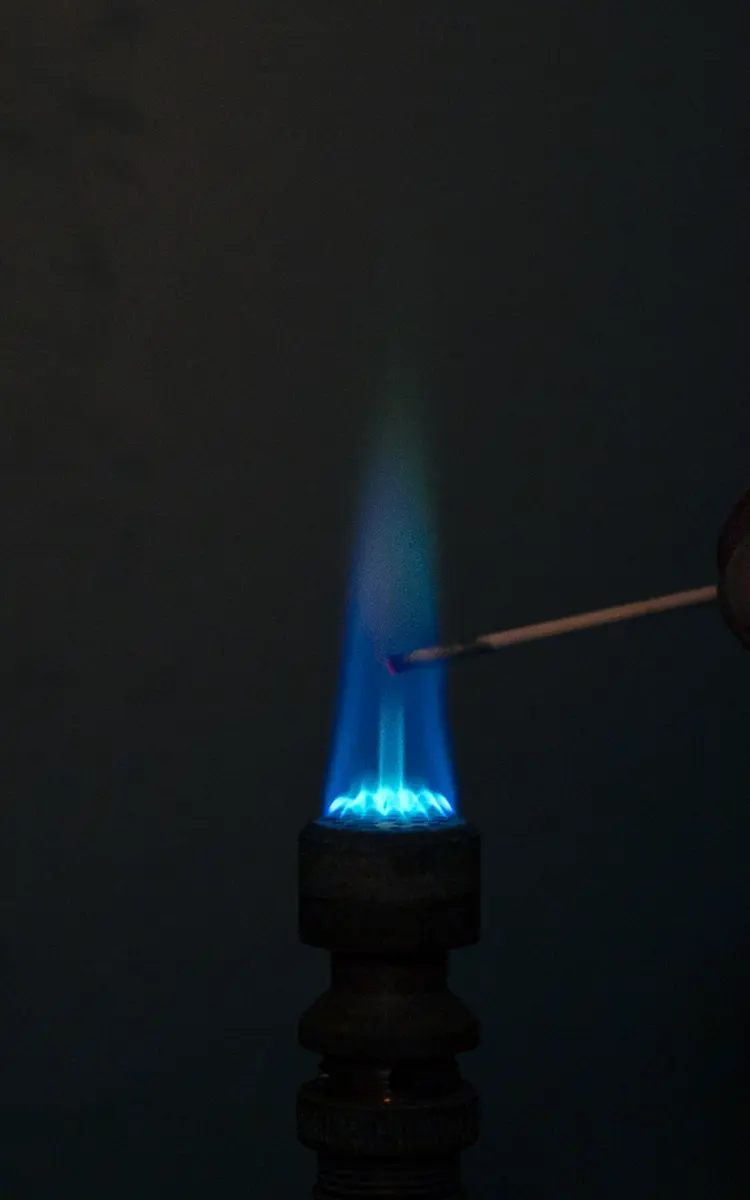
Hold a barium compound in a gas flame and it turns a pale apple green. The heat lifts the barium atoms’ electrons to higher energy levels; as they drop back, they give out light of exact colors, mostly green (Why each element has its own lines). That is how fireworks get their green: from barium nitrate or barium chlorate.
The test for a sulphate
Barium sulphate is one of the least soluble salts there is. So if you add barium chloride solution to a solution that contains a sulphate, a thick white precipitate of barium sulphate forms at once. The barium and sodium swap partners: a double displacement reaction Grade 10: Double displacement:
BaCl₂ + Na₂SO₄ → BaSO₄↓ + 2NaCl
Chemists use it as the test for sulphates, and factories use the same reaction to make pure barium sulphate.
A few drops of barium chloride solution are added to four solutions. Which one gives a white precipitate?
Pick an answer to see why.
Poison or medicine?
Barium chloride and barium nitrate are poisonous: they dissolve in water, the barium ions pass from the gut into the blood, and there they upset the way nerves and muscles work. Barium sulphate is just as full of barium, yet a patient can drink a glassful. The difference is solubility.
Only about 2 to 3 milligrams of barium sulphate dissolve in a liter of water, and stomach acid doesn’t dissolve it either. So the barium stays locked in the solid, passes through the gut and leaves the body. Barium carbonate is different. It too is almost insoluble in water, but acids dissolve carbonates Grade 8: Acids react with metal carbonates, and your stomach is full of hydrochloric acid:
BaCO₃ + 2HCl → BaCl₂ + H₂O + CO₂
The barium chloride formed dissolves and is absorbed. That is why barium carbonate was once used as rat poison.
A hospital must never give a patient barium carbonate instead of barium sulphate. Why?
Pick an answer to see why.
Why barium shows up on X-rays
X-rays pass easily through things made of light atoms, such as hydrogen, carbon, nitrogen and oxygen: the stuff of skin, fat, muscle and the stomach wall. Atoms with many electrons stop them much better. That is why bones, full of calcium (20 electrons), show up white on an X-ray Grade 9: X-ray imaging. Barium has 56 electrons, so a coat of barium sulphate on the inside of the gut stops X-rays even better than bone does, and shows the gut’s exact shape.
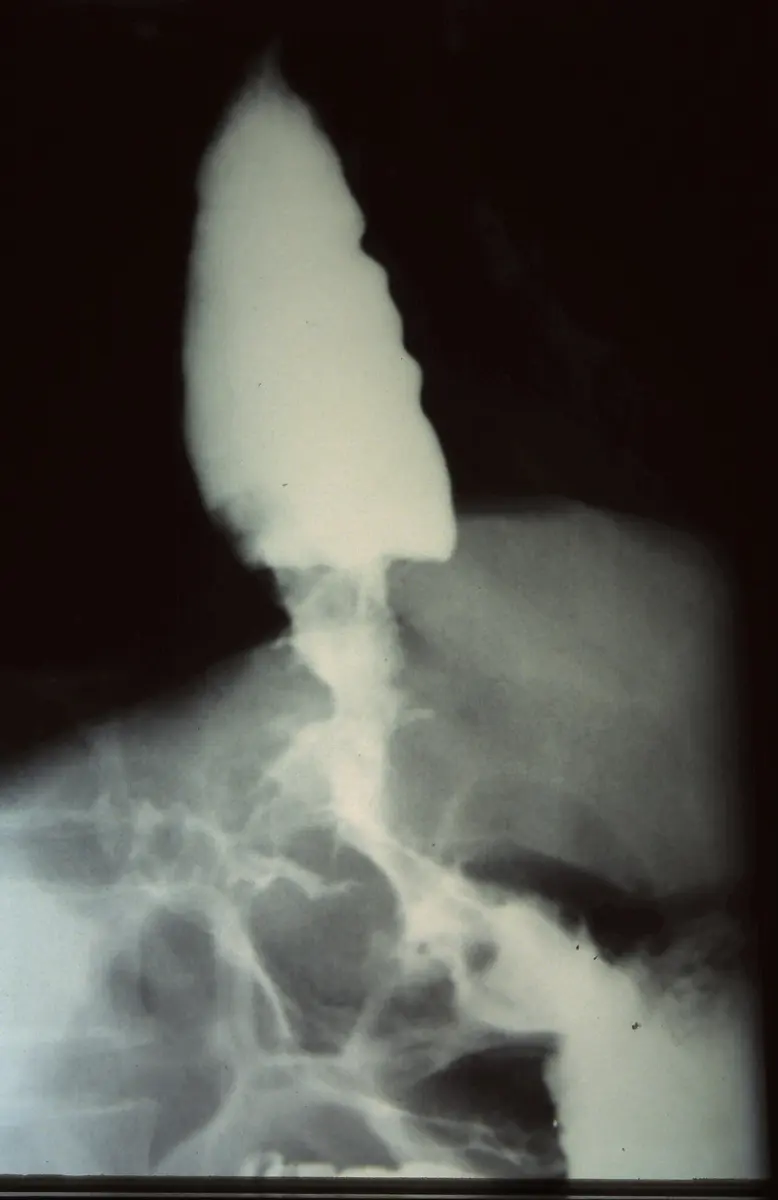
Hospitals around the world, Nepal’s among them, have used barium meals and barium swallows since the early 1900s, to find ulcers, narrowings and growths. Barium sulphate is also used in CT scans of the belly Grade 9: CT scan.
Barium in daily life
- Oil and gas wells. Most baryte is ground to a fine powder and added to drilling mud, to make it heavy enough to hold back the gas and oil underground. In the USA, more than 90% of baryte goes this way (USGS, 2026).
- White paint and plastics. Pure barium sulphate, made by precipitation, is a brilliant white filler in paint, paper, plastics and car brake pads.
- Radiation shields. Concrete made with baryte stones is heavy and blocks X-rays and gamma rays: it is used in the walls of X-ray rooms and nuclear power stations.
- Fireworks. Barium nitrate and barium chlorate give the green stars of fireworks.
- Electronics. Barium titanate, a ceramic, stores electric charge very well. It is the main material of the tiny ceramic capacitors on every circuit board; a phone holds hundreds of them.
- Magnets. Some cheap ceramic (ferrite) magnets, like those on fridge doors, are made of iron oxide with barium Grade 8: Artificial magnets.
Isotopes of barium
Natural barium is a mixture of seven isotopes, from barium-130 to barium-138. Barium-138 (72%) is by far the commonest, then barium-137 (11%) and barium-136 (8%), so barium’s atomic mass, 137.3, is a little below 138 Grade 9: Atomic mass. Barium-137 is also what radioactive cesium-137 turns into as it decays.
Barium and your health
Barium has no known use in the human body. You take in a little with food and water, mostly too little to matter.
Barium compounds that dissolve, or that dissolve in stomach acid, are poisonous. In the blood, barium ions block the channels that let potassium ions out of cells, so the potassium in the blood falls. Muscles grow weak, and in serious poisoning they can stop working, including those for breathing and the heart. Doctors treat it by giving a soluble sulphate (such as magnesium sulphate) by mouth, which turns the barium still in the gut into harmless barium sulphate, and by giving potassium.
Surprising facts and records
- A glow 400 years old. The Bologna stone glowed in the dark more than three and a half centuries before glow-in-the-dark stickers.
- The screen that found X-rays. In 1895 Wilhelm Röntgen discovered X-rays when a paper screen painted with a barium compound, barium platinocyanide, began to glow near his covered tube (X-rays).
- Radium hid in barium. When Marie Curie discovered radium, it was mixed with barium, its close relative in group 2; she spent years separating them, crystal by crystal (Radium).
- Four metals in a year. Humphry Davy freed barium, strontium, calcium and magnesium in 1808.
In your science books
- Grade 8: the 2n² rule, valency, groups of the periodic table and acids with carbonates.
- Grade 9: the criss-cross method, molecular mass, nuclear fission, endothermic reactions and X-ray imaging.
- Grade 10: the Aufbau principle, reactivity down a group and double displacement (the test for sulphates).
- Going further: fission, flame colors, energy diagrams and where barium is made.
More to explore
- Nobel Prizes with barium in them: X-rays (1901, found with a barium-coated screen), radium (1911, separated from barium), the CT scanner (1979), superconductors that work in liquid nitrogen (1987, oxides of barium, copper and lanthanum or yttrium) and traps for single atoms (1989, a single barium ion, glowing blue).
- Elements next door: strontium above it, radium below, cesium beside it, and calcium, higher up its group.
- Play: find barium in Guess the Element and the Periodic Table Jigsaw.
- Read more: barium at the Royal Society of Chemistry and at PubChem.