
- Atomic number
- 50
- Atomic mass
- 118.71
- Shells
- 2, 8, 18, 18, 4
- Configuration
- 1s² 2s² 2p⁶ 3s² 3p⁶ 4s² 3d¹⁰ 4p⁶ 5s² 4d¹⁰ 5p²
- In the table
- period 5, group 14 (IVA), p-block
- Kind
- Other metal
- Valency
- 2 and 4 (stannous Sn²⁺, stannic Sn⁴⁺)
- State at 25 °C
- solid
- Melts · boils
- 232 °C · 2,602 °C
- Density
- 7.3 × as heavy as water
- Known since
- ancient times
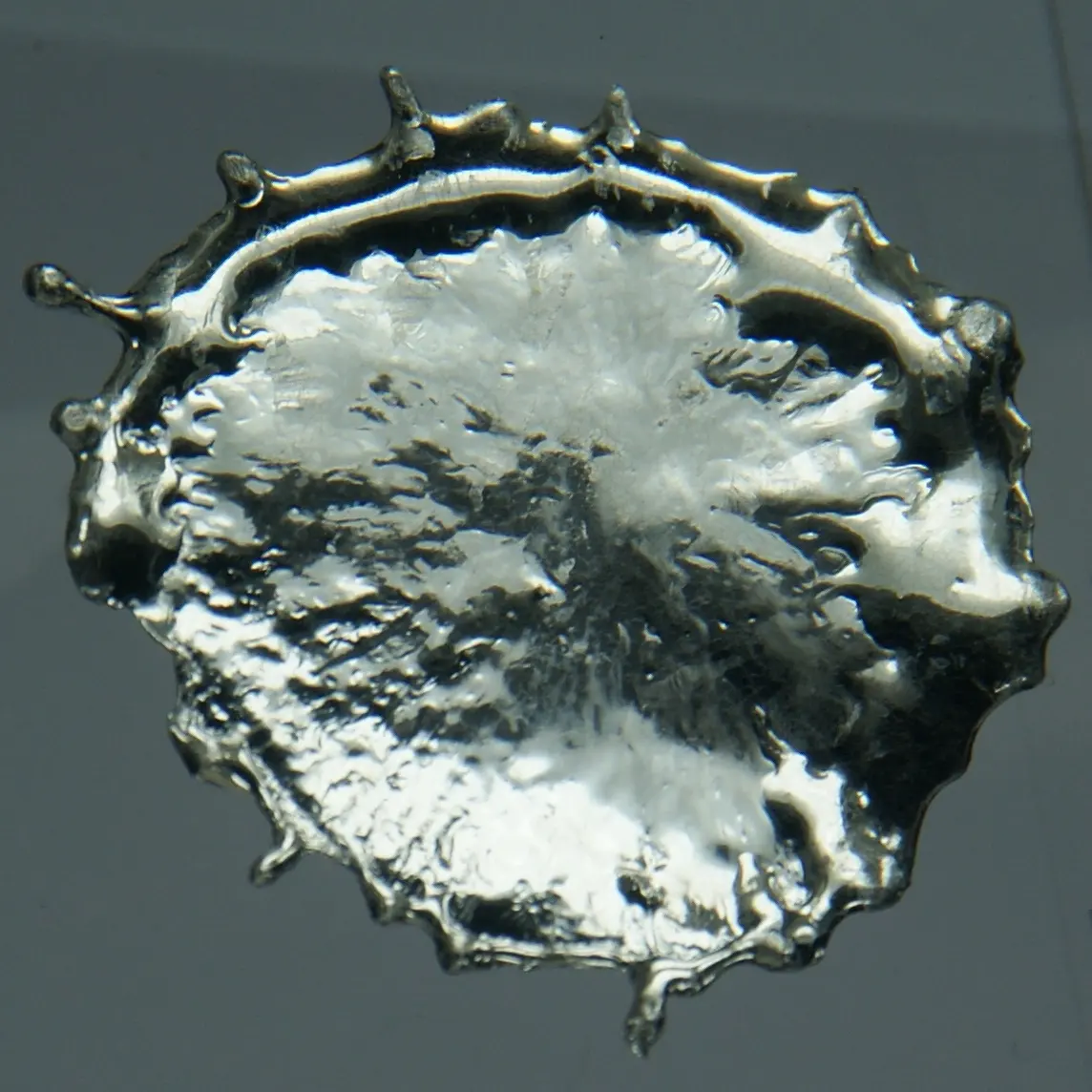
Eat from a काँसको थाल, ring a temple bell, or open a can of fish, and you are using tin, राङ in Nepali. There is tin in the bronze of the bell and the plate, and a thin coat of tin keeps the steel of the can from rusting. There is tin inside every phone and computer too: it is the solder that joins all the parts on the circuit boards.
Tin is a soft, silvery metal that has been precious for over 5,000 years, because mixed with copper it makes bronze. Here is its story.
The tin atom
A tin atom has 50 protons, so tin’s atomic number is 50, and a neutral atom has 50 electrons. The most common kind of tin atom has 70 neutrons, so its mass number is 50 + 70 = 120.
The electrons fill five shells: 2, 8, 18, 18, 4 Grade 8: Bohr and Bury’s rule. The fourth shell could hold 32 but has only 18 when the fifth shell starts, because of the order in which subshells fill: 5s comes before 4d, and 4d before 5p Grade 10: The Aufbau principle:
1s² 2s² 2p⁶ 3s² 3p⁶ 4s² 3d¹⁰ 4p⁶ 5s² 4d¹⁰ 5p²
So tin has four outer electrons, 5s² 5p², like every element in its group.
Its place in the periodic table
- Period 5, because its electrons are in five shells.
- Group 14, called IVA in the older naming, because it has four outer electrons.
- p-block, because its last electrons go into a p subshell (5p).
Tin belongs to the carbon family: carbon, silicon, germanium, tin and lead. Going down the group the atoms get bigger and lose electrons more easily, so the elements change from a non-metal through metalloids to metals Grade 10: How properties change down groups. Tin is the first true metal in the group, though only just: below 13 °C it can even turn into a crumbly, non-metallic form (see below).
Its valency
Tin has two valencies Grade 9: Variable valency:
- 2, in stannous compounds, such as stannous chloride (SnCl₂): the atom gives up its two 5p electrons.
- 4, in stannic compounds, such as stannic oxide (SnO₂), the ore of tin: all four outer electrons take part.
Unlike lead, tin is most stable with valency 4. The names come from tin’s Latin name, stannum.
How many electrons are in the outermost shell of a tin atom?
Pick an answer to see why.
How tin was found and named
Tin was found very early, as dark, heavy pebbles of its ore, cassiterite (tin oxide, SnO₂), in the gravel of streams. Heated with charcoal, the ore gives up the metal easily. Pure tin was not much use on its own, being soft, but more than 5,000 years ago metalworkers in Mesopotamia, Egypt and the Indus valley found that copper with about a tenth part tin made bronze: harder than copper, easier to cast, and good for tools, weapons and bells. The time when bronze was the most important metal is called the Bronze Age Grade 8: Bronze.
Copper is found in many places, but tin in only a few, so tin had to be carried long distances, and it was valuable.
The names. “Tin” is an old English word. Its Latin name was stannum, which gives the symbol Sn Grade 8: Symbols from Latin names. Nepali’s राङ (also written राँग) comes from Sanskrit रङ्ग, which also means tin. Bronze in Nepali is काँसो, from Sanskrit कांस्य.
Where tin is found
In the universe. Tin is heavier than iron, so it was made when atoms caught neutrons, mostly slowly inside giant stars (Heavier than iron: catching neutrons).
In the Earth’s crust. Tin is rare: about 2 grams in a tonne of ordinary rock. Almost all of it is mined as cassiterite, a heavy, dark brown or black mineral. Because it is so heavy and doesn’t wear away, it collects in river gravels, where it can be washed out like gold Grade 10: Gravity separation. The ore is then reduced by heating with carbon Grade 10: Reduction:
SnO₂ + 2C → Sn + 2CO
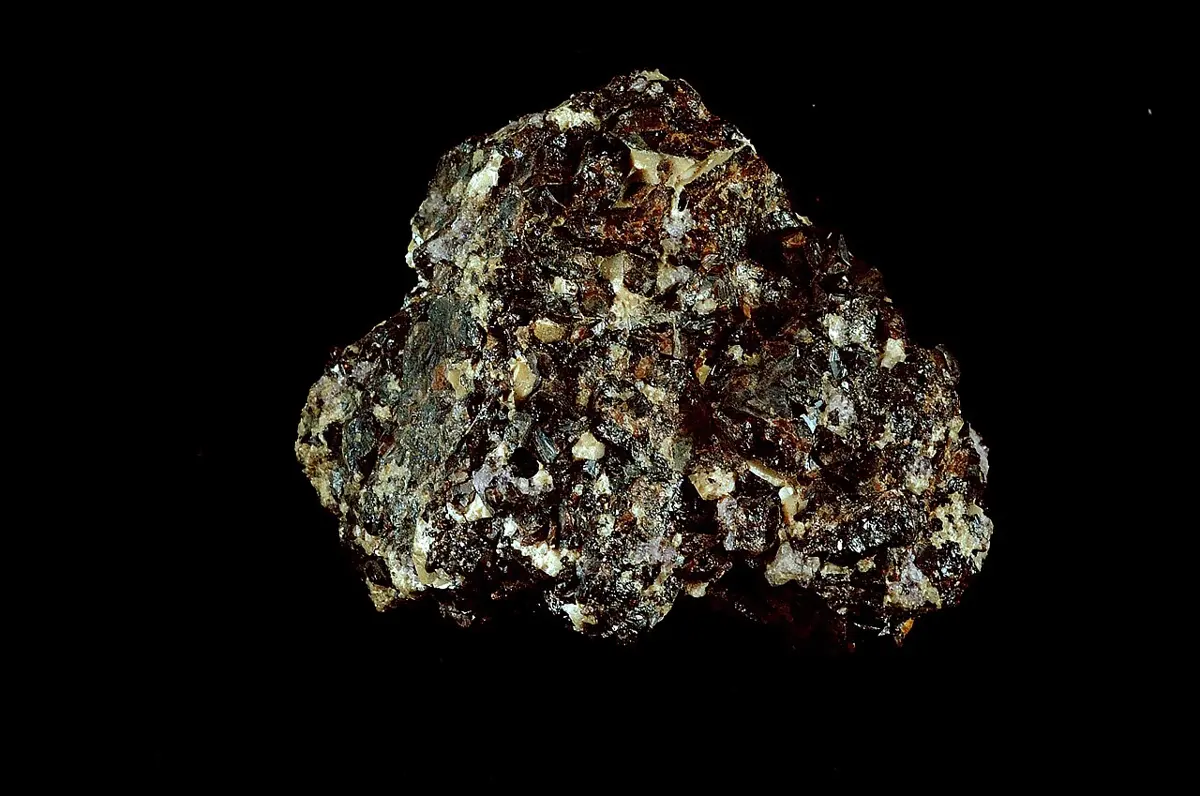
In 2024 the world mined about 300,000 tonnes of tin. The biggest producers were China (about 69,000 tonnes), Indonesia (50,000), Myanmar, Peru and Brazil (USGS, 2025).
In Nepal. Nepal mines no tin. The tin in its bells, plates and solder comes from abroad.
What tin is like
- Silvery-white and shiny, and it stays bright in air, because a very thin, invisible layer of oxide protects it.
- Soft and malleable: it can be rolled into very thin foil Grade 9: Malleable. Before aluminium was cheap, kitchen foil was tin, which is why people still call it “tin foil”.
- Melts at 232 °C, low for a metal, lower even than lead (327 °C): you could melt it on a gas stove. Yet it boils only at about 2,600 °C.
- Density 7.3 g/cm³, a little lighter than iron.
- It cries. Bend a bar of tin, and it makes a faint crackling sound, the tin cry, as the crystals inside slip against each other.
Two forms of tin
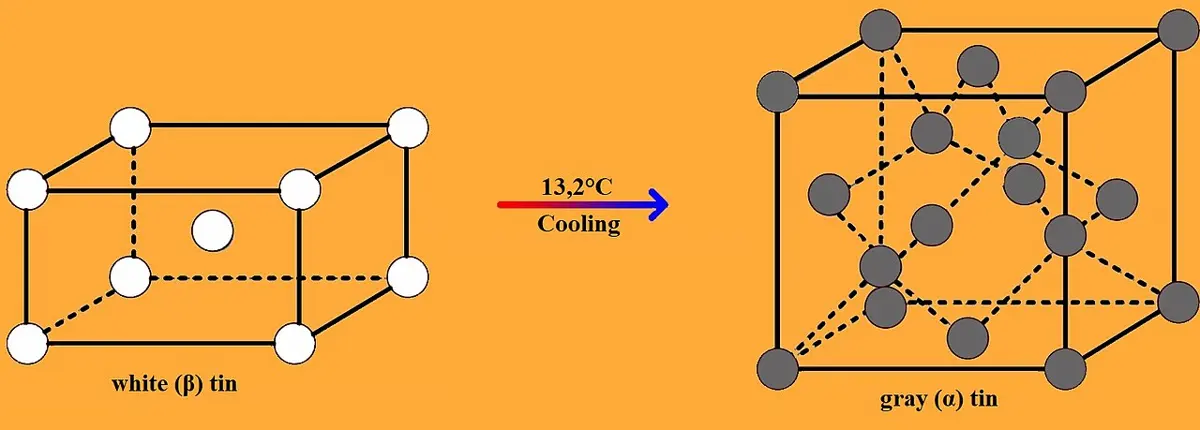
Ordinary tin is white tin, a metal. But below about 13 °C, white tin can slowly change into gray tin, a brittle gray powder that isn’t a metal at all. Gray tin takes up about a quarter more space, so the metal swells, cracks and crumbles. This is called tin pest. It usually starts only after a long time in real cold, and a little of another metal mixed in stops it, but it really has destroyed old tin objects, such as organ pipes in cold churches. White tin and gray tin are two allotropes of tin, just as diamond and graphite are two allotropes of carbon Grade 9: Allotropes.
How tin reacts
Tin is fairly unreactive. In the reactivity series it comes just below iron and just above lead Grade 9: The reactivity series:
K > Na > Ca > Mg > Al > Zn > Fe > Sn > Pb > (H) > Cu > Hg > Ag > Au
- Water and air don’t harm it at room temperature, which is why it is used to protect other metals.
- Heated strongly in air, it turns into white tin oxide: Sn + O₂ → SnO₂.
- With dilute hydrochloric acid it reacts slowly, giving hydrogen Grade 9: Metals and dilute acids: Sn + 2HCl → SnCl₂ + H₂
Tin cans: a coat that protects
A “tin can” is really made of steel, coated on both sides with a very thin layer of tin: tinplate. Tin doesn’t rust, it is safe with food, and it sticks to steel well. Since 1810, when a patent was taken out in England for keeping food in tin-coated iron containers, cans have carried food around the world.
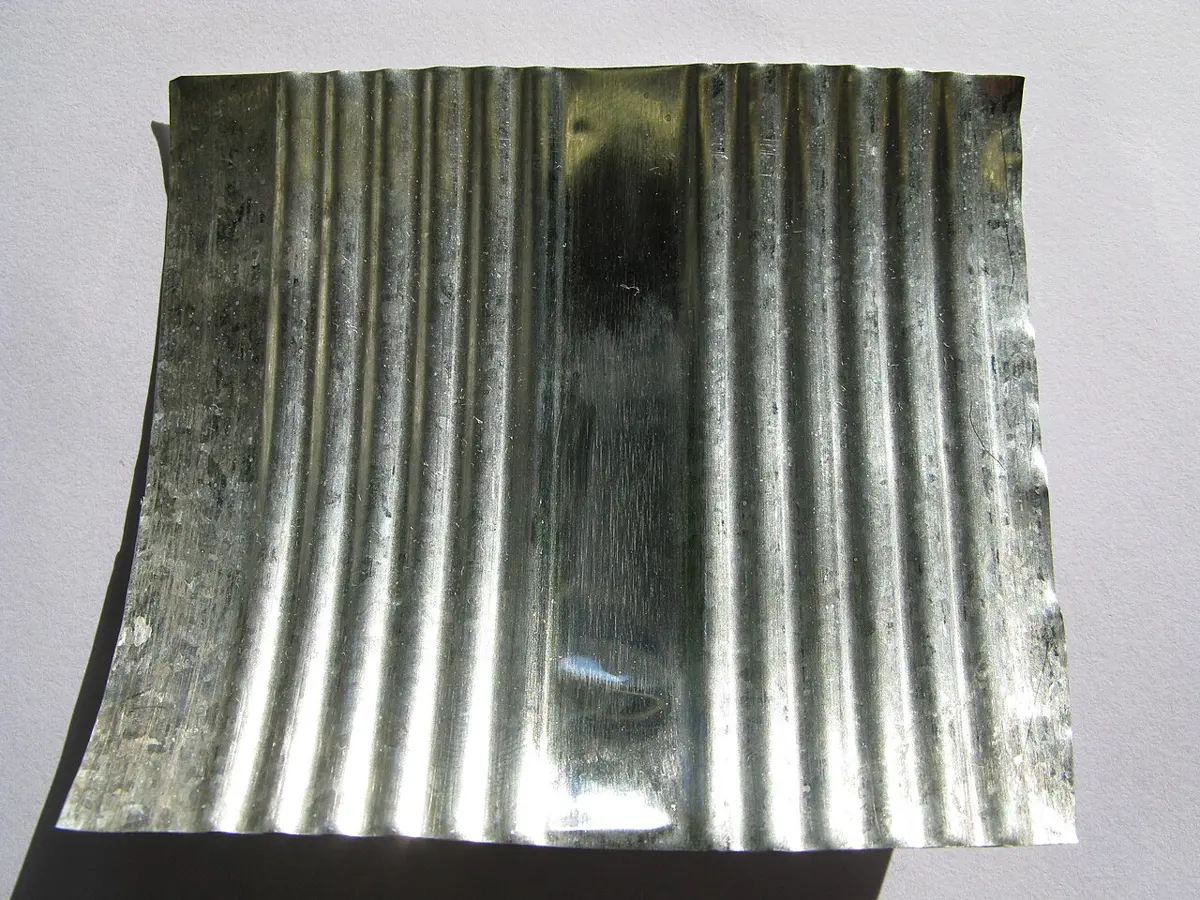
But tin protects only while the coat is unbroken. Tin is less reactive than iron, so where a can is scratched or dented through to the steel, the iron rusts. A roof sheet is protected differently: it is galvanized, coated with zinc, which is more reactive than iron and corrodes first, so the steel survives even where the zinc is scratched.
Nepal’s “tin” roofs, जस्तापाता, are steel sheets coated with which metal?
Pick an answer to see why.
Tin in daily life and in Nepal
Solder. Tin’s biggest use today is solder, the metal that is melted to join wires and electronic parts. For most of the 1900s solder was about 60% tin and 40% lead, which melts at under 190 °C. Since the 2000s, electronics in many countries have had to use lead-free solder, mostly tin with a little silver and copper. The fuse wire in old fuse boxes is a tin–lead alloy too, made to melt before the house wiring gets too hot Grade 8: Fuse. Mixing metals lowers the melting point Grade 8: Properties of alloys.
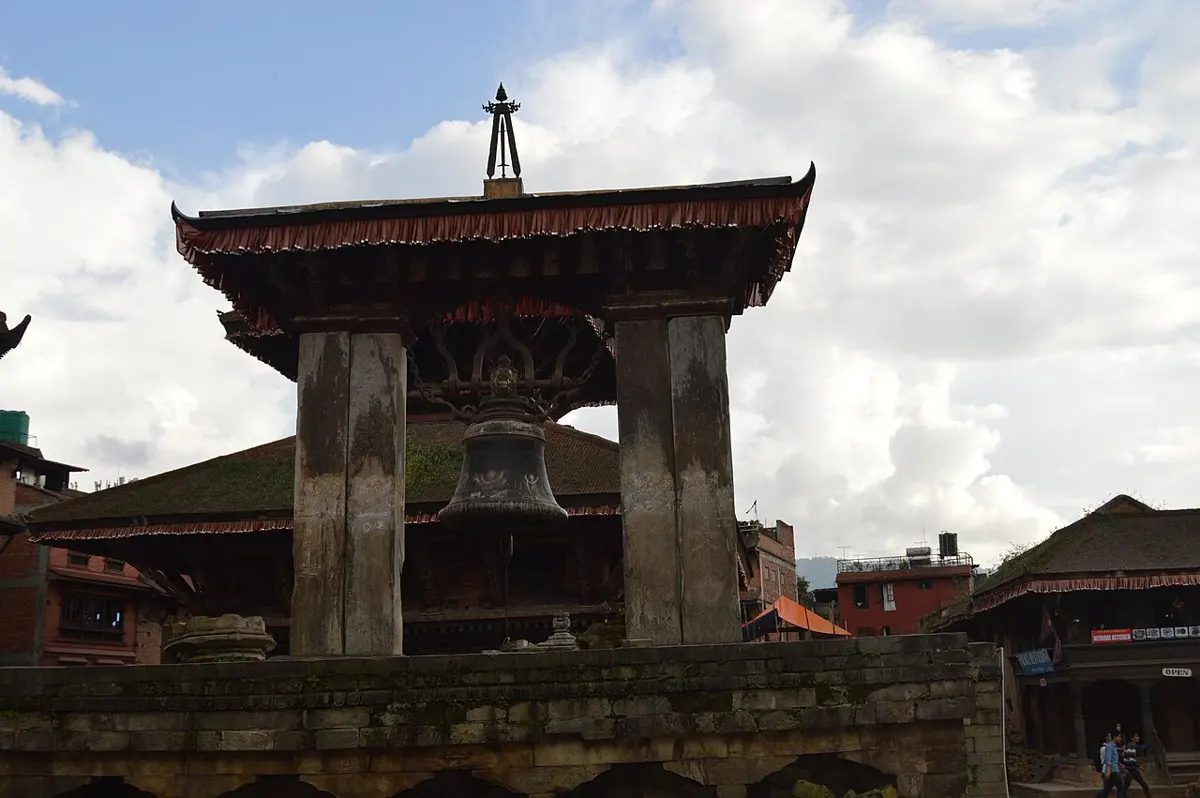
Bronze and bell metal. Bronze is copper with tin. Bell metal, with about one part tin to four parts copper, is hard and rings long and clear, so it is used for bells, cymbals and, in Nepal, for काँसो plates, bowls and glasses. Big temple bells, like those of the Durbar Squares, are cast from bronze.
Coating. Besides cans, tin is used to line copper and brass cooking pots, because sour foods would dissolve copper; a worn lining is renewed by a tinsmith (Copper).
Glass. Most window glass is made by pouring molten glass onto a bath of molten tin, where it spreads out perfectly flat and smooth: float glass.
Other uses. Pewter, mostly tin, for cups and plates; tin compounds in toothpaste (stannous fluoride, against tooth decay) and in glazes; and alloys of niobium and tin that become superconductors, used for the strongest magnets, such as those of the ITER fusion experiment in France.
Isotopes of tin
Tin has ten stable isotopes, more than any other element, from tin-112 to tin-124. The most common is tin-120 (about a third of all tin atoms). Tin’s 50 protons are one of the “magic numbers” that make a nucleus especially stable, which is why so many different numbers of neutrons are allowed Grade 9: Nuclear stability. The mixture averages out to tin’s atomic mass, 118.71 Grade 9: Atomic mass.
Tin and your health
Tin has no known use in the human body, and the metal itself is not poisonous: that is why it is trusted for food cans and the lining of cooking pots. Food from cans holds a little tin, harmless in normal amounts, though food left in an opened can picks up more and can upset the stomach.
Some organic tin compounds, made in factories, are very poisonous. One, painted on ships’ hulls to stop barnacles growing, harmed shellfish so badly that it was banned worldwide in 2008.
Surprising facts and records
- The most isotopes. Ten stable isotopes, more than any other element.
- It floats glass. Nearly every window you look through was made flat on a bath of molten tin.
- The tin cry. A bar of tin creaks when it is bent.
- Tin foil isn’t. The kitchen foil of today is aluminium, though many people still call it tin foil.
- Superconductor. Cooled below about −269 °C, tin carries electricity with no resistance (the theory of superconductors).
In your science books
- Grade 8: symbols from Latin names, bronze, properties of alloys and the fuse.
- Grade 9: variable valency, malleability, metals with dilute acids, the reactivity series, allotropes and nuclear stability.
- Grade 10: electronic configuration, properties down a group, concentrating an ore, reduction and Lavoisier’s tin.
- Going further: where the heavy atoms came from.
More to explore
- Nobel Prizes with tin in them: the theory of superconductors (2003; tin is one of the classic superconductors) and superconductors that work in liquid nitrogen (1987).
- Read about copper, tin’s partner in bronze, and lead, its neighbor in group 14.
- Play: find tin in Guess the Element, Higher or Lower and the Periodic Table Jigsaw.
- Read more: tin at the Royal Society of Chemistry and at PubChem.