
Learn
Our own interactive demos and games, plus hand-picked science websites and channels for students, teachers, and curious families.
By Science Playground
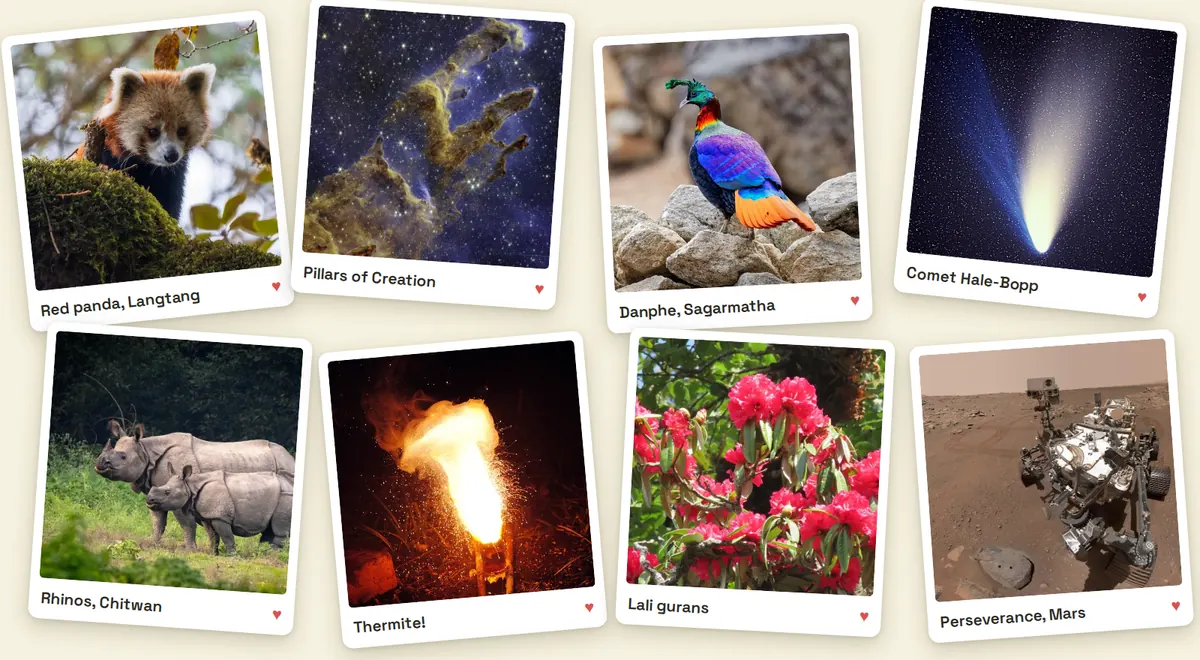
Photos: Sunuwargr (CC BY-SA 4.0); NASA, ESA, CSA, STScI; Pratap Gurung (CC BY-SA 4.0); E. Kolmhofer, H. Raab (CC BY-SA 3.0); Aditya Pal (CC BY-SA 4.0); Nikthestunned (CC BY-SA 3.0); Ananda Raj Devkota (CC BY-SA 3.0); NASA/JPL-Caltech/MSSS. Wikimedia Commons. Science, Explained
Science Playground
Nepal’s school science curriculum as interactive books, one for each grade: every unit said clearly, worked examples and exercises with answers to open when you’re ready, labelled diagrams, things to play with, and the stories and surprises textbooks leave out. For students with any science book.
Open Science, Explained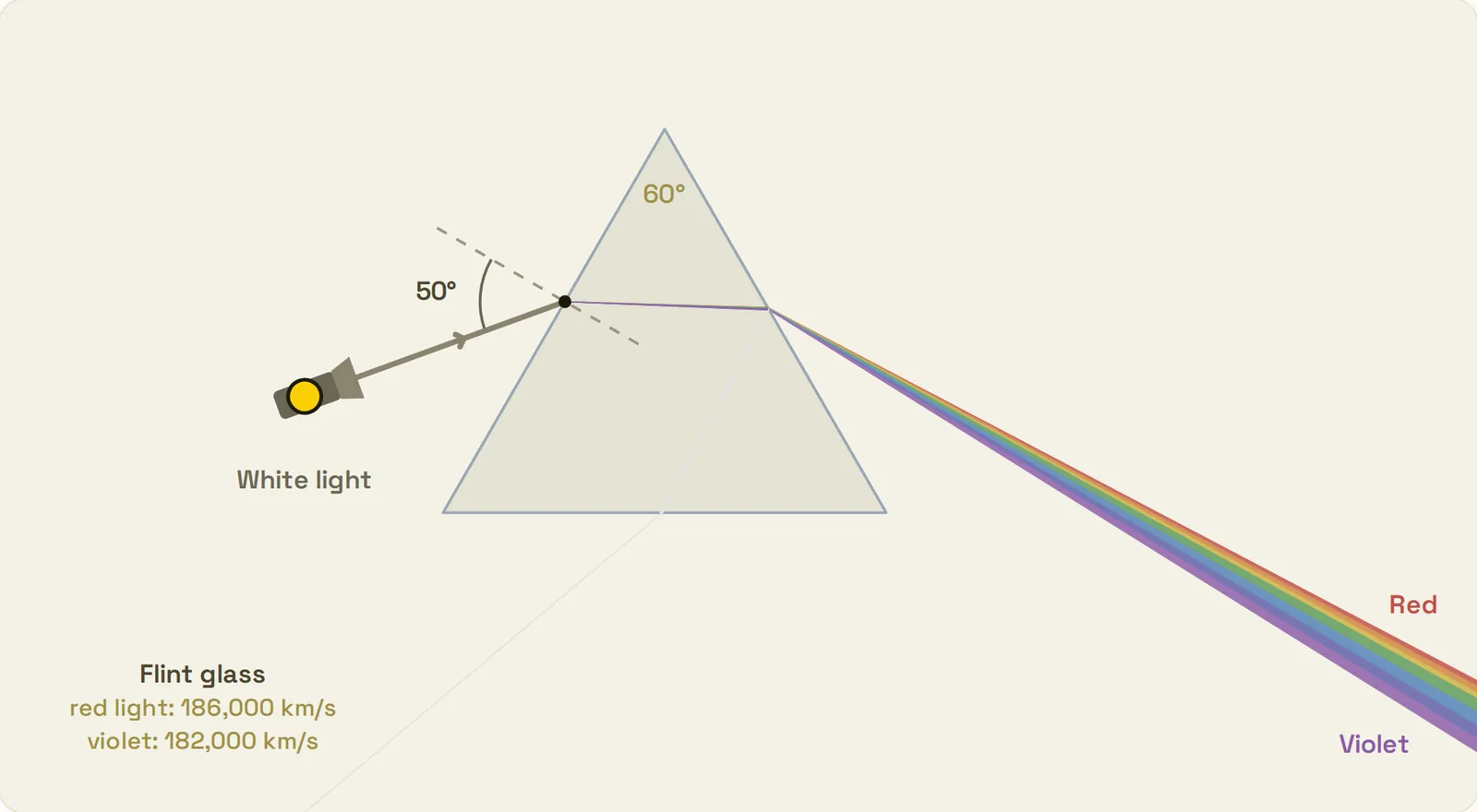
Optics: Interactive Demos
Science Playground
Thirteen hands-on diagrams of how light behaves: mirrors and a kaleidoscope, refraction, total internal reflection, lenses, the pinhole and single-lens camera, prisms, and rainbows. Move the light, the mirrors and the lenses and watch what happens, then read the science behind it.
Open Optics: Interactive Demos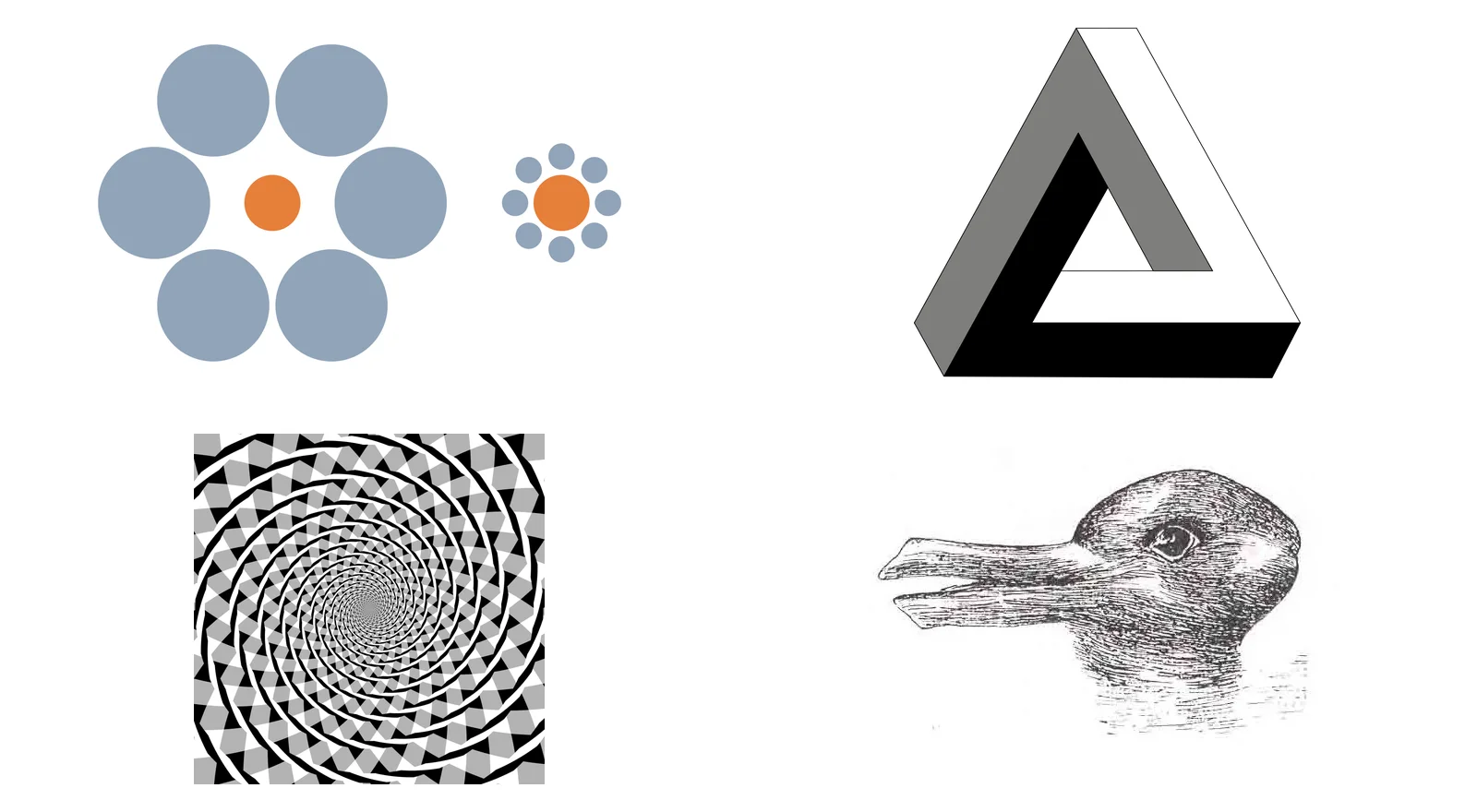
Images: Wikimedia Commons (public domain) Optical Illusions
Science Playground, with pictures from Wikimedia Commons
More than 170 optical illusions, from circles that change size and straight lines that bend to impossible objects, pictures that move when nothing moves, and mirages in the real world. Each one says what to look for, and why your brain is fooled.
Open Optical Illusions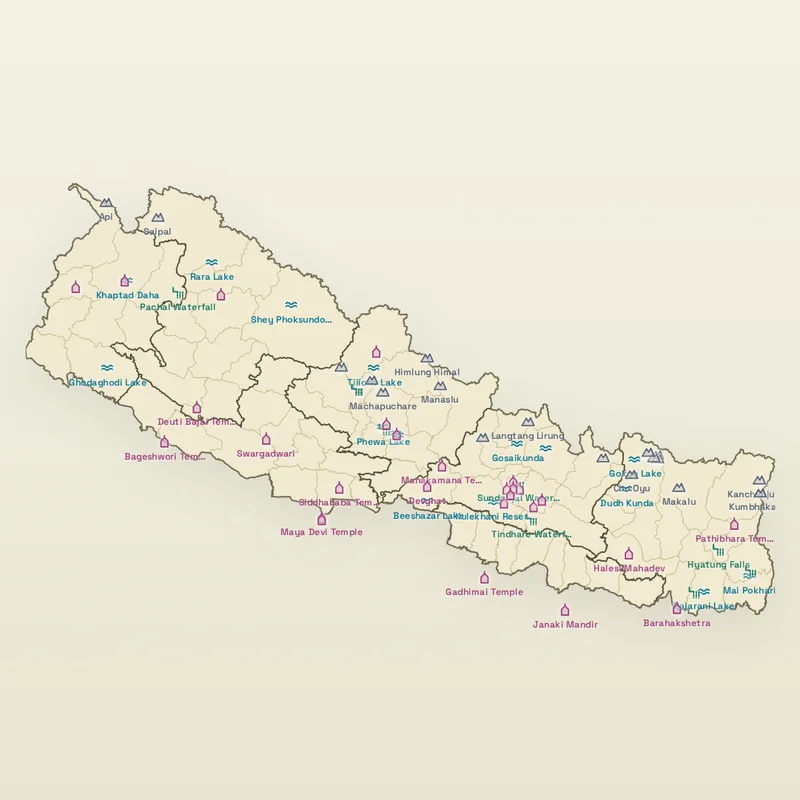
77 Districts: Nepal Map Game
Science Playground
Learn Nepal on an interactive map: all 77 districts, and 71 famous lakes, peaks, waterfalls, and temples. Then test yourself in six game modes, from finding a district by its shape to pinpointing a landmark or naming the district it’s in.
Open 77 Districts: Nepal Map Game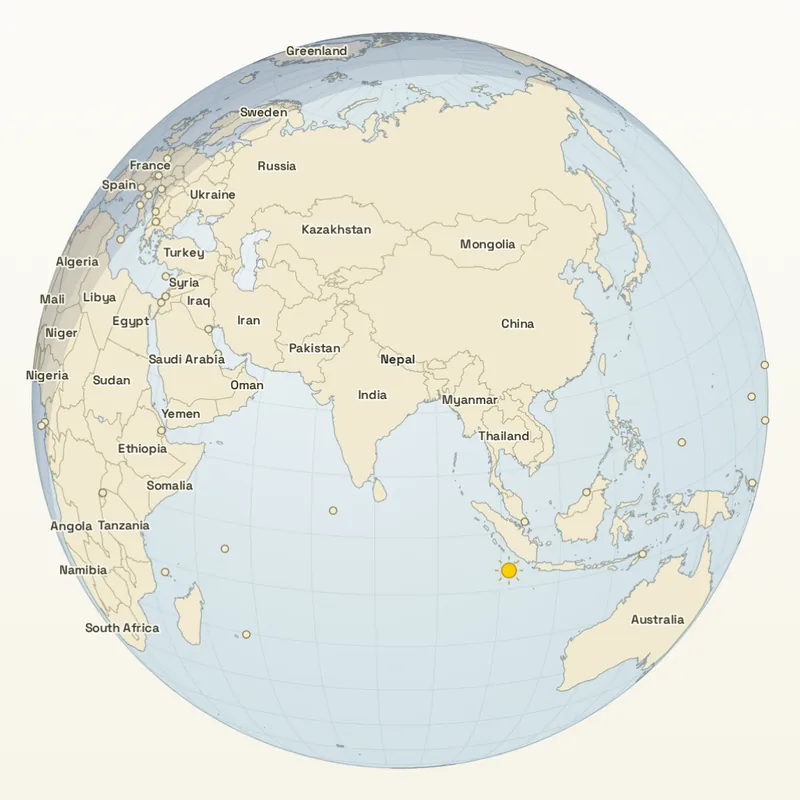
Our World
Science Playground
Every map of the world is drawn from somewhere, and this one is drawn from Nepal. Start in Kathmandu and look outward: how far away the rest of the world is, what time it is there right now, how big other countries really are, where the Earth is highest, deepest and hottest, and what lies straight through the ground beneath your feet. One round planet, 195 countries, and our small place among them, with games at the end to see how much of it you know.
Open Our World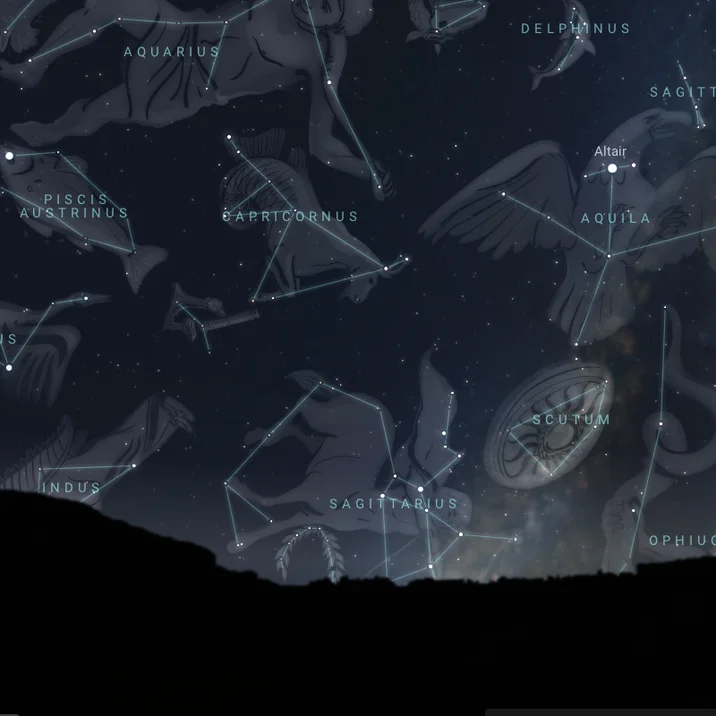
Night Sky
Science Playground, based on Stellarium Web
A planetarium of the sky above Science Playground. Slide through today and tonight to watch the Sun, Moon, planets, and stars rise and set, trace the constellations with their lines and figures, and switch off the daylight to see the stars that are up in the daytime.
Open Night Sky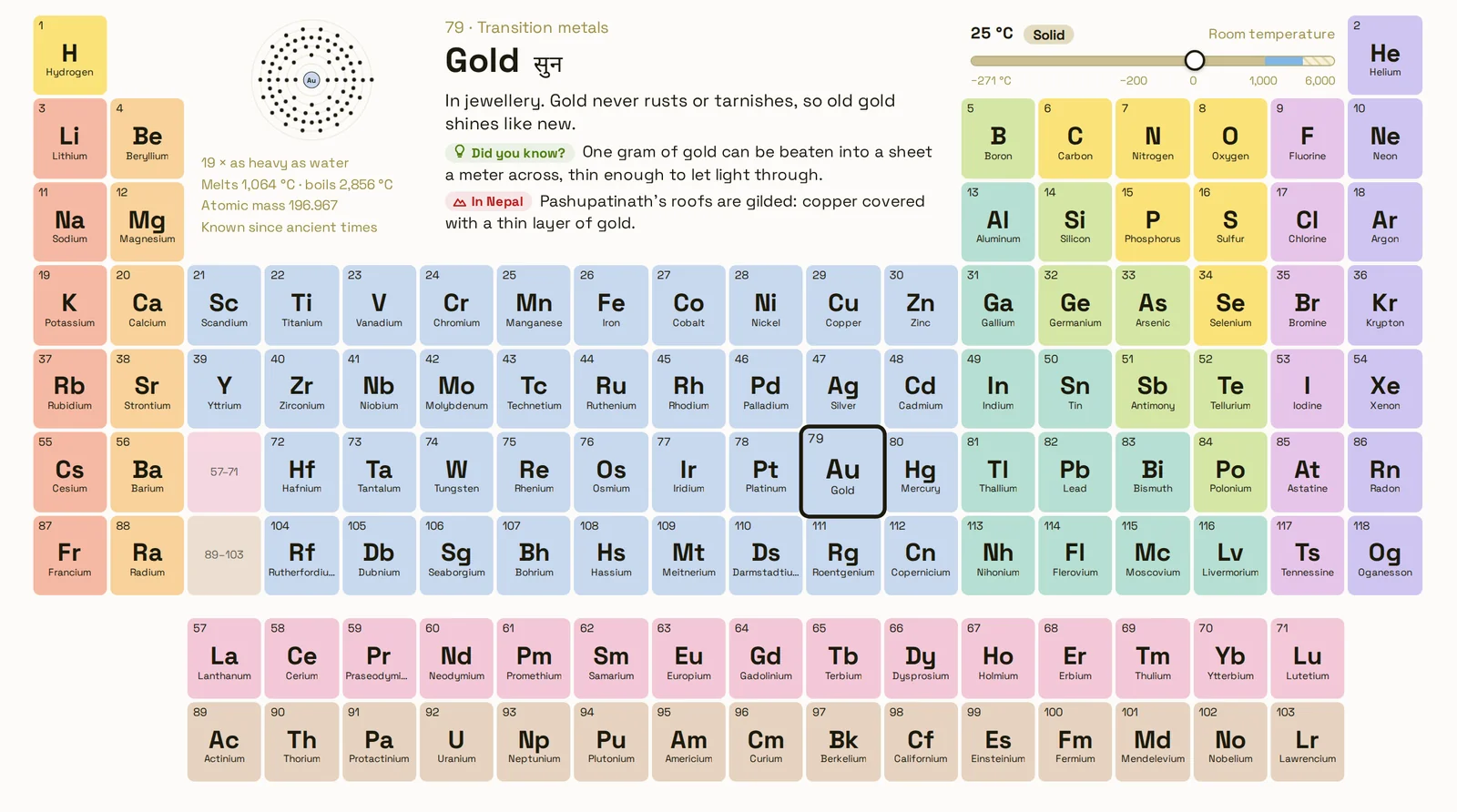
Periodic Table of the Elements
Science Playground
All 118 elements: where you meet them in everyday life and in Nepal, how they got their names, and what happens when you heat them up. Then play: rebuild the table as a jigsaw, guess an element from clues, compare atomic numbers, and mix atoms into 54 molecules in the Molecule Kitchen.
Open Periodic Table of the Elements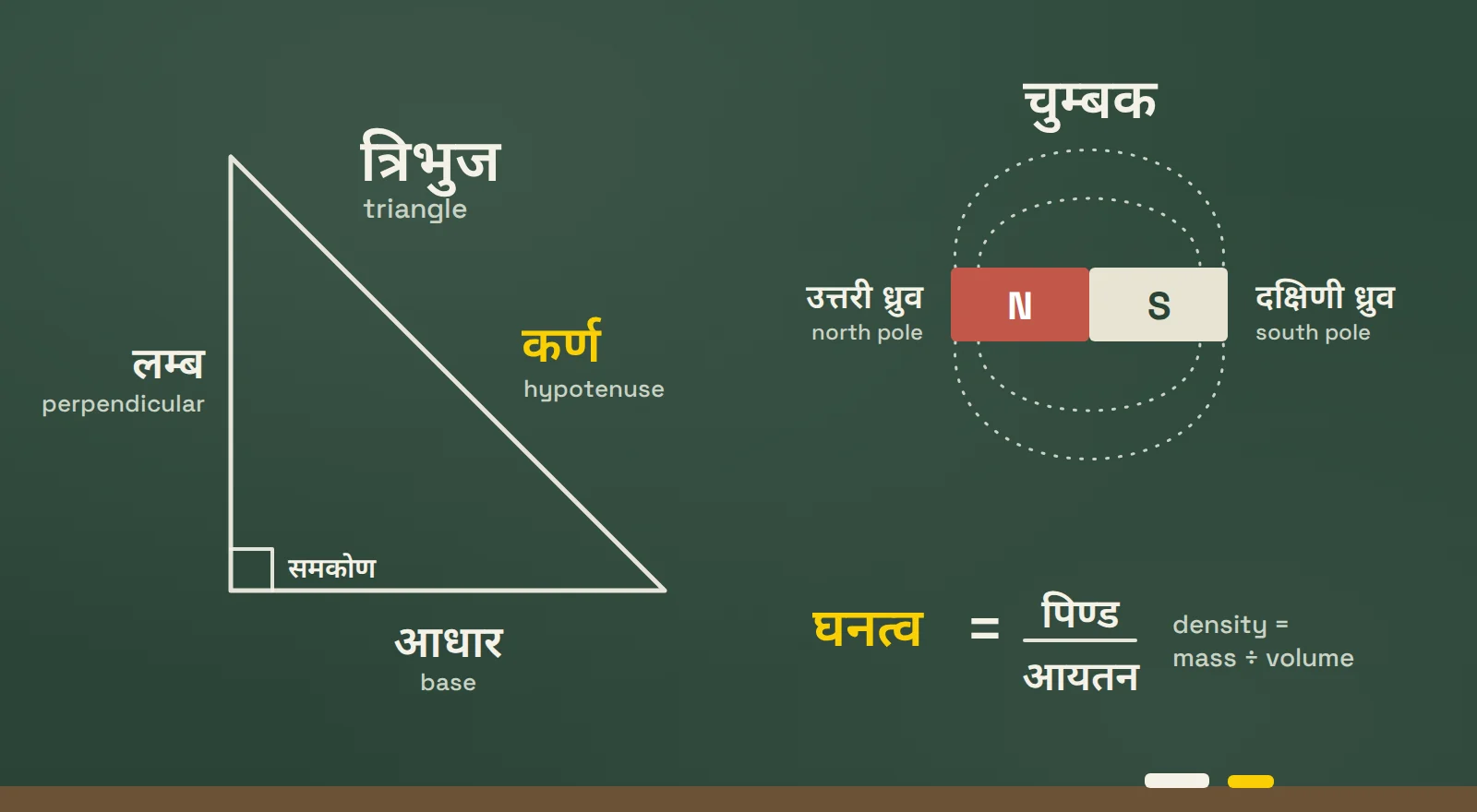
Science and Math in Nepali
Science Playground
The Nepali words for science and math, nearly 1,000 of them, the way Nepal’s school textbooks use them: वर्ग for a square, घनत्व for density, गुरुत्वाकर्षण for gravitation. Search in English, Nepali, or Roman letters, see the small pieces the words are built from, and test yourself in the quiz.
Open Science and Math in Nepali
Nobel Prizes in Science
Science Playground
Every Nobel Prize in Physics, Chemistry, and Medicine since 1901, with where the discovery shows up in our lives today. Start from something you use, like your phone, a vaccine, or an LED bulb, and find the prizes behind it, or look for prizes linked to Nepal, women laureates, and the people the prizes left out.
Open Nobel Prizes in Science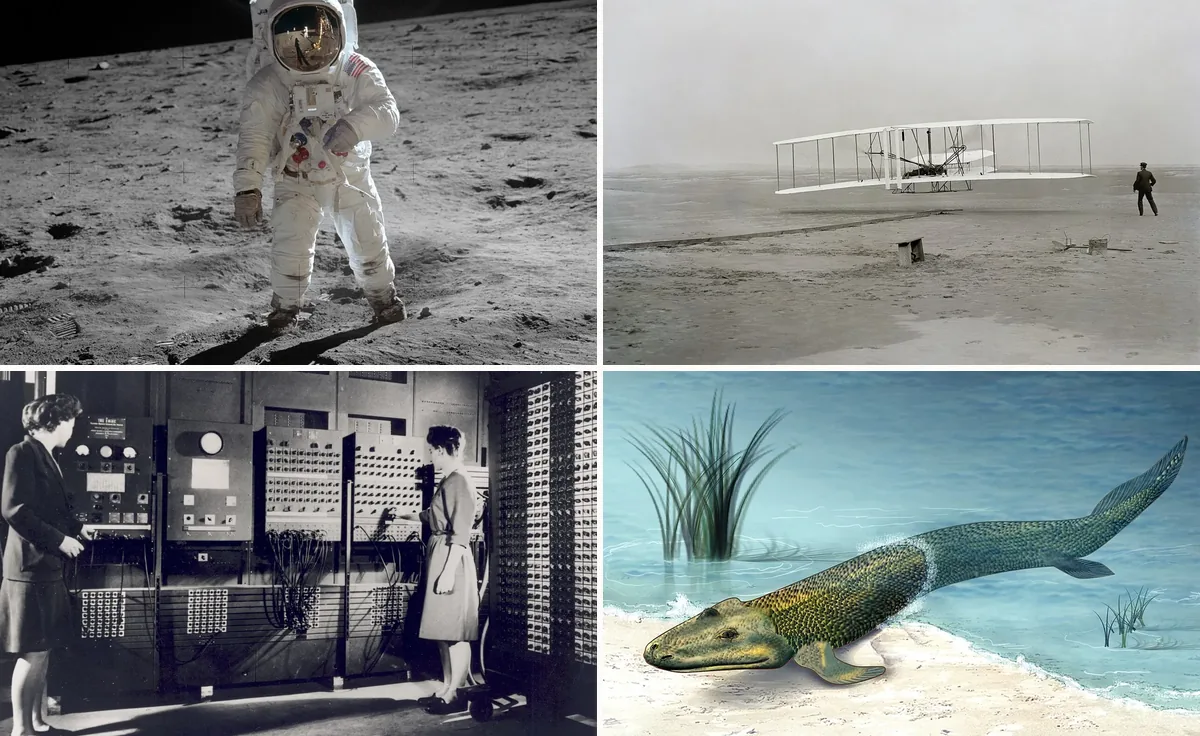
Timelines
Science Playground
Four timelines that fit together: Deep Time, from the Big Bang to the end of the last Ice Age; Science, the discoveries from the round Earth to CRISPR; Inventions, from stone tools to chatbots, with the ancestors of the things you use every day; and Scientists, from Aryabhata to Marie Curie and Sanduk Ruit, with who else was alive at the same time.
Open Timelines
Beyond Science
Science Playground
Not science, but ours, and useful to every student: Nepali Words from Nepal’s textbooks, English Vocabulary from everyday English to the SAT and GRE, and English Grammar practice in the style of the TOEFL.
Open Beyond Science
External websites
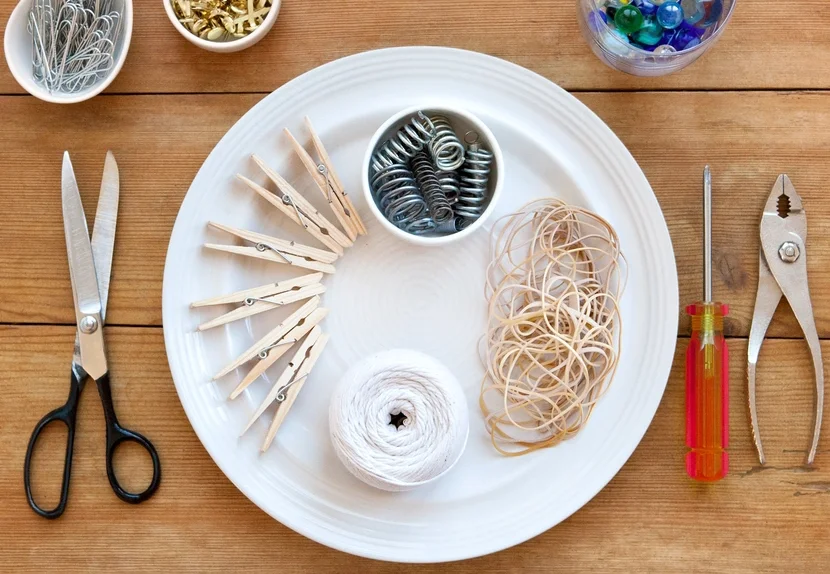
Image: Exploratorium Science Snacks
Exploratorium, San Francisco
Science Playground was inspired by the Exploratorium. Its Science Snacks are 300+ hands-on activities, many of them classroom-sized versions of its exhibits, that teachers and students can build from common, inexpensive materials, each with step-by-step instructions and an explanation of the science.
Open Science Snacks (opens Exploratorium in a new tab)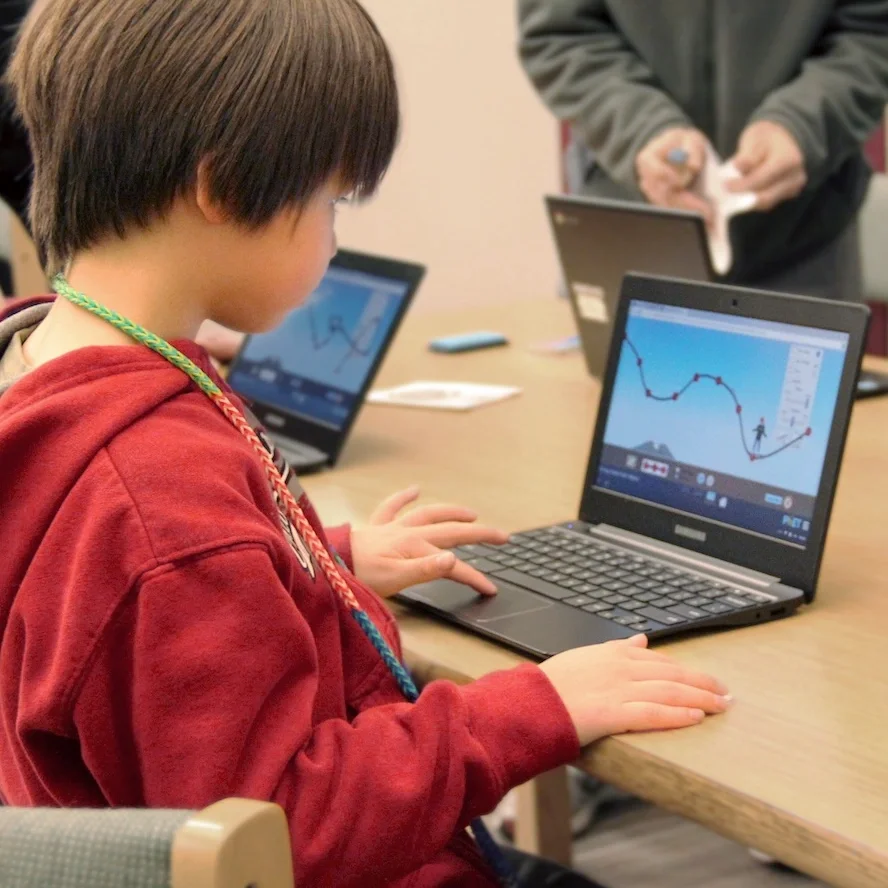
Image: PhET Interactive Simulations, University of Colorado Boulder PhET Interactive Simulations
University of Colorado Boulder
More than 100 free simulations in physics, chemistry, biology, earth science, and math. Swing a pendulum, build a circuit, or rub a balloon on a sweater and watch the charges move, changing one thing at a time to see what happens. Each one is designed from research on how students learn, and tested with students before it’s released.
Open PhET Interactive Simulations (opens University of Colorado Boulder in a new tab)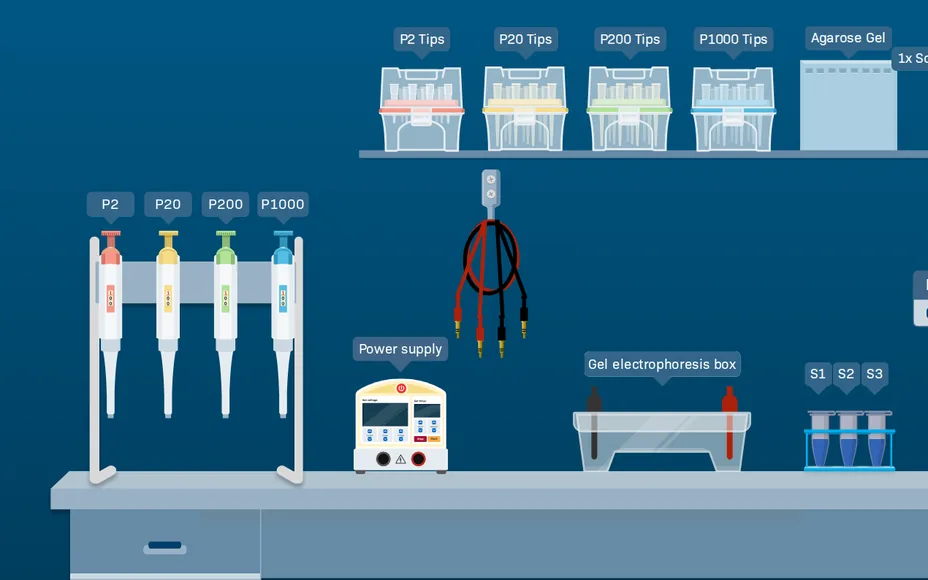
Image: LabXchange LabXchange
Harvard University, with the Amgen Foundation
A free science library from Harvard, with thousands of simulations and interactives. Its best are virtual labs: step up to a lab bench to pipette, run a gel, or put a new gene into bacteria, following the protocol and seeing your own results, the way scientists do it. Everything opens without an account; most of it is biology, and the virtual labs work best on a computer.
Open LabXchange (opens Harvard University in a new tab)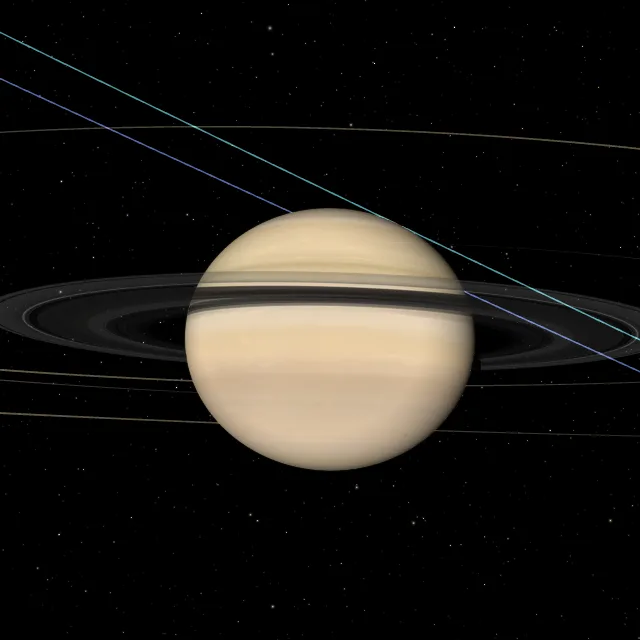
Image: NASA/JPL-Caltech Explore with NASA
NASA, collected by Science Playground
NASA’s free simulations and live trackers on one page: fly through the solar system with real spacecraft, explore maps of the Moon and Mars, watch the Sun and the antennas that talk to spacecraft, and design a wing or a rocket.
Open Explore with NASA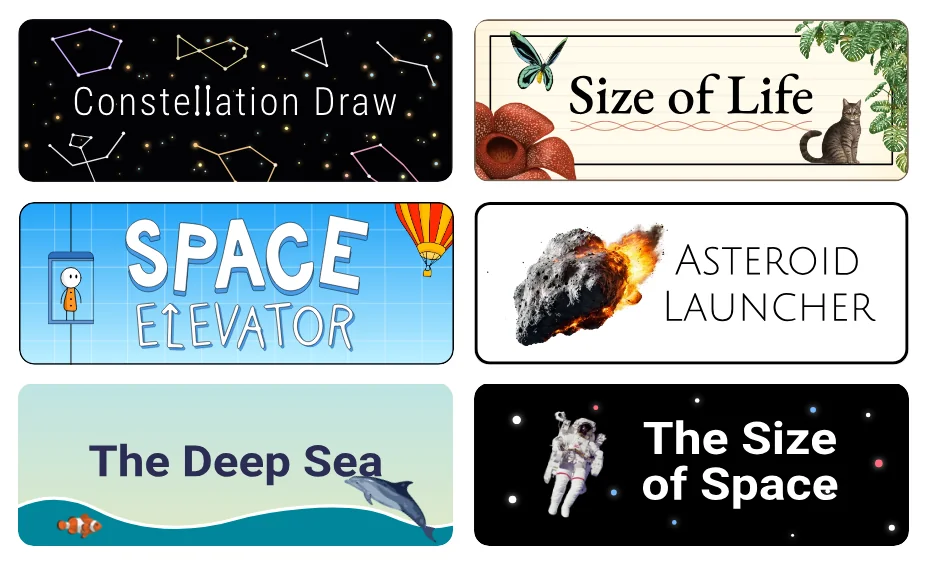
Image: neal.fun neal.fun
Neal Agarwal, picked by Science Playground
Neal Agarwal makes playful, beautifully made pages for the web. These are the ones about science: zoom out from an astronaut to the biggest stars, scroll down to the deepest part of the ocean, see every kind of living thing to scale, launch an asteroid, and draw constellations of your own.
Open neal.fun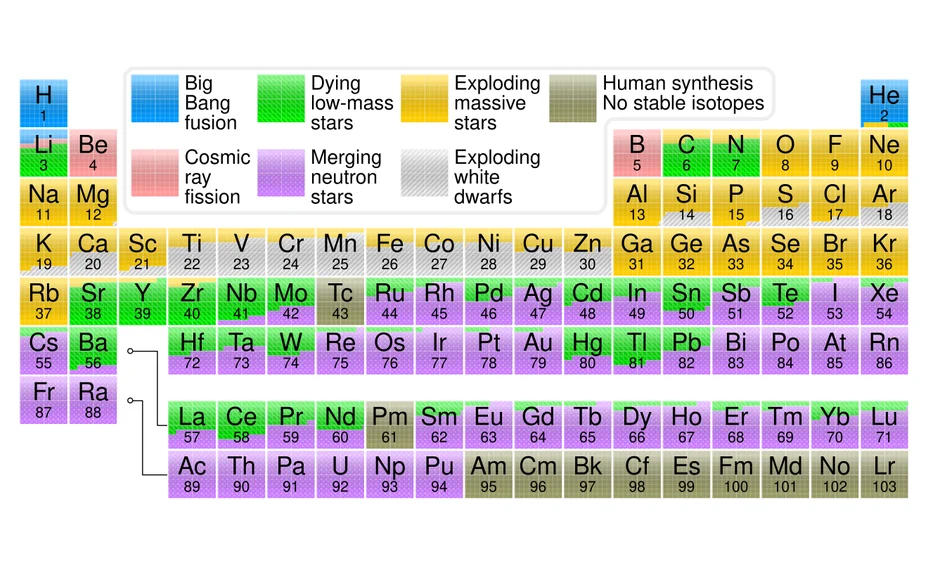
Image: Cmglee, CC BY-SA 3.0 Periodic Tables Online
Picked by Science Playground
The best periodic tables on the web, in one place: the story and data of every element, photos of a sample of each, and tables that show where the elements come from and which ones are running out.
Open Periodic Tables Online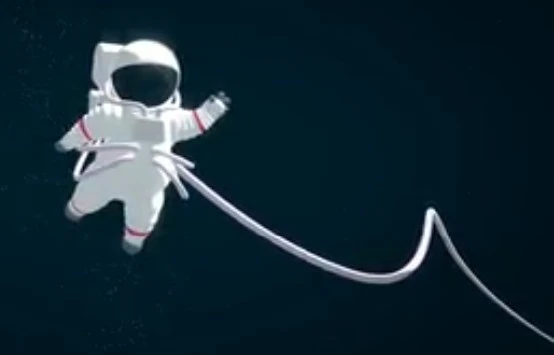
Image: TED-Ed TED-Ed Lessons: Science and Math
TED-Ed
Short animated lessons that answer big questions in science and math: why the sky is blue, how vaccines work, what infinity really means. Each one comes with a quiz, discussion questions, and links to dig deeper, so it works for a classroom or on your own.
Open TED-Ed Lessons: Science and Math (opens TED-Ed in a new tab)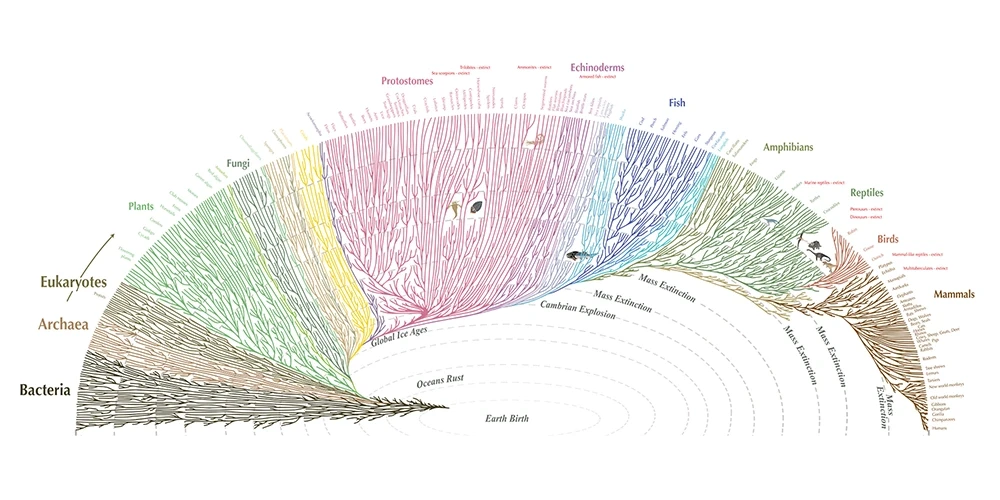
Image: Evogeneao Tree of Life Explorer
Evogeneao
An interactive tree of life: tap any animal, from humans and chimpanzees to octopuses and sea stars, and see how it is related to the others and how long ago they shared an ancestor. Every living thing is a distant cousin of every other.
Open Tree of Life Explorer (opens Evogeneao in a new tab)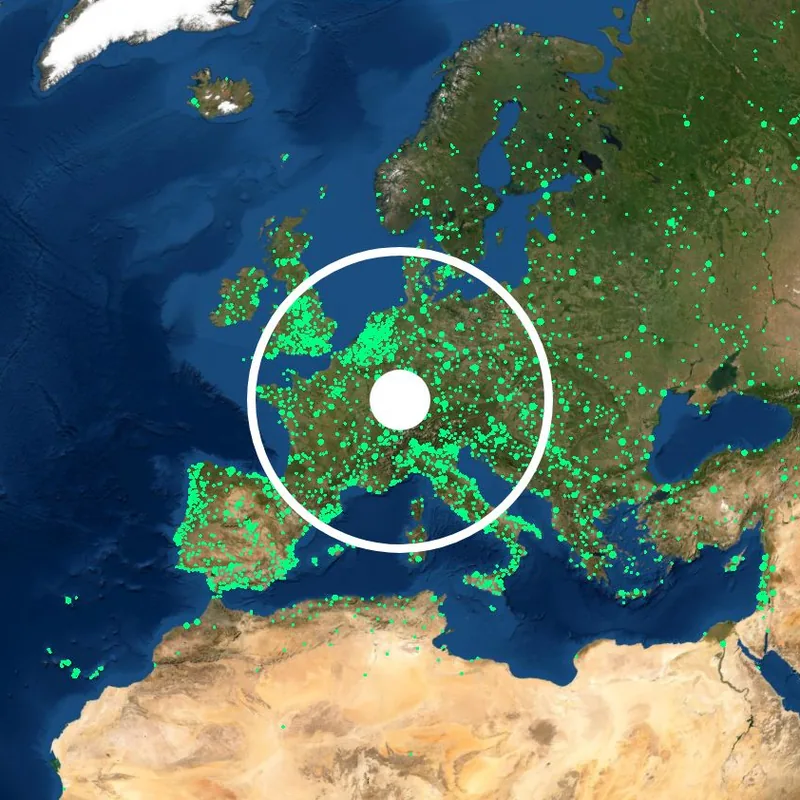
Image: Radio Garden Radio Garden
Radio Garden, the Netherlands
Spin a globe covered in thousands of green dots, each one a radio station broadcasting live, and listen to any of them. It opens on Kathmandu’s stations; from there, travel the world by ear: the music people listen to, the languages they speak, and the news they care about, from a breakfast show in New York while it’s evening here to festival songs in Brazil and folk music across the Himalaya.
Open Radio Garden (opens Radio Garden in a new tab)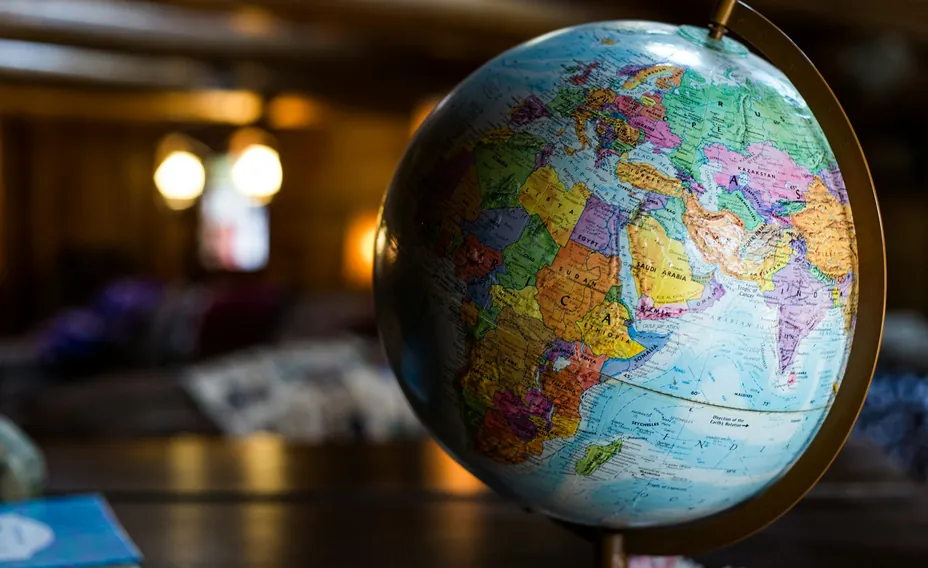
You May Also Like
Picked by Science Playground
More good things for curious minds, and a list we keep adding to.
Open You May Also Like
These links go to other websites. We choose them carefully but don’t control their content.