
- Atomic number
- 66
- Atomic mass
- 162.5
- Shells
- 2, 8, 18, 28, 8, 2
- Configuration
- 1s² 2s² 2p⁶ 3s² 3p⁶ 4s² 3d¹⁰ 4p⁶ 5s² 4d¹⁰ 5p⁶ 6s² 4f¹⁰
- In the table
- period 6, group none (f-block), f-block
- Kind
- Lanthanide
- Valency
- 3 (Dy³⁺)
- State at 25 °C
- solid
- Melts · boils
- 1,412 °C · 2,567 °C
- Density
- 8.6 × as heavy as water
- Known since
- 1886
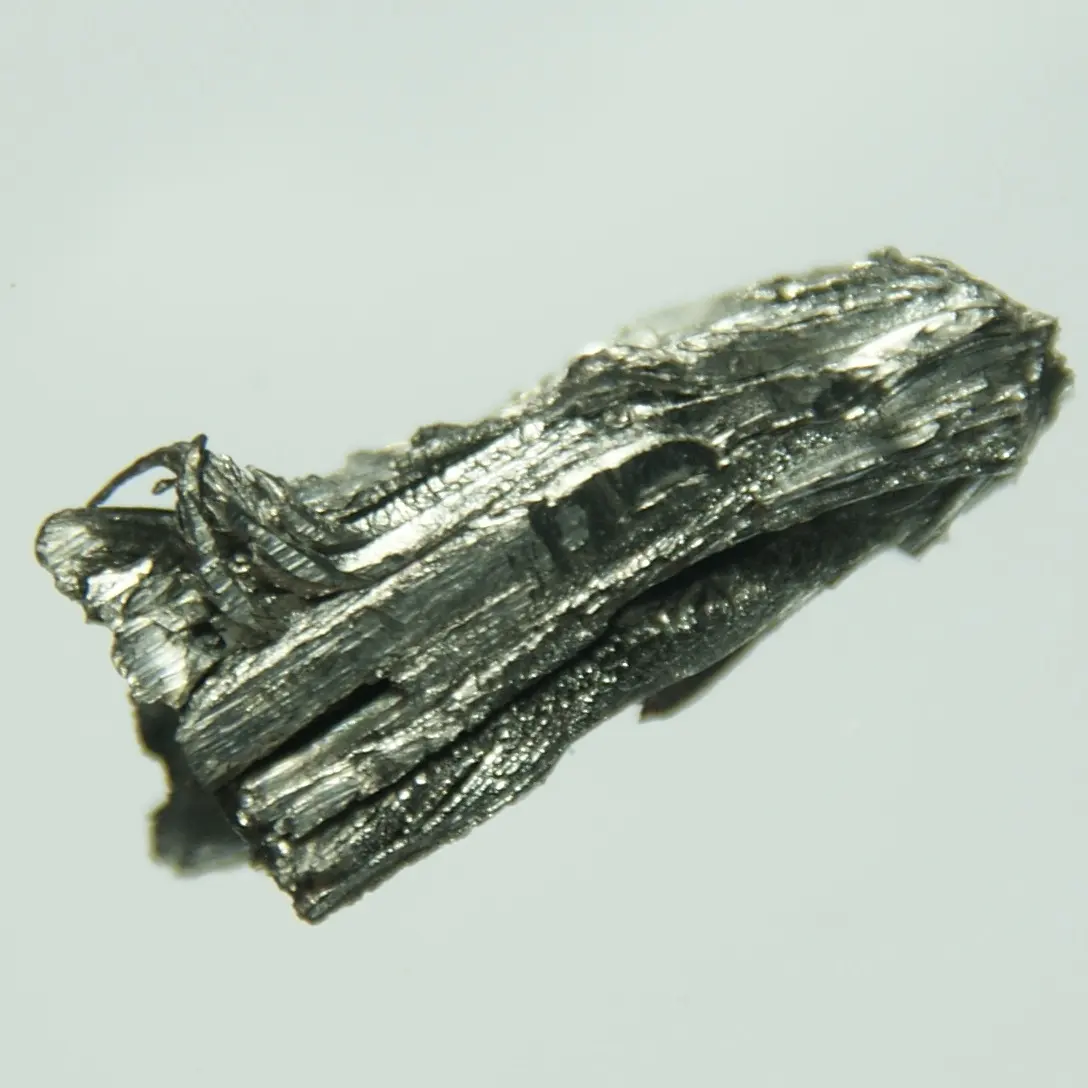
Electric cars are becoming common on Nepal’s roads. Inside each one, a motor spins thousands of times a minute, and it gets hot. Most of these motors are turned by very strong magnets, and a magnet loses its strength when it is heated. What keeps these magnets strong is a few grams of a metal whose name means “hard to get”: dysprosium (say dis-PROH-zee-um).
The dysprosium atom
A dysprosium atom has 66 protons and 66 electrons. Natural dysprosium is a mixture of seven isotopes. The commonest, dysprosium-164 (about 28%), has 98 neutrons: 66 + 98 = 164. Because the seven are mixed, the atomic mass, 162.50, is an average and not a whole number Grade 9: Atomic mass.
By shells its electrons are 2, 8, 18, 28, 8, 2. In subshells it ends 6s² 4f¹⁰ Grade 10: The Aufbau principle: one more 4f electron than terbium before it.
Its place and valency
- Period 6, the tenth lanthanide (f-block), between terbium (65) and holmium (67). Like all the lanthanides, it is a near-twin of its neighbors (fifteen near-twins).
- It loses three electrons and becomes Dy³⁺, with a valency of 3. Dysprosium chloride is DyCl₃.
Dysprosium has a valency of 3 and oxygen a valency of 2. What is the formula of dysprosium oxide?
Pick an answer to see why.
How dysprosium was found and named
Many of the heavy lanthanides came out of one black mineral from the village of Ytterby in Sweden (yttrium’s story). Its earth, yttria, held erbium. Erbium in turn hid holmium. And in 1886 the French chemist Paul-Émile Lecoq de Boisbaudran, who had already found gallium and samarium, found that holmium hid one more element.
Separating it was slow work. Lecoq dissolved the oxide in acid and added ammonia to make part of it come out as a solid, again and again, each time checking the colors of light it gave out. He worked at home, and he needed more than 30 tries before he had it. So he named it from the Greek word dysprositos, “hard to get”. The symbol is Dy.
Even then, pure dysprosium could not be made. That came only around 1950, when Frank Spedding and his team at Iowa State University in the USA learned to separate the rare earths by ion exchange, which sorts their ions by tiny differences in how tightly they stick to a resin.
Where dysprosium is found
In the universe, it is made in stars by catching neutrons (Catching neutrons).
In the Earth’s crust there are only about 5 grams in a tonne of rock. It is mined with the other rare earths from minerals such as monazite, bastnaesite and xenotime, and above all from clays in southern China. Almost all of it comes from China, which in April 2025 began to limit its export (USGS, 2026). In 2025 dysprosium oxide cost about 240 US dollars a kilogram, more than three times as much as neodymium oxide (USGS, 2026).
In Nepal and in your body. Nepal mines no rare earths. Your body has no use for dysprosium.
What dysprosium is like and how it reacts
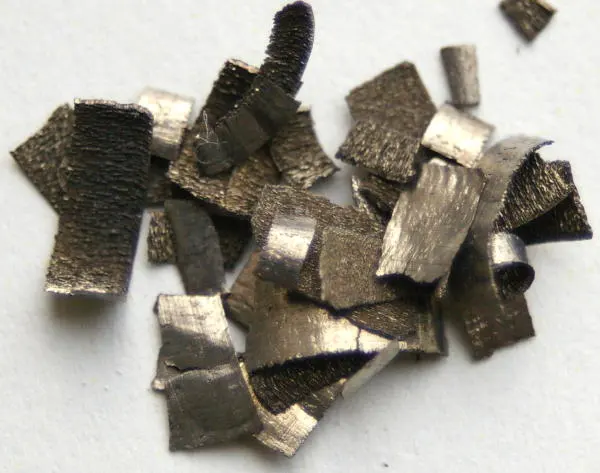
- A bright, silvery metal, soft enough to cut with a knife Grade 9: Properties of metals.
- In air it stays shiny when dry and tarnishes slowly in moist air. Heated, it burns to form the white oxide Grade 9: Metals and oxygen:
4Dy + 3O₂ → 2Dy₂O₃ - With water, slowly when cold and quickly when hot, giving dysprosium hydroxide and hydrogen:
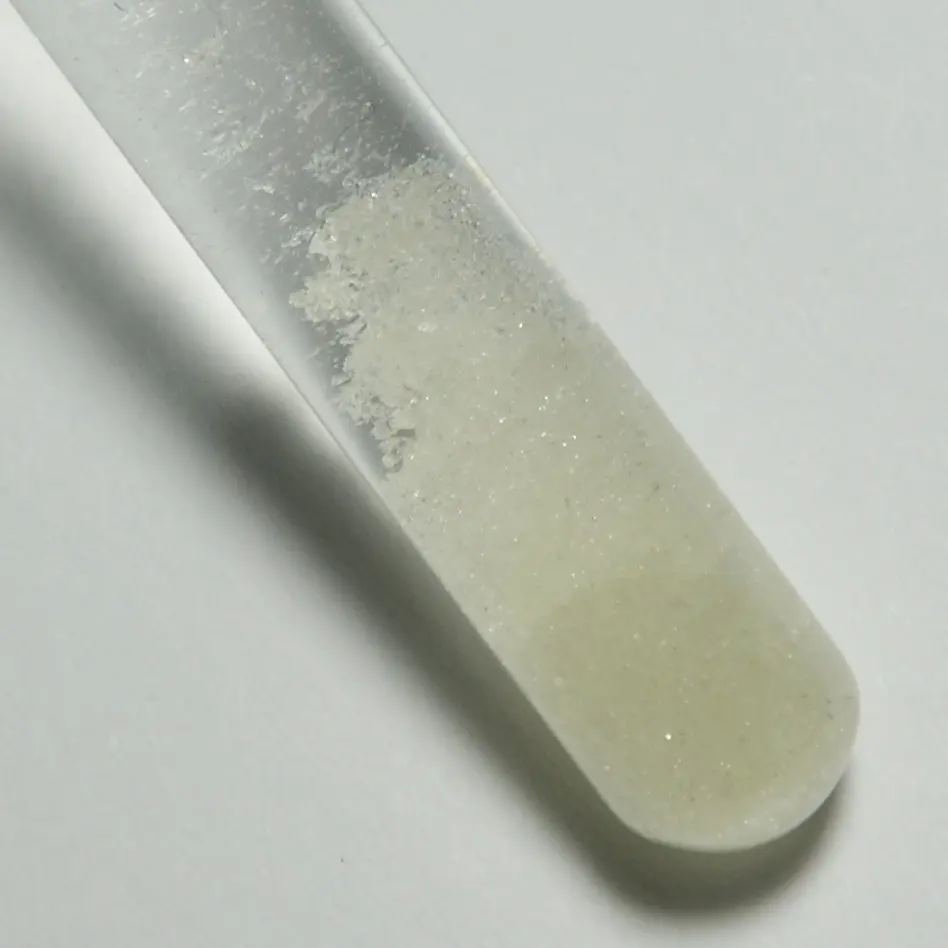
2Dy + 6H₂O → 2Dy(OH)₃ + 3H₂ - With dilute acids, readily, giving hydrogen and a salt of Dy³⁺. Its salts are pale yellow or yellow-green.
- Strongly magnetic, in its own way. Each dysprosium atom is a tiny but strong magnet, because of the many 4f electrons that are not in pairs (look at the boxes in Figure 1). At room temperature the heat keeps these tiny magnets pointing every which way, so a magnet pulls on dysprosium only gently. Cooled far below zero, colder than any place on Earth, dysprosium becomes a magnet as strong as iron.
Magnets that stand the heat
The strongest magnets in the world are neodymium magnets, made of neodymium, iron and boron (neodymium’s magnets). They are small and light for their strength, so they are used in earbuds, hard disks, drones, washing machines and, most of all, in the motors of electric cars and the generators of many wind turbines Grade 10: The electric motor.
But they have a weak point. You learned in Grade 8 that heating a magnet weakens it Grade 8: Demagnetization by heating. A magnet is made of tiny parts that are each a small magnet, all lined up Grade 8: Molecular theory of magnetism. Heat shakes them, and once some turn round, the magnet is weaker for good. An ordinary neodymium magnet is safe only up to about 80 °C, and a car motor gets hotter than that.
The answer is to replace a few percent of the neodymium with dysprosium (or the costlier terbium). Dysprosium atoms hold the direction of their magnetism very firmly, so they make it much harder for heat, or the changing fields inside a motor, to turn the tiny magnets round. Such magnets keep working up to about 200 °C. Magnets are now dysprosium’s main use, and the demand for it grows with every electric car.
Why is a little dysprosium added to the neodymium magnets of electric car motors?
Pick an answer to see why.
Other uses
- Terfenol-D. With terbium and iron, dysprosium makes the alloy that grows longer in a magnetic field, used in sonar and in speakers that turn a whole table into a loudspeaker (Terfenol-D). The D in its name is for dysprosium.
- Nuclear reactors. Dysprosium is very good at catching neutrons, like gadolinium. Its oxide, mixed with nickel, is used in control rods that soak up neutrons to keep the chain reaction steady Grade 9: Nuclear fission. It does not swell or crack after years in the reactor.
- Bright white lamps. A little dysprosium iodide in some metal-halide lamps, used for lighting film sets, gives a very bright light with natural colors.
- Measuring radiation. Crystals with a little dysprosium in them store some of the energy of the radiation that hits them, and give it out as light when heated. Badges with such crystals, worn by people who work with X-rays or radioactive materials, show how much radiation they have received.
Dysprosium and your health
Dysprosium has no known job in the body and is of low toxicity. Its salts that dissolve in water are mildly poisonous if swallowed in large amounts; those that don’t dissolve are thought to be harmless. Like many metals, dysprosium as a fine powder can catch fire.
In your science books
- Grade 8: the molecular theory of magnetism and demagnetization by heating.
- Grade 9: atomic mass, the criss-cross method, nuclear fission and the properties of metals.
- Grade 10: the Aufbau principle, the lanthanides and the electric motor.
- Going further: where dysprosium is made.
More to explore
- Its neighbors: terbium before it, its partner in Terfenol-D, and holmium after it, out of which it was separated; neodymium, whose magnets it improves; yttrium, with the story of Ytterby, and lanthanum, with the story of the whole row.
- Play: find dysprosium in Guess the Element, the Periodic Table Jigsaw and Higher or Lower.
- Read more: dysprosium at the Royal Society of Chemistry and at PubChem.