
- Atomic number
- 44
- Atomic mass
- 101.07
- Shells
- 2, 8, 18, 15, 1
- Configuration
- 1s² 2s² 2p⁶ 3s² 3p⁶ 4s² 3d¹⁰ 4p⁶ 5s¹ 4d⁷
- In the table
- period 5, group 8 (VIIIB), d-block
- Kind
- Transition metal
- Valency
- 3 and 4 (as in RuCl₃ and RuO₂), also 2, and up to 8 (RuO₄)
- State at 25 °C
- solid
- Melts · boils
- 2,334 °C · 4,150 °C
- Density
- 12.1 × as heavy as water
- Known since
- 1844
Somewhere in a big building far from you, the photos and messages you have sent are kept on hard disks: spinning disks, each with a surface on which billions of tiny magnets point up or down. Under those magnets lies a layer of a metal few people have heard of, often only a few atoms thick. Without it, the tiny magnets would not stand up straight, and the disk would hold far less.
The same metal tips the nibs of fine fountain pens, coats the electrodes that make chlorine for clean water, and has helped two teams of chemists win Nobel Prizes. It is ruthenium (say “roo-THEE-nee-um”), one of the rarest metals on Earth. Here is its story.
The ruthenium atom
A ruthenium atom has 44 protons, so ruthenium’s atomic number is 44, and a neutral atom has 44 electrons. The most common kind, ruthenium-102, has 58 neutrons: mass number 44 + 58 = 102.
Its shells are 2, 8, 18, 15, 1 Grade 8: Bohr and Bury’s rule. The fourth shell (N) is not full: it can hold 32, but its 4d and 4f subshells are still filling as the period goes on.
Its electronic configuration
In the Aufbau order Grade 10: The Aufbau principle, 5s fills before 4d, so you would expect ruthenium to end 5s² 4d⁶, just like iron above it (4s² 3d⁶). The real atom is:
1s² 2s² 2p⁶ 3s² 3p⁶ 4s² 3d¹⁰ 4p⁶ 5s¹ 4d⁷
One electron has moved from 5s into 4d. In period 5, the 5s and 4d subshells have almost the same energy, so a small change can tip an electron from one to the other. Most of ruthenium’s neighbors in period 5 do the same: niobium, molybdenum, rhodium and palladium all have fewer than two 5s electrons. Iron and osmium, above and below ruthenium in its group, do not. A rule such as the Aufbau order is a very good guide, but the real atom has the last word.
How many electrons are in the outermost shell of a ruthenium atom?
Pick an answer to see why.
Its place in the periodic table
- Period 5, because its electrons are in five shells. It sits between technetium (43) and rhodium (45).
- Group 8, the first of the three columns that older tables call VIIIB, with iron above it and osmium below.
- d-block, because its last electrons go into a d subshell: a transition metal Grade 10: Metals.
Ruthenium is the lightest of the six platinum group metals, a family of rare, unreactive, precious metals found together in the same ores: ruthenium, rhodium and palladium in period 5, and osmium, iridium and platinum in period 6.
Its valency
Ruthenium can use its eight outer electrons (5s¹ 4d⁷) in different numbers, so it has a variable valency Grade 9: Variable valency. The commonest are 3, as in brown ruthenium chloride (RuCl₃), and 4, as in ruthenium dioxide (RuO₂). It can even use all eight, in ruthenium tetroxide, RuO₄: no other transition metal of period 5 reaches a valency of 8.
In ruthenium dioxide, RuO₂, oxygen has a valency of 2. What is the valency of ruthenium in it?
Pick an answer to see why.
How ruthenium was found and named
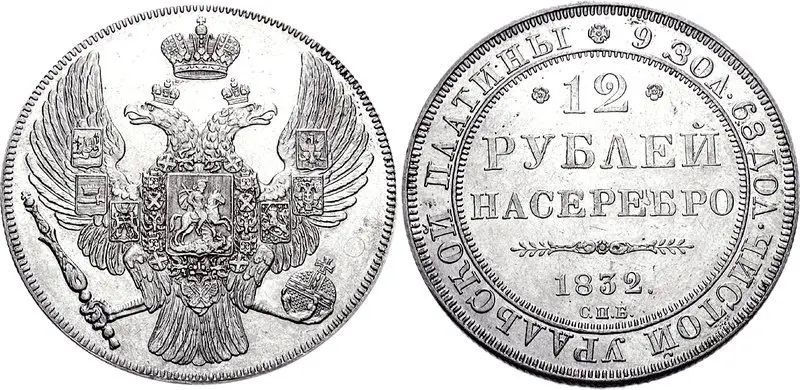
In the 1820s, rich grains of platinum were found in the river sands of the Ural Mountains, in Russia, and from 1828 Russia even made coins of platinum. Making them left behind a dark, stubborn residue that would not dissolve even in aqua regia (a mixture of concentrated nitric and hydrochloric acids that dissolves gold and platinum). Chemists suspected that something new was hiding in it.
- 1808. The Polish chemist Jędrzej Śniadecki announced a new metal in platinum ore from South America, which he called vestium. Others could not find it, and he withdrew his claim.
- The late 1820s. Gottfried Osann, a German chemist at Dorpat (now Tartu, in Estonia), studied the residues of Ural platinum and reported three new metals. One he named ruthenium, from Ruthenia, an old Latin name for Russia. But he could not repeat his work, and he gave up the claim.
- 1844. Karl Klaus (also written Karl Ernst Claus), a chemist at Kazan University in Russia who had grown up in Dorpat, worked through the leftovers of platinum refining with great patience. He separated a new metal, got about 6 grams of it, proved that it was an element, and kept Osann’s name for it.
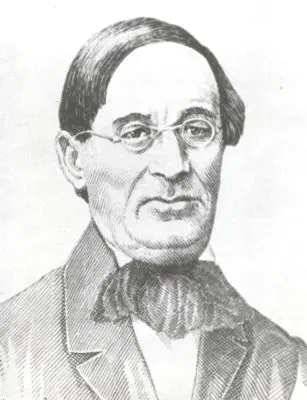
Klaus wrote that he named it in honor of his motherland. Ruthenium was the first element named after a country; gallium (France), germanium (Germany) and polonium (Poland) came later. Its symbol is Ru. Nepali uses the English name: रुथेनियम.
Where ruthenium is found
In the universe. Ruthenium is heavier than iron, so it could not be made by the fusion in an ordinary star’s core. It was built when atomic nuclei caught neutrons one after another, in giant stars and in collisions of dead stars (Heavier than iron).
In the Earth’s crust. Ruthenium is one of the rarest metals in the crust, far rarer than gold. It is almost never found on its own. It comes mixed with the other platinum group metals, in the ores of platinum and nickel, and is separated from them in the last steps of refining. The world produces only about 30 tonnes of it a year, most of it from South Africa, with Russia next. For comparison, about 3,300 tonnes of gold were mined in 2025 (USGS).
In Nepal. No ruthenium is mined in Nepal. You meet it only in imported electronics.
In your body. None: ruthenium has no known use in any living thing.
What ruthenium is like
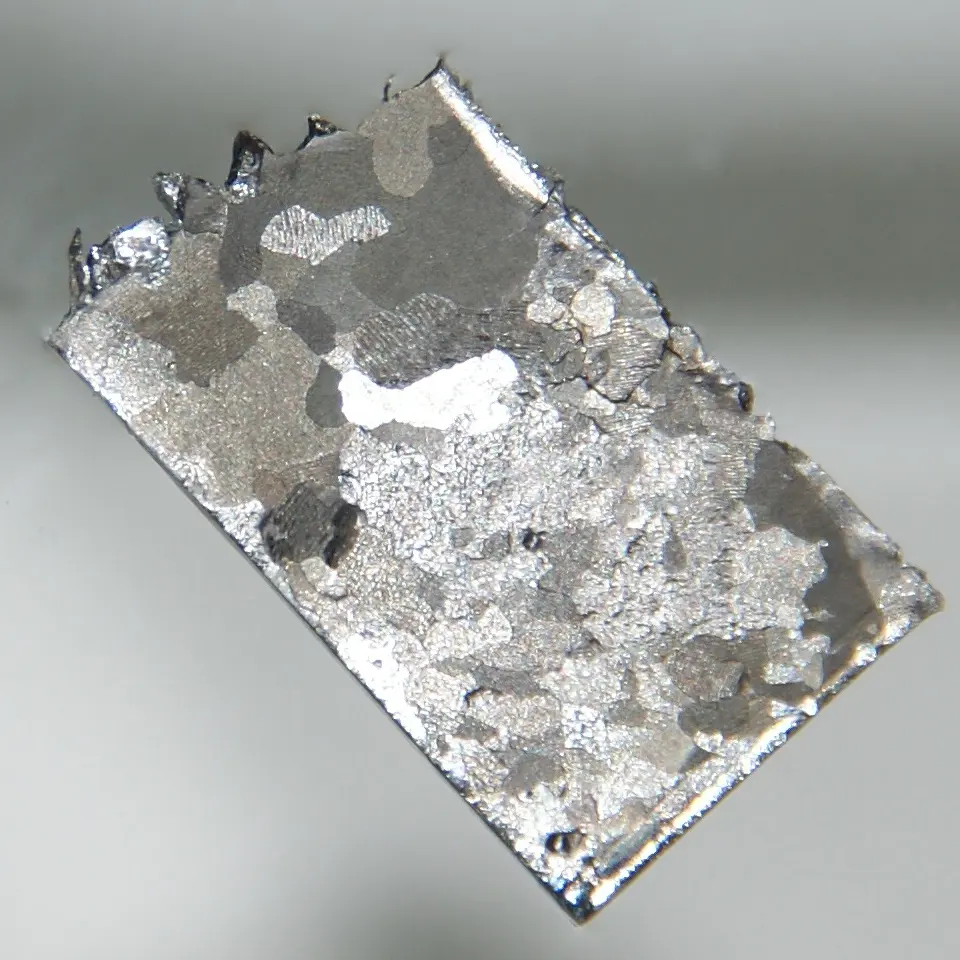
- A hard, brittle, silvery-white metal. Unlike most metals, it cannot easily be hammered into shape: it cracks instead. So it is usually used as a thin coating, or as a small part of an alloy.
- Fairly heavy: its density is about 12 g/cm³, a little more than lead.
- Melts at 2,334 °C, far hotter than iron (1,538 °C).
- Does not tarnish. Air and water leave it bright, and no single acid dissolves it; even aqua regia barely attacks it.
- Not magnetic like its neighbor iron above it, though it is used beside magnetic metals, as you will see.
How ruthenium reacts
At room temperature, ruthenium is one of the least reactive metals. Heated strongly in air (above about 800 °C), it slowly forms black ruthenium dioxide:
Ru + O₂ → RuO₂
With very strong oxidizing agents it goes further, to ruthenium tetroxide, RuO₄, a yellow solid that melts and turns to vapor easily. It is very poisonous, and it is one reason chemists treat ruthenium compounds with care.
Ruthenium dioxide, on the other hand, is a useful compound: unusually for an oxide, it conducts electricity like a metal, and it is very hard to wear away.
Ruthenium at work
In hard disks
A hard disk stores each bit as a tiny patch of magnetic grains, magnetized either “up” or “down” Grade 8: Uses of magnets. The smaller the patches, the more a disk can hold. But very small magnets can lose their direction, and the grains must stand straight up and apart from each other.
- In 2001, the company IBM began making disks with two magnetic layers separated by a layer of ruthenium only three atoms thick. The ruthenium made the two layers point in opposite directions and steady each other, so the bits could be made smaller without fading. Engineers nicknamed it “pixie dust”.
- Today’s disks store their bits as tiny magnets standing upright. The grains of the recording layer, an alloy of cobalt, chromium and platinum, are grown on a layer of ruthenium, whose own crystals make them stand straight and keep them apart. A ruthenium film a few atoms thick is often used deeper down, too.

The heads that read these disks work by giant magnetoresistance, which won the Nobel Prize in Physics in 2007.
In electronics and electrical contacts
Electronics use more ruthenium than anything else. Paste of ruthenium dioxide is printed onto tiny chip resistors, millions of which sit on the circuit boards of phones, televisions and computers. And because ruthenium is hard and never tarnishes, it is plated onto electrical contacts, the parts of switches that touch each other thousands of times.
Making chlorine
Chlorine for cleaning drinking water and making PVC pipes is made by passing electricity through salt water (Chlorine). The electrodes that the chlorine forms on are made of titanium coated with ruthenium dioxide. Chlorine attacks almost every metal, but this coating conducts electricity and lasts for years.
Hardening other metals
A few percent of ruthenium makes platinum and palladium much harder, for jewelry and for contacts that must not wear. A tiny amount (about 0.1%) makes titanium resist corrosion even better.
Catalysts that won Nobel Prizes
A catalyst speeds up a reaction without being used up Grade 10: Catalyst. Many ruthenium compounds are good catalysts, because ruthenium changes its valency easily and holds other molecules just firmly enough.
- In 1986, the Japanese chemist Ryoji Noyori made ruthenium catalysts that add hydrogen to a molecule so as to give only one of its two mirror-image forms, as many medicines need: the Nobel Prize in Chemistry in 2001.
- In 1992, the American chemist Robert Grubbs made a ruthenium catalyst for metathesis, a reaction that swaps the parts of two molecules like dancers changing partners. Unlike earlier catalysts, it is not spoiled by air or water: the Nobel Prize in Chemistry in 2005.
Grubbs’ ruthenium catalyst is used to make medicines. After a batch is made, how much of the catalyst has been turned into the medicine?
Pick an answer to see why.
Sunlight into electricity. Some ruthenium compounds are brightly colored and soak up sunlight. In 1991, the Swiss scientist Michael Grätzel and his team used one to make a dye-sensitized solar cell, which works a little like a leaf, using a dye to catch light. Cells of this kind are now sold to power small gadgets from room light.
Isotopes of ruthenium
Natural ruthenium is a mixture of seven stable isotopes, from ruthenium-96 to ruthenium-104. The most common is ruthenium-102 (about 32%), then ruthenium-104 (19%) and ruthenium-101 (17%).
A radioactive isotope, ruthenium-106, is made in nuclear reactors when uranium splits. Half of it decays in about a year. Doctors use it in small curved plates, stitched for a few days against the back of the eye, to destroy a kind of eye tumor with its radiation.
Ruthenium and your health
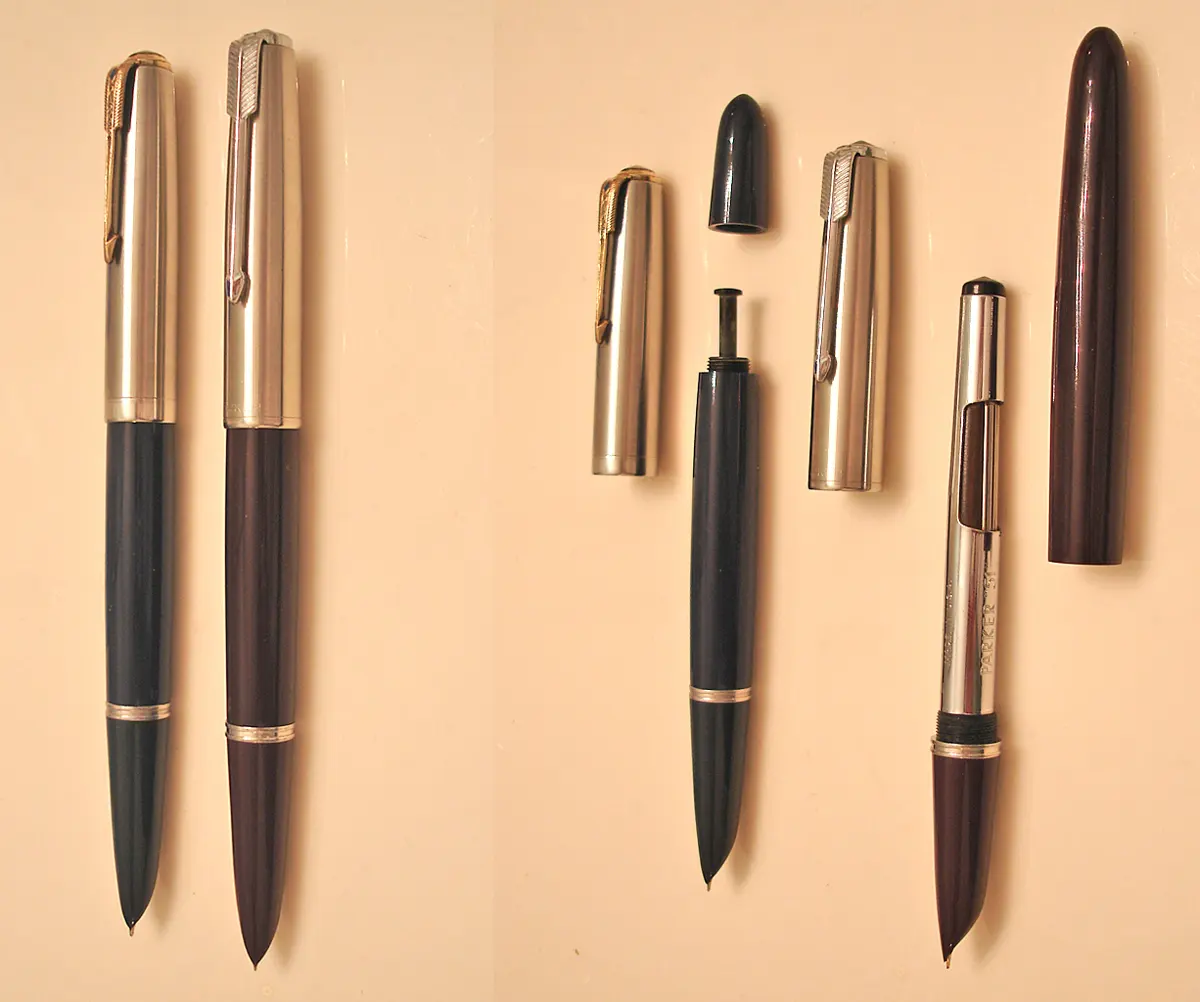
Your body has no need for ruthenium, and there is almost none in food. The metal itself is harmless: it does not dissolve or react in the body, which is why it can be used in jewelry and pens.
Some of its compounds are another matter. Ruthenium tetroxide is highly toxic and its vapor attacks the eyes and lungs, so it is handled only in laboratories, in a fume cupboard. Scientists are also testing some ruthenium compounds as cancer medicines, hoping they will be gentler than the platinum drugs used today.
Surprising facts and records
- Rarer than gold, and yet the cheapest of the platinum group metals (about US$690 an ounce in 2025, against about 3,300 for gold; USGS), because fewer people want it.
- The connoisseur’s element. The British Nobel Prize winner Geoffrey Wilkinson called ruthenium “an element for the connoisseur”, for the huge variety of its compounds.
- A chemistry first. In 1969 Carol Creutz and Henry Taube made a molecule with two ruthenium atoms joined by a bridge, which share an electron between them so evenly that each seems to have a valency of two and a half. It helped explain how electrons jump between metal atoms, the work behind Taube’s Nobel Prize in Chemistry in 1983.
- Named after a country, the first element to be.
In your science books
- Grade 8: the 2n² rule, groups and periods, precious metallic minerals and uses of magnets.
- Grade 9: variable valency, atomic mass and properties of metals.
- Grade 10: electronic configuration, transition metals and catalysts.
- Going further: how catalysts lower the hill and where heavy atoms are made.
More to explore
- Nobel Prizes with ruthenium in them: metathesis (2005, Grubbs’ ruthenium catalyst), left-handed and right-handed molecules (2001, Noyori’s ruthenium catalysts), electrons jumping between metal atoms (1983, the Creutz–Taube ion) and giant magnetoresistance (2007, reading hard disks).
- Its family: iron, above it in group 8, and platinum, the best known of the platinum group metals.
- Play: find ruthenium in Guess the Element and the Periodic Table Jigsaw.
- Read more: ruthenium at the Royal Society of Chemistry and at PubChem.