
- Atomic number
- 117
- Atomic mass
- 294.21
- Shells
- 2, 8, 18, 32, 32, 18, 7
- Configuration
- 1s² 2s² 2p⁶ 3s² 3p⁶ 4s² 3d¹⁰ 4p⁶ 5s² 4d¹⁰ 5p⁶ 6s² 4f¹⁴ 5d¹⁰ 6p⁶ 7s² 5f¹⁴ 6d¹⁰ 7p⁵
- In the table
- period 7, group 17 (VIIA), p-block
- Kind
- Halogen
- Valency
- 1 (by its group); 1 and 3 predicted
- State at 25 °C
- expected to be a solid
- Melts · boils
- not known · not known
- Known since
- 2010
Every element in the periodic table has been found or made by someone, and the last one to be added is tennessine, element 117, first made in 2010. It sits in group 17, with fluorine, chlorine, bromine and iodine, the halogens, the elements that grab an electron and make salts. But calculations say tennessine would hardly ever grab one. It may be a halogen only by its place in the table.
The tennessine atom
A tennessine atom has 117 protons (atomic number 117) and 117 electrons. Its longest-lasting known kind, tennessine-294, has 294 − 117 = 177 neutrons. By shells, the electrons are 2, 8, 18, 32, 32, 18, 7, and in subshells Grade 10: The Aufbau principle:
… 7s² 5f¹⁴ 6d¹⁰ 7p⁵
With seven electrons in its outermost shell, tennessine is in group 17. Every halogen above it needs just one more electron to complete its octet Grade 9: Octet rule, so they take one and form ions with one negative charge: F⁻, Cl⁻, Br⁻, I⁻. That is why their valency is 1, as in sodium chloride, NaCl.
From its place in group 17 alone, what valency would you expect tennessine to have?
Pick an answer to see why.
Four laboratories, one element
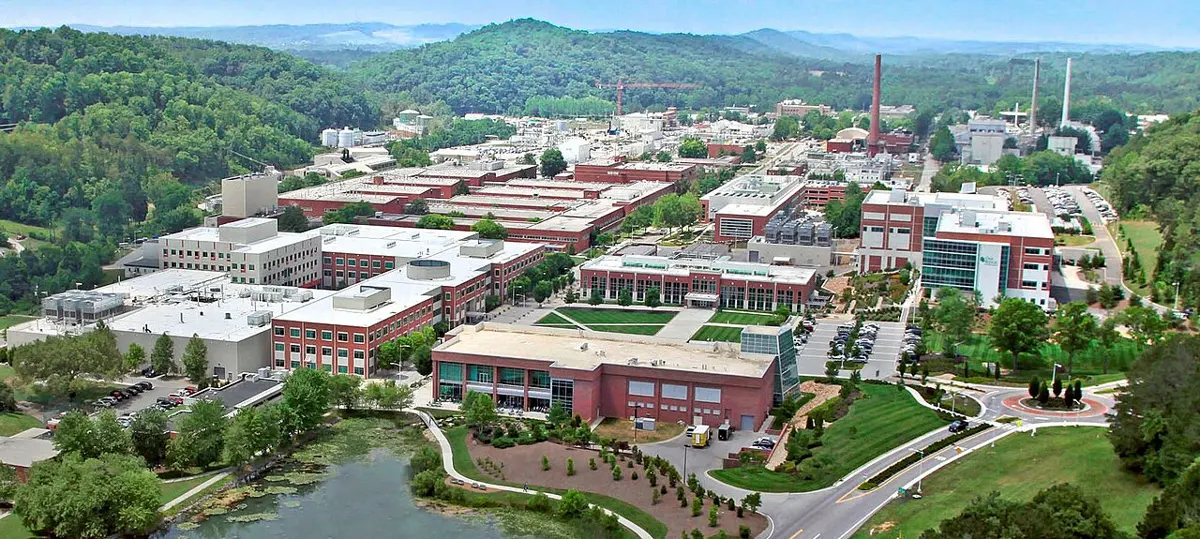
Making element 117 needed the right target: berkelium-249 (97 protons), to be hit by calcium-48 (20 protons): 97 + 20 = 117. Berkelium is made only in a few nuclear reactors, and it decays, half of it every 330 days. In 2008, over 250 days, the Oak Ridge National Laboratory in Tennessee, USA, made 22 thousandths of a gram of it in its High Flux Isotope Reactor, and early in 2009 purified it (berkelium tells that part of the story). It was flown to Russia in 2009; customs twice turned it back over its paperwork, so the precious box crossed the Atlantic five times before it arrived.
At the Joint Institute for Nuclear Research in Dubna, the berkelium was hit with calcium-48 for about five months. In April 2010, the team, from Dubna, Oak Ridge, Vanderbilt University in Nashville, Tennessee, and the Lawrence Livermore National Laboratory, with others, reported six atoms: five of tennessine-293 and one of tennessine-294. Dubna repeated the experiment in 2012, and in 2014 a German and American team at GSI, Darmstadt, made two atoms with another batch of Oak Ridge berkelium.
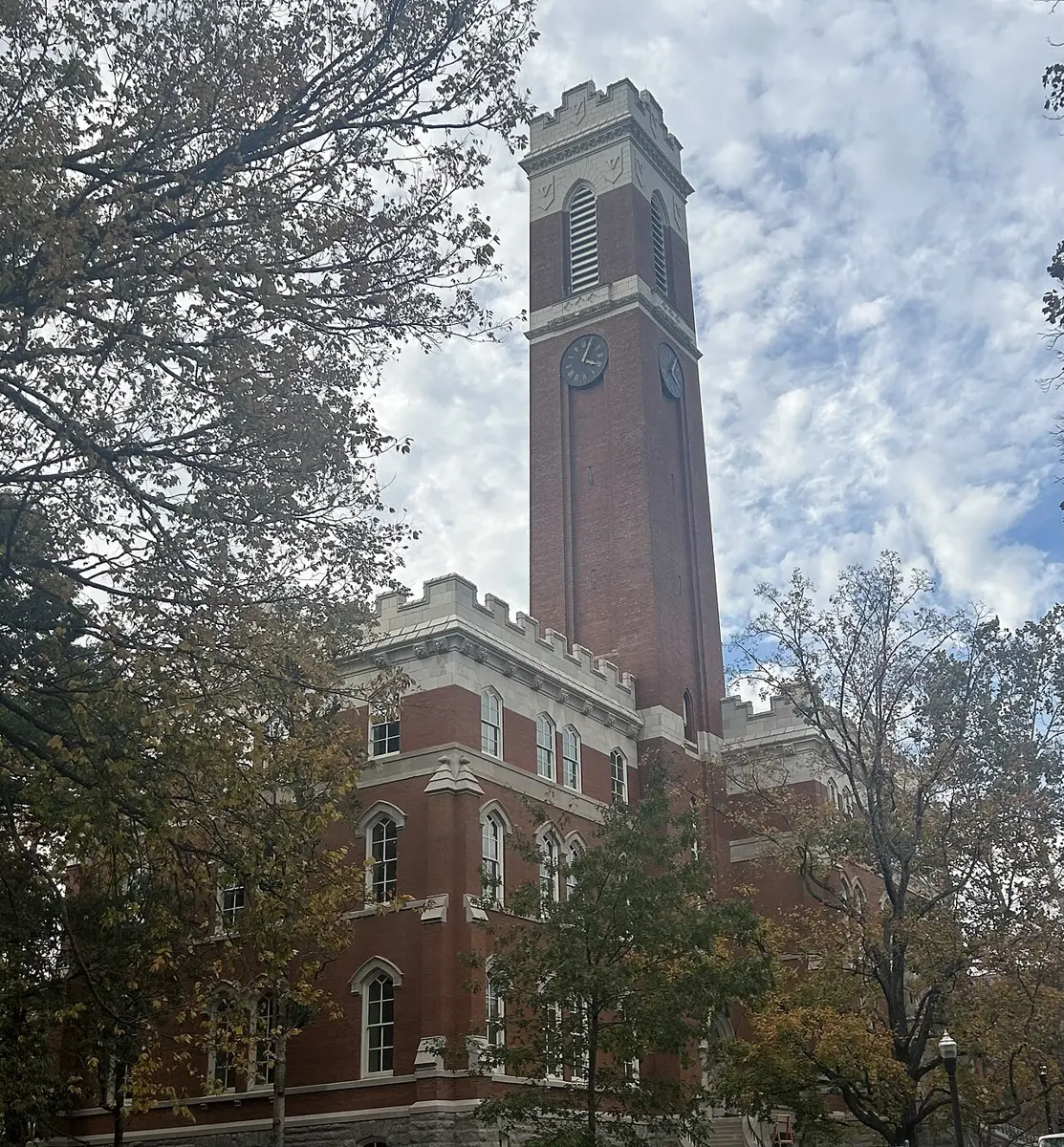
In December 2015, IUPAC and IUPAP accepted the discovery. In November 2016 the element was named tennessine, symbol Ts, after the US state of Tennessee, home of Oak Ridge, Vanderbilt and the University of Tennessee. Until then it was called ununseptium (un-un-sept: 1-1-7).
Is tennessine really a halogen?
Going down group 17, the halogens change a lot. Fluorine and chlorine are gases, bromine a liquid, iodine a solid. Each is a little less eager than the one above to take an electron, because its outer shell is farther from the nucleus Grade 10: Electronegativity down a group. Astatine, the one above tennessine, is so radioactive that no one has ever seen a visible lump of it, and chemists expect it to be partly metallic.
For tennessine, calculations go further. In so heavy an atom, the electrons near the nucleus move at a large fraction of the speed of light, which changes how tightly the outer electrons are held. The 7p electrons split into two groups, and taking in one more electron gains tennessine much less than it gains chlorine. So it is predicted to give away electrons more readily than it takes them, forming Ts⁺ and Ts³⁺ rather than Ts⁻, and to be a solid that looks and behaves at least partly like a metal.
Going down group 17 from fluorine to iodine, what happens to how readily the element takes an electron?
Pick an answer to see why.
What is measured, and what is only predicted
What has been measured, from a few dozen atoms:
- Two kinds of tennessine. Tennessine-294 has a half-life of about 0.05 seconds and tennessine-293 about 0.02 seconds.
- Each decays by giving out an alpha particle, turning into moscovium.
What is only predicted: everything about how tennessine behaves. No chemistry has been done with it. Calculations say it is a solid (melting at very roughly 350–550 °C; density about 7 g/cm³), metal-like, and less willing than any other halogen to form a negative ion. The facts card gives no melting point or density because none has been measured.
Tennessine has no uses outside research, and the body has none for it.
In your science books
- Grade 8: the last four elements named, in 2016 and groups and periods.
- Grade 9: the octet rule, negative ions and radioactive elements.
- Grade 10: features of the modern periodic table, electronegativity down a group and chemical reactivity.
- Going further: alpha decay and half-life.
More to explore
- Its family: astatine, above it, and iodine and chlorine, higher up in group 17.
- Its neighbors: berkelium, its target, moscovium, which it decays into, and oganesson, element 118.
- Play: find tennessine in Guess the Element and the Periodic Table Jigsaw.
- Read more: tennessine at the Royal Society of Chemistry and at PubChem.