
- Atomic number
- 7
- Atomic mass
- 14.01
- Shells
- 2, 5
- Configuration
- 1s² 2s² 2p³
- In the table
- period 2, group 15 (VA), p-block
- Kind
- Non-metal
- Valency
- 3 (as in ammonia, NH₃, and the nitride ion, N³⁻)
- State at 25 °C
- gas
- Melts · boils
- −210 °C · −196 °C
- Density
- lighter than air
- Known since
- 1772
Take a deep breath. Nearly four-fifths of the air that just went into your lungs was nitrogen, and nearly all of it came straight back out again, unused. Yet you cannot live without nitrogen: it is in every protein in your muscles, in the DNA of every cell, in the dal and the milk that build your body.
That is nitrogen’s puzzle. The air is full of it, and every living thing needs it, but almost nothing can use it straight from the air. How the nitrogen in the sky reaches your plate is one of the great stories of science, and it involves lightning, tiny bacteria in the roots of lentil plants, and the factories that make the urea Nepal’s farmers queue for every planting season.
The nitrogen atom
Every nitrogen atom has 7 protons, so nitrogen’s atomic number is 7. A neutral atom has 7 electrons. Almost all nitrogen atoms also have 7 neutrons, so their mass number is 7 + 7 = 14.
By the 2n² rule Grade 8: Bohr and Bury’s rule, the K shell takes 2 electrons and the L shell the other 5: 2, 5. In subshells Grade 10: The Aufbau principle that is 1s² 2s² 2p³.
With 5 electrons in its outer shell, nitrogen is 3 short of an octet Grade 9: Octet rule. So its valency is 8 − 5 = 3 Grade 8: Valency. It can gain three electrons to become the nitride ion, N³⁻, as in magnesium nitride (Mg₃N₂). Much more often it shares three electrons, as in ammonia, NH₃ Grade 9: Formation of ammonia.
Its place in the periodic table
- Period 2, because its electrons are in two shells.
- Group 15, called VA in the older naming, because it has 5 outer electrons.
- p-block, because its last electrons go into a p subshell.
Nitrogen is a non-metal Grade 10: Non-metals. Below it in group 15 are phosphorus (another non-metal, which plants also need), arsenic, antimony and bismuth, which become more and more like metals as you go down.
Two atoms, three bonds
Nitrogen gas is made of molecules of two atoms, N₂. Each atom needs three more electrons, so the two atoms share three pairs: a triple bond, written N≡N Grade 9: Double and triple bonds.
That triple bond is one of the strongest bonds between two atoms that chemists know. Breaking the bonds in just 28 g of nitrogen gas takes about 945 kJ of energy, nearly twice as much as breaking the double bonds in 32 g of oxygen. This one fact explains most of nitrogen’s story: why the gas is so unreactive, why there is so much of it in the air, and why making use of it is so hard.
Nitrogen makes up 78% of the air. Why doesn’t it react with things the way oxygen does?
Pick an answer to see why.
How nitrogen was found and named
In the 1760s and 1770s, several scientists noticed that air in which a candle had burned out still held a gas that put out flames and that a mouse could not live in. In 1772 a young Scottish student, Daniel Rutherford, wrote about it in his doctoral thesis at Edinburgh and called it “noxious air”; he is usually named as its discoverer. Carl Scheele in Sweden and Henry Cavendish and Joseph Priestley in England found it too, at about the same time.
The French chemist Antoine Lavoisier called it azote, from the Greek for “without life”, because animals died in it. French and Russian still use that name, and nitrogen compounds such as the azide in the first car airbags carry it. In 1790 another French chemist, Jean-Antoine Chaptal, named it nitrogène, “niter-maker”, because it is part of niter (saltpeter, potassium nitrate, KNO₃), the salt used in gunpowder. Its symbol is N.
Nepali uses the English name, नाइट्रोजन. The Nepali Brihat Shabdakosh gives it a second meaning too: a nitrogen fertilizer for the fields, such as urea or ammonium sulphate.
Where nitrogen is found
In the universe. Nitrogen is one of the commonest elements in the universe, about the seventh by mass. It is made inside stars, from carbon and hydrogen, and blown into space when they die (Cooking in stars).
In the air. Nitrogen is 78% of the air by volume Grade 9: Gases around us. There is so much because it is so unreactive: oxygen joins with rocks and is used by living things, but nitrogen mostly just stays in the air.
In the ground. Rocks hold very little nitrogen. Soil holds more, in the remains of dead plants and animals and as nitrates and ammonium compounds. A few deserts, such as the Atacama in Chile, have thick beds of sodium nitrate, which were mined as fertilizer before factories could make it.
In your body. About 3% of your mass is nitrogen. Every protein contains it (each of the amino acids that proteins are built from has nitrogen in it), and so do DNA, RNA and chlorophyll in plants.
What nitrogen is like
- A colorless gas with no smell and no taste, made of N₂ molecules Grade 9: Physical properties of nitrogen.
- A little lighter than air: a liter weighs about 1.25 g, against 1.29 g for air.
- Hardly dissolves in water, so it is collected over water in the laboratory.
- Neither burns nor supports burning: a burning splint goes out in it.
- Neutral: it does not change the color of litmus.
- Very cold to liquefy: it turns liquid at −196 °C and freezes at −210 °C.
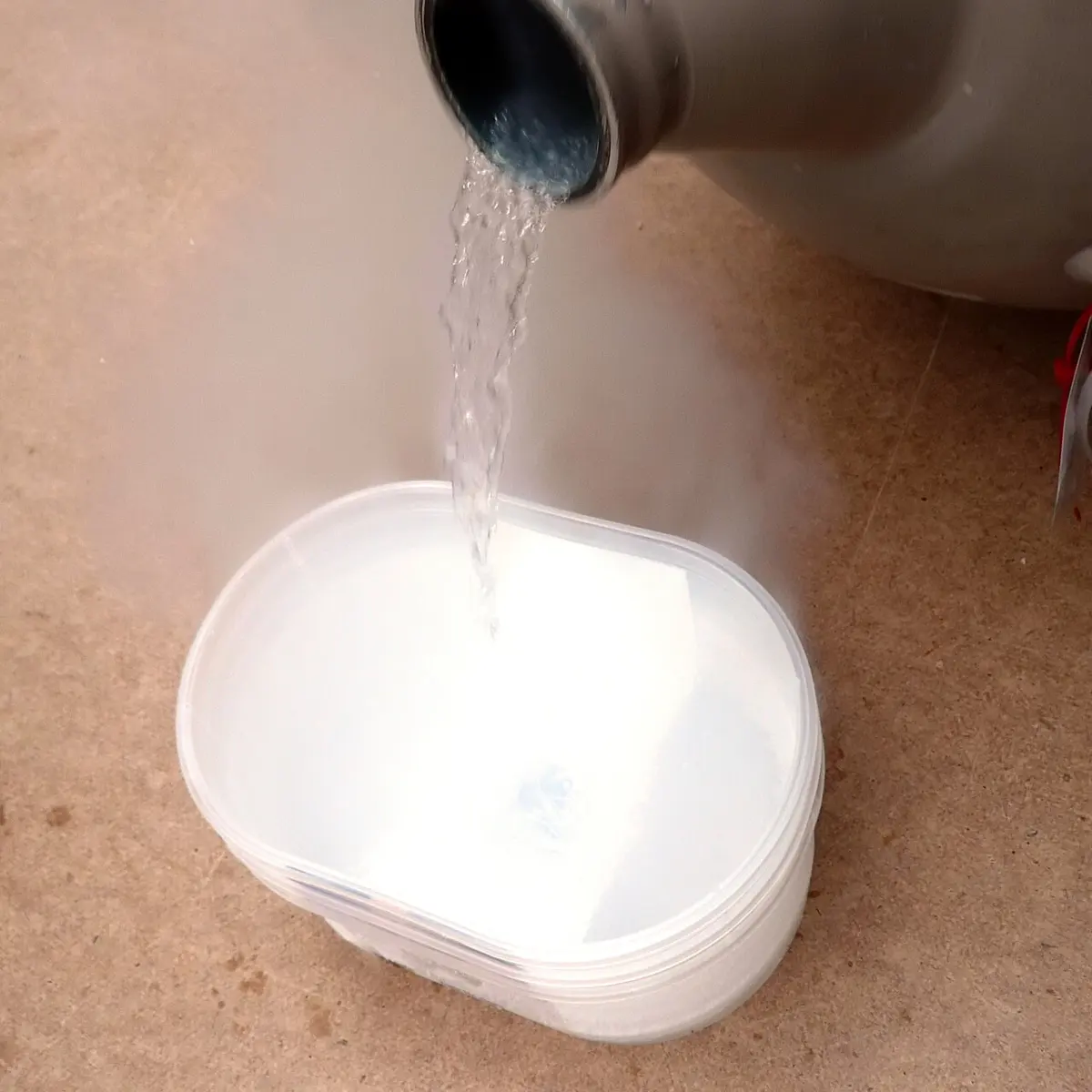
Liquid nitrogen looks like water, but it boils on any surface at room temperature, as water does on a hot tava. Factories make it by cooling air until it turns liquid, then letting the nitrogen boil off first (a process called fractional distillation of liquid air; the oxygen boils at −183 °C). One liter of liquid nitrogen turns into about 700 liters of gas.
How nitrogen reacts
Because of its triple bond, nitrogen gas reacts only under special conditions Grade 9: Chemical properties of nitrogen:
With hydrogen, it makes ammonia, at about 450 °C, a pressure about 200 times that of the air, and with an iron catalyst. This is the Haber process (see below):
N₂ + 3H₂ ⇌ 2NH₃
With oxygen, it makes nitric oxide, but only at the enormous heat of an electric arc or a flash of lightning, or in the cylinders of a car engine:
N₂ + O₂ → 2NO
In the air, nitric oxide joins with more oxygen to make brown nitrogen dioxide, NO₂, a poisonous gas in vehicle exhaust. Dissolved in rain, it makes nitric acid, one cause of acid rain Grade 10: Acid rain.
With burning magnesium, it makes magnesium nitride, a yellowish powder that gives off ammonia when water is added: the test for nitrogen Grade 9: Test for nitrogen:
3Mg + N₂ → Mg₃N₂
Once nitrogen is out of N₂, it is in compounds that matter enormously:
- Ammonia (NH₃), a sharp-smelling gas, the start of almost all fertilizers Grade 10: Ammonia.
- Nitric acid (HNO₃) and its salts, the nitrates, such as potassium nitrate.
- Urea, NH₂CONH₂, the fertilizer (and the nitrogen waste in your urine).
- Nitrous oxide (N₂O), “laughing gas”, once a common anesthetic and today an important greenhouse gas.
A gas puts out a burning splint and does not turn lime water milky. Which gas could it be?
Pick an answer to see why.
The nitrogen cycle
Plants cannot take in N₂ from the air. They take in nitrogen only as nitrates and ammonium from the soil, through their roots. Turning N₂ into these useful compounds is called nitrogen fixing, and nature does it in two ways:
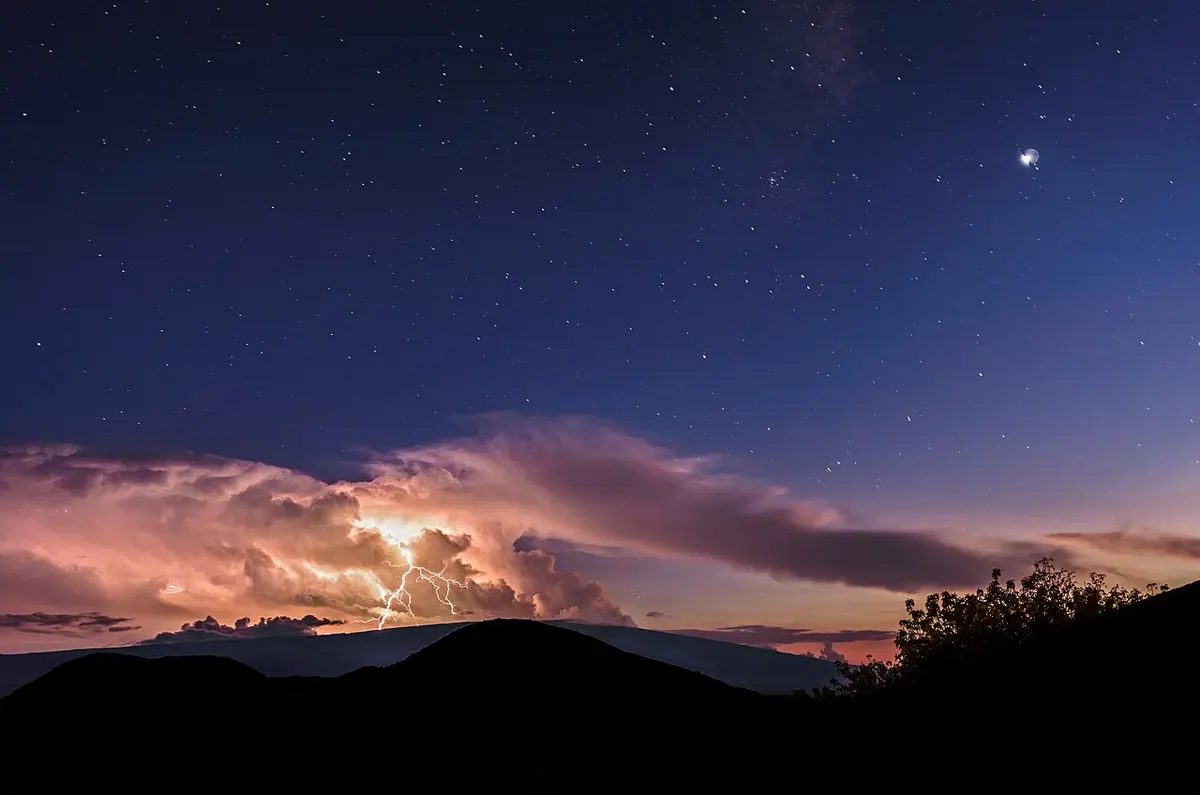
- Lightning. Its heat joins nitrogen and oxygen into nitric oxide, which rain washes into the soil as dilute nitrates.
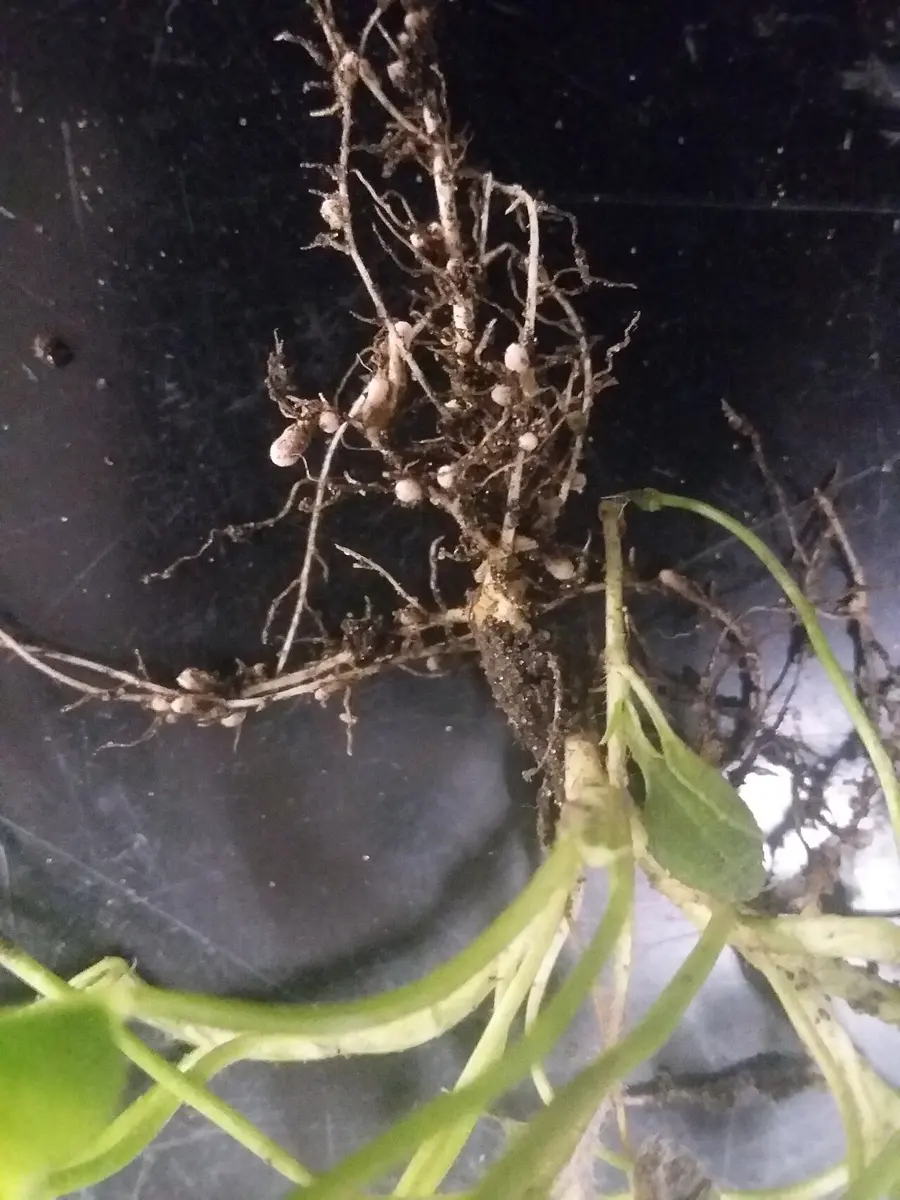
- Bacteria. A few kinds of bacteria can break the triple bond at ordinary temperatures, with a special enzyme. The best known, Rhizobium, live in little lumps called root nodules on the roots of legumes: beans, peas, lentils, gram, soya and clover Grade 8: Positive effects of microorganisms. The plant feeds the bacteria with sugar; the bacteria feed the plant with nitrogen.
From the soil, nitrogen goes into plants, then into the animals that eat them. Dung, urine and dead bodies return it to the soil, where decomposers (bacteria and fungi) turn it into ammonium, and other bacteria turn ammonium into nitrates. Finally, in waterlogged soil, still other bacteria turn nitrates back into N₂, which goes back to the air. The whole round trip is the nitrogen cycle.
That is why farmers in Nepal have long grown lentils, beans or mas between their crops of rice and wheat, and plowed the stalks back in: the legumes leave the soil richer in nitrogen Grade 9: Crop rotation.
Bread from air: the Haber process
By 1900, farms were feeding more people than ever, and the world was running short of nitrogen fertilizer. The main supply was mined: bird droppings from islands off Peru, and sodium nitrate from Chile’s desert. In 1898 the British scientist William Crookes warned that wheat-eating countries would face hunger within a few decades unless chemists learned to fix nitrogen from the air.
In 1909 the German chemist Fritz Haber made ammonia from nitrogen and hydrogen on his laboratory bench, using high pressure and a catalyst. Carl Bosch, an engineer at the BASF company, then spent years building steel vessels strong enough to do it on a huge scale; the first factory opened in 1913. Both won Nobel Prizes, Haber in 1918 and Bosch in 1931.
Today factories fix about 150 million tonnes of nitrogen a year as ammonia (2024, US Geological Survey), most of it in China, India, Russia and the USA, and most of it is turned into fertilizer. Scientists estimate that about half of all the people alive eat food grown with nitrogen from the Haber process. Making it uses natural gas or coal for the hydrogen and the heat: about 2% of all the energy the world uses.
The same chemistry has a dark side. Nitric acid made from ammonia is also the starting point of explosives, and Haber’s process let Germany keep making them in the First World War.
Nitrogen in daily life and in Nepal
Fertilizer. Nepal has no fertilizer factory, so all its chemical fertilizer is imported, and when the urea doesn’t arrive in time for planting, it makes the news. Urea is 46% nitrogen Grade 9: Nitrogenous fertilizers, more than any other common solid fertilizer. A nitrogen-starved plant shows it: its older, lower leaves turn pale yellow first.
Too much fertilizer does harm. What the crop doesn’t take up washes into rivers and ponds, where it makes algae grow so fast that they use up the oxygen and the fish die. Some turns into nitrous oxide, a greenhouse gas about 270 times stronger than carbon dioxide, which also harms the ozone layer.
Packets of chips and biscuits are filled with nitrogen instead of air: with no oxygen inside, the oil doesn’t go stale, and the gas cushions the chips.
Liquid nitrogen keeps things frozen for years at −196 °C. In Nepal, vets carry frozen semen in flasks of liquid nitrogen for the artificial breeding of cows and buffaloes. Hospitals and laboratories use it to store blood, cells and seeds, and doctors use it to freeze off warts.
Explosives and airbags. Gunpowder, the first explosive, gets its power from saltpeter. Dynamite, invented by Alfred Nobel in 1867, is made with nitroglycerin, another nitrogen compound. The money it made him pays for the Nobel Prizes. The first car airbags were filled in a few hundredths of a second by sodium azide breaking down into nitrogen gas (How an airbag works).
Isotopes of nitrogen
Natural nitrogen is a mixture of two stable isotopes: nitrogen-14 (7 neutrons) and a little nitrogen-15 (8 neutrons).
Nitrogen-14 matters for another reason. High in the air, particles from space knock neutrons out of atoms, and when a neutron hits a nitrogen-14 nucleus, it turns it into radioactive carbon-14. Plants take in that carbon, so every living thing carries a little carbon-14, and scientists use it to find the age of old bones, wood and cloth.
Nitrogen and your health
You need nitrogen every day, but only in food: in the protein of dal, beans, soya, milk, eggs, meat and fish. Your body breaks proteins into amino acids and builds its own from them. What it doesn’t need, it gets rid of as urea in urine.
The nitrogen you breathe does nothing, unless it is under pressure. A diver deep under water breathes air at high pressure, and extra nitrogen dissolves in the blood. If the diver comes up too fast, it forms bubbles, like a bottle of soda opened, causing a painful and dangerous illness called the bends.
Surprising facts and records
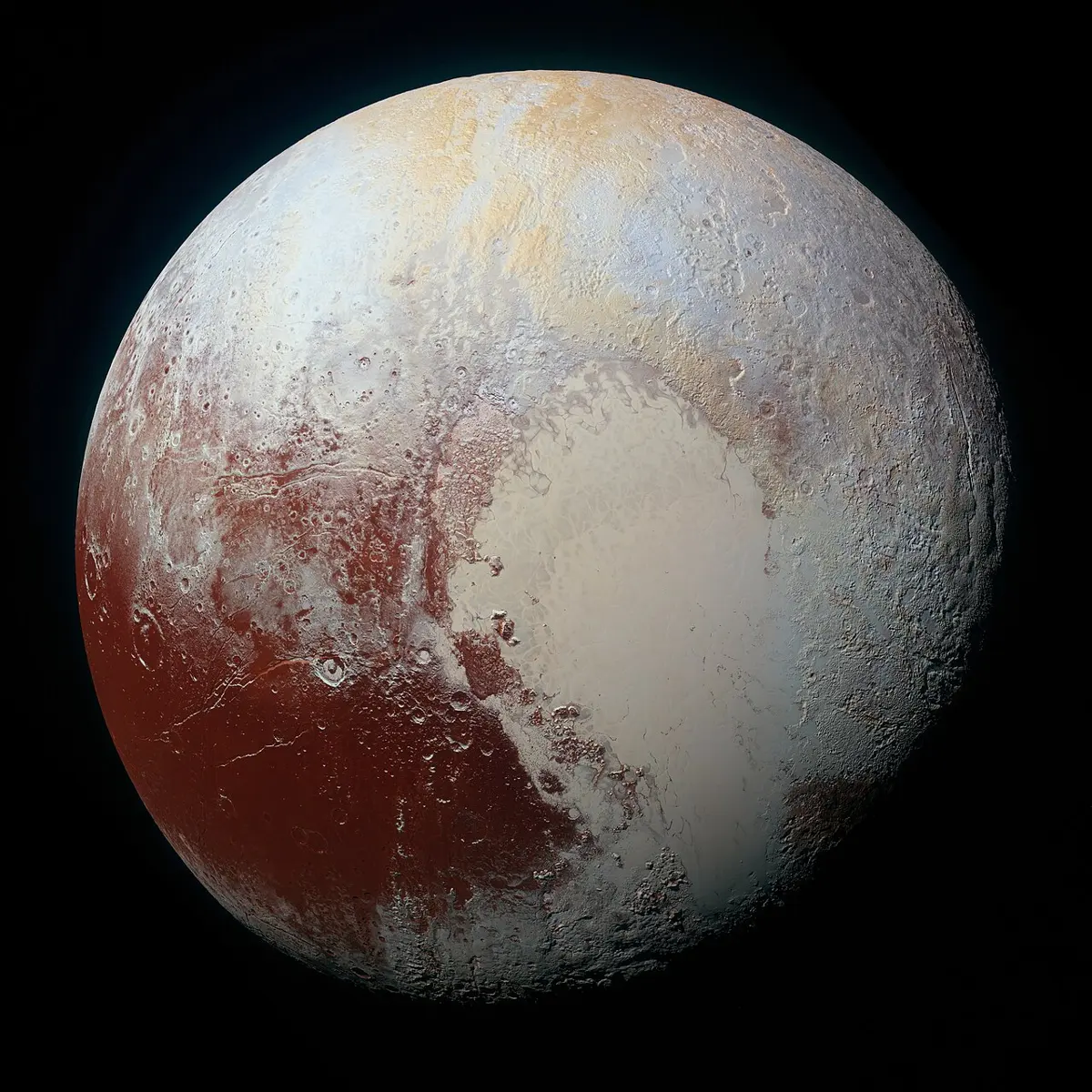
- Pluto’s ice. A huge plain on the dwarf planet Pluto, larger than Nepal, is a sheet of frozen nitrogen, at about −230 °C.
- Titan’s air. Saturn’s largest moon, Titan, has an atmosphere even thicker than Earth’s, and it is mostly nitrogen too.
- Superconductors. Some materials lose all their electrical resistance when cooled with cheap liquid nitrogen. The discovery that led to them won the Nobel Prize in Physics in 1987.
In your science books
- Grade 8: the 2n² rule, valency and bacteria that fix nitrogen.
- Grade 9: nitrogen gas (its preparation, test, properties and uses), the triple bond, ammonia’s covalent bonds and nitrogenous fertilizers.
- Grade 10: subshells, non-metals, ammonia and acid rain.
- Going further: making ammonia in a factory, where your body’s nitrogen comes from and how an airbag works.
More to explore
- Nobel Prizes with nitrogen in them: making ammonia (1918), nitric oxide in the blood vessels (1998), ozone (1995, how nitrogen oxides destroy it) and superconductors in liquid nitrogen (1987).
- Play: make ammonia, urea and saltpeter in Molecule Kitchen, or find nitrogen in Guess the Element.
- Read more: nitrogen at the Royal Society of Chemistry and at PubChem.