
- Atomic number
- 21
- Atomic mass
- 44.96
- Shells
- 2, 8, 9, 2
- Configuration
- 1s² 2s² 2p⁶ 3s² 3p⁶ 4s² 3d¹
- In the table
- period 4, group 3 (IIIB), d-block
- Kind
- Transition metal
- Valency
- 3 (Sc³⁺)
- State at 25 °C
- solid
- Melts · boils
- 1,541 °C · 2,836 °C
- Density
- 3.0 × as heavy as water
- Known since
- 1879
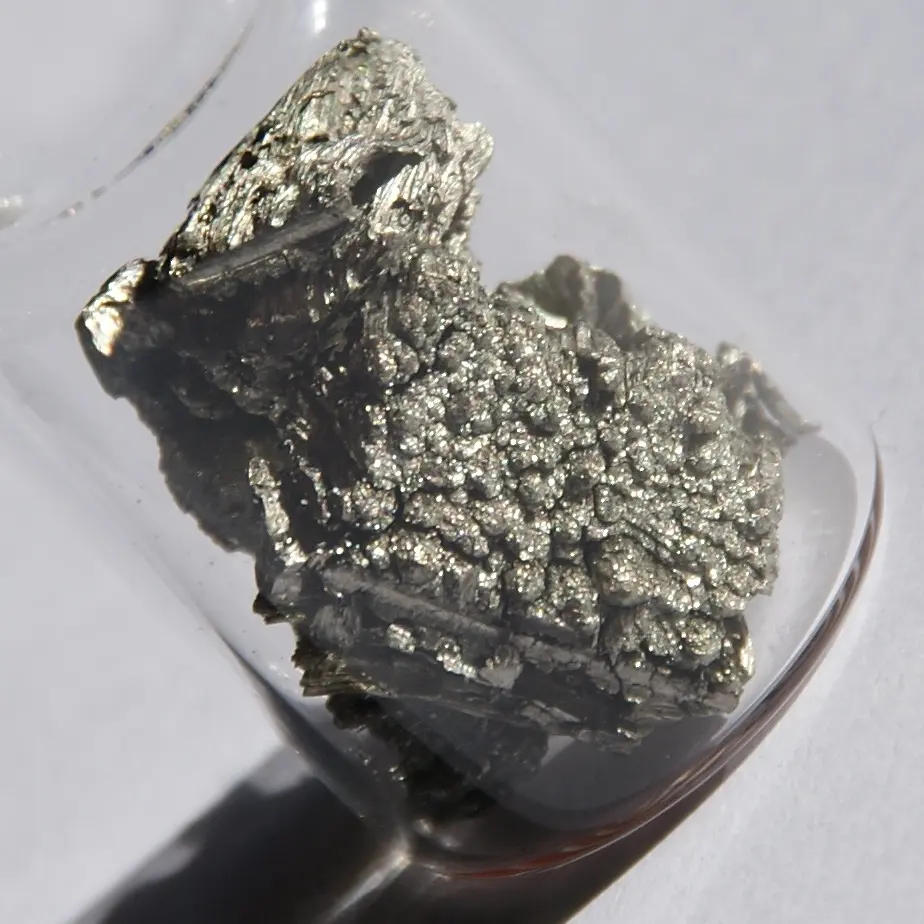
In 1871 a Russian chemist described a metal that no one had ever seen. He said how heavy its atoms would be and what its oxide would look like, and he gave it a name made from the Sanskrit word for one, eka (एक, the same word as in Nepali): eka-boron, “one place below boron”. Eight years later, a chemist in Sweden found it.
That metal is scandium. Today a little of it goes into some of the lightest, strongest aluminium in bicycle frames and aircraft. Here is its story.
The scandium atom
A scandium atom has 21 protons, so scandium’s atomic number is 21, and 21 electrons. Every scandium atom found in nature has 24 neutrons, so its mass number is 21 + 24 = 45.
You might expect the shells to be 2, 8, 8, 3: after calcium (2, 8, 8, 2), one more electron in the outer shell. But scandium is 2, 8, 9, 2. The 21st electron goes back into the M shell, which can hold 18 Grade 8: Bohr and Bury’s rule.
The reason shows in subshells Grade 10: The Aufbau principle. After 3p, the next subshell to fill is 4s, which has a little less energy than 3d. So potassium and calcium put their electrons in 4s, and then, with 4s full, scandium’s 21st electron goes into 3d, which belongs to the third shell:
1s² 2s² 2p⁶ 3s² 3p⁶ 4s² 3d¹
How are scandium’s 21 electrons arranged in shells?
Pick an answer to see why.
Its place in the periodic table
- Period 4, because its electrons are in four shells. It comes after calcium (20) and before titanium (22).
- Group 3, called IIIB in the older naming many books use.
- d-block, because its last electron goes into a d subshell. That makes scandium the first transition metal Grade 10: Metals: period 4’s ten transition metals, from scandium to zinc, are the elements that fill 3d.
Below scandium in group 3 is yttrium (39). Scandium, yttrium and the fifteen lanthanides together are called the rare-earth elements.
Its valency
In its compounds, scandium loses all three of its outer electrons, the two 4s and the one 3d, to become the ion Sc³⁺ Grade 9: Ions. Its valency is 3, and almost always only 3. That leaves Sc³⁺ with 2, 8, 8: exactly the electrons of the noble gas argon.
This makes scandium an odd transition metal. Most transition metals have a variable valency (iron is 2 or 3, copper 1 or 2) and colored compounds, because their ions still have d electrons Grade 9: Variable valency. Scandium’s ion has no d electrons left, so it has one valency, and its compounds are white or colorless, like those of aluminium.
Iron sulphate crystals are green, copper sulphate blue. Scandium sulphate is white. Why?
Pick an answer to see why.
How scandium was found and named
Mendeleev’s gap
When Dmitri Mendeleev arranged the elements by atomic weight in 1869, he noticed a jump between calcium (40) and titanium (48). Titanium did not behave like the elements of group III; it belonged with carbon and silicon in group IV. So he left a gap after calcium and said that an unknown element, with an atomic weight of about 44, belonged there Grade 10: Mendeleev’s periodic table. In 1871 he described it in detail and called it eka-boron, because it would sit one place below boron (and aluminium) in group III.
Nilson finds it
In 1879 the Swedish chemist Lars Fredrik Nilson, at the University of Uppsala, was separating the oxides of rare metals from two minerals found in Scandinavia, euxenite and gadolinite. From about 10 kilograms of mineral he got about 2 grams of a white oxide that no one had seen before. Its spectrum (the colors it gave out when heated in a flame or a spark) had lines no known element gave. He named the new element after Scandinavia (in Latin, Scandia): scandium, symbol Sc. Nepali books write it स्क्यान्डियम.
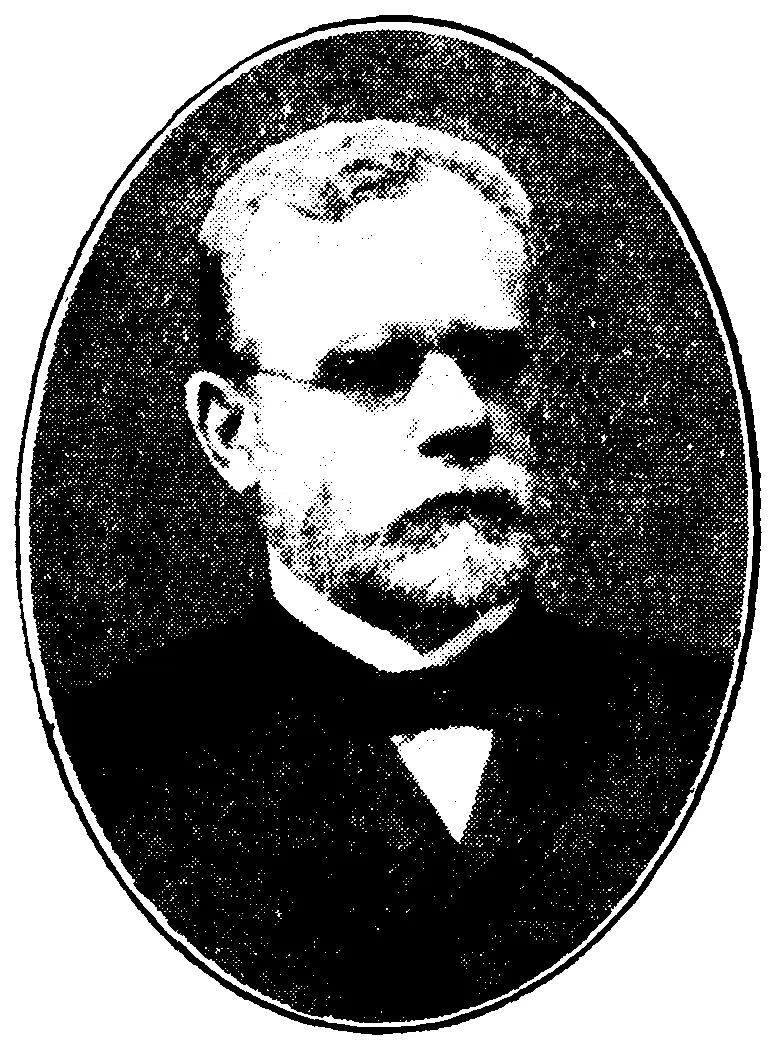
Nilson did not know about Mendeleev’s prediction. His colleague in Uppsala, Per Teodor Cleve, saw that scandium was exactly eka-boron, and wrote to tell Mendeleev.
| Mendeleev’s eka-boron (1871) | Scandium (found 1879) | |
|---|---|---|
| place in the table | group III, between calcium and titanium | group 3, between calcium and titanium |
| atomic weight | about 44 | 44.96 |
| its oxide | Eb₂O₃ | Sc₂O₃ |
| valency | 3 | 3 |
After gallium (1875), scandium was the second of Mendeleev’s predicted elements to be found, and germanium the third (1886). Each one made chemists trust the periodic table more.
The pure metal was much harder to get. Scandium was first made as a metal only in 1937, by passing electricity through molten scandium chloride mixed with other salts, and the first half-kilogram of 99% pure scandium was made only in 1960.
Where scandium is found
In the universe. Scandium atoms are made in big stars and thrown out into space when the stars explode as supernovae (Getting the atoms out). It is more common in the Sun than on Earth: it is about the 23rd most common element in the Sun, but only about the 50th on Earth as a whole.
In the Earth’s crust. Scandium isn’t really rare: the crust holds about 20 grams per tonne, about as much as cobalt, and more than lead. But it is spread thinly through hundreds of different minerals and hardly ever gathered into an ore Grade 10: Ores. The only mineral that is mostly scandium, thortveitite, is found in a few places in Norway and Madagascar, and is too rare to mine.
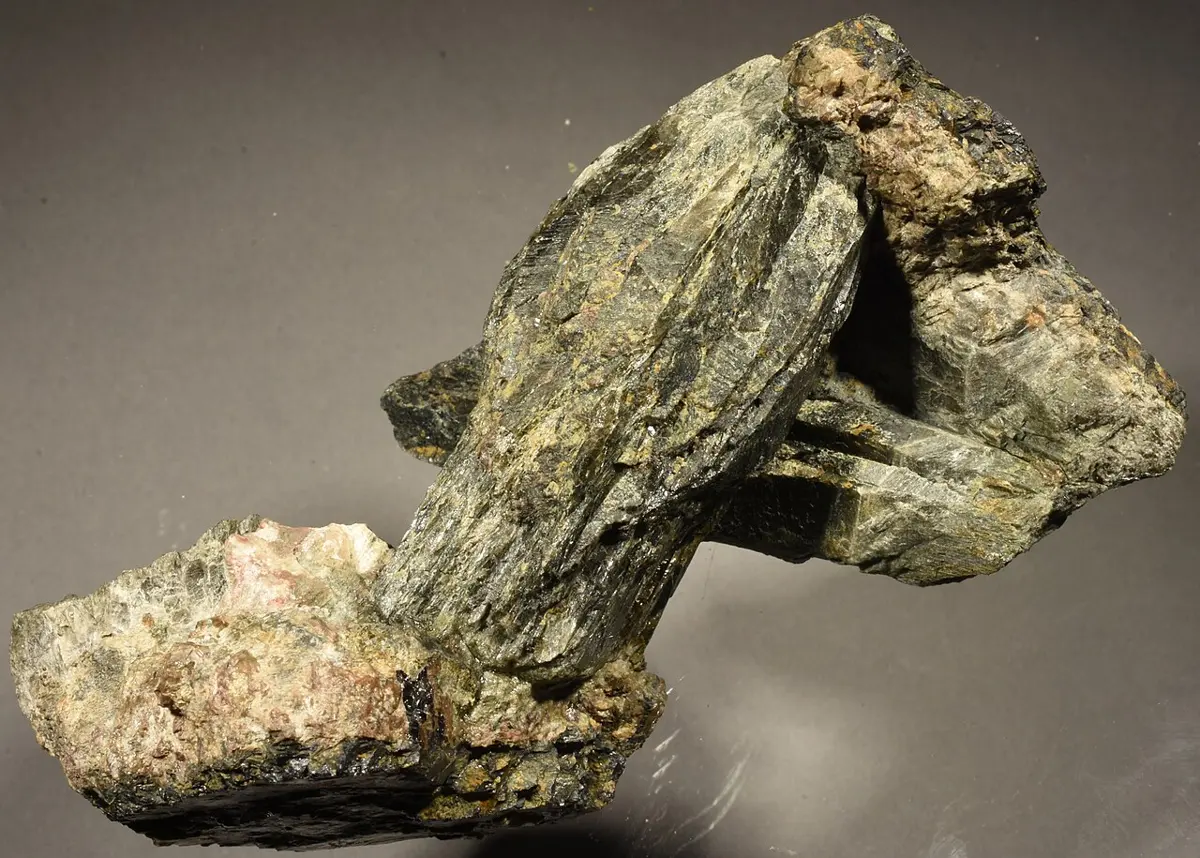
So nearly all scandium is a by-product, collected from the leftovers when other metals are extracted, mainly from nickel and titanium ores. In 2025 the whole world produced only about 80 tonnes of scandium oxide, most of it in China (USGS, 2026). Compare that with about 23 million tonnes of copper a year. Scandium metal costs about $5 a gram, far more than aluminium.
In Nepal and in your body. No scandium deposit is known in Nepal, and the body has no use for scandium.
What scandium is like
- A silvery-white metal, fairly soft, that takes on a slightly yellow or pink tinge in air.
- Light. Its density is 2.99 g/cm³, only a little more than aluminium’s, and less than titanium’s: it is the lightest of all the transition metals.
- Melts at 1,541 °C, more than twice the temperature at which aluminium melts.
| metal | density (g/cm³) | melting point (°C) |
|---|---|---|
| aluminium | 2.70 | 660 |
| scandium | 2.99 | 1,541 |
| titanium | 4.5 | 1,668 |
| iron | 7.87 | 1,538 |
So scandium is almost as light as aluminium, but stands heat like iron. Pure scandium would be a wonderful material, if it weren’t so rare and costly.
How scandium reacts
Scandium is a reactive metal, much more like aluminium than like iron or copper.
- With air. A piece slowly tarnishes. Thin shavings, heated, burn with a bright yellow flame, giving white scandium oxide:
4Sc + 3O₂ → 2Sc₂O₃ - With dilute acids, it gives a salt and hydrogen gas Grade 9: Metals and dilute acids:
2Sc + 6HCl → 2ScCl₃ + 3H₂
Scandium’s oxide and hydroxide are amphoteric, like aluminium’s: they react with acids and with strong alkalis too. Its compounds are white or colorless, and in all of them scandium has a valency of 3: ScCl₃, Sc₂O₃, Sc₂(SO₄)₃.
Scandium in daily life
Aluminium with a pinch of scandium
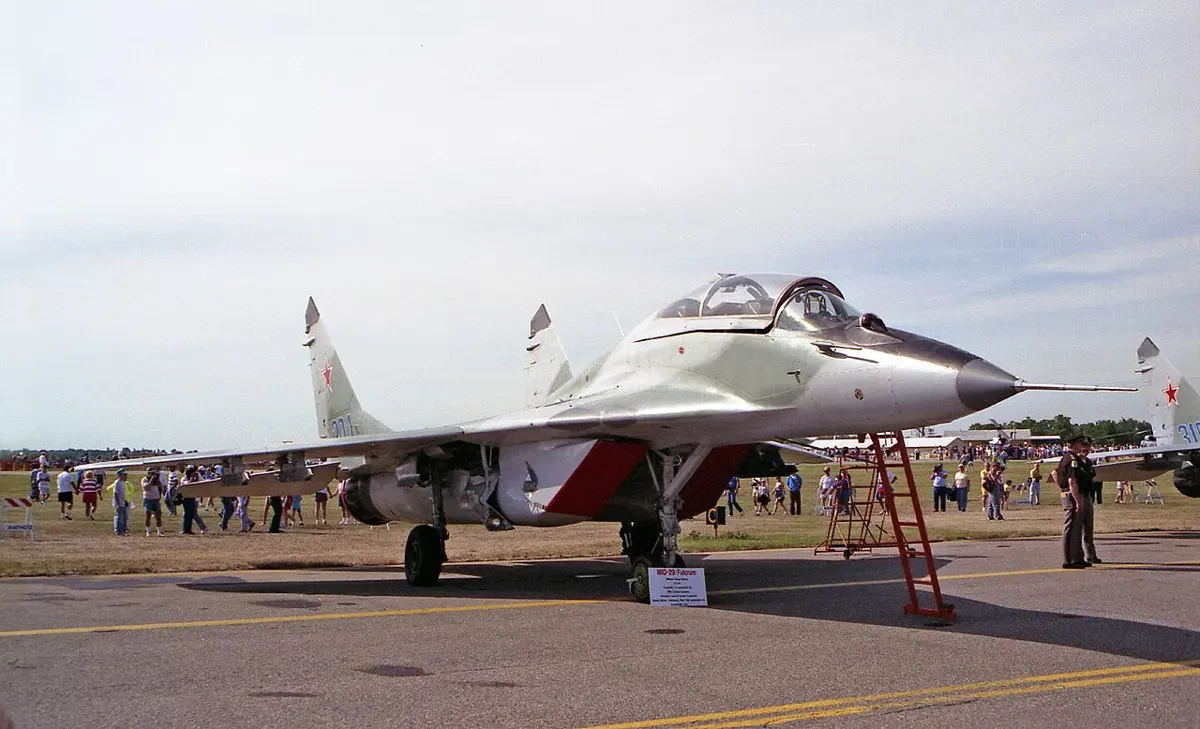
Scandium’s main use is in alloys with aluminium Grade 8: Alloys. Adding only 0.1 to 0.5% of scandium makes aluminium much stronger. The scandium forms countless tiny particles inside the metal, which stop its crystals from growing big and its layers of atoms from sliding. It also keeps aluminium strong where it has been welded, which normally weakens it.
Such alloys have gone into parts of Russian fighter planes such as the MiG-29, and into sports goods where every gram counts: racing bicycle frames, baseball bats and tent poles.
Light like sunlight
A little scandium iodide in a powerful metal halide lamp makes its light very close to daylight. Such lamps have been used to light film and television studios and sports grounds at night, where colors must look true on camera.
Fuel cells
Fuel cells make electricity from a fuel, such as hydrogen, without burning it. In one kind, the solid oxide fuel cell, a ceramic made with scandium oxide lets the charged particles through at a lower temperature. According to the USGS, this is now one of scandium’s main uses.
Isotopes of scandium
Natural scandium has only one isotope, scandium-45, with 21 protons and 24 neutrons. That is why its atomic mass, 44.956, is so close to a whole number: there is no mixture to average Grade 9: Atomic mass. Only about twenty elements have just one natural isotope.
The radioactive scandium-46 (half-life 84 days) is used as a tracer: a little is added to oil in a refinery, or to the water or gas in an underground pipe, and detectors follow where it goes or find where a pipe leaks.
Scandium and your health
Scandium has no known job in any living thing. Scientists know little about how poisonous it is, so its compounds are handled with care, like other chemicals of unknown harm.
Surprising facts and records
- A Sanskrit name in chemistry. Mendeleev used eka (one) and dvi (two) to name missing elements one or two places below a known one: rhenium was “dvi-manganese”. Some historians think he chose Sanskrit to honor the ancient Indian grammarian Pāṇini, who arranged the sounds of Sanskrit in a table of rows and columns.
- The lightest transition metal. At 2.99 g/cm³, scandium is lighter than every other d-block metal.
- More common in the Sun. About the 23rd most common element in the Sun, but only about the 50th on Earth.
In your science books
- Grade 8: the 2n² rule and alloys.
- Grade 9: cations, variable valency, atomic mass and metals and dilute acids.
- Grade 10: Mendeleev’s periodic table, the Aufbau principle, transition metals and ores.
- Going further: where scandium is made.
More to explore
- Its neighbors: calcium before it, titanium after it, and aluminium, which it so resembles.
- Play: find scandium in Guess the Element, the Periodic Table Jigsaw and Higher or Lower.
- Read more: scandium at the Royal Society of Chemistry and at PubChem.