
- Atomic number
- 59
- Atomic mass
- 140.91
- Shells
- 2, 8, 18, 21, 8, 2
- Configuration
- 1s² 2s² 2p⁶ 3s² 3p⁶ 4s² 3d¹⁰ 4p⁶ 5s² 4d¹⁰ 5p⁶ 6s² 4f³
- In the table
- period 6, group none (f-block), f-block
- Kind
- Lanthanide
- Valency
- 3 (Pr³⁺)
- State at 25 °C
- solid
- Melts · boils
- 931 °C · 3,520 °C
- Density
- 6.8 × as heavy as water
- Known since
- 1885
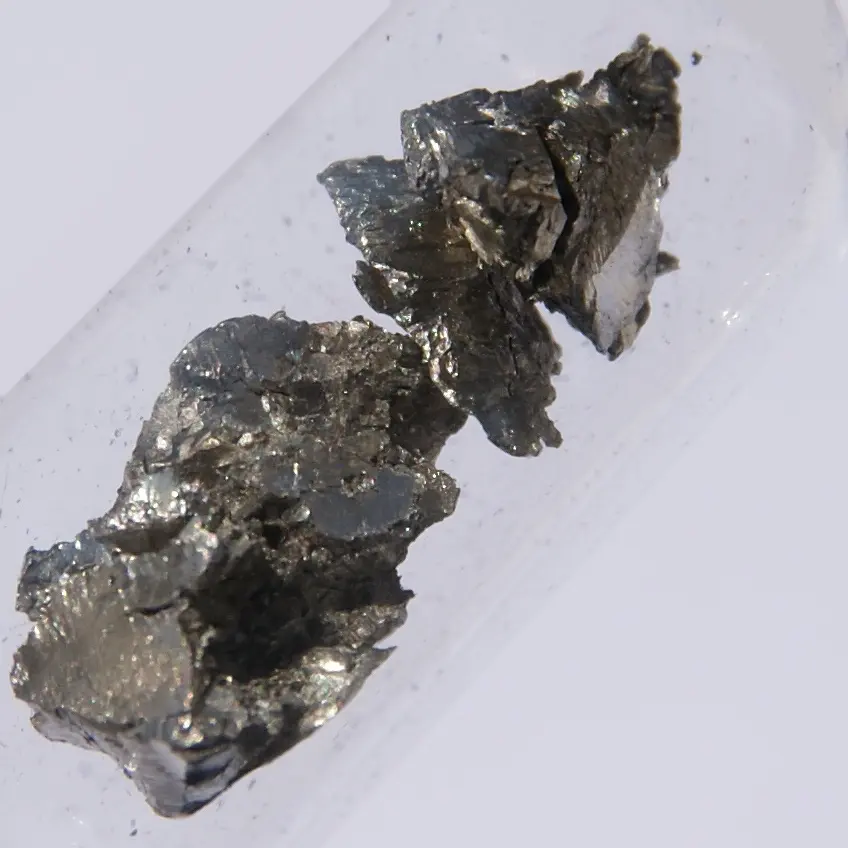
For more than forty years, chemists wrote Di, for didymium, “the twin”, in their lists of elements. Then, in 1885, a young Austrian chemist split it in two. One half gave pink salts; the other gave green ones, and he called it praseodymium (say pray-zee-oh-DIM-ee-um), the “green twin”.
Praseodymium is the third lanthanide. It works quietly in some of the strongest magnets made, in the goggles that let glassblowers look into a furnace, and in the clean yellow of some pottery glazes. Here is what makes it different from its neighbors.
The praseodymium atom
A praseodymium atom has 59 protons and 59 electrons. Every praseodymium atom in nature has 82 neutrons, so its mass number is 59 + 82 = 141.
By shells, its electrons are 2, 8, 18, 21, 8, 2. Look at the fifth shell: it has 8, not 9 as in lanthanum and cerium.
In subshells Grade 10: The Aufbau principle, praseodymium has no 5d electron at all. All three electrons after 6s² sit in 4f:
1s² 2s² 2p⁶ 3s² 3p⁶ 4s² 3d¹⁰ 4p⁶ 5s² 4d¹⁰ 5p⁶ 6s² 4f³
As more protons are added, 4f drops lower in energy than 5d, so from praseodymium on, the new electrons go into 4f, just as the diagonal rule says.
How are praseodymium’s 59 electrons arranged in shells?
Pick an answer to see why.
Its place and valency
- Period 6, the third lanthanide (f-block), between cerium (58) and neodymium (60). Why the lanthanides are so alike: see fifteen near-twins.
- Like the others, it loses three electrons (6s² and one 4f) to become Pr³⁺: its valency is 3. So its oxide is Pr₂O₃ and its chloride PrCl₃ Grade 9: The criss-cross method.
- Unlike cerium, it cannot keep a 4+ ion in water. Only in a few solids, such as the dark oxide that forms when the metal burns, is some of it Pr⁴⁺.
Why its salts are green
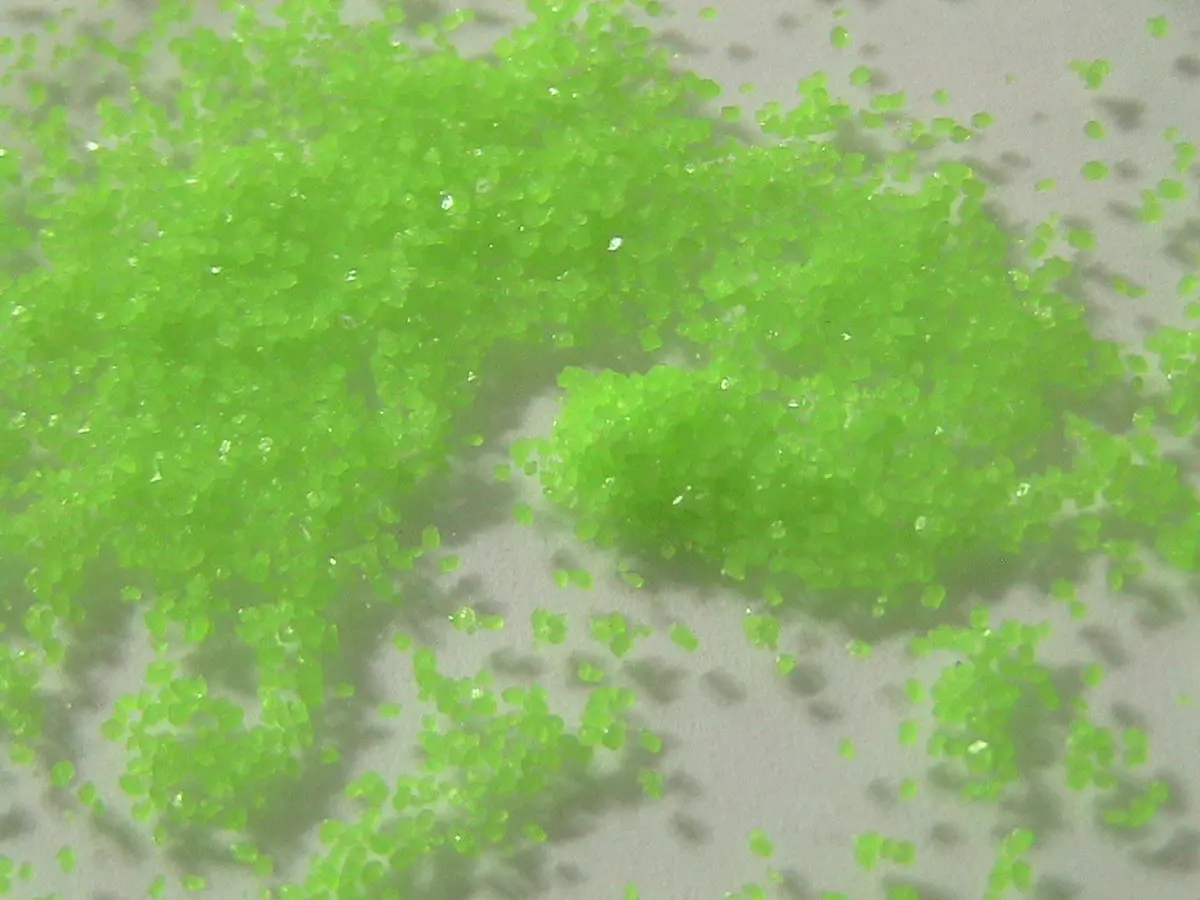
La³⁺ and Ce⁴⁺ have no 4f electrons, and their salts are colorless or white. Pr³⁺ keeps two 4f electrons. They can soak up light of a few exact colors, mostly in the blue, and jump to higher energy. Take those colors out of white light and what is left looks yellow-green. That is the color of praseodymium’s salts, and of glass with praseodymium in it.
How praseodymium was found and named
- 1841. In Stockholm, Carl Gustaf Mosander took a new earth (a metal oxide) out of lanthana, itself just taken out of ceria. It was so like lanthanum that he called it didymium, “the twin” (the whole family tree is on the lanthanum page).
- 1879. Paul-Émile Lecoq de Boisbaudran, in France, found samarium hidden in didymium. So didymium was a mixture.
- 1882. Bohuslav Brauner, in Prague, showed that the light given out by didymium was not that of a single element (Why each element has its own lines).
- June 1885. Carl Auer von Welsbach, in Vienna, dissolved didymium as a double salt with ammonium nitrate and crystallized it again and again. Each time the crystals and the liquid differed a little more, until he had two salts of different colors: green praseodidymium, “green twin” (from the Greek prasinos, leek-green, and didymos, twin), and pink neodidymium, “new twin”. The names were soon shortened to praseodymium (Pr) and neodymium (Nd).
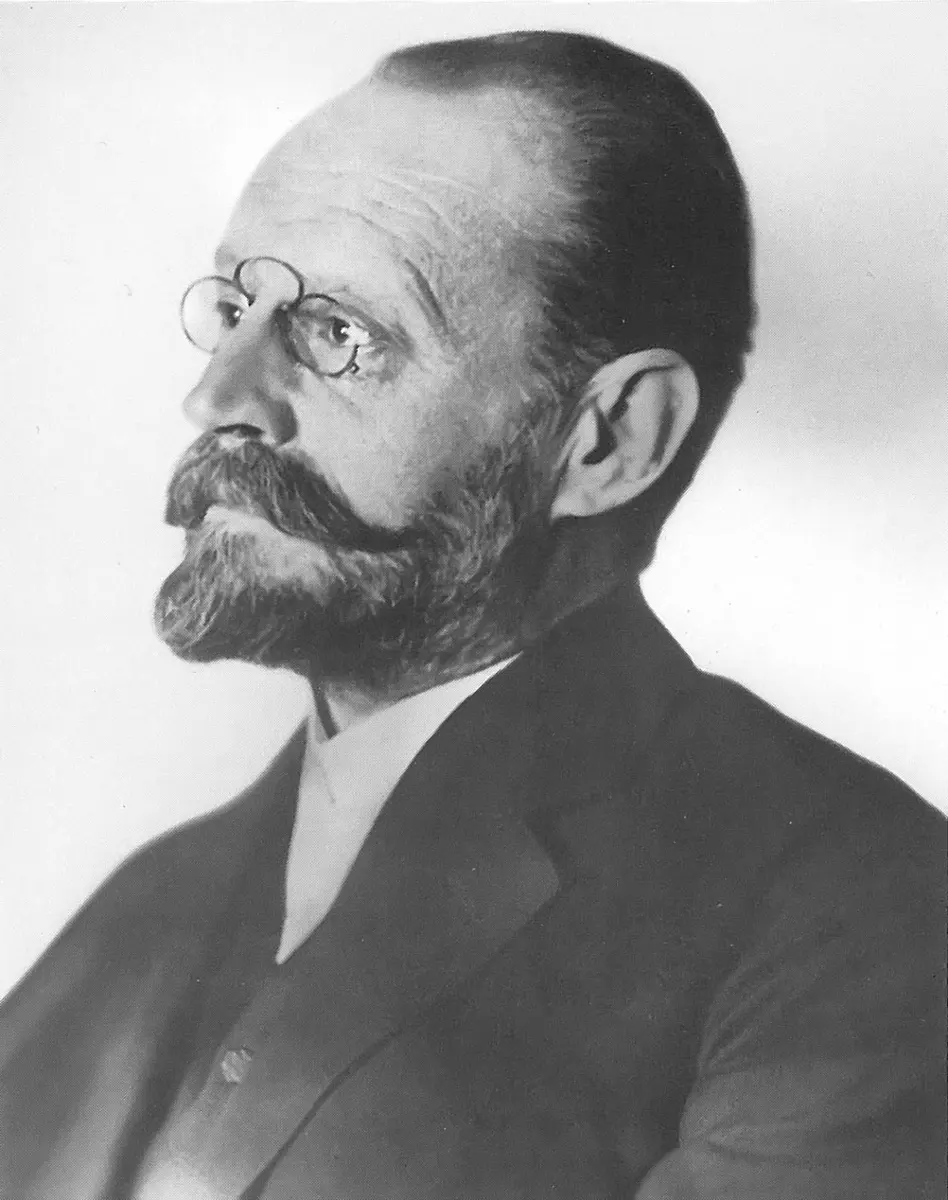
Pure praseodymium metal was first made only in 1931.
Where praseodymium is found
In the universe, like its neighbors, it is made in stars by catching neutrons (Catching neutrons). Like lanthanum-139 and cerium-140, praseodymium-141 has the especially stable number of 82 neutrons.
In the Earth’s crust there are about 9 grams in a tonne of rock, about as much as boron. It is never the main rare earth in a mineral: there is always more cerium and lanthanum, and usually more neodymium. It is mined with them from bastnäsite and monazite, mostly in China (where the rare earths come from), and often sold together with neodymium as “NdPr”.
That makes it a valuable lanthanide. In 2025 a kilogram of praseodymium oxide cost about 74 US dollars, while a kilogram of cerium oxide cost under 2 dollars and of lanthanum oxide about 1 (USGS, 2026). The magnets it helps make are wanted far more.
In Nepal and in your body. Nepal mines no rare earths, and your body has no use for praseodymium.
What praseodymium is like and how it reacts
- A soft, silvery metal that can be hammered and drawn out. Density 6.77 g/cm³, the same as cerium.
- In air it slowly grows a green coating of oxide, which flakes off, so it is kept under oil or sealed in plastic. It resists air a little better than lanthanum or cerium. Heated, it burns easily.
- With water, slowly when cold and faster when hot, giving praseodymium hydroxide and hydrogen:
2Pr + 6H₂O → 2Pr(OH)₃ + 3H₂ - With dilute acids, quickly, giving green solutions of Pr³⁺ Grade 9: Metals and dilute acids, for example:
2Pr + 3H₂SO₄ → Pr₂(SO₄)₃ + 3H₂
Praseodymium has a valency of 3. What is the formula of praseodymium sulphate?
Pick an answer to see why.
Praseodymium in daily life
Goggles for looking into fire
Hot glass glows with a dazzling yellow light, which comes from the sodium in the glass. Sodium gives out yellow light of one exact color (wavelength 589 nm), and it hides the glowing work. Didymium glass, colored with praseodymium and neodymium together, soaks up just that yellow and little else. So glassblowers and blacksmiths wear didymium goggles: they see their work clearly, in nearly true colors, without the glare.
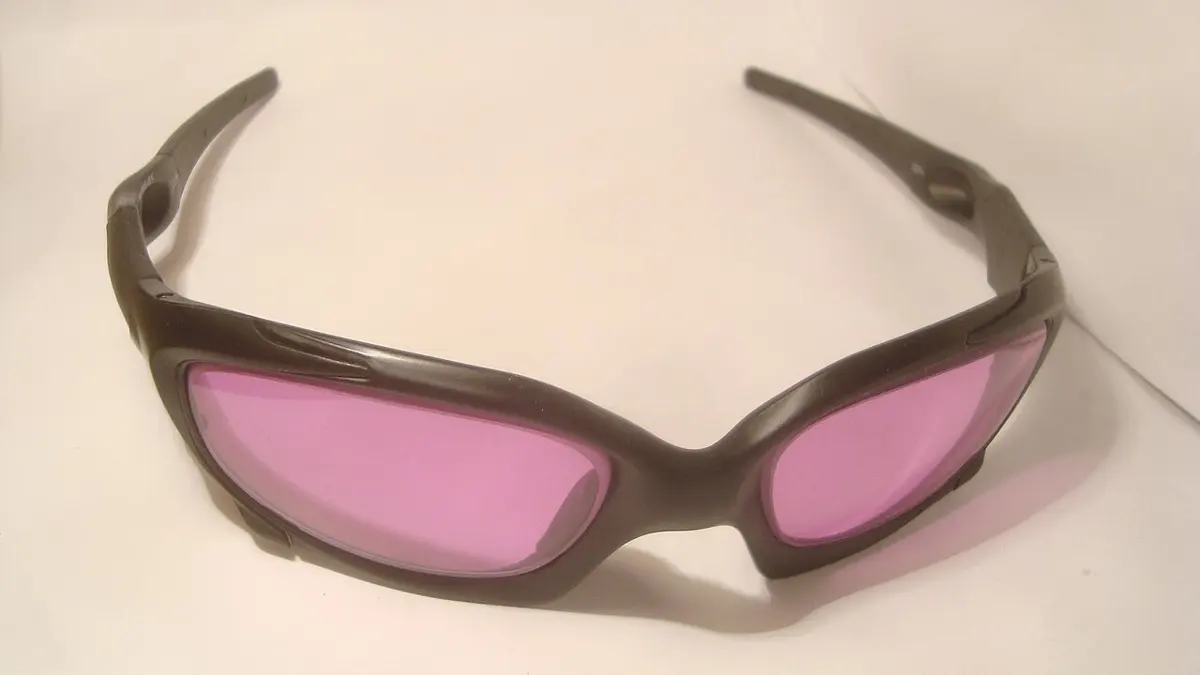
The same kind of glass is used in photographers’ filters, and to check the color scale of instruments that measure light in laboratories.
Magnets, alloys and colors
- Magnets. The strongest permanent magnets are made of neodymium, iron and boron, and part of the neodymium is usually praseodymium. They are in earbuds, phones, the motors of electric cars and some wind turbines Grade 10: The electric motor.
- Aircraft engines. A little praseodymium in magnesium makes a light, strong alloy.
- Yellow glass and glazes. Praseodymium gives glass a yellow-green color, and in pottery glazes a clean, bright yellow.
- Lighter flints. Mischmetal, the rare-earth mixture in lighter flints, is about 5% praseodymium (see cerium).
- Optical fibers. Praseodymium added to some optical fibers strengthens the light signals in them Grade 10: Optical fibers.
Isotopes and health
Natural praseodymium has only one isotope, praseodymium-141. So its atomic mass, 140.91, has no mixture to average and is close to a whole number Grade 9: Atomic mass, like yttrium’s.
Praseodymium has no known job in the body and is of low toxicity. Like other rare-earth metals, its fine dust or shavings can catch fire.
In your science books
- Grade 9: the criss-cross method, atomic mass and metals and dilute acids.
- Grade 10: the lanthanides, the Aufbau principle, the electric motor and optical fibers.
- Going further: why each element has its own lines and where praseodymium is made.
More to explore
- Its neighbors: cerium before it, neodymium, its twin, after it, and lanthanum, with the story of the whole lanthanide row.
- Play: find praseodymium in Guess the Element, the Periodic Table Jigsaw and Higher or Lower.
- Read more: praseodymium at the Royal Society of Chemistry and at PubChem.