
- Atomic number
- 89
- Atomic mass
- 227.03
- Shells
- 2, 8, 18, 32, 18, 9, 2
- Configuration
- 1s² 2s² 2p⁶ 3s² 3p⁶ 4s² 3d¹⁰ 4p⁶ 5s² 4d¹⁰ 5p⁶ 6s² 4f¹⁴ 5d¹⁰ 6p⁶ 7s² 6d¹
- In the table
- period 7, group none (f-block), f-block
- Kind
- Actinide
- Valency
- 3 (Ac³⁺)
- State at 25 °C
- solid
- Melts · boils
- 1,051 °C · 3,198 °C
- Density
- 10.1 × as heavy as water
- Known since
- 1899
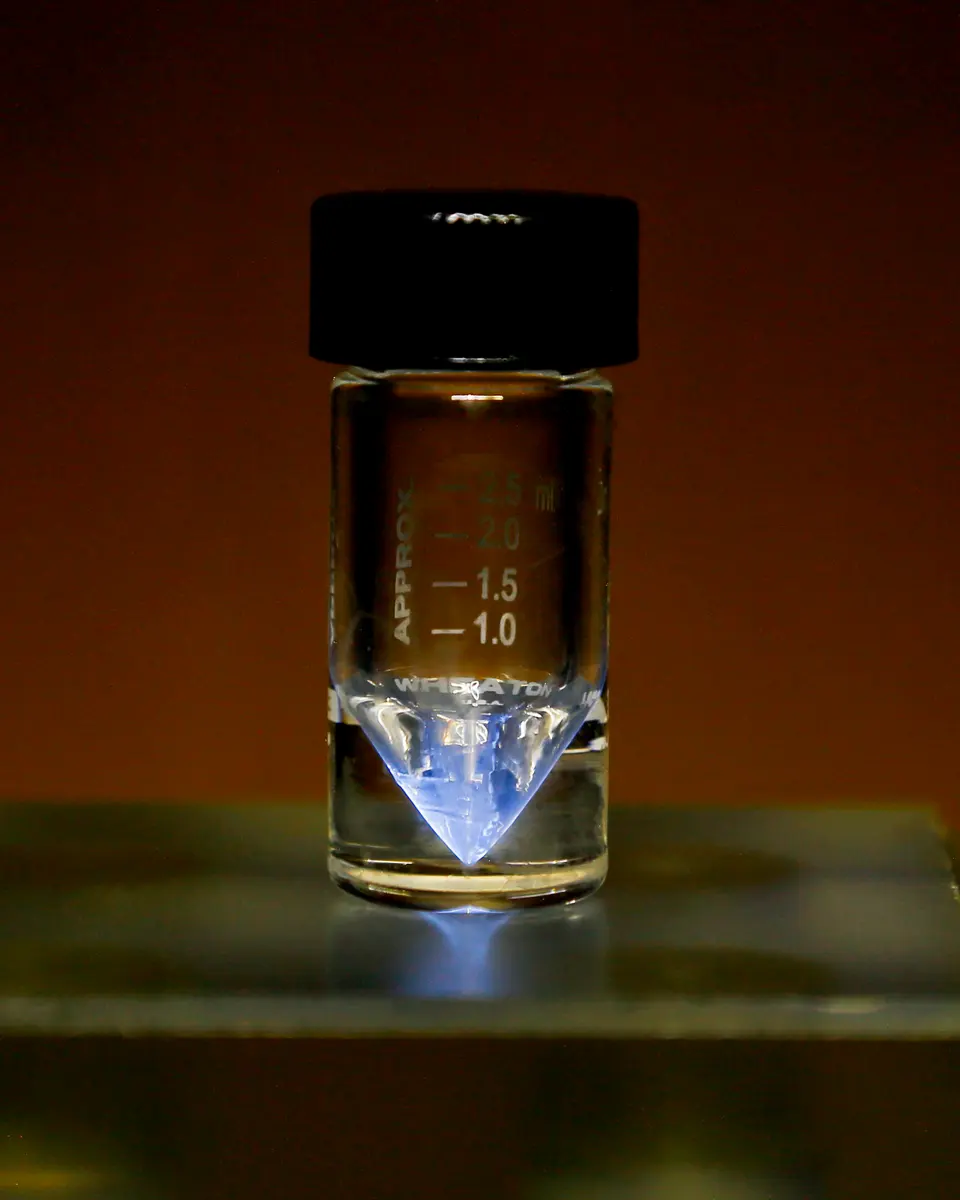
In a dark room, a tiny amount of actinium glows with a soft blue light. The metal is not burning or hot enough to shine: its rays knock electrons off the molecules of the air around it, and the air glows. That is why it was named after the Greek word for a ray.
Actinium gave its name to a whole row of the periodic table, the actinides, which includes uranium and plutonium. Most of it is too rare and too radioactive to be useful. But one kind, actinium-225, is now one of the most hoped-for new medicines against cancer.
The actinium atom
An actinium atom has 89 protons, so its atomic number is 89, and 89 electrons. Every kind of actinium atom is radioactive. The longest-lasting, actinium-227, has 138 neutrons: 89 + 138 = 227.
The electrons fill seven shells: 2, 8, 18, 32, 18, 9, 2. In subshells Grade 10: The Aufbau principle, radium, just before it, ends with 7s², and the diagonal rule says 5f comes next. But actinium’s 89th electron goes into 6d instead:
… 6s² 4f¹⁴ 5d¹⁰ 6p⁶ 7s² 6d¹
5f and 6d have almost the same energy here, and with only one electron to place, 6d wins, exactly as lanthanum puts its electron in 5d rather than 4f. From the next element, thorium, the 5f subshell starts to fill.
Its place in the periodic table
- Period 7, because its electrons are in seven shells.
- Actinium sits below lanthanum and leads the row of 15 actinides, from actinium (89) to lawrencium (103), printed below the main table Grade 10: Features of the modern periodic table. Some tables put it in group 3 with scandium, yttrium and lanthanum.
- Its block depends on whom you ask: its last electron is a d electron, so some tables call it d-block; others put it at the start of the f-block, with the actinides.
Actinium gives away its three outer electrons (7s² 6d¹) to form the ion Ac³⁺, so its valency is 3, like lanthanum’s Grade 9: Cations. Its compounds, such as actinium oxide, Ac₂O₃, and actinium chloride, AcCl₃, are written by the criss-cross method like any other Grade 9: Criss-cross method.
Actinium forms Ac³⁺ ions and oxygen forms O²⁻. What is the formula of actinium oxide?
Pick an answer to see why.
How actinium was found and named
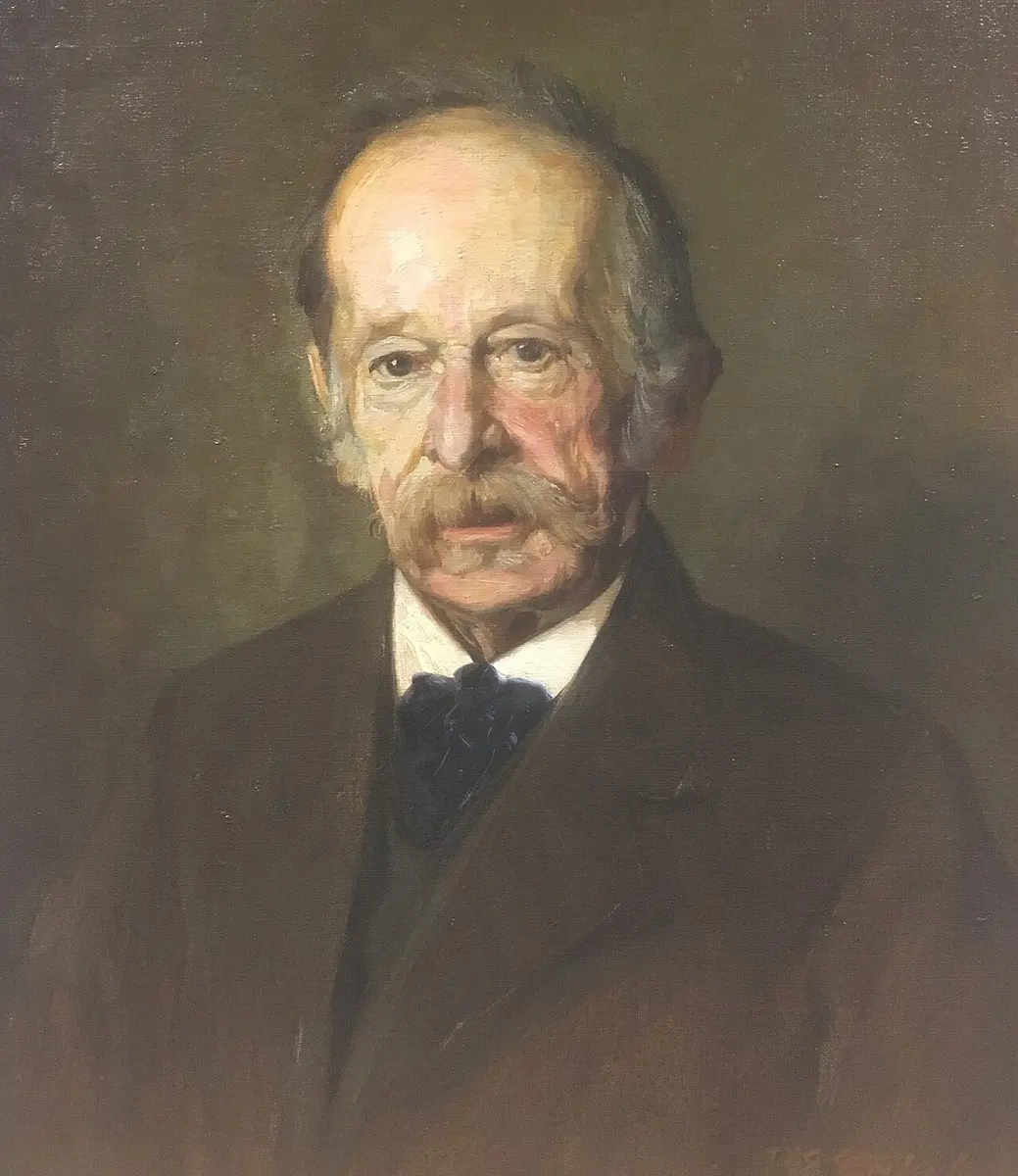
After Marie and Pierre Curie had taken radium and polonium out of tonnes of pitchblende, the black ore of uranium, they gave the leftovers to their friend André-Louis Debierne. In 1899 he announced a third new radioactive element from them, and named it actinium, from the Greek aktis, aktinos, “ray”. The symbol is Ac.
In 1902 the German chemist Friedrich Giesel, who worked in a factory making the malaria medicine quinine and studied radioactivity on the side, found a radioactive substance in the same kind of residue, much like lanthanum, and called it emanium. Later work showed the two were the same element, and Debierne’s older name was kept. Most historians still credit Debierne, but some argue that what he described at first was a mixture, and that Giesel was the first to make actinium truly pure.
Where actinium is found
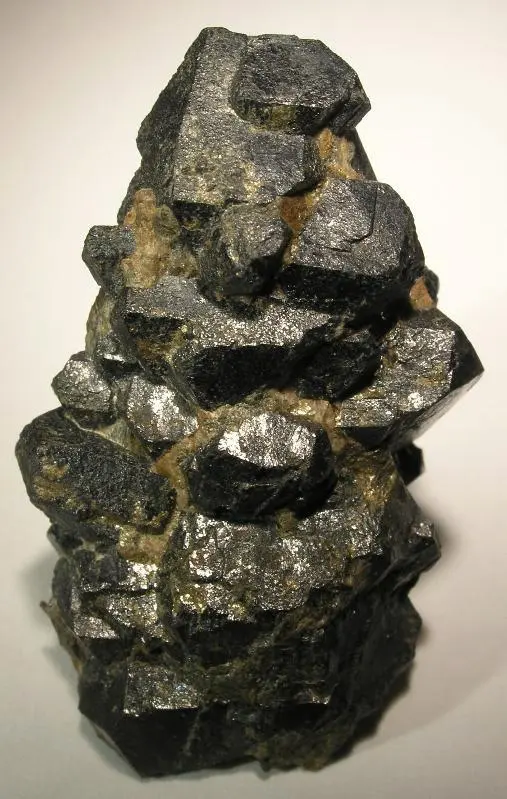
Actinium exists in nature only because uranium keeps making it. Uranium-235, as it slowly breaks down towards lead, passes through actinium-227 on the way (From uranium to lead). The amount is tiny: about 0.2 milligrams of actinium for every tonne of uranium in the ore. And because actinium is chemically almost a twin of lanthanum, which is always in the same ores, it is nearly impossible to separate.
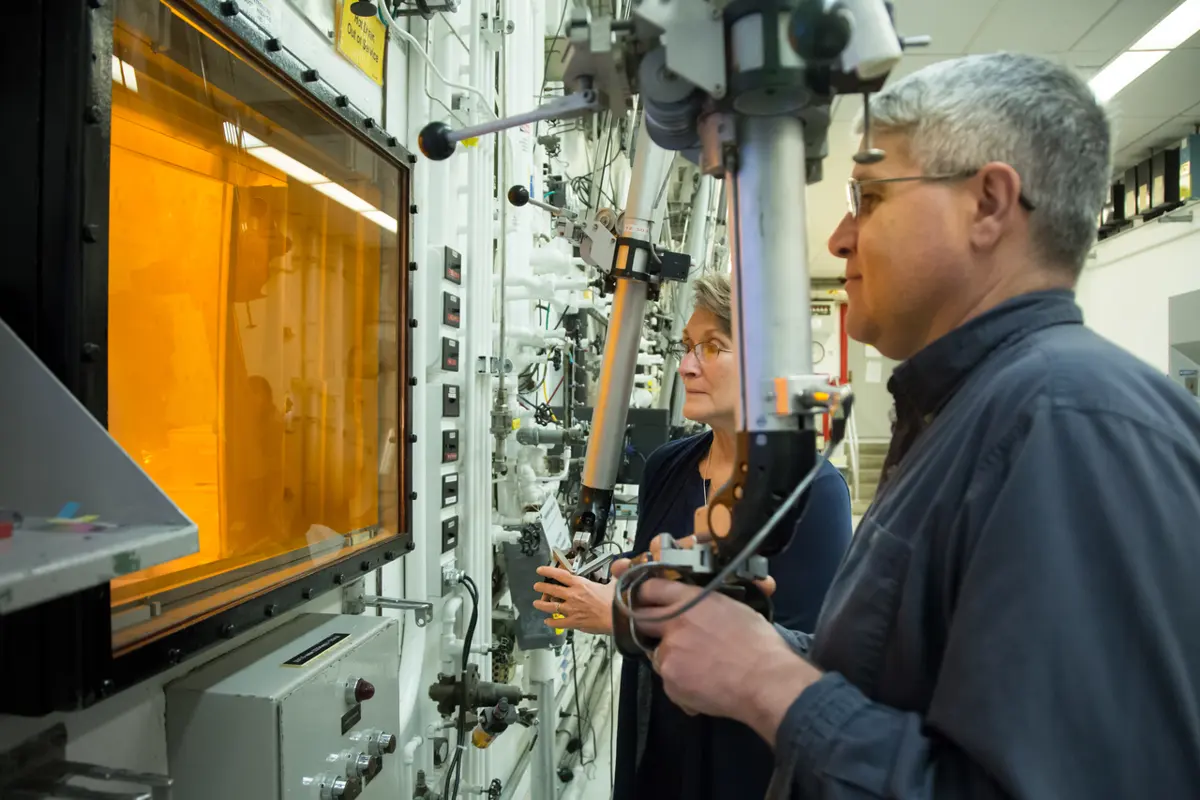
So the actinium used today is made. Radium-226 placed in a nuclear reactor catches a neutron, becomes radium-227, and within an hour turns into actinium-227 by beta decay. Even this way, it is made only in milligrams.
What actinium is like
- A soft, silvery-white metal, melting at about 1,050 °C.
- It tarnishes quickly in air, covering itself in a white layer of actinium oxide, which protects the metal underneath.
- It glows pale blue in the dark, from the air its rays excite.
- It is fiercely radioactive. Actinium-227 halves every 21.8 years. Mostly it gives out weak beta particles, but the substances it turns into give out alpha particles, so a sample soon becomes a strong source of alpha rays. Mixed with beryllium, it makes a source of neutrons: the alpha particles knock neutrons out of the beryllium nuclei.
Actinium-225 against cancer
Actinium-225 lasts longer than most medicines need, with a half-life of 10 days, enough to make it in one place and fly it to a hospital in another. As each atom decays, it does not stop at one alpha particle. It becomes francium-221, which becomes astatine-217, then bismuth-213: a chain that throws out four alpha particles in all (Alpha decay).
Doctors join actinium-225 to a molecule that sticks to one kind of cancer cell. One that seeks out a protein on prostate cancer cells is being tested in patients in several countries. Each alpha particle travels only a few cells’ widths, so the damage stays close to the cancer cell the actinium is stuck to. The difficulty is making enough: the world’s supply of actinium-225 is still small, and laboratories in the USA, Europe and elsewhere are building new ways to make it.
Actinium and your health
The body has no use for actinium. Swallowed or breathed in, it would settle in the liver and bones and damage them with its rays for years, so it is handled only in sealed glove boxes. No one outside a laboratory or hospital will ever meet it.
In your science books
- Grade 9: cations, the criss-cross method and radioactive elements.
- Grade 10: the actinides in the periodic table and the Aufbau principle.
- Going further: alpha decay, beta decay and from uranium to lead.
More to explore
- Nobel Prizes: hunting elements by their rays (1911), Marie Curie’s, from whose leftover ore actinium was found.
- Its relatives: lanthanum, its twin above it, radium, from which it is made, francium, born from it, and uranium, the best-known actinide.
- Play: find actinium in Guess the Element and the Periodic Table Jigsaw.
- Read more: actinium at the Royal Society of Chemistry and at PubChem.