
- Atomic number
- 115
- Atomic mass
- 290.2
- Shells
- 2, 8, 18, 32, 32, 18, 5
- Configuration
- 1s² 2s² 2p⁶ 3s² 3p⁶ 4s² 3d¹⁰ 4p⁶ 5s² 4d¹⁰ 5p⁶ 6s² 4f¹⁴ 5d¹⁰ 6p⁶ 7s² 5f¹⁴ 6d¹⁰ 7p³
- In the table
- period 7, group 15 (VA), p-block
- Kind
- Other metal
- Valency
- 3 (by its group); 1 predicted too
- State at 25 °C
- expected to be a solid
- Melts · boils
- not known · not known
- Known since
- 2003
An atom of moscovium, element 115, lasts less than a second. How can anyone be sure it was ever there? For moscovium, the proof came from what its atoms turn into: a chain of five quick changes that ends in an atom of dubnium, which lasts for hours, long enough for chemists to catch it. And in 2024, with just four atoms, moscovium became the heaviest element whose chemistry has ever been tested.
The moscovium atom
A moscovium atom has 115 protons (atomic number 115) and 115 electrons. Its longest-lasting known kind, moscovium-290, has 290 − 115 = 175 neutrons. By shells, the electrons are 2, 8, 18, 32, 32, 18, 5, and in subshells Grade 10: The Aufbau principle:
… 7s² 5f¹⁴ 6d¹⁰ 7p³
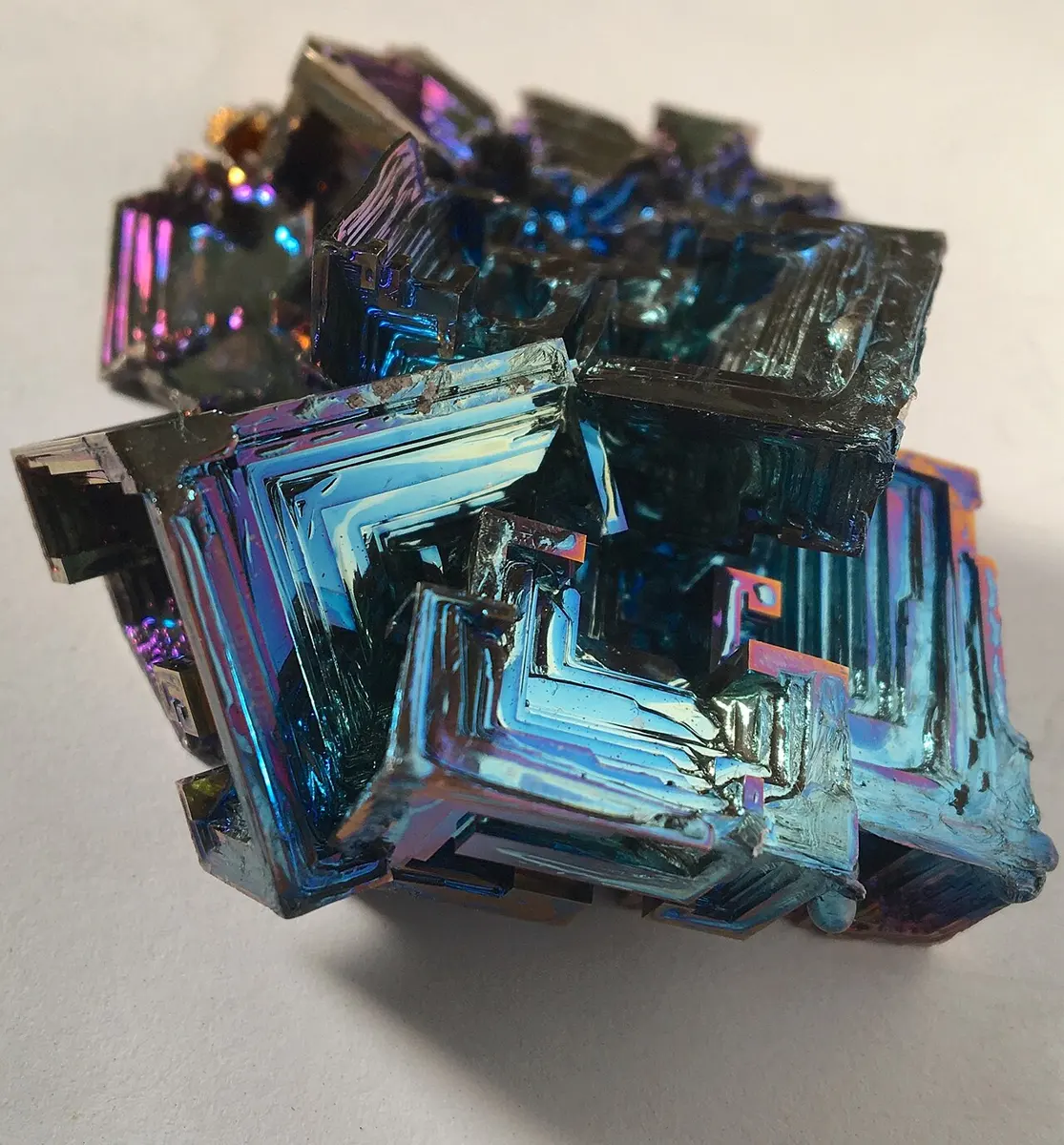
Its last electrons go into a p subshell, so moscovium is a p-block element. With five electrons in its outermost shell it belongs to group 15, under nitrogen, phosphorus, arsenic, antimony and bismuth Grade 10: Features of the modern periodic table. Going down group 15 the elements become more metallic: nitrogen is a gas, bismuth a heavy metal. Moscovium, below bismuth, is expected to be a metal too.
Moscovium-288 was the first kind of moscovium made. How many neutrons does it have?
Pick an answer to see why.
How moscovium was found and named
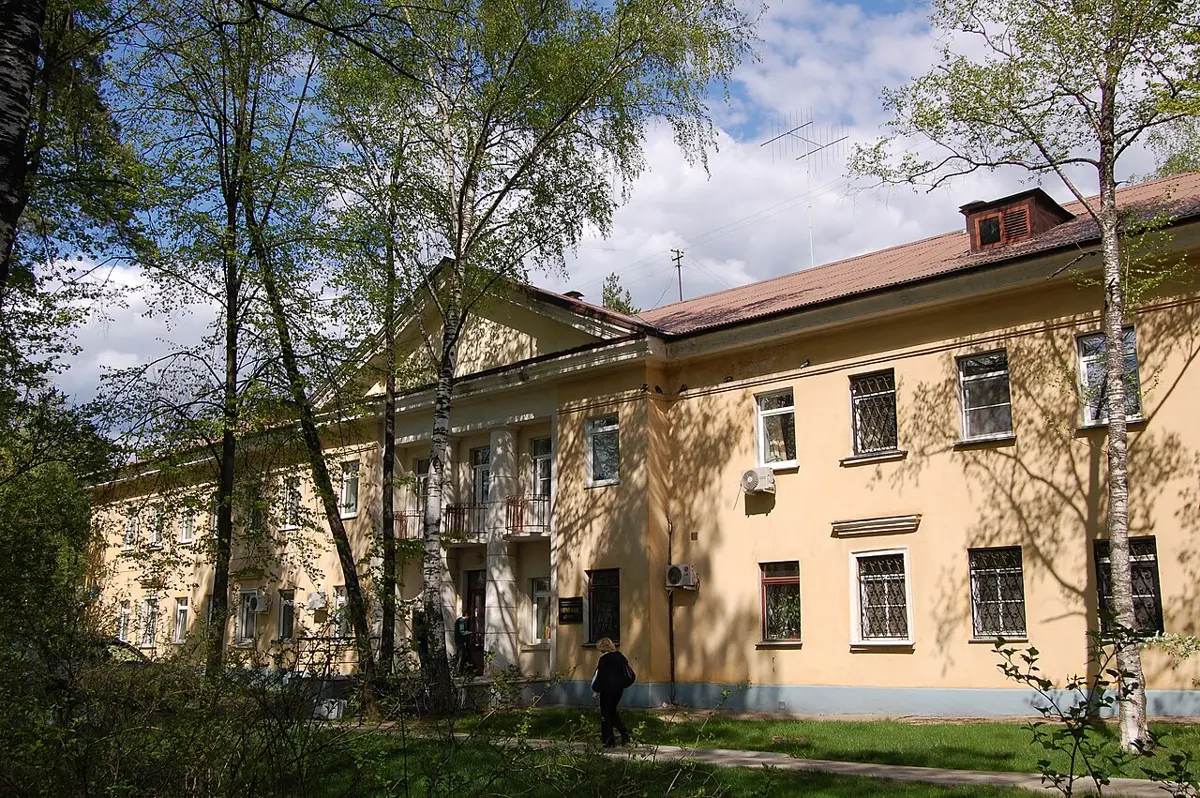
In 2003, a team at the Joint Institute for Nuclear Research in Dubna, a science town on the Volga river north of Moscow, worked with scientists from the Lawrence Livermore National Laboratory in the USA. They fired a beam of calcium-48 nuclei (20 protons) at a thin layer of americium-243 (95 protons): 95 + 20 = 115. In February 2004 they reported four atoms of element 115.
Other laboratories repeated the experiment: a team led by Lund University in Sweden, working at GSI in Darmstadt, Germany, in 2013, and Berkeley in 2015. In December 2015, IUPAC (the international union of chemists) and IUPAP (the physicists’ union) accepted the discovery and credited the Dubna and Livermore team, together with Oak Ridge in the USA, whose later experiments were part of the proof. In November 2016 the element was named moscovium, symbol Mc, after the Moscow region (Moscow Oblast), where Dubna is. Until then it had a stand-in name built from its digits, ununpentium (un-un-pent: 1-1-5).

A chain that ends in dubnium
Each moscovium-288 atom throws out an alpha particle (2 protons and 2 neutrons) and becomes nihonium, element 113. That does the same, and so on, five times in all (Alpha decay):
The detectors saw each alpha particle and the final splitting of the dubnium, at the same spot, one after another. That pattern is the fingerprint of a single atom. But a careful scientist asks: could something else have made it?
So in 2004 and again in 2005 the Dubna team did a second, different test. They let the products of the experiment collect for days, dissolved them, and separated them by chemistry, the way you separate mixtures in class. If element 115 had really been made, dubnium should turn up with the elements of group 5, niobium and tantalum, and not with the others. It did: the splitting atoms were found in the part that behaves like niobium. The discovery of element 115 was backed by the chemistry of its great-great-great-granddaughter.
Chemistry with four atoms
In 2024, a team at GSI in Darmstadt, working with the University of Mainz, tested how moscovium itself behaves. Each atom, made by the same calcium-and-americium reaction, was carried by a stream of gas over detectors coated with quartz (silicon dioxide, the mineral in sand). In about two months they caught four moscovium atoms (and 14 of nihonium). All four stuck to the quartz, so moscovium forms a chemical bond with it. The bond was weaker than bismuth’s would be, but moscovium was clearly more reactive than flerovium (114), which sticks to quartz only weakly. So far, no heavier element has had its chemistry tested.
What is measured, and what is only predicted
What has been measured:
- Five kinds of moscovium, from moscovium-286 to moscovium-290. The longest-lasting, moscovium-290, has a half-life of about 0.65 seconds.
- Each decays by giving out an alpha particle, turning into nihonium.
- It forms a bond with quartz, weaker than bismuth would, stronger than flerovium.
What is only predicted by calculations: that moscovium is a solid metal (about 13.5 g/cm³, melting near 400 °C), and that besides giving away three electrons, as bismuth does, it may often give away just one, forming Mc⁺ ions. The reason is that in so heavy an atom the electrons near the nucleus move at a large fraction of the speed of light, and that changes how tightly the 7p electrons are held. The facts card gives no melting point or density because none has been measured.
Moscovium has no uses outside research, and the body has none for it.
In your science books
- Grade 8: the last four elements named, in 2016 and groups and periods.
- Grade 9: radioactive elements and nuclear stability.
- Grade 10: features of the modern periodic table, the Aufbau principle and metals, non-metals and metalloids.
- Going further: alpha decay and half-life.
More to explore
- Its family: bismuth, above it in group 15, and dubnium, at the end of its decay chain.
- Its neighbors: flerovium, element 114, and livermorium, element 116, which decays into flerovium.
- Play: find moscovium in Guess the Element and the Periodic Table Jigsaw.
- Read more: moscovium at the Royal Society of Chemistry and at PubChem.