
Joining carbon atoms with palladium
Nobel Prize in Chemistry, 2010: Richard F. Heck, Ei-ichi Negishi, and Akira Suzuki
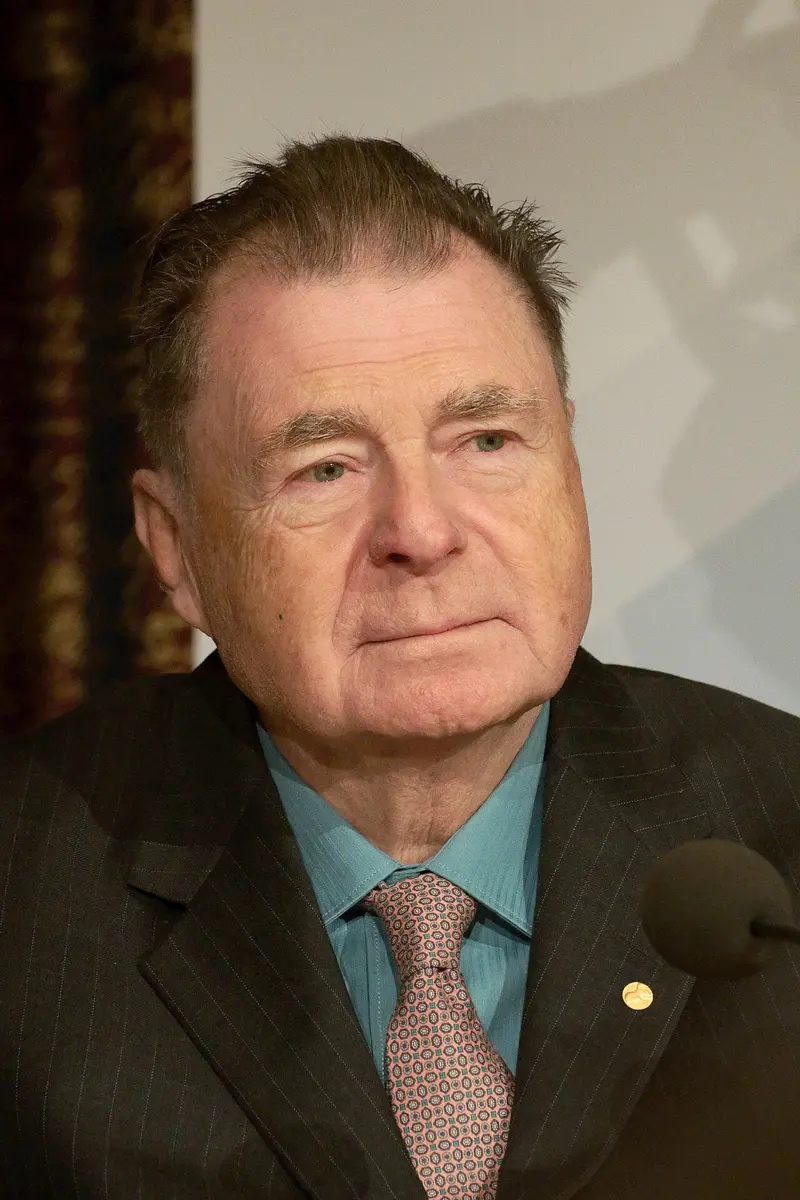
Richard F. Heck
1931–2015, born in the United States
He started growing orchids as a teenager and was still growing them in the Philippines when he won.
Photo: Holger Motzkau, CC BY-SA 3.0
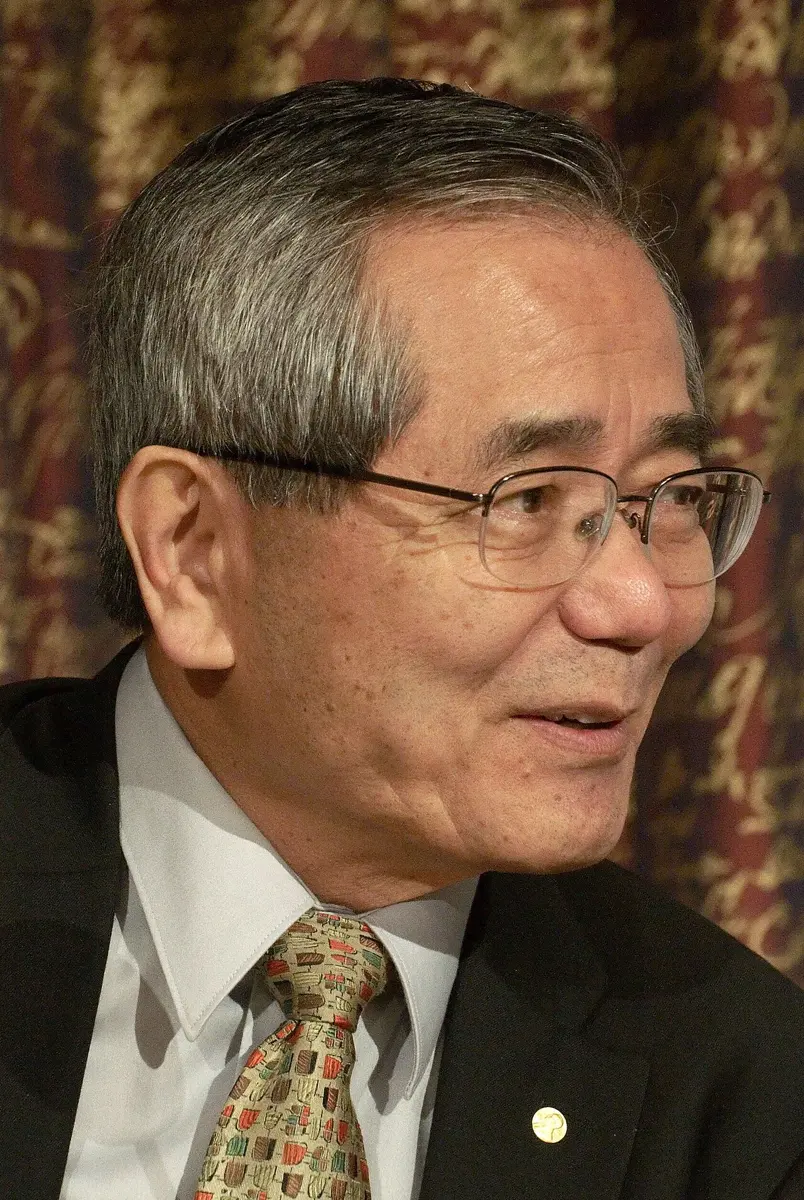
Ei-ichi Negishi
1935–2021, born in China to Japanese parents
As a student he dreamed of a way to join any two pieces of a molecule as easily as two LEGO bricks.
Photo: Holger Motzkau, CC BY-SA 3.0
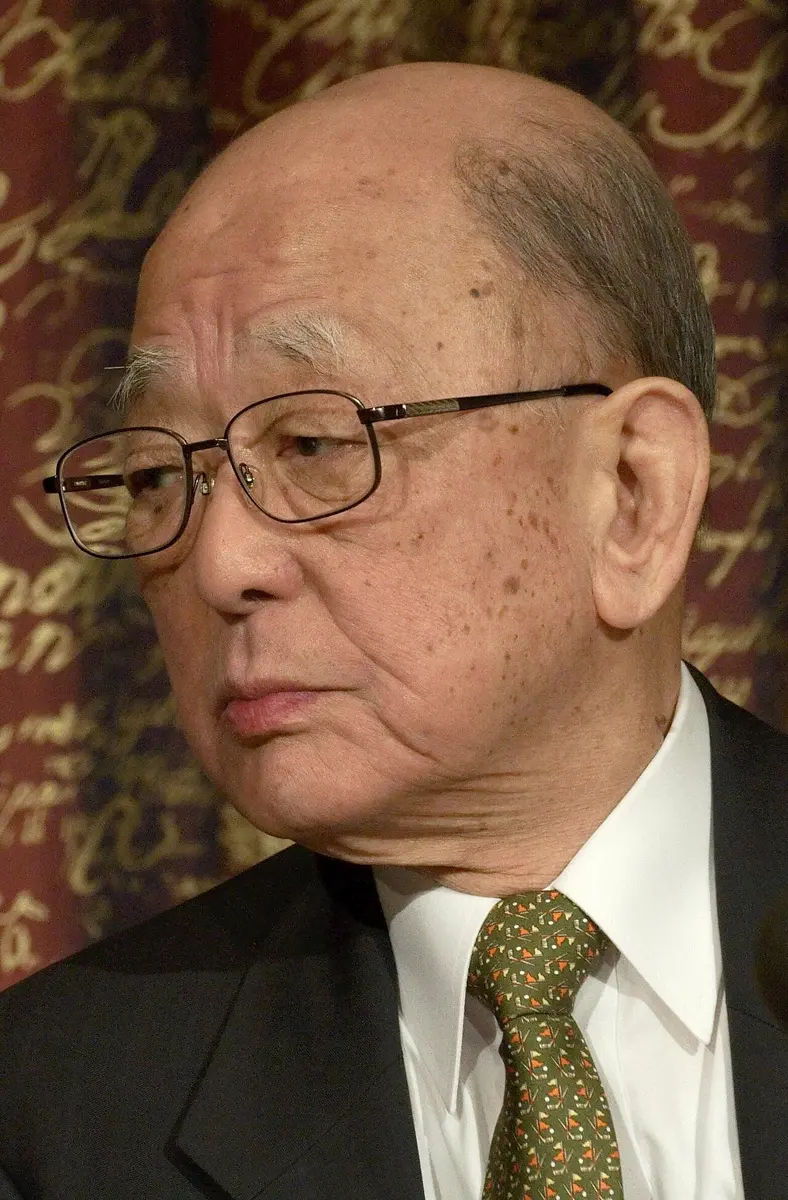
Akira Suzuki
born 1930 in Japan
He found his life’s work in a red and black book he bought one Saturday in a Sapporo bookshop, and stayed up all night to read.
Photo: Holger Motzkau, CC BY-SA 3.0
Look at the strip of tablets in your family’s medicine box: a painkiller, a cough syrup, a tablet for high blood pressure. Each medicine is a molecule, a group of atoms joined in an exact shape. Most of them have a skeleton of carbon atoms, joined in chains and rings. Change the skeleton a little and the medicine may stop working, or become a poison.
So how do chemists build a carbon skeleton exactly the way they want? For a long time it was very hard. In 2010 the Nobel Prize in Chemistry went to three chemists who found a neat way to join two carbon atoms, with the help of a silvery metal called palladium.
The problem: carbon atoms don’t want to join
You know that the atoms of carbon, oxygen and nitrogen are most stable with eight electrons in their outer shell (the octet rule). A carbon atom has only four outer electrons of its own, so it shares electrons with other atoms through covalent bonds until it has eight. In methane, CH₄, the carbon shares one pair of electrons with each of four hydrogen atoms Grade 9: Formation of methane.
Carbon can also bond to other carbon atoms, making long chains and rings Grade 9: Catenation. That is why there are millions of organic compounds Grade 10: What an organic compound is. Nature builds them all the time, in every leaf and every cell of your body.
A chemist who wants to make a big molecule usually starts from smaller ones and joins them, piece by piece. But here is the difficulty: in a small molecule, every carbon atom already has its eight electrons. It is satisfied. It has no reason to react with a carbon atom in another molecule.
The old way: make the carbon restless
In 1912 the French chemist Victor Grignard won a Nobel Prize for a trick. He attached a magnesium atom to the carbon he wanted to join. Magnesium gives up its electrons easily, so it pushes them onto the carbon. The carbon now has too much negative charge for its nucleus. It becomes restless, and grabs the nearest carbon it can find.
That works well for small molecules. But a big molecule has many carbon atoms, and the restless carbon doesn’t choose carefully. It may join the right carbon, or a wrong one, or react with something else entirely. The flask fills with by-products: molecules nobody wanted.
Why by-products matter so much
A medicine molecule may need twenty or thirty steps to build. What is lost at each step is lost for good.
A meeting point for carbon atoms
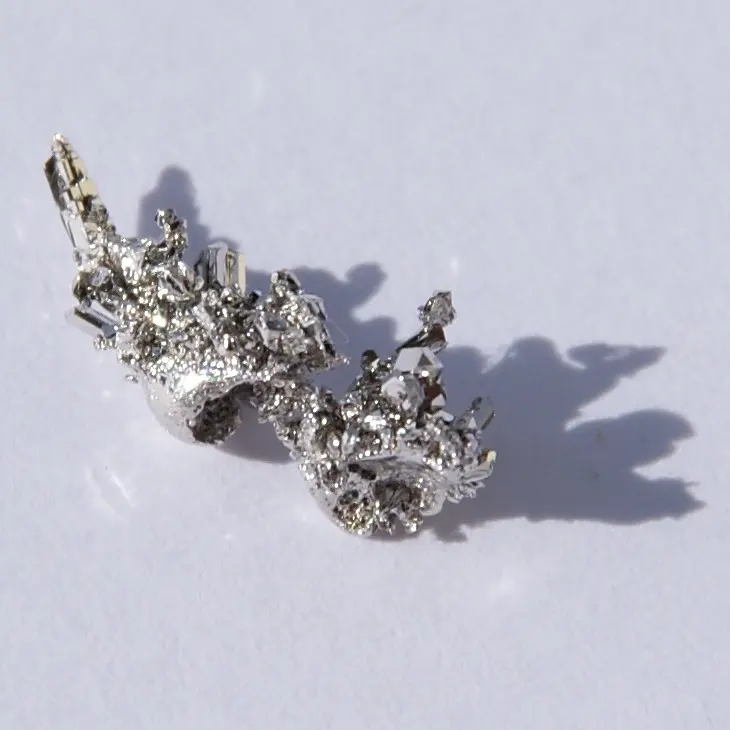
The three laureates used a different idea. Instead of making one carbon very reactive, they let both carbons meet on a metal atom: palladium (Pd, element 46), a silvery metal in the same family as platinum.
Each carbon attaches to the same palladium atom. Held there, side by side, the two carbons are close enough to join, so neither of them needs to be made very restless. They join each other and nothing else. Then the new molecule leaves, and the palladium is free to do it again.
So palladium is a catalyst: a substance that makes a reaction go, takes part in it, but is not used up Grade 10: Catalyst. A very small amount of palladium can join a very large number of molecules.
Why is so little palladium needed to make a large amount of product?
Pick an answer to see why.
What they did, step by step
All three reactions start the same way. One of the two pieces has a handle: an atom of bromine or iodine attached to the carbon that is to join. They differ in how the second carbon is brought to the palladium.
1. Heck: the first meeting on palladium (1968–1972)
Richard Heck grew up in Los Angeles and studied chemistry at the University of California. In 1956 he went to work for the Hercules Powder Company, a chemical company in Wilmington, Delaware, in the United States.
- The idea. In the 1950s a German company, Wacker, had begun using palladium to turn ethylene into another chemical on a large scale. A colleague of Heck’s, in the laboratory across the corridor, was studying how that worked. Heck wondered what would happen if he made a carbon attached to palladium meet another molecule.
- 1968, the first experiment. He made a ring of carbon atoms (a benzene ring) attached to palladium, in a flask filled with ethylene, the simplest alkene (a hydrocarbon with a carbon–carbon double bond; Alkenes). They reacted at once. The ring and the ethylene joined to make styrene, the starting material of the plastic polystyrene. He published his results in a series of papers in 1968.
- The problems. His first method needed poisonous mercury and a full amount of costly palladium, not just a pinch.
- 1972, the Heck reaction. By then a professor at the University of Delaware, he found a better way: a ring with a bromine or iodine handle, an alkene, and only a small amount of palladium, which works again and again. This is the Heck reaction. In Japan, Tsutomu Mizoroki had reported a very similar reaction in 1971, working on his own, so chemists often call it the Mizoroki–Heck reaction.
2. Negishi: zinc brings the carbon (1977)
Ei-ichi Negishi was born in 1935 in Changchun, China, to a Japanese family, and grew up partly in Korea before the family returned to Japan after the Second World War. In 1960 he won a scholarship to study for a PhD in the United States. While still a student he had a dream: a simple, LEGO-like method to join any two pieces of a molecule, R₁ and R₂, to make R₁–R₂.
- The idea. Grignard’s magnesium made carbon too restless. Negishi tried other metals that hold their carbon more gently.
- 1977, zinc. He found that zinc works very well. A carbon attached to zinc is calm. It doesn’t attack other molecules by itself. But on meeting palladium, the zinc hands its carbon over. Now both carbons sit on the palladium, and they join. This is the Negishi reaction.
3. Suzuki: boron, the gentlest of all (1979)
Akira Suzuki was born in 1930 in Mukawa, a small town on the Japanese island of Hokkaido, and spent almost all his career at Hokkaido University.
- 1962, the book. In a bookshop in Sapporo he found a book called Hydroboration, by the American chemist Herbert C. Brown, about compounds of carbon and boron. He stayed up all night reading it.
- 1963–1965, America. He went to work in Brown’s laboratory. Most chemists there thought boron compounds were useless for building molecules, because they are so unreactive. Suzuki thought that might be an advantage: they are stable in water and air, so they are safe and easy to handle.
- 1979, the Suzuki reaction. With Norio Miyaura, he showed that a carbon attached to boron, with a little base (an alkali) added, hands its carbon to palladium too. Boron is the mildest helper of all and is less poisonous than zinc, which matters when a factory makes tonnes of product.
How it works: three steps round a circle
Here is the Suzuki reaction, the one used most, in three steps. The palladium goes round a circle and ends where it started.
- The first piece arrives. The carbon with the bromine handle attaches to the palladium atom. The bromine stays on the palladium for now.
- The second piece is handed over. The carbon attached to boron comes along. The boron hands its carbon to the palladium and takes the bromine away.
- The two pieces join. Both carbons are now on the same palladium atom, side by side. They form a bond with each other and leave as one new molecule. The palladium is ready for the next pair.
The two pieces can join only at the two carbons that were attached to the palladium: the one with the handle and the one with the boron. That is where the precision comes from. The chemist decides where the joint will be by putting the handle and the boron there.
In a Suzuki reaction, how does the chemist decide exactly where the two pieces will join?
Pick an answer to see why.
In your life today
- Medicines. The Heck reaction is used in factories to make naproxen, a painkiller, and montelukast, a tablet for asthma. In 1994 chemists at the company Merck described how to make losartan, a medicine for high blood pressure, with the Suzuki reaction as its key step. Many new medicines being tested today were first built in a laboratory with one of these reactions.
- Medicines from the sea. At the end of the 1980s, divers in the Caribbean Sea collected a sponge from 33 meters down. It makes a substance, discodermolide, that stopped cancer cells growing in tests. The sponge makes only tiny amounts, so it could never be collected in enough quantity. Chemists built the molecule instead, with Negishi’s reaction as a key step. Later improvements made enough of it to begin tests on patients.
- Farming. The Suzuki reaction is used to make thousands of tonnes a year of a fungicide, a chemical that protects crops from fungi Grade 10: Types of pesticides.
- Screens. Many phone screens are OLED screens: each tiny dot of color is a layer of organic molecules that glows when a current flows. Chemists have used these reactions to build better molecules for them, especially the ones that give blue light.
Joining carbon atoms: five Nobel Prizes
Joining carbon to carbon is so important that the 2010 prize was the fifth Nobel Prize in Chemistry for a way of doing it: Grignard’s reaction (1912), the Diels–Alder reaction (1950), the Wittig reaction (1979), olefin metathesis (2005), and palladium cross-coupling (2010). The German chemist Hermann Kolbe made one of the first carbon–carbon bonds by chemistry in 1845. A century and a half later, chemists could build molecules as large as palytoxin.
You have met another metal catalyst in your science book: nickel, which helps hydrogen add to the double bonds of vegetable oil to make vanaspati ghee Grade 10: Hydrogenation. Like palladium, it holds molecules on its surface so they can react.
What came next
- Cheaper metals. Palladium is rare and expensive, and some people react badly to traces of it. Chemists are learning to do the same joinings with nickel, copper and iron, which are common and cheap.
- Greener chemistry. In 2010 scientists attached palladium atoms to graphene (a sheet of carbon one atom thick, that year’s physics prize) and used it to run the Suzuki reaction in water instead of in oily solvents.
- Joining other atoms. The same idea, two pieces meeting on palladium, is now used to join carbon to nitrogen and to oxygen, which many medicines need.
An open question: can chemists make any molecule nature makes, as easily as snapping two LEGO bricks together, with no waste at all? Negishi’s student dream is closer than ever, but not there yet.
In your science books
- Grade 9: the octet rule, covalent bonds in methane, catenation (carbon’s chains), and uses of organic compounds.
- Grade 10: organic compounds, alkenes, hydrogenation with a nickel catalyst, catalysts and pesticides.
- Going Further: how a catalyst lowers the hill and what a molecule looks like.
Learn more
- The Nobel Prize’s own explanation: A powerful tool for chemists (nobelprize.org), with the presentation speech.
- The laureates’ Nobel lectures: Heck, Negishi and Suzuki.
The official reason
The prize was given “for palladium-catalyzed cross couplings in organic synthesis.”