
You eat about half a kilogram of food a day. Almost all of it, the rice, the dal, the vegetables, even the milk and meat (through the grass and grain the animals ate), was built by plants. And plants build it out of very little: air, water, sunlight, and a few pinches of elements taken from the soil.
Take a crop from a field year after year, and those pinches of elements go with it to the market. Unless they are put back, the soil grows poorer and the harvest smaller. Insects and diseases take their share too. This unit is about what farmers put on their fields to keep them fertile and their crops safe, fertilizers and insecticides: how they help, and the harm they do when they are used carelessly.
Harka Bahadur’s maize
The lesson of the story: feed the soil what it lacks, in the right amount, and find out what it lacks by testing it. The rest of this unit explains each part of that.
Necessary nutrients for plants
A seed sprouts, grows into a plant, flowers, and its flowers become fruits with new seeds: the life cycle goes on and on. To complete it, a plant needs 17 elements, called the essential elements (or plant nutrients). Without any one of them, it can’t grow and reproduce normally.
The 17 essential elements are: carbon (C), hydrogen (H), oxygen (O), nitrogen (N), phosphorus (P), potassium (K), sulphur (S), calcium (Ca), magnesium (Mg), boron (B), chlorine (Cl), copper (Cu), iron (Fe), manganese (Mn), molybdenum (Mo), nickel (Ni) and zinc (Zn).
Carbon, hydrogen and oxygen come from air and water: plants take carbon dioxide from the air and water from the soil, and make sugar from them by photosynthesis. The other 14 come from the soil, dissolved in the water that the roots take up.
The soil nutrients are grouped by how much of each a plant needs.
- a.Primary nutrients are nitrogen (N), phosphorus (P) and potassium (K). Plants need them in large amounts, so they run short first, and farmers must manage them carefully.
- b.Secondary nutrients are calcium (Ca), magnesium (Mg) and sulphur (S), needed in smaller, but still fair, amounts.
- c.Micronutrients are iron, manganese, zinc, copper, boron, molybdenum, chlorine and nickel. Plants need only tiny amounts of them, but without them, growth, development and the harvest are still held back.
In nature, the nutrients go round in a cycle. Leaves fall, plants and animals die, dung is dropped; all of it decays in the soil, and the nutrients in it are returned for new plants to use. But when a farmer harvests a crop and takes it away, the nutrients go with it. Farm the same field again and again, and the soil runs short. That shortage is made up with fertilizer.
A plant takes its carbon mainly from…
Pick an answer to see why.
Fertilizer
A fertilizer is any substance that supplies plants with the essential nutrients they need. We add fertilizer to the soil to make up for nutrients it lacks. It increases the fertility of the soil (its ability to grow crops), helps plants grow and develop, and keeps them healthier and better able to resist disease.
There are two types of fertilizer: organic and inorganic.
a. Organic fertilizer
Organic fertilizer (or manure) is made from the dead bodies and wastes of living things, decayed by bacteria and fungi. Compost, farmyard manure, green manure, oil cake (pina), bone meal and wood ash are organic fertilizers.
Compost is made from decayed plant and animal waste: fallen leaves, straw, grass, leftover fodder, kitchen scraps, animal dung and urine, and dead animals. Dung of cows and buffaloes (gobar mal) is the most common organic manure in Nepal.
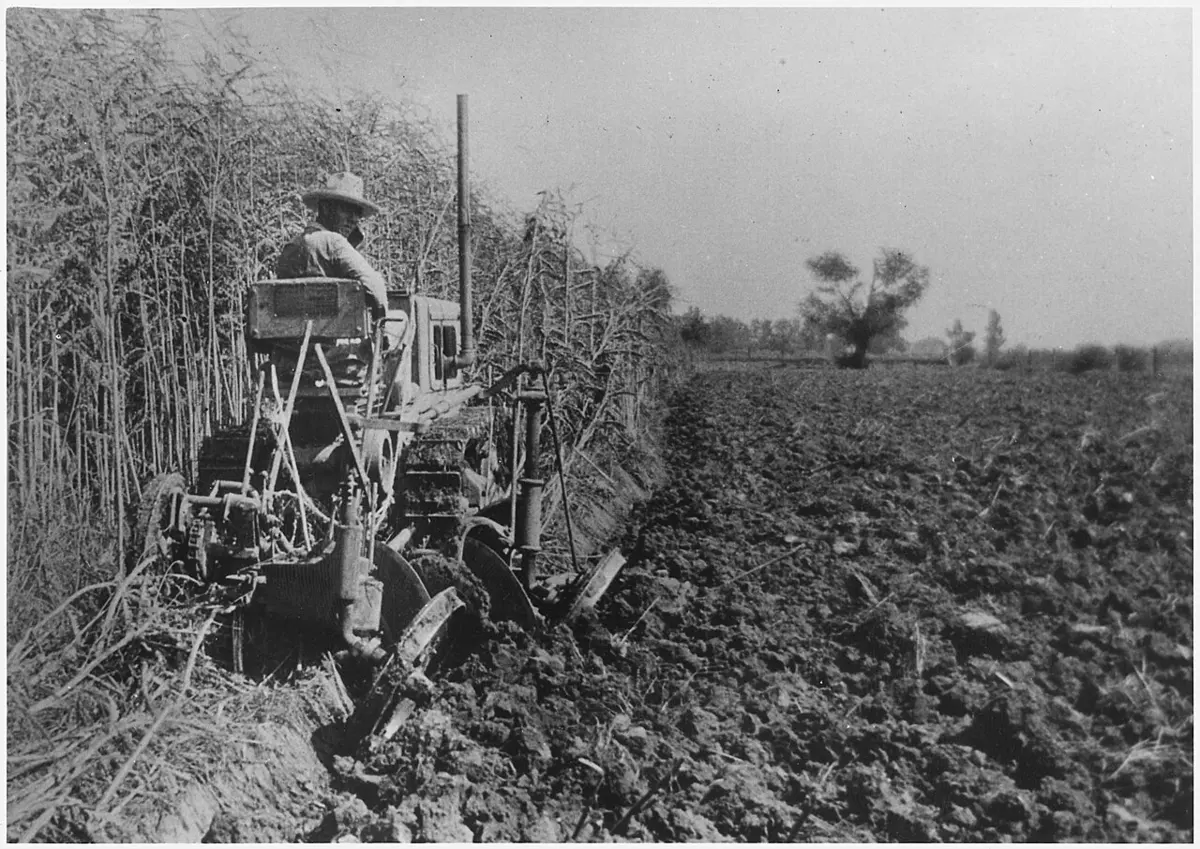
Green manure: before sowing the main crop, a farmer grows a fast-growing plant on the field, and then plows it into the soil while it is still green. There it rots, and becomes manure. Plants of the pea and bean family (legumes) are best for this, such as dhaincha and sunhemp: bacteria in small lumps (nodules) on their roots take nitrogen from the air, so when they rot, they add nitrogen (as nitrates) to the soil. In Nepal, the leafy branches of plants such as asuro (adhatoda), titepati (mugwort) and khirro are also cut and buried in fields as green manure.
Oil cake (pina), what is left after oil is pressed from mustard seeds, is rich in nitrogen. Bone meal (powdered bones) supplies phosphorus and calcium. Wood ash supplies potassium.
Advantages of organic fertilizers
- They supply many nutrients at once, slowly, as they decay, so the soil stays fertile for a long time.
- They add humus (decayed organic matter), which makes the soil soft and crumbly, lets air in, and helps it hold water.
- They feed the earthworms and microbes that keep soil alive.
- They don’t harm the soil even after many years of use, and they cause little pollution: they turn wastes into something useful.
- Crops grown with them are as nutritious and tasty as any, and are free of chemical residues.
b. Inorganic fertilizer
When the soil lacks nutrients, they can also be supplied as chemicals. Inorganic fertilizers (also called chemical fertilizers) are inorganic compounds, made in factories from minerals and gases, that supply nitrogen, phosphorus and potassium to plants. For example, urea is made from ammonia and carbon dioxide:
(Urea is in fact an organic compound, but as a factory-made fertilizer it is grouped with the chemical fertilizers.)
Chemical fertilizers dissolve easily in water, so plants take them up quickly and the effect shows within days. They are concentrated: a small amount contains a lot of one particular nutrient. By the main nutrient they supply, they are of three kinds: nitrogenous, phosphatic and potassium fertilizers.
Nitrogenous fertilizers
Nitrogenous fertilizers are the compounds used to supply nitrogen to plants. Examples:
| Fertilizer | Formula | Nitrogen in it |
|---|---|---|
| urea | NH₂CONH₂ | 46% |
| ammonium nitrate | NH₄NO₃ | 35% |
| ammonium sulphate | (NH₄)₂SO₄ | 21% |
Why plants need nitrogen: nitrogen is part of every protein and of chlorophyll. It makes plants grow fast and leafy, raises the rate of photosynthesis, helps build protein and protoplasm, and increases the harvest.
Effects of nitrogen deficiency (signs of too little nitrogen): the plant grows slowly and stays small, and the harvest falls. The leaves turn pale yellow, starting with the older, lower leaves (the plant moves its scarce nitrogen to the young leaves). Flowers, fruits and seeds are small.
Phosphatic fertilizers
Phosphatic fertilizers are the compounds used to supply phosphorus to plants. Examples:
| Fertilizer | Formula |
|---|---|
| ammonium phosphate (as DAP, diammonium phosphate, the most used in Nepal) | (NH₄)₂HPO₄ |
| single superphosphate (calcium superphosphate) | Ca(H₂PO₄)₂ mixed with CaSO₄ |
| triple superphosphate | Ca(H₂PO₄)₂ |
| ammonium metaphosphate | NH₄PO₃ |
Why plants need phosphorus: it helps roots grow and develop, and helps flowers, fruits and seeds form and ripen on time. Phosphorus is part of DNA and of the molecules that carry energy in every cell. It also helps plants resist disease.
Effects of phosphorus deficiency: the roots stay small. Cell division slows, so the plant is thin and stunted. Leaves are dull dark green, often with a purplish tinge. Fruits and seeds ripen late and the seeds are shriveled. The plant becomes weak against disease.
Potassium fertilizers
Potassium fertilizers (potash fertilizers) are the compounds used to supply potassium to plants. Examples: potassium chloride (KCl, called muriate of potash, the most used), potassium sulphate (K₂SO₄), potassium nitrate (KNO₃) and potassium carbonate (K₂CO₃). Wood ash contains potassium carbonate, which is why ash is good for the soil.
Why plants need potassium: it makes stems and roots strong, so plants don’t fall over, and helps them resist disease and drought. It helps flowers and fruits develop, and helps the plant make and move sugar, starch and protein.
Effects of potassium deficiency: the plant makes less protein and starch, and cell division slows, so it grows weak. The leaves stay small and fall early, and the edges of the older leaves turn yellow and then brown and dry, as if scorched. Stems are weak and fall over easily, and plants may dry up and die.
A maize plant is short, and its older, lower leaves have turned pale yellow all over. The soil most probably lacks…
Pick an answer to see why.
NPK fertilizer
A fertilizer that supplies all three primary nutrients, nitrogen, phosphorus and potassium, is called an NPK fertilizer (a complex or mixed fertilizer). Its bag carries three numbers, such as 20-20-10: the percentages of nitrogen (N), phosphate (written as P₂O₅) and potash (written as K₂O). So 100 kg of a 20-20-10 fertilizer supplies 20 kg of N, 20 kg of P₂O₅ and 10 kg of K₂O. Urea is 46-0-0 and DAP is 18-46-0. An NPK fertilizer gives a balanced feed in one application, so a farmer doesn’t have to buy and spread three fertilizers separately.
Advantages of chemical fertilizers
- a.They contain exactly the nutrients plants need, in concentrated form, so they quickly increase the fertility of the soil and the harvest.
- b.They dissolve easily in water, so plants absorb their nutrients quickly.
- c.They are easy to use, to transport and to store, and can be made in large amounts.
Disadvantages of chemical fertilizers
Chemical fertilizers are useful, but using too much of them, or using nothing else, does great harm.
- a.They don’t break down into humus the way manure does (exam answers often say they are not biodegradable). What plants don’t take up is washed by rain into rivers, ponds and wells. There it pollutes the water: nitrates in drinking water are harmful, especially to babies, and the extra nutrients make algae grow so thickly in ponds that fish die.
- b.They change the acidity of the soil: ammonium fertilizers and urea, used year after year, make soil more acidic; some others make it more basic. Crops then grow poorly.
- c.They supply nutrients but no humus. Used alone, year after year, they leave the soil hard and lifeless, with fewer earthworms and microbes. Then the soil gives less and less unless more and more fertilizer is added, and the farmer comes to depend on it.
- d.Too much nitrogen makes plants soft and leafy, easy prey for insects, and can lower the taste, quality and keeping time of fruits and vegetables.
Insecticides
Insects such as caterpillars, aphids, stem borers and grain weevils eat a large share of the world’s crops. To kill or control them, farmers use insecticides: chemicals that kill or control the harmful insects that damage crops. They are dusted on as a powder or sprayed as a liquid. For example, malathion is used to kill the insects that attack vegetables and fruits.
Insecticides are of two kinds: bio-insecticides and chemical insecticides.
a. Bio-insecticides
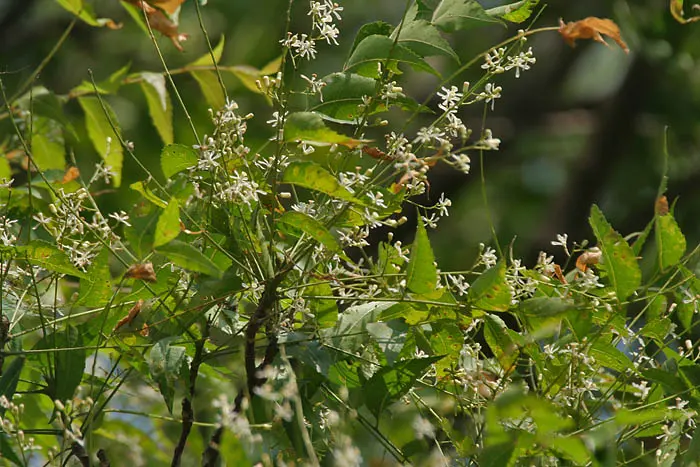
Bio-insecticides are insecticides made from natural things, mostly the parts of plants that insects dislike. They are made locally, from plants that grow around us. Jholmol is a bio-insecticide made in Nepal. Other examples from Nepali farms:
- the ash that farmers in villages sprinkle on plants;
- branches of asuro (adhatoda) laid in the field before planting potatoes;
- neem (nim) leaves kept in stored grain;
- juice of titepati (mugwort) and neem used to kill bedbugs.
The careless use of chemical insecticides pollutes the land, water and living things. Bio-insecticides can be used instead. They repel insects and protect plants from disease, and they don’t harm the soil, other living things or human health.
b. Chemical insecticides
Chemical insecticides are compounds made in factories on a large scale. Examples: DDT (dichlorodiphenyltrichloroethane), BHC (benzene hexachloride), methoxychlor, aldrin and dieldrin, and malathion.
Advantages of insecticides: they kill the insects that harm crops and help to increase the harvest. But they do great harm to the environment as well. Farmers often use chemical insecticides not because they want to but because they feel they must, to save their crop. These chemicals are poisons and must be stored safely.
Disadvantages of insecticides:
- Residues of insecticides left on fruits and vegetables enter our bodies with our food and harm our health.
- Breathing in sprays, or getting them on the skin, can harm the lungs, the nervous system and the glands (hormone system); badly handled, they poison and even kill the people who spray them.
- They pollute the air, water and soil.
- They kill not only harmful insects but also useful ones: bees that pollinate crops, and insects that eat pests.
- They upset the ecosystem. DDT, for example, washes into water. Fish and other water animals in polluted water die, or those that survive have fewer young. DDT also builds up in body fat as it passes up the food chain, so birds and fish that eat other animals carry the most, and their growth and breeding are harmed.
Precautions while using chemical insecticides
- Read the instructions on the label carefully before use, and use only the amount recommended.
- The person spraying should wear protective clothing: gloves, long sleeves, boots, a mask and goggles.
- Never let the insecticide touch the eyes or mouth; don’t eat, drink or smoke while spraying, and wash well afterwards.
- Spray with the wind (the wind blowing from behind you), so the spray is carried away from you, not into your face. Don’t spray on a windy day.
- Store what is left over safely: in its own labeled container, locked away from children, food and animals.
- Don’t wash the sprayer and other equipment near a water source (a stream, pond, well or tap).
- Wait the number of days given on the label before harvesting a sprayed crop, so the poison has time to break down.
Why should a farmer not wash his insecticide sprayer in the village stream?
Pick an answer to see why.
Conservation of soil quality
To keep getting good crops, a farmer must keep the soil in good health. Using too many chemicals to push up the harvest can spoil it. Soil quality can be kept up in these ways:
a. Test the soil
Testing the soil from time to time shows which nutrients it lacks, and how acidic it is, so the farmer adds only what is needed. It also shows which crops suit the soil.
b. Use suitable farming methods
- crop rotation: growing different crops on a field one after another (rice, then wheat, then a legume such as lentils, which adds nitrogen), so that the same nutrients aren’t used up year after year;
- mixed cropping: growing two or more crops together, such as maize with beans;
- agricultural lime on acidic soil;
- plenty of compost and manure, and as little chemical fertilizer as needed;
- suitable irrigation, neither too little nor too much water.
c. Use the land properly
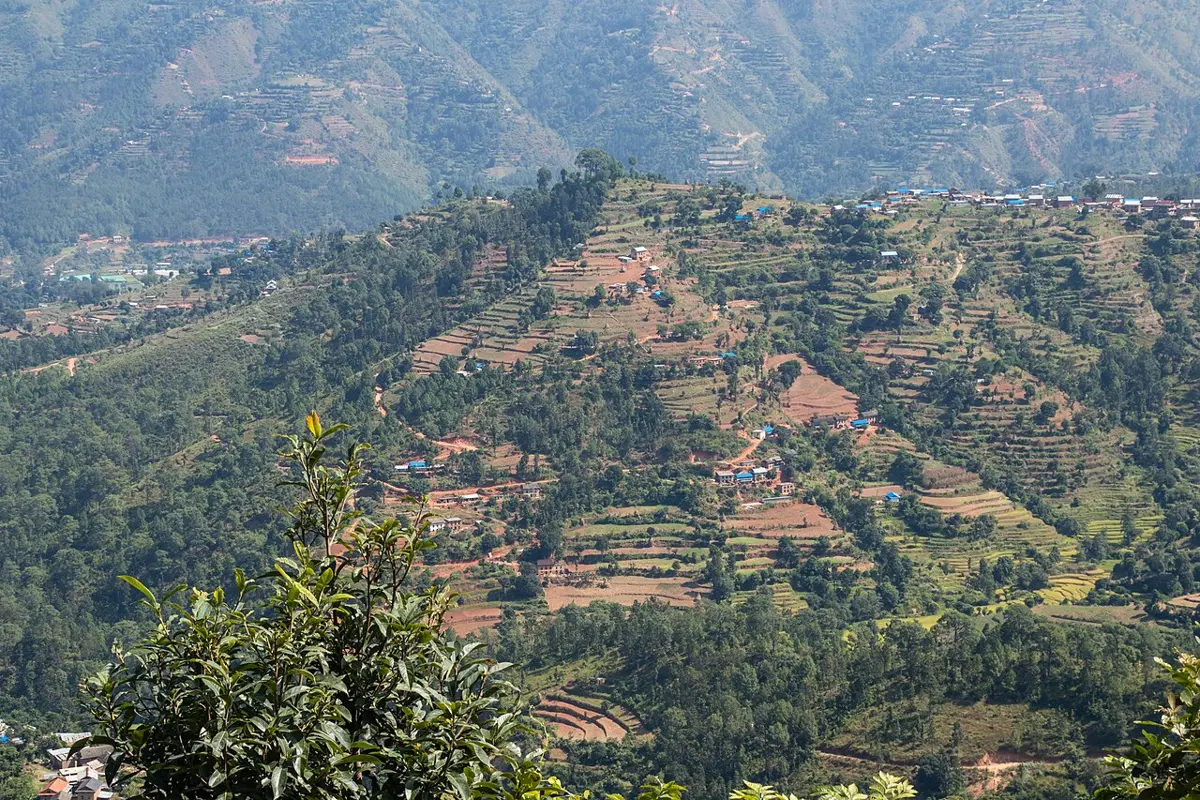
A field left unplowed and bare for years slowly loses its fertility. Burning dry leaves and crop stubble on the field kills the useful microbes and earthworms in the soil. On steep slopes, rain washes the fertile topsoil away, so farmers build terraces: flat steps of land, each a little higher than the one below, that hold the soil and water.
Exercise
1. Choose the correct answer
(i) Which of these household materials can make up for a shortage of phosphorus in the soil?
Pick an answer to see why.
(ii) A maize plant growing in a field is shown in Figure 19.7. Which nutrient is lacking in that soil?
Pick an answer to see why.
(iii) Figure 19.8 shows leaves of plants grown in different soils. Which leaf shows a lack of potassium in the soil?
Pick an answer to see why.
(iv) Which of these is a group of insecticides only?
Pick an answer to see why.
2. Differentiate between
Chemical fertilizer and organic fertilizer
Answer
| Chemical fertilizer | Organic fertilizer |
|---|---|
| Made in factories from minerals and gases. | Made from the decayed bodies and wastes of plants and animals. |
| Supplies one or a few nutrients, in concentrated form. | Supplies many nutrients, in small amounts. |
| Dissolves easily: its effect is quick but short-lived. | Releases nutrients slowly as it decays: its effect is slow but long-lasting. |
| Adds no humus; used alone for long, it makes soil hard and changes its acidity. | Adds humus, which improves the soil’s texture and its water-holding. |
| Its excess pollutes water. | Causes little pollution. |
| Examples: urea, DAP, potassium chloride. | Examples: compost, farmyard manure, green manure, bone meal. |
Chemical insecticides and bio-insecticides
Answer
| Chemical insecticides | Bio-insecticides |
|---|---|
| Made in factories from chemicals. | Made from natural materials, mostly plants (and things like cow urine and ash), often at home. |
| Kill insects quickly and powerfully. | Mostly repel insects or kill them slowly. |
| Many stay in the environment for a long time and build up in food chains. | Break down quickly in nature. |
| Harm useful insects, other animals and human health; pollute soil, air and water. | Don’t harm the soil, other living things or human health. |
| Cost money to buy. | Cheap, made from local materials. |
| Examples: DDT, BHC, malathion. | Examples: jholmol, neem, ash, asuro. |
3. Give reasons
Organic fertilizer is environment-friendly.
Answer
Organic fertilizer is made from wastes (dung, leaves, crop remains, kitchen scraps) that would otherwise rot or be burnt, so using it recycles them. It releases nutrients slowly, so little is washed into rivers and wells to pollute them. It adds humus, which keeps the soil soft, alive with earthworms and microbes, and able to hold water, and it doesn’t harm the soil, other living things or people even after many years of use.
The use of DDT powder upsets the balance of the ecosystem.
Answer
DDT doesn’t kill only harmful insects: it also kills useful ones, such as bees and the insects that eat pests. It doesn’t break down for many years, and it is washed into water, where it kills fish and other water animals. It collects in the body fat of animals and builds up at every step of the food chain (biomagnification), so the birds and fish at the top get the largest doses: they grow and breed poorly (birds lay eggs with thin shells that break). With some species dying out and others (the pests, without their enemies) increasing, the balance of the ecosystem is upset.
4. Answer the following questions
What is NPK fertilizer? Write its importance.
Answer
An NPK fertilizer is a fertilizer that contains all three primary nutrients: nitrogen (N), phosphorus (P) and potassium (K). The three numbers on its bag (such as 20-20-10) give the percentages of N, P₂O₅ and K₂O.
Importance:
- It supplies all three nutrients plants need most, in one application, giving balanced feeding.
- Nitrogen makes plants grow fast and leafy, and makes protein and chlorophyll.
- Phosphorus helps roots grow and seeds and fruits form and ripen.
- Potassium makes stems strong and helps plants resist disease.
- Together they increase the harvest.
Give two examples each of nitrogenous, phosphatic and potassium fertilizers.
Answer
Nitrogenous: urea (NH₂CONH₂), ammonium sulphate ((NH₄)₂SO₄) (also ammonium nitrate).
Phosphatic: diammonium phosphate (DAP), single superphosphate (also triple superphosphate).
Potassium: potassium chloride (KCl), potassium sulphate (K₂SO₄).
The two plants in Figure 19.9 grew from the same kind of seed. Compare their growth, give the reason for the difference, and suggest a solution.
Answer
Comparison: plant 1 is short and thin, with few, pale yellowish-green leaves. Plant 2 is tall, with many broad, dark green leaves.
Reason: since the seeds were the same, the difference comes from the soil. The soil of plant 1 lacks nutrients, most likely nitrogen, which plants need for leafy growth and green color (pale yellow leaves and stunted growth are its typical signs). Plant 2’s soil has enough.
Solution: test the soil of plant 1. Add well-rotted compost or manure, and, if the test shows a shortage of nitrogen, a nitrogenous fertilizer such as urea, in the right amount (or an NPK fertilizer if other nutrients are short too).
A farmer can’t decide whether to use chemical fertilizer to increase his harvest. What would you suggest?
Answer
- First, test the soil at the nearest soil testing laboratory or agriculture office, to know which nutrients it actually lacks and whether it is acidic.
- Use plenty of organic fertilizer (compost, farmyard manure, green manure) every season to keep the soil healthy.
- Add chemical fertilizer only where the test shows a shortage, and only in the recommended amount, at the right time (for example, urea in two or three small doses rather than all at once).
- Rotate crops, including legumes that add nitrogen.
This way he gets a good harvest now without ruining his soil for later.
What alternatives are there for a farmer who doesn’t want to use chemical fertilizer? Write the advantages of that kind of fertilizer.
Answer
Alternatives: organic fertilizers: compost, farmyard manure (cow and buffalo dung), green manure (such as dhaincha, plowed in), oil cake (pina), bone meal and wood ash. Growing legumes in rotation also adds nitrogen.
Advantages:
- They supply many nutrients, slowly, so the soil stays fertile for long.
- They add humus, which keeps soil soft and helps it hold water and air.
- They feed earthworms and useful microbes.
- They don’t harm the soil or cause pollution, and are cheap, made from wastes on the farm.
- Crops grown with them carry no chemical residues.
What is a chemical insecticide? Give two examples.
Answer
A chemical insecticide is a compound made in factories that is used to kill or control harmful insects that damage crops. Examples: DDT (dichlorodiphenyltrichloroethane) and malathion (also BHC, aldrin, dieldrin).
What is a bio-insecticide? Give two examples.
Answer
A bio-insecticide is an insecticide made from natural materials, mostly parts of plants that insects dislike, which repels or kills harmful insects without harming the soil, other living things or people. Examples: jholmol and neem leaves (also ash, asuro and titepati).
“Chemical insecticides should be replaced by bio-insecticides.” Justify this statement with two examples.
Answer
Chemical insecticides harm much more than pests, while bio-insecticides do the job without that harm. For example:
- DDT doesn’t break down; it builds up in food chains and harmed fish and birds so badly that it is now banned. Neem leaves in stored grain keep insects away and break down harmlessly.
- A farmer spraying malathion without protection can be poisoned, and its residues can remain on vegetables; jholmol, made from local plants and cow urine, protects the crop without poisoning the farmer, the soil or the people who eat the vegetables, and costs almost nothing.
So, wherever bio-insecticides can control the pests, they should be used instead.
Write the importance of chemical fertilizers and insecticides.
Answer
Chemical fertilizers:
- They quickly supply the nutrients that the soil lacks, in concentrated form.
- They dissolve easily, so plants absorb them fast and grow well.
- They greatly increase the harvest, which is needed to feed a growing population.
- They are easy to transport, store and use.
Insecticides:
- They kill or control the insects that damage crops, in the field and in storage.
- They protect the harvest, so farmers earn more and more food reaches the market.
- Some control insects that spread disease, such as mosquitoes.
Farmers are using too much chemical fertilizer and insecticide for profit, and this is harming people’s health. Write two slogans to make people aware.
Answer
- “Feed the soil with compost, not poison: healthy soil, healthy food, healthy people.”
- “Spray less, test more: a little poison on the field is a lot of poison on the plate.”
(Any short, catchy slogan with the same message gets full marks, for example, in Nepali: “विषादी होइन, जैविक खेती अपनाऔं, स्वस्थ जीवन बचाऔं।”)
Write two effects of using too much chemical insecticide, with examples.
Answer
- Harm to human health: residues on vegetables and fruits enter our bodies; people who spray without protection can be poisoned, with harm to the nerves and glands. For example, farmers spraying insecticide on vegetables without a mask can suffer headaches, vomiting and dizziness.
- Harm to the ecosystem: insecticides kill useful insects such as honey bees, and pollute water, killing fish. For example, DDT built up along food chains and made birds lay thin-shelled eggs that broke, so their numbers fell.
Write two examples of alternatives to chemical fertilizers and chemical insecticides used around you.
Answer
Instead of chemical fertilizers: compost and farmyard manure (gobar mal); green manure such as dhaincha or asuro leaves.
Instead of chemical insecticides: jholmol; neem leaves in stored grain (also ash sprinkled on vegetables).
Practice every question in the book, and keep track of the ones you miss →