
Before you left home this morning, you probably used a dozen chemicals without thinking about it. Soap or shampoo in the bathroom. Toothpaste. Salt and turmeric in the vegetables, the achar (pickle) beside your rice. Washing powder for your uniform. Maybe a mosquito coil last night, or a rat poison behind the grain store.
Chemicals aren’t only things in bottles in a laboratory: everything is made of chemicals, and some of the most useful are the ones we use every day. Some are natural, some are made in factories. The branch of chemistry that studies how to turn raw materials into things useful to people, by chemical processes, is called industrial chemistry. This unit is about four groups of everyday chemicals: those that keep food from spoiling, those that clean, those that kill pests, and the pollution they can cause when used carelessly. Every one of them is useful in the right amount, and harmful in the wrong one.
Chemicals in daily life
Here are some chemicals you can find at home and in a shop, sorted by what they are used for. Add more of your own and discuss them in class.
| Used as food | Used to preserve food | Used for cleaning | Used as pesticides |
|---|---|---|---|
| salt, sugar | salt, sugar | soap | rat poison (a rodenticide) |
| vinegar, baking soda | vinegar, oil | detergent powder | mosquito coil and spray |
| turmeric, spices | turmeric, oil, lemon | bleach, phenyl (floor cleaner) | insecticide for vegetables |
| oil, ghee | spices | shampoo, toothpaste | weed killer |
Food preservatives
Food spoils because microbes, bacteria, yeasts and molds, grow in it and feed on it. They need four things: water, warmth, food and (most of them) air; many also can’t stand acid. Every way of keeping food takes at least one of these away.
Food preservatives are the substances used to keep food from spoiling for a long time. They are used to keep cereals, pulses, vegetables, fruits and animal products such as meat, milk, curd and fish. They stop or slow the growth of bacteria, yeasts and molds, and help keep the food’s nutrients.
First-class and second-class preservatives
Preservatives are also sorted into two classes:
- First-class preservatives come from natural sources and can be used in the amount needed: sugar, salt, vinegar, honey, spices, edible oils.
- Second-class preservatives are chemicals made in factories and may be used only in small, limited amounts, set by law: sodium or potassium nitrate, benzoic acid and its salts, sulphur dioxide. Not more than one kind of second-class preservative should be used in any one food.
Food is preserved in many ways, old and new: drying, cooling in a fridge, salting, soaking in sugar syrup, and adding chemicals. Some chemicals put into food, or used to ripen fruit quickly, harm health and the environment when used carelessly. Wear a mask and gloves while handling them, wash your hands with soap afterwards, never use more than allowed, and use natural preservatives as much as possible.
Food preservatives are of three kinds: chemical preservatives, natural preservatives, and the chemicals used to ripen fruit.
1. Chemical food preservatives
Salt and oil control the growth of microbes, and so do these factory-made chemicals, each used in small, permitted amounts:
| Preservative | What it does | Found in |
|---|---|---|
| sodium benzoate | stops yeasts and molds in acidic foods | sauces, ketchup, juices, soft drinks |
| sorbates (potassium sorbate) | stop molds and yeasts | cheese, bread, jam |
| sulphur dioxide, sodium metabisulphite | stop microbes and keep color | dried fruit, squash, wine |
| nitrates and nitrites | stop the bacteria of botulism; keep meat pink | sausages, ham, salami |
| BHA and BHT (butylated hydroxyanisole and hydroxytoluene) | stop fats going rancid (antioxidants) | chips, instant noodles, biscuits, oils |
| calcium propionate | stops mold | bread, cakes |
2. Natural food preservatives
Natural food preservatives come from living things: plants, animals, fungi and algae. In Nepal, people have long used titepati (mugwort) leaves among stored grain and clothes, neem oil and leaves, and chuk (a thick, sour concentrate of lemon or chuk amilo). Traditional ways of keeping food are natural too: drying in the sun, keeping it in a cool place or over water, mixing it with wood ash, coating it with turmeric and oil.
Newer methods, used in towns and villages alike, include pasteurization (heating milk to about 72 °C for 15 seconds and cooling it quickly, which kills the harmful bacteria without boiling the milk), freezing, and cold stores for potatoes and apples. All these methods control what microbes need to grow.
3. Chemicals that ripen fruit
Mangoes and bananas are picked hard and green, so that they survive the journey to market; then they take a long time to ripen. To speed this up, ripening agents are used: calcium carbide, ethylene gas (ethene) and ethephon.
The real ripening signal is ethylene, C₂H₄, the alkene you met in Unit 18. Ripening fruit makes it naturally, and it tells the fruit (and the fruit next to it) to soften, sweeten and change color. Ethylene gas in a closed ripening room, and ethephon (a liquid that releases ethylene, used to make the gas in a ripening room), work the way nature does.
Calcium carbide works differently. With moisture it gives off acetylene (ethyne), which acts a little like ethylene:
Industrial calcium carbide carries traces of arsenic and phosphorus compounds, which are poisonous, and the fruit ripens on the outside while it stays raw and sour inside. It is cheap and easy, so it is still misused, but Nepal’s food rules forbid making, selling or keeping for sale fruit ripened with carbide (India’s rules forbid it too), and in the mango season the food department warns traders and checks fruit shops and stores for it. It can cause skin irritation and burns, blisters, eye irritation, and fluid in the lungs; workers who handle it are at the greatest risk.
Traditional ways to ripen fruit work by trapping the fruit’s own ethylene: wrapping it in a jute sack, packing it with leaves of asuro (Malabar nut), burying the sack of fruit in a pit and covering it with soil, or wrapping it in a thick layer of husk or hay.
Which gas is the fruit’s own natural ripening signal?
Pick an answer to see why.
Chemicals used for cleaning
Natural cleaning materials
Long before shops sold soap, people in Nepal cleaned with what grew around them: reetha (soapberry), peena (mustard seed cake), wood ash, lemon juice and sajiban.
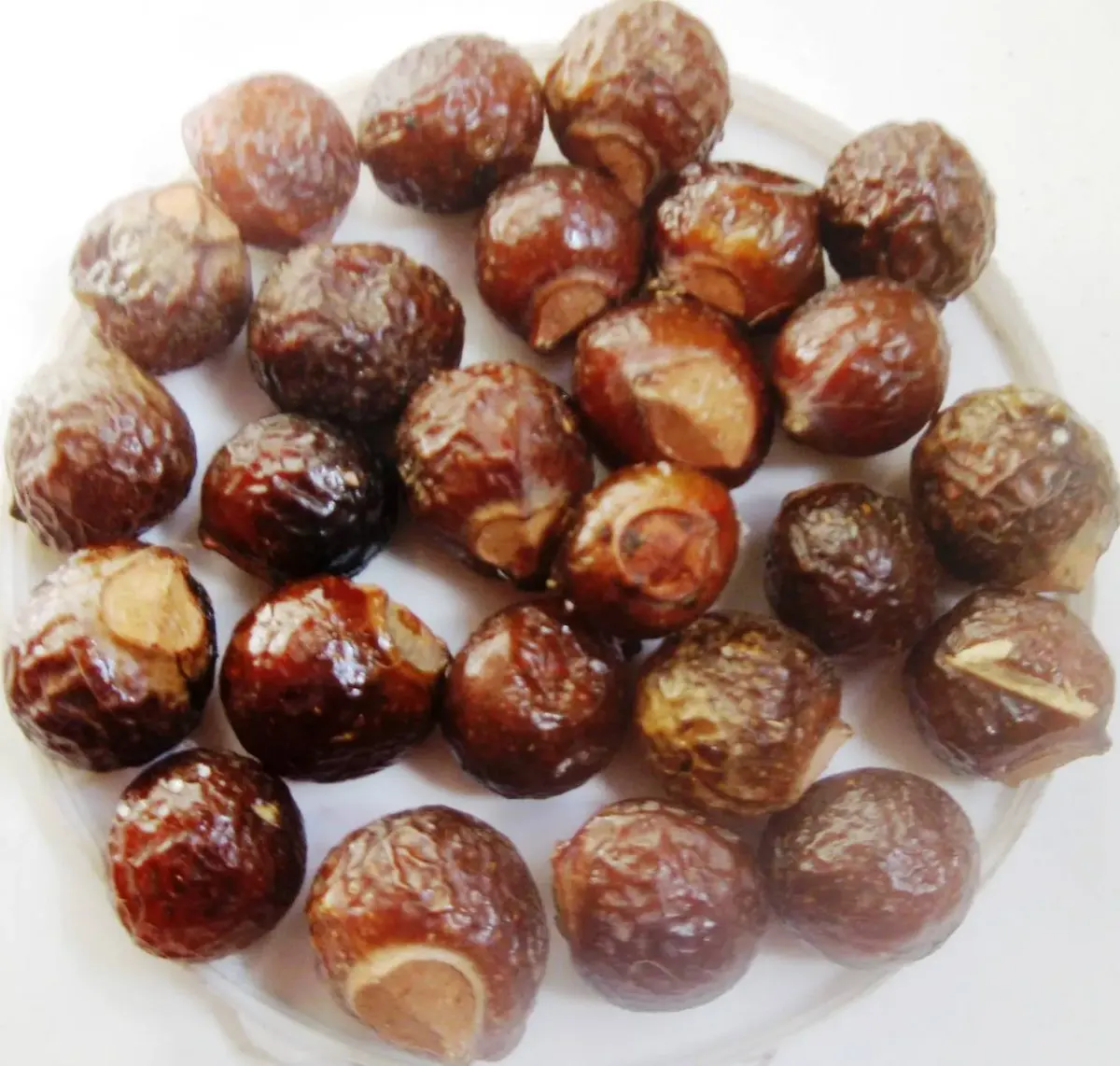
Reetha (soapberry)
Reetha fruits contain saponins, natural chemicals that make a lather in water, so reetha works as a soft natural soap. It has been used for centuries to wash the body, hair, clothes and jewelry. The reetha tree (Sapindus mukorossi) grows in Nepal, India and China and is used in Ayurvedic medicine; powdered reetha is a foaming agent in herbal shampoos.
Peena (mustard seed cake)
Peena, the cake left after the oil is pressed out of mustard seeds, has long been used in Nepal to wash hair and make it soft and strong. It contains B vitamins such as folate, niacin, thiamine and vitamin B6, and it is said to reduce hair fall and keep the hair healthy.
Wood ash
Wood ash mixed with a little water makes a paste that scrubs (an abrasive cleaner): it brightens metal utensils, cleans dirty pots, and even removes sticky glue. It works partly because ash is alkaline: it contains potassium carbonate (potash), which turns grease into a kind of soap. Ash is also a good source of potassium, phosphorus and magnesium for plants, so it can be used as a fertilizer.
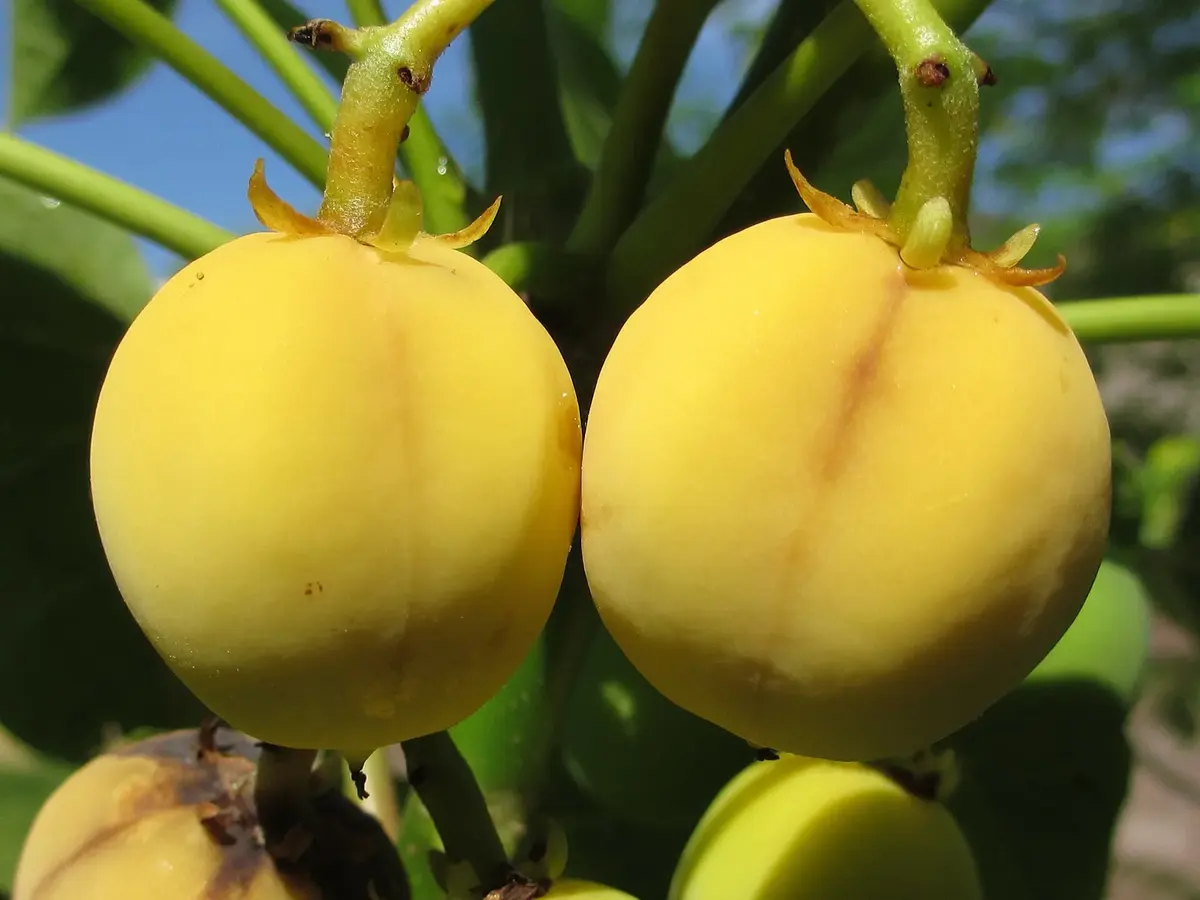
Sajiban (Jatropha curcas)
Sajiban grows wild in many parts of Nepal and has many uses:
- Animals don’t eat it, so it makes a good living fence around fields.
- Its leaves make compost; its juice is put on burns; its twigs are used to clean the teeth (datiwan).
- Its seeds are rich in oil, which is used to make soap, to light lamps, to produce glycerine, and on skin diseases and aching muscles and joints; its juice and oil are put on cattle to kill lice.
- It is a good source of nitrogen, phosphorus and potash, so the seed cake is an organic fertilizer.
- Its oil can be refined into biodiesel. A sajiban seed is about 30–48% oil, and about 3 kg of seeds give 1 liter of oil.
Lemon juice
Lemon juice contains a lot of citric acid. Its low pH and its germ-killing properties make it a good natural cleaner and a mild bleach. It smells pleasant and doesn’t harm wood or cloth. It cleans copper and brass well and makes them shine: the acid dissolves the dull green-black layer of copper compounds on the surface. (That is why tamarind and lemon are used to clean the copper and brass of temple vessels.) Lemon juice has also been used as a home remedy for a very long time.
Soap
Soaps are the sodium or potassium salts of long-chain fatty acids. They are made from animal fat or vegetable oil (coconut, olive, cottonseed, mustard), sodium hydroxide (caustic soda), and sodium chloride (common salt).
When oil or fat is heated with sodium hydroxide, it splits into soap and glycerol. This process, making soap by the hydrolysis of an oil or fat with an alkali, is called saponification:
fat or oil + sodium hydroxide → soap + glycerol
For example, with the fat tristearin:
Check the balance: C 57 = 54 + 3; H 110 + 3 = 105 + 8; O 6 + 3 = 6 + 3; Na 3 = 3. ✓
Then common salt is added. Soap dissolves less in salty water, so it separates and floats to the top as a solid crust, leaving the glycerol behind in the water (salting out).
How soap cleans
Water alone can’t wash away oil and grease, because oil and water don’t mix. A soap molecule solves this by having two different ends:
- a long hydrocarbon tail (like the alkanes of Unit 18), which hates water but dissolves in oil (hydrophobic, “water-fearing”);
- a small ionic head, –COO⁻ Na⁺, which loves water (hydrophilic).
In soapy water, the tails dig into the grease, and the heads stay in the water. The soap molecules surround tiny droplets of grease, forming balls called micelles, with the oil inside and the heads outside. Rubbing breaks the grease into many such droplets, and they are rinsed away with the water.
Soap and hard water
Hard water contains dissolved calcium and magnesium salts (from rocks like limestone). Many wells, deep tube wells and taps in Nepal give hard water. Soap reacts with the calcium and magnesium ions to make an insoluble scum, the gray curds on a bucket or the ring in a bathtub:
The soap used up in scum can’t clean, so in hard water soap makes little lather and is wasted. But soap is biodegradable: microbes break it down, so it doesn’t pollute for long.
Detergent
A detergent is a cleaning substance made mostly from petroleum hydrocarbons, not from fats. It cleans in the same way as soap (it also has a water-loving head and an oil-loving tail), but its head is a sulphonate or sulphate group instead of a carboxylate. Its calcium and magnesium salts dissolve, so detergents work in hard water too, and they dissolve in water better than soap. Because it cleans like soap but isn’t a soap, a detergent is also called a soapless soap.
Examples: sodium lauryl sulphate (the foaming agent in most shampoos and toothpastes), alkylbenzene sulphonates (in washing powders); washing powders also contain helpers such as sodium pyrophosphate and other phosphates that soften the water. Detergents come as powders and liquids. Many “beauty bars” and perfumed bars sold as soap are in fact partly detergent.
Problems with detergents: they can irritate or burn the skin, fade the colors of clothes after long use, and pollute soil and water. The first detergents were non-biodegradable: in the 1950s and 60s, rivers in Europe and the USA were covered in mountains of foam, because microbes couldn’t break down their branched tails. Since then, most countries have switched to detergents with straight tails, which microbes do break down. Today’s bigger problem is the phosphates in washing powder: they are a fertilizer for water plants, and wastewater full of them makes lakes and slow rivers choke with algae, which use up the oxygen the fish need.
| Soap | Detergent |
|---|---|
| Sodium or potassium salt of a long-chain fatty acid. | Sodium salt of a sulphonic acid or alkyl sulphate (made from petroleum). |
| Made from animal fat or vegetable oil. | Made from petroleum hydrocarbons. |
| Forms scum with hard water; little lather. | Works in hard water and soft water. |
| Biodegradable. | Older ones non-biodegradable; most modern ones biodegradable, but phosphates pollute water. |
| Mild; good for the skin. | Stronger; can irritate the skin and fade colors. |
Why does soap lather poorly in hard water, while detergent lathers well?
Pick an answer to see why.
Chemical pesticides
Pesticides are poisonous substances used to remove, destroy, kill or control harmful pests: insects, mites, worms, fungi, weeds, rats. They protect seeds, crops, trees, animals, human health and buildings.
Nepal’s Pesticide Management Act, 2076 BS (2019) defines a pesticide as any organic, plant-based, biological or chemical material used to protect plants, crops, forests and forest products, living beings, livestock, human health, stores, packaging and buildings from any harmful disease, insect, mite, nematode, weed or rodent.
DDT came to Nepal in the 1950s to control malaria mosquitoes: spraying began in the Chitwan valley in 1952. In 2015, Nepal’s Department of Agriculture put the country’s average use at about 396 grams of pesticide (active ingredient) per hectare of farmland, up from 142 grams two years before; vegetable farms used about four times the average, around 1.6 kg per hectare. Most of a spray never touches a pest: it lands on the soil and plants or drifts into the air and water, where some pesticides take a long time to break down, kill the useful living things in the soil, and seep into rivers and groundwater.

Types of pesticides
Pesticides are grouped in three ways: by their effect on the environment, by the pests they kill, and by how they act.
1. By their effect on the environment
a. Biodegradable (non-persistent) pesticides are broken down into harmless compounds by microbes and other living things in a fairly short time, helped by water, air, light and heat. Examples: dimethoate (sold as Nugor, Rugor, Dimet), malathion.
b. Non-biodegradable (persistent) pesticides don’t break down easily; they stay in the environment and in food chains for years. Most countries have banned them, and in Nepal their use, import and export are banned. Examples: DDT, aldrin.
2. By the pests they kill
| Kind | Kills or controls | Examples |
|---|---|---|
| insecticides | harmful insects | malathion, cypermethrin, fenvalerate, nitenpyram |
| fungicides | fungi and the diseases they cause (blights, rusts, mildews) | dimethomorph, mancozeb, carbendazim, and mixtures sold under trade names such as Sectin |
| herbicides (weedicides) | unwanted plants (weeds) in crop fields | butachlor, isoproturon, atrazine |
| rodenticides | rats and other rodents: mice, squirrels, hamsters, porcupines | zinc phosphide, bromadiolone, coumatetralyl |
| miticides (acaricides) | mites | bifenazate, fenazaquin, propargite, fenpyroximate |
3. By how they act
a. Contact pesticides kill pests such as aphids (lahi), caterpillars (larvae), thrips and whiteflies when the pest’s body touches the poison. Examples: malathion, chlorpyrifos.
b. Internal (stomach) pesticides kill pests that eat leaves, flowers or fruits carrying the poison. Examples: malathion, cypermethrin, fenvalerate.
c. Systemic pesticides are absorbed by the roots or leaves and carried through the whole plant in its sap, so the plant itself becomes poisonous to insects that suck its juice or eat it (aphids, larvae, thrips, whiteflies, leaf miners, stem borers). Examples: thiamethoxam, dinotefuran.
d. Fumigants give off poisonous gases in air, which kill pests. They are used mostly to protect grain and other farm produce in storage. Examples: aluminium phosphide, methyl bromide.
Safety in using and storing pesticides
Follow these rules strictly:
- a.Import, make, sell or use only the pesticides allowed by the Pesticide Management Act, 2076.
- b.Buy pesticides only on the advice of an agricultural technician, and store what is left over safely.
- c.Keep the labels clear and whole.
- d.Store pesticides out of children’s reach, and never near food.
- e.Keep them in airtight, leak-proof containers.
- f.Read and follow the instructions on the label: one careless mistake can cause an accident.
- g.Use only the least harmful pesticide that works. While spraying, wear protective clothing covering the whole body, a mask over nose and mouth, goggles and gloves.
- h.Clean the sprayer and other equipment right after use, and store them safely, but not near a river, well or pond.
- i.Wash your hands and bathe right after spraying.
- j.Follow integrated pest management as far as possible.
- k.Don’t eat or sell vegetables, fruits or crops soon after spraying: wait for the time on the label (the waiting period).
- l.The most dangerous pesticides, listed as Group IB (highly hazardous), may be bought only on the direction of a crop protection officer.
- m.Never forget the saying: “All pesticides are poisons; they are not medicines.”
Chemical pollution
Pollution makes life harder for people and all living things. It spoils the quality of air, water and soil and upsets the balance of ecosystems. Air pollution spreads airborne diseases; water pollution spreads waterborne diseases. Polluted air also adds carbon dioxide, which is warming the Earth (Unit 16), and that affects all living things.
Pollution by pesticides
Pesticides are poisons. They kill the harmful insects, but also useful ones: bees that pollinate crops, ladybirds that eat aphids, earthworms that make soil. This upsets the balance of the ecosystem.
DDT (dichlorodiphenyltrichloroethane) pollutes both the living and non-living environment. It washes into water and harms animals in water and on land, damages their reproductive systems, and causes breathing problems. Fish and birds grow and breed less. Birds lay fewer eggs, some of which are infertile; and the eggs that are fertile have such thin shells that they break under the parent bird before they hatch. Other persistent pesticides, such as BHC (benzene hexachloride), methoxychlor, aldrin and dieldrin, have similar effects.
Why do birds suffer most, when they were never sprayed? Because DDT doesn’t break down and isn’t passed out of the body; it builds up in fat. Each animal eats many of the animals below it in the food chain, and keeps all their DDT. So the poison becomes more concentrated at every step up the chain. This is called biomagnification.

Insecticides such as DDT, BHC, aldrin and dieldrin were used in the name of modern farming, along with too much chemical fertilizer. Washed by rain into rivers, ponds and lakes, they harm the life there and can kill fish. Crops do need protection from pests, so pesticides have a place; but they also pollute the soil. Insecticides, fungicides and weedicides are a major source of pollution, and chemicals like DDT, aldrin, dieldrin and parathion lower the quality of the soil.
Pollution by industrial chemicals
Cement, ceramics, glass, plastics, fibers, chemical fertilizers, soaps and detergents, used and thrown away carelessly, spoil the air, water and soil, and upset ecosystems. They must be used and disposed of properly, and never dumped into rivers, ponds or farmland.
Think of the Sisdole landfill site in Nuwakot, where Kathmandu’s rubbish was dumped for years, piled with ceramics, glass, plastic and fibers. Discuss:
- a.What happens to the environment when such waste is dumped carelessly?
- b.What can be done to control this pollution?
Proper management of industrial chemicals:
- a.Don’t throw glass, ceramics, plastics and fibers anywhere; collect them and take them to proper places (and recycle them where possible).
- b.Keep sacks of cement tied and covered, so the dust doesn’t blow.
- c.Use organic manure or compost instead of chemical fertilizers.
- d.Use chemical fertilizers and pesticides only as advised by an agricultural expert.
- e.Don’t let soapy and detergent water run straight into rivers, wells or fields; collect it separately (in a soak pit, or a drain to a treatment plant).
Exercise
1. Choose the correct option
a. Why is detergent called a soapless soap?
Pick an answer to see why.
b. Which is a group of insecticides?
Pick an answer to see why.
c. Which group does sodium stearate belong to?
Pick an answer to see why.
d. What is the main use of detergents?
Pick an answer to see why.
e. Which of the following compounds is used to ripen fruits?
Pick an answer to see why.
2. Write the differences between
Chemical pesticides and biological pesticides
Answer
| Chemical pesticides | Biological pesticides |
|---|---|
| Made from chemicals in factories. | Made from living things or their products (neem, Bt bacteria, Trichoderma fungus, jholmal). |
| Often kill many kinds of living things, including useful ones. | Usually act only on the target pest. |
| Many persist in soil, water and food chains. | Break down quickly; leave little residue. |
| Can poison people and animals. | Much safer for people and animals. |
| Act fast. | Often act more slowly. |
Chemical food preservatives and organic (natural) food preservatives
Answer
| Chemical food preservatives | Organic (natural) food preservatives |
|---|---|
| Made in factories (second-class). | Come from natural sources (first-class). |
| Allowed only in small, limited amounts. | Can be used in the amount needed. |
| Some can harm health if overused (sulphites, nitrites). | Generally safe. |
| e.g. sodium benzoate, nitrates, sulphur dioxide, BHA | e.g. salt, sugar, vinegar, honey, oil, spices, turmeric |
Soap and detergent
Answer
| Soap | Detergent |
|---|---|
| Sodium or potassium salt of a long-chain fatty acid. | Sodium salt of a long-chain sulphonic acid or alkyl sulphate. |
| Made from animal fats or vegetable oils. | Made from petroleum. |
| Forms scum with hard water; doesn’t lather well. | Lathers and cleans in both hard and soft water. |
| Biodegradable. | Less biodegradable (old ones not at all); phosphates pollute water. |
| e.g. sodium stearate | e.g. sodium lauryl sulphate |
3. Give reasons
Using DDT powder upsets the balance of the ecosystem.
Answer
DDT is a persistent poison: it doesn’t break down and builds up in the fat of animals. It kills useful insects along with pests, and it becomes more and more concentrated up the food chain (biomagnification), so fish-eating birds and other top predators are poisoned, lay thin-shelled eggs and fail to breed. When some living things in a food chain die out, the others that depend on them are affected too, so the balance of the ecosystem is upset.
The use of chemical pesticides should be reduced.
Answer
Chemical pesticides are poisons: they harm the people who spray them and those who eat the residues on food (skin diseases, breathing problems, cancers); they kill useful insects such as bees and the pests’ natural enemies; they pollute soil, rivers and groundwater; and pests become resistant to them, so more and more must be used. Integrated pest management and biological methods protect crops with less harm.
Salt is used in the process of making soap.
Answer
Soap dissolves less in salty water. Adding common salt makes the soap separate from the mixture of soap, glycerol and water, and come up as a solid that can be filtered off (salting out), leaving the glycerol in the liquid.
Pickles can be kept for a long time.
Answer
Pickles contain preservatives such as salt, oil, vinegar or lemon and spices. Salt draws water out of the food and out of microbes (osmosis), so they can’t grow; oil keeps out air; vinegar and lemon make the pickle too acidic for most microbes; and mustard oil and spices kill some microbes. So the pickle doesn’t rot.
4. Answer the following questions
Write the full forms of DDT and BHC.
Answer
DDT: dichlorodiphenyltrichloroethane. BHC: benzene hexachloride.
What do you mean by food preservatives? Why are they used?
Answer
Food preservatives are substances added to food to stop it from spoiling, by stopping or slowing the growth of bacteria, yeasts and molds. They are used to keep food for a long time without it going bad, to keep its nutrients, taste and color, to let food be stored and carried to markets far away, and to have seasonal food all year round.
What chemicals are used as food preservatives?
Answer
Salt, sugar, vinegar and oil (natural); and, in small permitted amounts, sodium benzoate, sorbates (potassium sorbate), sulphur dioxide and sodium metabisulphite, nitrates and nitrites, BHA (butylated hydroxyanisole), BHT (butylated hydroxytoluene) and calcium propionate.
What are the natural methods used to preserve the nutrients of food?
Answer
Drying in the sun (gundruk, sukuti, dried vegetables); keeping food in a cool place, or over water; salting; using sugar and honey; pickling with oil, lemon, vinegar and spices; mixing with wood ash or turmeric and oil; using titepati, neem or chuk; smoking; fermentation (gundruk, curd). Modern methods include pasteurization, freezing and cold stores.
What are natural food preservatives? Why are they better than chemical food preservatives? Analyze.
Answer
Natural food preservatives come from living things, plants, animals, fungi and algae, or from traditional methods: salt, sugar, honey, vinegar, oil, spices, turmeric, lemon (chuk), neem, titepati.
Why they are better: they have been used safely for centuries and can be used in the needed amount; they don’t leave harmful residues, while some chemical preservatives (sulphites, nitrites, BHA) can cause allergies, asthma or long-term harm if overused; they are cheap and locally available; many (turmeric, garlic, spices) even add flavor and health benefits; and they don’t pollute.
But fairly: natural methods don’t suit every food (packaged juices or bread would spoil quickly without a chemical preservative), and too much salt or sugar is itself unhealthy. Chemical preservatives within legal limits are tested and considered safe. The best choice is fresh food, natural methods where possible, and checking labels.
How can fruits be ripened artificially? Write the methods and processes.
Answer
Chemical methods:
- Ethylene gas: the fruit is kept in a closed ripening room with a small amount of ethylene, the natural ripening hormone, at a controlled temperature, for a day or two. This is the safe, modern method.
- Ethephon: a liquid that releases ethylene gas; it is put in a dish in the closed ripening room, not on the fruit. (Dipping or spraying fruit in it leaves a residue; India’s food rules forbid that.)
- Calcium carbide: packets are put among the fruit; with moisture it releases acetylene, which imitates ethylene. It is harmful (arsenic and phosphorus impurities), and Nepal’s food rules forbid selling fruit ripened with it.
Traditional methods (trap the fruit’s own ethylene and warmth): wrapping in a jute sack; packing with asuro leaves; putting the sack of fruit in a pit covered with soil; wrapping in a thick layer of husk or hay; keeping unripe fruit with ripe fruit.
What precautions should be taken while using chemical pesticides?
Answer
- Use only pesticides allowed by the Pesticide Management Act, 2076, bought on an agricultural technician’s advice; the most hazardous (Group IB) only on a crop protection officer’s direction.
- Read and follow the label; use the least harmful pesticide that works, in the right amount.
- Wear protective clothing, a mask, goggles and gloves while spraying; don’t spray against the wind.
- Wash hands and bathe right after spraying; clean the equipment, but not near water sources.
- Store pesticides in airtight, labeled containers, out of children’s reach and away from food.
- Don’t harvest, eat or sell produce until the waiting period on the label has passed.
- Use integrated pest management, and remember: all pesticides are poisons, not medicines.
List the chemicals used for cleaning in your house and community. Write their effects on the environment.
Answer
A typical list: bathing soap, washing soap, detergent powder and liquid, shampoo, toothpaste, dishwashing bar or liquid, bleaching powder, phenyl and toilet cleaner (acid), glass cleaner (ammonia), hand sanitizer; and natural ones: reetha, wood ash, lemon.
Effects: soap is biodegradable and does little lasting harm. Detergents can foam and pollute rivers, and their phosphates feed algae that choke lakes and kill fish. Bleach and strong acid or alkali cleaners can harm water life and, mixed together, give off poisonous gases (never mix bleach with acid or ammonia cleaners). Plastic packets and bottles add to plastic waste. Natural cleaners do almost no harm.
Explain the soap-making process.
Answer
Soap is made by saponification. Vegetable oil or animal fat is heated with sodium hydroxide solution, stirring, until it forms a thick paste; the fat breaks down into soap (the sodium salt of its fatty acids) and glycerol:
fat + sodium hydroxide → soap + glycerol, e.g.
Common salt is added, which makes the soap separate as a solid (salting out). The mixture is filtered: the soap stays on the filter paper, and the filtrate contains glycerol. The soap is pressed into molds, left to set, and can have perfume and color added.
What is a detergent? Give two examples. What are its effects on human health and the environment? Present your argument.
Answer
A detergent is a synthetic cleaning substance made from petroleum hydrocarbons; it cleans like soap and also works in hard water (a soapless soap). Examples: sodium lauryl sulphate, sodium alkylbenzene sulphonate.
Health: it can dry and irritate the skin, cause rashes and burns with long contact, irritate the eyes, and it is harmful if swallowed (keep washing powder away from small children).
Environment: older detergents didn’t break down and made rivers foam; modern ones mostly biodegrade, but the phosphates in washing powder fertilize algae, which cover lakes and use up the oxygen fish need; detergent foam also harms the gills of fish and the soil’s microbes. It fades clothes.
My argument: detergents are useful, especially in hard water, so we needn’t stop using them; but we should use the amount on the packet (more doesn’t clean better), choose phosphate-free products, and let the wastewater go to a soak pit or treatment plant, not straight into a river or field.
Hari’s village uses far too many chemical pesticides, causing serious problems for people’s health and the environment. What could be done instead? Give suggestions.
Answer
- Train the farmers in integrated pest management: use chemicals only when really needed, the right one, in the right amount.
- Use bio-pesticides and plant sprays: neem, jholmal, garlic and chilli; Bt and Trichoderma.
- Use traps: yellow sticky cards, pheromone and light traps.
- Protect natural enemies: ladybirds, spiders, frogs and birds.
- Use good farming habits: crop rotation, mixed cropping, resistant varieties, removing diseased plants, clean seed.
- Move towards organic farming with compost and farmyard manure; organic vegetables also sell for more.
- Where pesticides must be used: protective clothing, safe storage, and keeping to the waiting period before harvest.
- Ask the local government to arrange pesticide-residue testing and health checks, and awareness programs.
What is chemical pollution? What are its effects? Suggest practical ways to reduce it.
Answer
Chemical pollution is the spoiling of air, water and soil by harmful chemicals: pesticides, fertilizers, detergents, industrial wastes, plastics, fumes and smoke.
Effects: diseases in people (poisoning, skin and breathing problems, cancers, waterborne diseases); death of fish, bees, birds and useful soil life; biomagnification of persistent chemicals in food chains; loss of soil fertility; algae choking lakes; acid rain and global warming from gases; upset ecosystems.
Practical ways to reduce it: use fewer pesticides (IPM, bio-pesticides); use compost and manure with fertilizers only as advised; use the right amount of detergent and choose phosphate-free; send wastewater to soak pits or treatment plants; sort, reduce, reuse and recycle waste; never burn plastic; treat factory waste before releasing it; and raise awareness.
Write about the pollution caused in your locality by industrial products such as cement, glass, ceramics, plastics, fibers, chemical fertilizers, soaps and detergents. Write its causes, and suggest proper ways to manage it.
Answer
(A model answer; write about what you see in your own area.)
What is seen: cement dust from construction sites and open sacks blowing into the air; broken glass and ceramics thrown on roadsides and in rivers, cutting people and animals; plastic bags and bottles blocking drains and floating in rivers, and burnt in heaps, giving off toxic smoke; fertilizer washing into ponds, making them green with algae; soapy water from homes and washing places flowing into streams, with foam.
Causes: careless dumping, no separate collection of waste, burning of rubbish, overuse of fertilizer, drains that go straight to the river, and lack of awareness.
Management: sort waste at home (organic, recyclable, other); compost organic waste; sell plastics, glass and metal to the kabadi for recycling; keep cement covered and sprinkle water on construction sites; use fertilizers on expert advice and add compost; build soak pits for wastewater; never burn plastic; and ask the municipality for regular collection and proper landfill sites.
Practice every question in the book, and keep track of the ones you miss →