
Ozone: how three chemists saved the sky
Nobel Prize in Chemistry, 1995: Paul Crutzen, Mario Molina, and F. Sherwood Rowland
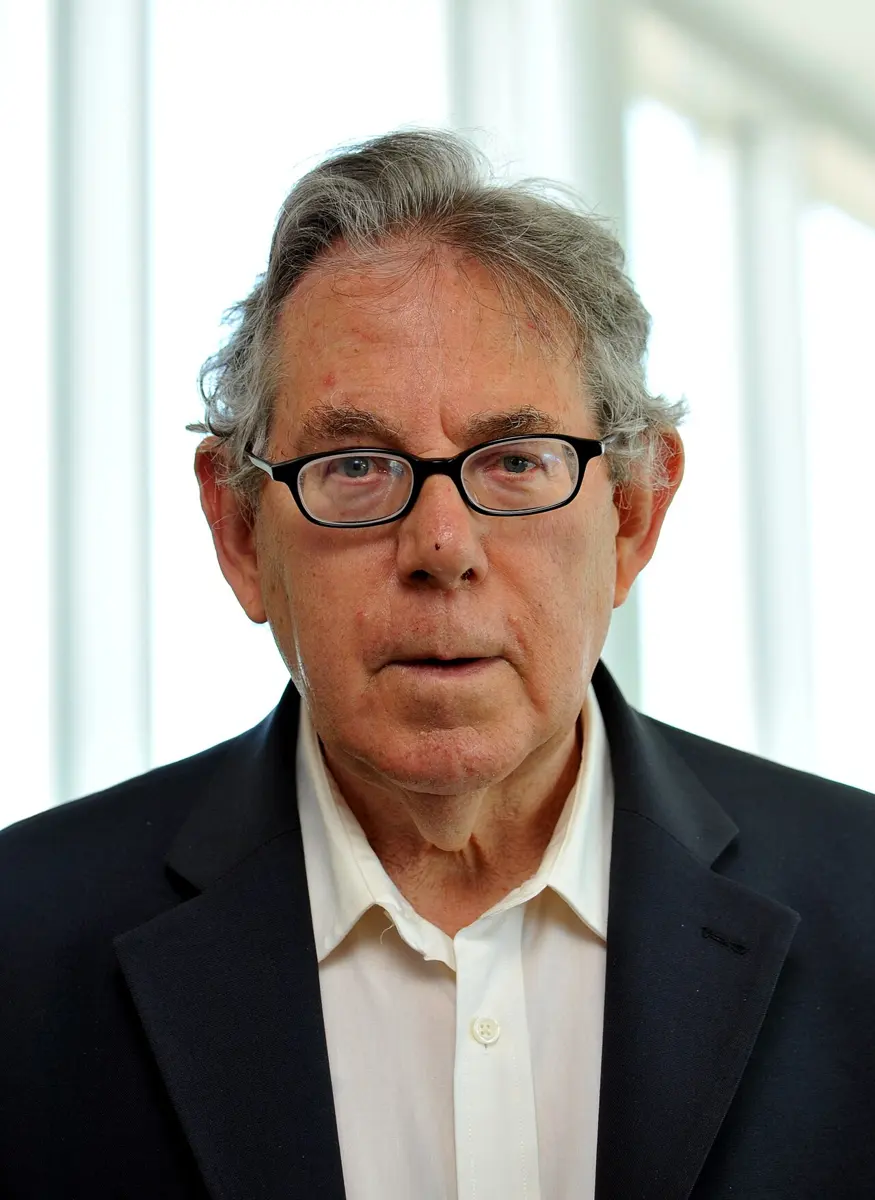
Paul Crutzen
1933–2021, born in Amsterdam, the Netherlands
He started out building bridges, then answered a newspaper advertisement for a computer programmer at a weather institute in Stockholm.
Photo: Teemu Rajala, CC BY 3.0
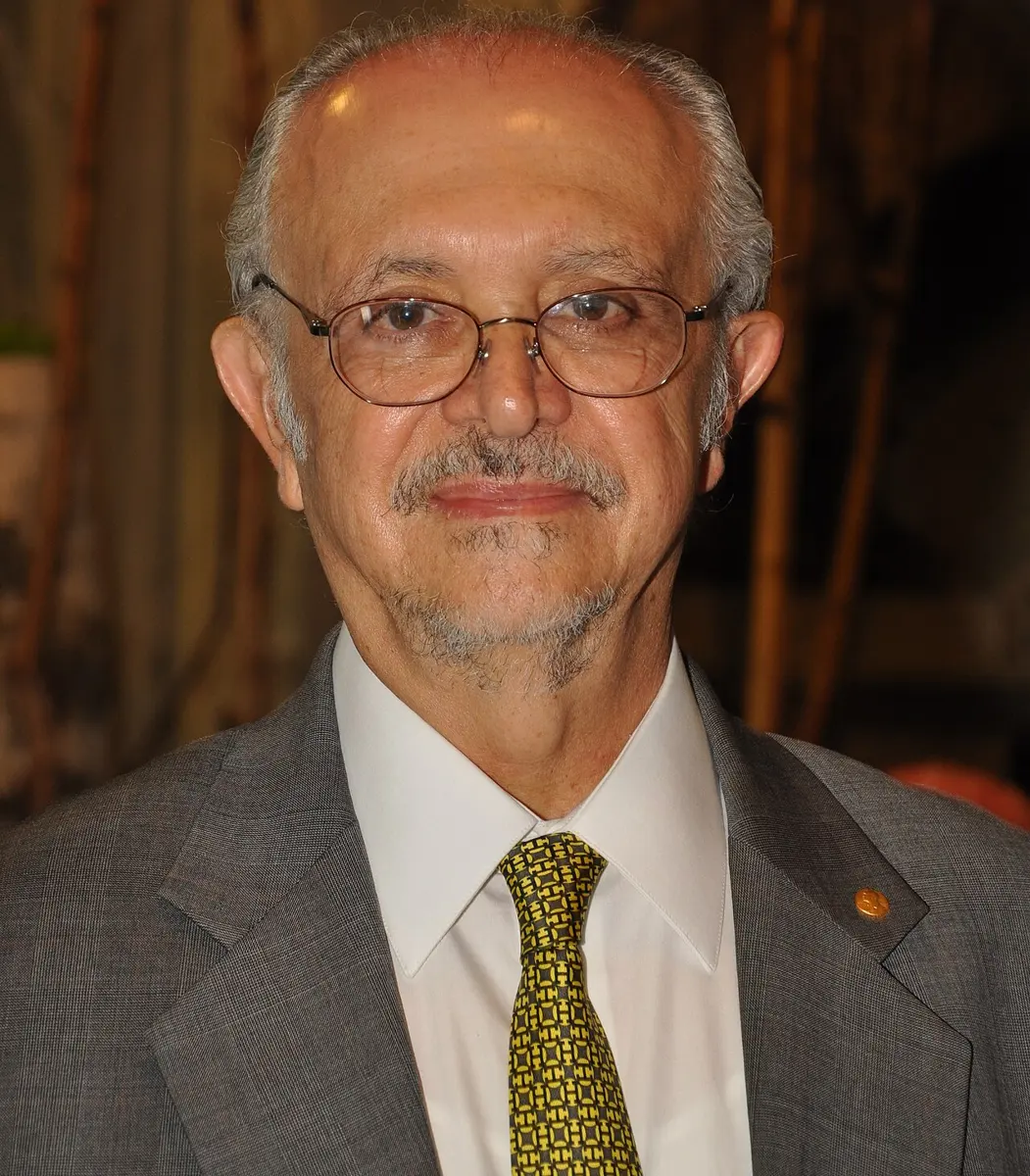
Mario Molina
1943–2020, born in Mexico City
As a boy he turned a bathroom at home into his own chemistry laboratory. He was the first Mexican-born winner of the Nobel Prize in Chemistry.
Photo: Janwikifoto, CC BY-SA 3.0
F. Sherwood Rowland
1927–2012, born in Ohio, United States
He finished school before he was 16, and spent the rest of his life warning the world about the ozone layer, long after it was proved right.
Photo: Markus Pössel ( Mapos ), CC BY-SA 3.0
Stand in the sun at Nagarkot or on a trek above Namche and your skin burns much faster than in Kathmandu. Part of the reason is the Sun’s ultraviolet (UV) light, which damages skin and eyes Grade 9: Ultraviolet rays. Most of the Sun’s UV never reaches us at all. It is soaked up high in the sky by a thin layer of a gas called ozone.
In the 1970s three chemists found that this layer was in danger, and that people were the cause: gases from fridges, air conditioners and spray cans. At first many people didn’t believe them. Then a hole appeared in the ozone layer over Antarctica, and the world did something it had never done before: every country agreed to stop making the gases. In 1995 Paul Crutzen, Mario Molina and Sherwood Rowland shared the Nobel Prize in Chemistry.
The problem: a thin shield nobody was watching
Ozone is a form of oxygen with three atoms in each molecule, O₃, instead of the usual two, O₂ Grade 9: Ozone. Most of it is in the stratosphere, roughly 15 to 35 km above the ground, well above the clouds and the weather.
There, UV light from the Sun splits some oxygen molecules into single atoms, and each atom joins an oxygen molecule to make ozone:
Ozone in turn soaks up UV and breaks apart again. Ozone is being made and broken all the time, and the amount stays roughly steady. In 1930 the British scientist Sidney Chapman explained this balance.
The layer is spread very thin. If all the ozone in the sky were brought down to the ground, at ordinary pressure, it would make a layer only about 3 mm thick. Yet that thin shield stops almost all of the Sun’s most dangerous UV. Without it, plants and animals could hardly live on land.
By the 1960s measurements showed there was less ozone than Chapman’s balance predicted. Something else must be breaking ozone down. What?
Why does the ozone layer matter so much to life on land?
Pick an answer to see why.
How a few molecules can destroy many
The key idea in this story is the catalyst: a substance that speeds up a reaction without being used up itself Grade 10: Catalyst. A catalyst comes out of the reaction unchanged, so one molecule of it can do the same job again and again.
Some molecules act as catalysts for breaking ozone. They take an oxygen atom from an ozone molecule, then give it away again, and come back unchanged, ready for the next ozone molecule. This is a chain: one such molecule can destroy thousands of ozone molecules before something else finally locks it away.
So it doesn’t take much. A gas that is only a tiny part of the air can still do great harm to the ozone layer, if it can act as a catalyst up there.
What they did, step by step
Crutzen: the soil and the sky (1970)
Paul Crutzen grew up in Amsterdam during the Second World War. He trained as a civil engineer and designed bridges. In 1959 he answered an advertisement for a computer programmer at the meteorology institute of Stockholm University, and began studying the chemistry of the air in his spare time.
- 1970, nitrogen oxides. Crutzen showed that two gases, nitric oxide (NO) and nitrogen dioxide (NO₂), destroy ozone as catalysts. NO takes an oxygen atom from ozone and becomes NO₂; NO₂ gives that atom away to a free oxygen atom and becomes NO again, ready for the next ozone molecule.
- Where they come from. The nitrogen oxides in the stratosphere come mostly from nitrous oxide (N₂O, sometimes called laughing gas), which is made by bacteria in the soil. N₂O is so stable that it drifts all the way up to the stratosphere before UV breaks it down. Crutzen had found a link between tiny living things in the soil and the ozone layer high above.
- A warning. He pointed out that more nitrogen fertilizer on farms means more nitrous oxide, and so less ozone. In 1971 he and, separately, the American chemist Harold Johnston warned that a planned fleet of supersonic passenger planes, flying at about 20 km, would release nitrogen oxides right inside the ozone layer.
Molina and Rowland: the gases from spray cans (1974)
Chlorofluorocarbons, CFCs for short, were invented in the late 1920s. They are made of carbon, chlorine and fluorine. They don’t burn, aren’t poisonous and hardly react with anything, so they seemed perfect: the cold gas inside fridges and air conditioners, the gas that pushed the spray out of spray cans, and the bubbles in foam. By the 1970s hundreds of thousands of tonnes were made every year.
- Early 1970s, a clue. The British scientist James Lovelock had built a very sensitive instrument and found CFCs in the air everywhere, even over the far oceans. Sherwood Rowland, a chemistry professor at the University of California, Irvine, wondered: what finally happens to them?
- Late 1973, the question. Rowland gave the problem to a young Mexican chemist who had just joined his group, Mario Molina. Molina found that nothing in the lower air breaks CFCs down. They don’t dissolve in rain, and sunlight near the ground can’t split them. So they slowly drift up, over years, into the stratosphere.
- The answer. High up, strong UV light breaks the CFC molecules apart and sets chlorine atoms free. And other scientists, Richard Stolarski and Ralph Cicerone, had just shown that chlorine atoms destroy ozone as catalysts, just as Crutzen’s nitrogen oxides do.
- June 1974, the paper. Molina and Rowland published their work in the journal Nature. They calculated that if CFCs went on being let out at the same rate, the ozone layer would lose many per cent of its ozone within some decades.
Why can one chlorine atom destroy so many ozone molecules?
Pick an answer to see why.
Why it was hard
- Nobody could see it happening. The danger was in the future and 20 km up. The chemistry had to be worked out in the laboratory and in calculations, then checked by measuring tiny amounts of chlorine compounds high in the sky, from balloons and aircraft.
- A large industry said no. CFCs were made by big companies and used everywhere. Many people said Molina and Rowland’s calculations were only a theory, and that nothing should be done until damage was proved. For years Rowland was attacked in newspapers and at meetings.
- A slow problem. CFCs take years to reach the stratosphere and then stay there for decades. So by the time damage could be measured, the gases already let out would go on destroying ozone for a long time.
Still, the warning worked a little. From 1978 the United States, and then a few other countries, banned CFCs in most spray cans. But they were still used in fridges, air conditioners and foam, and world production grew again.
The ozone hole
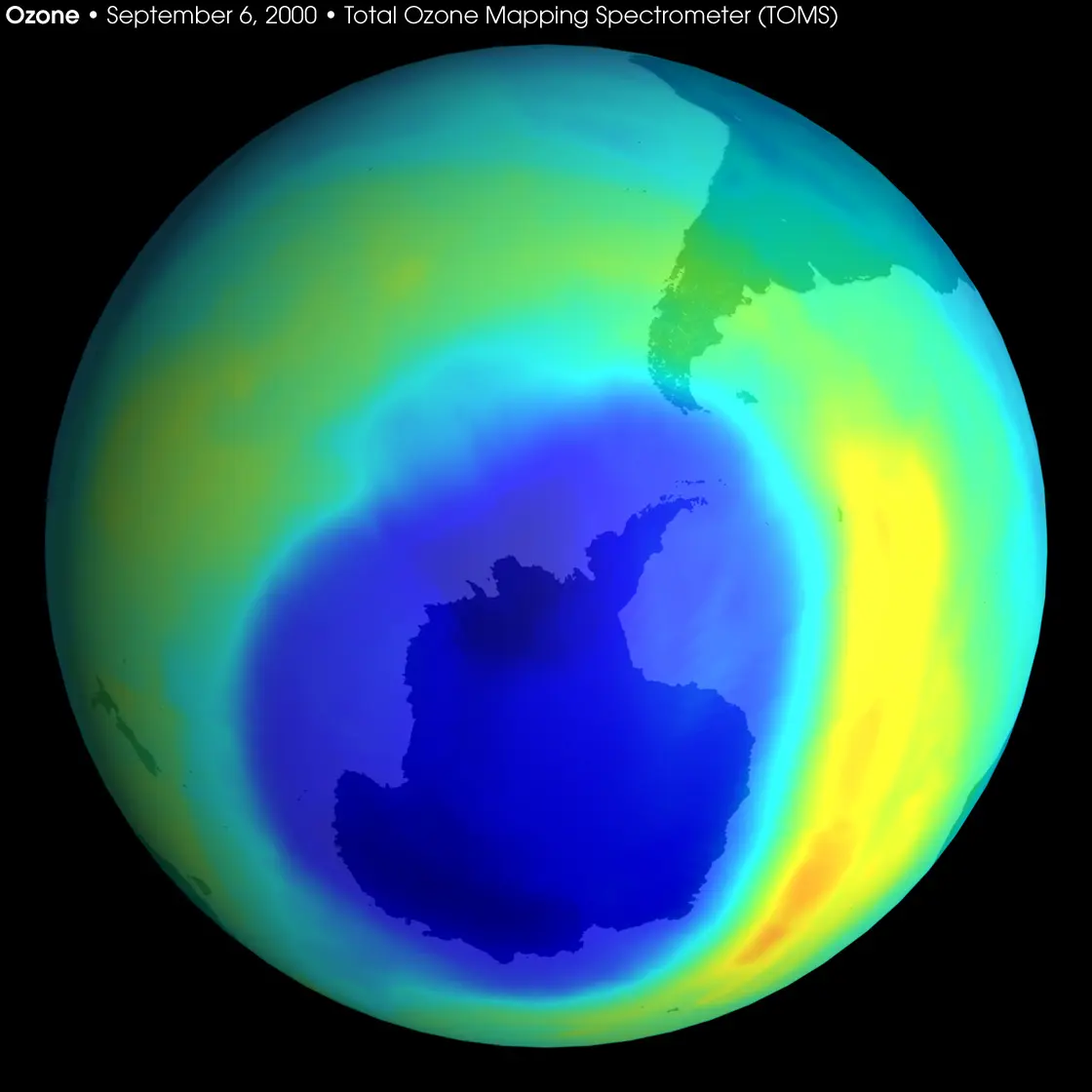
In May 1985 three scientists of the British Antarctic Survey, Joe Farman, Brian Gardiner and Jonathan Shanklin, reported something that shocked everyone. Measuring ozone from the ground at their station at Halley Bay in Antarctica, they had found that every spring (September to November in the south) much of the ozone above them disappeared. The October ozone had fallen steeply since the 1970s. A hole was opening in the ozone layer.
It was far worse than anyone had predicted. Was it chlorine? Or some natural change in the winds?
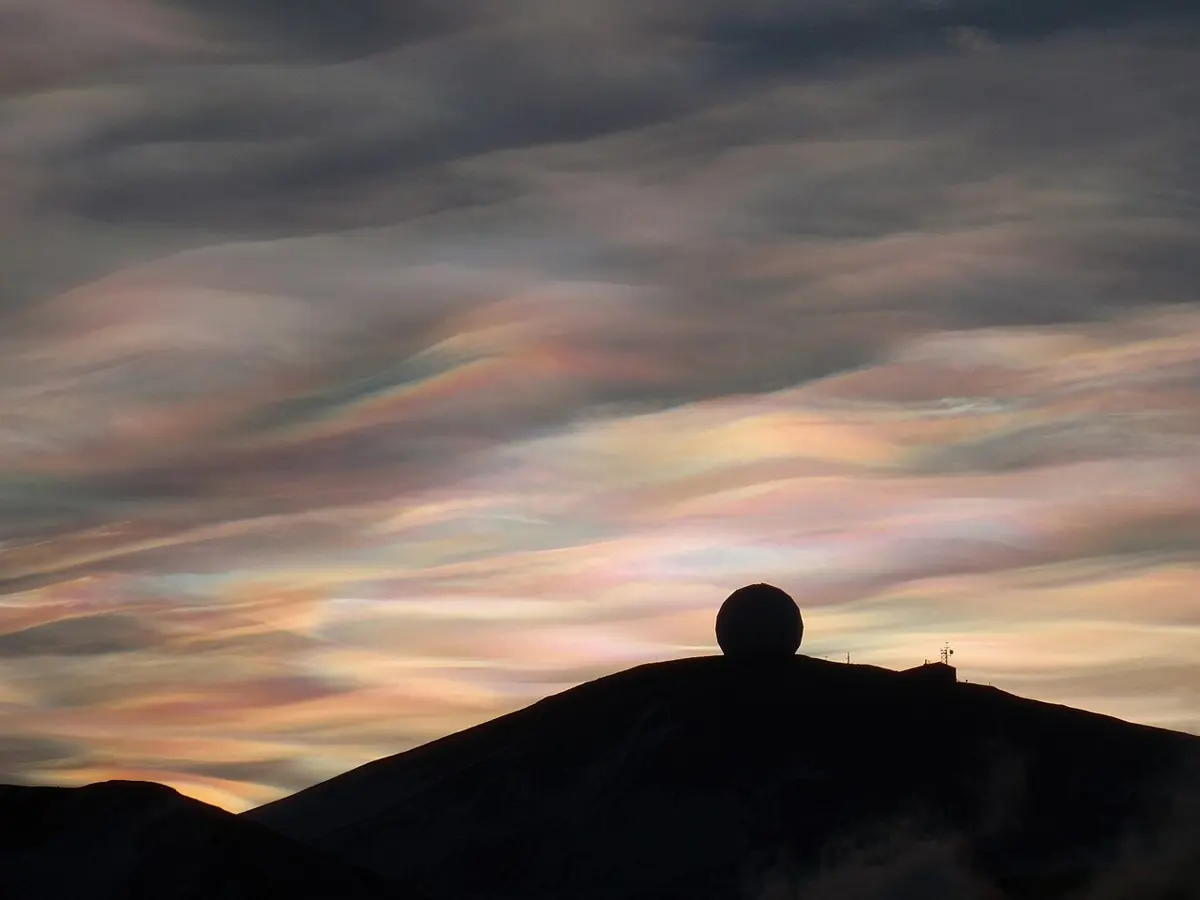
The answer came from Crutzen, Molina, the American scientist Susan Solomon and others. Over Antarctica in winter the stratosphere gets colder than anywhere else on Earth, below about −80 °C. At that cold, thin polar stratospheric clouds form, made of ice and frozen acid. On the surface of the tiny cloud particles, chlorine that had been locked up in harmless compounds is set free. When the Sun comes back in spring, it splits this chlorine into atoms, and they destroy ozone very fast. The cloud particles are what make the hole so deep, and so sudden.
How it works now: the treaty that worked
The ozone hole gave the world a fright, and the science showed clearly what had to be done.
- 1987, the Montreal Protocol. Countries signed a treaty in Montreal, Canada, to cut the making of CFCs. As the science got clearer, it was made stricter several times, until CFCs were to be stopped completely.
- 1994, Nepal joins.
- 2009, every country. The Montreal Protocol became the first treaty in the history of the United Nations to be joined by every country in it. By 2010 CFCs were no longer made anywhere.
- 2016, the next step. Many of the gases that replaced CFCs, called HFCs, don’t harm ozone but are strong greenhouse gases. A change to the treaty agreed in Kigali, Rwanda, phases them down too.
The ozone layer is now slowly healing. CFCs already in the sky last for decades, so the recovery is slow. Scientists expect the ozone layer to be back to its 1980 level around 2040 over most of the world, around 2045 over the Arctic, and around 2066 over Antarctica (as of 2023).
In your life today
- Your fridge. An old fridge from before about 2000 may still contain CFCs, in the cold gas inside it and in its foam walls. That is why old fridges and air conditioners should be taken apart by people who collect the gas instead of letting it out. Many new fridges use gases such as isobutane, which harm neither the ozone layer nor, much, the climate.
- Sunburn in the mountains. In Nepal, UV is stronger at high altitude, where there is less air above you. A healthy ozone layer keeps it from being much stronger still. Sunglasses and a hat matter on any trek.
- Ozone near the ground. Ozone is good high up but harmful down here. Near the ground it is a pollutant, made when sunlight acts on fumes from vehicles and fires; it damages lungs and crops. Crutzen studied this ozone too.
- World Ozone Day. 16 September, the day the Montreal Protocol was agreed in 1987, is World Ozone Day.
What came next
- Climate. CFCs are also strong greenhouse gases. Because of the Montreal Protocol, the Earth is warmer by less than it would otherwise have been, so the treaty that saved the ozone layer also slowed global warming Grade 10: Greenhouse effect.
- The Anthropocene. In 2000 Crutzen suggested that people have changed the Earth so much that we live in a new age of its history, which he called the Anthropocene, the age of humans. The word is now used widely, though geologists decided in 2024 not to make it an official part of the Earth’s timeline.
- Open questions. Chemists still watch for new ozone-destroying gases. In 2018 scientists found that CFC-11, a banned CFC, was being made and let out again somewhere in eastern Asia; the source was traced and shut down, and the levels fell again. A changing climate is also changing the stratosphere, and scientists don’t yet know exactly how that will affect the ozone layer’s recovery.
In your science books
- Grade 9: ozone and the ozone layer, depletion of the ozone layer, its effects, ways to protect it and ultraviolet rays.
- Grade 10: catalysts and the greenhouse effect.
- Going further: lowering the hill: catalysts.
Learn more
- The Swedish Academy’s press release, which explains the discoveries, and the presentation speech (nobelprize.org).
- The Nobel lectures: Crutzen, Molina and Rowland.
The official reason
The prize was given “for their work in atmospheric chemistry, particularly concerning the formation and decomposition of ozone.”