
Nitric oxide: a gas that widens blood vessels
Nobel Prize in Physiology or Medicine, 1998: Robert Furchgott, Louis Ignarro, and Ferid Murad
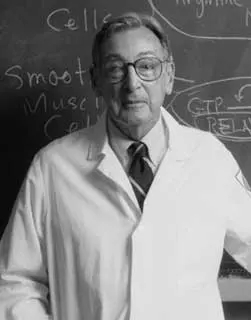
Robert Furchgott
1916–2009, born in the United States
A patient experimenter who kept studying strips of blood vessel for decades, and noticed when one did the opposite of what he expected.
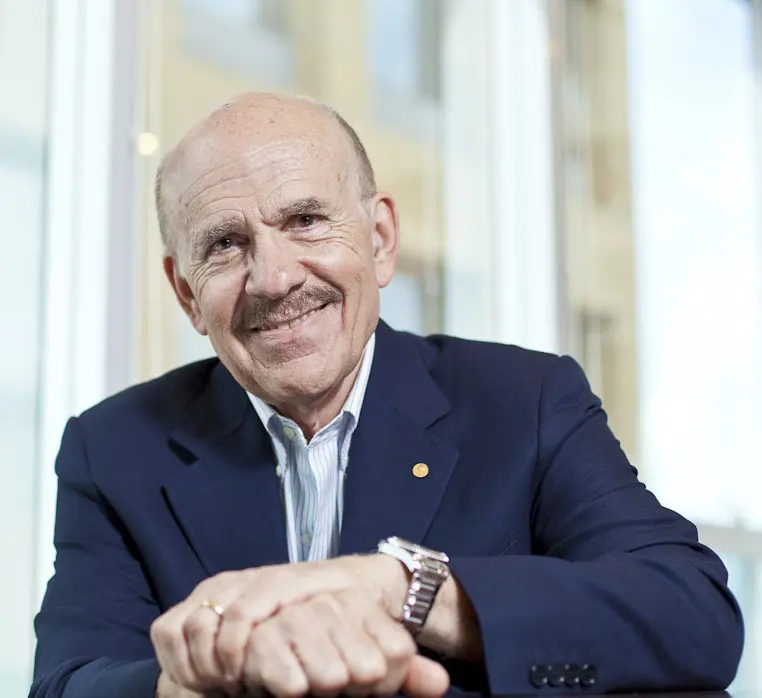
Louis Ignarro
born 1941 in the United States
The son of Italian immigrants, a carpenter’s son, who showed by chemistry that Furchgott’s mystery messenger was nitric oxide.
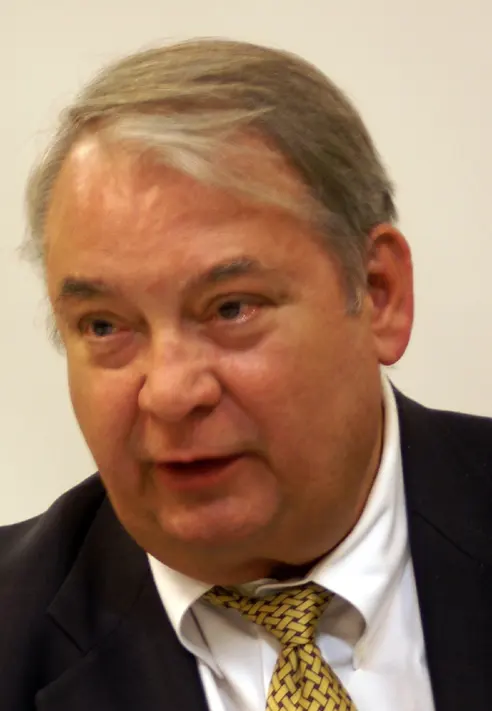
Ferid Murad
1936–2023, born in the United States
A doctor and chemist who first showed that a gas, nitric oxide, could switch on an enzyme inside cells.
Photo: Jeff Dahl, CC BY-SA 4.0
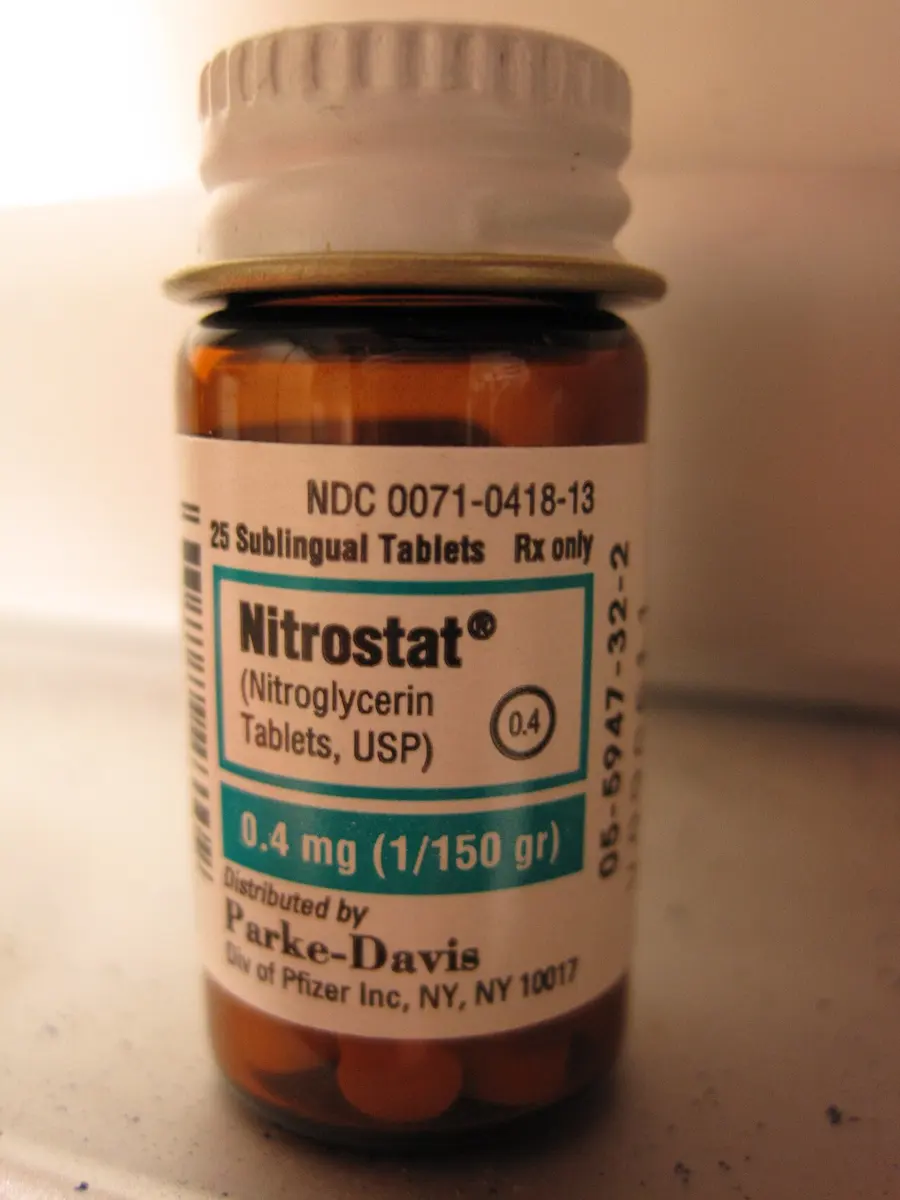
Some older people carry a tiny bottle of tablets in their pocket. When their chest begins to hurt, they put one tablet under the tongue, and within a few minutes the pain eases. The medicine is nitroglycerin: the same chemical that explodes in dynamite. Doctors have used it for chest pain since the late 1870s, but for about a hundred years nobody knew how it worked.
The answer turned out to be one of the biggest surprises in medicine. Your body sends messages with a gas, the simple gas nitric oxide (NO), made of one nitrogen atom and one oxygen atom. In 1998 the Nobel Prize in Physiology or Medicine went to Robert Furchgott, Louis Ignarro and Ferid Murad for finding it.
The problem: how does a blood vessel know when to widen?
When you run, your leg muscles need much more blood. When you stand in the sun, more blood flows into your skin, and your face goes red. The heart pumps harder, but that is only half of it. The arteries that carry the blood also change their width: they widen where more blood is needed and narrow where less is needed.
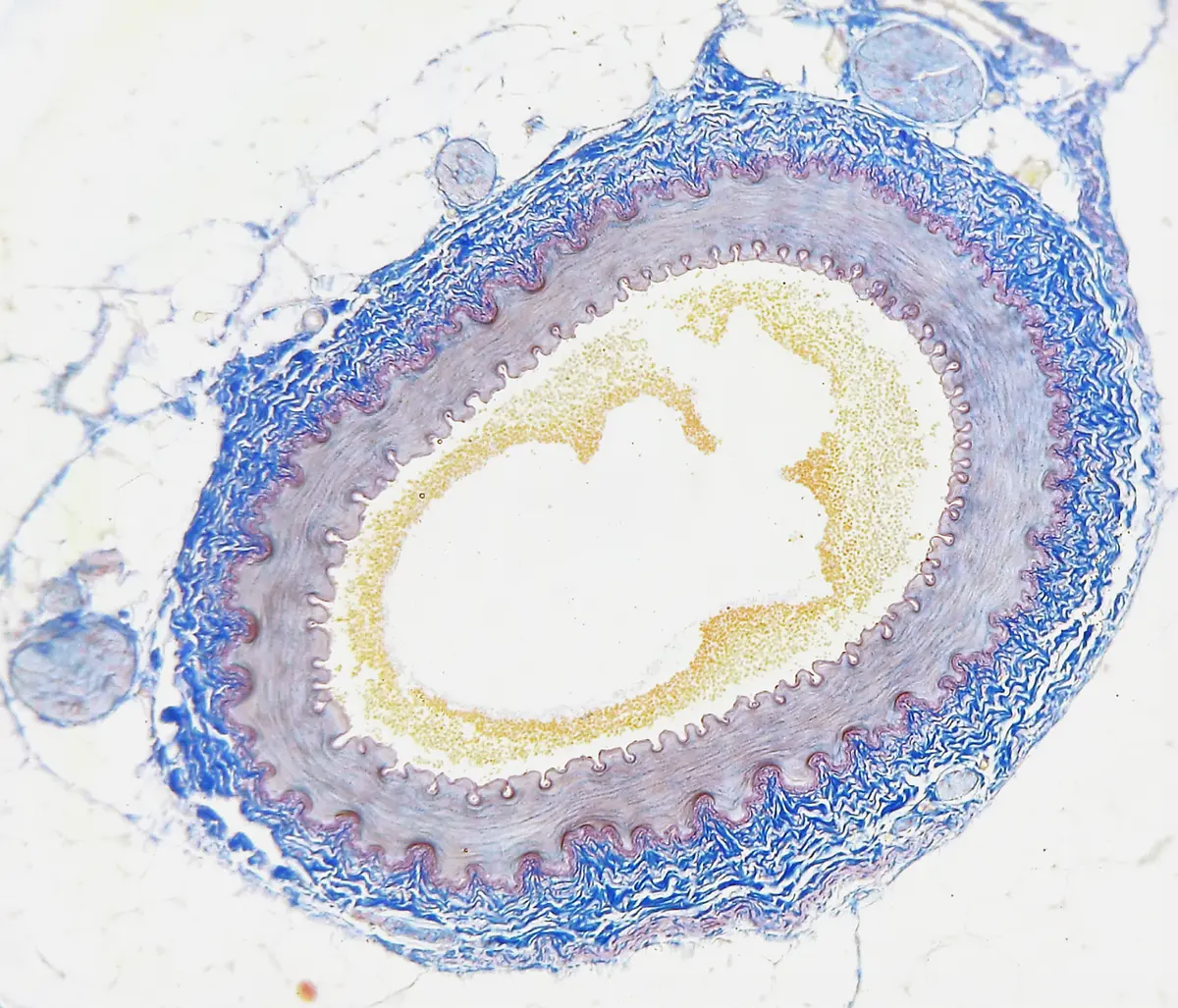
An artery can do this because its wall has a layer of smooth muscle, the kind of muscle you cannot control by thinking Grade 9: smooth muscle. Smooth muscle cells wrap round the artery. When they contract (tighten), the artery gets narrower. When they relax, the blood pressure inside pushes the artery wider, and more blood flows.
The inside of the artery is lined with a single layer of flat cells, the endothelium (say en-doh-THEE-lee-um). For a long time, scientists thought the endothelium was just a smooth, slippery lining for the blood to slide along, like the plastic coating inside a pipe.
So what tells the smooth muscle to relax? Doctors knew some of the chemical messengers that do it. One is acetylcholine, a messenger made by nerves. Injected into an animal’s blood, it makes blood vessels widen strongly. But there was a puzzle. When scientists cut a strip of artery out of an animal and tested acetylcholine on it in the laboratory, the strip did the opposite: it tightened. Nobody could explain why.
Why it was hard
The messenger the scientists were looking for broke every rule they knew.
- It was a gas. Every known messenger in the body was a larger molecule, such as a hormone, that fits a special receiver on the outside of a cell, like a key in a lock. Nitric oxide is so small that it passes straight through cell membranes. Nobody thought of looking for a gas.
- It lasted only seconds. Nitric oxide reacts quickly with oxygen and water. In the body it is turned into other chemicals within about ten seconds. A messenger that vanishes so fast is very hard to catch and measure.
- It was a poison. Nitric oxide was known as an air pollutant, a gas made when fuel burns in car engines. It was the last thing anyone expected the body to make on purpose.
What they did, step by step
Murad: how nitroglycerin works (1977)
Ferid Murad, a doctor and pharmacologist (a scientist who studies how medicines work) in the United States, wanted to know how nitroglycerin relaxes smooth muscle.
- He knew that nitroglycerin switched on an enzyme in smooth muscle cells. An enzyme is a protein that speeds up one particular chemical reaction. This enzyme, guanylyl cyclase, makes a small molecule called cyclic GMP, and more cyclic GMP makes the muscle relax.
- Murad wondered whether nitroglycerin itself did this, or whether something it gave off did. Nitroglycerin contains nitrogen and oxygen. Perhaps it released nitric oxide.
- He bubbled nitric oxide gas through a mixture containing the enzyme. The enzyme switched on and made more cyclic GMP. A gas could switch on an enzyme inside a cell.
His results, published in 1977, explained a hundred-year-old medicine. Murad even guessed that the body’s own messengers might use nitric oxide. But there was no evidence for that yet.
Furchgott: the lining that was rubbed off (1978–1980)
Robert Furchgott, in New York, had spent many years testing medicines on strips of rabbit aorta, the body’s largest artery. He hung each piece in a warm, salty liquid, joined to a gauge that recorded how strongly it pulled.
- A surprise (1978). In 1978 his team tested acetylcholine on artery rings, cut straight across the aorta, instead of their usual strips. To Furchgott’s surprise, the rings relaxed, just as arteries do in a living body. In all his years with this artery he had never seen it happen.
- The clue. The rings and the strips came from the same artery, so why did they behave differently? After weeks of tests his team found the answer. While cutting their usual strips, they had been rubbing the inside surface without knowing it, and the rubbing scraped off the endothelium. When they gently rubbed the inside of a ring, it too stopped relaxing.
- The sandwich (1980). Was the endothelium sending a message to the muscle? Furchgott pressed a strip of artery whose lining had been rubbed off against a second strip that still had its lining, inside to inside, like a sandwich. On its own, the bare strip did not relax with acetylcholine. In the sandwich, it relaxed. Something had traveled from the lined strip into the bare one.
Furchgott and John Zawadzki published this in the journal Nature in 1980. The endothelium, when acetylcholine reaches it, releases an unknown substance that makes the smooth muscle relax. It was named EDRF, short for endothelium-derived relaxing factor: the relaxing substance that comes from the endothelium.
Why did Furchgott’s old strips of artery never relax with acetylcholine?
Pick an answer to see why.
The hunt for EDRF (1980–1986)
Now laboratories all over the world wanted to know what EDRF was. It was hard to study, because it disappeared within seconds. But clues gathered.
- It was blocked by hemoglobin. Hemoglobin, the red protein in your blood that carries oxygen, stopped EDRF from working. Hemoglobin was known to grab nitric oxide very tightly.
- It switched on the same enzyme. EDRF raised cyclic GMP in smooth muscle, exactly as nitroglycerin and nitric oxide did in Murad’s experiments.
- It was destroyed by a reactive form of oxygen called superoxide, which reacts at once with nitric oxide.
In the spring of 1986, Furchgott began to suspect that EDRF was nitric oxide itself. So did Louis Ignarro, a pharmacologist in Los Angeles, working separately.
Ignarro and Furchgott: EDRF is nitric oxide (1986)
In July 1986, at a scientific meeting at the Mayo Clinic in Rochester, in the United States, Furchgott and Ignarro each said the same thing: EDRF is nitric oxide.
Ignarro had a neat piece of evidence. When a substance reacts with hemoglobin, it changes the colors of light that the hemoglobin absorbs, a little like a fingerprint. Ignarro let hemoglobin react with nitric oxide gas, and separately with the substance released by endothelial cells. The two fingerprints were the same. EDRF was nitric oxide.
The meeting started what the prize committee called an avalanche of research. It was the first time anyone had found that a gas acts as a messenger in the body.
How it works now
Today we know the whole relay, from the lining to the muscle.
- A signal reaches the lining. It can be a messenger such as acetylcholine, or simply the drag of blood flowing faster over the endothelial cells.
- The endothelial cell makes nitric oxide. An enzyme, nitric oxide synthase, makes it from arginine, one of the building blocks of the proteins in food such as dal, eggs and meat.
- The gas spreads. Nitric oxide is tiny and has no charge, so it passes straight through the cell membranes into the smooth muscle cells next door. It doesn’t need a door or a receiver on the outside of the cell.
- The muscle relaxes. Inside the muscle cell, nitric oxide switches on guanylyl cyclase, which makes cyclic GMP, which makes the muscle relax.
- The artery widens and more blood flows. Within seconds the nitric oxide is gone, so the signal stops unless the lining keeps making more.
Nitroglycerin joins in at step 4. In the body it gives off nitric oxide, which does the same job as the body’s own. That is why the tablet eases chest pain: the arteries of the heart widen and more blood reaches the heart muscle, and other blood vessels widen too, so the heart has less work to do Grade 10: heart attack: how it happens.
Why can nitric oxide pass from one cell into the next without a special receiver on the cell’s surface?
Pick an answer to see why.
Not only in blood vessels
Once people knew what to look for, they found nitric oxide at work all over the body:
- In the brain and nerves, some nerve cells use it to pass on signals. Because it spreads in all directions, it reaches all the cells nearby.
- In white blood cells, it is a weapon. Some white blood cells make huge amounts of it, which poisons bacteria and parasites Grade 10: white blood cells.
- In blood, it stops platelets from sticking together into clots where they aren’t needed.
In 1992 the journal Science named nitric oxide its Molecule of the Year.
In your life today
- Chest-pain medicines. Nitroglycerin, and related medicines that release nitric oxide, are still given to people with angina, chest pain from narrowed heart arteries. Now doctors know how they work, and why: nitroglycerin is a way of handing the body extra nitric oxide.
- Saving newborn babies. Some newborn babies have dangerously high blood pressure in their lungs, so too little blood picks up oxygen. Breathing in a little nitric oxide gas widens the lungs’ blood vessels and has saved lives. The dose must be carefully controlled, because a lot of the gas is poisonous.
- A breath test for asthma. Swollen, inflamed airways breathe out more nitric oxide, so measuring it helps doctors diagnose and follow asthma.
- Life high in the mountains. At high altitude each breath brings less oxygen, so the body must get more blood to its tissues. A 2007 study of Tibetans living at 4,200 m, on the plateau just north of Nepal’s Himalaya, found that the blood flow in their forearms was more than double that of people living near sea level, and that their blood held more than ten times as much of the chemicals made from nitric oxide. Their widened blood vessels help make up for the thin air.
- Exercise. When you run, blood rushes faster over the endothelium, and the drag makes it release nitric oxide, so the arteries to your working muscles widen. Regular exercise keeps the endothelium healthy, which is one reason it protects against heart disease Grade 10: high blood pressure.
What came next
- Unhealthy linings. In people with atherosclerosis, where fatty deposits narrow the arteries, the endothelium makes less nitric oxide. Doctors can now test how healthy the lining is: they squeeze the arm with a blood-pressure cuff for a few minutes, let go, and measure by ultrasound how much the artery widens as the blood rushes back. Much of that widening comes from nitric oxide.
- New medicines. A medicine first tested for chest pain, sildenafil, works by protecting cyclic GMP from being broken down, so the nitric oxide signal lasts longer. It is now also used for high blood pressure in the lungs.
- Other gas messengers. After nitric oxide, scientists found that the body also uses tiny amounts of carbon monoxide and hydrogen sulphide, both well-known poisons, as messengers. How many gas messengers there are, and what all of them do, is still being worked out.
In your science books
- Grade 10: blood vessels and arteries, blood pressure, and how a heart attack happens.
- Grade 9: smooth muscle and epithelial tissue, the kind of tissue the endothelium is.
- Grade 10: acid rain, which nitrogen oxides from engines help to cause.
- Going further: How does your body stay at 37 °C?, where widening blood vessels in the skin help you lose heat.
Learn more
- The prize at nobelprize.org: The Nobel Prize in Physiology or Medicine 1998, with the press release and the presentation speech, which describes the sandwich experiment.
- The three Nobel lectures: Furchgott, Ignarro and Murad.
The official reason
The prize was given “for their discoveries concerning nitric oxide as a signalling molecule in the cardiovascular system.”