
Think of a plate of dal bhat: a heap of rice, a bowl of dal, some tarkari. A few hours after you eat it, some of it is keeping you warm and moving your legs. Some of it, months later, is part of you: the muscle in your arm, the hair on your head, the new bone that made you taller this year. And much of it has already left you, by a door you might not expect: you breathed it out.
Rice is mostly starch, which is made of only three elements: carbon, hydrogen and oxygen. Your muscles are mostly protein, which also has nitrogen in it. So how does a cell get energy out of rice, and how does it turn rice and dal into you? Both happen in every one of your cells, every second, and both are chemistry you can follow atom by atom.
Two jobs for every meal
You know from Grade 10 how food reaches your cells: the digestive system breaks it into small, soluble molecules, such as glucose from starch, amino acids from proteins, and fatty acids from fats, and the blood carries them to every cell Grade 10: Blood circulation in the human body. Inside the cell, these small molecules have two jobs.
- Fuel. Some are broken down with oxygen, to carbon dioxide and water, and the energy that comes out runs the cell. This is cellular respiration.
- Building material. Others are put together into the big molecules a cell is made of: proteins, fats, DNA, and stores such as glycogen. Making the molecules of life from smaller ones is biosynthesis (bio, life, and synthesis, putting together).
The two jobs are linked. Building takes energy, and that energy comes from respiration. And the building material itself is mostly the same sugar: its carbon, hydrogen and oxygen atoms end up in all your molecules.
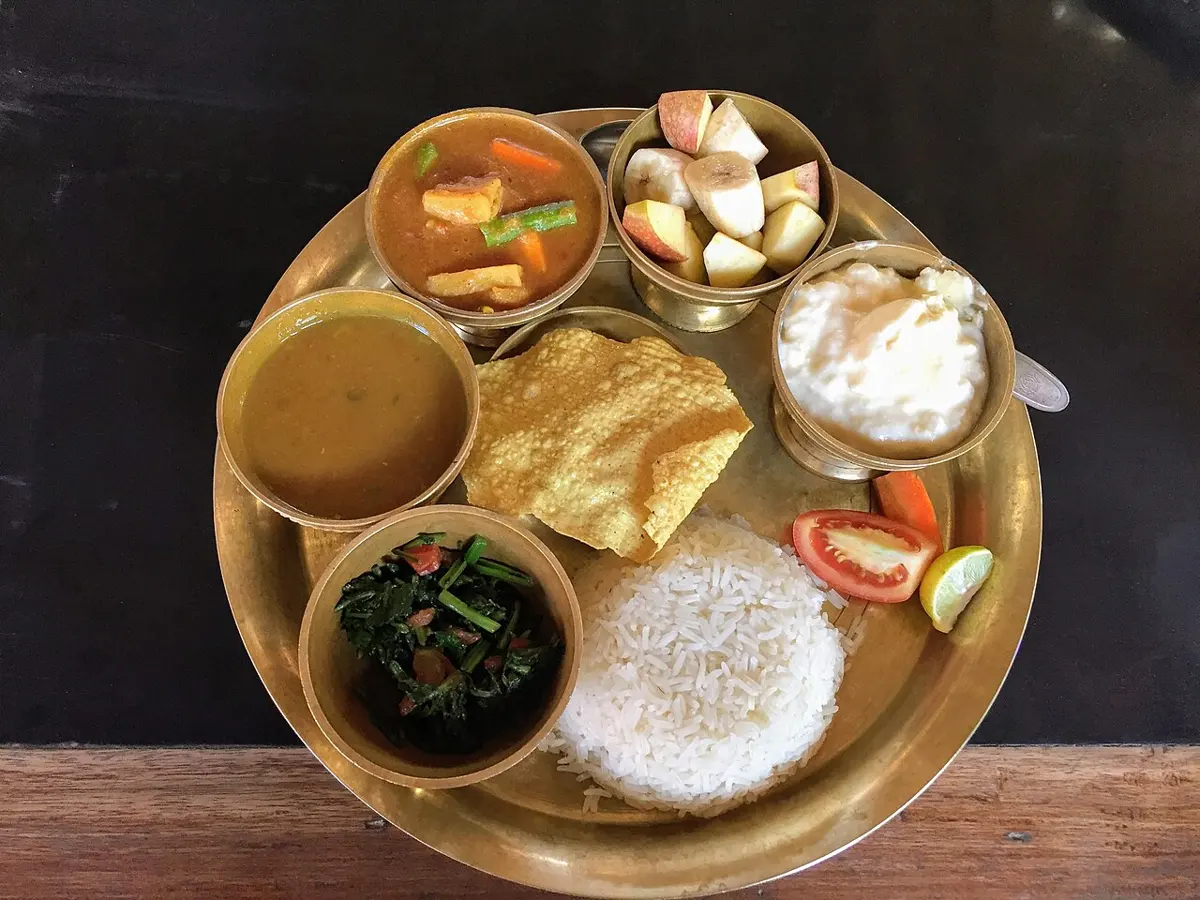
A growing teenager eats a plate of rice. What happens to the starch in it?
Pick an answer to see why.
Respiration: what goes in, what comes out
You met the word equation in Grade 8 Grade 8: Mitochondria and the balanced one in Grade 9, where it is an exothermic reaction Grade 9: Exothermic reaction:
Treat this equation as a model: a simple picture that leaves out the details but gets the important things right. It says what goes into a cell and what comes out.
Count the atoms on each side.
| Atom | In (glucose + 6 O₂) | Out (6 CO₂ + 6 H₂O) |
|---|---|---|
| carbon | 6 | 6 |
| hydrogen | 12 | 12 |
| oxygen | 6 + 12 = 18 | 12 + 6 = 18 |
No atom is made or lost: they only change partners. So the mass going in equals the mass coming out. That is the first thing the model tells us. The second is about energy, in the next section.
Where does the energy come from?
The equation says energy comes out. But where from? Chemistry gives a clear answer, and you have the tools for it in Why Do Some Reactions Get Hot? (Breaking and making): breaking a bond always takes energy in; making a bond always gives energy out. In respiration, all the bonds in glucose and in the oxygen molecules are broken, and new bonds are made in carbon dioxide and water.
So the energy doesn’t come out of glucose “breaking”. It comes from the difference: the bonds in carbon dioxide and water are, all together, stronger than the bonds in glucose and oxygen.
Which bonds make the difference? Count the shared pairs of electrons, the glue of every bond (a double bond has two). Before: glucose has 24 bonds, all single, so 24 pairs, and the six O=O bonds have 12 pairs: 36 pairs. After: 12 C=O bonds have 24 pairs, and 12 O–H bonds have 12: 36 pairs again. The same number of pairs; what changes is how tightly they are held.
| Pairs | Energy to break | Per pair (kJ/mol) | |
|---|---|---|---|
| glucose | 24 | 9,473 | 395 |
| 6 O₂ | 12 | 2,988 | 249 |
| 6 CO₂ | 24 | 9,648 | 402 |
| 6 H₂O | 12 | 5,556 | 463 |
The weak pairs are in oxygen. The O=O double bond holds its two pairs far more loosely than any other bond here. Respiration takes those loosely held pairs and puts them into strong bonds, and the difference comes out as energy. That is why oxygen is so important to us: it is the half of the fuel that holds the most energy to give.
In respiration, energy is given out because:
Pick an answer to see why.
The energy follows the oxygen
If most of the energy comes from oxygen’s weak bond, then the energy a food releases should depend mostly on how much oxygen it uses, whatever the food. Test the idea.
Fat gives about 39 kJ per gram, sugar only about 16. Yet per gram of oxygen, all three give close to 14 kJ. A sugar molecule already holds plenty of oxygen of its own (look at all the O’s in glucose), so it needs less from the air. Fat holds very little oxygen, so each gram of it combines with much more, and gives out more energy.
The kilojoules on a food packet come from this. A food’s energy is measured by burning it in pure oxygen in a sealed steel can under water and measuring how much the water warms; then a little is taken off for what the body can’t use. The figures on labels are about 17 kJ per gram of carbohydrate or protein and 37 kJ per gram of fat. (Many packets also give kilocalories, kcal: 1 kcal = 4.184 kJ.)
Energy from a breath
Because the energy follows the oxygen, measuring the oxygen a person uses is a way to measure the energy they use, without burning anything. Every liter of oxygen (measured at 0 °C and normal air pressure) used in respiration releases about 20 kJ, within a few per cent whatever the food. Sports scientists measure an athlete’s energy use this way, with a mask that analyzes every breath.
Catching the energy: ATP
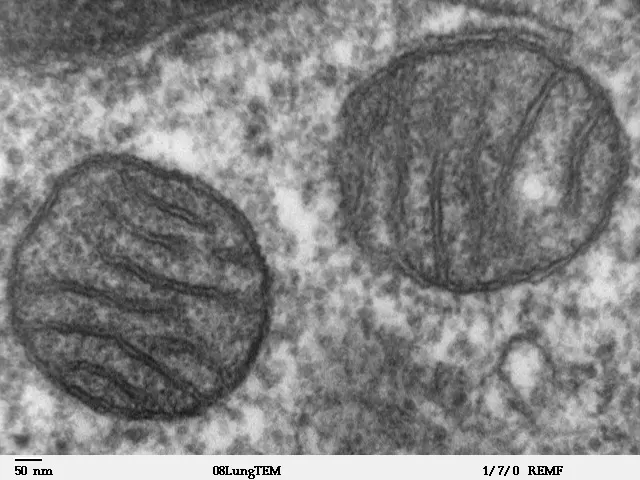
A flame releases all of glucose’s energy at once, as heat and light, at hundreds of degrees. A cell can’t work like that. Instead, respiration happens in dozens of small steps, each helped along by its own enzyme (a protein that speeds up one reaction). At several of the steps, the energy that comes out is used to make a small molecule, ATP (adenosine triphosphate), from ADP (adenosine diphosphate) and phosphate.
You met ATP in Grade 8 as the molecule that carries energy around the cell Grade 8: Mitochondria. Think of it as small change. Glucose is a big note; the cell can’t spend a 1,000-rupee note at a tea stall. So respiration changes each glucose into about 30 ATP, and the cell spends them one at a time, wherever energy is needed:
- moving: muscle proteins use ATP to pull;
- building: every join in a protein, fat or DNA chain is paid for with ATP (or a molecule like it);
- pumping: the cell membrane uses ATP to pump substances in and out, as nerve cells do with sodium and potassium.
When ATP is used, it splits back into ADP and phosphate, which go back to the mitochondria to be joined again. Not all of glucose’s energy is caught: roughly a third to a half ends up in ATP (estimates differ, depending on how it is counted), and the rest becomes heat at once. That heat is not wasted: it is what keeps you warm.
Why does a cell make ATP, instead of using the energy from glucose directly?
Pick an answer to see why.
Food becomes you
Now the second job. You are made of the same few elements as your food, but not in the same proportions.
| Element | Share of your body’s mass (roughly) | In sugar? |
|---|---|---|
| oxygen | 65% | yes |
| carbon | 18% | yes |
| hydrogen | 10% | yes |
| nitrogen | 3% | no |
| calcium | 1.5% | no |
| phosphorus | 1% | no |
| potassium, sulphur, sodium, chlorine, magnesium and others | about 1.5% together | no |
Most of the oxygen and hydrogen are in your water, about 60% of you. Take the water away, and what is left is mostly protein (about 16% of your body), fat (varies, often 15–25%), and the minerals in bone. Very little is sugar.
Every one of these big molecules has a skeleton of carbon, and its carbon, hydrogen and oxygen can all come from sugar. A cell breaks glucose into small pieces, two or three carbon atoms long, and uses them as a kit. But some of the molecules need elements that sugar doesn’t have:
- Starch (in plants), glycogen (in animals) and cellulose (the wall of plant cells) are glucose units joined in long chains: carbon, hydrogen and oxygen only.
- Fats are glycerol with three fatty acids joined to it. The fatty acids are built two carbon atoms at a time from pieces of sugar: carbon, hydrogen and oxygen only. (The fats in cell membranes also carry phosphorus.)
- Proteins are chains of amino acids. Every amino acid has an amino group, –NH₂, with nitrogen in it, and two of the twenty (cysteine and methionine) have sulphur. So proteins need nitrogen and sulphur.
- DNA and RNA are chains of nucleotides. Each has a base rich in nitrogen and a phosphate group with phosphorus.
Every big molecule is built the same way: small units joined into a chain. At each join, the chain ends up short of one water molecule, H₂O. (In the cell each join goes by way of ATP or a molecule like it, but that is the overall result.) Taking a chain apart in digestion puts the water back: your gut breaks a protein back into amino acids, and then your cells join them up again in a new order, to make your proteins. How a cell knows which order to use is in How Does a Gene Make a Protein? (A chain that folds).
A cell has plenty of glucose but no nitrogen. Which of these can it not make?
Pick an answer to see why.
Where the nitrogen comes from
Nearly four-fifths of the air is nitrogen, but almost no living thing can use it: the two atoms of N₂ are held by a triple bond, one of the strongest there is. You learned in Grade 9 that plants take nitrogen from the soil instead, as nitrates (and ammonium), made by lightning and by bacteria, some living in the root nodules of beans and lentils Grade 9: Abiotic components. That is why farmers add nitrogen fertilizers such as urea Grade 9: Nitrogenous fertilizers.
Inside the plant, the nitrate is turned into ammonium and attached to small carbon pieces from its sugar. That makes amino acids. A plant can make all twenty this way, from sugar it made in sunlight and nitrogen from the soil.
You can’t. Animals can’t build nitrates into amino acids. Our nitrogen comes in proteins we eat, from plants or from animals that ate plants. Your cells can make about half of the twenty amino acids for themselves, moving nitrogen from one amino acid onto a carbon skeleton made from sugar. The other nine they can’t make at all: these essential amino acids must come in food.
Sugar into fat
Eat more than you use, and your cells keep the extra. A little goes into glycogen, but the body can hold only a few hundred grams of that. The rest becomes fat: the liver breaks the extra glucose into two-carbon pieces and builds fatty acids from them, then joins three to a glycerol. The fat is stored in adipose tissue under your skin and around your organs Grade 9: Adipose connective tissue. Fat is the better store: a gram of it holds more than twice the energy of a gram of sugar, and it is stored without water, while glycogen holds about three times its own mass of water.
The evidence: following the atoms
How do we know any of this? Nobody can watch a single carbon atom go from a grain of rice into a muscle. But scientists have found ways to follow atoms, and the evidence came in steps, each one correcting the last explanation.
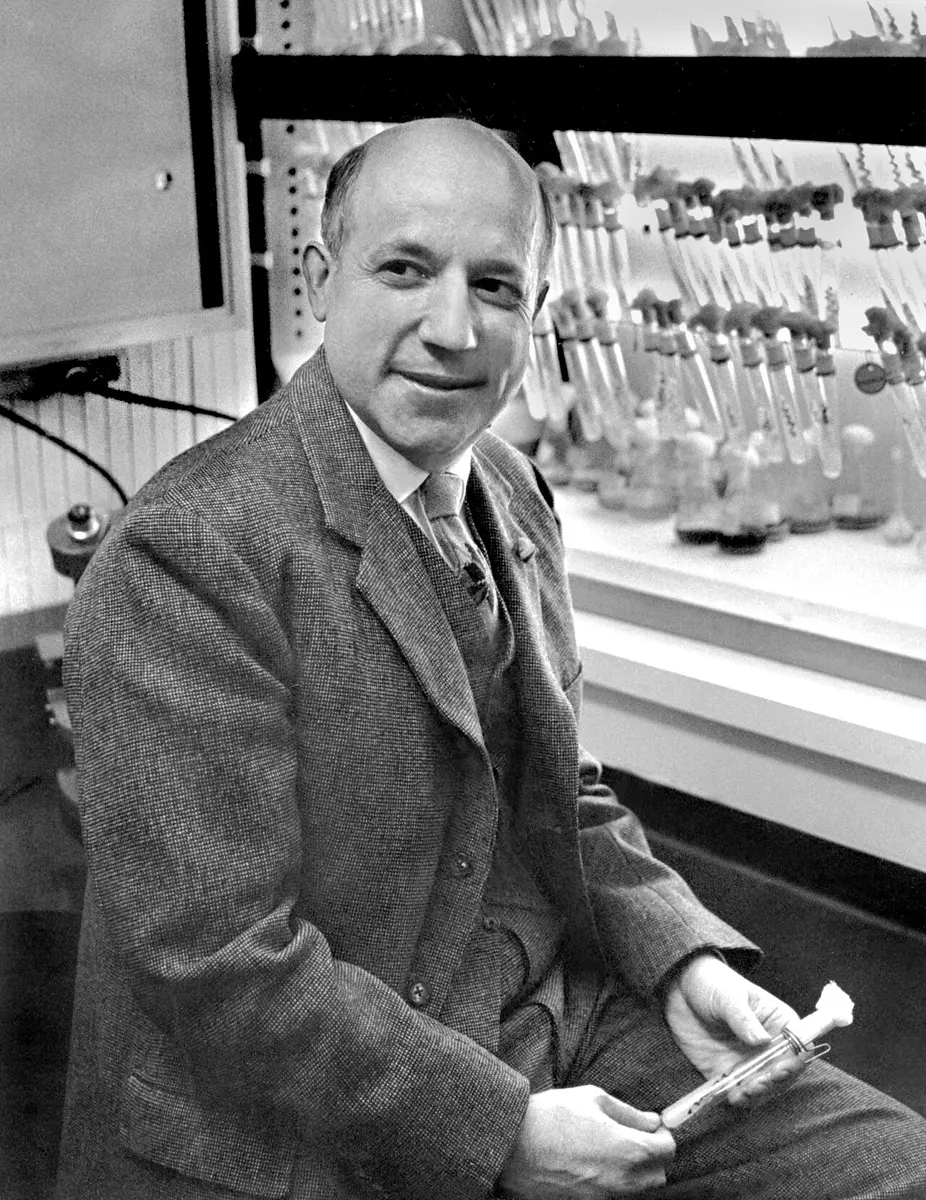
In the 1930s and 40s, a new kind of evidence arrived: isotope tracers. An isotope of an element has the same chemistry but a different mass (you met isotopes in Grade 10: The trouble with atomic weight), so atoms of a rare isotope can be put into a molecule and then traced, by their extra mass or their radioactivity, wherever they go.
The atoms in you now are not the ones you had a few years ago. You keep your shape, and your molecules keep their patterns, but the atoms in them come and go. The rice and dal you eat this week will be, for a while, part of you.
Questions
A student says: “In respiration, glucose is turned into energy.” What is wrong with this?
Pick an answer to see why.
Which pair of substances must a growing bean plant take from its surroundings to make its proteins, besides carbon dioxide and water?
Pick an answer to see why.
Use a model to explain respiration as a chemical process. In your answer, say what goes in and what comes out, what happens to the bonds, and why there is a net release of energy.
Answer
In: glucose (from digested food, carried by the blood) and oxygen (from the lungs, carried by the blood). Out: carbon dioxide and water (carried away by the blood), and energy.
The atoms are rearranged: 6 C, 12 H and 18 O on each side, so mass is conserved. All the bonds in glucose and in the oxygen molecules are broken, which takes energy in (about 12,500 kJ per mole of glucose, from average bond energies). New bonds are made in carbon dioxide and water, which gives energy out (about 15,200 kJ). More comes out than went in, so there is a net release of about 2,800 kJ per mole. Much of the difference comes from oxygen’s O=O bond, whose electron pairs are held much more loosely than those in the C=O and O–H bonds that replace them. In the cell, part of the released energy is caught in ATP and the rest becomes heat.
A person respires 360 g of glucose in a day. a. What mass of carbon dioxide do they breathe out from it? b. What mass of oxygen do they need? c. How much energy is released (2,800 kJ per mole)?
Answer
360 g is 360 ÷ 180 = 2 moles of glucose.
- a.2 × 6 = 12 moles of CO₂: 12 × 44 = 528 g.
- b.12 moles of O₂: 12 × 32 = 384 g.
- c.2 × 2,800 = 5,600 kJ.
A gram of fat releases 39 kJ, a gram of sugar about 16 kJ. Explain why, using the idea that the energy follows the oxygen.
Answer
The energy released in respiration (or burning) comes mostly from the oxygen molecules used, about 14 kJ per gram of oxygen, whatever the food. Sugar molecules already contain a lot of oxygen (C₆H₁₂O₆: one oxygen for every carbon), so each gram of sugar combines with only about 1.1 g of oxygen. Fat contains very little oxygen (tripalmitin, C₅₁H₉₈O₆, has 6 oxygens for 51 carbons and 98 hydrogens), so each gram of fat combines with about 2.9 g of oxygen. More oxygen used means more strong bonds made, and so more energy: about 2.5 times as much.
Explain, using evidence, how the carbon, hydrogen and oxygen of a sugar molecule can end up in an amino acid in your muscle, and where the amino acid’s nitrogen comes from.
Answer
- A plant makes sugar from carbon dioxide and water by photosynthesis. Calvin’s experiments with carbon-14 showed the carbon from carbon dioxide appearing in sugars within seconds, and then in amino acids.
- In the plant, small carbon pieces from the sugar get an amino group (nitrogen) from the nitrate or ammonium its roots took from the soil, making amino acids, which are joined into proteins.
- You eat the plant (dal, for example). Digestion breaks its proteins into amino acids, which the blood carries to your muscle cells.
- Your cells join the amino acids into your own proteins. They can also make about half the twenty amino acids themselves, from carbon skeletons made from sugar plus nitrogen taken from other amino acids. Schoenheimer’s nitrogen-15 experiments showed this: nitrogen fed to rats turned up in most of the amino acids of their proteins (but not lysine, an essential amino acid).
So the carbon, hydrogen and oxygen came from sugar (and so, first, from carbon dioxide and water), and the nitrogen from the soil.
A strand of DNA and a molecule of starch are both long chains. List two ways they are alike and two ways they are different, in what they are made of.
Answer
Alike: both are made of small units joined into a chain, one water molecule short at each join; both contain a sugar (glucose units in starch, deoxyribose in each nucleotide of DNA), so both have carbon, hydrogen and oxygen.
Different: starch’s units are all the same (glucose), while DNA has four kinds of nucleotide (with bases A, T, G and C), and their order carries information. Starch contains only carbon, hydrogen and oxygen; DNA also contains nitrogen (in its bases) and phosphorus (in its phosphate groups), which come from the soil.
An athlete uses 3 liters of oxygen a minute while running. How much energy does she release in 20 minutes? If her muscles turn a quarter of it into the work of running, where does the rest go?
Answer
Energy: 3 L × 20 kJ/L × 20 = 1,200 kJ. A quarter, 300 kJ, becomes the work of running; the other 900 kJ becomes heat in her body (some at once in respiration, some in the muscles themselves). She gets rid of it by sweating and by sending more blood to her skin. This is why running makes you hot.
Where to go next
- How Does a Gene Make a Protein? You know where the amino acids come from. How does a cell choose their order, from the instructions in its DNA?
- How Does Your Body Stay at 37 °C? The heat from respiration keeps you warm. How your body keeps its temperature steady, whether you are sitting in the sun or running in the cold.
- Can Life Run Without Oxygen? Yeast making jaand, your muscles in a sprint, microbes in a flooded paddy: how life gets energy from food when there is no oxygen.