
Metathesis: molecules that change partners
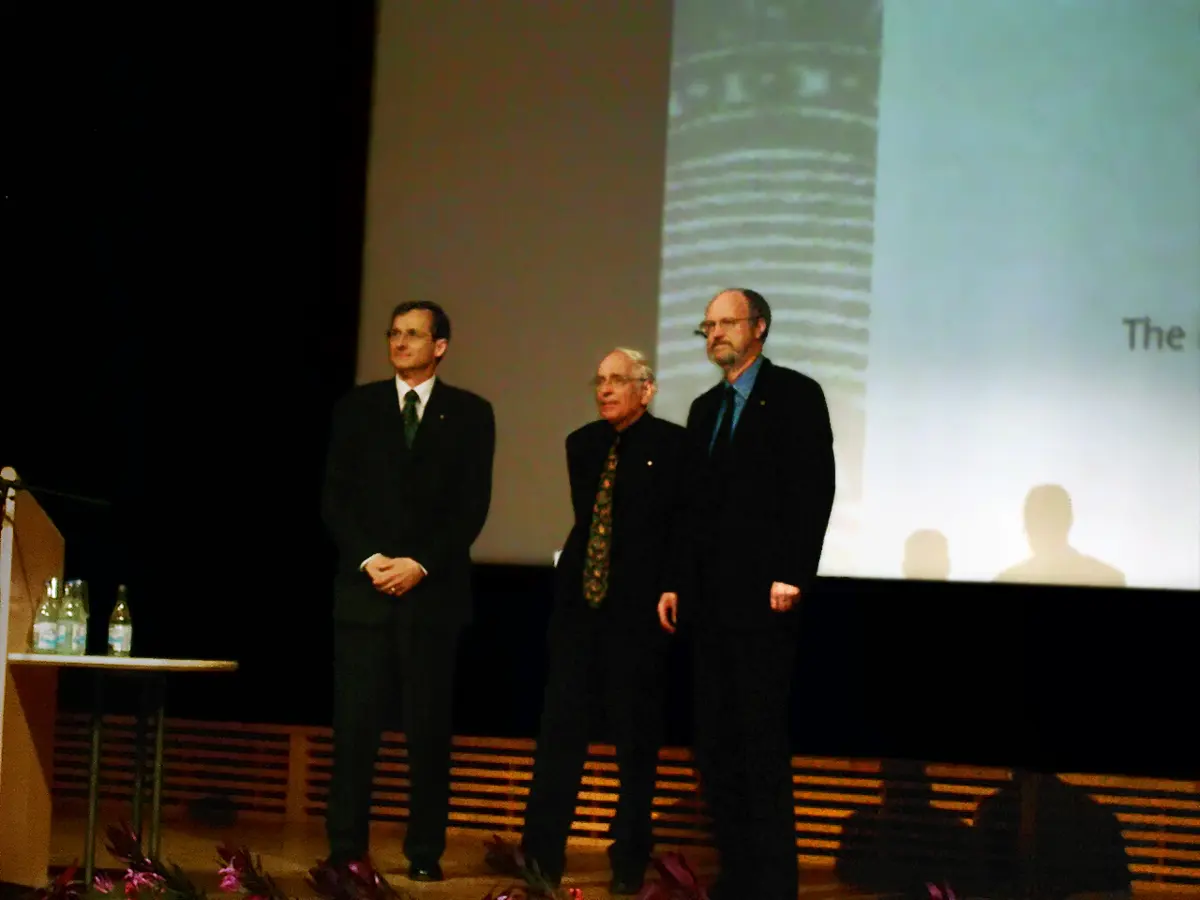
Nobel Prize in Chemistry, 2005: Yves Chauvin, Robert H. Grubbs, and Richard R. Schrock
-
Yves Chauvin
1930–2015, born in Belgium to French parents
He never did a PhD, and spent his career in the research laboratory of a French oil company. His motto: “If you want to find something new, look for something new!”
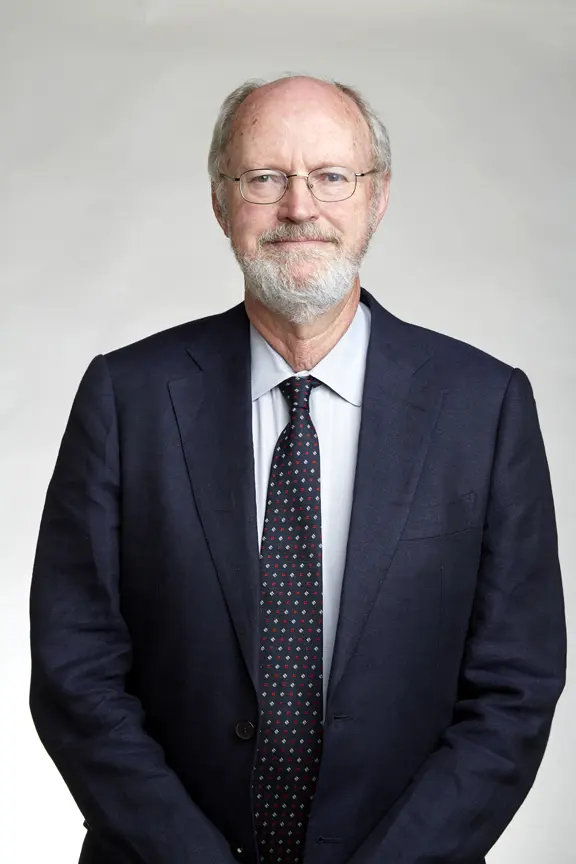
Robert H. Grubbs
1942–2021, born in Kentucky, USA
He grew up near farms. As a boy he spent his pocket money on nails instead of sweets, to build things out of scrap wood.
Photo: Duncan.Hull, CC BY-SA 4.0
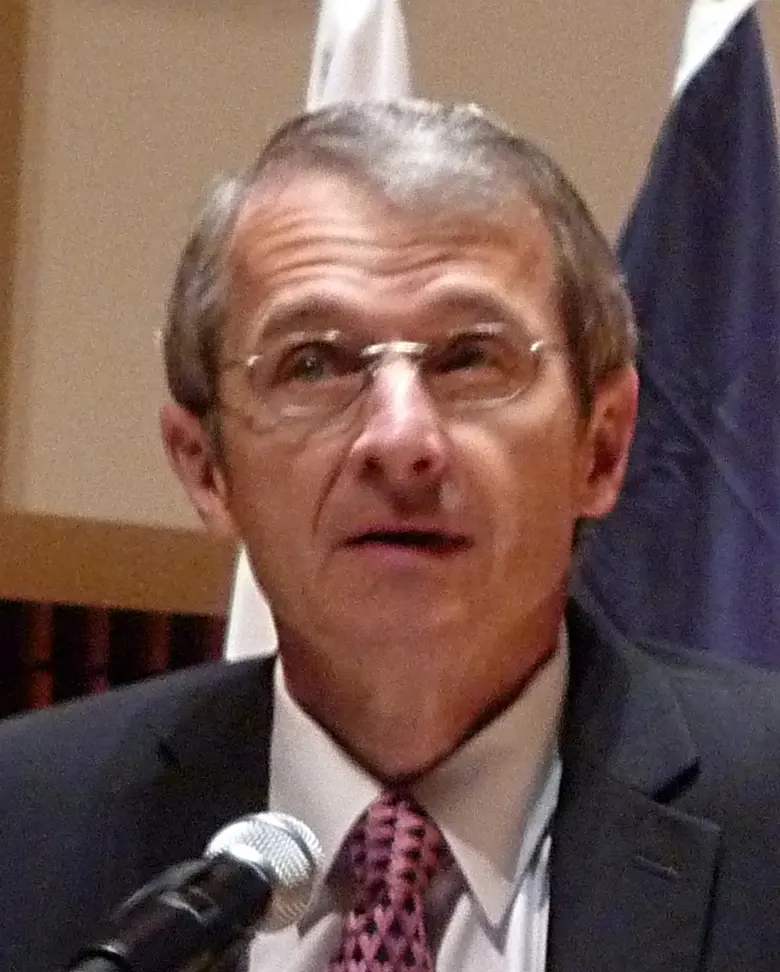
Richard R. Schrock
born 1945 in Indiana, USA
His older brother gave him a chemistry set on his eighth birthday, and he set up a laboratory at the end of a storeroom for tinned food.
Photo: R._Schrock_-_IChO_2012_Opening_Ceremony.JPG : A.mela93 derivative work: Materialscientist, CC BY-SA 3.0
Look at the things around you that chemists have made: a plastic bucket, the strip of tablets in the medicine box, the spray a farmer uses on tomato plants. Each one is made of molecules, and most of them are built on a skeleton of carbon atoms. To make a new medicine or a new plastic, a chemist has to build exactly the right skeleton, joining and cutting carbon atoms one step at a time.
For a long time this was slow and wasteful. In 2005 the Nobel Prize in Chemistry went to three chemists who gave the world a new way to rebuild molecules, called metathesis (say “meh-TA-the-sis”). The word means “changing places”. In this reaction, two molecules swap their parts, like two pairs of dancers changing partners.
The problem: building carbon skeletons
Double bonds
You know that a carbon atom forms four covalent bonds, by sharing electrons with other atoms. Two carbon atoms can also share two pairs of electrons at once. That makes a double bond, C=C Grade 9: Double and triple bonds. Hydrocarbons with a C=C double bond are called alkenes: ethene, propene, butene and so on Grade 10: Alkenes and alkynes. Chemists in industry often call them olefins.
A double bond is a useful handle. It is where an alkene reacts most easily, and many plastics are made by opening double bonds and joining molecules into long chains (From oil to a plastic bucket).
Building a molecule step by step
A chemist who wants to make a big molecule usually starts from small ones and joins them, piece by piece. Every step needs its own reaction, and at every step some of the material is lost as by-products, molecules nobody wanted. A medicine may take twenty or more steps, each with its own waste and its own costly chemicals. Chemists needed reactions that do a lot in one step, waste little, and touch only the part of the molecule they are aimed at.
A mysterious reaction in industry
In the 1950s, chemists in industry noticed something odd. In 1957 a chemist at the company DuPont in the USA found that a catalyst turned alkenes into long chains that still had double bonds in them, which nobody expected. The same year, another patent showed that propene could be turned into butene and ethene with a mixture of metal compounds. In 1967 Nissim Calderon and his team at the Goodyear tyre company in the USA showed that these were all the same kind of reaction, and named it olefin metathesis.
What did the reaction do? In metathesis, the C=C double bonds of two alkene molecules break, and the halves join up again with new partners.
But nobody knew what the catalysts were or how they worked. The industrial catalysts were messy mixtures. They stopped working in air or a trace of water. Finding a better one was like fumbling in the dark.
In olefin metathesis, which bonds are broken and made again?
Pick an answer to see why.
What they did, step by step
Chauvin: how the dance goes (1971)
Yves Chauvin worked at the French Petroleum Institute near Paris, where he looked for new ways to turn the chemicals from oil into useful ones. He had read about compounds in which a metal atom is joined to a carbon atom by a double bond, metal=carbon. These are called metal carbenes.
- 1971, the idea. Chauvin and his student Jean-Louis Hérisson proposed that the real catalyst in metathesis is a metal carbene: a metal atom holding a carbon group by a double bond.
- The mechanism. They also explained how it works, in steps (a mechanism). The metal=carbon pair meets an alkene’s C=C pair. For a moment all four join hands in a small ring of four atoms: the metal and three carbons. Then the ring breaks the other way. Out comes a new alkene, and the metal now holds a new carbon partner. It is ready to meet the next alkene.
- The evidence. Their experiments gave exactly the mixture of products this mechanism predicts, and no other explanation of the time could account for it. Later experiments by Grubbs, Schrock and others supported it, and today it is accepted.
The Nobel committee described Chauvin’s mechanism as a dance. The catalyst is a pair holding both hands: the metal and its carbon partner. It meets a dancing pair of carbons, the four dance in a ring for a moment, then let go and dance away with new partners.
Chauvin’s idea showed chemists what to aim for. If the catalyst is a metal carbene, then a chemist could design one on purpose, atom by atom, instead of mixing chemicals and hoping. But designing one that worked turned out to be very hard. The metal carbenes that were known did not catalyze metathesis at all.
Schrock: the most active catalysts (1990)
Richard Schrock began making metal carbenes in the early 1970s, first at DuPont and then at the Massachusetts Institute of Technology (MIT). He wanted to know which metal works best and which groups of atoms the metal should hold besides its carbon partner.
- The metals. He tried tantalum, tungsten and molybdenum. Slowly he learned which metals worked and why. Molybdenum and tungsten looked best.
- The other groups. A metal atom in a catalyst holds other groups of atoms as well. These have to be chosen so that the catalyst is stable enough to keep, but still active. Schrock spent years finding the right ones.
- 1990, a breakthrough. Schrock and his team made a family of very active, well-defined molybdenum catalysts: chemists knew exactly what each molecule looked like. For the first time, chemists saw that metathesis could be used for all kinds of building, not just in a few special factories.
But Schrock’s catalysts had a weakness: oxygen and water destroyed them. They had to be handled in sealed boxes filled with dry gas.
Grubbs: a catalyst for every laboratory (1992)
Robert Grubbs, at the California Institute of Technology (Caltech), had been studying metathesis since the early 1970s, and his experiments were among those that supported Chauvin’s mechanism.
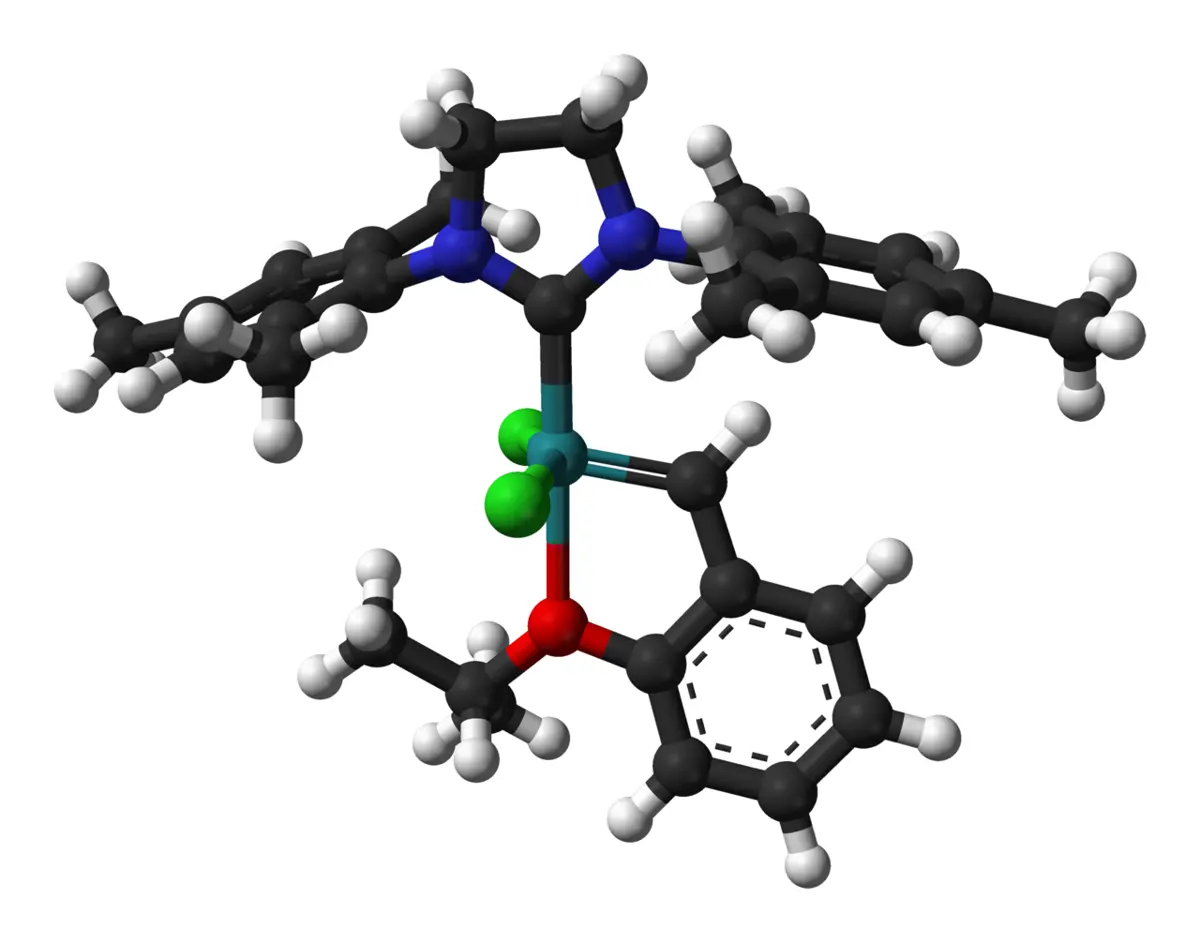
- 1992, ruthenium. Grubbs and his team reported a catalyst based on the metal ruthenium. It was less active than Schrock’s, but it was stable in air, and it worked even in the presence of water and alcohols. It was also selective: it reacted with C=C double bonds and left the rest of the molecule alone.
- 1995, Grubbs’ catalyst. An improved version was easy to make and to use. Known simply as Grubbs’ catalyst, it became the standard that every new metathesis catalyst is compared with. A chemist could keep it in a bottle and weigh it out on an ordinary bench.
- Better and better. Grubbs kept improving his catalysts, using what he learned about how they work. In 1998 he helped start a company to make them for sale.
Why did Grubbs’ catalyst become used in so many ordinary laboratories?
Pick an answer to see why.
How metathesis is used now
A metathesis catalyst can do several different jobs, depending on what it is given.
- Swapping partners (cross metathesis): two different alkenes exchange halves, as in the propene picture above, joining two pieces of a molecule in one step.
- Closing a ring (ring-closing metathesis): a long chain with a C=C double bond at each end bends round, and the catalyst joins the two ends into a ring. The leftover pieces leave as ethene, a gas, which bubbles away. Many medicines need a large ring of atoms to work, and before metathesis such rings were very hard to make.
- Opening rings into chains (ring-opening polymerization): small rings of carbon atoms open up and join end to end into long chains, making plastics with special properties.
Metathesis is also an example of green chemistry: chemistry that makes less waste and uses less energy. A catalyst works again and again without being used up Grade 10: Catalyst, so only a tiny amount is needed. The reaction often runs at room temperature and normal pressure. It can replace several older steps with one, and its main by-product is often harmless ethene. Fewer steps mean less waste and cheaper products.
In your life today
- Medicines. Metathesis is now a standard tool for making new medicines. Several medicines for hepatitis C, a liver disease caused by a virus, contain a large ring that is closed by ring-closing metathesis. The first, simeprevir, approved in 2013, was the first medicine made with a metathesis step on a large scale.
- Plastics. Ring-opening metathesis makes tough plastics that are used, for example, in body parts for tractors and buses.
- Farming without so many sprays. Many female insects attract males with a scent called a pheromone. Farmers can hang pheromone traps in the field, or spread the scent so that males can’t find females, instead of spraying pesticides that also kill useful insects Grade 10: Types of pesticides. Several pheromones are alkenes, and metathesis is now used to make some of them more cheaply.
- Chemicals from oil. Since the 1970s, large factories have used metathesis to turn alkenes that nobody wants into ones that are needed, for example to make detergents.
A drug company needs to close a large ring of atoms in a medicine molecule. Which reaction would a chemist most likely use?
Pick an answer to see why.
What came next
- Choosing the shape. A C=C double bond can have its two groups on the same side or on opposite sides, and the two shapes can behave very differently in a medicine or a scent. In the 2010s, Schrock, Amir Hoveyda and others made catalysts that choose one shape over the other.
- Chemicals from plants. Metathesis can turn plant oils, such as palm oil, into chemicals that once came only from petroleum.
- An open question: cheaper metals. The best catalysts still use ruthenium and molybdenum, which are rare and costly. Can chemists design catalysts that work as well using common metals such as iron? Nobody has done it yet.
In your science books
- Grade 9: covalent bonds, double and triple bonds, catenation (how carbon makes chains and rings) and organic compounds.
- Grade 10: alkenes, naming hydrocarbons (ethene, propene, butene), catalysts and pesticides.
- Going Further: Where does plastic come from? and What makes a reaction go faster? (catalysts).
Learn more
- The Nobel Prize’s own explanation: Popular information: the 2005 Nobel Prize in Chemistry (nobelprize.org).
- The three laureates’ Nobel lectures: Chauvin, Grubbs and Schrock.
The official reason
The prize was given “for the development of the metathesis method in organic synthesis.”