
Left-handed and right-handed molecules
Nobel Prize in Chemistry, 2001: William S. Knowles, Ryoji Noyori, and K. Barry Sharpless
-
William S. Knowles
1917–2012, born in the USA
A chemist at the company Monsanto all his working life. He liked to work with his hands as well as his brain, and when things went wrong he split firewood.
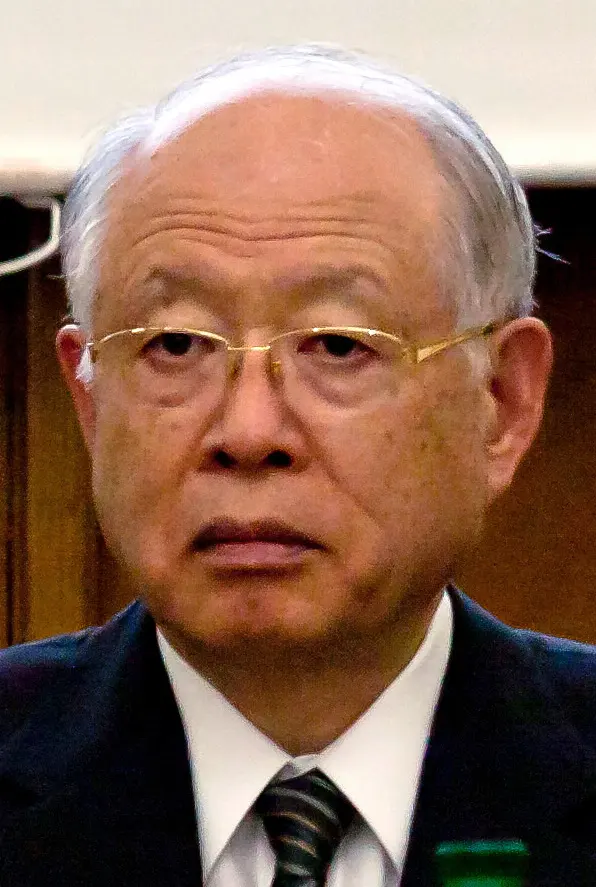
Ryoji Noyori
born 1938 in Japan
At 12, in a Japan still poor and hungry after the war, he heard that nylon could be made from coal, air and water, and decided to become a chemist.
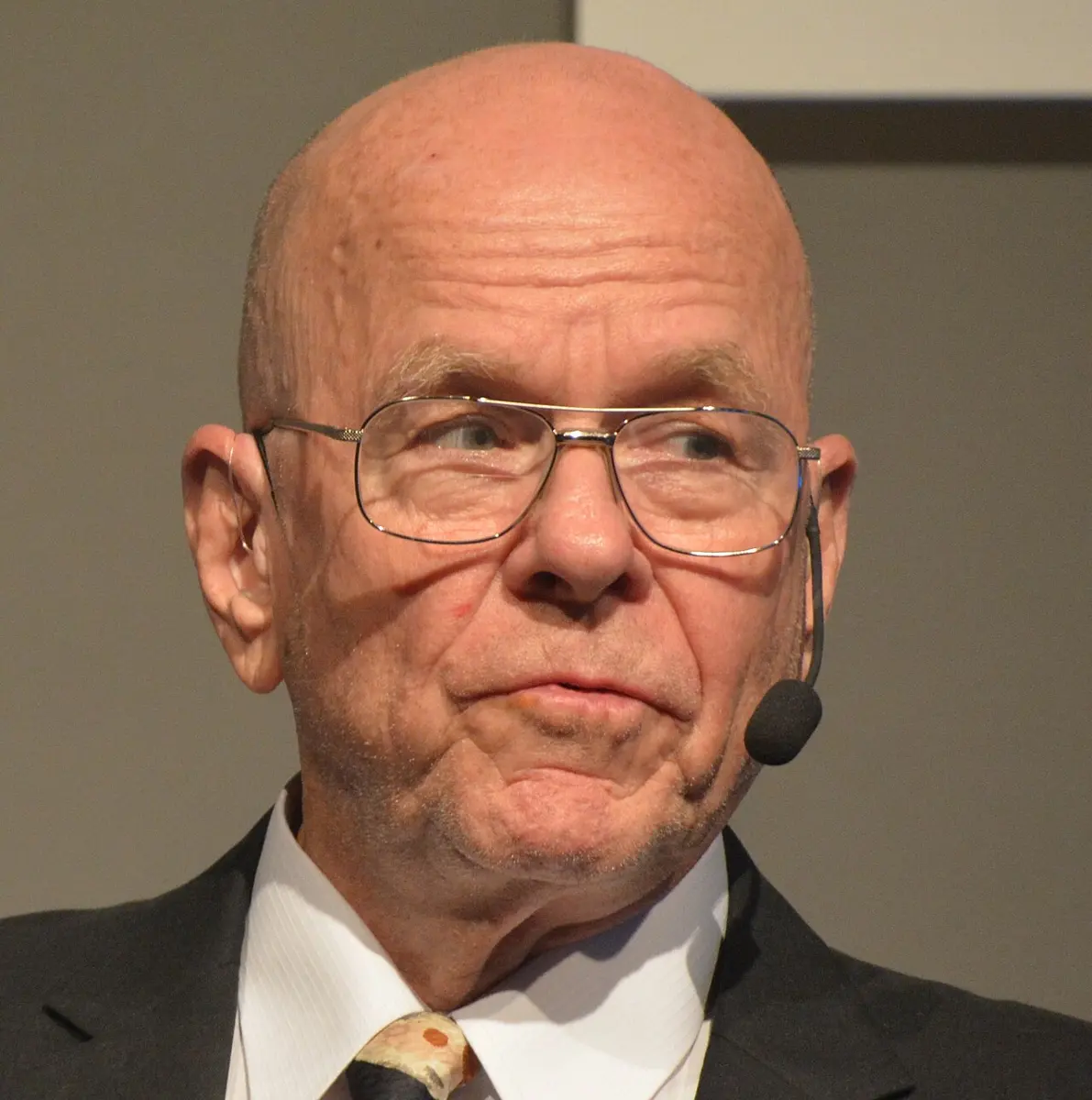
K. Barry Sharpless
born 1941 in the USA
As a boy he cared more about fishing than school. In 2022 he won a second Nobel Prize in Chemistry.
Photo: Bengt Oberger, CC BY-SA 4.0
Put your left chappal on your right foot. It has the same parts, the same size and the same color as the right one, and yet it doesn’t fit. Your hands are the same: a left glove will not go on a right hand.
Many molecules come in a left-handed and a right-handed form, just like gloves. And your body, like your foot, can tell the difference. In 2001 the Nobel Prize in Chemistry went to three chemists who found ways to make only one hand of a molecule, using a catalyst. Their work is used to make medicines, flavors and smells by the tonne.
The problem: molecules with two hands
Carbon’s four bonds
A carbon atom makes four covalent bonds. In a molecule like methane, CH₄, those four bonds don’t lie flat. They point to the four corners of a tetrahedron, a pyramid with a triangle for its base Grade 10: Carbon’s four bonds.
Now suppose the four things joined to a carbon atom are all different. Then there are two ways to arrange them, and the two ways are mirror images of each other. However you turn one, it will never sit exactly on top of the other, just as your right hand never fits exactly on your left. This was worked out in 1874, by the Dutch chemist Jacobus van ’t Hoff and the French chemist Joseph Le Bel, each on his own.
A molecule like this is called chiral (say “KY-rul”), from the Greek word cheir, “hand”. Its two forms are called enantiomers; we will just call them its two hands.
Which of these molecules has a left-handed and a right-handed form?
Pick an answer to see why.
Your body can tell them apart
The two hands of a molecule have the same atoms, the same weight and the same melting point. In an ordinary laboratory test they behave exactly alike. So why should anyone care?
Because life is handed. The amino acids in your proteins are all of one hand. The sugar in your DNA is of one hand too. So the enzymes and the receptors in your cells (the molecules that a medicine or a smell must fit into) are handed as well. A molecule fits its receptor like a key in a lock, or a hand in a glove, and only one hand fits.
You can smell this for yourself. The molecule carvone comes in two hands. One smells of spearmint (pudina). Its mirror image smells of caraway, a seed that looks much like jeera. Same atoms, same bonds, different smell, because the smell receptors in your nose are handed.
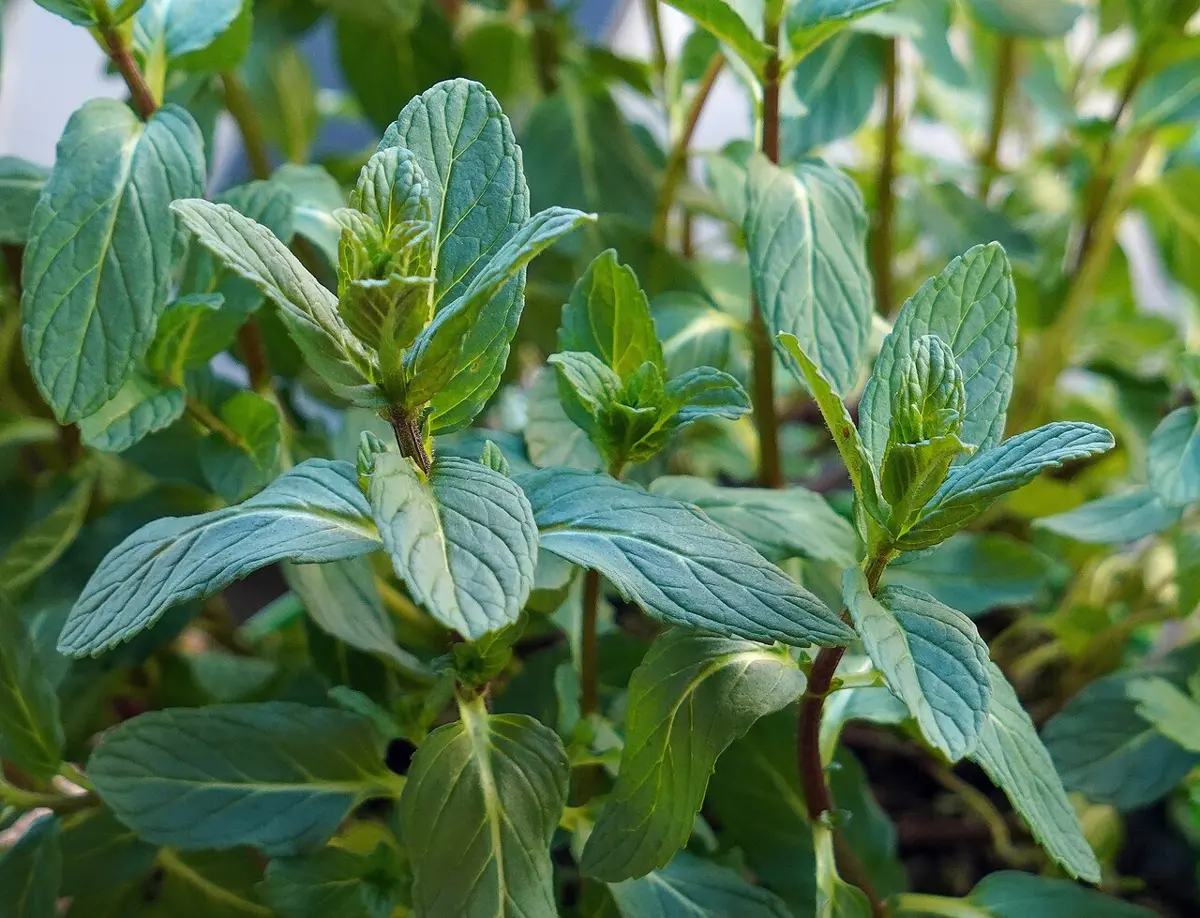
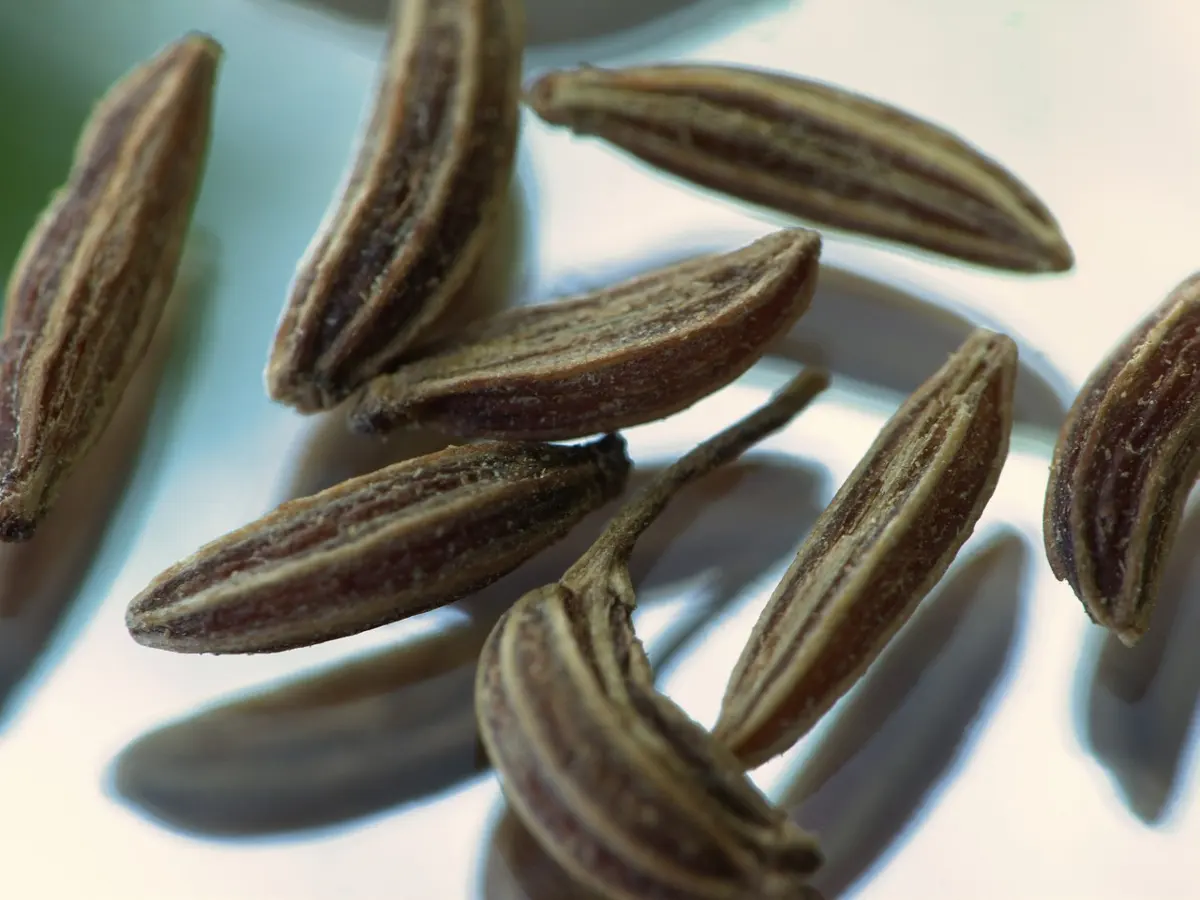
With a medicine, the difference can be much more serious. One hand may cure, while the other does nothing, or does harm.
Making only one hand
When chemists build a chiral molecule from simple, non-chiral starting materials, they normally get both hands, half and half. Nothing in the flask prefers left over right. Separating the two hands is slow and costly, and half of everything you made is thrown away.
Living things don’t have this problem. Their enzymes are handed, so they make only one hand. Could a chemist make a catalyst that does the same? A catalyst is a substance that speeds up a reaction without being used up Grade 10: Catalyst. If the catalyst were itself handed, perhaps it could pass its handedness on. One catalyst molecule might then make thousands, or millions, of molecules of the right hand.
In the 1960s nobody knew whether this was possible.
What they did, step by step
Knowles: the first handed catalyst (1968–1970s)
William Knowles worked at the American chemical company Monsanto, in St. Louis. He chose a reaction you have met in your science book: hydrogenation, adding hydrogen across a C=C double bond. It is how liquid vegetable oil is turned into solid vanaspati ghee, using a nickel catalyst Grade 10: Hydrogenation.
Here is why hydrogenation can make a chiral molecule. Around a double bond, a molecule is flat, like a sheet of paper. Its carbon atoms only have three neighbors each, so nothing is handed yet. When two hydrogen atoms are added, one of the carbons gets its fourth, different neighbor, and becomes chiral. If the hydrogen comes from above the sheet, you get one hand; from below, the other. A nickel catalyst doesn’t care which side, so you get half and half.
- 1966, a catalyst that dissolves. In England, John Osborn and Geoffrey Wilkinson made a catalyst for hydrogenation that dissolves in the liquid, instead of being a solid lump like nickel. At its center is an atom of the metal rhodium, surrounded by small phosphorus-containing molecules. It was not handed.
- The idea. Other chemists had just learned to make handed phosphorus molecules. Knowles thought: put handed ones round the rhodium instead, and the whole catalyst becomes handed.
- 1968, a small but real result. It worked, a little. His catalyst gave 15 % more of one hand than of the other. That is too little to be useful, but it proved the idea: a handed catalyst can make a handed product. (The German chemist Leopold Horner reported a similar result the same year.)
- A medicine. Knowles wanted to make L-DOPA, a medicine for Parkinson’s disease, an illness of the brain that makes the hands shake and the body slow. Only one hand of the molecule works. Knowles and his team tried many handed phosphorus molecules, and found one, called DiPAMP, that gave 97.5 % of the hand they wanted.
Within a few years, Monsanto was making L-DOPA this way in a factory. It was the first time a handed catalyst was used in industry.
Knowles’s first handed catalyst, in 1968, gave only 15 % more of one hand than the other. Why was it still important?
Pick an answer to see why.
Noyori: handed catalysts for almost everything (1980s)
Knowles’s catalysts worked well, but only for a few kinds of molecule. Ryoji Noyori, a professor at Nagoya University in Japan, set out to make catalysts that would work for many.
- A beautiful molecule. In 1974 Noyori and his colleague Hidemasa Takaya began trying to make a handed phosphorus molecule called BINAP. It is built from two flat rings of carbon atoms joined in the middle, twisted against each other like a propeller, so it has a left and a right twist.
- Six years of work. Making BINAP of just one hand turned out to be very hard. Their first results could not be repeated. They finally published in 1980.
- A better metal, 1986. Noyori swapped rhodium for another metal, ruthenium. The ruthenium–BINAP catalysts could hydrogenate many more kinds of molecules, giving one hand almost purely, and could be scaled up to factory size.
Noyori’s catalysts are used in factories to make antibiotics, such as levofloxacin, and other medicines. A BINAP catalyst is used by the Japanese company Takasago to make menthol, the cool taste of mint, since the 1980s.
Sharpless: adding oxygen (1980)
Hydrogenation removes a double bond. But a chemist building a medicine often wants to add something new, such as an oxygen atom, which gives the molecule a handle to build on. Adding oxygen is a kind of oxidation.
Barry Sharpless, a professor in the USA, had been looking for handed catalysts for oxidation for about ten years, first at the Massachusetts Institute of Technology (MIT) and then at Stanford University.
- January 1980, the handed epoxidation. At Stanford, Sharpless and Tsutomu Katsuki, a young chemist from Japan working in his laboratory, found the recipe. They mixed a compound of the metal titanium with a handed molecule made from tartaric acid, the sour acid of grapes and tamarind (imli). This catalyst adds one oxygen atom across a double bond, making a small three-cornered ring of two carbons and one oxygen, called an epoxide. And it makes almost only one hand of it.
- Why it mattered. An epoxide is a very useful building block, because its strained little ring opens easily and lets the chemist add other groups. Many chemists have called it the most important new reaction in building molecules of those years. One epoxide made this way, glycidol, is used to make beta-blockers, medicines for the heart and high blood pressure.
- More reactions. Sharpless went on to find handed catalysts for other oxidations, such as adding two OH groups across a double bond (1988).
How a handed catalyst works
In a handed catalyst, a metal atom (rhodium, ruthenium or titanium) does the chemistry. Around it sits a handed molecule, like a glove around the metal’s fingers.
The starting molecule and the hydrogen (or oxygen) both attach to the metal for a moment. The starting molecule can sit there two ways round, one leading to each hand of the product. Because the glove is handed, one way fits more comfortably than the other. Think of shaking hands: two right hands fit together well, while a right hand and a left hand fit awkwardly. The comfortable way reacts faster, so most of the product comes out as one hand.
Then the product leaves, and the catalyst is free for the next molecule. Because it is not used up, one catalyst molecule can make millions of molecules of the wanted hand. That is why a little catalyst can make a factory’s worth of medicine, with very little waste.
Why can a small amount of a handed catalyst make tonnes of a medicine?
Pick an answer to see why.
In your life today
- Medicines. Look at the names on a strip of tablets. A name starting with levo- or es-, such as levofloxacin (an antibiotic sold in pharmacies in Nepal) or esomeprazole (for acidity), means the tablet holds only one hand of its molecule. Not all of these are made with the laureates’ catalysts, but making single-hand medicines cheaply is now ordinary, and their work began it. Many new medicines are approved only as one hand.
- L-DOPA is still one of the main medicines for Parkinson’s disease. Inside the brain it is turned into dopamine, a messenger the brain is short of in this illness.
- Mint and menthol. The cool taste in toothpaste, chewing gum, balms and cough sweets is menthol, and much of it is made with a BINAP catalyst.
- Flavors, sweeteners and insecticides are also made as one hand, so that less of the chemical does the job.
What came next
- Sharpless’s second prize. In 2022 Sharpless won the Nobel Prize in Chemistry again, for click chemistry, a way of snapping molecules together quickly and cleanly (Chemistry 2022). He became only the fifth person ever to win two Nobel Prizes.
- Catalysts without metals. Rhodium and ruthenium are rare and costly, and traces of metal must be cleaned out of a medicine. In 2000 chemists found that small, handed organic molecules can do the job without any metal. That won the Nobel Prize in 2021 (Chemistry 2021).
- Enzymes as catalysts. Chemists now also redesign the body’s own handed catalysts, enzymes, to make one hand of a medicine in water, at room temperature.
In your science books
- Grade 9: covalent bonds and double bonds, and the many compounds of carbon.
- Grade 10: alkanes and carbon’s four bonds, alkenes, hydrogenation, catalysts and high blood pressure (what beta-blockers treat).
- Going further: molecules have shapes and how a catalyst speeds a reaction.
Learn more
- The Nobel Prize’s own explanation: Mirror image catalysis (nobelprize.org).
- The laureates’ Nobel lectures: Knowles, Noyori and Sharpless.
The official reason
The prize was given “for their work on chirally catalysed hydrogenation reactions.”
The prize was given “for his work on chirally catalysed oxidation reactions.”