
Grade 7 Science and Math: A Teacher’s Guide
How the exhibits and the garden link to what you teach, unit by unit.
This guide links what your Grade 7 class sees at Science Playground to the units you teach from the Science and Technology textbook, unit by unit, in the book’s order. For each unit you’ll find the CDC learning outcomes the visit supports, the exhibits and garden plants that show them, what students do at each one, a question to ask there, the wrong ideas to watch for, and an activity for before and after the visit.
Grade 7 brings in many of the terms students will use for years: displacement and velocity, mass and weight, frequency and amplitude, the laws of reflection, density, elements and compounds. The center lets students see each one at work before it becomes a definition to learn, and the questions here ask them to use the term on something in front of them.
Three stops also serve the Mathematics textbook, where an exhibit shows this year’s maths: Walk Your Weight for indirect variation, the wood blocks for surface area and volume, and the raised map’s scale bar for scale drawing. They are marked Math and come after the science units.
Every stop links to its section in Grade 7 Science, Explained, our free online edition of the textbook, where students can read the idea again after the visit.
Visit sheets for the day
Pages to print for you, for before, during and after the visit, and a two-page explorer sheet to copy for your students.
At a glance
45 exhibits and plants for 14 of the books’ units. Tap a unit to go to it.
- Unit 1: Scientific Learning 3 stops
- Unit 2: Information and Communication Technology 1 stop
- Unit 3: Organisms and their Structure 6 stops
- Unit 4: Biodiversity and Environment 3 stops
- Unit 5: Life Process 3 stops
- Unit 6: Force and Motion 8 stops
- Unit 7: Energy in Daily Life 8 stops
- Unit 8: Electricity and Magnetism 3 stops
- Unit 9: Matter 6 stops
- Unit 10: Materials Used in Daily Life 4 stops
- Unit 11: The Earth and Space 6 stops
- Math, Unit 8: Unitary Method 1 stop
- Math, Unit 9: Perimeter, Area and Volume 1 stop
- Math, Unit 20: Bearing and Scale Drawing 1 stop
A two-hour visit
Four rounds that cover every stop in this guide. With a large class, split into four groups that take the rounds in turn; with less time, choose the units you’re teaching now.
Each round is a line, its stops in walking order; the columns are the floors, from outside up to the Second Floor, so the line steps across where the group takes the stairs.
Round 1 · 30 min · Indoors and outdoors
Living things and the body
The betel vine and the amla are in the garden; the rest are indoors.
- 1
- 2In through the Entrance Plant Cell Model
- 3
- 4
- 5
- 6
- 7
- 8
- 9Woods of Nepal (Math)
- 10
- 11
Also in this round, not on the map yet: Betel Leaf (Paan), Amla (Indian Gooseberry)
Round 2 · 25 min · Indoors
Rocks, matter and materials
- 1
- 2
- 3
- 4
- 5
- 6Up the stairs to the First Floor The Giant Periodic Table
- 7
- 8
- 9
Round 3 · 30 min · Indoors
Light, sound and electricity
- 1
- 2In through the Entrance Solar House Model
- 3
- 4
- 5Plasma Ball· under the stairs
- 6Up the stairs to the First Floor The Fun Circuit
- 7
- 8
- 9
- 10
- 11Up the stairs to the Second Floor The Periscope
- 12
- 13
- 14
Round 4 · 25 min · Indoors and outdoors
Force, motion and machines
- 1Walk Your Weight (Math)
- 2In, and up to the First Floor Magnetic Levitation
- 3
- 4
- 5
- 6
- 7
- 8
- 9Up the stairs to the Second Floor Flying Paper Shapes
Unit 1
Scientific Learning
The center is full of small tests students can run and write up in the book’s report format, and of models that show what we can’t see directly: the organs inside us, and the shape of Nepal’s land.
CDC learning outcomes this visit supports
- 1.1Prepare a report of practical work in science.
- 1.2Make models of things related to science, and describe how they were made.
At the center
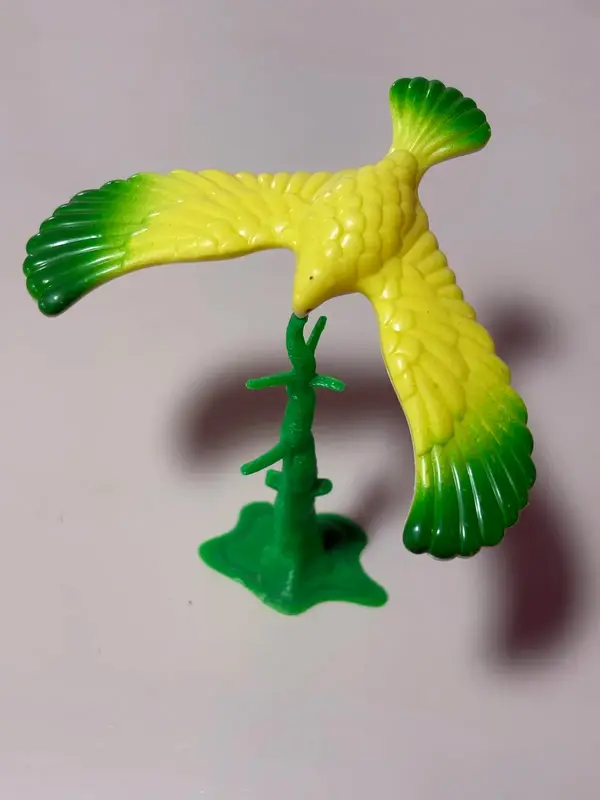
- The Balancing Bird · How scientific learning begins
Do: Guess first: will the bird fall if you touch one wing tip gently? Test it, see it rock back to balance, and ask why: look at its heavy wing tips.
Ask: Guess first: will the bird fall if you touch one wing tip gently? Test it. Why might its heavy wing tips matter?
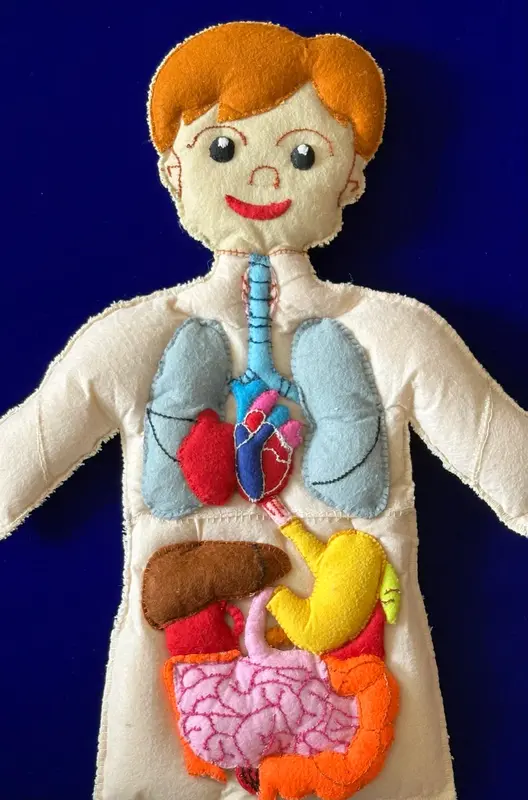
First Floor - Inside the Body · Model construction
Do: A soft model of the organs we can’t see: find the windpipe and lungs, the parts the bottle model’s pipe and balloons stand for.
Ask: Which parts of this model do the pipe and balloons of the bottle model stand for? What can this model show that the bottle can’t?
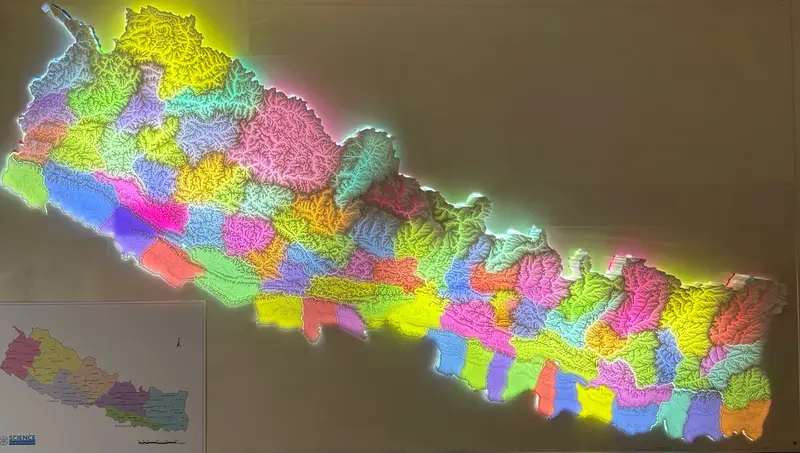
Ground Floor - 3D Map of Nepal · Model construction
Do: A model of Nepal with its heights stretched on purpose: at true scale, even the Himalayas would be barely a bump.
Ask: Why are the mountains made much taller than true scale? What would the map look like if they weren’t?
Second Floor
Watch for
- Students think a model is right in every way. A model shows some things clearly and changes others: the map stretches the heights, and the bottle model has no ribs.
Before the visit
Make the bottle model of the lungs from the book’s sample report of model construction, so students can compare it with the organ model at the center.
After the visit
Each group writes a report of one test from the visit, such as the balancing bird, in the parts of the book’s sample reports: title, objective, materials, procedure, observation, result and conclusion.
Unit 2
Information and Communication Technology
A digital photo is made of pixels, which students rarely see. The bead pictures make each pixel big enough to count, and show why a small picture loses its detail.
CDC learning outcomes this visit supports
- 2.4Prepare and give a presentation with photos and text.
At the center
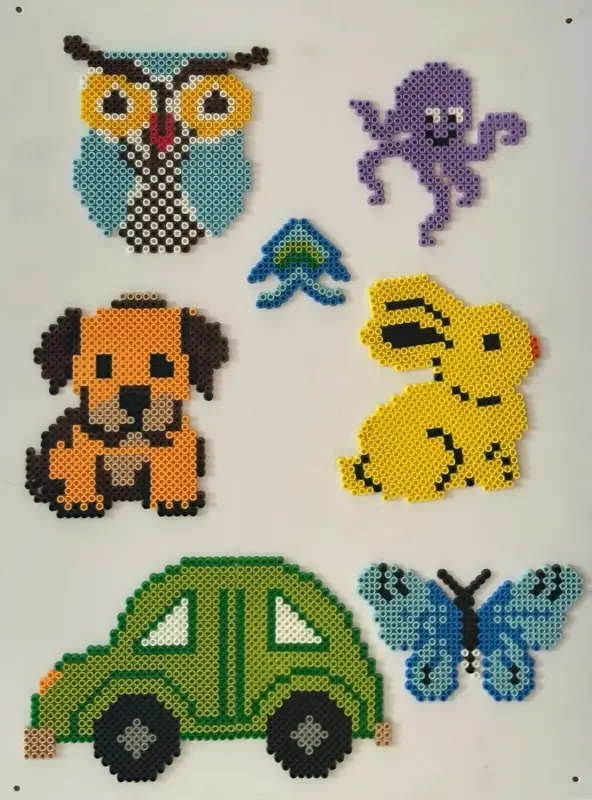
- Bead Art · 2.4 Photo
Do: Each bead is one dot of a single color, like a pixel in a photo: look closely, then step back until the dots become a picture.
Ask: At what distance do the beads become a picture? If the car had half as many beads across, what would you lose first?
First Floor
Watch for
- Students think making a photo bigger shows more detail. Enlarging only makes each pixel bigger; like the bead pictures, a photo can’t show more detail than its pixels hold.
Before the visit
Do Activity 2.5 (2.6 in Grade 7 Science, Explained): take a class photo, then make it smaller and bigger in MS Paint and see what happens to its detail.
After the visit
Do Activity 2.6 (2.7 in Grade 7 Science, Explained): slides of Nepal’s World Heritage Sites. Add one slide that explains pixels, with the bead pictures as the example.
Unit 3
Organisms and their Structure
Students see leaf veins lit from behind, roots growing from a stem in the air, a fruit that grew from one flower, a living arthropod, and the two cell models side by side, so the differences between plant and animal cells can be found, not only learned.
CDC learning outcomes this visit supports
- 3.1Describe the functions of the different parts of a flowering plant.
- 3.2Identify the modified organs of plants (root, stem and leaf), and explain their structure and functions.
- 3.3Classify invertebrates and give the general features of each group.
- 3.4Identify the organelles of animal and plant cells.
At the center
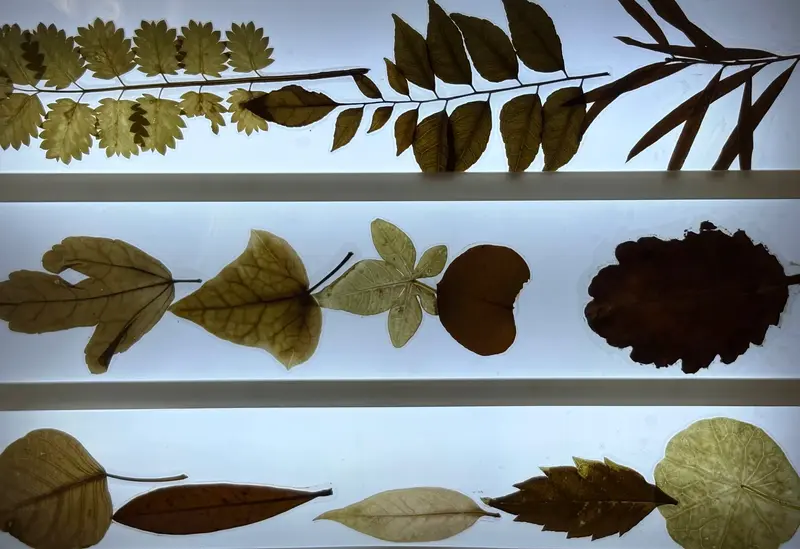
- Leaf Shapes and Veins · 3.1 Parts of a plant
Do: Lit from behind, the veins show clearly: find a dicot’s net of veins. Does any leaf have a monocot’s parallel veins?
Ask: Trace the veins from a leaf’s stalk. What do they carry?
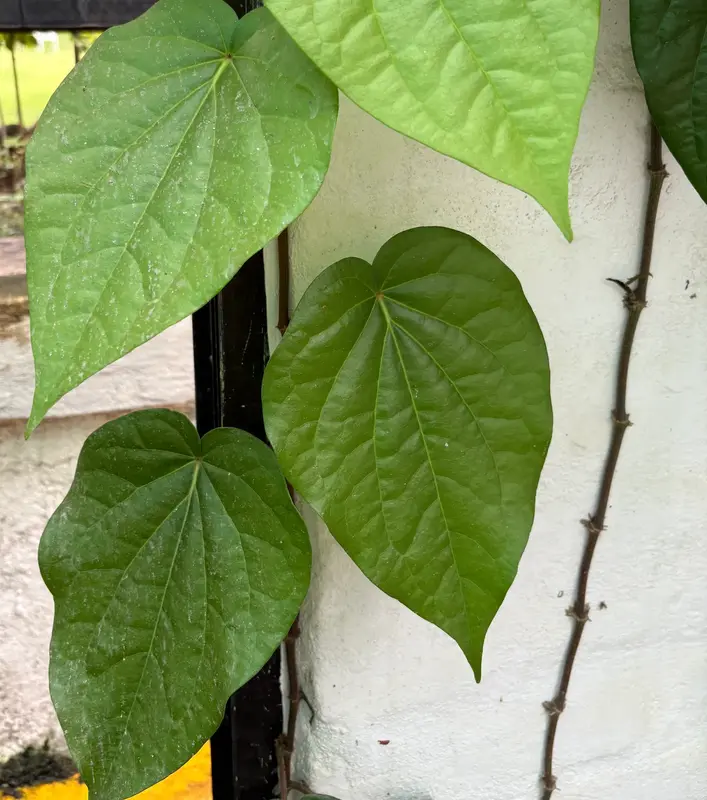
Ground Floor - Betel Leaf (Paan) · 3.1 Parts of a plant
Do: Follow the stem of the betel leaf (paan) vine up the wall: at every node, a tuft of short roots grows out and grips the wall.
Ask: Where do the short roots grow from? What job do they do that ordinary roots don’t?
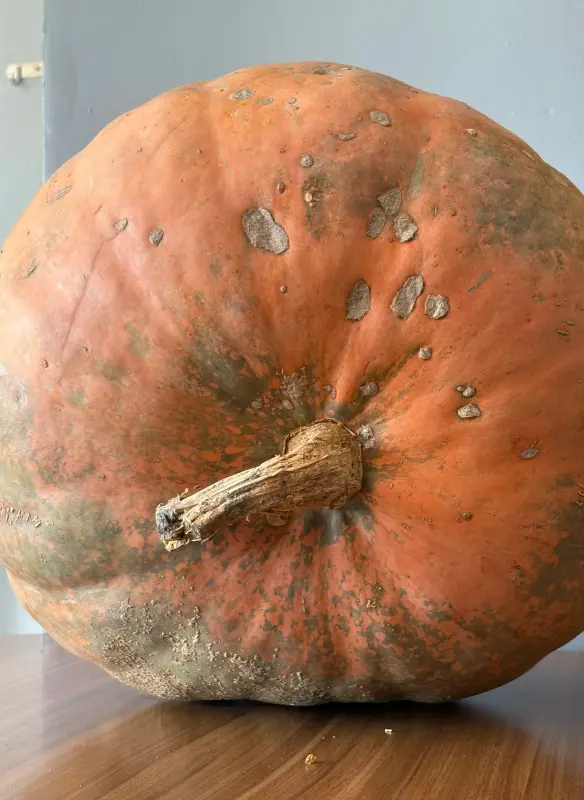
- A Giant Pumpkin · 3.1 Parts of a plant
Do: A pumpkin is a fruit: it grew from a single female flower after bees brought it pollen, and it is packed with seeds.
Ask: Which part of the flower did the pumpkin grow from? Why is it a fruit, though we cook it as a vegetable?
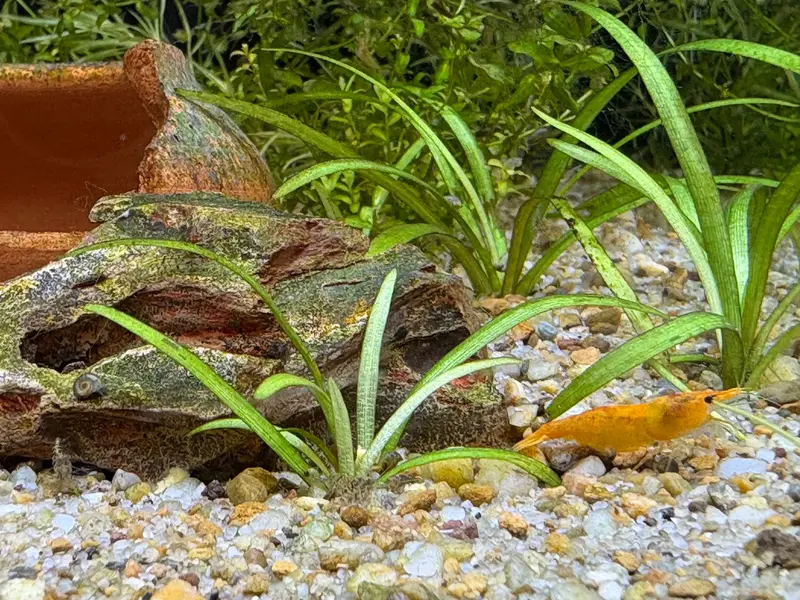
Ground Floor - Shrimp Tank with a Sandfall · 3.2 Invertebrates
Do: Shrimp are arthropods: look for their jointed legs and the hard exoskeleton they must shed to grow.
Ask: Are the shrimp’s legs jointed? What must it do to grow bigger?
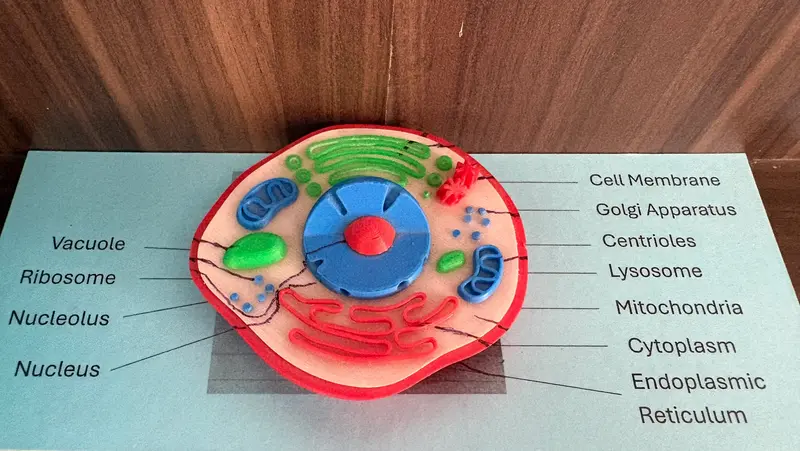
Ground Floor - Animal Cell Model · 3.3 The cell
Do: Find the nucleus and the mitochondria, which release energy from food; then check that this cell has no cell wall.
Ask: Which part controls the cell? Is there a cell wall?
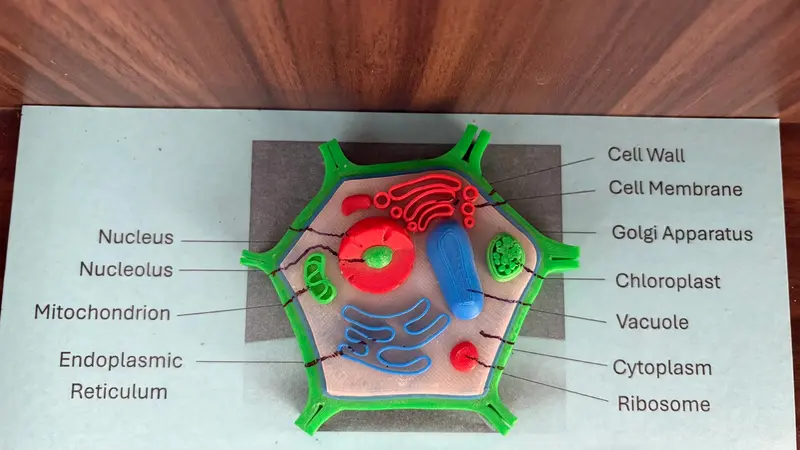
Ground Floor - Plant Cell Model · 3.3 The cell
Do: Find the three parts only a plant cell has: the stiff cell wall, the green chloroplasts and one large vacuole.
Ask: Name two parts the animal cell doesn’t have. Why would a cell that makes its own food still need mitochondria?
Ground Floor
Watch for
- Students call a pumpkin or a tomato a vegetable, not a fruit. In science a fruit is what grows from the flower’s ovary and holds the seeds.
- Students think all roots grow under the ground. The betel vine’s roots grow from the nodes of its stem, in the air, and grip its support: a modified root.
- Students think animals without a backbone have no skeleton. A shrimp’s skeleton is a hard shell on the outside, an exoskeleton, which it sheds to grow.
Before the visit
Do Activity 3.8 (sort the invertebrates around you), so students arrive knowing what to look for on the shrimp.
After the visit
Do Activity 3.20 (a Venn diagram of cell parts) with the two cell models students compared.
Unit 4
Biodiversity and Environment
Three natural resources from Nepal side by side: woods from its trees, herbs from its plants, and soil, which takes hundreds of years to form and can be washed away in one monsoon.
CDC learning outcomes this visit supports
- 4.1Introduce natural resources, say why they matter, and classify them.
- 4.3Give the causes and effects of the destruction of natural resources.
At the center
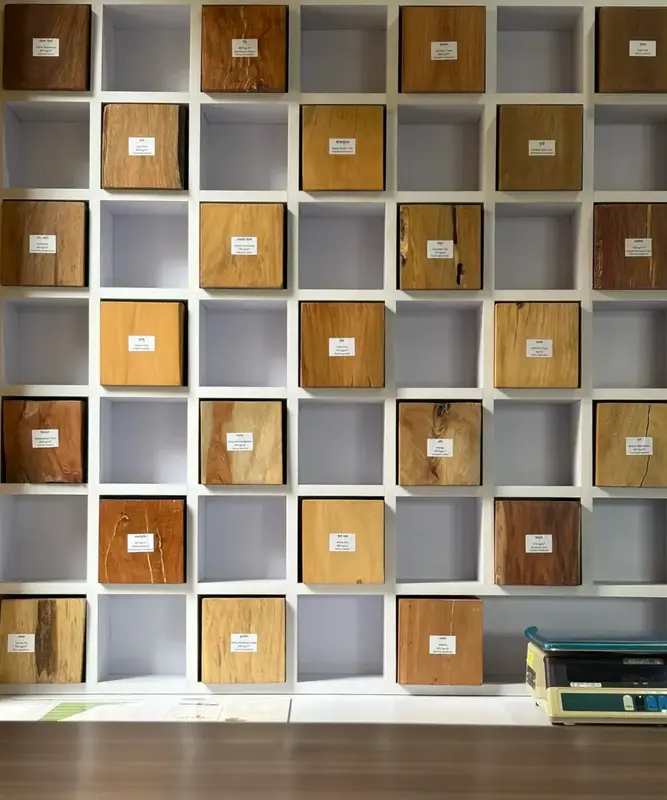
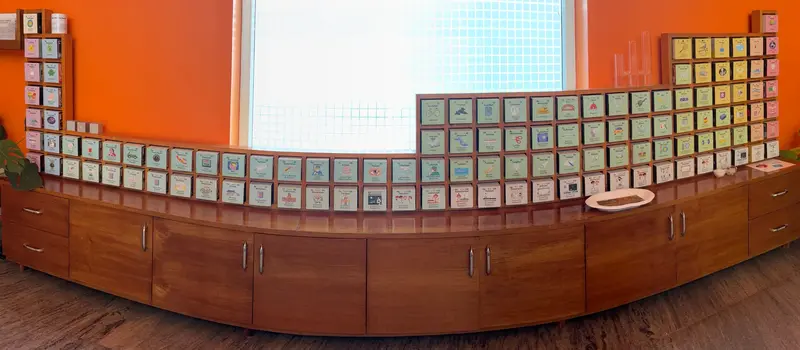
- Woods of Nepal · 4.1 Natural resources
Do: Timber from Nepal’s own trees: a forest is a renewable resource only if trees aren’t cut faster than new ones grow.
Ask: Read the labels: which wood is the densest? Wood is renewable, so what could still make it run out?
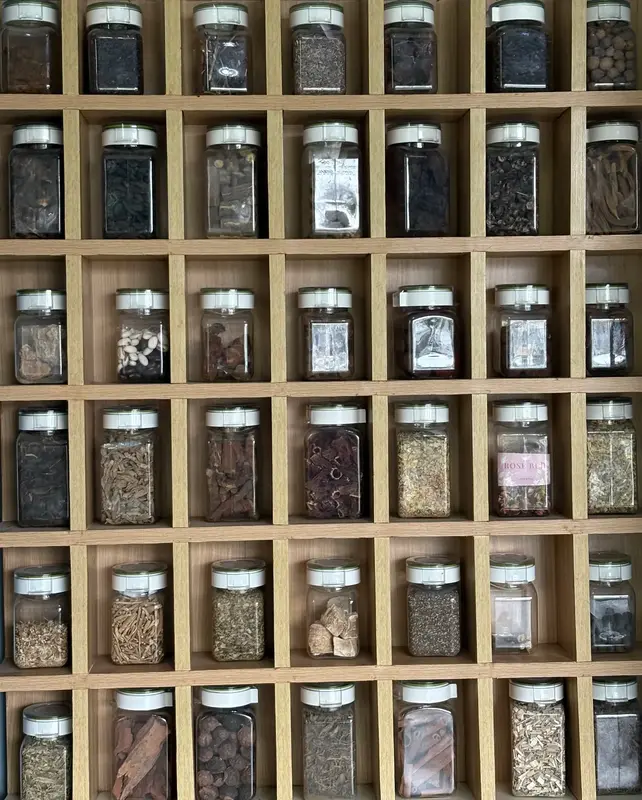
Ground Floor - Medicinal and Culinary Herbs of Nepal · 4.1 Natural resources
Do: Dried herbs used in cooking and medicine, all from plants found in Nepal: a natural resource that comes from living things.
Ask: Find a jar of leaves, one of seeds and one of roots. How can herbs be collected so the plants are still there next year?
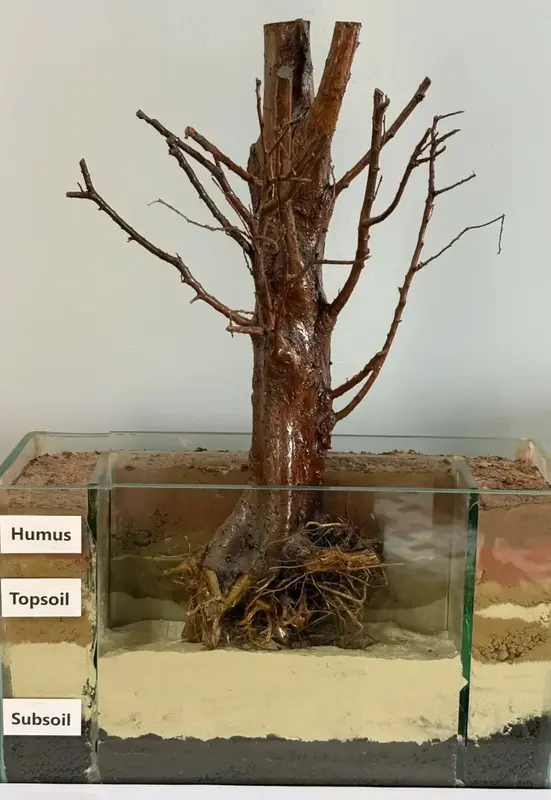
Ground Floor - Soil Layers · 4.1 Natural resources
Do: Find the humus and the topsoil under it, where crops grow: soil takes hundreds of years to form, so it must not be washed away.
Ask: What happens to topsoil on a bare hillside in the monsoon? What holds it?
Ground Floor
Watch for
- Students think a renewable resource can never run out. Forests, herbs and soil renew only if we use them more slowly than they grow back, and one centimeter of soil can take hundreds of years to form.
Before the visit
Do Activity 4.1 (natural resources in your locality), so students arrive with a list of the resources they use.
After the visit
Do Activity 4.2 (sort the resources you use), adding wood, herbs and soil from the visit.
Unit 5
Life Process
The organ model puts the heart and lungs where they really sit, a guppy shows gills at work, and the terrarium shows water a plant has given out.
CDC learning outcomes this visit supports
- 5.1Explain transportation in plants and animals.
- 5.2Compare excretion in plants and animals.
- 5.3Introduce respiration in plants and animals, and explain why it matters.
At the center
- Inside the Body · 5.1 Transportation
Do: Find the heart between the lungs: the pump that sends blood, carrying oxygen and food, round the whole body.
Ask: Find the heart between the lungs. What does the blood pick up in the lungs, and where does the heart send it?
Ground Floor - The Ecosystem Pond · 5.3 Respiration
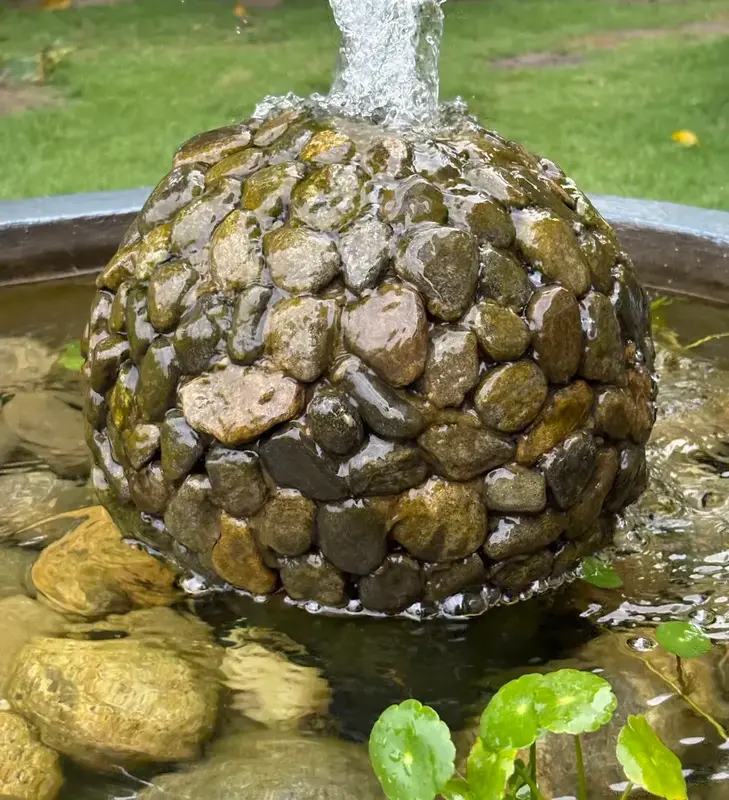
Do: Watch a guppy’s mouth open and close: it takes in water, which flows over its gills, where the blood takes up oxygen.
Ask: Watch a guppy’s mouth open and close. What does it take from the water, and where?
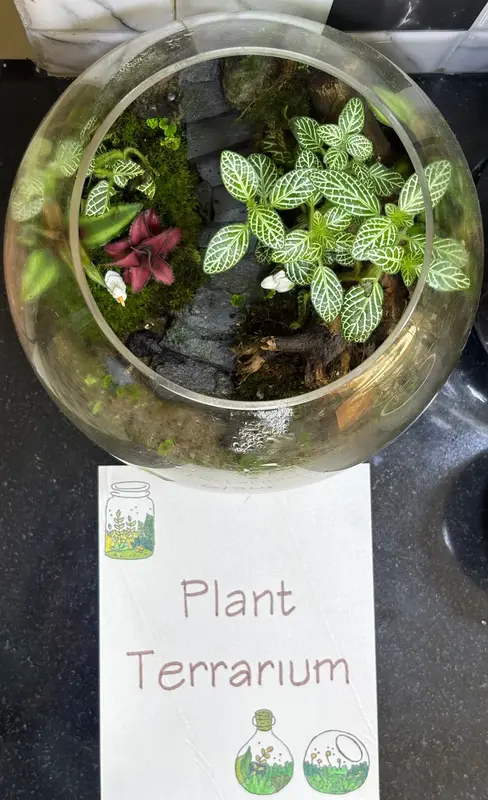
Grounds - Plant Terrarium · 5.2 Excretion
Do: Look for drops on the glass: part of that water was given out by the leaves as vapor, which is transpiration.
Ask: What do we call a plant giving off water vapor? Why does it turn to drops on the glass?
Ground Floor
Watch for
- Students use breathing and respiration as the same word. Breathing moves air in and out of the lungs; respiration releases energy from food in every cell.
- Students think only animals respire, and plants only make food. Plants respire too, day and night: Activity 5.5 shows them giving out carbon dioxide.
Before the visit
Do Activity 5.2 (a plant in a bag), so students recognize the drops on the terrarium’s glass.
After the visit
Do Activity 5.5 (do plants give out carbon dioxide?), to add plants to the respiration students saw in the fish and the lungs.
Unit 6
Force and Motion
Students can see a path drawn by a spinning top, swing a pendulum back to where it started, feel gravity win on a cone that seems to climb, and pull the same load with less force and more rope.
CDC learning outcomes this visit supports
- 6.1Define distance, displacement, speed and velocity, and tell distance from displacement and speed from velocity.
- 6.2Solve simple problems on distance, displacement, speed and velocity.
- 6.3Show that the Earth pulls every object toward its center by gravity.
- 6.4Measure weight with a spring balance, and calculate weight from mass.
- 6.6Give ways to reduce friction, with their uses, advantages and disadvantages in daily life.
- 6.7Introduce work and power, and how they are related.
At the center
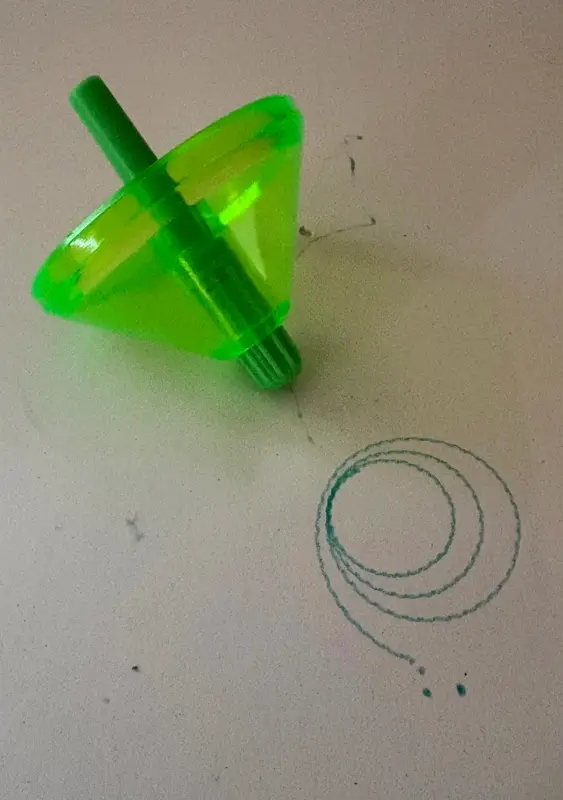
- Spin Art Top · 6.1 Distance and displacement
Do: The looping line the top draws is the distance it travels; a straight line from where it started to where it stopped is its displacement.
Ask: Trace the line with your finger, then point from start to end. Which is longer, the distance or the displacement?
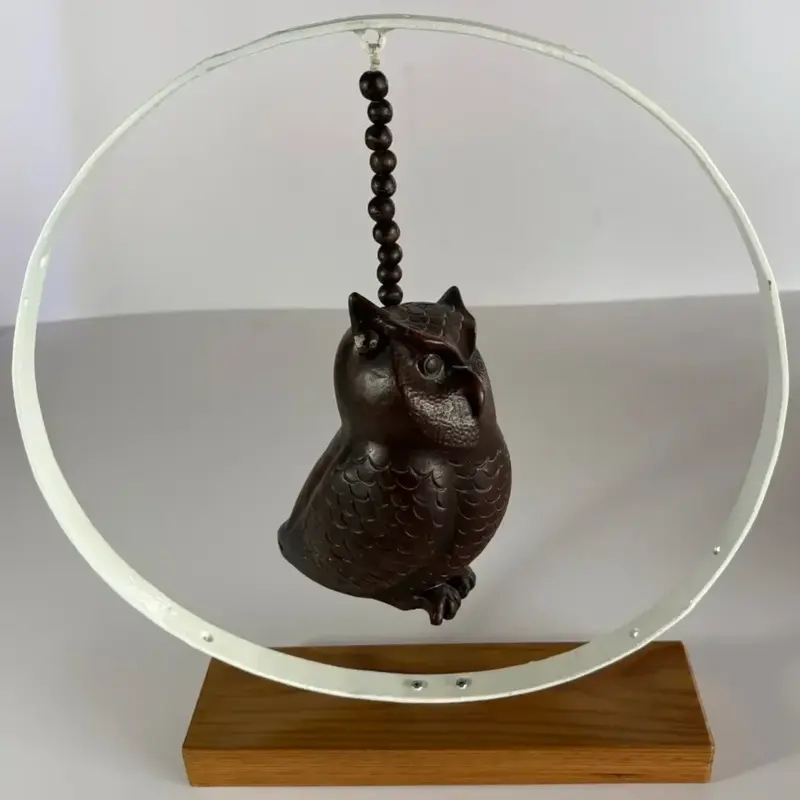
First Floor - The Clay Owl · 6.1 Distance and displacement
Do: Let the owl swing out and back to where it started: it has traveled a distance, but its displacement is zero.
Ask: After one swing out and back, what is the owl’s displacement? Is its distance zero too?
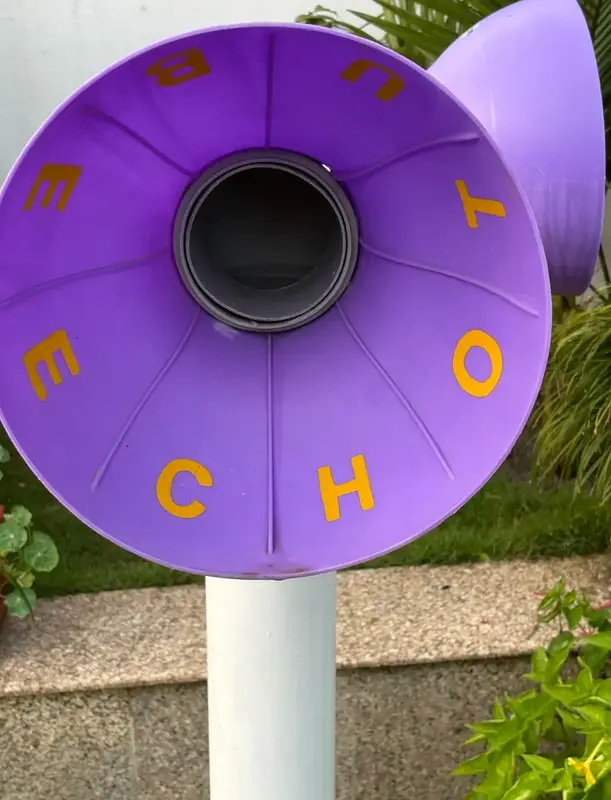
First Floor - The Echo Tube · 6.2 Speed and velocity
Do: Clap and hear the delay as sound travels the long tube: speed = distance ÷ time, about 340 m/s in warm air.
Ask: Do you hear the clap through the tube at once, or a moment later? Sound travels about 340 meters each second: how far does it go in a tenth of a second?
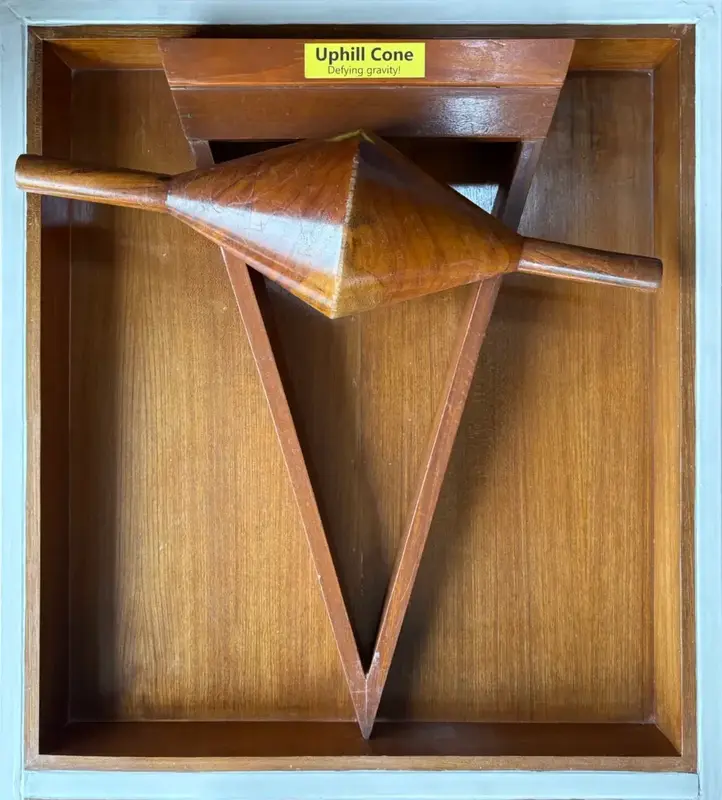
Grounds - Uphill Cone - Defying Gravity? · 6.3 Gravity
Do: The cone seems to roll uphill, but watch its middle: it sinks lower all the time, because gravity always pulls it down.
Ask: Watch its middle, not its ends. Does it go up or down? Which way does gravity pull it?
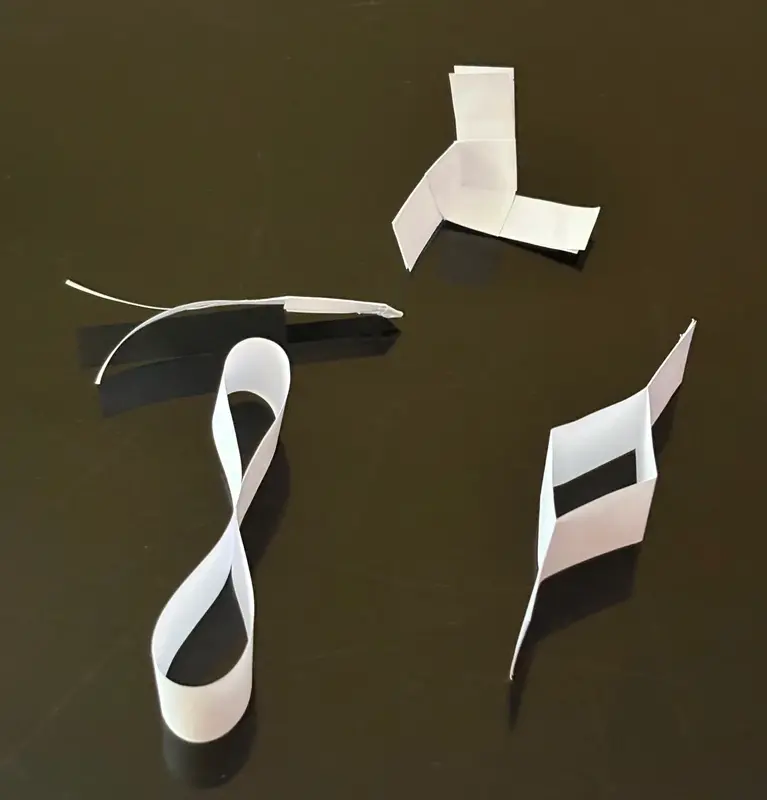
First Floor - Flying Paper Shapes · 6.3 Gravity
Do: Gravity pulls every paper shape down, but the air holds some back more than others, as it holds back a falling feather.
Ask: Gravity pulls every shape down. Why do some fall more slowly than others?
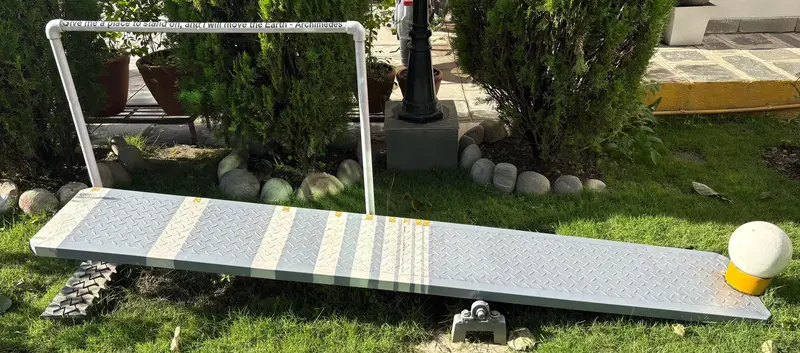
Second Floor - Walk Your Weight · 6.4 Weight and its measurement
Do: The plank balances you against the ball at its far end, so it compares your mass with the ball’s, as a beam balance does; your weight is the pull of gravity on that mass, a force measured in newtons.
Ask: If your mass is 50 kg, what is your weight in newtons? (g = 9.8 m/s²)
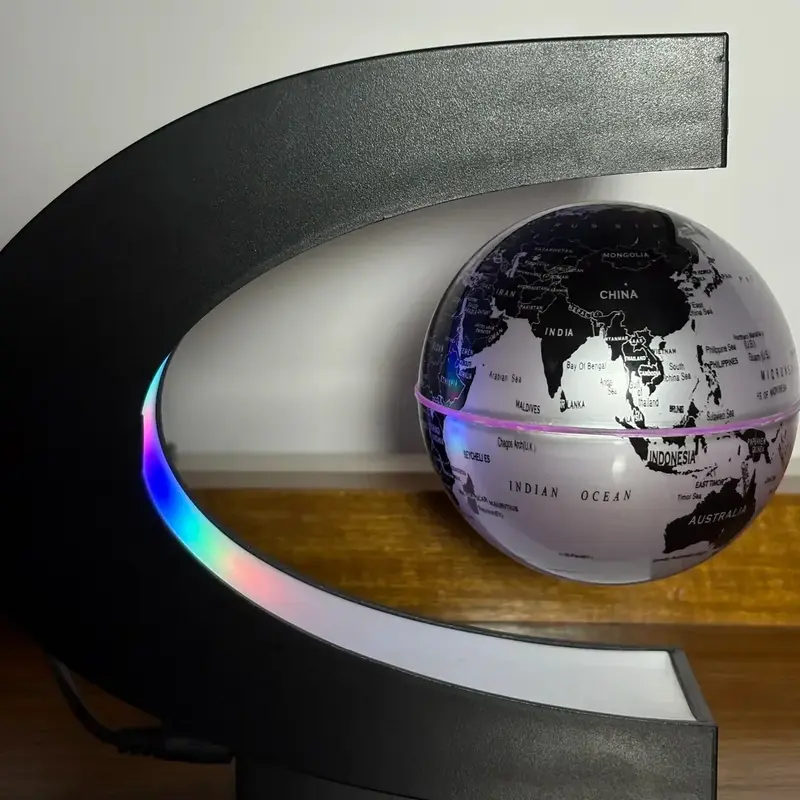
Grounds - Magnetic Levitation · 6.5 Friction and its nature
Do: Ask your guide to spin the floating globe: nothing touches it, so there is very little friction, and it keeps turning for a long time.
Ask: Once the guide spins the globe, why does it keep turning so long? What slows it at all?
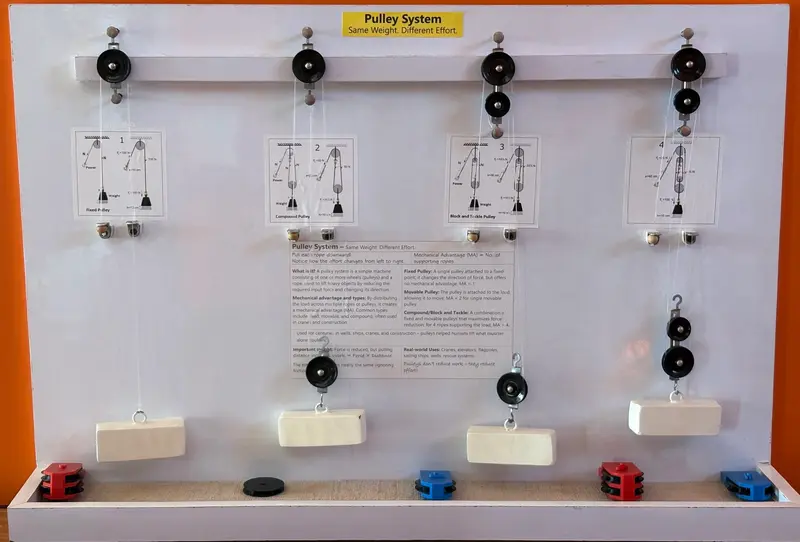
First Floor - Pulley Systems · 6.6 Work and power
Do: With more pulleys you pull with less force but over a longer length of rope, so the work, force × distance, stays about the same.
Ask: Less force but more rope: did the work, force × distance, change much?
First Floor
Watch for
- Students treat distance and displacement as the same. The owl swings out and back: it has traveled a distance, but its displacement is zero.
- Students say “I weigh 40 kg”. That is mass, the amount of matter, in kilograms; weight is gravity’s pull on it, a force in newtons, and on the Moon it would be less.
- Students think a machine saves work. A pulley system lets you pull with less force, but over a longer length of rope, so the work stays about the same.
Before the visit
Do Activity 6.1 (a Z-shaped walk on the school field), so students arrive knowing distance from displacement.
After the visit
Do Activity 6.9 (sliding and rolling), and compare it with the floating globe, which has almost no friction at all.
Unit 7
Energy in Daily Life
The unit’s ideas are hard to see on the page: heat flowing out of a hand, a bar vibrating faster to make a higher note, sound carried by a metal spring, and mirrors that obey the same law whether there are two of them or dozens.
CDC learning outcomes this visit supports
- 7.1Classify the sources of energy used in daily life, with examples.
- 7.5Recognize the units of temperature used in science (°C and K), and convert between them.
- 7.6Introduce the thermometer, and measure temperature with it.
- 7.9Show by experiment that heat flows from a hotter body to a colder one.
- 7.13Define wavelength, amplitude, frequency and wave speed.
- 7.14Define the reflection of light, and identify its uses and effects in daily life.
- 7.15State and verify the laws of reflection.
- 7.17Make a model periscope, show how it works with a ray diagram, and find out its uses.
At the center
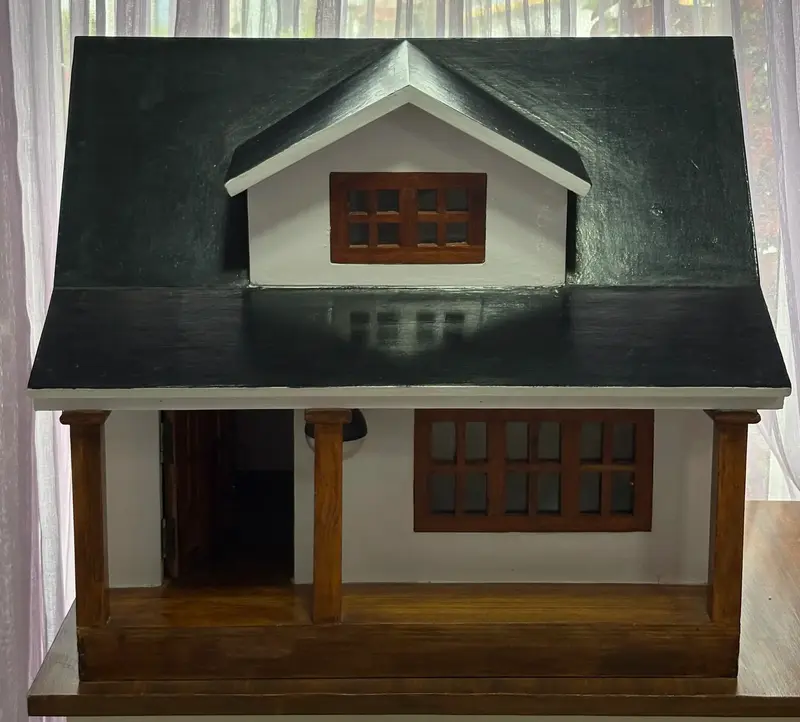
- Solar House Model · 7.1 Energy
Do: Solar panels turn sunlight, a renewable source of energy, into the electricity that runs this house; a battery stores some for cloudy hours.
Ask: By day the panels make more energy than the lamps use. Where is the rest stored?
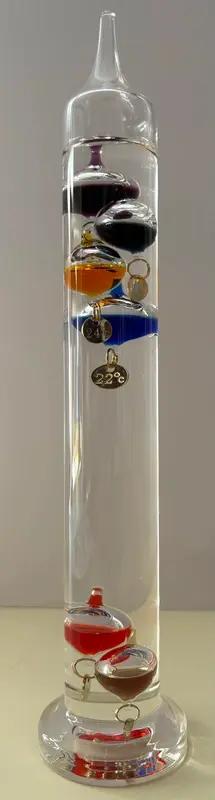
Ground Floor - Galileo Thermometer · 7.2 Heat and temperature
Do: A thermometer that works by floating: read the temperature from the tag on the lowest bulb still floating.
Ask: Read the tag on the lowest floating bulb. What is that temperature in kelvin?
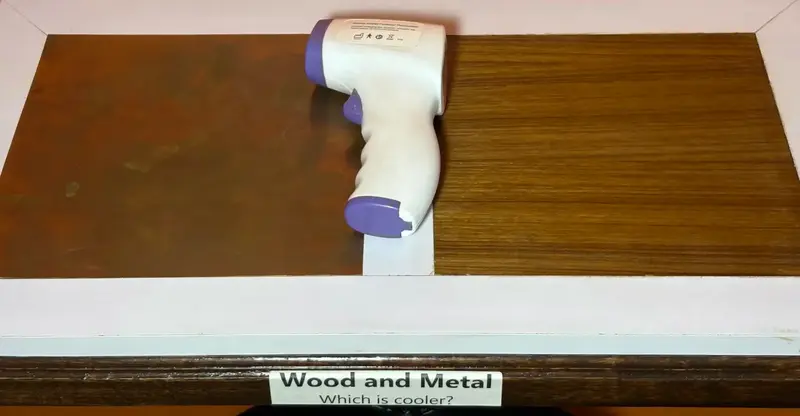
First Floor - Which Feels Cooler? · 7.2 Heat and temperature
Do: The metal and the wood are at the same temperature, yet the metal feels colder: heat flows from your hand into it faster.
Ask: Both are at room temperature. Which way does heat flow when you touch them, and why does the metal feel colder?
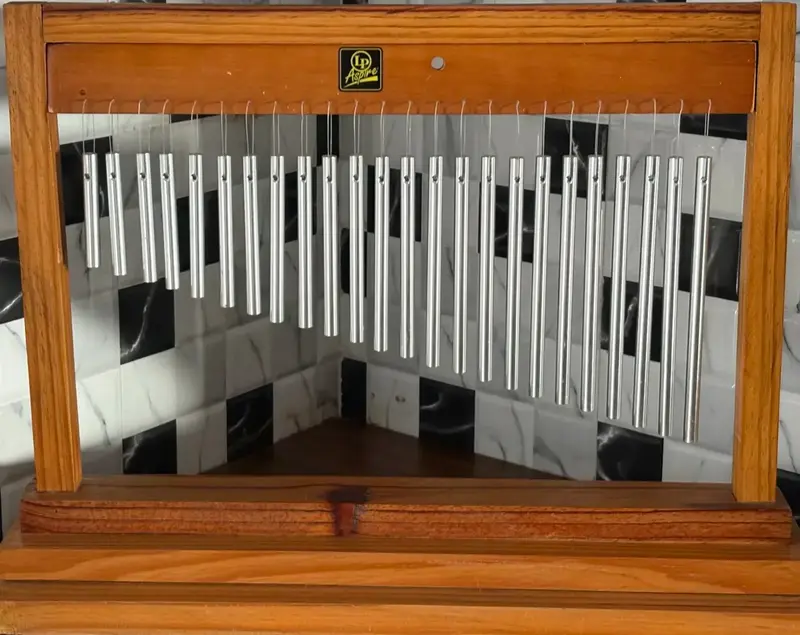
First Floor - The Chime Instrument · 7.3 Wave
Do: Strike the bars: each vibrates to make its sound, and a shorter bar vibrates faster, with a higher frequency and a higher note.
Ask: Which bar has the higher frequency? Does striking harder change the frequency or the amplitude?
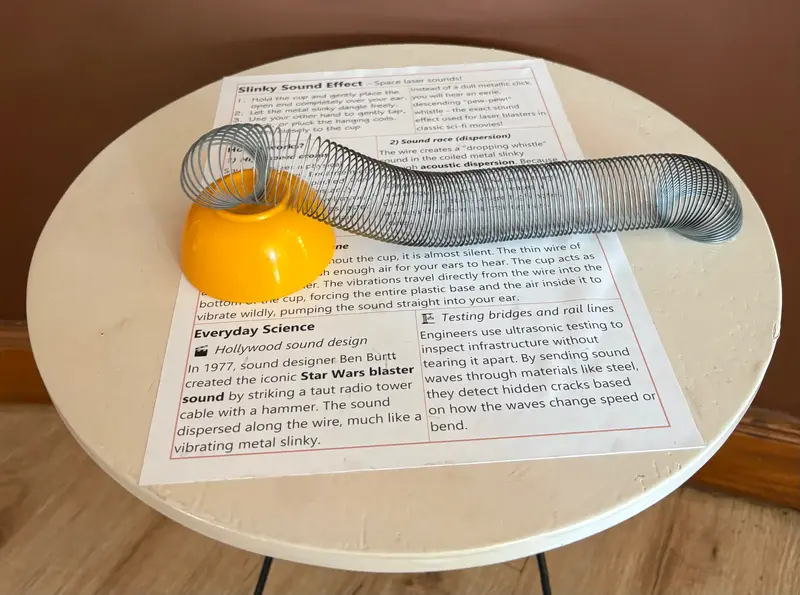
First Floor - Space Blaster Sounds · 7.3 Wave
Do: Hold the cup to your ear and tap the spring: the sound reaches you through the metal spring, a solid medium.
Ask: What medium carries the sound from your tap to the cup? Could sound travel through empty space, with no medium at all?
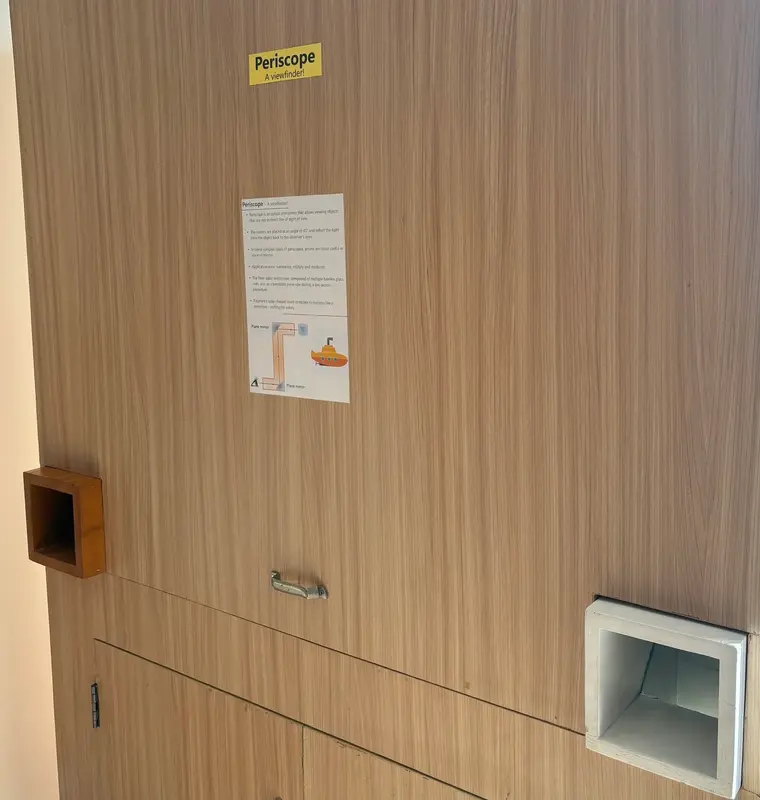
First Floor - The Periscope · 7.4 Light
Do: Two plane mirrors, each at 45°, turn the light twice, so you can see over a wall from a low place.
Ask: At what angle is each mirror? A friend raises their right hand: which hand goes up in the periscope?
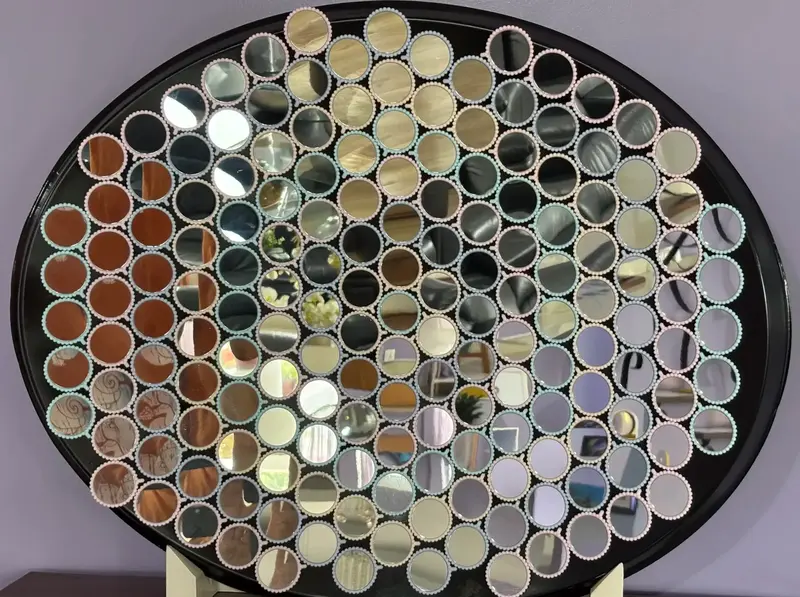
Second Floor - All Eyes on Me · 7.4 Light
Do: Each small plane mirror is tilted to send your eye’s light back to you: the angle of incidence equals the angle of reflection.
Ask: You see your eye in a mirror only when the light comes straight back. Which law of reflection explains it?
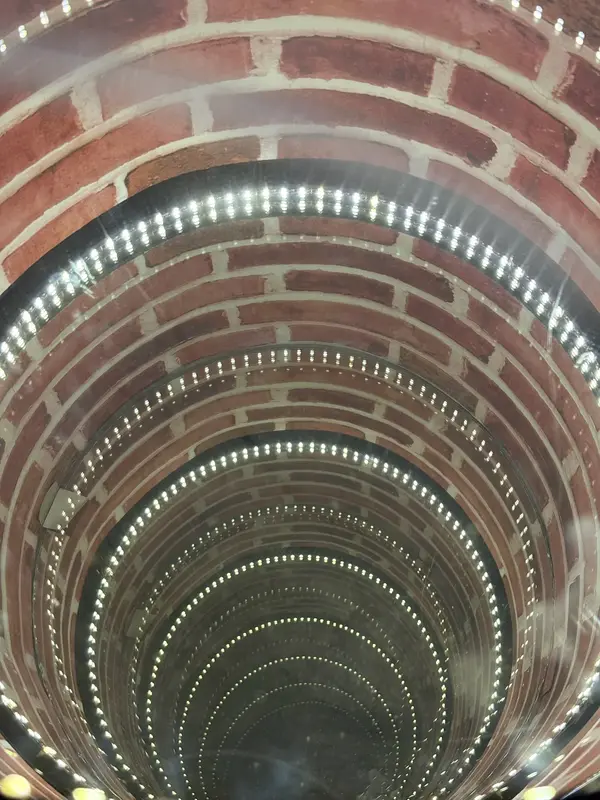
Ground Floor - The Infinity Well · 7.4 Light
Do: Two facing mirrors reflect the lights again and again: each image seems to lie farther behind the mirror, and each is dimmer.
Ask: Count the rings of light before they fade. Why is each one dimmer than the one before?
Second Floor
Watch for
- Students use heat and temperature as one word. Temperature is how hot something is; heat is energy flowing from hotter to colder, faster into the metal than into the wood.
- Students think a louder note is a higher one. Striking harder raises the amplitude (louder); a shorter bar has a higher frequency (higher).
Before the visit
Do Activity 7.10 (the angle of incidence and the angle of reflection), so students arrive with the laws of reflection to test on the mirrors.
After the visit
Make the book’s model periscope (Make a periscope), and draw the path of light through it, as through the one at the center.
Unit 8
Electricity and Magnetism
Students watch charged beads jump and cling, see electricity make a gas glow as lightning lights the air, and trace a real circuit that works only while the loop is closed.
CDC learning outcomes this visit supports
- 8.1Show by experiment that rubbing two objects together produces an electrostatic force.
- 8.2Introduce static electricity and its common effects.
- 8.3Give the causes of thunder and lightning, and the work of a lightning conductor.
- 8.4Introduce current electricity.
At the center
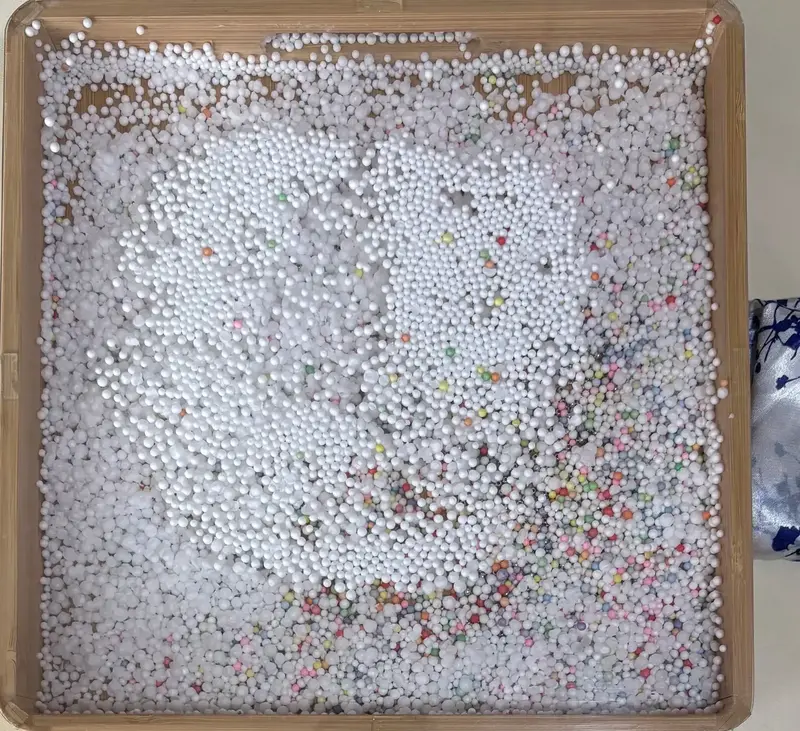
- Static Electricity · 8.1 An introduction to static electricity
Do: Watch the light foam beads jump and cling: charged things attract or push away, and even a small charge moves a light bead.
Ask: Do the beads jump away, cling, or both? What does that tell you about like and unlike charges?
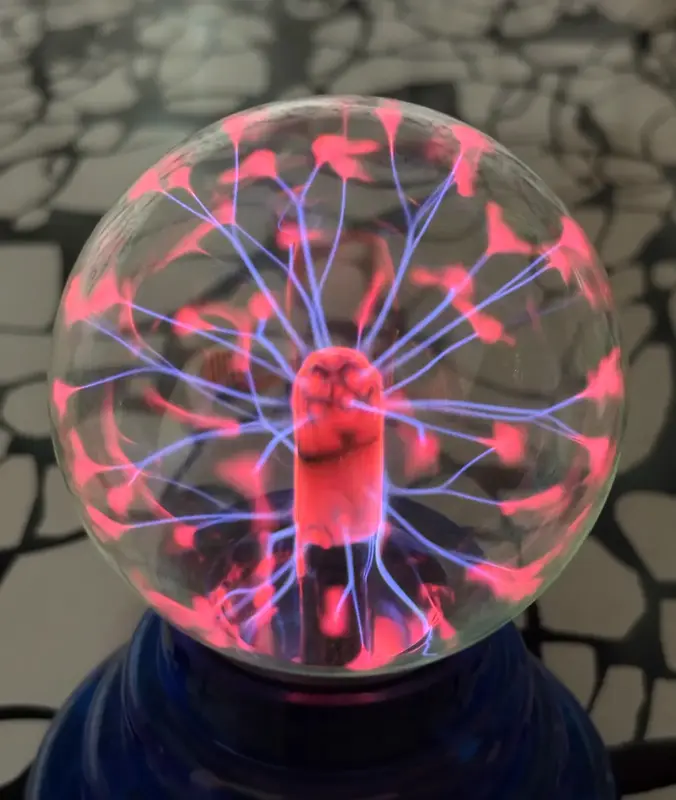
First Floor - Plasma Ball · 8.3 Introduction to lightning
Do: Glowing streaks branch out from the center: electricity passing through a gas makes it glow, as a lightning flash lights up the air.
Ask: What in a thunderstorm do the glowing streaks look like? What makes the gas glow?
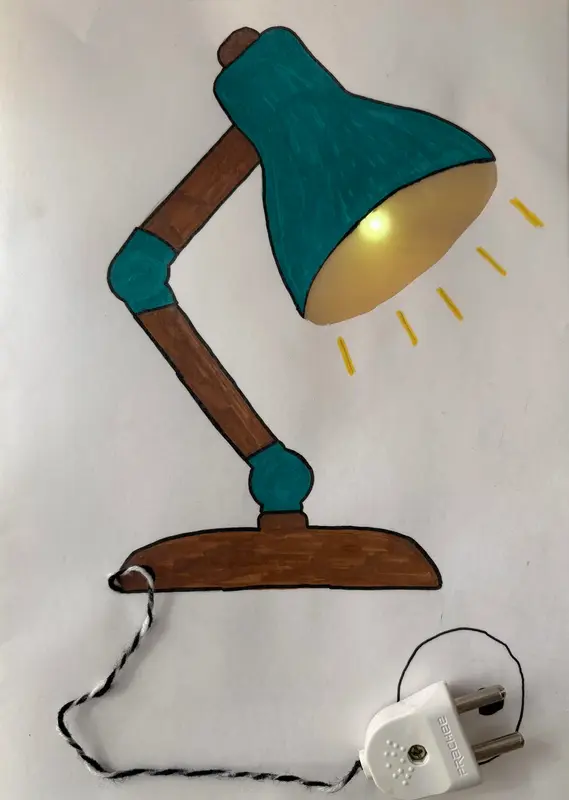
Ground Floor, under the stairs - The Fun Circuit · 8.4 Introduction to current electricity
Do: Unfold the drawing and trace the path: current flows, and the lamp lights, only while the circuit is a closed loop.
Ask: A circuit has a source, wires and a load. Which part is the load here?
First Floor
Watch for
- Students think current is used up in the bulb. The same current flows all the way round the loop; what the bulb uses is the energy the current carries.
Before the visit
Do Experiment 8.1 (balloon and wool), so students know what rubbing does before they see the beads.
After the visit
Do Activity 8.3 (make a series combination), and draw its loop beside the circuit students traced.
Unit 9
Matter
Density decides what floats and what rises, and three stops show it moving: a rock that floats, wax that rises when warmed, and glass bulbs that sink one by one. The periodic table and the salt make elements and compounds real.
CDC learning outcomes this visit supports
- 9.1Introduce density and solve simple problems on it.
- 9.2Find the relative density of a substance by comparing it with water, and on that basis tell which things sink or float in water.
- 9.3Introduce elements and atoms.
- 9.5Give the names and symbols of the elements up to atomic number 20, and the numbers of subatomic particles in their atoms.
- 9.6Introduce compounds and molecules.
- 9.7Introduce physical and chemical changes, give their features, and demonstrate them by experiment.
At the center
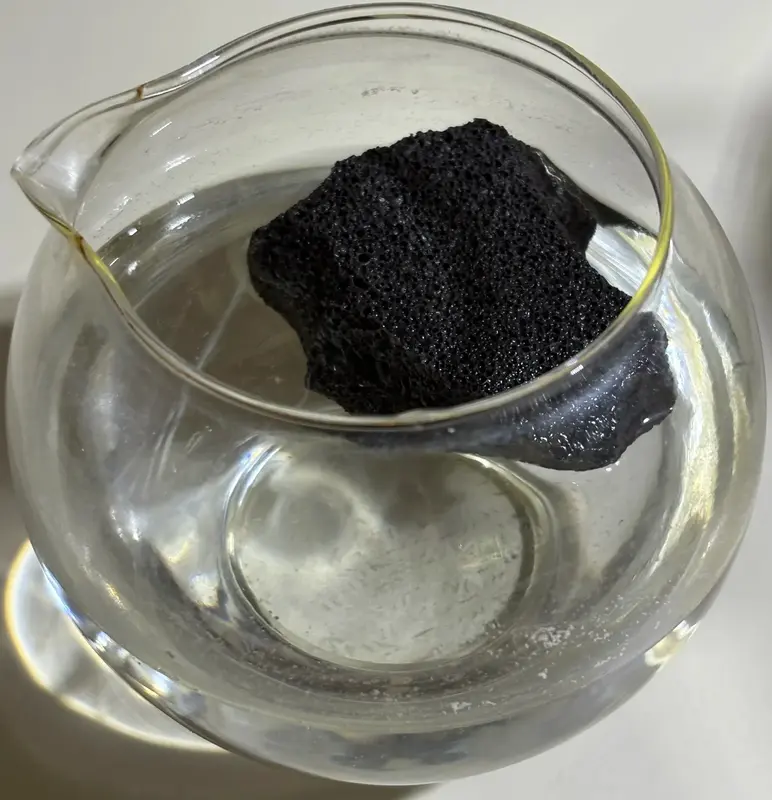
- The Rock That Floats · 9.1 Density of matter
Do: A rock that floats: its many trapped gas bubbles make it less dense than water.
Ask: Most rocks sink. Why does this one float? Look at its surface for a clue.
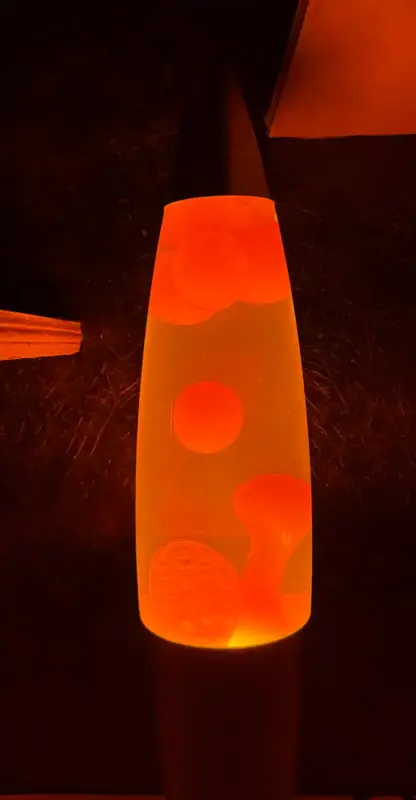
Ground Floor - Lava Lamp — Convection in Motion · 9.1 Density of matter
Do: Warmed at the bottom, the wax expands and becomes less dense than the liquid, so it rises; it cools at the top and sinks.
Ask: Watch one blob. Where does it start to rise? What happened to its density there?
Ground Floor - Galileo Thermometer · 9.1 Density of matter
Do: Each bulb floats or sinks by comparing its density with the liquid’s: as the liquid warms, it gets less dense and more bulbs sink.
Ask: Is a floating bulb more or less dense than the liquid? And a sunk one?
First Floor - The Giant Periodic Table · 9.2 Element and compound
Do: Every element has a symbol: find one that comes from an old Latin name, not the English one, like Na for sodium or K for potassium.
Ask: Find Na and K. Why don’t their symbols match their English names? What does an element’s atomic number count?
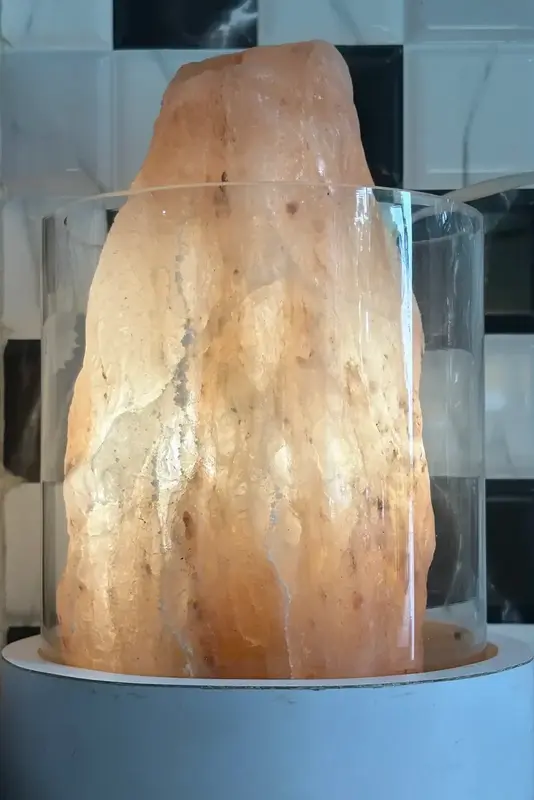
First Floor - Himalayan Pink Salt · 9.2 Element and compound
Do: Rock salt is mostly sodium chloride, a compound of sodium and chlorine, with traces of iron oxide that make it pink.
Ask: Is sodium chloride an element or a compound? Is the pink block a pure compound or a mixture?
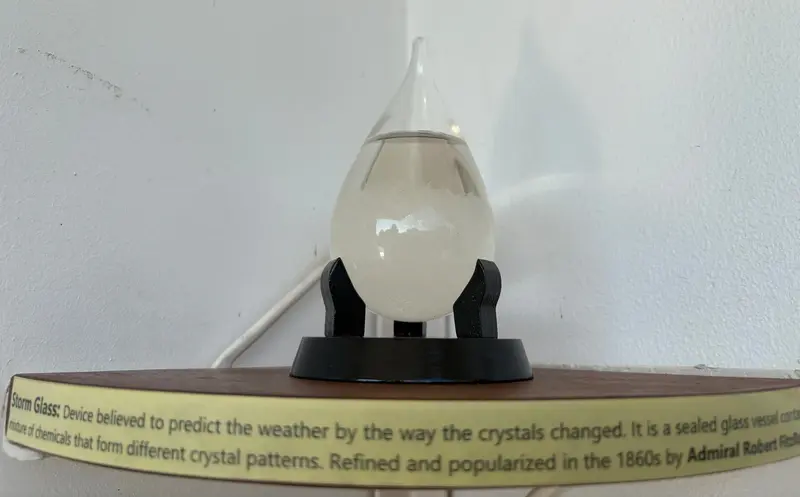
Ground Floor - The Storm Glass · 9.3 Change in matter
Do: Crystals dissolve on warm days and form again on cold ones: a physical change, because no new substance is made.
Ask: Are the crystals a new substance? Is this a physical or a chemical change?
Ground Floor
Watch for
- Students think heavy things sink and light things float. What matters is density: a big log floats and a small iron nail sinks.
- Students think dissolving or crystals forming is a chemical change. No new substance is made: the storm glass’s crystals dissolve and form again with the temperature.
Before the visit
Do Activity 9.3 (which things float?), so students arrive asking why.
After the visit
Do Activity 9.4 (two kinds of change), and add the storm glass to the list of changes like melting ice.
Unit 10
Materials Used in Daily Life
Students meet an acid growing on a tree and a salt as a block of rock, find the unit’s metals and non-metals on the giant periodic table, and feel one property of metals.
CDC learning outcomes this visit supports
- 10.1State the physical properties of acids, bases and salts.
- 10.4State the physical properties and uses of aluminium, zinc, silver, iron, copper and gold.
- 10.5State the physical properties and uses of sulphur and iodine.
At the center
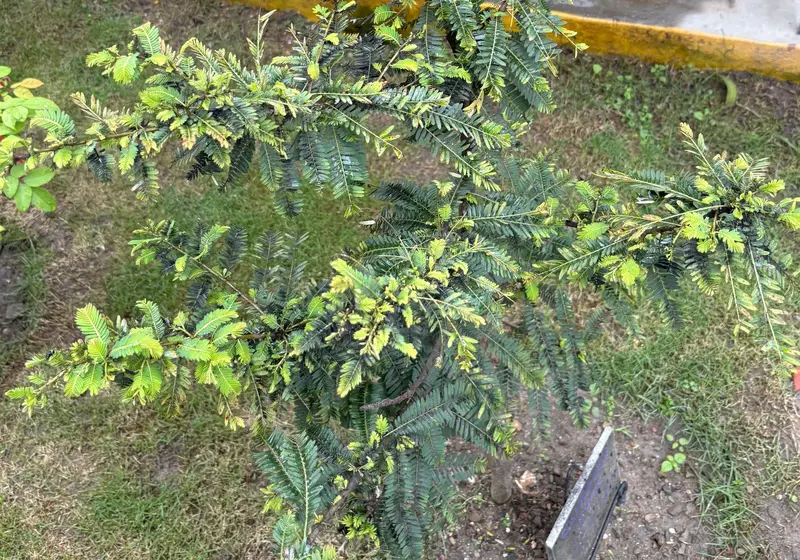
- Amla (Indian Gooseberry) · 10.1 Acid, base and salt
Do: Amla’s sour fruits contain ascorbic acid (vitamin C), an organic acid made by the plant; look for them on its twigs when it fruits.
Ask: Amla tastes sour. Which acid in it makes it sour?
- Himalayan Pink Salt · 10.1 Acid, base and salt
Do: Common salt is sodium chloride, and this pink rock salt is mostly the same salt; the color comes from traces of iron oxide.
Ask: Common salt tastes salty. Which salt is it, and which two elements is it made of?
Ground Floor - The Giant Periodic Table · 10.2 Metals and non-metals
Do: Find the cubes for aluminium, zinc, iron, gold, copper and silver, then sulphur and iodine: where do the metals and non-metals sit?
Ask: Find aluminium, zinc, iron, copper, silver and gold, then sulphur and iodine. Where do the metals sit, and where the non-metals?
First Floor - Which Feels Cooler? · 10.2 Metals and non-metals
Do: The metal feels colder than the wood because metals are good conductors of heat: they draw heat from your hand fast.
Ask: Metals conduct heat well. Which of the book’s metals are used for cooking pots, and why are pan handles made of wood?
First Floor
Watch for
- Students think every acid is dangerous. Many are in our food, like the ascorbic acid in amla; but never taste anything from a laboratory.
Before the visit
Do Activity 10.1 (sour, bitter or salty?), so students arrive with their own lists of tastes.
After the visit
Do Activity 10.8 (metals at home and school), using the properties students met at the center.
Unit 11
The Earth and Space
A chart follows one rock as it changes into another, a block of salt shows a rock left by a sea, and shadows students make themselves explain the two parts of an eclipse.
CDC learning outcomes this visit supports
- 11.1Introduce rocks and describe their types.
- 11.4Give a general description of the Moon: its shape, size, distance, and how it goes round the Earth.
- 11.6Introduce eclipses and demonstrate how they happen.
At the center
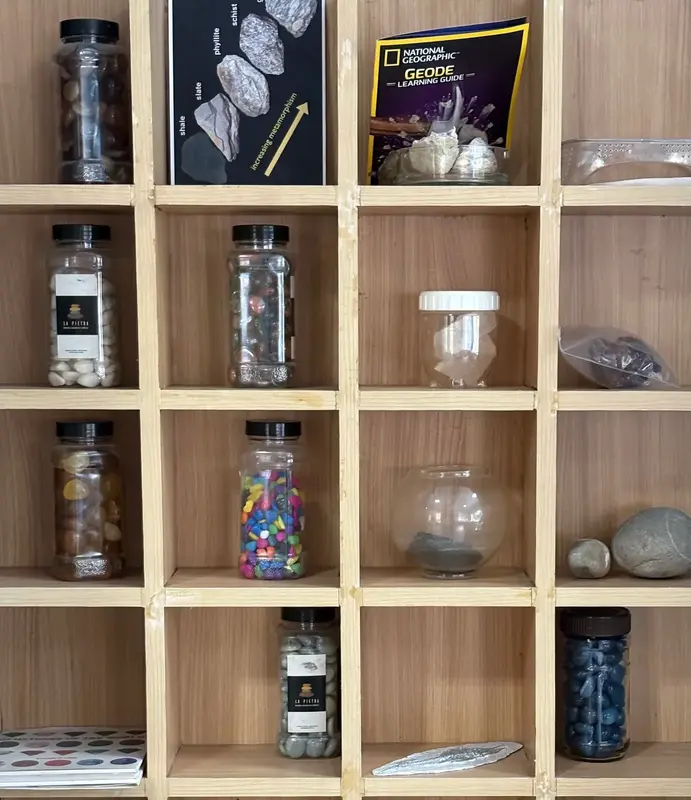
- Stone & Mineral Collection · 11.1 Rock
Do: Follow the chart from shale to slate, phyllite and schist: heat and pressure deep underground slowly turn one rock into a metamorphic rock.
Ask: Follow the chart from shale to schist. Did the rock melt on the way? Which family of rocks do the later steps belong to?
Ground Floor - Himalayan Pink Salt · 11.1 Rock
Do: Rock salt is a sedimentary rock: salt left behind as an ancient sea dried up, then buried and pressed into rock.
Ask: How did this rock form? Which family of rocks is it?
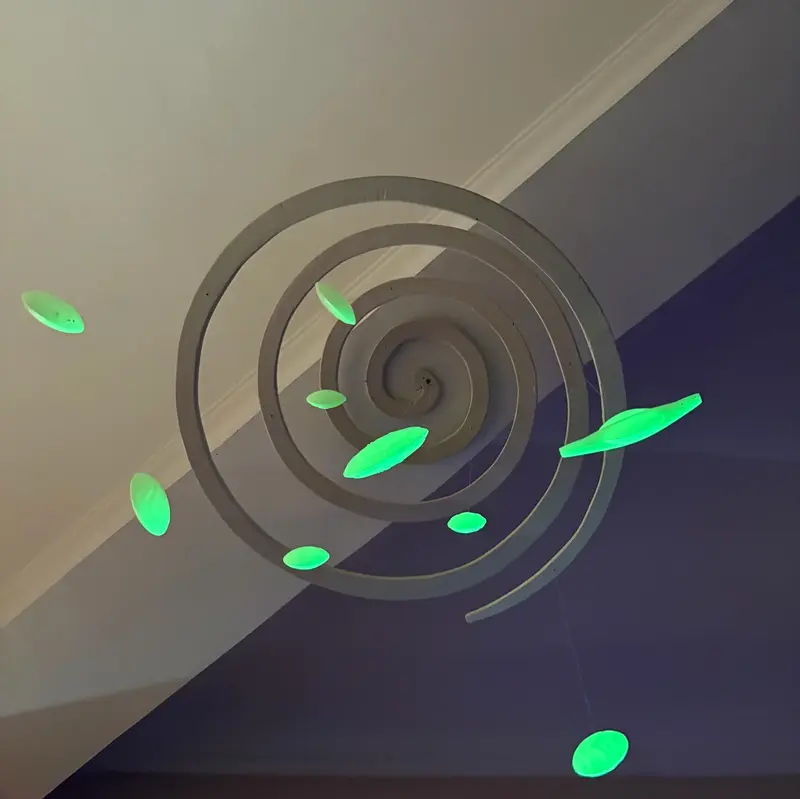
Ground Floor - Glow-in-the-Dark Planets · 11.2 Planets
Do: These model planets keep glowing after the lights go off, giving back light their paint stored earlier; real planets are non-luminous: they shine only by reflecting sunlight.
Ask: Is Mars luminous? How does its light reach your eyes at night?
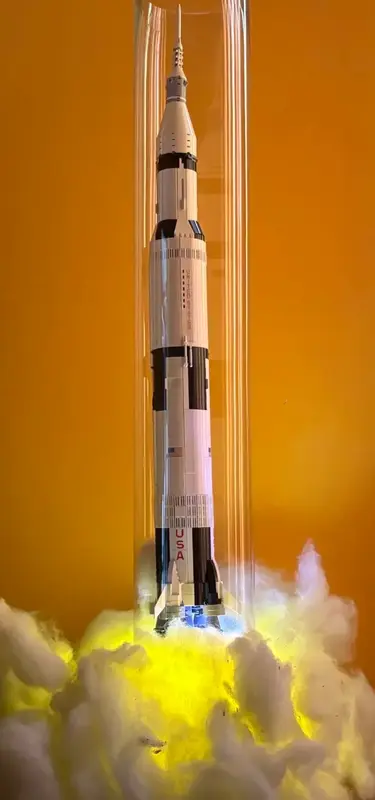
Second Floor - Saturn V - LEGO Model · 11.3 Moon
Do: The rocket that carried people to the Moon, the Earth’s only natural satellite, about 384,400 km away.
Ask: How far away is the Moon? Why was most of the rocket’s weight fuel?
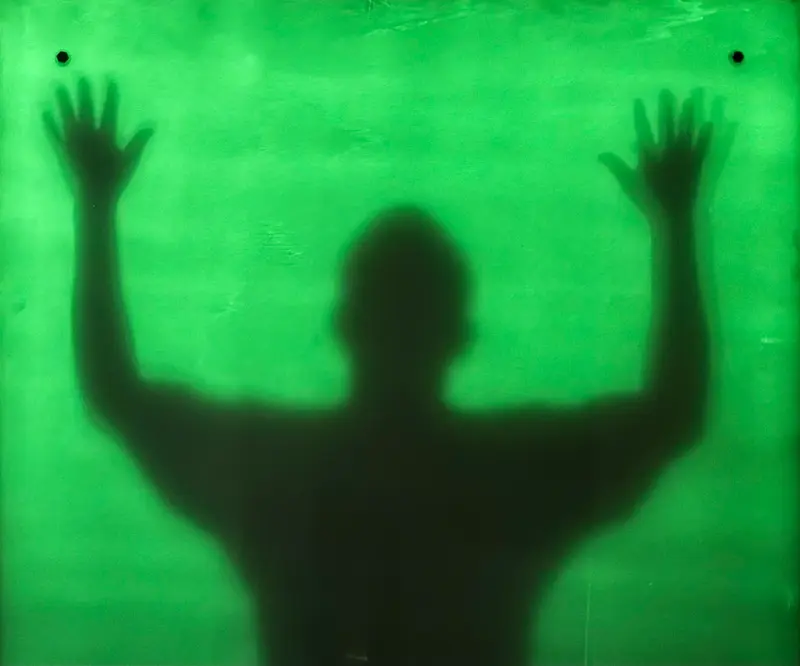
First Floor - The Shadow Catcher · 11.4 Eclipse
Do: Your body is opaque: where it blocked the flash, no light reached the wall, so your shadow stays behind. An eclipse is a shadow too.
Ask: Why does your shadow have your outline? In a solar eclipse, whose shadow falls on what?
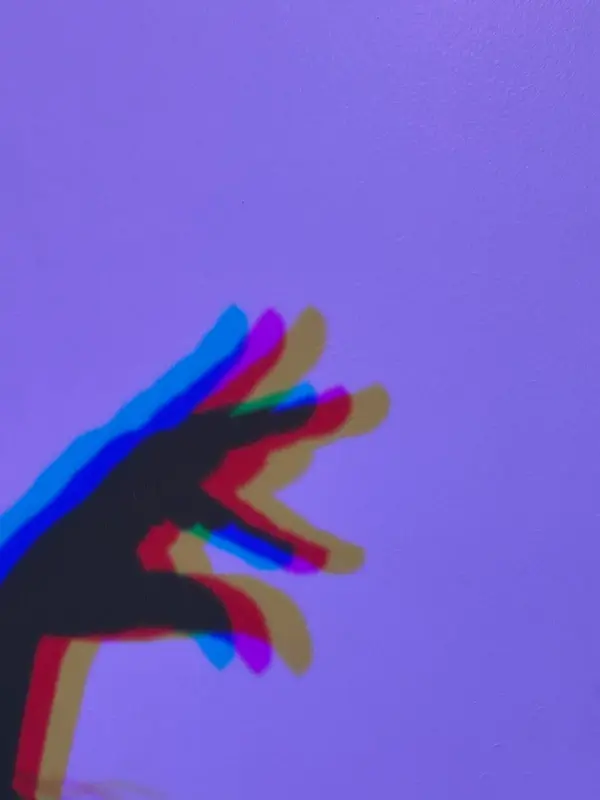
Second Floor - Colored Shadows · 11.4 Eclipse
Do: Where your hand blocks only some lamps, light from the others still gets in, as in a penumbra; where it blocks them all, the shadow is dark, like the umbra.
Ask: Where is the shadow darkest, and where paler? Which part is like the umbra, and which like the penumbra?
Ground Floor
Watch for
- Students think rocks never change. Heat and pressure turn shale into slate and then schist without melting, and rocks go round and round in the rock cycle.
Before the visit
Do Activity 11.2 (sort your rocks), so students can compare their rocks with the collection.
After the visit
Do Activity 11.7 (an eclipse on the table), and point out the umbra and the penumbra as students saw them in the colored shadows.
Math on the same visit
Where an exhibit shows this year’s mathematics, from Grade 7 Math, Explained. These stops are in the rounds above, so a Math teacher can come along or set the questions.
Math · Unit 8
Unitary Method
On the plank students feel an indirect variation with their own weight: the heavier the person, the shorter the distance from the pivot, and the numbers painted on it should follow the rule.
CDC learning outcomes this visit supports
- 2.5Solve problems with two variables using direct and indirect variation.
At the center
- Walk Your Weight · 8.2 Indirect variation
Do: Read the marks on the plank: 15 is far from the pivot and 90 close to it. Weight × distance from the pivot stays the same, an indirect variation.
Ask: The 90 mark is near the pivot and the 15 far out. If mass × distance stays the same, how many times farther out should the 15 be? Check in hand spans.
Grounds
Watch for
- Students think any pair where one goes up as the other goes down is an indirect variation. In an indirect variation the product stays the same: double one, and the other halves.
Before the visit
Do Activity 2 in 8.2 (workers and days): what happens to the days as the workers increase, and what stays the same?
After the visit
Do the Project work after Exercise 8: five cases of direct and indirect variation from daily life, starting with the plank.
Read Math, Unit 8 online → ·the unit’s classroom worksheet (PDF)
Math · Unit 9
Perimeter, Area and Volume
Students hold a cube whose edge they know, work out its surface area and volume, and then use its volume to predict what it weighs, which the scale beside it checks.
CDC learning outcomes this visit supports
- 3.2Find the surface area of a cuboid and a cube.
- 3.2Solve problems on the surface area and volume of a cuboid and a cube.
At the center
- Woods of Nepal · 9.2 Cuboid and cube
Do: Lift a wood block: a cube with 10 cm edges. Each of its 6 faces is 10 × 10 = 100 cm², so its total surface area is 600 cm².
Ask: Put two blocks face to face: what is their total surface area now? One block is 0.001 m³: predict its mass from its label’s kg/m³, then weigh it.
Ground Floor
Watch for
- Students mix up surface area and volume. The 600 cm² counts the squares that cover the outside, the 1,000 cm³ the cubes that fill it: different units that can’t be compared.
Before the visit
Do Activity 2 in 9.2 (a die): students measure its edge and find its total surface area.
After the visit
Do Exercise 9.3, Q6 (a cubical box’s volume is given: find its total surface area), the block worked backwards.
Read Math, Unit 9 online → ·the unit’s classroom worksheet (PDF)
Math · Unit 20
Bearing and Scale Drawing
A whole country fits on one small map because every length shrinks by the same number; the scale bar lets students turn centimeters on the map back into kilometers of real ground.
CDC learning outcomes this visit supports
- 5.8Introduce bearing and scale drawing.
At the center
- 3D Map of Nepal · 20.2 Scale drawing
Do: Use the scale bar on the small flat map in its corner to find Nepal’s length in kilometers. The raised map stretches its heights far more than its distances.
Ask: Mark the scale bar of the small corner map on a strip of paper, then step it across Nepal from east to west: how many km long is Nepal?
Second Floor
Watch for
- Students multiply by the scale but keep the map’s unit. If 1 cm stands for 20 km, then 4 cm on the map is 80 km on the ground, not 80 cm.
Before the visit
Do Activity 3 in 20.2 (the volleyball court at 1 : 200), so students have used a scale both ways.
After the visit
Do Exercise 20, Q4 (real distances from a map’s scale), then work out the distance from the school to the center on a map of the district.
Read Math, Unit 20 online → ·the unit’s classroom worksheet (PDF)
Planning the day
- Visits are by appointment, so book well in advance on the Book a Visit page. A visit takes about two hours; set aside three in all. A large class can split into four groups that take the rounds in turn.
- A sunny morning is best: the solar house and the garden plants need the sun.
- Ask each student to bring a notebook and a pencil to record what they test and see. Before the visit, give each group two or three of the questions in this guide to answer.
- You’re welcome to come beforehand, free, to see the exhibits and plan the visit; teachers who come with the group are free too.