
Pull a wool sweater over your head on a dry winter night, in the dark. Crackle, crackle, and tiny blue sparks! Rub a plastic comb in your dry hair and it picks up bits of paper. In a monsoon storm, a flash lights the whole valley, and a few seconds later the thunder shakes the windows. All of these are electricity, the same thing that lights your bulb and charges your phone.
In this unit you will find out where electric charge comes from, why rubbing things makes sparks, how a thundercloud makes lightning and how a simple metal rod protects a building from it. Then you will build circuits with cells, and see why a torch puts its cells end to end.
Electricity and magnets around us
We use electricity all day: to light bulbs, run fans and refrigerators, charge phones, and work computers, projectors and televisions. In Nepal most of it is made in hydropower stations, where flowing water turns a machine called a generator. Inside the generator, magnets (often electromagnets, magnets made with electricity) spin past coils of wire, and that makes the electric current. Electricity and magnetism always go together.
A magnet is a substance that attracts iron things, like iron dust and pins, towards it. An electromagnet is made by winding insulated wire round a piece of iron and passing an electric current through the wire: while the current flows, the iron becomes a magnet.
Electricity that flows along wires from a source, such as a power station or a cell, to the place where it is used is called current electricity. Wires carry it from power stations to houses and factories all over the country.
But there is another kind. You may have seen lightning, or heard the crackle and seen the sparks when you take off a wool or nylon sweater in the dark. This is electricity too, but it doesn’t flow along a wire; it builds up on an object and stays there until it jumps away in a spark. It is called static electricity (static means “not moving”).
8.1 An introduction to static electricity
The same thing happens when you take off clothes made of polyester, nylon, acrylic or wool: the cloth rubs against your body and hair, charge builds up, and it jumps across in tiny sparks that you can see in the dark and hear crackle. To understand why, we need to look inside matter.
Inside an atom
Everything is made of tiny particles called atoms (and molecules, which are groups of atoms joined together). An atom is far too small to see, but scientists know what is inside it:
- In the middle is the nucleus. It holds protons, which have a positive (+) charge, and neutrons, which have no charge.
- Round the nucleus move electrons, which have a negative (−) charge.
An ordinary atom has the same number of protons and electrons, so the positive and negative charges cancel. It is neutral. Most things around you, made of neutral atoms, have no charge.
The protons are held tightly in the nucleus and never move from one object to another when you rub them. But some electrons, on the outside of the atoms, can be rubbed off one material and onto another.
Rubbing moves electrons
When two different materials are rubbed together, electrons move from one to the other:
- The material that gains electrons has more electrons than protons. It becomes negatively charged (−).
- The material that loses electrons has fewer electrons than protons. It becomes positively charged (+).
When a balloon is rubbed on wool, electrons move from the wool to the balloon: the balloon becomes negative and the wool positive. When you comb your hair, electrons move from your hair to the comb: the comb becomes negative, your hair positive.
This charge is made in insulators, materials that don’t let electricity flow through them easily: plastic, rubber, wool, nylon, polyester, acrylic, glass, dry hair. Because the charge can’t flow away through an insulator, it stays where it was made. Electricity produced in insulators by rubbing (friction), when they gain or lose electrons, and which stays on them, is called static electricity.
A plastic ruler rubbed with a dry cloth becomes negatively charged. What happened?
Pick an answer to see why.
Why the comb picks up paper
A piece of paper has no charge to begin with. So why does it jump to a charged comb?
When the negatively charged comb comes near, its negative charge pushes the electrons in the paper a tiny bit away (like charges push each other away). The side of the paper nearest the comb is left slightly positive, and the far side slightly negative. The near, positive side is attracted to the negative comb more strongly than the far side is pushed away, because it is closer. So the paper is pulled up to the comb.
Charged objects push and pull each other:
- Opposite charges attract (+ and − pull together).
- Like charges repel (+ and +, or − and −, push apart).
The force of attraction or repulsion between charged objects is called the electrostatic force. Rub two balloons on wool and hang them side by side on threads: both have the same (negative) charge, and they swing apart.
Two balloons are both rubbed on the same wool sweater and hung close together on threads. What happens?
Pick an answer to see why.
8.2 Effects of static electricity
Static electricity can be a nuisance, or even dangerous. Its harmful effects in daily life include:
- Lightning and thunder: a giant spark of static electricity (section 8.3).
- Fires in fuel tankers: petrol sloshing and flowing through pipes builds up static charge. A spark near petrol vapor can start a fire.
- Damage to computer chips: a spark of static from your finger, too small to feel, can destroy the tiny parts of a computer chip. Repair workers wear a strap on the wrist that leads the charge safely away.
- Dust and hair sticking: charged TV and computer screens and phone screens attract dust; clothes attract fluff and hair.
But static electricity is also useful:
- Photocopiers and laser printers: a drum inside is charged in the pattern of the page, and the powdered ink (toner) sticks only where it is charged. The toner is then pressed onto the paper and melted in place.
- Paint sprayers: the paint drops are given a charge, and the object being painted (a car body, a bicycle frame) the opposite charge. The paint is pulled onto it evenly, even round the back, and less is wasted.
- Air filters: in some air cleaners, and in the chimneys of factories, smoke and dust are charged and then caught on plates of the opposite charge, so cleaner air comes out.
- Dusting equipment: some dusters are made of materials that become charged when wiped, so they pull dust in.
Which of these is a use of static electricity?
Pick an answer to see why.
8.3 Introduction to lightning
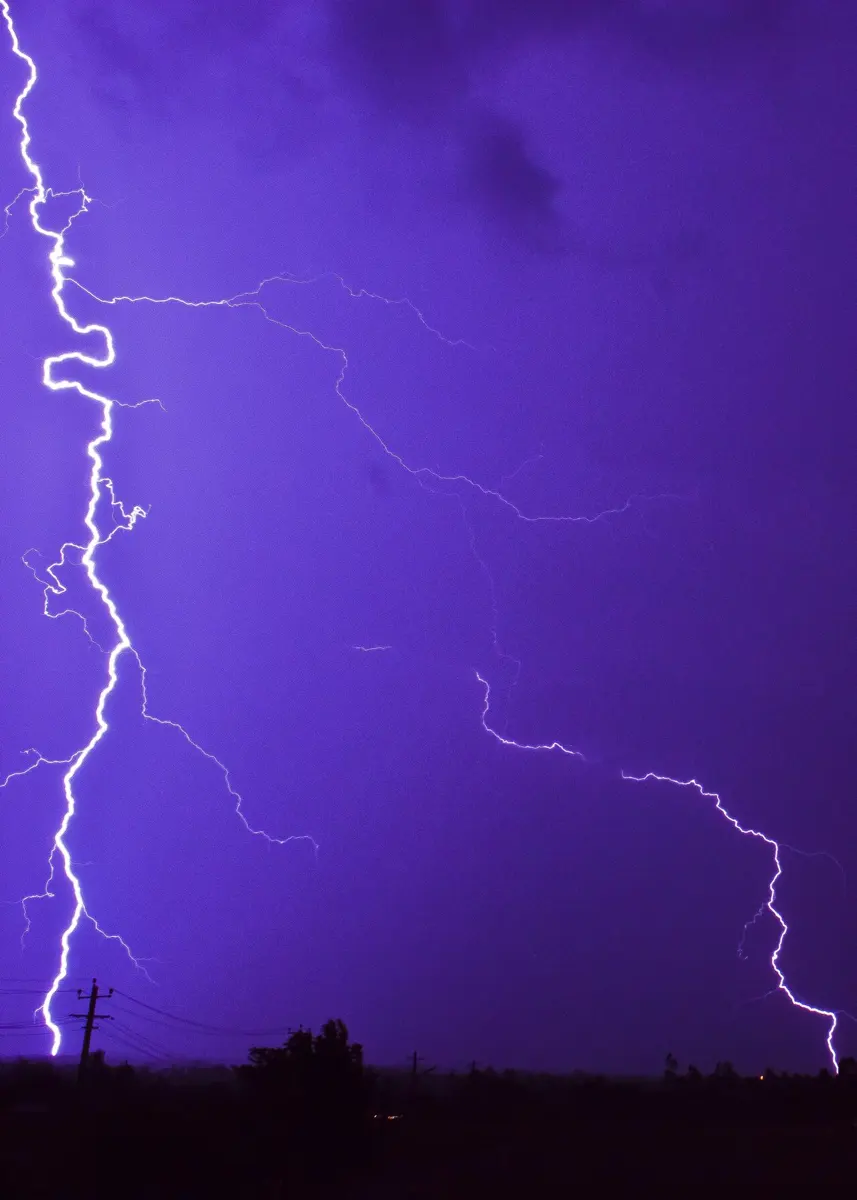
How a thundercloud becomes charged
On a hot, humid day, warm, wet air rises fast. As it rises it cools, and its water vapor turns into tiny water droplets, making a cloud. In a tall storm cloud, the air rises so high (often over 10 km) that the drops freeze into ice crystals and soft lumps of ice called graupel (soft hail). Strong winds called updrafts carry the small ice crystals up, while the heavier graupel falls down through them.
The ice crystals and the graupel crash into each other millions of times, and each collision moves a little charge, rather like rubbing a balloon on wool. The light ice crystals become positive and are carried to the top of the cloud. The heavier graupel becomes negative and gathers in the lower part of the cloud. So a thundercloud usually has a positive top and a negative bottom.
When the charge becomes huge, the air can no longer hold it apart, and electrons rush through the air in a giant spark. This sudden flow of charge through the air is called an electric discharge. It may jump:
- inside one cloud, from its negative part to its positive part, or between two clouds (most lightning is like this);
- from the cloud to the ground. The negative base of the cloud pushes electrons in the ground away, so the ground under the cloud becomes positive. The spark usually strikes the highest point nearby: a tree, a tower, a tall building or a person standing in an open field.
A flash of lightning is a giant electric discharge from a cloud. It produces a huge amount of light, heat and sound. The air in its path is heated to about 30,000 °C, five times hotter than the surface of the Sun, in a few millionths of a second. The hot air expands so suddenly that it makes a mighty bang: thunder. Lightning can set trees on fire, split them, damage buildings, and kill people and animals.
Lightning rod
How can a building be protected? With a lightning rod (also called a lightning conductor). A pointed rod of copper is fixed on the highest point of the building. A thick copper strip or wire runs from it down the outside wall and into the ground, where it is joined to a copper plate or rod buried in a pit. This joining to the ground is called earthing.
If lightning strikes, it hits the rod, the highest point, and the huge current runs down the copper strip into the ground, instead of through the building. Copper is used because it conducts electricity very well. The pit is filled with charcoal and salt, which hold water and keep the soil round the buried plate moist, so that the charge can spread easily into the ground.
Many new buildings in Nepal, such as schools built to resist earthquakes, apartments, shopping centers and cinema halls, are fitted with lightning rods.
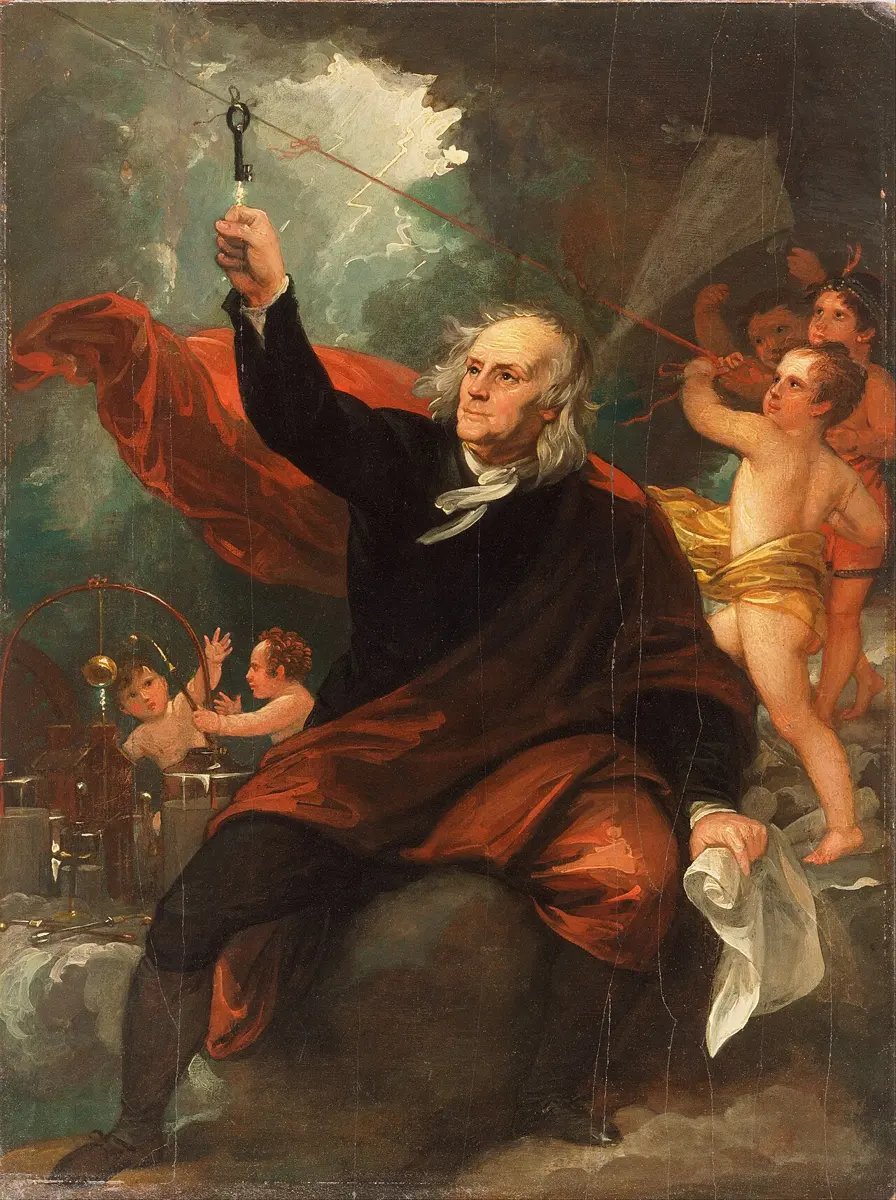
Why is the lightning rod’s strip made of copper and joined to a pit in the ground?
Pick an answer to see why.
8.4 Introduction to current electricity
Where does the electricity in your home and school come from? Is it the same kind as the electricity in a torch?
The electricity in your home comes along wires from power stations, mostly hydropower stations. A torch, a clock or a TV remote gets its electricity from cells. Both are current electricity: electricity that flows.
For electricity to flow, four things are needed:
- a source of electricity, such as a cell, a battery or the mains supply;
- conducting wires, which carry the electricity (copper wire covered with plastic);
- a switch, to start and stop the flow;
- a load, the device that uses the electricity, such as a bulb, a fan or a radio.
When these are joined so that there is a complete, unbroken path from one end of the source, through the load, and back to the other end, the electricity flows. The complete path along which an electric current flows is called an electric circuit. If the path is broken anywhere (the switch is off, or a wire comes loose), the flow stops.
In a metal wire, the flow of electricity is a flow of electrons. The continuous flow of electrons through a conductor, from one end to the other, is called current electricity. The electrons leave the negative terminal of the cell, go round the circuit, and come back into the positive terminal.
Electrical appliances change electrical energy into other forms of energy: a bulb into light (and heat), a heater or an iron into heat, a radio or a speaker into sound, a fan or a water pump into motion (using the magnetic effect of the current in its motor).
Combination of cells
A cell is a source of electricity. It turns the energy stored in chemicals into electrical energy. Every cell has two ends, or terminals: a positive terminal (+), usually the end with the small metal cap, and a negative terminal (−), the flat end. Cells come in different kinds, shapes and sizes: the simple cell made in laboratories, the dry cells in torches and remotes, the lead–acid cell in car and inverter batteries, and the flat button cells in watches.
A group of cells joined together is called a battery. (In daily life we call a single dry cell a “battery” too.) An ordinary dry cell gives 1.5 volts (V); the volt tells how hard the cell pushes the electricity round the circuit.
Using two or more cells together is called a combination of cells. There are two ways to join them: series combination and parallel combination.
Series combination
In a series combination, the cells are joined end to end, in a line: the negative terminal of the first cell is joined to the positive terminal of the second, and the negative terminal of the second to the positive terminal of the third, and so on. The free + of one end and the free − of the other end are joined to the circuit.
Uses of series combination:
- to get a higher voltage, and so a brighter bulb or a stronger current, by adding more cells;
- in torches, radios, remotes, clocks, toys and many other appliances.
But the brighter bulb uses up the cells faster.
Parallel combination
In a parallel combination, the positive terminals of all the cells are joined together at one point, and all the negative terminals together at another point. These two points are joined to the circuit.
Uses of parallel combination:
- to make the cells last longer;
- to supply a steady, small current for a long time.
A torch needs 3 V. You have two 1.5 V cells. How should you join them?
Pick an answer to see why.
Exercise
1. Choose the best option
a. What type of electricity is produced by friction (rubbing)?
Pick an answer to see why.
b. Which one is an electric load?
Pick an answer to see why.
c. Which one is an effect of static electricity?
Pick an answer to see why.
d. What happens to the brightness of a bulb when the number of cells in series is increased?
Pick an answer to see why.
e. The device in Figure 8.7 protects a house from which of these?
Pick an answer to see why.
f. Read the statement and the two reasons, then choose the correct option.
Statement: The electricity which is produced by friction, and does not flow, is called static electricity.
Reason 1: In static electricity, the substance which loses electrons becomes negatively charged.
Reason 2: In static electricity, the substance which gains protons becomes positively charged.
Pick an answer to see why.
g. Which of these statements is true?
Pick an answer to see why.
h. Which of these statements is true?
Pick an answer to see why.
i. Which of these statements is not true?
Pick an answer to see why.
j. Which of these statements is true?
Pick an answer to see why.
2. Differentiate between
Current electricity and static electricity.
Answer
| Current electricity | Static electricity |
|---|---|
| Electrons flow continuously through a conductor. | Charge builds up on an object and stays there. |
| It is produced by cells, batteries, generators and solar panels. | It is produced by rubbing (friction). |
| It flows through conductors such as metal wires. | It is made on insulators such as plastic, wool and nylon. |
| It flows all the time the circuit is complete. | It doesn’t flow, until it jumps away in a spark. |
| Example: a torch, the electricity in a house. | Example: a rubbed comb, lightning. |
Series combination and parallel combination of cells.
Answer
| Series combination | Parallel combination |
|---|---|
| The + of one cell is joined to the − of the next, in a line. | All the + terminals are joined together, and all the − terminals together. |
| The total voltage is the sum of the cells’ voltages. | The total voltage is the same as one cell’s. |
| A bulb gets brighter as cells are added. | A bulb’s brightness stays the same as cells are added. |
| The cells run down sooner. | The cells last longer. |
| Used in torches, remotes, radios. | Used where a small current is needed for a long time. |
3. Give reasons
It is dangerous to stay under a tall tree or beside a tall building during lightning.
Answer
Lightning usually strikes the highest point around, such as a tall tree or building. The huge current runs down it into the ground, and can jump sideways into a person standing beside it, or spread through the ground under it. So a person sheltering there may be struck or badly hurt.
Pieces of paper are attracted to a comb after it has been used to comb dry hair.
Answer
Combing rubs the comb against the hair, and electrons move from the hair to the comb, so the comb becomes negatively charged. When it is brought near the neutral paper, its negative charge pushes the electrons in the paper slightly away, leaving the near side of the paper positive. Opposite charges attract, so the paper is pulled up to the comb.
A crackling sound is heard when woolen clothes are taken off in the dark.
Answer
As the woolen clothes are pulled off, they rub against the body and hair, and electrons move from one to the other. Static charge builds up on the clothes. When enough has built up, it jumps across the air in tiny sparks, which can be seen as flashes in the dark; each spark heats the air suddenly, making the crackling sound.
4. Answer the following questions
What is electrostatic force? How is it produced? Describe.
Answer
The force of attraction or repulsion between electrically charged objects is called the electrostatic force. Opposite charges attract each other, and like charges repel.
It is produced when objects become charged. For example, when a comb is rubbed in dry hair, electrons move from the hair to the comb, so the comb becomes negative. Brought near small pieces of paper, it makes their near side positive, and the electrostatic force of attraction pulls the paper up to the comb.
What is static electricity? Write any three effects of it.
Answer
The electricity produced on insulators by rubbing (friction), when they gain or lose electrons, and which stays on them without flowing, is called static electricity.
Effects (any three):
- Lightning and thunder.
- Fires in fuel tankers and at fuel pumps, from sparks near fuel vapor.
- Damage to computer chips.
- Dust sticking to screens, and hair and fluff to clothes.
What is lightning? How is it produced? Explain.
Answer
Lightning is a giant electric discharge (spark) between a charged cloud and another cloud, or between a cloud and the ground, with a huge flash of light, heat and sound.
How it is produced: In a tall storm cloud, strong rising winds carry water drops up until they freeze. Small ice crystals and heavier soft hail crash into each other millions of times, and charge moves between them, as in rubbing. The light ice crystals become positive and are carried to the top of the cloud; the heavier hail becomes negative and gathers in the lower part. When the charge becomes very large, electrons rush through the air between the charged parts, or from the cloud to the ground, which becomes positive below the cloud. This sudden discharge is lightning; the air heated by it expands with a bang, the thunder.
How can we protect a house or a building from lightning?
Answer
By fitting a lightning rod (lightning conductor) and earthing it. A pointed copper rod is fixed at the highest point of the building. A thick copper strip or wire joins it, down the outside wall, to a copper plate or rod buried in a pit in the ground. The pit is filled with charcoal and salt, which keep the soil moist. If lightning strikes, the current passes from the rod, down the copper strip, into the ground, and not through the building. (Also: unplug appliances and stay away from windows and taps during a storm.)
What is a combination of cells? Why is it done?
Answer
Using two or more cells together in a circuit is called a combination of cells.
It is done to get the voltage or the length of use that an appliance needs: cells are joined in series to get a higher voltage (for example, two 1.5 V cells give 3 V for a torch), and in parallel to make them last longer.
Which combination of cells is used to make a bulb brighter? Describe with a diagram.
Answer
The series combination. The cells are joined in a line, the + terminal of one to the − terminal of the next, as in the left half of Figure 8.11. The voltages of the cells add up (1.5 V + 1.5 V + 1.5 V = 4.5 V), so a bigger current flows through the bulb and it glows more brightly. The more cells in series, the brighter the bulb (up to what the bulb can take).
Draw diagrams to show a series combination and a parallel combination of two cells.
Answer
A torch needs 3 V. How will you connect two cells of 1.5 V each? What are the advantages of such a combination?
Answer
Join them in series: the + terminal of one cell to the − terminal of the other (in a torch, they sit end to end in the tube). The voltages add up: 1.5 V + 1.5 V = 3 V.
Advantages: it gives the higher voltage the torch needs, so the bulb glows brightly; and the cells fit neatly end to end in a narrow tube.
A radio needs 3 V. How will you run it with two cells? Draw the diagram of the combination.
Answer
Each cell gives 1.5 V, so they must be joined in series, + to −, to give 1.5 V + 1.5 V = 3 V. The diagram is the series circuit on the left of the answer to question g, with the radio in place of the bulb.
Study Figure 8.13 and answer the questions.
- i.What type of combination of cells does it have?
- ii.What happens to the brightness of the bulb when the number of cells is increased? Give a reason.
- iii.Write the uses of such a combination.
Answer
- i.A series combination: the + terminal of each cell is joined to the − terminal of the next.
- ii.The bulb gets brighter, because in series the voltages of the cells add up, so a bigger current flows through the bulb.
- iii.Series combinations are used in torches, radios, TV remotes, clocks and toys, wherever a higher voltage is needed than one cell gives.
Look at the picture and answer the questions.
- i.What is shown in the picture?
- ii.What is it used for?
- iii.How does lightning strike when a negatively charged cloud comes just above a house? Explain with a diagram.
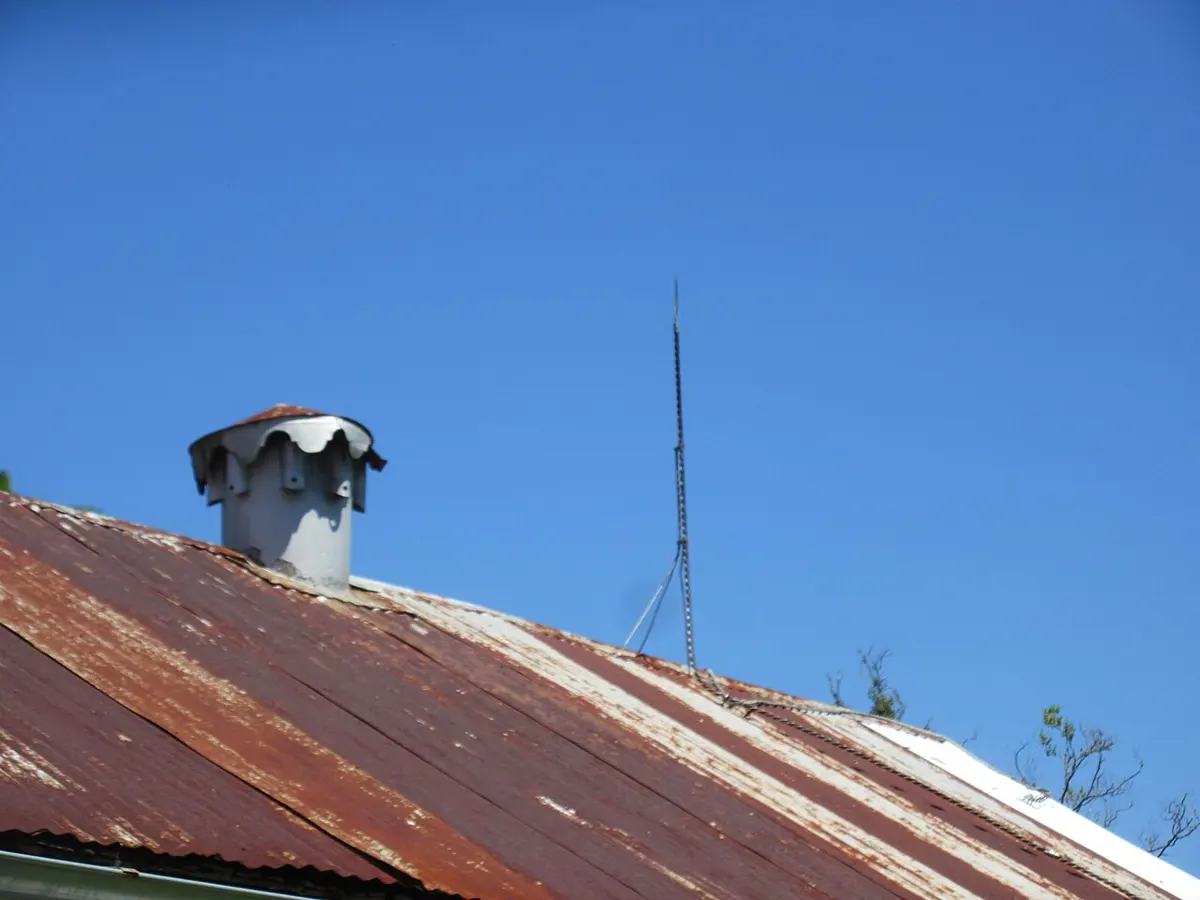
Answer
- i.A lightning rod (lightning conductor).
- ii.It protects the building from lightning: a strike hits the rod, and its current is led down a copper strip into the ground instead of through the building.
- iii.When a negatively charged cloud comes over the house, its negative charge pushes electrons in the ground and the house away, so the top of the house (and the pointed rod) becomes positively charged. When the charges become large enough, electrons rush through the air from the cloud to the highest point, the rod, in a giant spark: lightning. The current then runs down the copper strip into the earth. See Figure 8.6 and Figure 8.7.
Practice every question in the book, and keep track of the ones you miss →