
Roots That Do More
Most roots hold a plant down and drink. These also climb walls, hold up branches or store food.
Most roots grow under the soil, where they fix the plant firmly and absorb water and mineral salts. Some roots look very different because they do a special job: a root changed in this way is a modified root. A banyan’s prop roots hold up its branches, and a carrot’s storage root is swollen with food. The climbers here grow roots from their stems, above the ground, to grip a wall or a tree as they climb toward the light.
See it in our garden
- Betel Leaf (Paan): look along the stem on the wall for the short roots at each node that grip it.
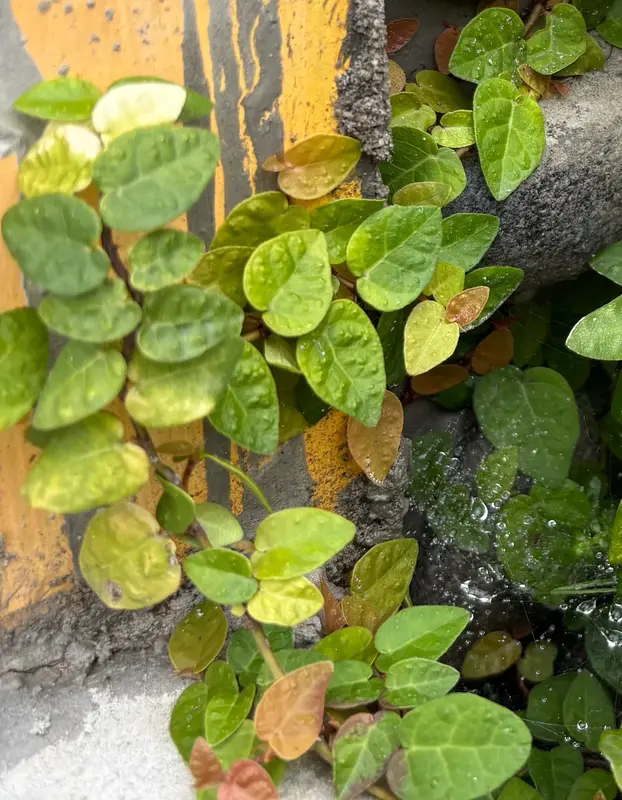
- Creeping Fig: it lies flat against the wall, held by tiny roots all along its stems.
- Common Ivy: rows of tiny clinging roots grow from the stem, not from another root.
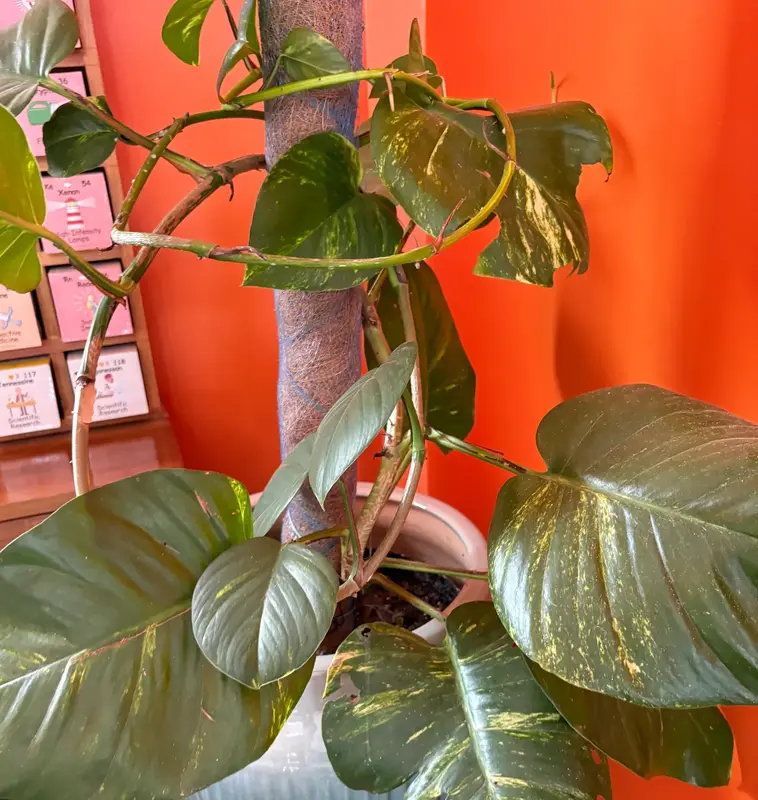
- Golden Pothos: short brown roots grow from its nodes, ready to grip the pole it climbs.
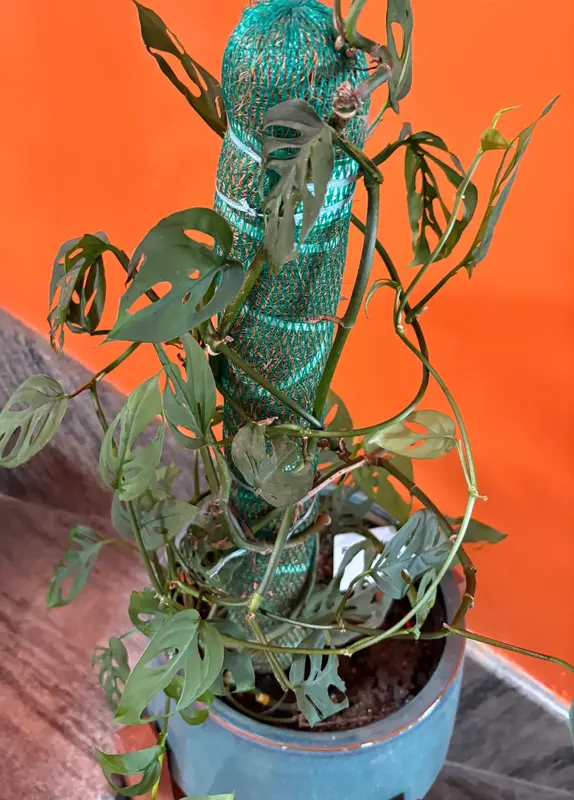
- Broken Heart Plant: brown roots grow out into the air from its stem and grip the pole it climbs.
- Cassava: its storage roots swell with starch under the soil. They are poisonous raw and safe to eat only peeled and cooked.
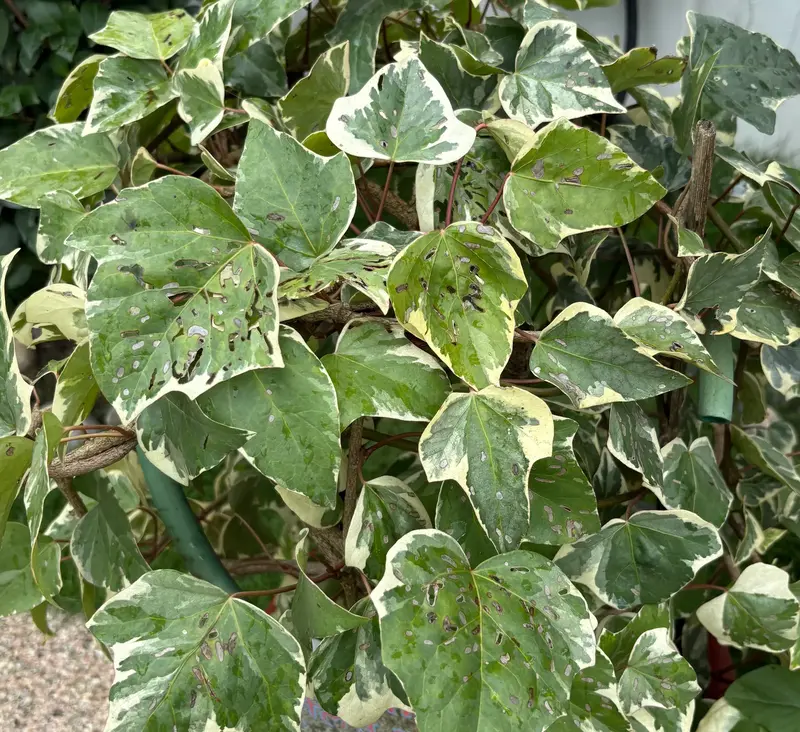
Algerian Ivy
Hedera algeriensis
Ivy climbs walls with short roots that grow from its stem and cling to rough surfaces: look along a stem for rows of tiny brown roots. These are adventitious roots, growing from a stem instead of from another root. Algerian ivy has bigger, glossier leaves than common ivy.
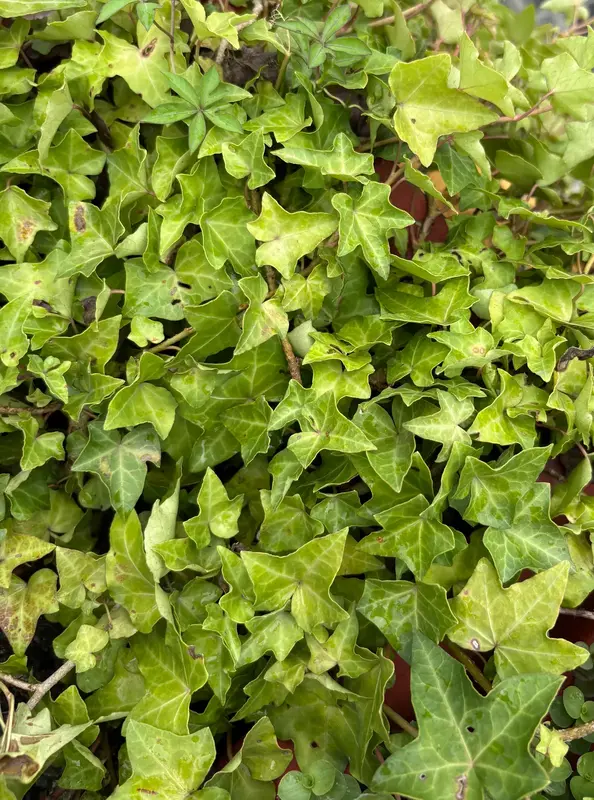
Common Ivy
Hedera helix
Rows of tiny clinging roots along the stem hold it to the wall. Ivy has two forms: young climbing stems with lobed leaves, and older, bushy stems with plain oval leaves that flower and fruit and grow no climbing roots at all.
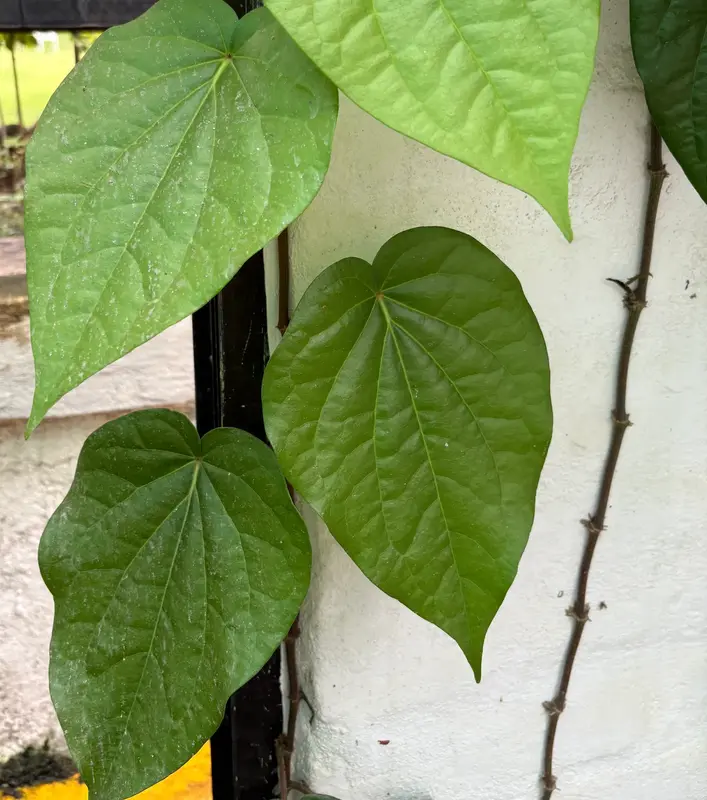
Betel Leaf (Paan)
पानको बोट
Piper betle
A close relative of black pepper that climbs the same way, with short roots at every node that grip its support. Its heart-shaped leaves are wrapped around areca nut and spices to make paan.
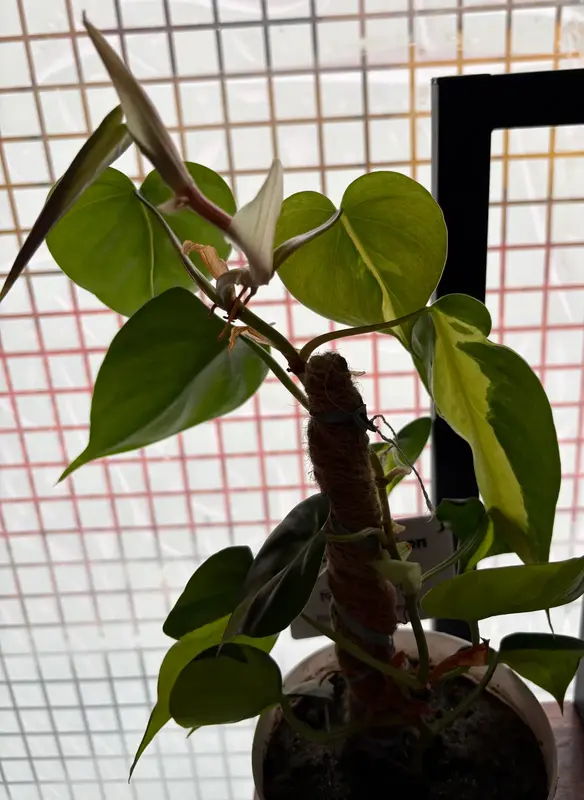
Brazil Philodendron
Philodendron hederaceum ‘Brazil’
Roots grow from the nodes of its stem into the air and hold on to whatever they touch. In the rainforest they let it climb a tree trunk toward the light. Each heart-shaped leaf has a yellow-green stripe, like the colors of Brazil’s flag.
Broken Heart Plant
लहरे कर्कलो
Monstera adansonii
Look for the thick aerial roots that grow from its stem and grip its support: they let it climb trees in the rainforest. Its leaves are full of holes; one idea is that the holes let a leaf spread wider to catch flecks of sunlight while using less leaf.
Golden Pothos
Epipremnum aureum
A vine that climbs by aerial roots growing from each node. Indoors it stays a trailing vine with small leaves, but climbing a tree in the wild its leaves grow huge and split. It almost never flowers.
Arrowhead Vine
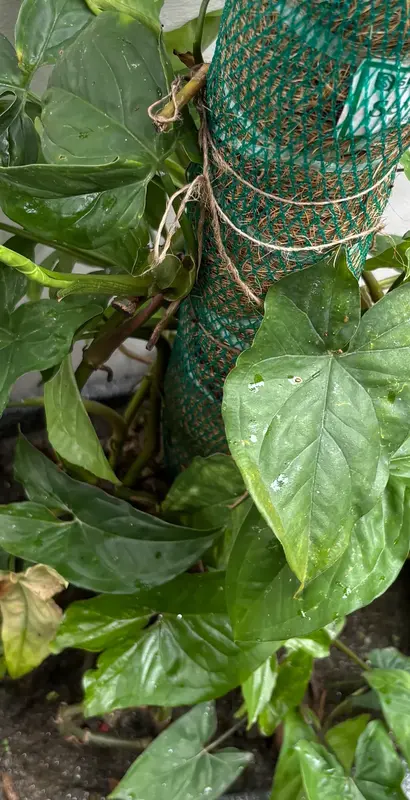
Syngonium podophyllum
It climbs with aerial roots that grow from its stem at the nodes. Its young leaves are arrow-shaped; as the vine climbs, new leaves split into three to five lobes.
Creeping Fig
Ficus pumila
It presses flat against a wall with tiny clinging roots all along its stems. Young stems have small leaves, but older stems branch out with much bigger leaves and small figs.
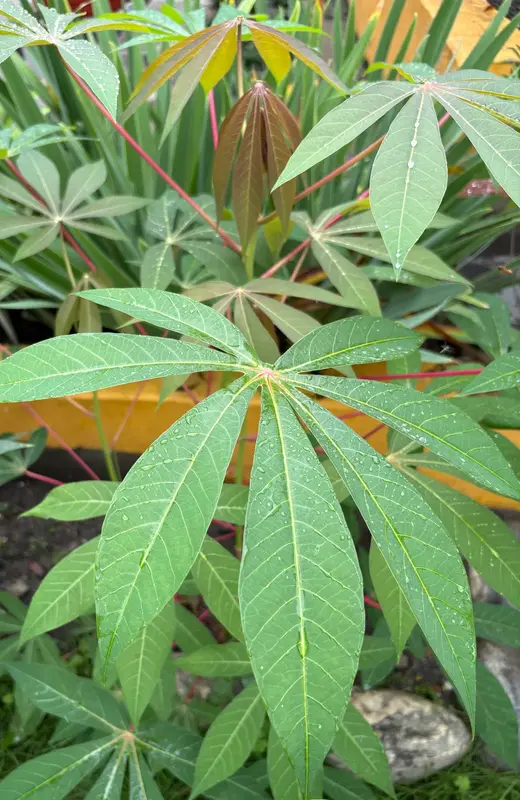
Cassava
सिमल तरुल
Manihot esculenta
Its roots swell up with stored starch: storage roots, like a radish or a sweet potato. They feed hundreds of millions of people in the tropics, and tapioca is made from them. They must be peeled and cooked first: raw cassava contains natural cyanide compounds.
More in The Plant Body
The garden is alive and changes through the year. Some plants flower, fruit, or rest only in certain seasons, so what you see depends on when you visit.
See them for yourself
Every plant here grows on our campus in Bhaktapur. Walk the garden on your visit.
Book a Visit