
Minerals of Nepal
The minerals and rocks of Nepal: how to recognize them, how they formed, where in Nepal they are found, and how people have used them.
Minerals
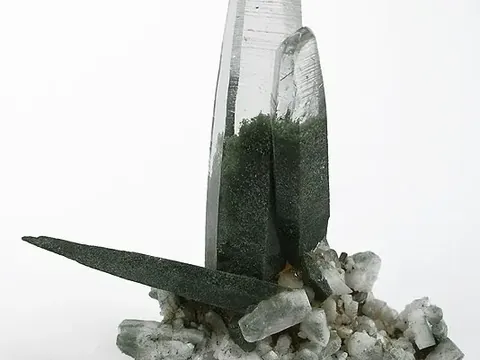 Quartz स्फटिक Hard, clear and everywhere
The glassy mineral in sand, granite and river pebbles. Clear crystals are mined from pegmatites in Taplejung and Nuwakot; quartz sand makes glass.
Read more →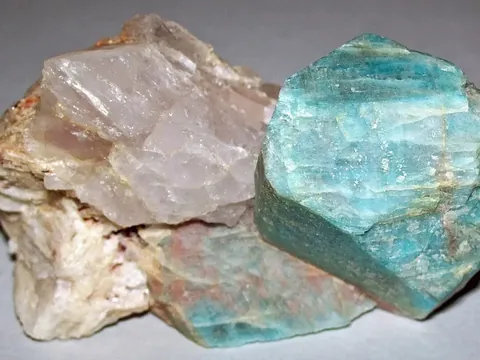 Feldspar The commonest minerals of all
A family of pale, blocky minerals that make up over half of Earth’s crust. In Nepal’s granites and pegmatites, with green amazonite in Sankhuwasabha; weathered, it becomes clay.
Read more →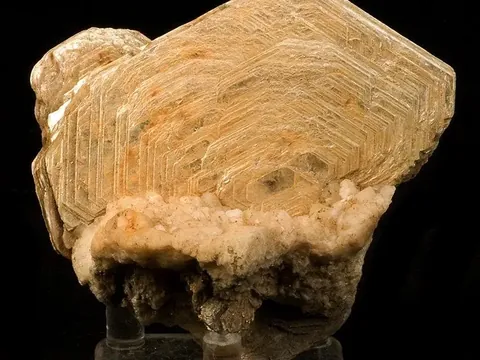 Mica अभ्रक A mineral made of layers
A shiny mineral you can peel into sheets thinner than paper, clear, bendy and fireproof, found in the pegmatites of Nepal’s hills.
Read more →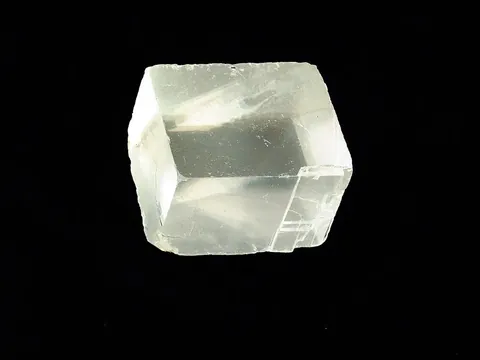 Calcite The mineral of limestone, marble and caves
The mineral that limestone and marble are made of. Soft, it splits into slanted boxes and fizzes in acid. In Nepal, in veins and cave crystals; a small mine at Nibuwagaon.
Read more →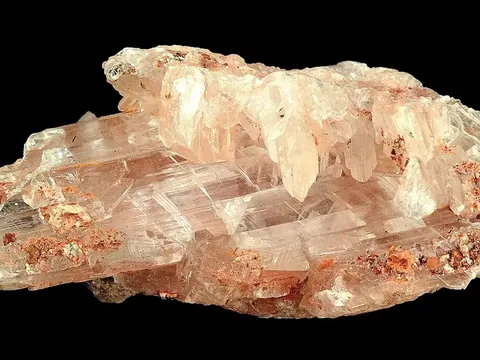 Gypsum and rock salt नुन What drying seawater leaves behind
Two soft minerals left when salty water dries up. Nepal has only small lenses of gypsum and a few salt springs in Mustang and Dolpa, so the gypsum for its cement factories and the salt in its kitchens are imported.
Read more →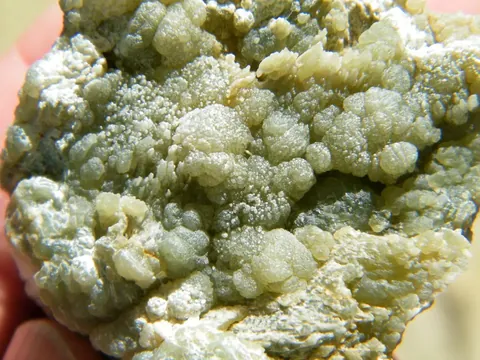 Talc Number 1 on the hardness scale
So soft a fingernail carves it, with a soapy feel. Talc is found beside magnesite and dolomite in many hill districts; the mine at Kharidhunga in Dolakha has worked it for over twenty years.
Read more →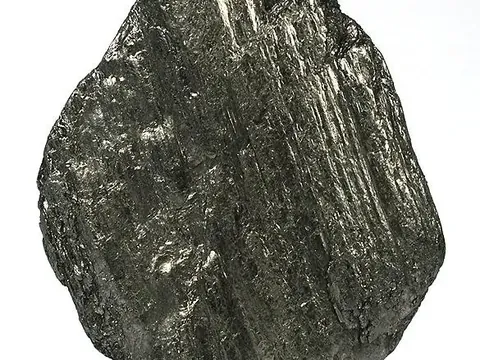 Graphite ग्राफाइट Soft carbon, the same element as diamond
Pure carbon in soft, slippery sheets that leave a black mark: the “lead” in a pencil. Found in the metamorphic rocks of Ilam, Dhankuta, Nuwakot and other districts, but not mined in Nepal.
Read more →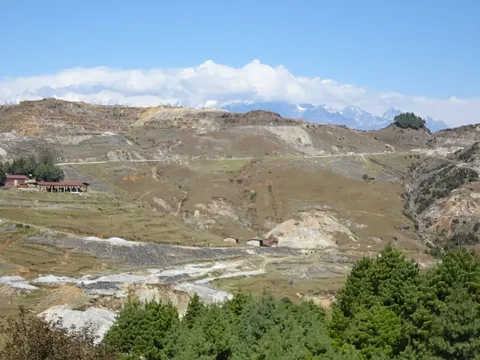 Magnesite म्याग्नेसाइट Nepal’s biggest mineral deposit, waiting
A white carbonate rock that heat turns into fireproof bricks for steel furnaces. Kharidhunga in Dolakha holds about 180 million tonnes of it; its factory has stood idle since 1998.
Read more →
Ores and metals
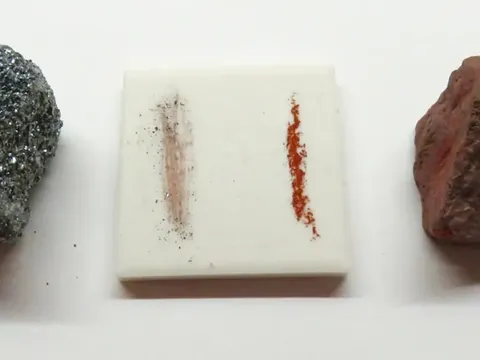 Iron ores फलाम Red streak, black magnet
The minerals iron is made from. Nepal has more than 88 iron ore localities and smelted iron for over a century until 1951; Phulchoki, Thoshe and Dhaubadi hold millions of tonnes.
Read more →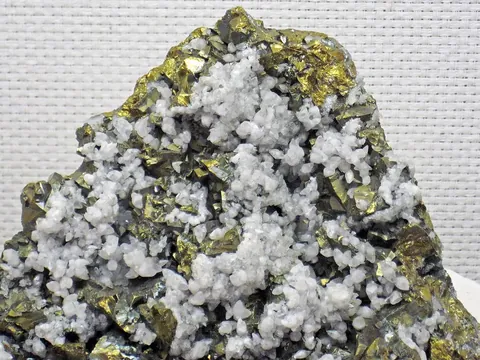 Copper ores तामा The metal of Nepal’s old mines
Brass-yellow chalcopyrite and bright green malachite are the ores of copper. Nepal has more than 107 copper localities; small mines at Gyazi, Okharbot and Wapsa made copper until 1995.
Read more →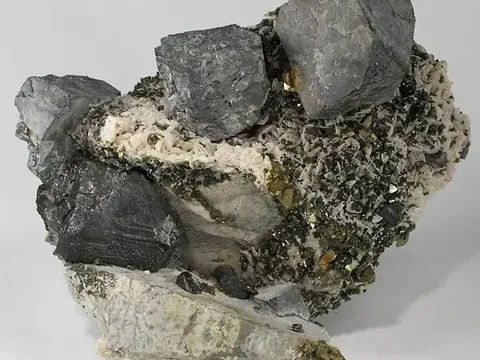 Galena and sphalerite सिसा र जस्ता Lead and zinc, found together
Galena, the heavy silver-gray ore of lead, and sphalerite, the ore of zinc, usually occur together. Nepal knows them at more than 57 places; the Ganesh Himal deposit at Lari is rich but unmined. Lead is poisonous, so galena needs care.
Read more →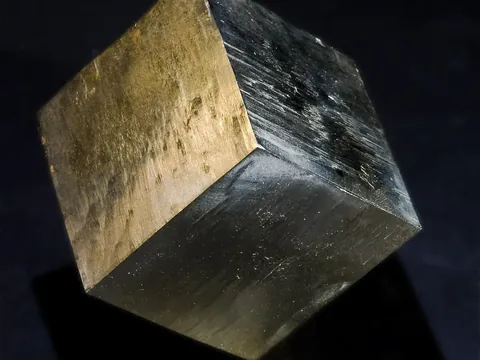 Pyrite पाइराइट Brassy cubes that are not gold
Shiny brass-yellow cubes of iron sulfide that have fooled many prospectors. Pyrite is in almost every sulfide deposit in Nepal and abundant at Bering Khola in Ilam; once a source of sulfur.
Read more →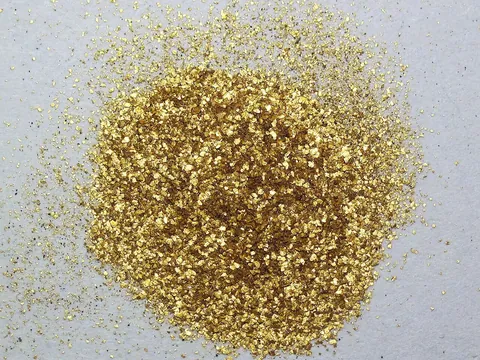 Gold सुन Panned from river gravel
The heavy yellow metal that never rusts. Bote families have long panned tiny flakes from the gravel of Nepal’s big rivers; the gold comes down from the Higher Himalaya. No gold mine works in Nepal, and it imports its gold.
Read more →
Gems
 Ruby and sapphire माणिक र नीलम One mineral, two famous gems
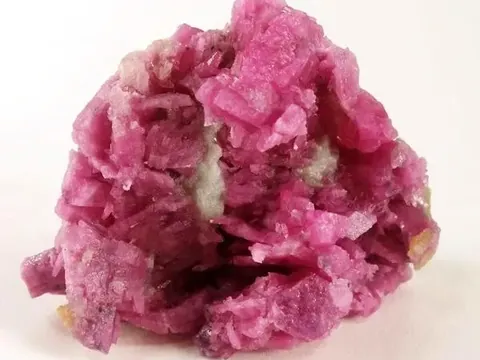
Red ruby and blue sapphire are the same mineral, corundum, second only to diamond in hardness. Small gem crystals grow in the marble of Ruby Valley in Dhading and the Ganesh Himal; the law treats them as Nepal’s most important gems.
Read more →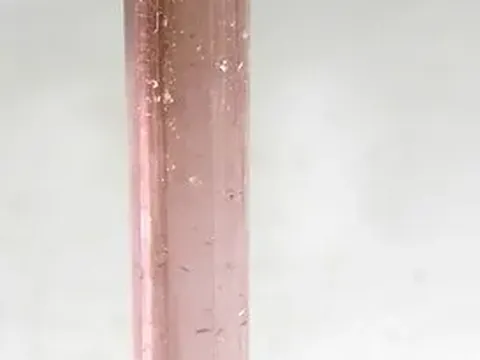 Tourmaline Long, striped crystals in every color
Long crystals with a rounded three-sided outline, in more colors than any other mineral. Black schorl is common in Nepal’s Himalayan granites; gem pink and green elbaite come from Hyakule in Sankhuwasabha, where Nepal’s gem story began in 1934, and Jajarkot.
Read more →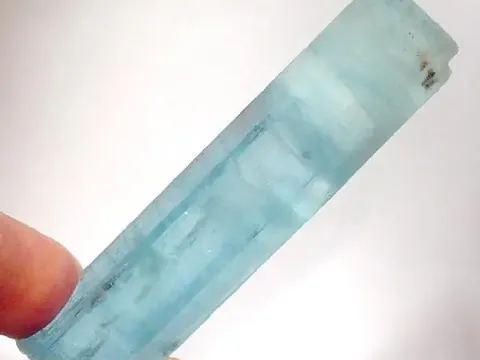 Beryl and aquamarine Six-sided crystals of sea-blue
Beryl grows as six-sided columns in pegmatites; blue-green beryl is aquamarine, green is emerald. Nepal’s aquamarine from Ikabu and Lodantar in Taplejung fetches high prices; beryl is also an ore of beryllium.
Read more →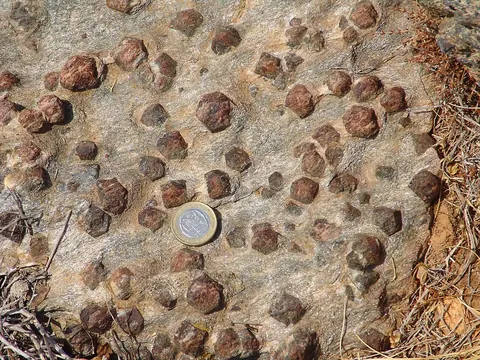 Garnet गार्नेट Red crystals that grew under pressure
Dark red crystals with twelve faces that grow in rocks buried deep and squeezed hard, found in the Higher Himalaya of eastern Nepal. A cheap gem and a hard-working abrasive.
Read more →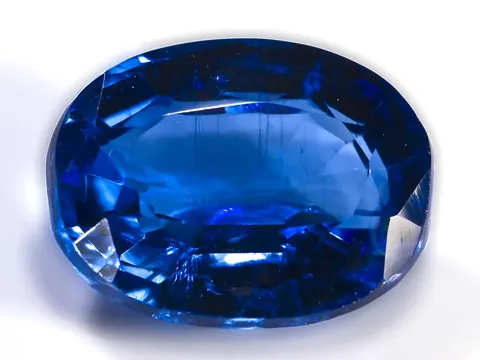 Kyanite A mineral that tells of great pressure
Long blue blades that a knife scratches one way but not the other. Kyanite grows only under high pressure, so it marks rocks once buried deep. Nepal mines it by hand in Jajarkot, Achham and Kalikot.
Read more →
Rocks
 Granite ग्रेनाइट Big crystals from slow-cooled magma
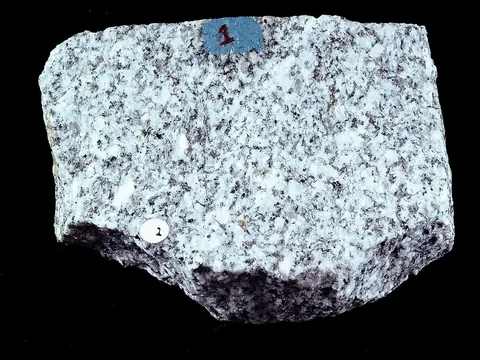
A speckled rock of quartz, feldspar and mica that crystallized slowly from magma deep underground. Nepal has old granites in Makwanpur, Sindhuli, Udayapur and Dadeldhura, and young tourmaline granites high in the Himalaya.
Read more →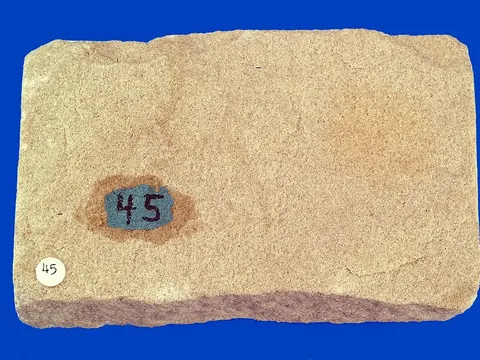 Sandstone and quartzite बलौटे ढुङ्गा From loose sand to the hardest common rock
Sandstone is sand cemented into rock; the Churia hills are built of it. Squeezed and heated, quartz sandstone becomes quartzite, so hard it breaks through its grains, and Nepal quarries it for slabs in dozens of districts.
Read more →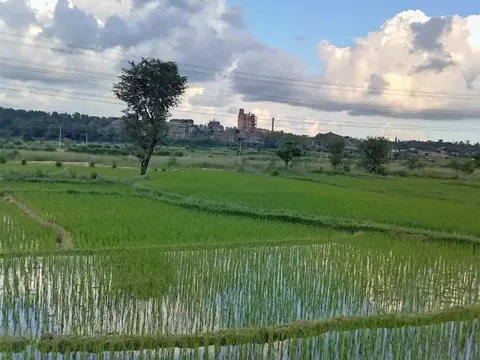 Limestone and dolomite चुनढुङ्गा Old seabeds that build new houses
Limestone is rock made of calcite, mostly from the shells of sea creatures; dolomite is its magnesium-rich cousin. Nepal’s Lesser Himalaya hold over 1.3 billion tonnes of cement-grade limestone, which feeds more than 27 cement factories.
Read more →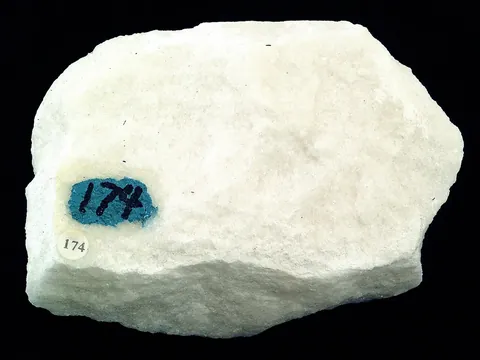 Marble सङ्गमरमर Sparkling crystals from old seabeds
When limestone is heated and squeezed, its calcite regrows as interlocking crystals: marble. Godavari in Lalitpur has 1.63 million tonnes of pink, gray and white marble, but its quarry has been shut for years; small quarries work in Kavre and Dhading.
Read more →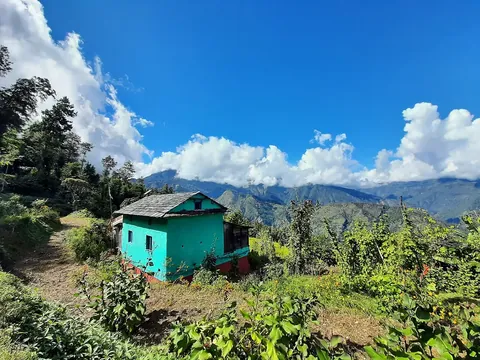 Slate and phyllite स्लेट Rocks that split into sheets
Squeeze mud gently and its tiny flakes line up, so the rock splits into thin, flat sheets: slate, and a step further, the silky phyllite. Villages from Taplejung to Baitadi have roofed and paved with them for centuries.
Read more →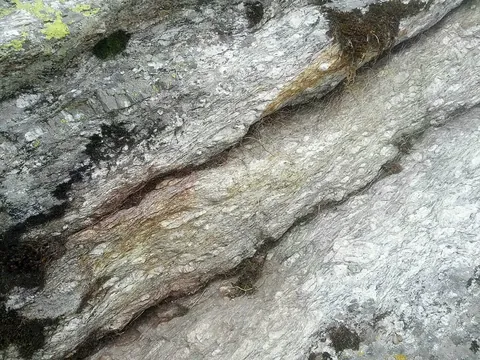 Schist and gneiss The Himalaya’s deep, changed rocks
Heat and squeeze mudstone hard enough and it becomes glittering schist, then banded gneiss. These rocks, once 600 to 700 °C hot deep underground, make up the Higher Himalaya and hold Nepal’s garnet, kyanite and tourmaline.
Read more →
Nepal's special stones
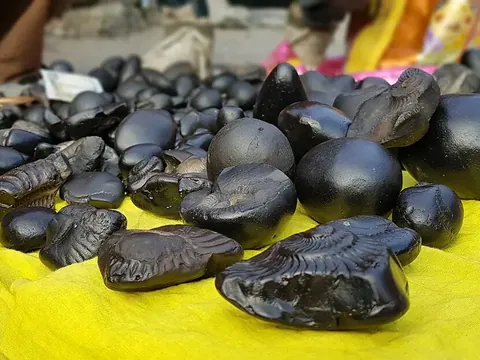 Shaligram शालिग्राम A fossil and a sacred stone
Shaligrams are black stones from the Kali Gandaki, worshipped as Vishnu. Split one and there is often a coiled ammonite inside: a sea animal that lived 166 to 140 million years ago in an ocean that the Himalaya replaced.
Read more →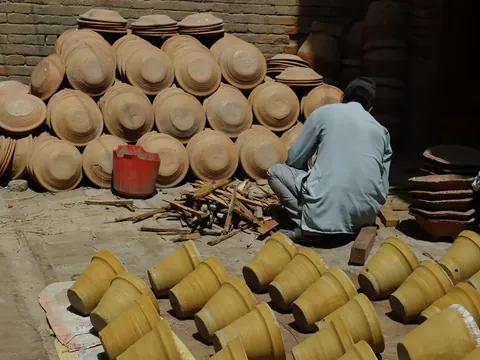 Kathmandu’s lake-bed clay Mud, diatoms and gas from an old lake
For about 2.5 million years a lake filled Kathmandu Valley and laid down black clay. Bhaktapur’s potters, the brick kilns, the diatomite diggers of Thimi and Bode, and a methane gas field under the city all use what that lake left behind.
Read more →
Energy from the ground
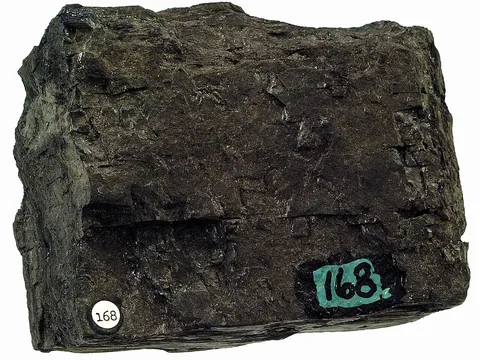 Coal कोइला Old swamps that burn
Coal is the remains of swamp plants, buried and pressed until they turn to a black rock that burns. Nepal’s coal is scarce and low-grade: eleven small mines in Dang and its neighbors produced only about 11,522 tonnes in 2018.
Read more →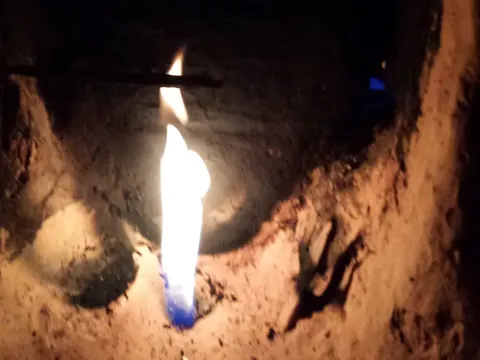 Petroleum and natural gas Flames from the rocks
At Dailekh, gas and oil have seeped from the ground and burned for as long as anyone remembers. A Chinese-assisted well drilled there to 4,013 m found gas; a report estimated 80.7 billion cubic meters, but whether it can be produced is not yet known.
Read more →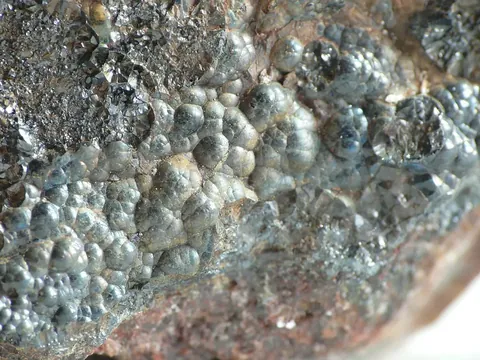 Uranium Rocks that give off radiation
Department of Mines and Geology surveys since 2014 have found strongly radioactive beds near Lomanthang in Upper Mustang, and smaller prospects in Makwanpur, Baitadi and Gorkha. Their figures are estimates from surface readings only: no drilling has proved a reserve.
Read more →