
Magnesite: the white rock of Kharidhunga
म्याग्नेसाइट · Nepal’s biggest mineral deposit, waiting
Every steel rod in a new building in Kathmandu was once molten metal in a furnace. What can hold molten steel without melting itself? The furnaces are lined with special fireproof bricks, and one of the main materials for them comes from a white rock called magnesite.
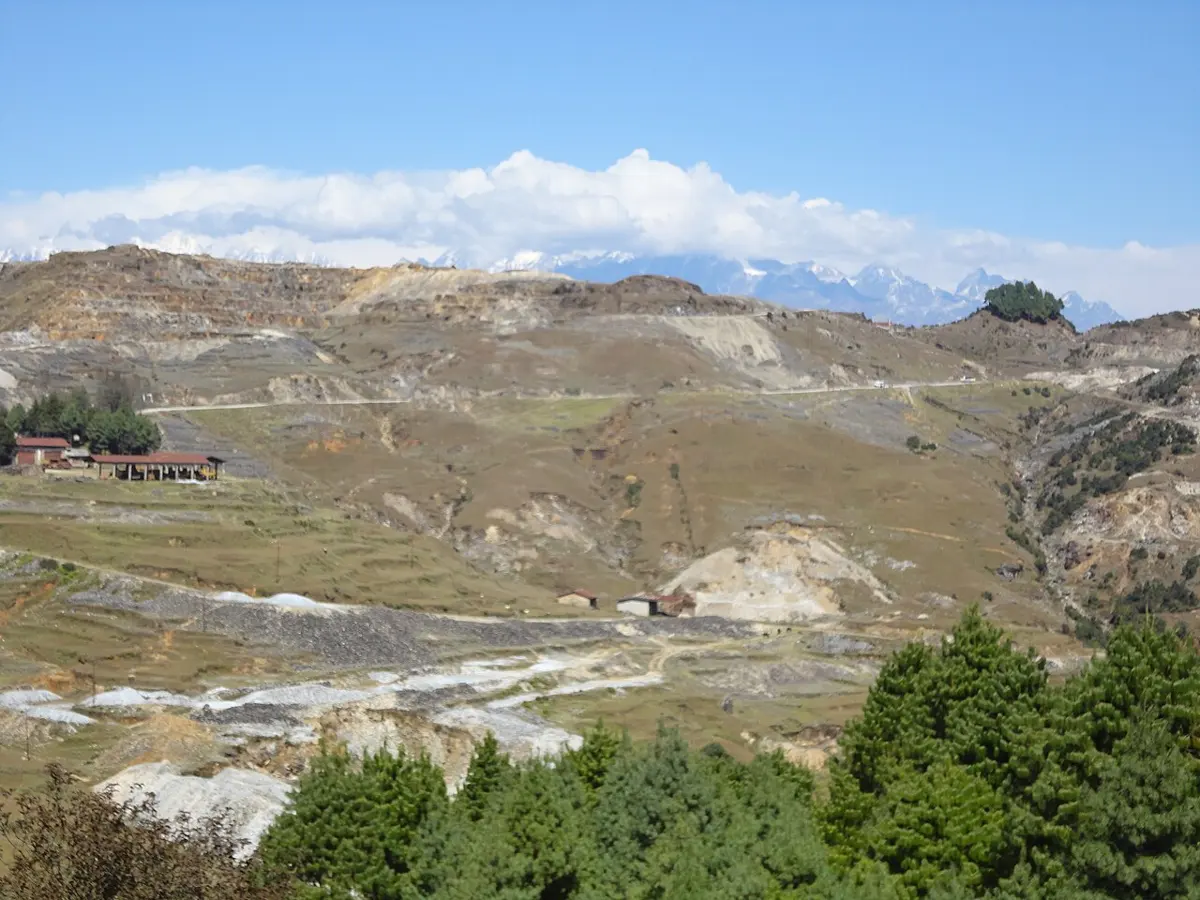
Nepal has one of the big magnesite deposits of Asia, at Kharidhunga (खरिढुङ्गा) in Dolakha. Your Social Studies book may mention it. This page is about what magnesite is, what heat does to it, and what happened at Kharidhunga.
What magnesite is
Magnesite is magnesium carbonate, MgCO₃: magnesium, carbon and oxygen. It is a cousin of calcite (CaCO₃), the mineral of limestone and marble, with magnesium in place of calcium.
| Property | Magnesite |
|---|---|
| Formula | MgCO₃ |
| Hardness (Mohs) | 3.5 to 4.5 |
| Density | 3.0 times as heavy as water |
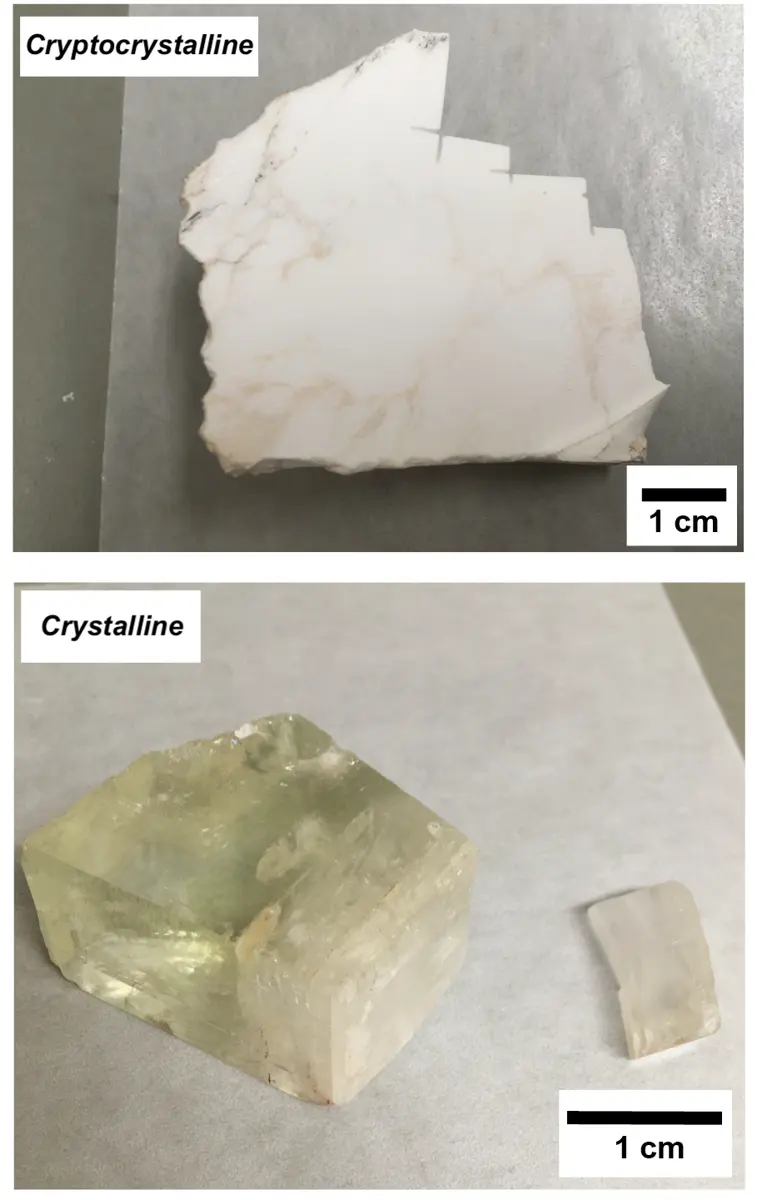
| Color | white, grayish, yellowish or brownish; rarely clear |
| Luster | dull and chalky; rarely glassy |
| Crystals | trigonal |
How it forms
Magnesite forms in two main ways. Rocks very rich in magnesium (such as serpentinite) take up carbon dioxide while heat and pressure are changing them. Or limestone or marble is altered by water carrying magnesium. Nepal’s magnesite lies in the Lesser Himalaya, the belt of the middle hills that also holds most of the country’s limestone and dolomite.
What heat does to it
Heat magnesite strongly and it breaks apart. Carbon dioxide gas goes off, and a white powder is left: magnesium oxide, MgO, also called magnesia.
MgCO₃ → MgO + CO₂
Heated much harder still, it becomes dead-burnt magnesia (DBM), from which fireproof bricks are made to line furnaces, for steelmaking above all. Such bricks can stand temperatures up to about 2,100 °C.
Magnesia is also used for fertilizer, chemicals, and for making magnesium metal.
Kharidhunga
A huge deposit
In Kharidhunga, Dolakha, geologists have measured about 180 million tonnes of magnesite. About 66 million tonnes of it is high grade, with 88 to 96% magnesium oxide once heated. A second, smaller deposit at Kampughat in Udayapur holds about 20 million tonnes of poorer magnesite, and there are small ones in Palpa, Baitadi and other parts of Dolakha.
The factory and the ropeway
To use it, Nepal built an open-cast mine at Kharidhunga and a factory to make dead-burnt magnesia at Lamosangu in Sindhupalchok. A 10.5 km ropeway carried the rock in buckets from the mine down to the factory.
The company, Nepal Orind Magnesite, was started on 25 March 1979, at a cost of Rs. 3.59 billion; the government owns 83.33% of it, and Orissa Industries and the Khetan Group the rest. It was once called the largest magnesite industry in Asia.
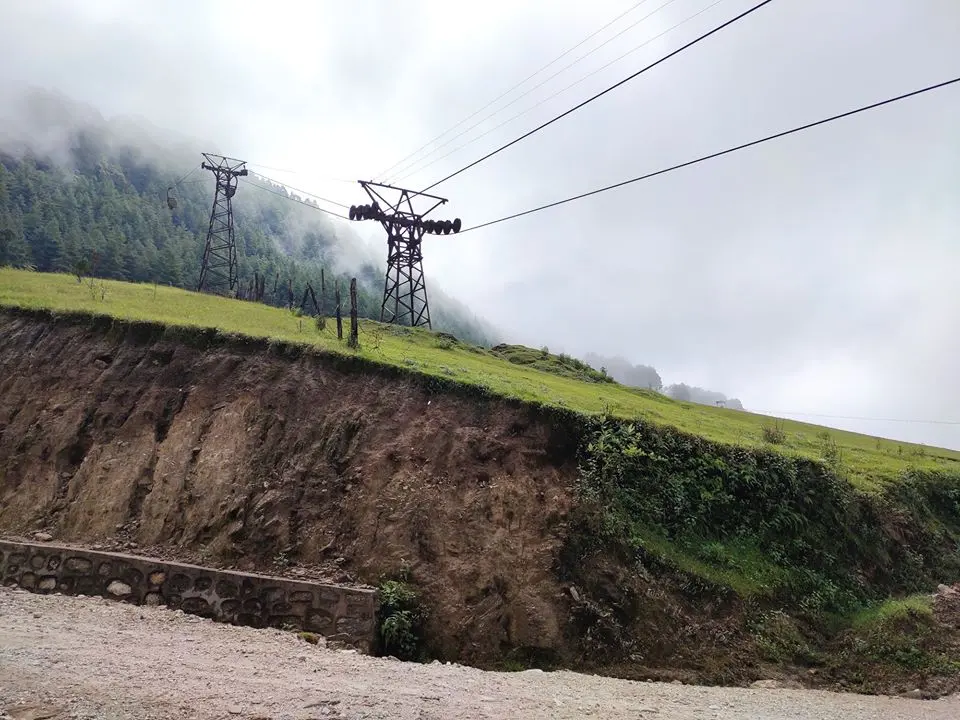
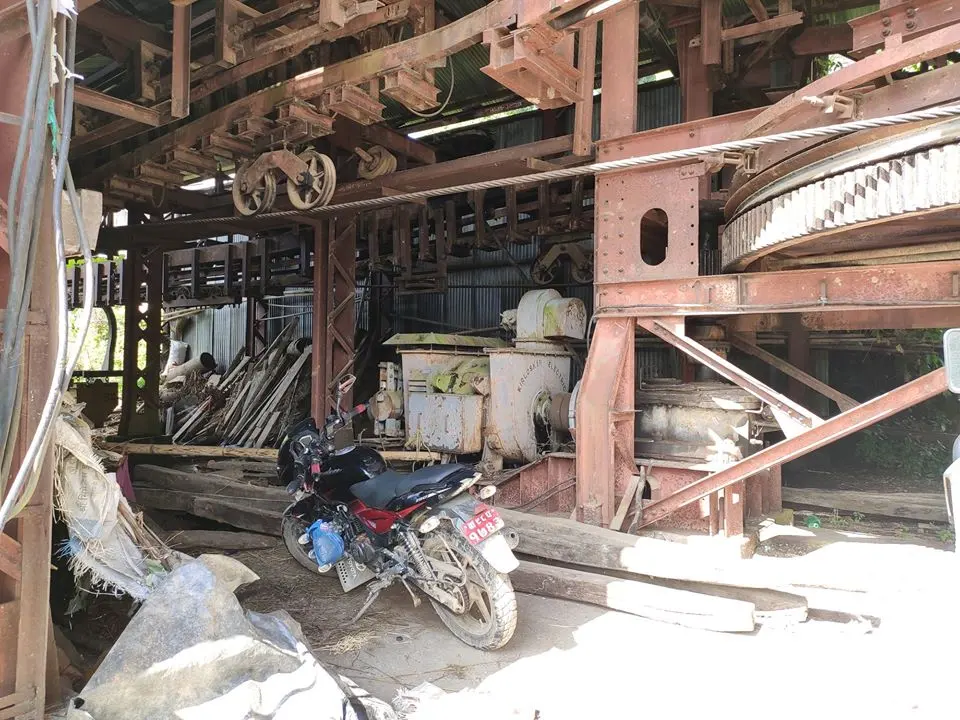
But there were problems with the ropeway and with the trial runs of the furnace. The factory closed on 10 December 1998, and more than 1,000 people lost their jobs. Its talc mine at Kharidhunga kept working (talc is found beside the magnesite): it produced about 8,557 tonnes of talc in 2018.
In 2026, The Rising Nepal reported that the factory’s machines no longer work, the ground under its furnace is sinking, and 87 of the ropeway’s towers are bent and close to falling. Governments have promised many times to start it again, but no date has been set.
Kharidhunga has plenty of high-grade magnesite. Which of these was a real problem for the factory, according to Nepal’s geologists and reporters?
Pick an answer to see why.
In short
Where these facts come from
- Kaphle K.P., Mineral resources of Nepal and their present status, Nepal Geological Society, 2020.
- Anthony J.W. et al., Magnesite, Handbook of Mineralogy, Mineralogical Society of America.
- Mijar C.K., Will Orind Magnesite Industry ever reopen?, The Rising Nepal, 2026.
- King H.M., Magnesite: a mineral used as a gem and in industry, Geology.com.
- King H.M., Mohs hardness scale, Geology.com.
- Londono V., Magnesium compounds, Mineral Commodity Summaries 2026, US Geological Survey, 2026.