
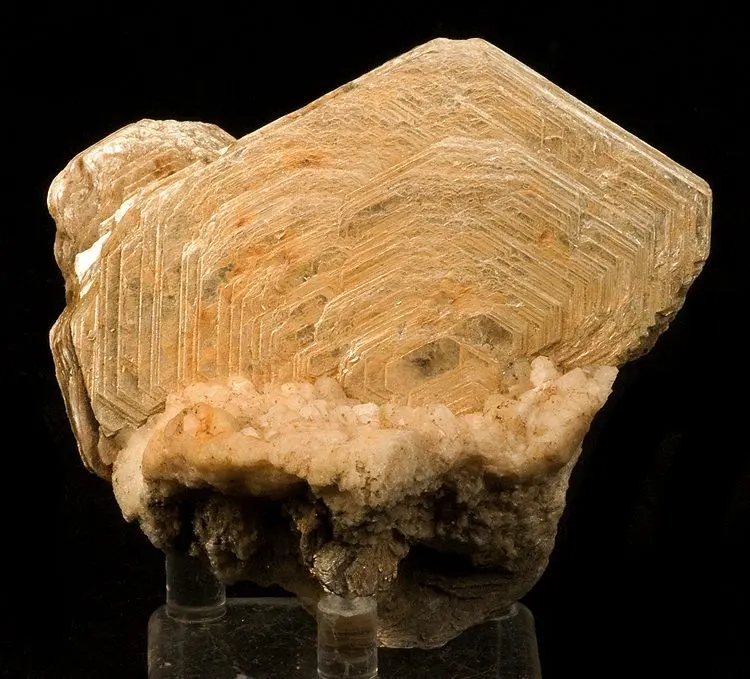
Look closely at a shiny eye shadow or a sparkly paint and you may be looking at mica. Rub a rock from the hills between your fingers and tiny silvery flakes may come off: mica again. The Nepali dictionary describes अभ्रक (abhrak) well: a transparent mineral in layers, that fire does not burn.
Mica is a group of minerals. The commonest, and the one this page is mostly about, is muscovite, the clear or silvery mica. Dark brown or black biotite is another.
What mica is
Muscovite’s chemical formula is KAl₂(Si₃AlO₁₀)(OH)₂: potassium (K), aluminium (Al), silicon (Si), oxygen and a little hydrogen. Like most of the rock around you, it is a silicate, built of silicon and oxygen.
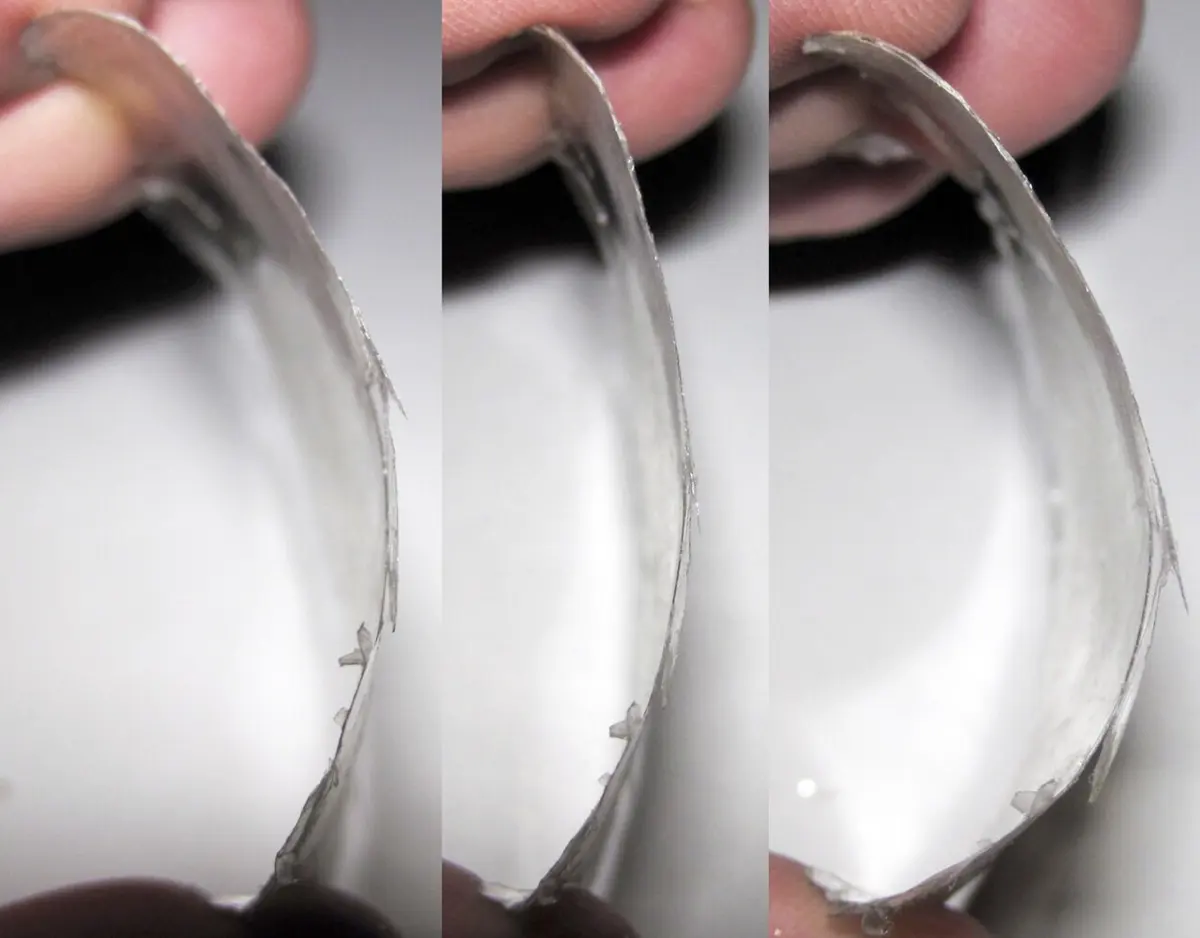
Its most famous property is its cleavage: the way it breaks. Mica splits along one direction only, into flat sheets, and it does this perfectly. A sheet can be split again and again, down to 0.025 mm or thinner, and the sheets stay clear and flexible.
| Property | Muscovite |
|---|---|
| Hardness (Mohs) | 2.5 to 3: about as hard as a fingernail, which may just scratch it |
| Cleavage | perfect, in one direction: splits into thin sheets |
| Luster | pearly to glassy |
| Color | thick pieces silver, brown or black; thin sheets colorless and clear |
| Density | 2.8 to 2.9 times as heavy as water |
Why it splits into sheets
Mica is built in layers, like a stack of sandwiches. Each layer is a sheet of aluminium and oxygen between two sheets of silicon–oxygen tetrahedra, all held by strong bonds. Between one layer and the next sit potassium ions, and the bonds there are weak. Push a blade into the edge of a mica crystal and it slips between the layers, where the bonds are weak, and lifts one off.
Where mica is found in Nepal
Mica is common in many rocks: granite and the shiny metamorphic rocks called schist and gneiss are full of small flakes. But big sheets, worth mining, come from pegmatites: veins of very coarse granite in which crystals grew large, sometimes into “books” of mica the size of a hand or bigger.
In Nepal, the Department of Mines and Geology knows of several small mica deposits, mostly muscovite and biotite. Coarse mica books big enough to mine have been found only in pegmatites, at places such as:
- Langtang (Rasuwa),
- Bhumidanda and Kharanetar (Nuwakot),
- Chaukibhanjyang (Kathmandu),
- Nibuwagaon (Sindhupalchok),
- Khaptad (Bajhang), and in Jajarkot and Doti,
- Phakuwa and Hyakule (Sankhuwasabha), and in Taplejung, Ilam and Panchthar.
None of these is a big mine today. In 2018 the department gave out just one prospecting license for mica.
How the Himalaya made it
About 40 to 50 million years ago, India, moving north across the ocean, ran into Asia. The collision crumpled and stacked the rocks between them into the Himalaya, which are still rising by more than 1 cm a year.
Rocks pushed deep down in the collision were heated and squeezed. Mud rocks rich in aluminium, buried deep, slowly turned into schist and gneiss, and new minerals grew in them, mica among them. Elsewhere, molten rock cooled slowly underground into granite and pegmatite, with time for its crystals to grow big.
What mica is used for
Mica’s layers give it a rare mix: it is clear, flexible, does not burn, and does not let electricity through, yet it passes heat well.
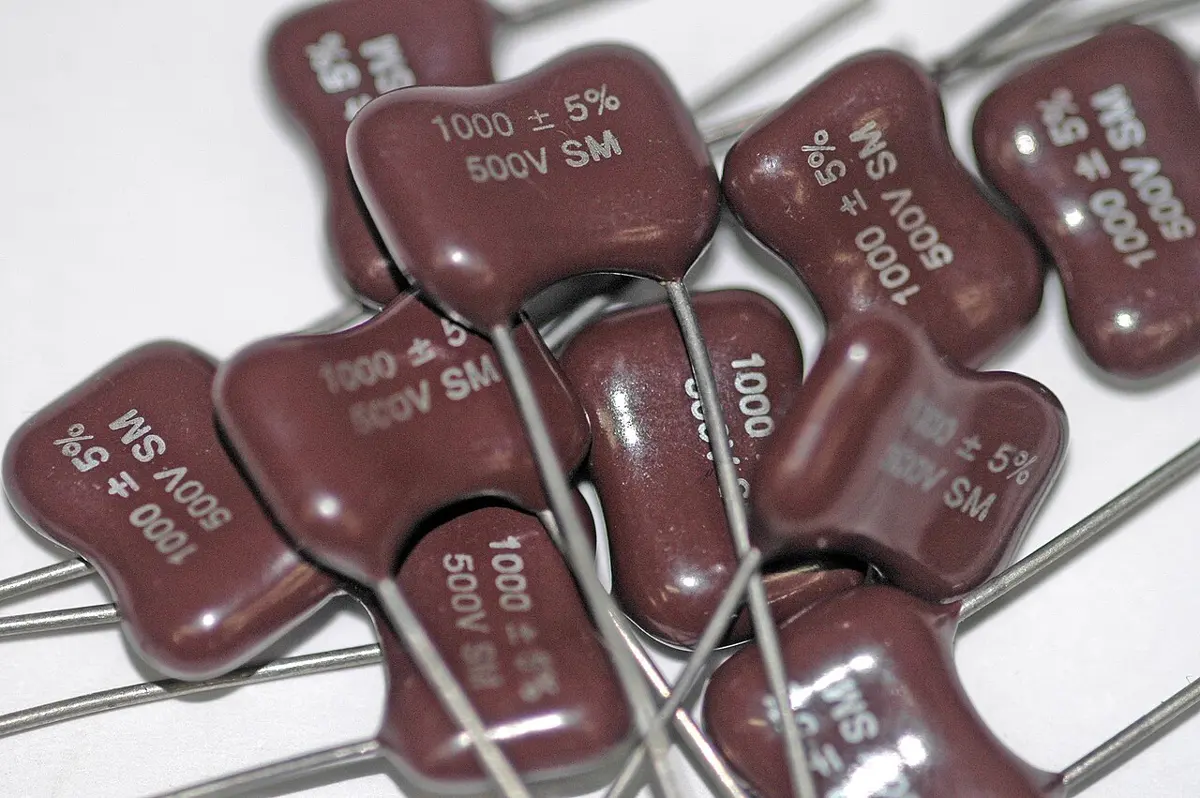
- Electrical insulators: thin sheets separate parts in electrical equipment. The best clear muscovite is used in capacitors, small parts that store charge in electronic circuits.
- Windows in stoves and furnaces, because it stands heat.
- Ground mica, the most used kind today: in the paste that smooths the joints between plasterboard walls, in paint, rubber, roofing, and in mud for drilling oil wells.
- Cosmetics: its pearly shine is in blushes and eye shadows.
Why is mica, and not glass, used for the little window in a wood stove?
Pick an answer to see why.
In short
Where these facts come from
- Kaphle K.P., Mineral resources of Nepal and their present status, Nepal Geological Society, 2020.
- King H.M., Muscovite: uses and properties, Geology.com.
- King H.M., Mohs hardness scale, Geology.com.
- Mica, Wikipedia.
- Jasinski S.M., Mica (natural), Mineral Commodity Summaries 2026, US Geological Survey, 2026.
- The Himalayas: two continents collide, This Dynamic Earth, US Geological Survey.
- अभ्रक in the Nepali Brihat Shabdakosh (Nepal Academy).