
Slate and phyllite: mud squeezed into roofs
स्लेट · Rocks that split into sheets
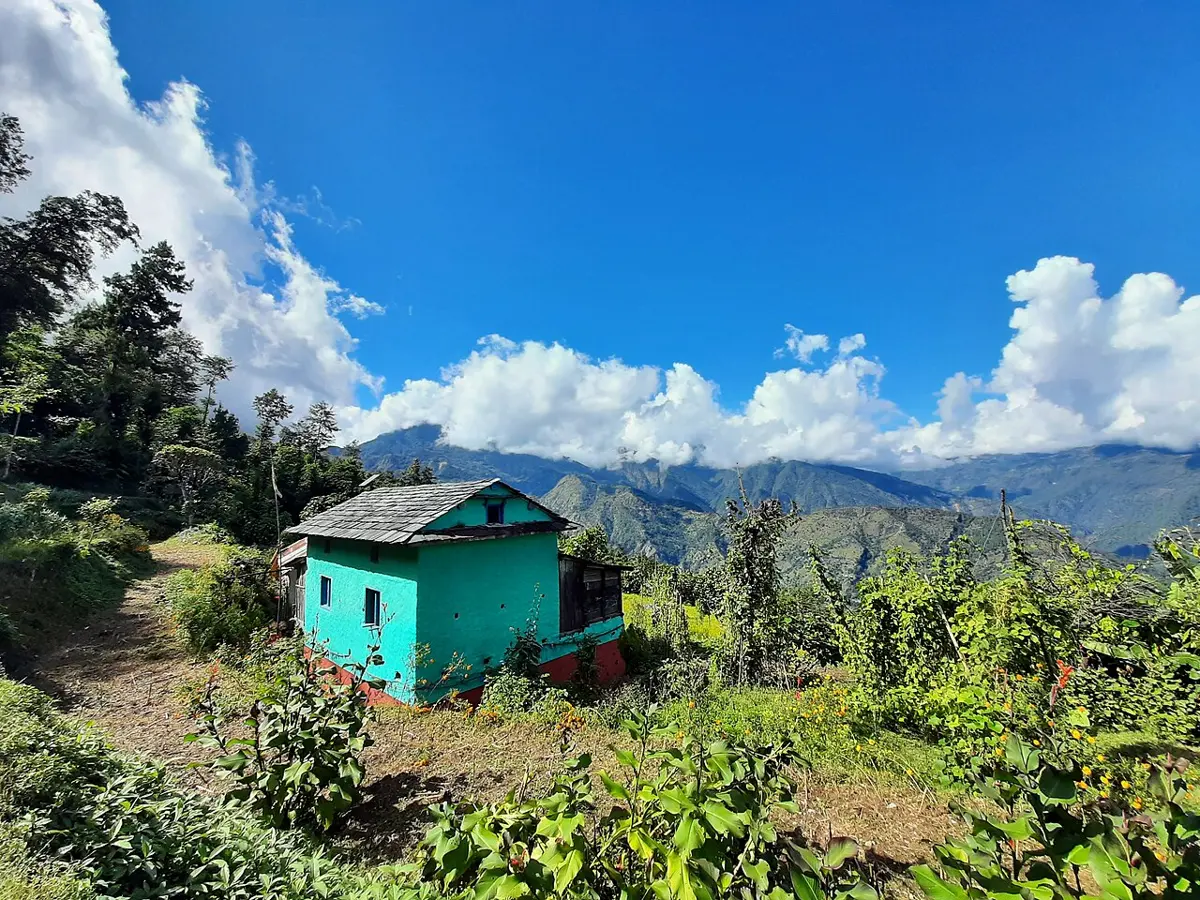
Walk through a hill village in Nepal and look up: many of the older roofs are made of flat gray stone slabs, overlapping like fish scales. Some of that stone is slate or phyllite: rocks that split into thin, even sheets, as if they had been made to be roofs.
From mud to slate to phyllite
Both begin as shale or mudstone, rock made of mud. Mud is mostly clay minerals, tiny flakes lying every which way. When mudstone is buried and squeezed in a mountain belt, gently heated, the clay flakes slowly turn into fine mica, and the flakes all line up at right angles to the squeeze. Rock whose grains line up like this is called foliated, and it splits easily along the lined-up flakes.
| Slate | Phyllite | |
|---|---|---|
| Starts as | shale or mudstone | slate (and before it, mudstone) |
| Heat and pressure | low | a little more |
| Grain | too fine to see | too fine to see, but the mica is a little larger |
| Surface | dull | silky, silvery sheen |
| Splits into | thin, flat sheets | sheets |
Both are low-grade metamorphic rocks: changed, but not much. Push further, and phyllite turns into schist, whose mica flakes you can see (see Schist and gneiss).
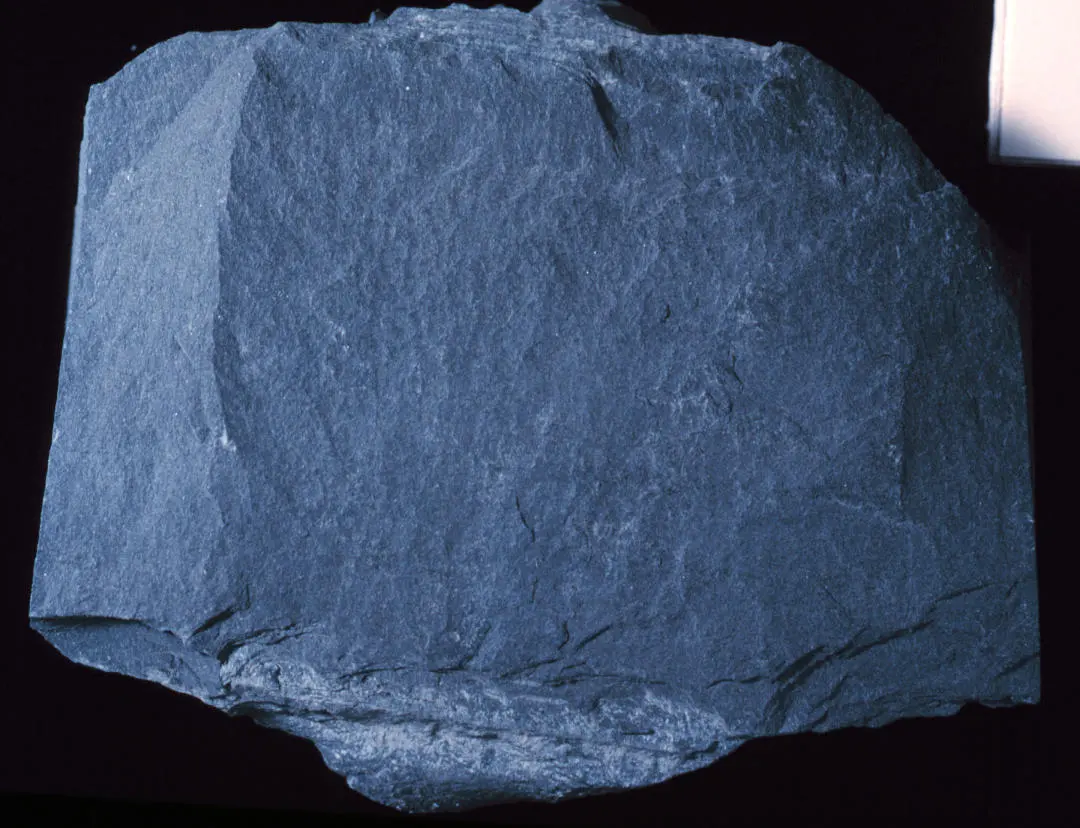
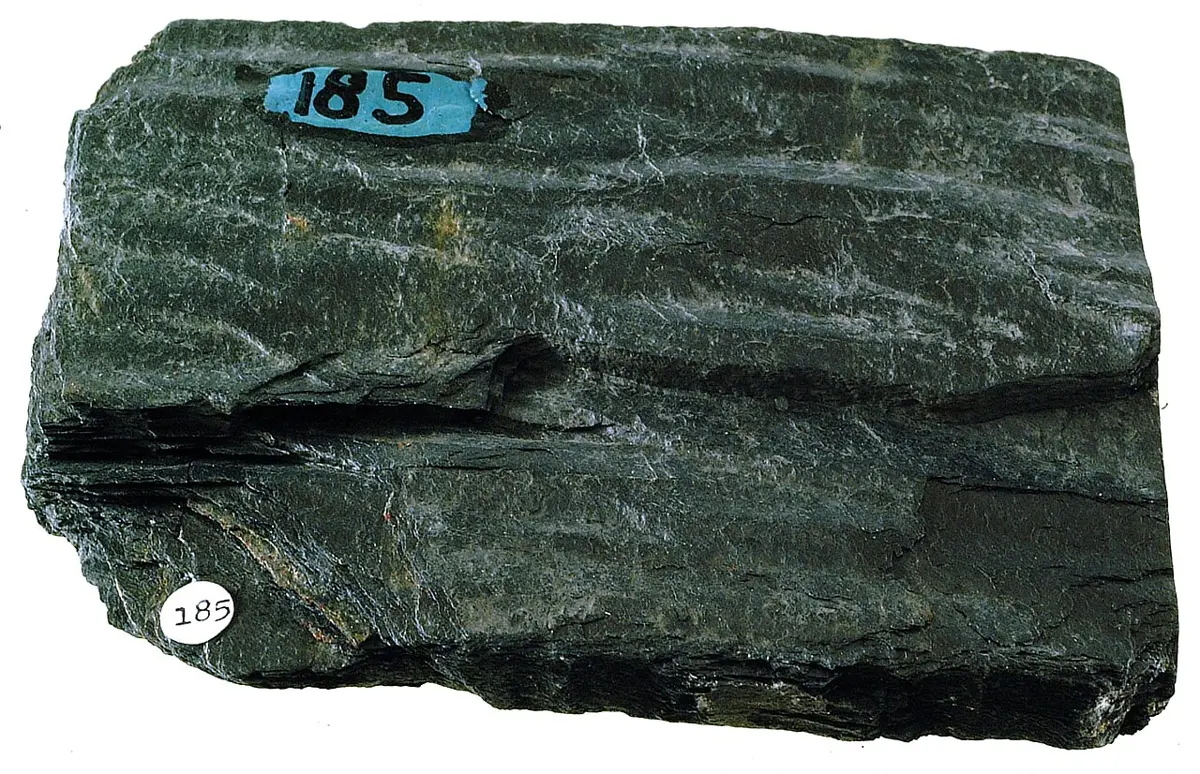
Slate and phyllite in Nepal
Slate and phyllite are among the main rocks of the Lesser Himalaya, with schist, quartzite, limestone and dolomite. Slate has been quarried since historic times in Taplejung, Dhankuta, Ramechhap, Sindhupalchok, Nuwakot, Dhading, Gorkha, Myagdi, Baglung, Parbat, Jajarkot, Achham, Doti, Dadeldhura, Baitadi, Bajhang, Bajura and many other districts, for roofing and paving. Phyllite, flaggy quartzite and schist are also split for roofs.
Small-scale slate quarrying for a household’s own use needs no license from the Department of Mines and Geology, though the local government may collect a royalty.
What slate is used for
Roofs and floors, because it splits into thin sheets, takes up very little water and stands up to frost; paving and flagstones. In the past slate was also used for chalkboards, students’ writing slates and billiard tables.
In short
Where these facts come from
- Kaphle K.P., Mineral resources of Nepal and their present status, Nepal Geological Society, 2020.
- Ghimire R.P., Mineral resources, mining and investment opportunities in Nepal, in Annual Report No. 11, Department of Mines and Geology, 2019.
- King H.M., Slate and Phyllite, Geology.com.