
Galena and sphalerite: lead and zinc ores
सिसा र जस्ता · Lead and zinc, found together
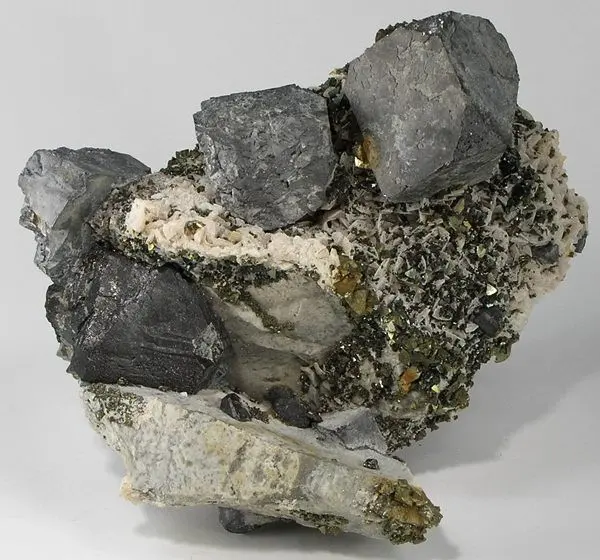
Pick up a piece of galena and you will be surprised: it is heavy, like a lump of metal. That is because it is mostly metal: about 87% of its weight is lead, सिसा. Its usual partner in the ground is sphalerite, the ore of zinc, जस्ता: the same word Nepali uses for zinc-coated roofing sheets, जस्तापाता. In Baglung there is a village called Shisa Khani, “lead mine”.
Two ores
| Property | Galena | Sphalerite |
|---|---|---|
| Formula | PbS (lead sulfide) | (Zn,Fe)S (zinc sulfide, with some iron) |
| Hardness (Mohs) | 2.5 to 2.75 | 3.5 to 4 |
| Density (× water) | 7.58 | 3.9 to 4.1 |
| Color | bright silver gray, tarnishing to dull lead gray | yellow, brown, red or black |
| Luster | metallic | resin-like to glassy |
| Cleavage | perfect, in three directions at right angles: it breaks into cubes | perfect |
| Streak | lead gray | pale brown to pale yellow |
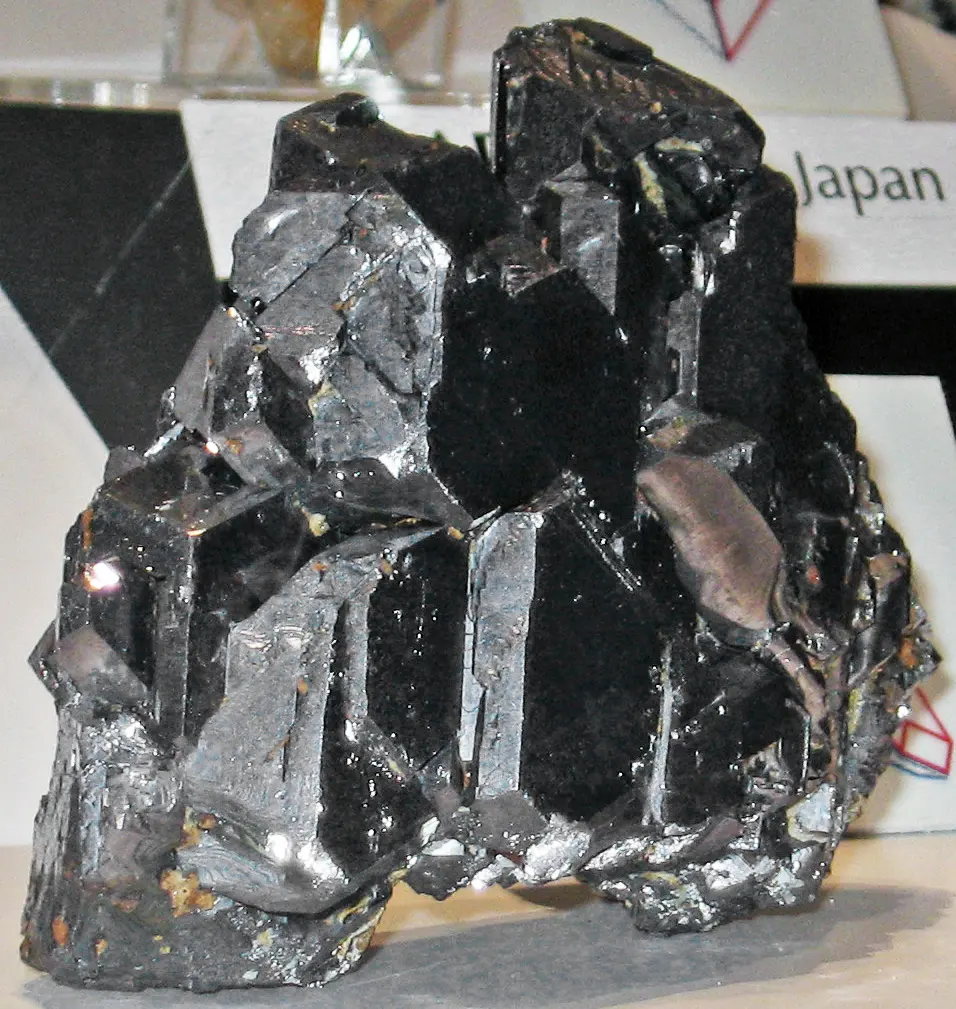
Galena’s cubes and its weight make it easy to recognize. It is the ore of most of the world’s lead, and often of silver too: some galena holds a few percent of silver. Sphalerite is the world’s most important ore of zinc.
How they form
Many deposits of sphalerite and galena formed where hot, acidic water carrying dissolved metals met carbonate rocks such as limestone and dolomite. The metals came out of the water as sulfide minerals. Because they come out of the same fluids, lead, zinc, copper and silver minerals are often found together, as in this page’s photo.
Lead and zinc in Nepal
Lead and zinc are reported from more than 57 places in Nepal, and in most of them galena and sphalerite occur together: in the Ganesh Himal area (Rasuwa), Phakuwa (Sankhuwasabha), Labang–Khairang and Barghare (Makwanpur), Pangum (Solukhumbu), Phulchoki (Lalitpur), Hatti Lekh (Palpa), Sisha Khani and Kandebas (Baglung), Dhuwakot (Parbat), Khola Khani (Taplejung), and in Darchula, Mugu and Humla. Most are old workings.
Only the Ganesh Himal deposits, at Lari, Serkaping, Suple and Poktanzo, have been explored in detail. Lari is rich, with silver and cadmium too, but the published figures differ:
| Who | Ore | Grade |
|---|---|---|
| Kaphle 2020 (Lari) | about 2 million tonnes | 13% zinc and lead together |
| Department of Mines and Geology, 2019, table | 2.21 million tonnes | 13.6% zinc, 2.3% lead |
| Department of Mines and Geology, 2019, text | 1.3 million tonnes | 13.6% zinc, 2.5% lead, 27 grams of silver a tonne |
Nepal Metal Company developed an underground mine at Lari long ago, but the deposit has never been worked: it is remote with no road, the climate is harsh, the geology complex and the tonnage small for all its high grade. In 2018 the Department issued one zinc and three lead mining licenses; none was producing in 2020. Another deposit, Khairang in Makwanpur, holds about 1.54 million tonnes at 2% lead and zinc.
What lead and zinc are used for
- Lead: mostly in lead-acid batteries, the batteries that start cars and keep backup power for computers and telephones running.
- Zinc: sphalerite is its main ore. In Nepali, the metal roofing sheets of village houses are named after it: जस्तापाता.
- Silver: from silver-rich galena.
In short
Where these facts come from
- Kaphle K.P., Mineral resources of Nepal and their present status, Nepal Geological Society, 2020.
- Ghimire R.P., Mineral resources, mining and investment opportunities in Nepal, in Annual Report No. 11, Department of Mines and Geology, 2019.
- Anthony J.W. et al., Galena and Sphalerite, Handbook of Mineralogy, Mineralogical Society of America.
- King H.M., Galena and Sphalerite, Geology.com.
- World Health Organization, Lead poisoning, fact sheet, 2026.