
Sandstone and quartzite: sand turned to stone
बलौटे ढुङ्गा · From loose sand to the hardest common rock
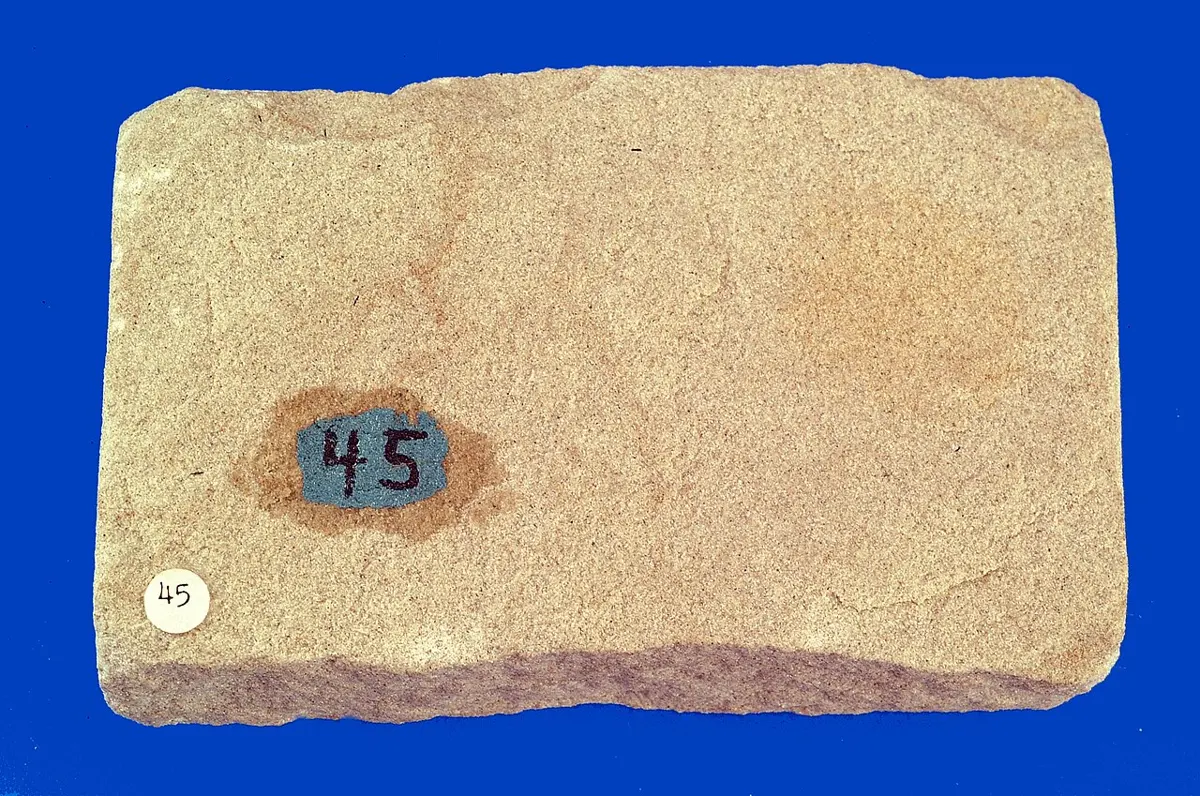
Rub a piece of sandstone and grains come off on your fingers: it is sand, stuck together. Its tough cousin, quartzite, looks similar but no rubbing will free a grain; a hammer blow breaks it straight through its grains. Between them they make many of Nepal’s hills, roofs and pavements.
Sandstone
Sandstone is a sedimentary rock: a rock made of bits of other rocks, laid down in layers and stuck together. Its grains are sand-sized, between 1/16 of a millimeter and 2 millimeters across. “Sand” here means the size of the grains, not what they are made of, though most are quartz, since quartz outlasts other minerals. A natural cement of other minerals fills the gaps and binds the grains.
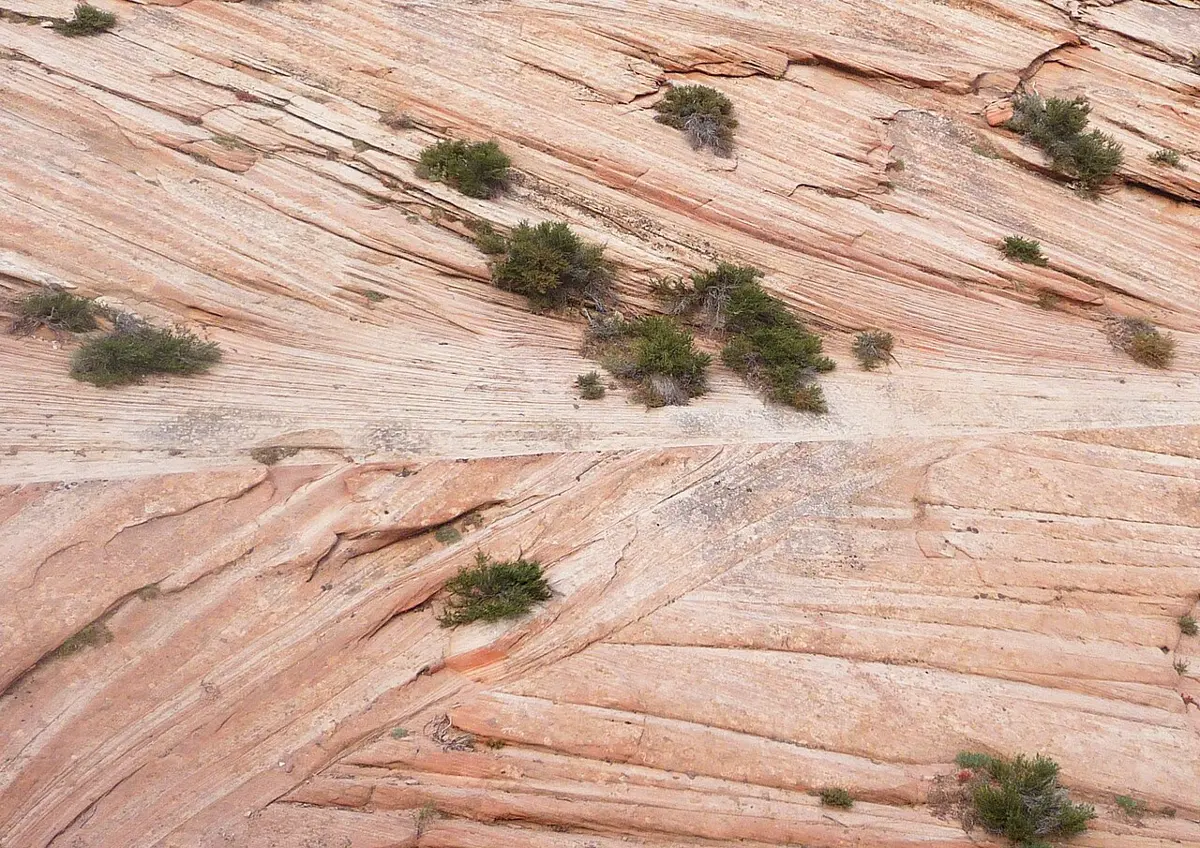
Rivers carry sand down from the mountains and spread it in basins; waves and wind can too. Buried under more sand and mud, the layers are pressed and cemented into stone. You can often still see the layers, and sometimes slanting layers left by moving ripples or dunes.
Nepal’s sandstone hills
The Siwalik, or Churia, hills along the edge of the Terai are made of sandstone, mudstone and conglomerate (pebbles cemented together), laid down from the middle Miocene to the early Pleistocene, while the Himalaya were rising to the north. Geologists divide them into three parts, which the Department of Mines and Geology describes in western Nepal:
| Part | Rocks |
|---|---|
| Upper Siwalik | boulders, conglomerate, sandy clays |
| Middle Siwalik | pebbly sandstone rich in feldspar, clays |
| Lower Siwalik | fine sandstone, clays, purple shales |
The Siwalik is a source of building stone and sand, and some of its sandstone layers hold traces of uranium, as at Tinbhangale in Makwanpur (see Uranium).
Quartzite
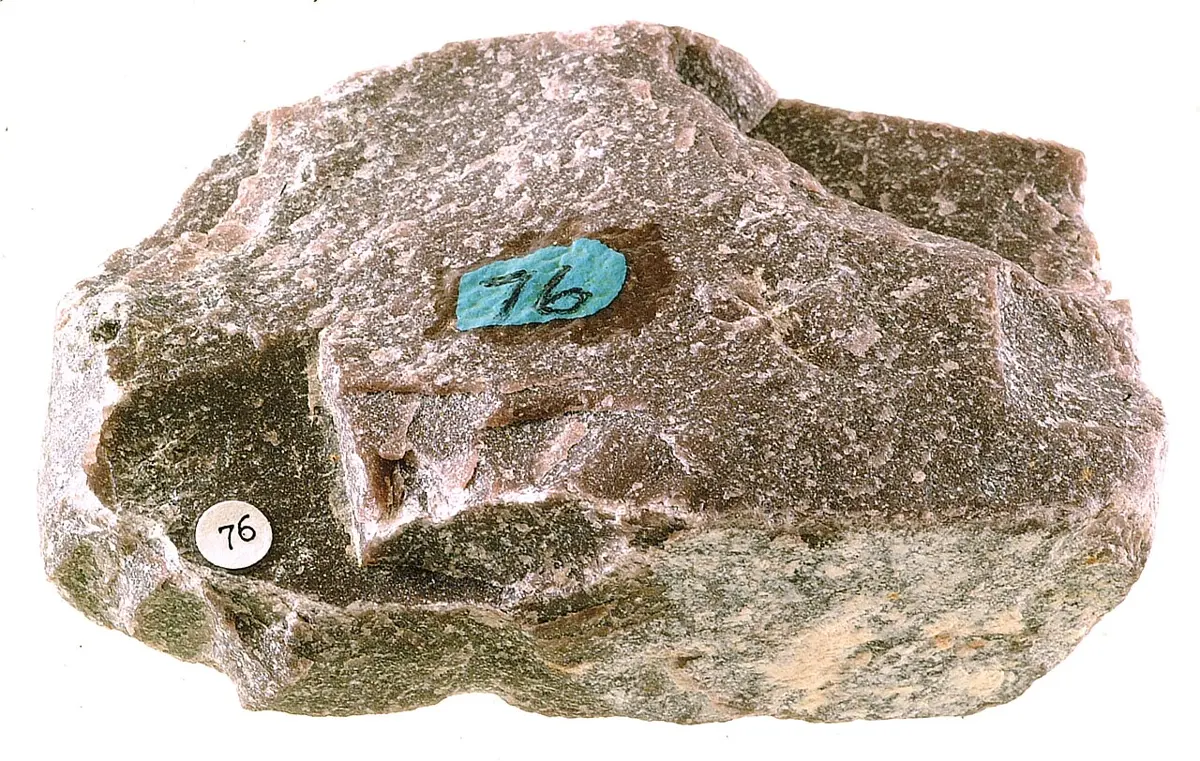
When a quartz-rich sandstone is buried deep in a mountain belt and squeezed by colliding plates, heat, pressure and hot fluids weld its grains together. It becomes quartzite, a metamorphic rock made almost entirely of interlocking quartz. Quartzite is about 7 on the Mohs scale, like quartz itself, and is one of the toughest and most weather-resistant rocks at Earth’s surface.
| Sandstone | Quartzite | |
|---|---|---|
| Kind of rock | sedimentary | metamorphic |
| Grains | cemented; can rub loose | welded together |
| Breaks | around the grains | straight through the grains |
Quartzite in Nepal
Quartzite is plentiful in Nepal’s hills, from Taplejung, Ilam and Panchthar in the east through Kavre, Makwanpur, Dhading, Nuwakot, Tanahun, Kaski, Syangja, Parbat, Baglung and Myagdi to Doti, Bajhang, Baitadi and Darchula in the far west. Flaggy quartzite, rich in fine mica, splits into flat slabs used for roofing, flooring and wall facing, and is in high demand in Kathmandu, Pokhara and other cities. In 2018 the Department issued 12 mining and 50 prospecting licenses for quartzite and slabstone.
What they are used for
- Sandstone: building and decorative slabs, crushed stone; very pure quartz sandstone is crushed for glass.
- Quartzite: slabs for roofs, floors and walls, crushed stone for roads, and as dimension stone.
- Underground, sandstone layers can hold groundwater, or oil and gas.
In short
Where these facts come from
- Kaphle K.P., Mineral resources of Nepal and their present status, Nepal Geological Society, 2020.
- Geological mapping for mineral exploration in parts of Achham, Dailekh and Surkhet districts; and Khadka D.R., Status of uranium and thorium prospects in Nepal; both in Annual Report No. 11, Department of Mines and Geology, 2019.
- King H.M., Sandstone and Quartzite, Geology.com.