
Kathmandu’s lake-bed clay: the Valley that was a lake
Mud, diatoms and gas from an old lake
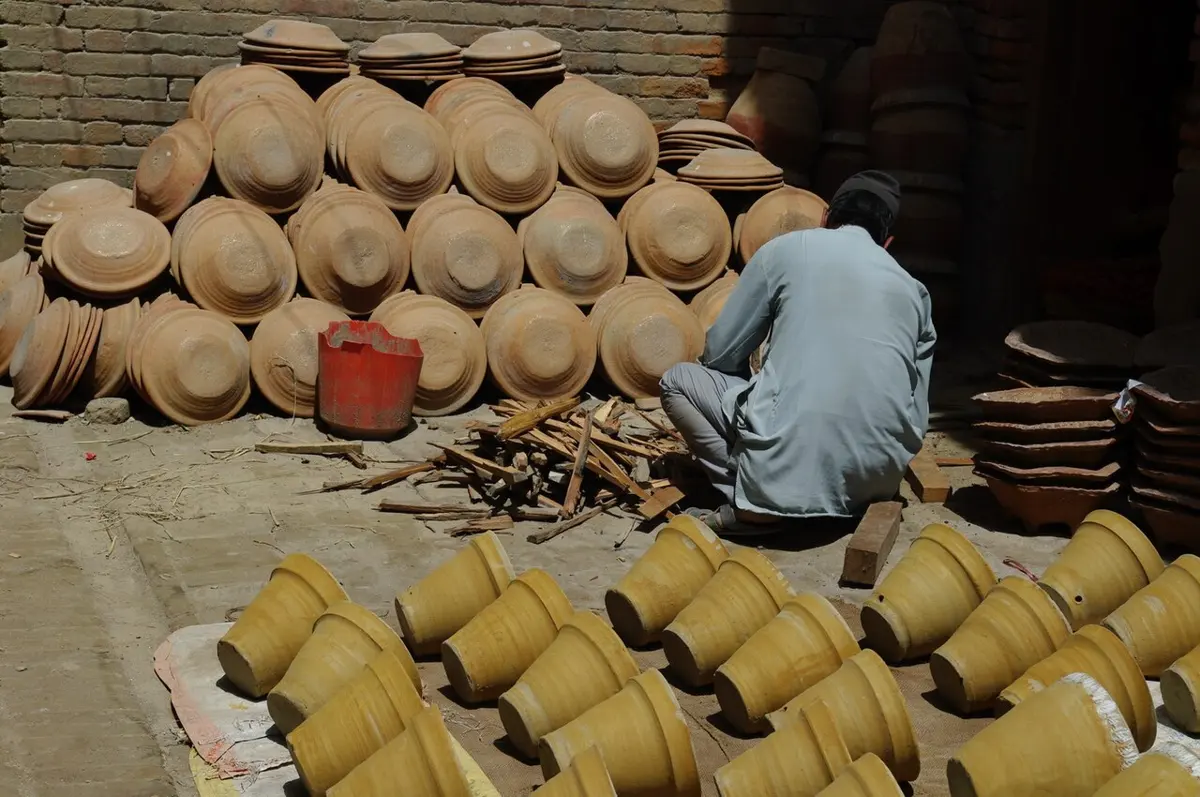
The pots drying in the sun in Bhaktapur are made of clay dug in Thimi and Bhaktapur. Kathmandu Valley is full of clay because, for a very long time, it was the floor of a lake.
The Paleo-Kathmandu Lake
For about the last 2.5 million years, a lake, the Paleo-Kathmandu Lake, filled much of Kathmandu Valley. Its deposits are thick and mostly black clay, called Kalimati clay (the Kalimati Formation). Below them lie sand and gravel laid down earlier by the Proto-Bagmati River.
The clay holds a record of the past: fossil pollen, diatoms, and the remains of animals with and without backbones. Geologists read them to learn how the monsoon climate changed while the Himalaya rose.
The lake is gone; its floor is now the Valley’s farmland and city.
What the old lake gives
| Material | What it is | Where and how it is used |
|---|---|---|
| Potter’s clay | clay dug at Thimi and Bhaktapur | small pottery workshops |
| Brick clay | silty clay | large amounts all over the Valley, for ordinary house bricks |
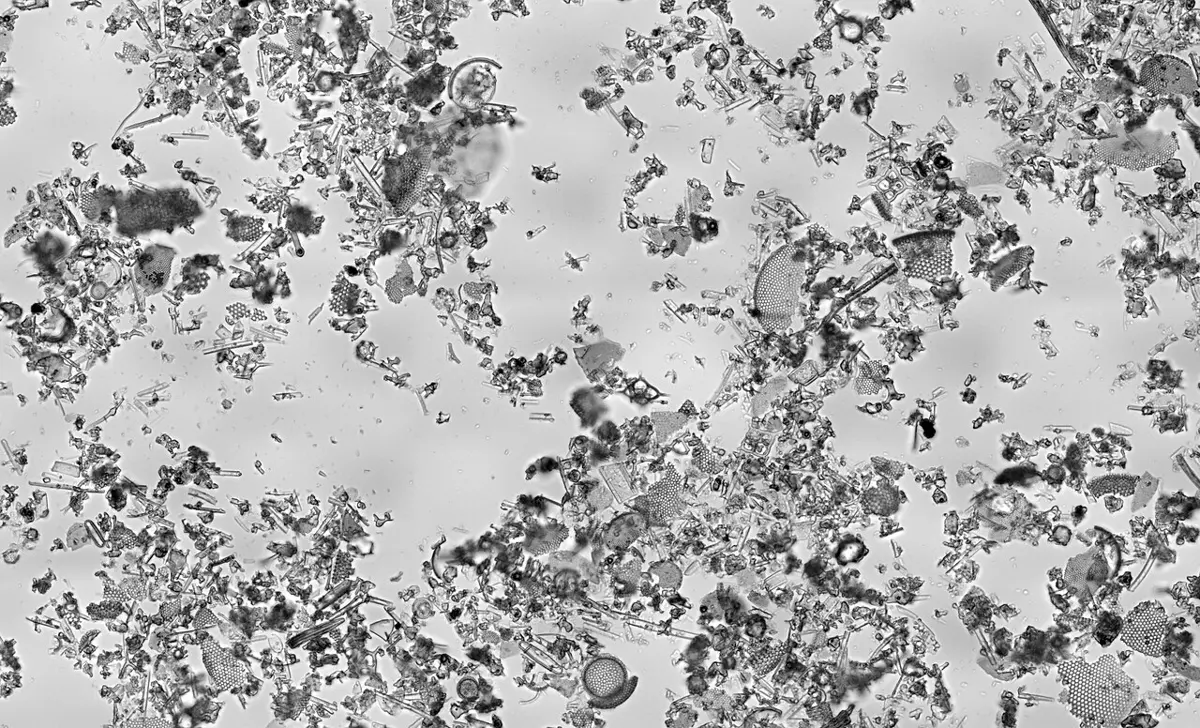
| Diatomite | a light, white rock made of the tiny silica skeletons of diatoms (microscopic algae) | beds up to 2 m thick at Chobhar, Thimi and Bode; dug by hand on a small scale at Thimi and Bode for local use |
| Peat and lignite | partly turned plant remains, the first steps toward coal | mined and burned, with firewood, in the brick kilns |
| Methane gas | natural gas made by living things, dissolved in groundwater | under the Valley (below) |
In villages, red clay and white clay (कमेरो, kamero) are also used to paint house walls.
Gas under the city
The Department of Mines and Geology drilled more than 15 holes, down to 570 m, over 26 square kilometers of the Valley, and proved about 310 million cubic meters of methane, lying 120 to 300 m down, dissolved in the groundwater. A model gas plant was set up at Tripureshwor/Teku. A feasibility study found it could supply 21,000 families for about 30 years, and the Department has invited investors to develop it.
What diatomite is used for
Diatomite has very small particles, is very porous and hardly reacts with anything, so it is used as a filter (beer is often filtered through it), as an absorbent, and as a lightweight filler in rubber, paint and plastics. The quality and quantity of Nepal’s diatomite have not yet been assessed.
In short
Where these facts come from
- Sakai H., The Kathmandu Basin: an archive of Himalayan uplift and past monsoon climate, Journal of Nepal Geological Society 25 (special issue), 2001.
- Kaphle K.P., Mineral resources of Nepal and their present status, Nepal Geological Society, 2020.
- King H.M., Diatomite and Coal, Geology.com.
- कमेरो in the Nepali Brihat Shabdakosh (Nepal Academy).