
Grade 9 Science and Math: A Teacher’s Guide
How the exhibits and the garden link to what you teach, unit by unit.
This guide links what your Grade 9 class sees at Science Playground to the units you teach from the Science and Technology textbook, unit by unit, in the book’s order. For each unit you’ll find the CDC learning outcomes the visit supports, the exhibits and garden plants that show them, what students do at each one, a question to ask there, the wrong ideas to watch for, and an activity from the book for before and after the visit.
Grade 9 asks students to work like scientists: predict, test fairly, measure, repeat and explain. Most stops here are small experiments of that kind, and many lead straight into a practical or a project work from the book. A visit works well in the middle of the year, when students have met some of the ideas and can still look forward to the rest; the questions are written so students can answer them by looking, even before they reach a unit.
Two stops also serve the Mathematics books: the gears for HCF and LCM, and the Galton board for probability and, in Optional Mathematics, the spread of data. They are marked Math and come after the science units.
Every stop links to its section in Grade 9 Science, Explained, our free online edition of the textbook, where students can read the idea again after the visit.
Visit sheets for the day
Pages to print for you, for before, during and after the visit, and a two-page explorer sheet to copy for your students.
At a glance
38 exhibits and plants for 18 of the books’ units. Tap a unit to go to it.
- Unit 1: Scientific Study 4 stops
- Unit 2: Classification of Living Beings 5 stops
- Unit 4: Evolution 2 stops
- Unit 5: Body Structure and Life Process 4 stops
- Unit 6: Nature and Environment 4 stops
- Unit 7: Force and Motion 3 stops
- Unit 8: Simple Machine 2 stops
- Unit 9: Energy 2 stops
- Unit 10: Wave 6 stops
- Unit 11: Electricity 1 stop
- Unit 12: The Universe 1 stop
- Unit 13: Information and Communication Technology 2 stops
- Unit 14: Atomic Structure and Chemical Bond 1 stop
- Unit 17: Metals and Non-metals 2 stops
- Unit 19: Materials used in Agriculture 1 stop
- Math, Unit 10: Highest Common Factor and Lowest Common Multiple 1 stop
- Math, Unit 19: Probability 1 stop
- Optional Math, Unit 5: Statistics 1 stop
A two-hour visit
Four rounds that cover every stop in this guide. With a large class, split into four groups that take the rounds in turn; with less time, choose the units you’re teaching now.
Each round is a line, its stops in walking order; the columns are the floors, from outside up to the Second Floor, so the line steps across where the group takes the stairs.
Round 1 · 30 min · Outdoors
Names, shapes and sound in the garden
Best in the morning, before the midday sun.
- 1
Also in this round, not on the map yet: Mandarin (Suntala), Tamarillo (Rukh Tamatar), Asparagus Fern, Indian Spurge Tree Cactus, Dwarf Jade, Foxtail Orchid
Round 2 · 25 min · Indoors
Cells, tissues and ecosystems
- 1
- 2
- 3In through the Entrance The Paludarium
- 4
- 5
- 6
- 7
- 8
- 9
Round 3 · 30 min · Indoors
Seeing, waves, electricity and matter
- 1
- 2In through the Entrance The Blackest Black
- 3Total Internal Reflection· under the stairs
- 4Up the stairs to the First Floor The Giant Periodic Table
- 5
- 6
- 7
- 8
- 9
- 10
- 11Up the stairs to the Second Floor Glowing Wire Sculptures
Round 4 · 30 min · Indoors and outdoors
Measuring, chance, force and machines
- 1
- 2In through the Entrance Solar House Model
- 3Up the stairs to the First Floor Pulley Systems
- 4
- 5Build a Gear Train (Math)
- 6
- 7
- 8
- 9
- 10
- 11Galton Board (Math, Optional Math)
Unit 1
Scientific Study
Students practice the process skills on real things: predict, observe, measure and conclude. The instruments also show what least count means and why scientists repeat a reading and take the average.
CDC learning outcomes this visit supports
- 1.1Introduce scientific study and the fields of science, and explore the careers in them.
- 1.4Use scientific notation, metric prefixes, least count and the average in measurement.
At the center
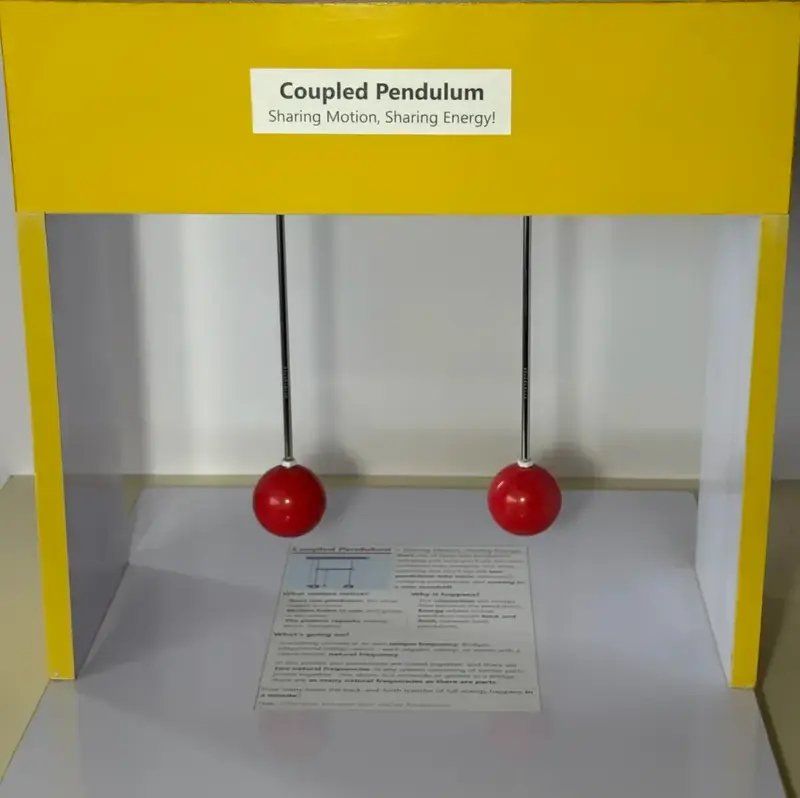
- Coupled Pendulums · 1.1 Scientific process skills
Do: Predict how many swings it takes before the still pendulum is swinging fully, then pull one ball gently aside, let go and count: predicting, observing and measuring.
Ask: Predict how many swings it will take before the still pendulum is swinging fully, then count. Which steps were predicting, observing and measuring?
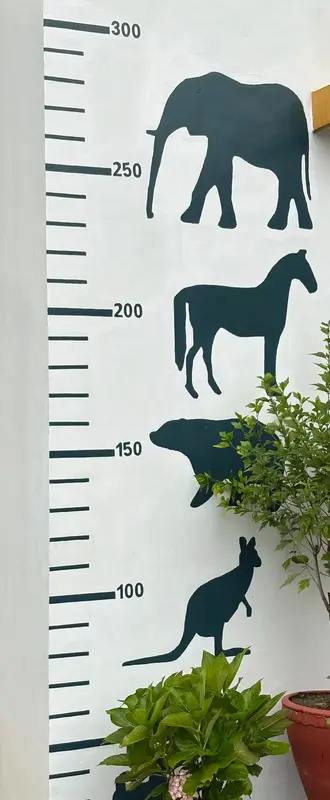
First Floor - How Tall Are You? · 1.8 Importance of least count
Do: Four short marks split each 50 cm into five, so the least count is 10 cm: heights are read to the nearest 10 cm.
Ask: What is this scale’s least count? Could it tell apart heights of 1.42 m and 1.46 m?
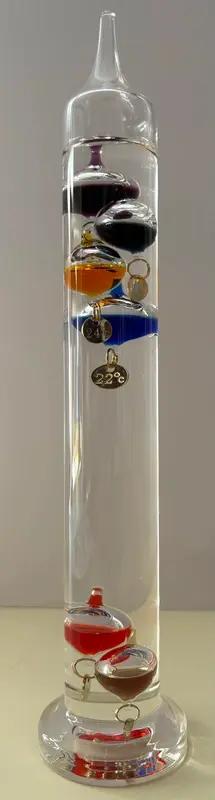
Grounds - Galileo Thermometer · 1.8 Importance of least count
Do: Read tags like 22 °C and 24 °C: it reads only in steps from tag to tag, and that step is its least count.
Ask: What is this thermometer’s least count? Can an ordinary thermometer read more finely?
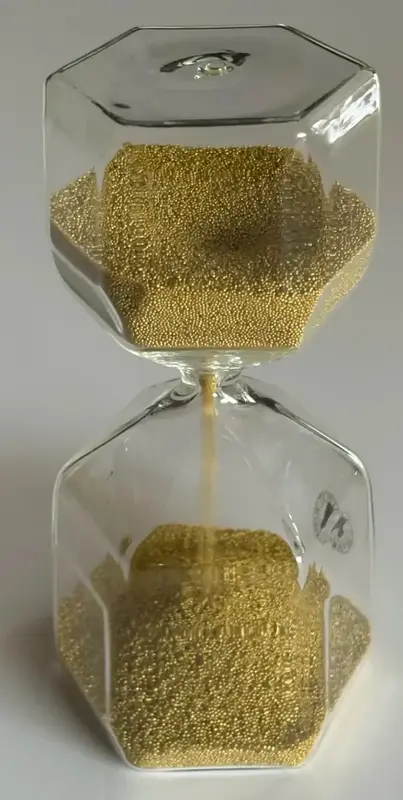
First Floor - The Hourglass · 1.9 Importance of taking the average
Do: Time three runs of the hourglass with a stopwatch: the readings differ a little, so take their average as the time it measures.
Ask: Time three runs and work out their average. Why do the three readings differ?
First Floor
Watch for
- Students think one careful reading is enough. Every reading has small errors in starting and stopping the watch, so scientists repeat it and take the average.
Before the visit
Do Activity 1.5 (least counts in your school lab), so students can read least counts at the center.
After the visit
Do Activity 1.6 (how long does a stone take to fall?), and compare its spread with the hourglass runs.
Unit 2
Classification of Living Beings
In the garden students meet scientific names on real plants: two names that share a genus, and a name that corrects a misleading common one. The cell models show the features that separate two of the five kingdoms.
CDC learning outcomes this visit supports
- 2.1Introduce the binomial system of nomenclature and use it to write the scientific names of organisms.
- 2.2Define genus and species.
- 2.3Make clear the idea of classifying organisms by the five-kingdom system.
At the center
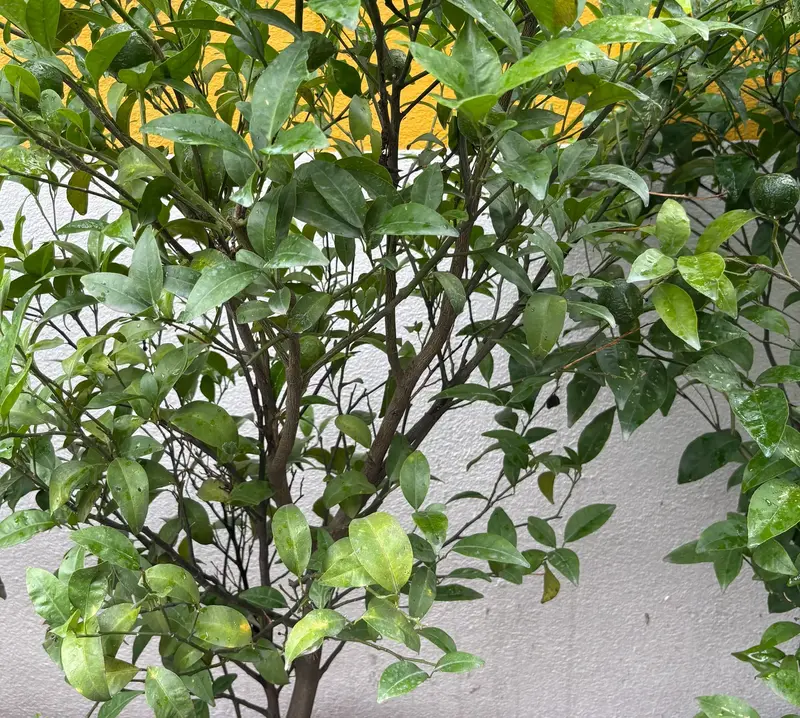
- Mandarin (Suntala) · 2.2 Binomial system of nomenclature
Do: Compare the mandarin (suntala) with the sweet orange (junar): Citrus reticulata and Citrus sinensis, one genus, two species.
Ask: Its scientific name is Citrus reticulata. Which word is the genus, and which the species?
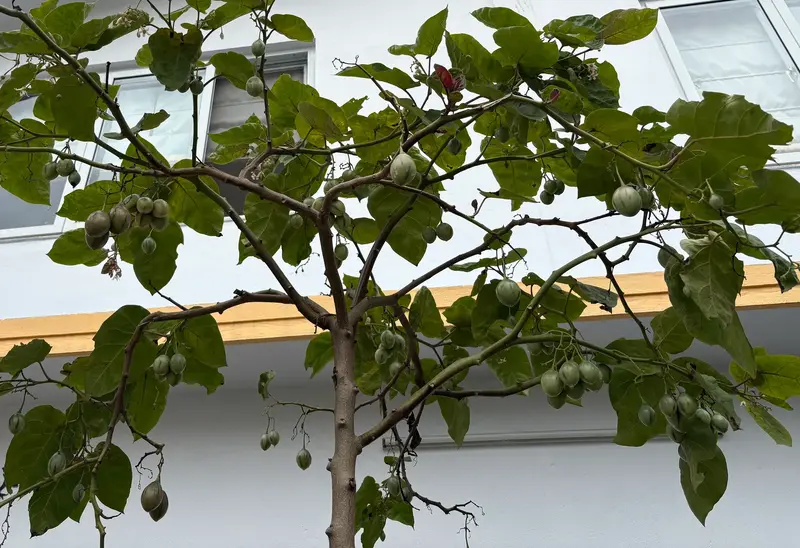
- Tamarillo (Rukh Tamatar) · 2.2 Binomial system of nomenclature
Do: Rukh tamatar is Solanum betaceum: the same genus as the potato and the tomato.
Ask: Which vegetables share rukh tamatar’s genus, Solanum? What does that tell you?
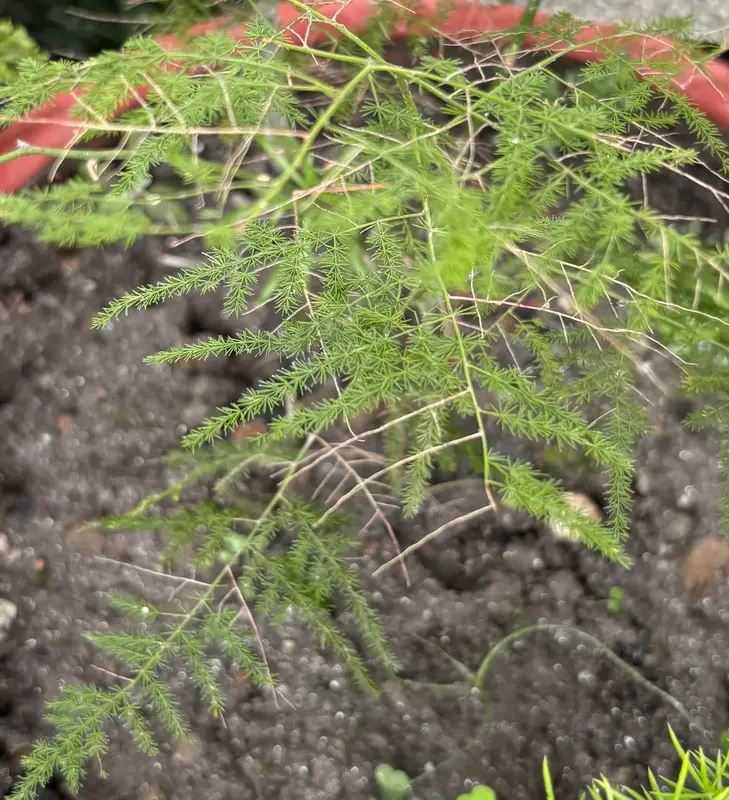
- Asparagus Fern · 2.2 Binomial system of nomenclature
Do: The “asparagus fern” isn’t a fern at all: its scientific name, Asparagus, tells the truth.
Ask: What does its scientific name say it is? What does it make that a fern never does?
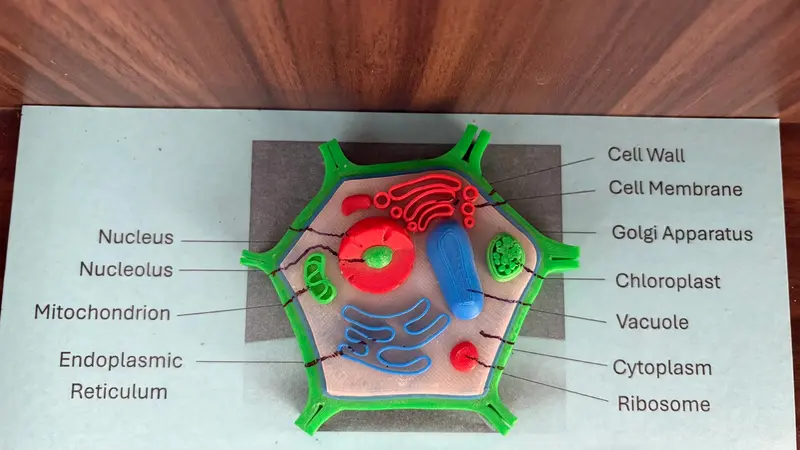
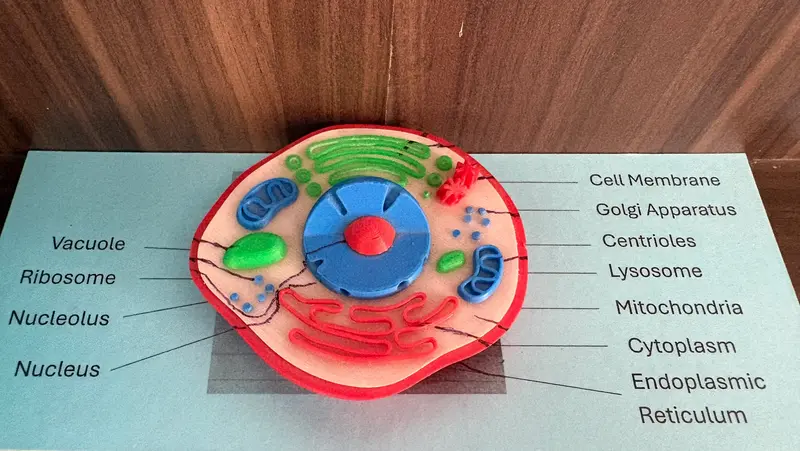
- Plant Cell Model · 2.4 Bases of the five kingdom system
Do: Find the cell wall and the green chloroplasts: a cell wall and making its own food are what put an organism in kingdom Plantae.
Ask: Find the cell wall and the chloroplasts. Which kingdom do they point to?
Ground Floor - Animal Cell Model · 2.4 Bases of the five kingdom system
Do: No cell wall and no chloroplasts: compare it with the plant cell model to see why animals have a kingdom of their own, Animalia.
Ask: Which two parts of the plant cell are missing here? Which kingdom does that point to?
Ground Floor
Watch for
- Students think a common name is good enough. One plant can have several common names, and a name can mislead: the asparagus fern isn’t a fern. A scientific name is the same everywhere.
Before the visit
Do Activity 2.1 (is two kingdoms enough?), so students arrive asking what makes a plant a plant.
After the visit
Answer Exercise 4 c (what are genus and species?) with the mandarin and the tamarillo as examples.
Unit 4
Evolution
The spiral puts Earth’s whole history on one wall, so students see how late plants, animals and people arrive, and the garden has a plant that shows analogous organs.
CDC learning outcomes this visit supports
- 4.1Describe the idea of evolution from its evidence.
At the center
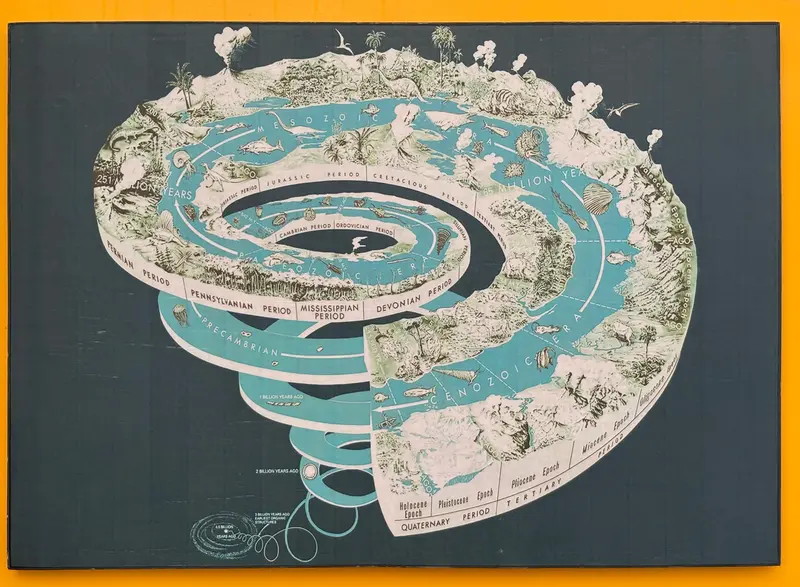
- The Spiral of Life on Earth · 4.1 Introduction to evolution
Do: Follow the spiral from Earth’s formation to today: single cells for most of the time, plants and animals much later, humans at the very tip.
Ask: For how much of Earth’s history was life only single cells? How do scientists know the order?
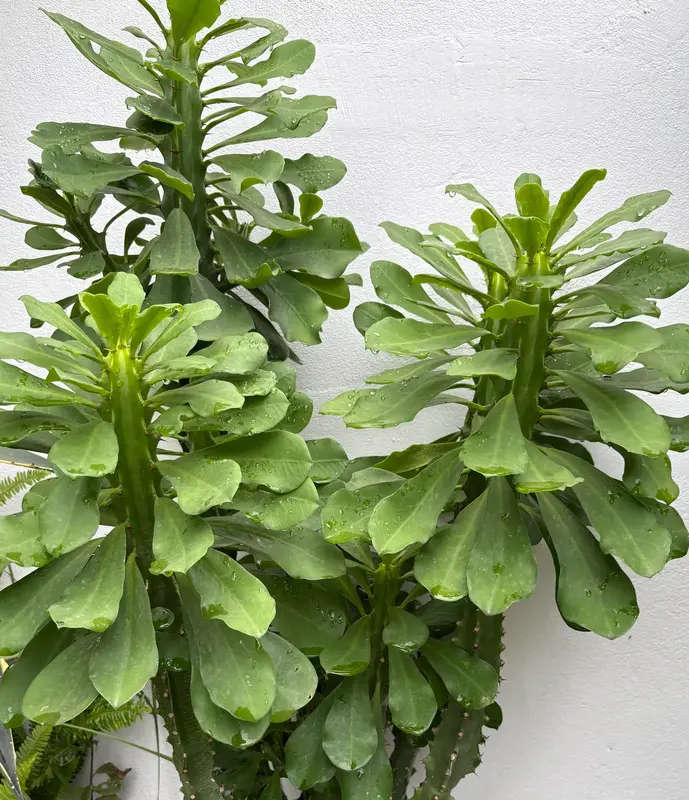
Ground Floor - Indian Spurge Tree Cactus · 4.2 Evidences of organic evolution
Do: It looks like a cactus but is a euphorbia; its spines do the same job as a cactus’s but grow from a different part: analogous organs.
Ask: Look for leaves on its ribs. Are its spines and a cactus’s homologous or analogous?
Watch for
- Students think things that look alike must be close relatives. Analogous organs do the same job in unrelated groups, like the spines of this euphorbia and of a cactus.
Before the visit
Do Activity 4.1 (variation in your family), so students have seen variation close to home.
After the visit
Do the project work on evidences of evolution, adding the euphorbia and a cactus as analogous organs.
Unit 5
Body Structure and Life Process
Students see tissues at work in whole plants: a year’s xylem in each tree ring, xylem and phloem in leaf veins, side buds that grew once a tip was cut. An illusion shows the cerebrum making sense of what the eyes send.
CDC learning outcomes this visit supports
- 5.1Introduce tissues, and describe the types of plant and animal tissue, where they are found and what they do.
- 5.2Explain the structure and functions of the parts of the human nervous system.
- 5.5Introduce plant hormones, and describe what growth hormones do and how they are used.
At the center
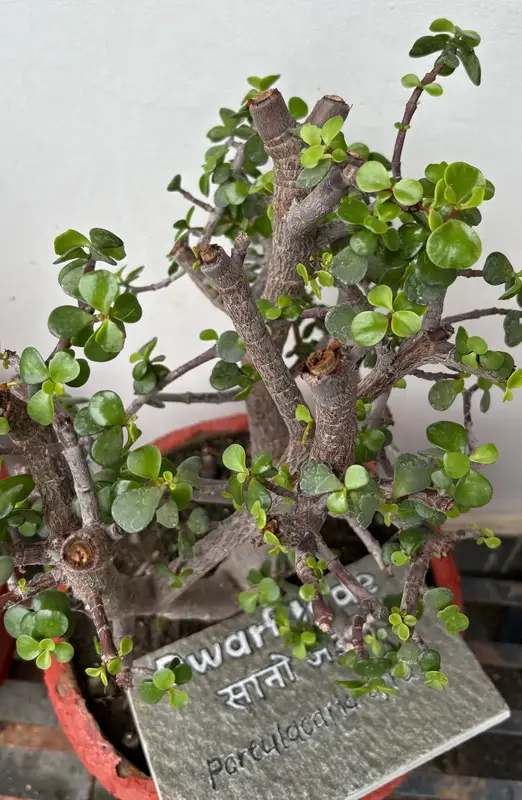
- Dwarf Jade · 5.4 Plant hormone
Do: Below each cut end of its thick stems, side buds have grown into new branches: with the tip gone, apical dominance ended.
Ask: Find a cut end. What grew below it, and why didn’t those buds grow before?
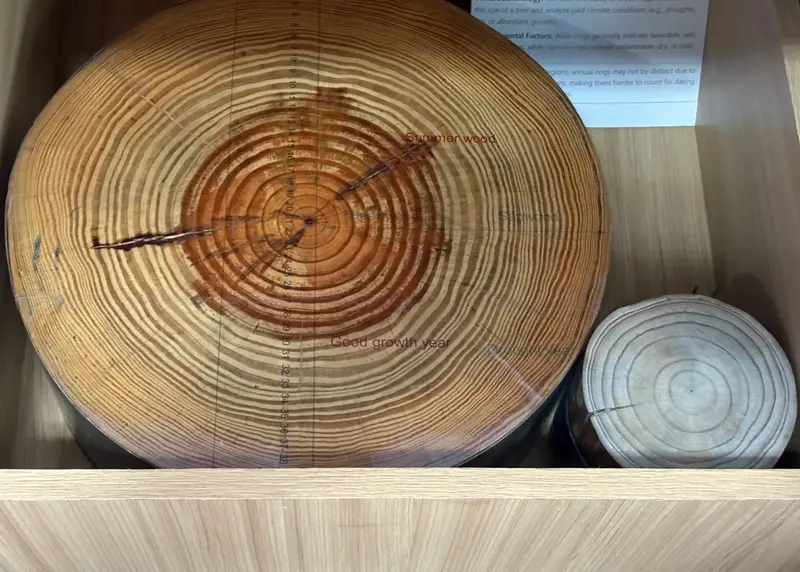
- Tree Ring Cross-Section · 5.1 Tissue
Do: Count the rings: each is a year’s wood, or xylem, laid down by the cambium, the lateral meristem that makes a trunk thicker.
Ask: How old was the tree? Which tissue is each ring, and which meristem laid it down?
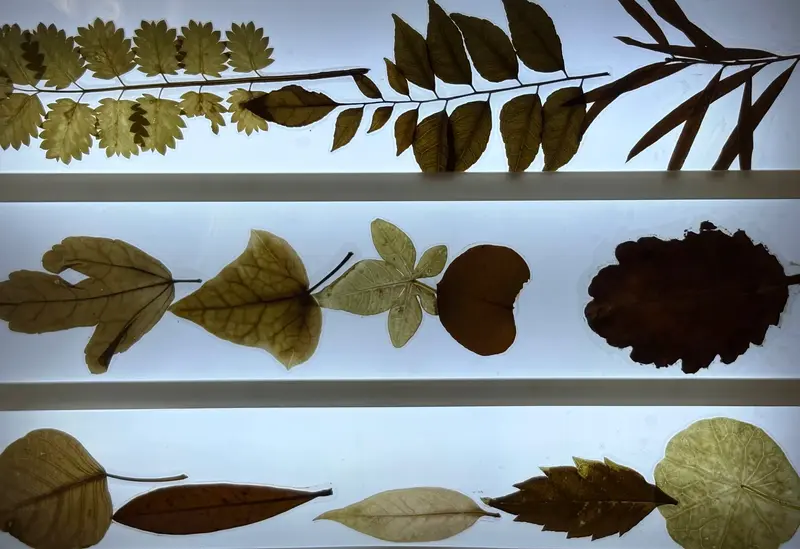
Ground Floor - Leaf Shapes and Veins · 5.1 Tissue
Do: Trace the veins in the backlit leaves: each vein carries xylem and phloem, the plant’s pipes for water and for food.
Ask: Trace the veins of one leaf. Which two tissues run in each vein, and what does each carry?
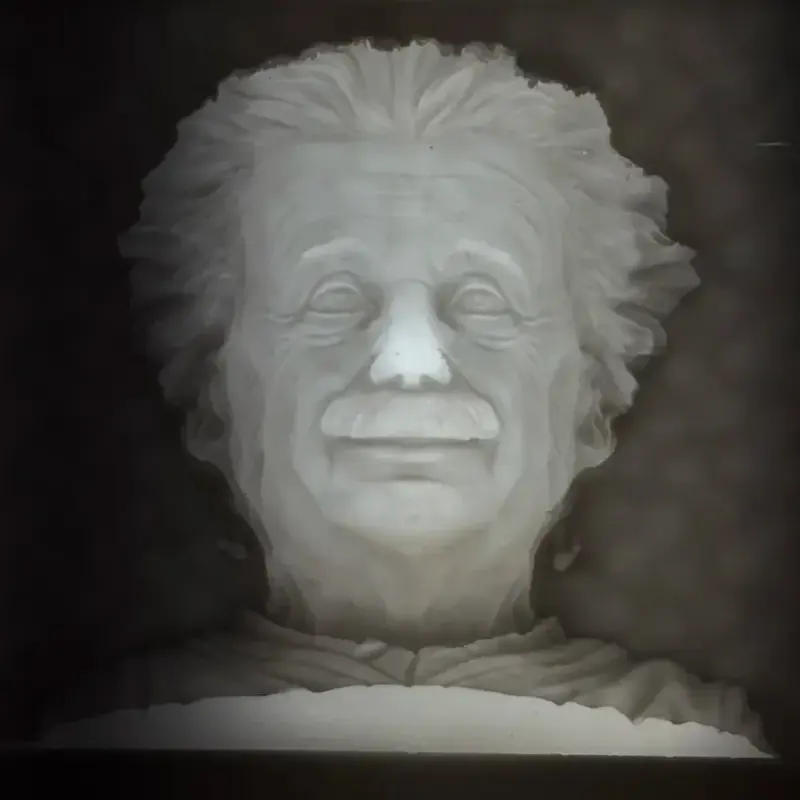
Ground Floor - The Hollow Face Illusion · 5.2 Human nervous system
Do: The face is hollow, yet you see it bulge out: your cerebrum, making sense of what the eyes report, sees the face it expects.
Ask: It’s hollow, yet it seems to bulge. Which part of the brain decides what you see?
First Floor
Watch for
- Students think a trunk thickens from the center. The cambium, just under the bark, adds a new ring of xylem on the outside each year, so the oldest wood is in the middle.
Before the visit
Do Activity 5.1 (what happens when the tip is pinched off?) a week before the visit.
After the visit
Do Activity 5.2 (looking at plant tissue): find the xylem that made the tree’s rings.
Unit 6
Nature and Environment
The pond and the paludarium are ecosystems small enough to see whole, and the orchid and the bromeliads show commensalism on real plants.
CDC learning outcomes this visit supports
- 6.1Explain how the biotic and abiotic components of aquatic and terrestrial ecosystems depend on each other.
- 6.2Introduce food chains and food webs, and show how living things in an ecosystem depend on each other.
- 6.3Describe the kinds of interaction between living things in an ecosystem.
At the center
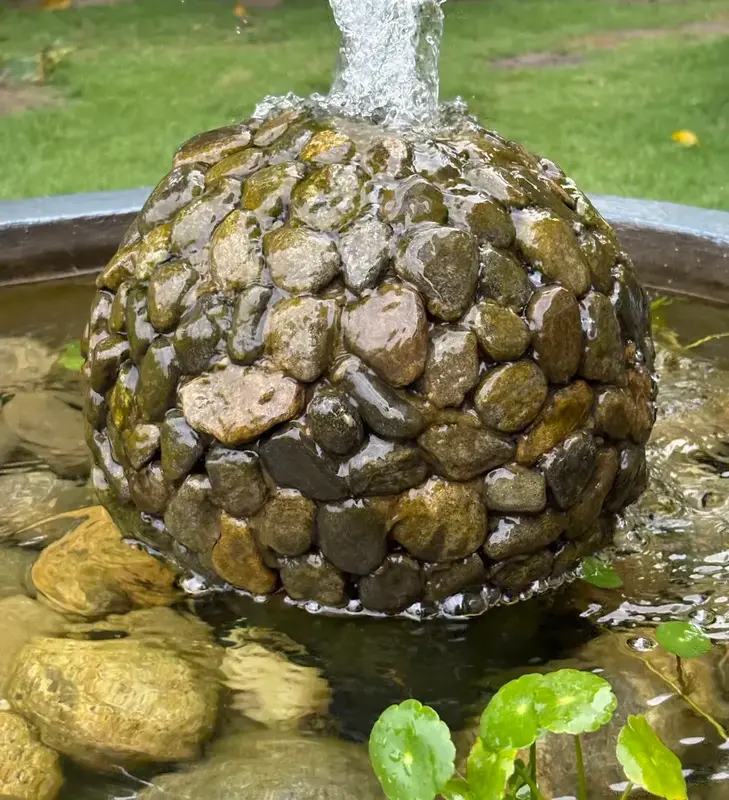
- The Ecosystem Pond · 6.1 Ecosystem
Do: Find the pond’s producers, consumers and decomposers, the parts that keep it running.
Ask: Trace the energy from sunlight to the guppies. Does energy go round the pond as the materials do, or flow one way?
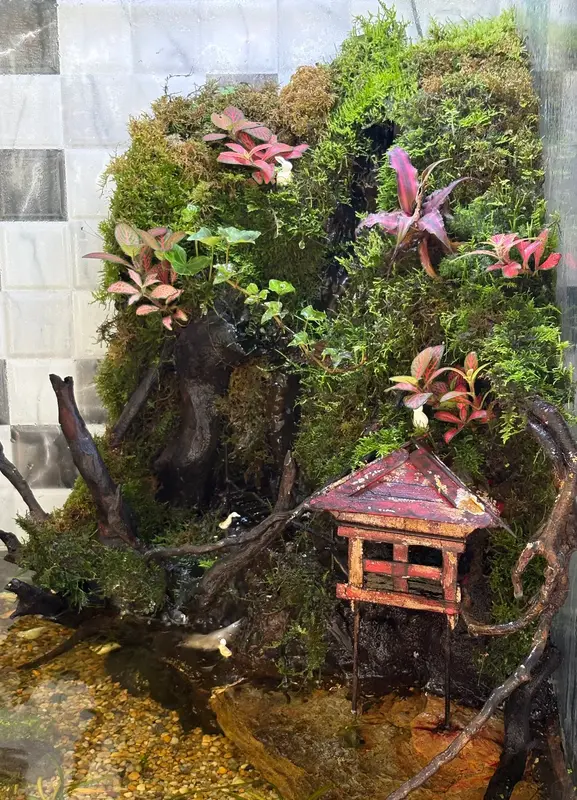
Grounds - The Paludarium · 6.1 Ecosystem
Do: Water below, land above: name its biotic parts, the mosses and other plants, and its abiotic ones, the water, light and moist air.
Ask: Name three biotic and three abiotic parts. Which abiotic part do the mosses need most?
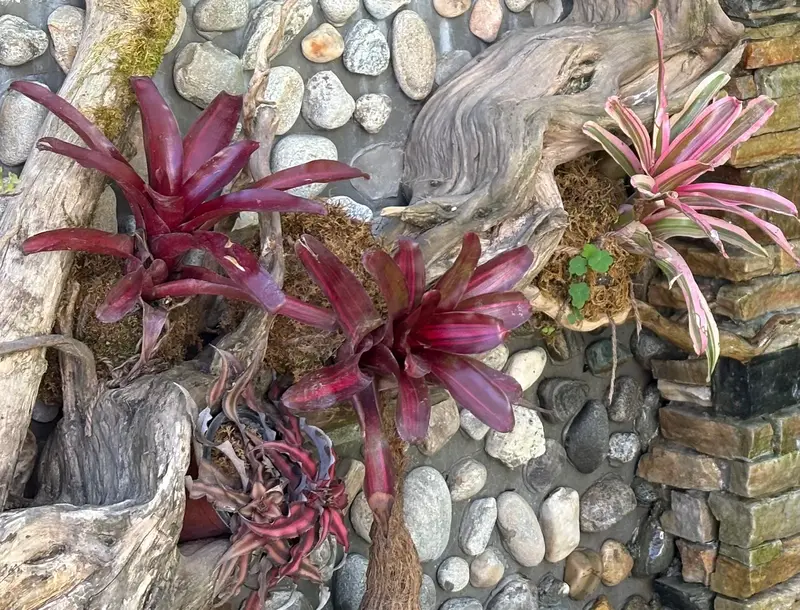
Ground Floor - Bromeliads and Air Plants · 6.2 Interaction between living beings
Do: In the wild these epiphytes perch on trees like the book’s orchid: their roots only hold on, so the tree loses nothing. That is commensalism.
Ask: What does each bromeliad sit in? In the wild, does the tree it perches on gain or lose?
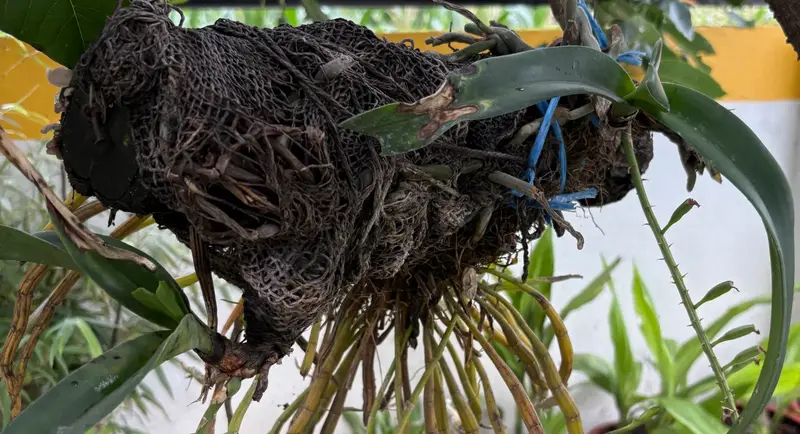
Grounds - Foxtail Orchid · 6.2 Interaction between living beings
Do: Like the orchid in the book’s photo, this one grows on trees but takes nothing from them.
Ask: This orchid lives on a tree but takes nothing from it. Is that parasitism, mutualism or commensalism? Which of the two gains?
Watch for
- Students call any plant growing on a tree a parasite. An orchid or a bromeliad makes its own food and only sits on the tree, which neither gains nor loses: that is commensalism.
Before the visit
Do Activity 6.3 (study a pond) near school, to compare with the pond at the center.
After the visit
Do Activity 6.6 (who lives with whom?), with the orchid and the bromeliads as examples.
Unit 7
Force and Motion
Three exhibits show Newton’s laws with little else in the way: a ball stopped dead by an equal push back, a rocket pushing its exhaust down, and a globe that keeps spinning with almost no friction.
CDC learning outcomes this visit supports
- 7.3State Newton’s laws of motion, demonstrate them, and find their uses in daily life.
At the center
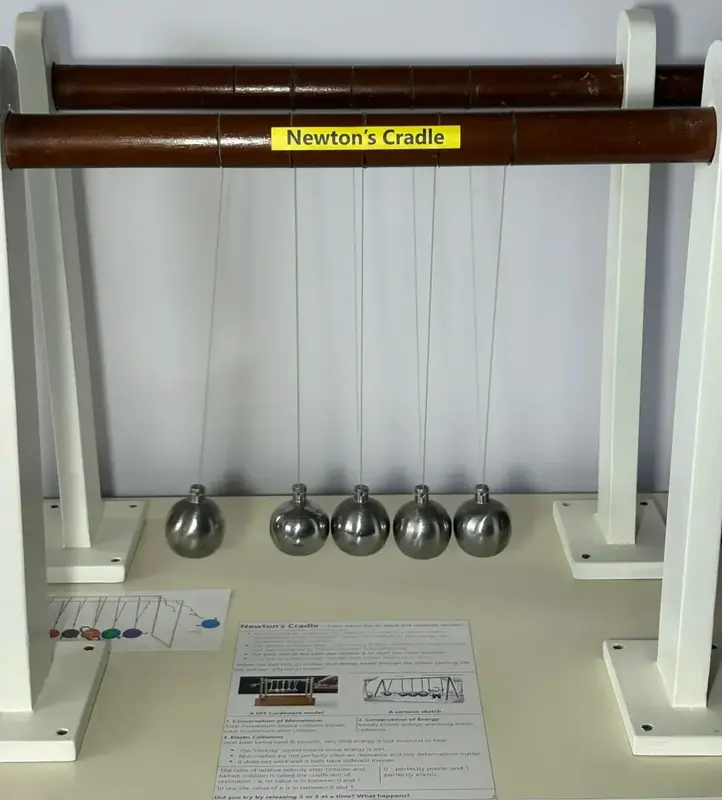
- Newton’s Cradle · Newton’s laws of motion
Do: Release one ball: it stops dead as it strikes, because the row pushes back on it with an equal and opposite force.
Ask: When the first ball hits the row, what stops it? Which law is this?
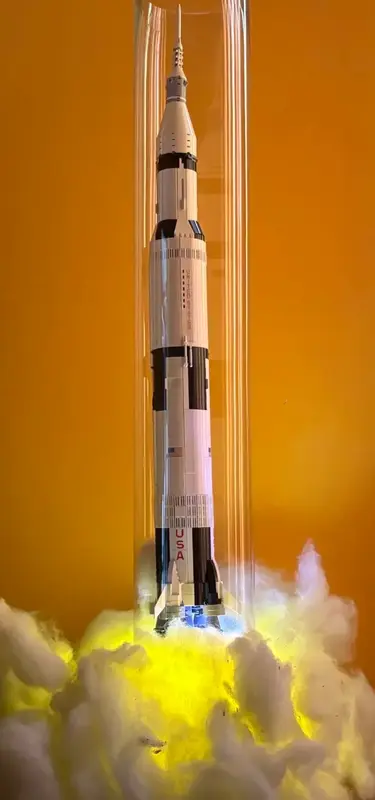
First Floor - Saturn V - LEGO Model · Newton’s laws of motion
Do: A rocket pushes hot gas down, and the gas pushes the rocket up with an equal and opposite force: see the model’s cloud of exhaust.
Ask: Which way do the engines push the gas, and the gas the rocket? Why does it need no air?
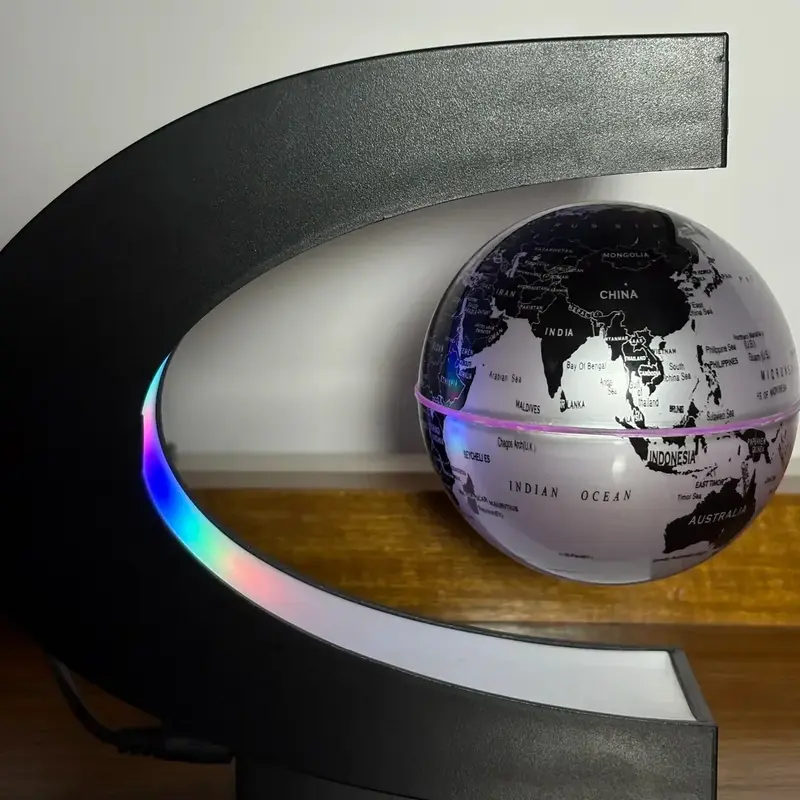
First Floor - Magnetic Levitation · Inertia
Do: Ask the guide to spin the floating globe: with almost no friction to stop it, it keeps turning a long time, inertia of motion.
Ask: Once the guide spins it, the globe keeps turning a long time. Which of Newton’s laws is that, and which force slowly stops it?
First Floor
Watch for
- Students believe a moving thing stops by itself. It stops because a force, such as friction, acts on it; the floating globe, with almost no friction, keeps turning.
- Students think action and reaction cancel, so nothing can move. They act on different bodies: the gas pushes the rocket, the rocket pushes the gas.
Before the visit
Do Activity 7.14 (two spring balances), so students have seen equal and opposite forces.
After the visit
Do Activity 7.16 (a balloon rocket), and compare it with the Saturn V.
Unit 8
Simple Machine
Students feel the trade a pulley system makes, less force for a longer pull, and build a gear train, the wheels that pass motion along inside complex machines.
CDC learning outcomes this visit supports
- 8.1Make clear the mechanical advantage, velocity ratio and efficiency of the inclined plane, the pulley, and the wheel and axle.
- 8.3Introduce complex machines.
At the center
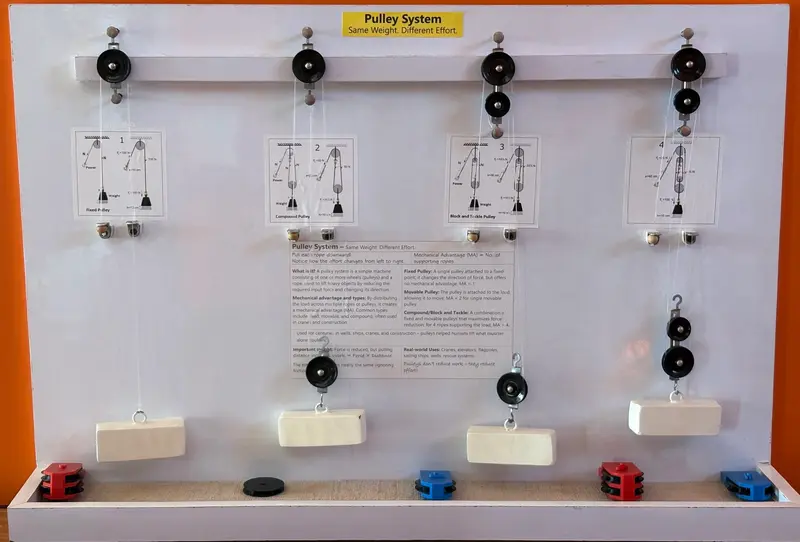
- Pulley Systems · 1. Pulley
Do: Lift the load with one pulley, then with several: more rope sections share its weight.
Ask: Count the rope sections holding each load. Which setup needs the longest pull, and why?
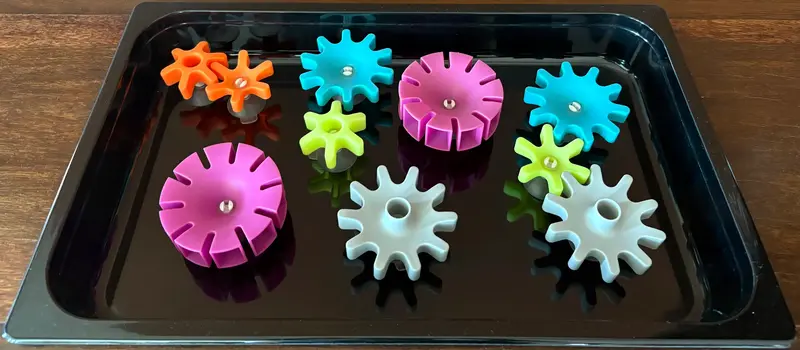
First Floor - Build a Gear Train · Complex machines
Do: Build a gear train and turn it: each gear turns the other way from its neighbor.
Ask: Turn the first gear clockwise: which way does the third turn? Which of two meshed gears turns more?
First Floor
Watch for
- Students think a machine gives out more work than you put in. It trades a small force over a long distance for a big force over a short one, and friction means a little more work goes in than comes out.
Before the visit
Do Activity 8.2 (three pulley systems), so students have measured effort, load and distances.
After the visit
Do Activity 8.6 (what are they made of?), starting with a bicycle and its gears.
Unit 9
Energy
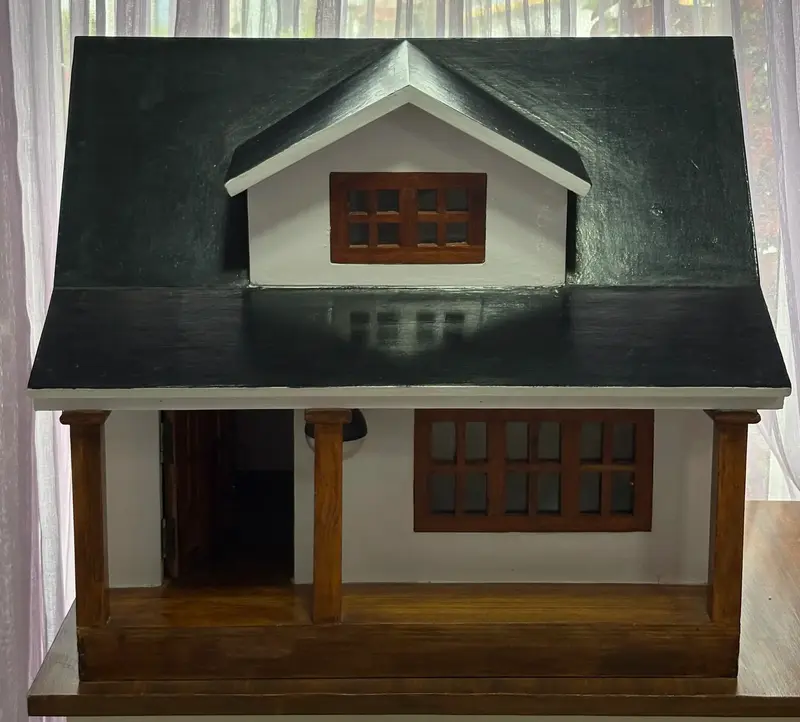
A model house that runs on sunlight, as homes in Nepal’s remote hills do, and a box that traps light the way a solar dryer does.
CDC learning outcomes this visit supports
- 9.2Introduce solar energy technology and make simple devices based on it.
- 9.5Identify the alternative sources of energy found in Nepal and explore how they could be developed.
At the center
- Solar House Model · Solar energy harvesting technology
Do: Follow the wires from the panels: sunlight becomes electricity, and a battery stores it.
Ask: Why have solar panels like these long lit homes in Nepal’s remote hills, far from the power grid?
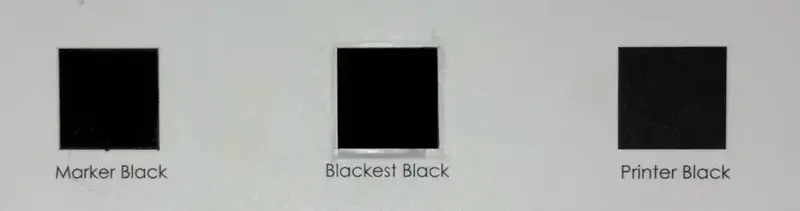
Ground Floor - The Blackest Black · Solar energy harvesting technology
Do: Light entering the box loses much of itself at every bounce: dark surfaces take in light, which is why a solar dryer is black inside.
Ask: Light that goes into the box is absorbed and becomes heat. Why is a solar dryer or a solar water heater black inside?
Ground Floor
Watch for
- Students think a solar panel stores sunlight. A panel turns light into electricity only while light falls on it; the battery stores energy for the night.
Before the visit
Do Activity 9.2 (following the arrows back to the Sun), to trace each source of energy to the Sun.
After the visit
Do the project work: make a solar appliance, such as a dryer or box cooker, black inside.
Unit 10
Wave
Students hear sound travel through a solid spring, along a long tube and between two dishes, and see invisible ultraviolet turned into a glow and white light spread into its colors.
CDC learning outcomes this visit supports
- 10.1Identify mechanical and electromagnetic (radiation) waves, and tell how they differ.
- 10.2Introduce the electromagnetic spectrum, and give examples of the uses of its parts.
- 10.4Demonstrate the reflection of sound, and find its uses in daily life.
At the center
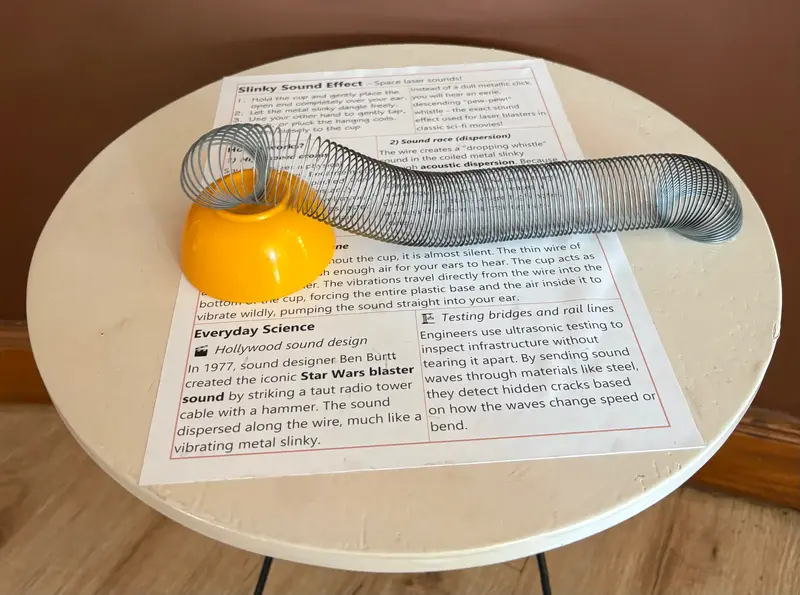
- Space Blaster Sounds · Mechanical waves and electromagnetic waves
Do: Hold the cup to your ear and tap the spring: the sound reaches you along it, a mechanical wave traveling through a solid medium.
Ask: Is sound a mechanical or an electromagnetic wave? Why do the high pitches reach the cup first along the spring?
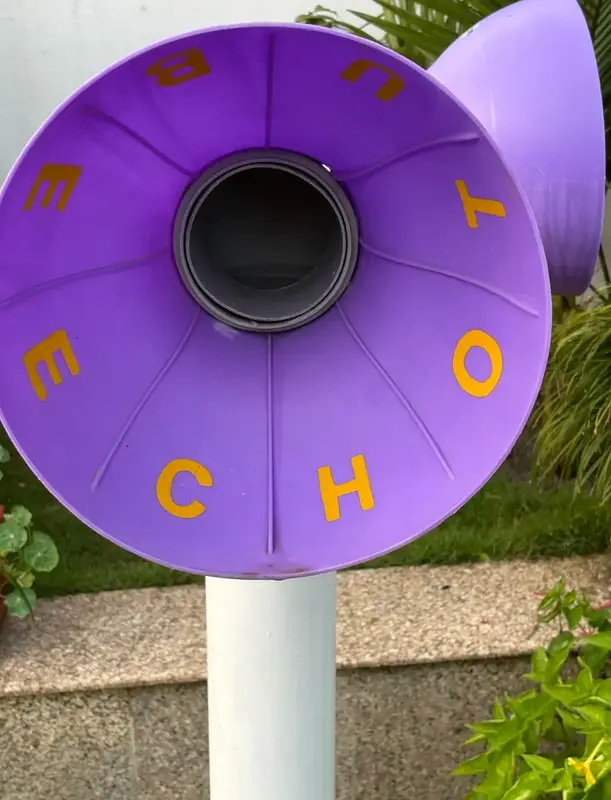
First Floor - The Echo Tube · Reflection of sound
Do: Clap into the 38 m tube: sound is reflected even at its open far end, and the echo comes back to you after about 0.22 s, having gone 76 m.
Ask: Clap and listen. How far away must a wall be for its echo to sound separate?
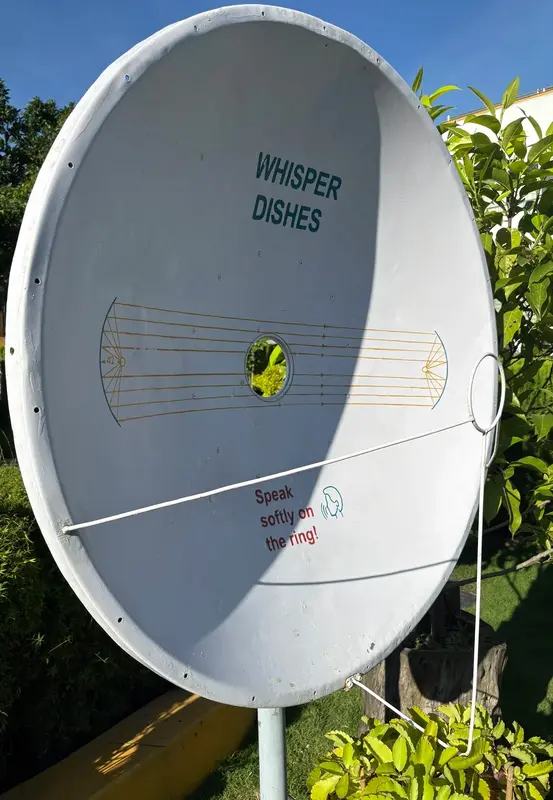
Grounds - Whisper Dishes — Send a Whisper Across the Garden · Reflection of sound
Do: Whisper at one dish’s ring: the curved dishes reflect and focus it across the garden.
Ask: This is a use of reflected sound. What does each dish do to your whisper? Which kind of mirror does the same with light?
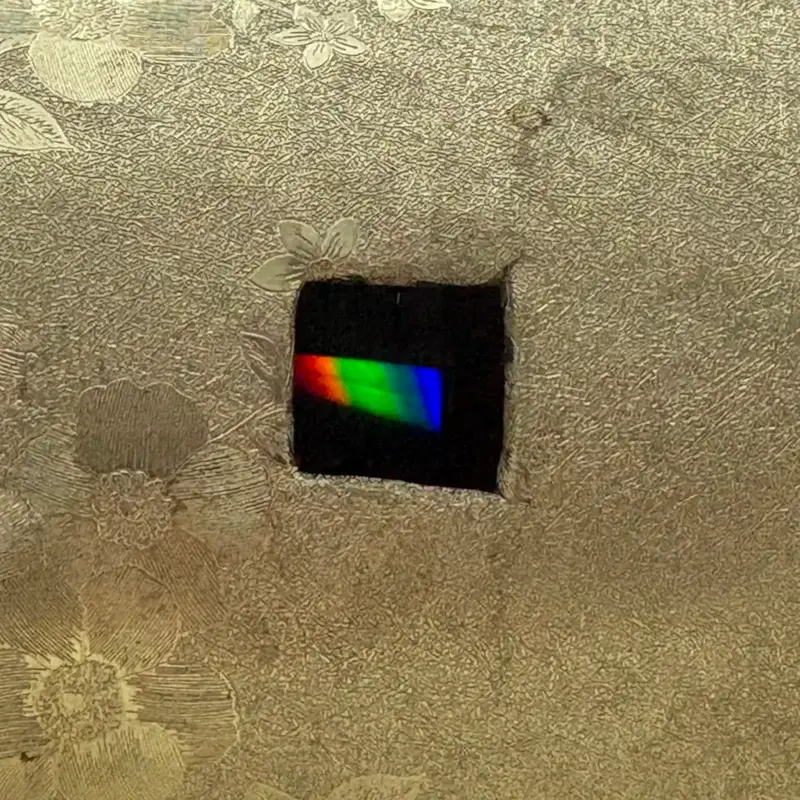
Grounds - The Spectroscope · Electromagnetic spectrum
Do: Look into the viewing window: the colors from red to violet are visible light, only a thin slice of the whole electromagnetic spectrum.
Ask: Name the colors in order. Which end has the longest wavelength? What lies beyond each end?
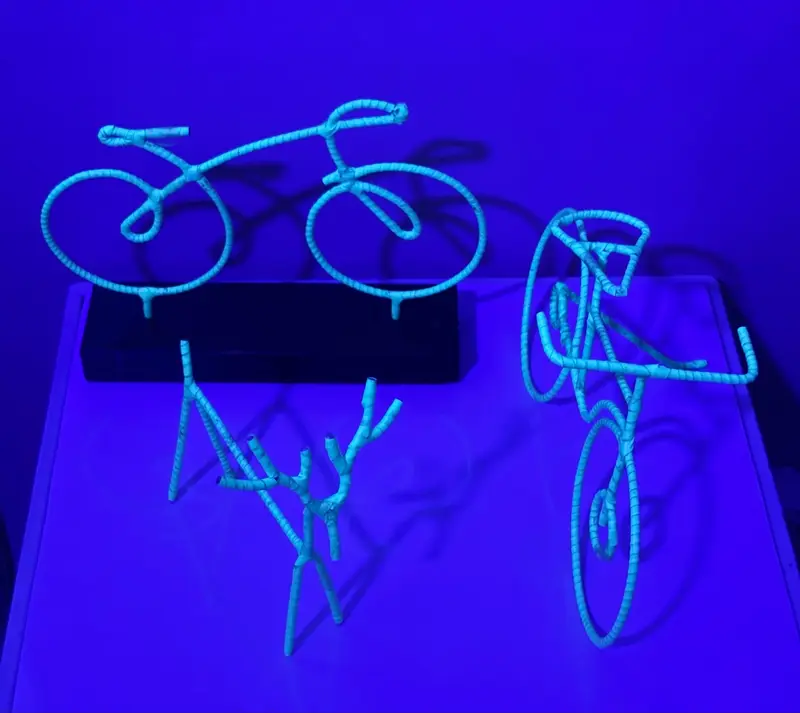
First Floor - Glowing Wire Sculptures · Applications of electromagnetic waves
Do: Under the UV lamp the wire coating glows: it turns invisible UV into visible light.
Ask: The lamp’s ultraviolet is invisible. Why can you see the wires glow?
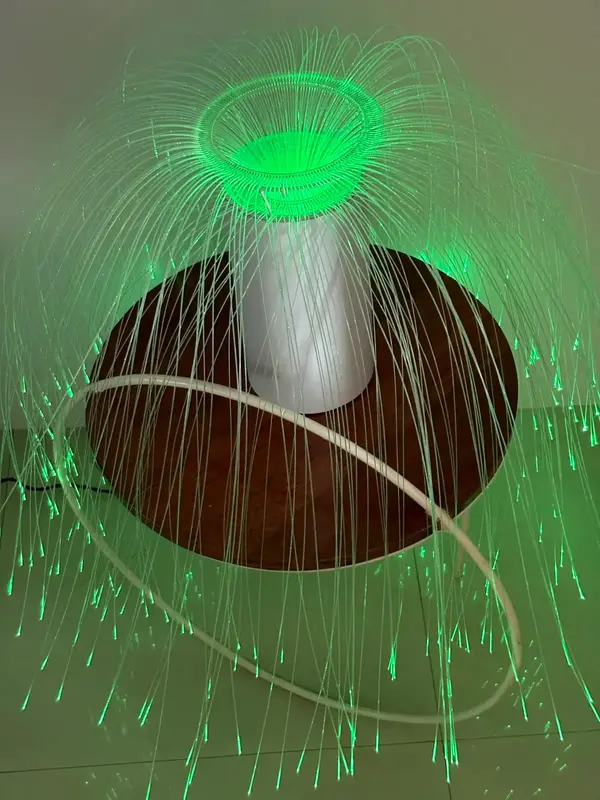
Second Floor - Total Internal Reflection · Applications of electromagnetic waves
Do: Light enters each fiber at one end and leaves at the tip, even round bends: phone and internet signals travel through optical fibers this way.
Ask: Is each fiber lit along its length or only at its tip? What are such fibers used for?
Ground Floor, under the stairs
Watch for
- Students think sound can travel through empty space. Sound is a mechanical wave and needs a medium; light and the other electromagnetic waves don’t.
- Students think ultraviolet is a violet light we can see. It lies beyond violet and is invisible; the glow is visible light the wire’s coating makes from it.
Before the visit
Do Activity 10.2 (two ways to shake a slinky), so students know a longitudinal wave.
After the visit
Do Activity 10.3 (what do you know about electromagnetic radiation?), adding what students saw.
Unit 11
Electricity
A circuit students can unfold and follow by eye, from the source through the light and back.
CDC learning outcomes this visit supports
- 11.1Define electric current and solve related numerical problems.
At the center
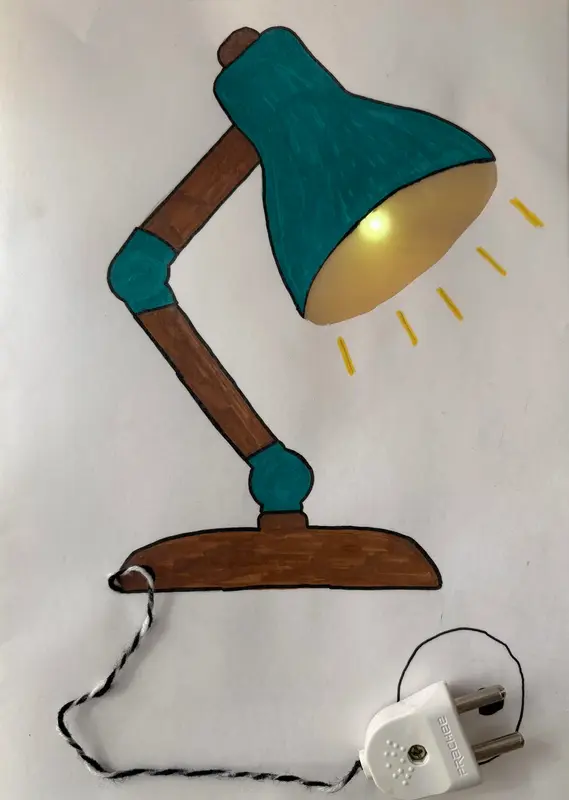
- The Fun Circuit · Electric current
Do: Current flows only round a closed loop: unfold the drawing to follow its path.
Ask: Is the current used up in the light? What does the light use instead?
First Floor
Watch for
- Students think the current is used up in the bulb. The same current flows all the way round the loop; what the bulb uses is the energy it carries.
Before the visit
Do Activity 11.1 (salt water in a circuit), so students know a current needs a complete path.
After the visit
Do the unnumbered activity Combination of resistors (Activity 11.5 in Grade 9 Science, Explained).
Unit 12
The Universe
A model of the rocket NASA flew to the Moon gives one of the unit’s organizations a face students remember.
CDC learning outcomes this visit supports
- 12.4Give a general introduction to the national and international organizations that study astronomy.
At the center
- Saturn V - LEGO Model · Organizations working in astronomy
Do: A model of the rocket NASA used for Apollo 11, which landed Neil Armstrong and Buzz Aldrin on the Moon in July 1969.
Ask: Which organization flew this rocket, and what did its Apollo 11 mission do in July 1969?
First Floor
Before the visit
Start the project work on organizations that study astronomy, so students know NASA’s place.
After the visit
Answer Exercise 4 h (the role of NASA in astronomy), with the Saturn V and Apollo 11 as an example.
Unit 13
Information and Communication Technology
Two parts of a telecommunication system to look at: a dish that gathers a weak signal to one point, as a satellite dish gathers the downlink, and optical fibers, one of the channels that carry signals.
CDC learning outcomes this visit supports
- 13.1Introduce how telecommunication technology works.
- 13.2State why artificial satellites matter in telecommunication.
At the center
- Whisper Dishes — Send a Whisper Across the Garden · Artificial satellite and its application
Do: A satellite dish gathers the weak downlink signal to one point, as each of these dishes gathers a whisper to its ring.
Ask: In telecommunication terms, which part here is the transmitter, which the channel and which the receiver?
Grounds - Total Internal Reflection · Telecommunication
Do: Each fiber carries the lamp’s light round every bend to its tip: an optical fiber is one of the channels that carry telecommunication signals.
Ask: Where does the light come out? In telecommunication, is a fiber the transmitter, the channel or the receiver?
Ground Floor, under the stairs
Watch for
- Students think a dish on the roof sends signals to the satellite. A home dish only receives: it gathers the weak downlink signal onto the receiver at its focus.
Before the visit
Do Activity 13.2 (satellites in three orbits), so students know which satellites a roof dish hears.
After the visit
Do Activity 13.9 (the parts of each technology), with optical fiber as a channel.
Unit 14
Atomic Structure and Chemical Bond
The giant table puts all 118 elements in one place, so students can find the families their own atomic models showed.
CDC learning outcomes this visit supports
- 14.1Make models of atomic structure and describe them.
- 14.5Give the basic idea of valency and ions.
At the center
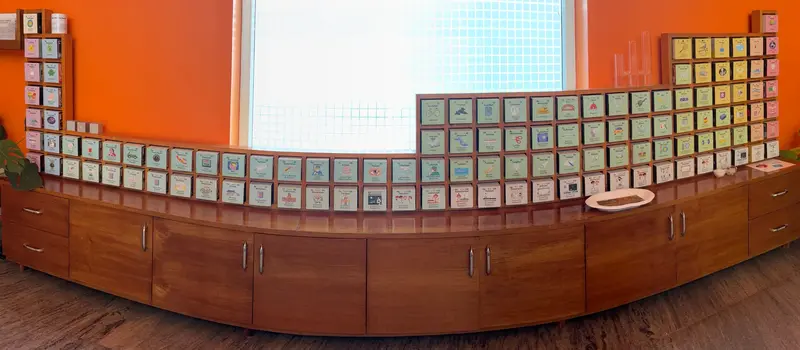
- The Giant Periodic Table · Valence shell and valence electron
Do: Find lithium, sodium and potassium, one above another in the first column: each has one valence electron, and each row down adds a new shell.
Ask: How many valence electrons do lithium, sodium and potassium have, and what valency?
First Floor
Watch for
- Students think elements in one column have the same number of shells. They have the same number of valence electrons; each row down adds a shell.
Before the visit
Do Activity 14.1 (build atomic models) for the first 20 elements, sodium and potassium among them.
After the visit
Do Activity 14.2 (a chart of the first 20 atoms), reading one column of the table at a time.
Unit 17
Metals and Non-metals
Students feel a metal draw heat from their hands and hear metal bars ring: two properties of metals met with their own senses.
CDC learning outcomes this visit supports
- 17.1Make clear the idea of metals and non-metals.
At the center
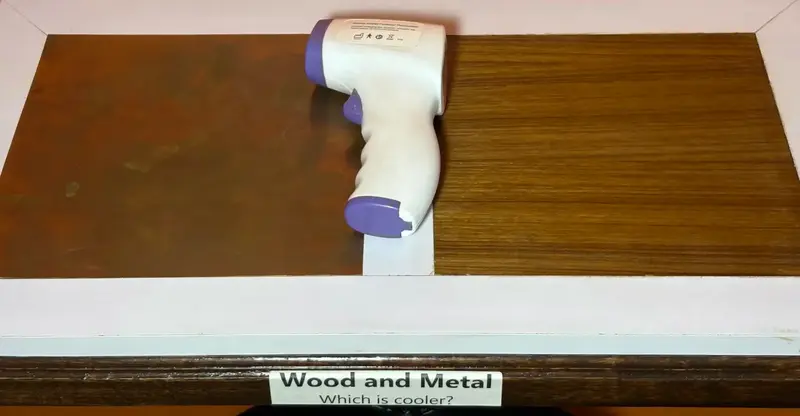
- Which Feels Cooler? · General properties of metals
Do: Touch metal and wood side by side: same temperature, but metal carries heat away faster.
Ask: Metals conduct heat well. Is that a physical or a chemical property? How can you tell?
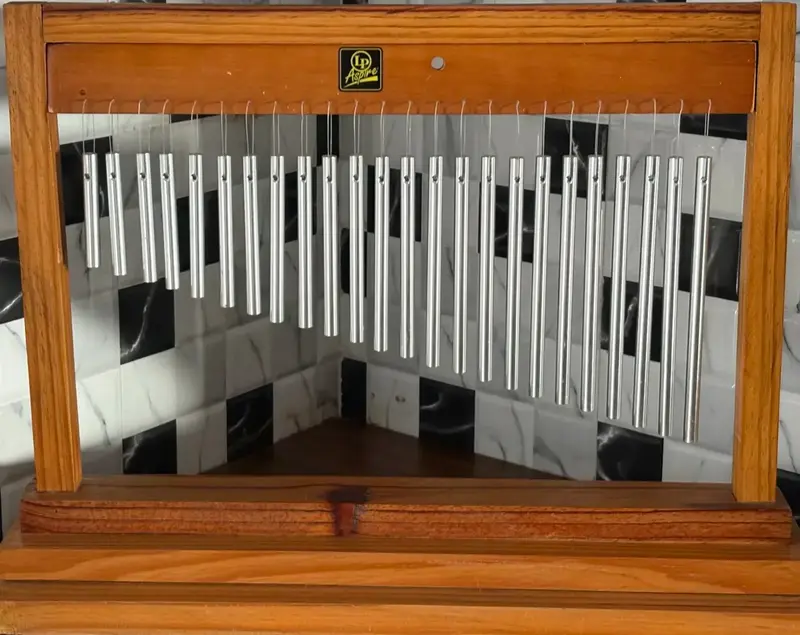
First Floor - The Chime Instrument · General properties of metals
Do: Strike the metal bars and hear them ring on: metals are sonorous, which is why bells and cymbals are made of metal.
Ask: Would a bar of a non-metal such as sulphur ring like this? Which are sonorous, metals or non-metals?
First Floor
Watch for
- Students conclude the metal is colder. It is at room temperature like the wood; it feels colder because it carries heat away from the skin faster.
Before the visit
Do Activity 17.5 (which end gets hot?), so students have seen heat travel along a metal.
After the visit
Do Activity 17.11 (fill in the table), adding the two properties students met at the center.
Unit 19
Materials used in Agriculture
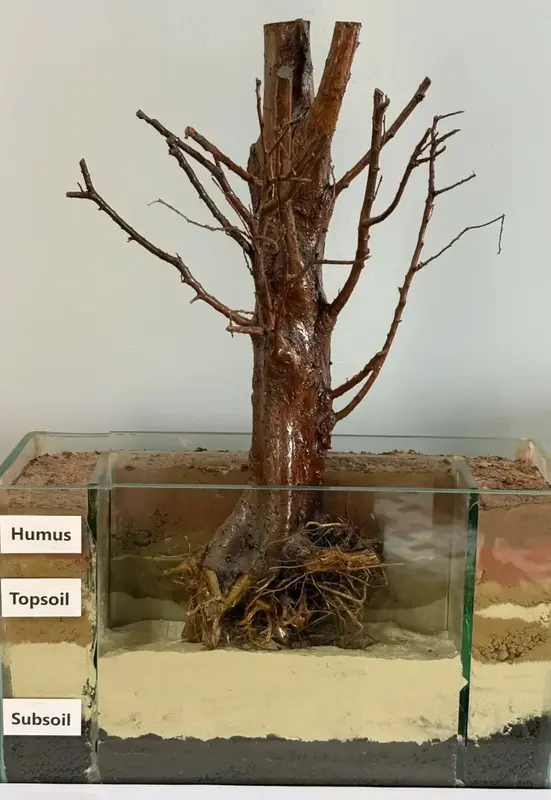
A soil profile students can look into shows the humus and topsoil that compost builds up and that rain washes off bare slopes.
CDC learning outcomes this visit supports
- 19.3Introduce organic manure, how it is made, and its benefits.
- 19.6Describe ways of conserving soil quality.
At the center
- Soil Layers · Conservation of soil quality
Do: Find the humus and the topsoil under it: the fertile layers that compost builds up, and that rain washes off bare slopes unless terraces hold them.
Ask: Which labeled layer makes soil fertile, and why? About how long does one centimeter of soil take to form?
Ground Floor
Watch for
- Students think lost topsoil soon comes back. One centimeter of soil can take hundreds of years to form, which is why terraces, trees and compost matter.
Before the visit
Answer Exercise 2 a (chemical and organic fertilizer), so students know organic fertilizer adds humus.
After the visit
Answer Exercise 4 e (alternatives to chemical fertilizer), using the humus and topsoil students saw.
Math on the same visit
Where an exhibit shows this year’s mathematics, from Grade 9 Math, Explained. These stops are in the rounds above, so a Math teacher can come along or set the questions.
Math · Unit 10
Highest Common Factor and Lowest Common Multiple
At the gears the simple-machine unit already visits, two meshed gears make the LCM something students can watch: two teeth that touch now meet again only when a common multiple of both tooth counts has passed. It gives the unit’s algebra a meaning before the factorizing starts.
CDC learning outcomes this visit supports
- 4.3Find the highest common factor (HCF) and the lowest common multiple (LCM) of algebraic expressions.
At the center
- Build a Gear Train · Back to the cicadas
Do: Mesh two gears, note which two teeth touch, and count each gear’s teeth: those two teeth meet again after the LCM of the counts.
Ask: Count the teeth on two meshed gears and find their HCF and LCM. Watch two teeth that touch. How many turns must each gear make before they touch again? Turn to check.
First Floor
Watch for
- “The LCM of two numbers is their product.” Only when their HCF is 1. Otherwise LCM = product ÷ HCF, so gears whose counts share a factor bring the same teeth together sooner.
Before the visit
Do Activity 1 in 10.2 (common and remaining factors), so students arrive knowing that the LCM is the common factors times the remaining factors.
After the visit
Answer Exercise 10.2, Q1 (define LCM; how are the LCM and HCF of two expressions related?), then check the answer on the tooth counts students wrote down: does HCF × LCM equal their product?
Read Math, Unit 10 online → ·the unit’s classroom worksheet (PDF)
Math · Unit 19
Probability
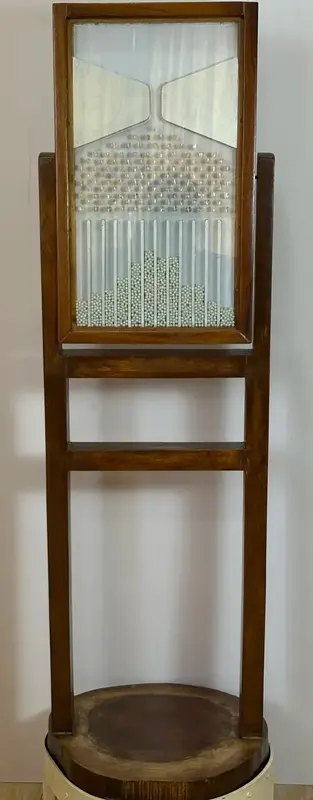
No one can say where one ball will land, yet the pile comes out much the same each time. Like the hourglass, where students repeat a reading, the board shows the difference between a single chance event and the steady fraction an empirical probability measures.
CDC learning outcomes this visit supports
- 6.2Develop the basic ideas of probability, and solve problems on empirical probability.
At the center
- Galton Board · 19.3 Empirical probability
Do: Once the balls have fallen, estimate what fraction of them ended in the middle columns: that fraction is an empirical probability.
Ask: Count the balls in the two end columns and estimate the total. Write the empirical probability of an end column. If it came out as 0, would that mean a ball can never land there?
First Floor
Watch for
- “Every column is equally likely, since each peg is fifty-fifty.” Each bounce is even, but far more paths lead to the middle columns than to the ends, so the middle fills most.
- “An experiment gives the exact probability.” An empirical probability is an estimate from one run; another run gives a slightly different fraction, and more trials give a steadier one.
Before the visit
Do Activity 1 in 19.3 (roll a die 10, 15 and 20 times and find each face’s fraction), so students know an experiment’s fractions wander.
After the visit
Answer Exercise 19.3, Q3 (toss three coins). A ball crossing the first three rows of pegs makes three left-or-right choices, like three coins: which outcomes keep it at the far left or far right?
Read Math, Unit 19 online → ·the unit’s classroom worksheet (PDF)
Optional Math on the same visit
Where an exhibit shows this year’s optional mathematics, from Grade 9 Optional Math, Explained. These stops are in the rounds above, so a Optional Math teacher can come along or set the questions.
Optional Math · Unit 5
Statistics
Dispersion is usually only a formula. On the Galton board students see it as the width of a pile: most balls near the middle, fewer and fewer farther out, the spread that the standard deviation measures.
CDC learning outcomes this visit supports
- 5Find the quartile deviation, mean deviation and standard deviation of individual and discrete series, and solve daily-life problems with them.
At the center
- Galton Board · 5.2 Dispersion of individual and discrete series
Do: Most balls land near the middle and fewer far out: dispersion measures how widely values like these are scattered from their middle.
Ask: Look how far the pile reaches on each side of the middle. If every ball had landed in one column, what would the standard deviation be? Is this pile’s bigger or smaller?
First Floor
Watch for
- Students think the average tells you everything about data. Two piles can have the same middle and very different spreads; dispersion is what tells them apart.
Before the visit
Do Exercise 5.2, Q1 (what is dispersion? explain with an example), so students arrive with the word.
After the visit
Do Exercise 5.4, Q1 (e) (where is the standard deviation used in daily life?), starting from the pile students saw.
Read Optional Math, Unit 5 online → ·the unit’s classroom worksheet (PDF)
Planning the day
- Visits are by appointment, so book well in advance on the Book a Visit page. A visit takes about two hours; set aside three in all. A large class can split into four groups that take the rounds in turn.
- A sunny morning is best: the solar house and the garden both need the sun.
- Ask each student to bring a notebook, a pencil and, if they have one, a watch to time things. Before the visit, give each group two or three of the questions in this guide to answer.
- You’re welcome to come beforehand, free, to see the exhibits and plan the visit; teachers who come with the group are free too.