
Is a lemon an acid? Your tongue says yes: it is sour. Is soap a base? It feels slippery. But “my tongue says so” is not good enough for a scientist, and some things in a laboratory must never be tasted at all. So how do we find out for sure, in a way that anyone, anywhere, could check?
This unit is about how science finds things out: the steps scientists follow, the skills they use, the fields they work in, how they stay safe, and how they write down measurements that range from the width of an atom to the distance to the Sun.
How a scientific study begins
Look at these things from a kitchen and a shop: a cucumber, a bitter gourd (karela), a lemon, an orange, a watermelon, a bar of soap, a bottle of soda water, a jar of a potassium compound and a packet of salt (nun). Some taste sour, one feels slippery, one is salty. Which of them are acidic, which are basic, and which are neutral?
A scientist turns this into a study in a few clear steps:
- A question: Which of these are acidic, basic or neutral?
- A hypothesis (a sensible guess that can be tested): “Sour things like lemon and orange are acidic; soap is basic; salt is neutral.”
- An experiment: dissolve or squeeze each one into a little water and test it with an indicator, such as pH paper or litmus.
- Data: write down the pH value of each (below 7 is acidic, 7 is neutral, above 7 is basic).
- A conclusion: compare the data with the hypothesis. Was the guess right?
Notice that the study needs measurements, and measurements are never perfectly exact. So a careful scientist tests each thing more than once and takes the average, which makes the result more trustworthy. You will learn more about measuring, and about averages, at the end of this unit.
1.1 Scientific process skills
Knowing facts is only part of science. Scientists also need skills, ways of working, and an attitude: curiosity, honesty about what they find, and willingness to change their mind when the evidence says so. The skills used in a scientific study are called scientific process skills. The main ones are:
| Skill | What it means |
|---|---|
| Observing | using your senses (and instruments) to notice things carefully |
| Questioning | asking a clear question that can be tested |
| Classifying | sorting things into groups by what they share |
| Predicting | saying what you expect to happen, before it happens |
| Measuring | finding the size of a quantity with an instrument and a unit |
| Interpreting | working out what your data mean |
| Concluding | deciding what the evidence shows |
| Communicating | telling others what you did and found, so they can check it |
Activity 1.1: the paper airplane challenge
Before folding her plane, Asha says, “I think the dart will fly farthest because it is narrow.” Which process skill is she using?
Pick an answer to see why.
1.2 Scientific learning
From a kettle to a weather forecast
When water boils in a kettle, steam comes out of the spout. Hold a cold steel plate in the steam and water drops form under it and drip down. Hold a hot plate there instead and far fewer drops form. From this simple observation we can conclude: the colder the surface, the faster water vapor turns into drops.
The same thing happens in the sky. Warm, moist air rises; the higher it goes, the colder it gets (on average about 6.5 °C colder for every kilometer up). The water vapor in it condenses into tiny drops, which make clouds, and when the drops grow big enough they fall as rain. That is why weather scientists measure how the air’s temperature changes with height: from those data they predict clouds and rain.
The steps of scientific learning
Science is a way of building knowledge about nature in an organized way, based on facts: things that can be observed and measured. We collect the facts with our sense organs and with instruments. Scientists usually follow these steps:
- Observation, curiosity, a question. Something is noticed, and a question is asked about it.
- Building a hypothesis. A possible answer is suggested, one that can be tested.
- Testing by experiment. An experiment is done and data are collected.
- Result and conclusion. The data are analyzed and a conclusion is drawn.
- Testing the hypothesis. Does the conclusion agree with the hypothesis?
- Report. If the hypothesis is proved, the work is written up as a report and shared with other people. If it is not proved, the hypothesis is changed (or a new one made), and the steps are repeated.
Scientists have studied force, energy, matter, the origin of life, the structure of the Earth and the universe by following these same steps, and the laws and theories of science came out of their conclusions. Isaac Newton, for example, found the law of gravitation: every two masses in the universe attract each other.
Which step comes straight after making a hypothesis?
Pick an answer to see why.
1.3 Fields of science
Science is too big for one person to know all of it, so it is divided into fields. The three main fields are biology, physics and chemistry. Others, such as geology, astronomy, agriculture and environmental science, use ideas from more than one main field.
A. Biology
Biology is the study of living things: how they are built, how they feed, breathe, grow, get rid of wastes and reproduce, how they behave, and how they live with other organisms and with their environment. It covers everything from bacteria to elephants and people. A scientist who studies biology is a biologist.
Biology helps farmers too. Scientists of the Nepal Agricultural Research Council (NARC) study the genes of crops to breed better varieties. One of them is a nutritious maize, Poshilo Makai, whose protein is better for people and animals than ordinary maize’s.
B. Physics
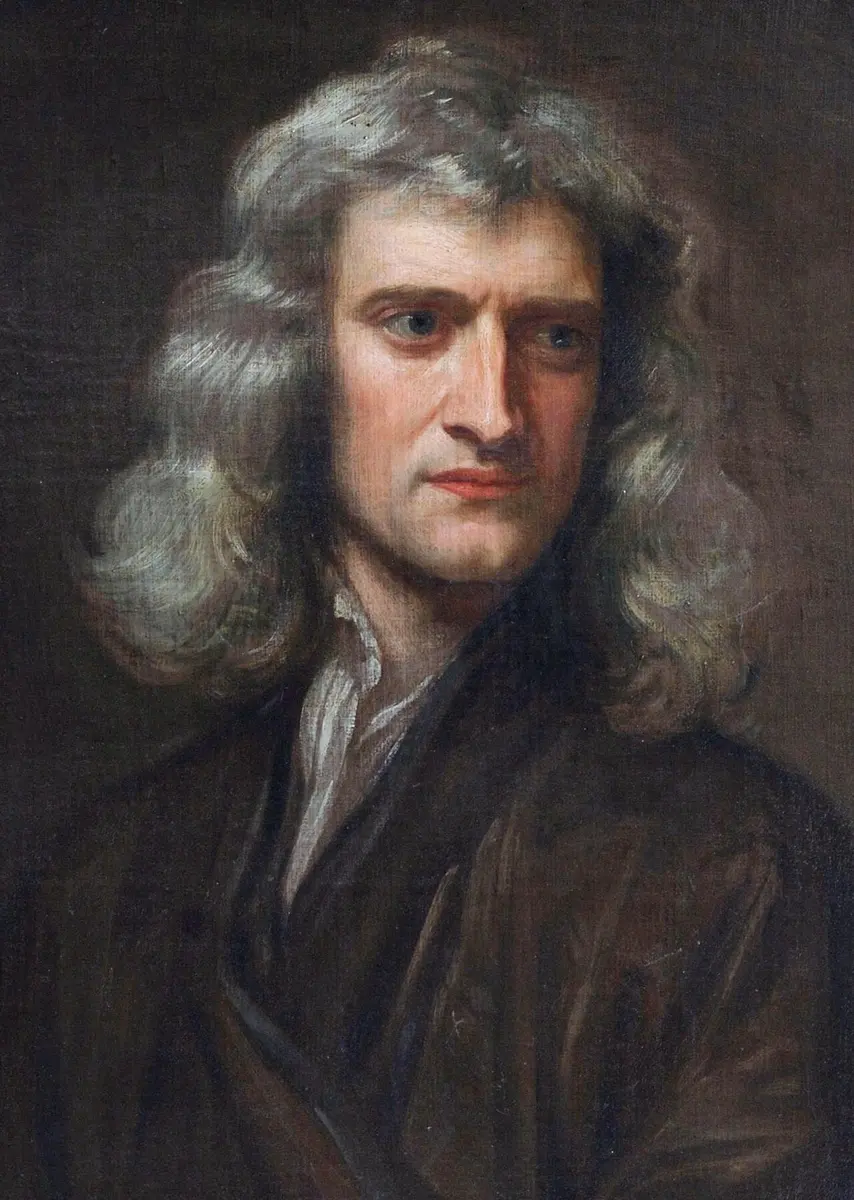
Physics studies matter and energy: force, motion, energy, heat, light, sound, electricity and magnetism, from the inside of an atom to the whole universe. A scientist who studies physics is a physicist. Isaac Newton found the laws of motion and the law of gravitation; Stephen Hawking studied black holes and the history of the universe.
C. Chemistry
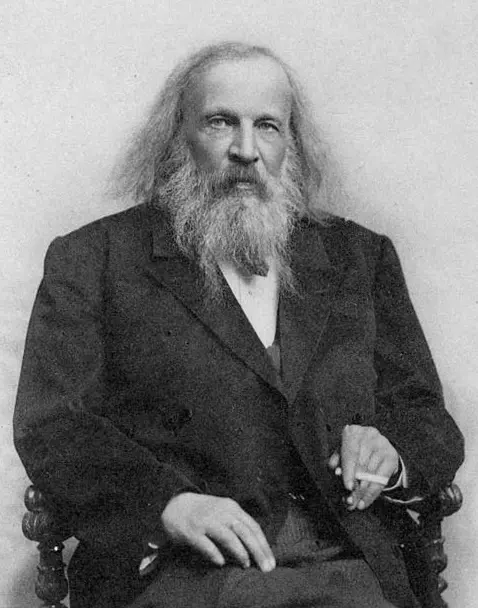
Chemistry studies what substances are made of and how they change into other substances, using the ideas of atoms and molecules. It covers everything from simple reactions, like iron rusting, to nuclear reactions. A scientist who studies chemistry is a chemist. John Dalton gave us the theory that matter is made of atoms; Dmitri Mendeleev arranged the elements in a table by their atomic weights and their properties, and left gaps for elements nobody had found yet.
Fields that share the work
Some fields use the ideas of more than one main field; they are called interdisciplinary fields. A geologist studying how the Himalaya rises uses physics (forces) and chemistry (rocks and minerals); an agricultural scientist uses biology (plants), chemistry (fertilizers and soil) and physics (water and weather). Geology, astronomy, agriculture and environmental science are examples.
Some achievements of science
| Field | Important achievements |
|---|---|
| Biology | surgery, organ transplants, vaccines, cloning, test-tube babies (IVF), high-yielding hybrid crops |
| Physics | electric motors and engines, microscopes, X-rays, communication technology (radio, phone, internet), transport |
| Chemistry | medicines, fuels, plastics, metals, cement, chemical fertilizers, insecticides |
A veterinary doctor treats a sick buffalo. Which main field of science does this work belong to?
Pick an answer to see why.
1.4 Safety measures in scientific experiments
Before you read on, think about two questions:
- How do we make a dilute acid from a concentrated one?
- What can happen if alcohol is heated in a beaker over a flame?
Experiments are done in laboratories and outdoors, and an experiment done carelessly can cause an accident. Alcohol catches fire easily: heated in a beaker over a flame, its vapor can burst into flames. So it is heated by standing its container in a bowl of hot water, called a water bath, with no flame near it. And to dilute a concentrated acid, never pour water into the acid. Pour the acid slowly into the water, stirring all the time.
The safety rules for any experiment:
- Do experiments only when a teacher is present.
- Wear safety equipment, such as a lab coat, safety glasses and gloves.
- If there is an accident, however small, tell the teacher at once.
- Learn how a piece of apparatus works before you use it.
- Use only the amount of a chemical that you need.
- Handle chemicals safely: never taste them, smell them only by wafting the air towards your nose, and read the label first.
- Keep the doors and windows open while you work.
- Ask the teacher whenever you need a concentrated acid.
- Clean the place after the experiment, and put every piece of apparatus back in its place.
- Wash your hands with soap and water when you finish.
Rina has to dilute some concentrated sulphuric acid. What should she do?
Pick an answer to see why.
1.5 Achievements and challenges of science and technology
Science keeps finding ways to make work faster and easier, and those discoveries become technology: the machines and methods we use. The steam engine is an example. Early steam engines pumped water out of mines; from the 1760s James Watt greatly improved them (he made them use far less coal), which is why he is often called the inventor of the steam engine, and steam engines went on to drive factories, trains and ships, changing transport for ever. Later, steam was used to make electricity: in a power plant, steam spins a turbine, and the turbine turns a generator.
But every technology needs careful management. The coal burnt to make steam pollutes the air. Nuclear power plants make electricity without smoke, but their waste stays dangerous for thousands of years and must be stored safely. When something goes wrong, the harm can be huge:
- In 1986, a reactor at Chernobyl (in Ukraine, then part of the Soviet Union) exploded and spread radioactive material over large parts of Europe. People in the area still cannot live there.
- In 2011, an earthquake and tsunami in Japan damaged the Fukushima nuclear power plant, and radioactive material leaked into the air and the sea.
- In 1984, poisonous gas leaked from a pesticide factory at Bhopal in India, killing thousands of people.
So with every achievement come challenges.
1.6 Scientific measurement
Measurement is at the heart of science: without numbers, we can’t compare, predict or check. And the numbers scientists meet range from very small to very large: the size of a virus or an atom, the mass of the Earth or the Sun.
Try writing them in the ordinary way. A coronavirus is about 0.0000001 m across. The Sun is about 150,000,000,000 m from the Earth. It is easy to miss a zero, and hard to read them. So scientists write such numbers with powers of ten, which is called scientific notation.
A power of ten tells you how many times 10 is multiplied (or divided):
| Big numbers | Small numbers | ||
|---|---|---|---|
| 10¹ = 10 | ten | 10⁻¹ = 0.1 | one tenth |
| 10² = 100 | hundred | 10⁻² = 0.01 | one hundredth |
| 10³ = 1,000 | thousand | 10⁻³ = 0.001 | one thousandth |
| 10⁶ = 1,000,000 | million | 10⁻⁶ = 0.000001 | one millionth |
| 10⁹ = 1,000,000,000 | billion | 10⁻⁹ = 0.000000001 | one billionth |
The power counts the zeros: 10⁶ is 1 followed by six zeros. A negative power means divided by: 10⁻³ = 1 ÷ 1,000. And 10⁰ = 1.
1.7 How to write in scientific notation
The East–West Highway (Mahendra Highway) is about 1,030 km long. In meters that is 1,030 × 1,000 = 1,030,000 m. To write it in scientific notation, move the decimal point left until only one digit (not zero) stands before it, and count the places moved: here, 6.
A number in scientific notation has three parts:
- the coefficient (some books call it the mantissa): a number from 1 up to (but not including) 10, here 1.03;
- the base, which is always 10;
- the power (also called the index or exponent), here 6.
| Number | How to convert | Scientific notation |
|---|---|---|
| 83,000 MW = 83,000,000,000 W | move the point 10 places left | 8.3 × 10¹⁰ W |
| Earth to Sun = 150,000,000 km | move the point 8 places left | 1.5 × 10⁸ km |
| Size of the coronavirus = 0.0000001 m | move the point 7 places right | 1 × 10⁻⁷ m |
Rules of scientific notation
- The base is always 10.
- The power is a whole number: positive for numbers of 10 or more, negative for numbers less than 1, and 0 for numbers from 1 up to (but not including) 10 (5 = 5 × 10⁰).
- The coefficient is at least 1 and less than 10: it has exactly one non-zero digit before the decimal point (3.6, 1.03 and 9.99 are fine; 36 and 0.36 are not).
- For a big number, the decimal point moves left, and the power is positive: 600,000 = 6 × 10⁵.
- For a number less than 1, the decimal point moves right, and the power is negative: 0.00006 = 6 × 10⁻⁵.
Metric prefixes
How many grams are in a kilogram? The word kilo tells you: it means 1,000. In the metric system, a unit is made bigger or smaller by multiplying or dividing by 10 again and again, and each size has a short word in front of the unit, called a metric prefix. They work the same way for meters, grams and liters.
Prefixes keep numbers short. A paracetamol tablet has 500 milligrams of medicine (not 0.5 g); a cooking-gas cylinder in Nepal holds 14.2 kilograms of gas (not 14,200 g).
| Small amounts | With a prefix | Big amounts | With a prefix |
|---|---|---|---|
| medicine in a tablet | 500 milligrams (mg) | gas in a cylinder | 14.2 kilograms (kg) |
| width of a human hair | 17–181 micrometers (µm) | Nepal’s estimated hydropower potential | 83,000 megawatts (MW) |
The main prefixes, with their symbols:
| Multiples | Symbol | Value | Fractions | Symbol | Value |
|---|---|---|---|---|---|
| deca | da | 10¹ | deci | d | 10⁻¹ |
| hecto | h | 10² | centi | c | 10⁻² |
| kilo | k | 10³ | milli | m | 10⁻³ |
| mega | M | 10⁶ | micro | µ | 10⁻⁶ |
| giga | G | 10⁹ | nano | n | 10⁻⁹ |
| tera | T | 10¹² | pico | p | 10⁻¹² |
Some small and big sizes
| Thing | Size |
|---|---|
| an atom | about 10⁻¹⁰ m (0.1 nm) |
| a small molecule, like sugar | about 10⁻⁹ m (1 nm) |
| a prokaryotic cell, like a bacterium | about 10⁻⁶ to 10⁻⁵ m (1–10 µm) |
| a eukaryotic cell, like yours | about 10⁻⁵ to 10⁻⁴ m (10–100 µm) |
| speed of light | 3 × 10⁸ m/s |
| mass of the Earth | 6 × 10²⁴ kg |
| mass of the Sun | 2 × 10³⁰ kg |
1.8 Importance of least count
Look at three instruments: a ruler (scale), a stopwatch and a protractor. What does each one measure, and what is the smallest amount it can measure?
| S.N. | Instrument | Physical quantity | Smallest unit it can measure |
|---|---|---|---|
| 1 | Scale (ruler) | length | 0.1 cm = 1 mm |
| 2 | Stopwatch (digital) | time | 0.01 s |
| 3 | Protractor | angle | 1° |
The smallest amount an instrument can measure is called its least count. On an instrument with a scale, it is the value of one smallest division.
- Ruler. Most rulers show centimeters on one edge (and inches on the other). Each centimeter is divided into 10 small divisions, so one division is 1 cm ÷ 10 = 0.1 cm = 1 mm. The least count of the ruler is 1 mm. If you measure your notebook as 1.2 cm thick, that last digit, 0.2 cm, is as fine as this ruler can tell you.
- Protractor. Between 0° and 10° there are 10 small divisions, so one division is 10° ÷ 10 = 1°.
- Stopwatch. A digital stopwatch shows time to 0.01 s, one hundredth of a second; an ordinary wristwatch only to 1 s. In a race, runners often finish less than a second apart, so a stopwatch with a least count of 0.01 s is needed to decide the first, second and third places.
The rule for any instrument with a scale:
A smaller least count means a more exact measurement. That is why scientists pick their instruments carefully: you can’t measure the thickness of a hair with a meter stick.
A thermometer has marks at 30 °C and 40 °C, with 5 divisions between them. What is its least count?
Pick an answer to see why.
1.9 Importance of taking the average
Try it on the screen first.
Small quantities are the hardest to measure in one go, so in science the average of several readings is used. When repeated readings come out the same, or very close, again and again, the measurement is called precise.
Exercise
1. Choose the correct answer
(i) Which field of science does the veterinary profession belong to?
Pick an answer to see why.
(ii) Which field of science is Johann Gregor Mendel known for?
Pick an answer to see why.
(iii) What is the least count of an ordinary scale (ruler)?
Pick an answer to see why.
(iv) How is 0.000024 written in scientific notation?
Pick an answer to see why.
(v) What is the value of the prefix giga?
Pick an answer to see why.
2. Answer the following questions
How is a scientific study done? Explain.
Answer
A scientific study follows planned steps:
- Observation and question: something in nature is observed and a question is asked about it.
- Hypothesis: a possible answer that can be tested is suggested.
- Experiment: the hypothesis is tested by an experiment, in a laboratory or outdoors, and data are collected by measuring (taking several readings and their average).
- Result and conclusion: the data are analyzed and a conclusion is drawn.
- Testing the hypothesis: the conclusion is compared with the hypothesis.
- Report: if the hypothesis is proved, a report is written and shared; if not, the hypothesis is changed and the steps are repeated.
Example: to find whether lemon juice is acidic, we guess that it is (hypothesis), test it with pH paper (experiment), find pH about 2 (data), conclude that it is acidic, and report it.
List the fields of science.
Answer
The three main fields are biology (the study of living things), physics (matter, energy, force and motion) and chemistry (substances and how they change). Interdisciplinary fields include geology, astronomy, agriculture and environmental science.
Describe how the fields of science are related to each other, with examples.
Answer
The fields depend on each other, and many problems need several of them:
- A doctor (biology) uses X-ray machines and scans built on physics, and medicines made by chemistry.
- Agriculture uses biology (breeding better crops), chemistry (fertilizers, soil tests) and physics (irrigation pumps, weather).
- Geology uses physics to study earthquakes and chemistry to study rocks and minerals.
- Biochemistry is the chemistry of living things; biophysics studies how nerves carry electric signals.
So the fields are connected; that is why interdisciplinary fields grow out of them.
What is the value of experiments in a scientific study? Explain with examples.
Answer
An experiment tests a hypothesis with evidence instead of opinion. It gives data that can be measured, checked and repeated by others, and it shows which guesses are right and which are wrong.
Examples: an experiment with an indicator shows that lemon juice is acidic and soap is basic; testing a vaccine on animals and then volunteers showed that it was safe and worked before it was given to everyone; timing a falling stone several times gives a reliable value for its fall time. Without experiments, a hypothesis stays a guess.
List the safety measures for experimental work.
Answer
- Do experiments only in the presence of a teacher.
- Wear a lab coat, safety glasses and gloves.
- Tell the teacher at once about any accident.
- Learn how apparatus works before using it.
- Use only the amount of chemical needed.
- Handle chemicals safely: never taste them, and read labels.
- Keep doors and windows open.
- Ask the teacher when a concentrated acid is needed; dilute it by adding acid to water.
- Heat alcohol and other things that catch fire in a water bath, never over a flame.
- Clean up and put apparatus back after the experiment, and wash your hands with soap and water.
Define scientific notation.
Answer
Scientific notation is a way of writing a very big or very small number as a coefficient from 1 up to (but less than) 10, multiplied by a power of 10. For example, 150,000,000 km = 1.5 × 10⁸ km and 0.0000001 m = 1 × 10⁻⁷ m.
What should you keep in mind when writing a number in scientific notation?
Answer
- The base is always 10.
- The coefficient is at least 1 and less than 10: one non-zero digit before the decimal point (4.5 is right; 45 and 0.45 are not).
- The power is a whole number: the number of places the point moved.
- For a big number the point moves left and the power is positive: 600,000 = 6 × 10⁵.
- For a number smaller than 1 the point moves right and the power is negative: 0.00006 = 6 × 10⁻⁵.
- Keep the unit: 1.03 × 10⁶ m.
Why are metric prefixes important? Describe with examples.
Answer
Metric prefixes make a unit bigger or smaller by powers of ten, so very big and very small quantities can be written with short, easy numbers and fewer zeros, and mistakes are less likely. Because they all go in steps of 10, changing from one to another is easy.
Examples: 1 kilogram = 10³ g, so the gas in a cylinder is written 14.2 kg, not 14,200 g; a tablet contains 500 mg (milligrams, 10⁻³ g) of medicine, not 0.5 g; Nepal’s hydropower potential is 83,000 MW (megawatts, 10⁶ W), not 83,000,000,000 W; a hair is 17–181 µm (micrometers, 10⁻⁶ m) wide.
Explain least count in measurement in brief.
Answer
The least count of an instrument is the smallest amount it can measure: the value of one smallest division on its scale. It is found by dividing the difference between two numbered marks by the number of divisions between them. A ruler’s least count is 1 mm (1 cm ÷ 10), a protractor’s is 1° (10° ÷ 10), a digital stopwatch’s is 0.01 s and a wristwatch’s is 1 s. The smaller the least count, the more exact the measurement, so the instrument must suit what is being measured.
Write these numbers in scientific notation:
- i.1230000
- ii.0.00042
- iii.0.00000001
- iv.300000000
Answer
- i.1,230,000 = 1.23 × 10⁶ (point moved 6 places left)
- ii.0.00042 = 4.2 × 10⁻⁴ (point moved 4 places right)
- iii.0.00000001 = 1 × 10⁻⁸ (point moved 8 places right)
- iv.300,000,000 = 3 × 10⁸ (point moved 8 places left; this is roughly the speed of light in m/s)
Practice every question in the book, and keep track of the ones you miss →