
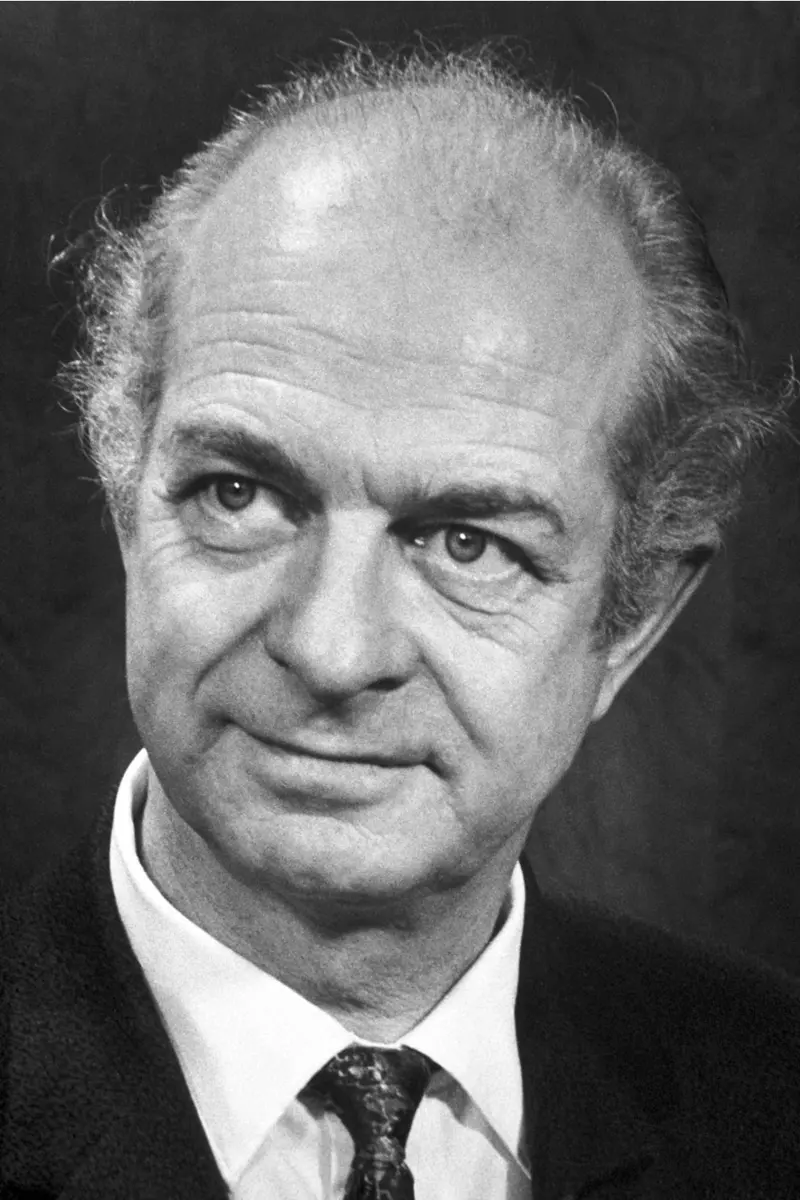
Linus Pauling
1901–1994, born in the United States
The son of a pharmacist in Oregon, who lost his father at nine. He later won a second Nobel Prize, for Peace, for his campaign against testing nuclear weapons.
Photo: Nobel Foundation, Public domain
The point of your pencil is graphite. A diamond is the hardest natural thing on Earth. Both are pure carbon, nothing else. Why is one soft enough to leave marks on paper, and the other hard enough to cut glass? Why does salt dissolve in water but ghee doesn’t? Why does ice float?
The answers all depend on how atoms hold on to each other: the chemical bond. The American chemist Linus Pauling spent his life asking what a bond really is, and his answers are in every chemistry book you will ever read. They won him the Nobel Prize in Chemistry in 1954.
The problem: what holds atoms together?
By 1900 chemists knew that matter is made of atoms, and that atoms join to make molecules: two hydrogen atoms and one oxygen atom make water, H₂O. But why atoms join, and why in those numbers, was a puzzle.
For salts there was a good answer. In sodium chloride (common salt), the sodium atom gives an electron to the chlorine atom. The sodium becomes a positive ion, Na⁺, the chlorine a negative ion, Cl⁻, and opposite charges attract. This is an ionic (electrovalent) bond Grade 9: Electrovalent bond.
But that couldn’t explain the hydrogen molecule, H₂. The two atoms are exactly the same. Why would one give an electron to the other? And in the molecules of living things, made mostly of carbon, hydrogen, oxygen and nitrogen, there are no ions at all.
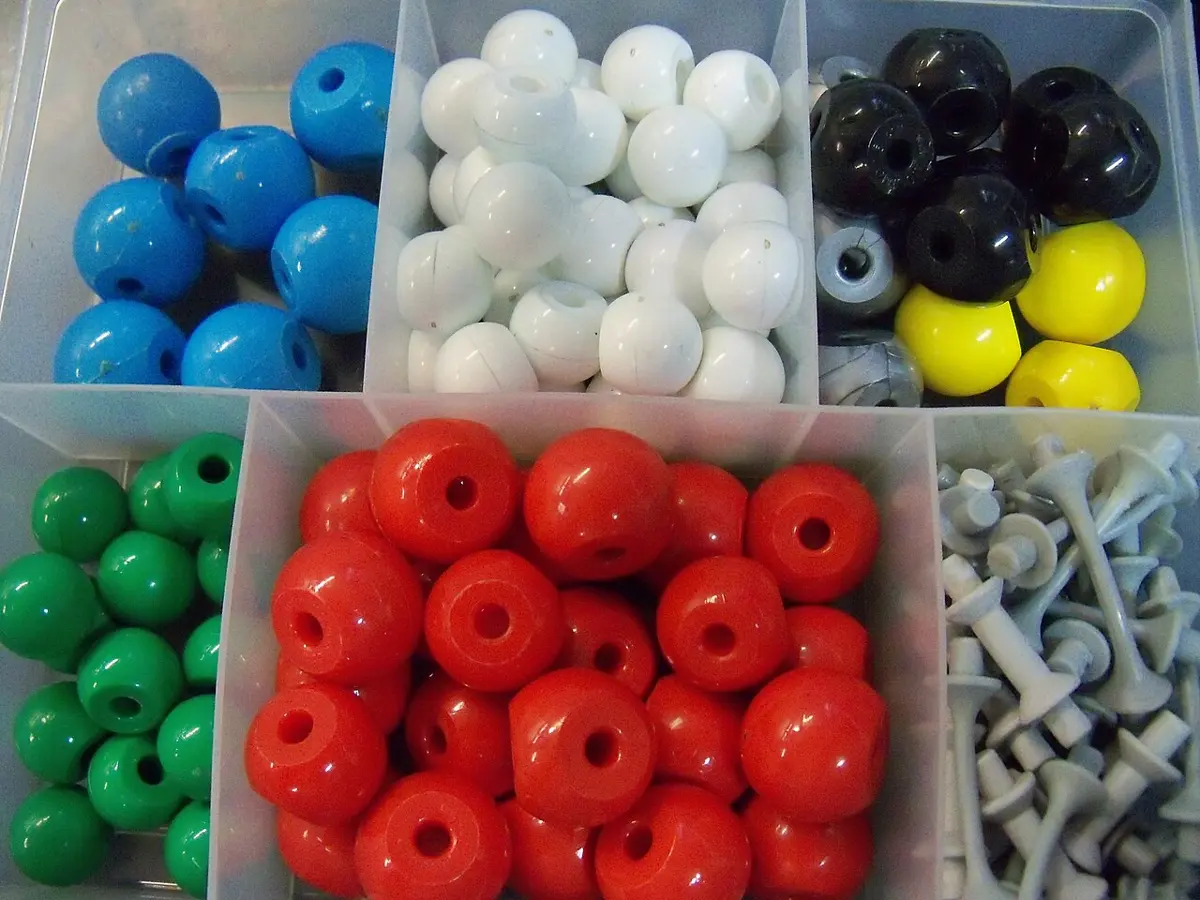
In 1916 the American chemist Gilbert Lewis suggested that two atoms can share a pair of electrons, and that the shared pair holds them together. This is the covalent bond Grade 9: Covalent bond. It worked very well as a rule for drawing molecules. But nobody could say why sharing should hold two atoms together, or why molecules have the shapes they do.
Two chlorine atoms join to make a chlorine molecule, Cl₂. What kind of bond holds them?
Pick an answer to see why.
Why it was hard
After 1925, quantum mechanics gave the true rules for electrons (Heisenberg’s Nobel Prize, 1932). In 1927 two German physicists, Walter Heitler and Fritz London, used it to show why two hydrogen atoms bond: the shared electrons spend much of their time between the two nuclei, and each nucleus is pulled towards them. The shared pair is like glue.
But the mathematics was terribly hard. Even for H₂, with just two electrons, it could only be done approximately. For a molecule like sugar, with dozens of atoms and over a hundred electrons, it was hopeless. Chemists needed someone who understood quantum mechanics deeply and could turn it into simple rules they could use at the bench.
What he did, step by step
Measuring atoms
Pauling grew up in Oregon, in the United States. He set up a chemistry lab at home as a boy, and was teaching chemistry at his college before he graduated.
- 1922–1925, crystals and X-rays. At the California Institute of Technology (Caltech), he learned to work out where the atoms sit in a crystal by shining X-rays through it, a method started by the Braggs (The Braggs’ Nobel Prize, 1915). From many crystals he built up tables of how big atoms are, and how far apart bonded atoms sit.
- 1926–1927, quantum mechanics at its source. He spent a year and a half in Europe, learning the brand-new quantum mechanics from Arnold Sommerfeld in Munich, and visiting Niels Bohr in Copenhagen and Erwin Schrödinger in Zürich.
Why carbon makes a pyramid
- 1931, bonds with directions. A carbon atom has four electrons to share, so it makes four bonds, as in methane, CH₄. Since the 1870s chemists had known that carbon’s four bonds point to the four corners of a tetrahedron, a pyramid with a triangular base, with an angle of 109.5° between any two bonds. But a carbon atom’s outer electrons are not all alike, so why would its four bonds be?
Pauling showed with quantum mechanics that the electrons mix, which he called hybridization, into four identical clouds pointing as far apart from each other as possible: to the corners of a tetrahedron. It explained the shape of methane, of diamond, where every carbon is joined to four others in a stiff 3D network, and of thousands of other molecules.
How strongly an atom pulls
- 1932, electronegativity. In most bonds the two atoms are different, so they don’t share the electrons equally. Pauling made a scale of numbers, the electronegativity of each element: how strongly its atoms pull on the electrons they share. He worked it out from how much energy it takes to break bonds. Fluorine pulls hardest, about 4.0; then oxygen 3.4, chlorine 3.2, hydrogen 2.2, and metals like sodium only about 0.9 Grade 10: Electronegativity.
The difference between two atoms’ numbers tells you what kind of bond they make. No difference: a pure covalent bond, shared equally, as in H₂ or Cl₂. A medium difference: a covalent bond with the electrons pulled to one side, a polar bond, as in H–Cl or the O–H bonds of water. A big difference: one atom takes the electron completely, an ionic bond, as in Na⁺Cl⁻. Ionic and covalent bonds, Pauling showed, are not two separate worlds but two ends of one scale.
Use Pauling’s numbers: hydrogen 2.2, carbon 2.6, oxygen 3.4. Which bond is more polar, C–H or O–H?
Pick an answer to see why.
- The 1930s, resonance. In some molecules, such as benzene (C₆H₆, a ring of six carbon atoms), the electrons can’t be drawn with ordinary single and double bonds. Pauling’s answer, which he called resonance, was that the real molecule is a blend of the possible drawings, more stable than any one of them. In benzene, all six bonds of the ring turn out to be exactly the same length, between a single and a double bond.
- 1939, the book. He put it all into a book, The Nature of the Chemical Bond. It became one of the most influential science books of the twentieth century, and taught a whole generation of chemists to think about molecules as real objects with sizes and shapes.
From bonds to the molecules of life
Next Pauling turned to proteins, the long molecules that do most of the work in living things: hemoglobin in your blood, keratin in your hair, enzymes in your stomach (Proteins do the work). A protein is a chain of hundreds of amino acids, joined end to end. Each chain folds into its own shape, and the shape decides what it does. Proteins were far too big for anyone to find their structure directly.
- From the late 1930s, the pieces. With his colleague Robert Corey, Pauling measured the exact sizes and angles of the bonds in single amino acids and small pieces of protein chain. One key finding: the bond that joins two amino acids, the peptide bond, holds its neighbors flat, so the chain can only bend at certain places.
- Spring 1948, a sheet of paper. While a visiting professor in England, Pauling was stuck in bed with a bad cold. He drew a protein chain on a sheet of paper, with the right bond lengths and the flat peptide bonds, and folded it along the lines where the chain could bend. When he twisted it into a spiral, the N–H of one amino acid came right next to the C=O of another, one turn further on: just right for a hydrogen bond, the weak attraction that also holds water molecules together.
- 1951, the alpha helix. After checking it for three years, Pauling, Corey and Herman Branson published the alpha helix (α-helix): a coil with about 3.6 amino acids per turn, held together by hydrogen bonds, with the side chains sticking out. They also described a second shape, the flat, pleated beta sheet. Both were soon found in real proteins, and most proteins contain one or both.
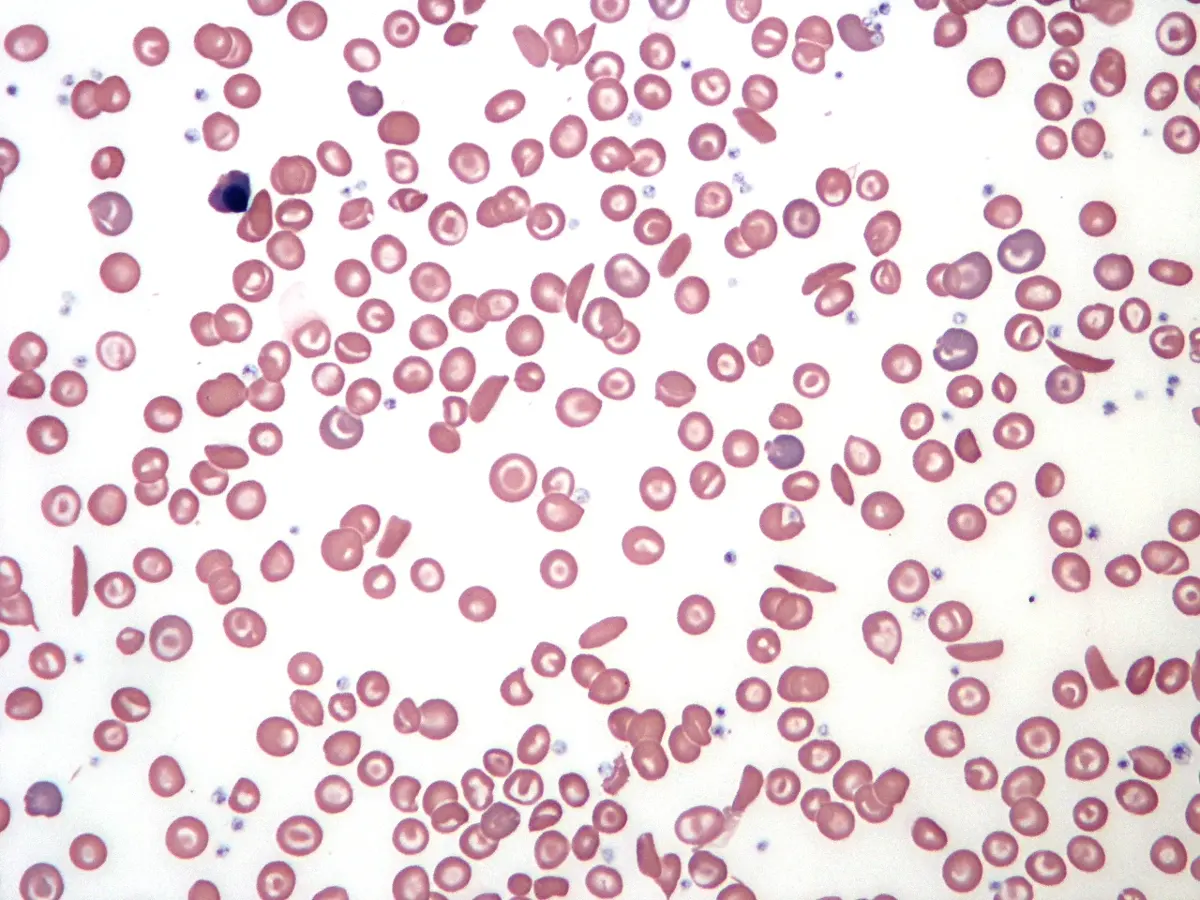
- 1949, a molecular disease. Pauling and his student Harvey Itano, with S. J. Singer and Ibert Wells, compared the hemoglobin of people with sickle-cell anemia with ordinary hemoglobin, and found that it carries a different electric charge. The disease, they showed, comes from a fault in one kind of molecule. It was the first disease ever traced to a molecule, and the start of molecular medicine.
What holds the turns of an alpha helix in shape?
Pick an answer to see why.
How it works now
Pauling’s ideas are now so much a part of chemistry that they hardly carry his name.
- Your Grade 10 book explains bonds and the periodic table with electronegativity, and its trends: up and to the right is more electronegative.
- Chemists predict whether a substance will dissolve, melt easily or conduct electricity from the kind of bonds in it (Four kinds of solid).
- Pauling’s way of building models with the right bond lengths and angles is how scientists still think about molecules, now with computers. In 2024 the Nobel Prize in Chemistry went to the scientists who taught computers to predict the shape of almost any protein from its chain of amino acids, and to design new ones.
In your life today
- Medicines. Most medicines work by fitting into a pocket of a protein, like a key in a lock, held there by the kinds of bond Pauling described.
- Your hair. Hair and wool are made of keratin, a protein coiled into alpha helices. When hair is wet, water breaks some of the hydrogen bonds, which is why wet hair can be stretched further and why hair dried while curled holds the curl for a while.
- Water. Ice floats, water climbs up a plant, and a water strider can walk on a pond, all because of hydrogen bonds between water molecules Grade 10: Anomalous expansion of water.
- Sickle-cell anemia in Nepal. The disease Pauling traced to a molecule is found in Nepal, especially among some Tharu communities of the Terai, where malaria was once common: people who carry one copy of the sickle gene are protected against severe malaria. Screening programs now help families find out whether they carry it (One wrong letter).
What came next
- A second Nobel Prize. In the 1950s Pauling campaigned against testing nuclear weapons in the open air, which spread radioactive dust around the world. In 1958 he and his wife, Ava Helen Pauling, gave the United Nations a petition against the tests signed by thousands of scientists from many countries. For a time the US government refused him a passport. He received the Nobel Peace Prize for 1962, on the day in October 1963 when a treaty banning nuclear tests in the air, in space and under water came into force. He is the only person to have won two Nobel Prizes on his own.
- When even Pauling was wrong. In his later years Pauling claimed that very large doses of vitamin C could prevent colds and cancer. Careful trials did not support these claims. A great scientist outside his own field can be wrong, and the evidence, not the name, decides.
- The folding problem. Computers can now predict a protein’s shape from its amino acids very well, but exactly how a chain folds into the right shape in a fraction of a second, and why it sometimes folds wrongly, as in diseases like Alzheimer’s, is still not fully understood.
In your science books
- Grade 9: electrovalent bonds and covalent bonds, including the formation of methane and double and triple bonds; diamond, graphite and fullerene.
- Grade 10: electropositivity and electronegativity; methane and other hydrocarbons; anomalous expansion of water (hydrogen bonds in ice).
- Going Further: What does a molecule look like?, Why does salt melt at 801 °C but ice at 0 °C? and How does a gene make a protein?.
Learn more
- The presentation speech: Award ceremony speech, 1954 (nobelprize.org).
- Pauling’s Nobel lecture: Modern structural chemistry.
The official reason
The prize was given “for his research into the nature of the chemical bond and its application to the elucidation of the structure of complex substances.”