
Superfluid helium and the oldest light
Nobel Prize in Physics, 1978: Pyotr Kapitsa, Arno Penzias, and Robert Wilson
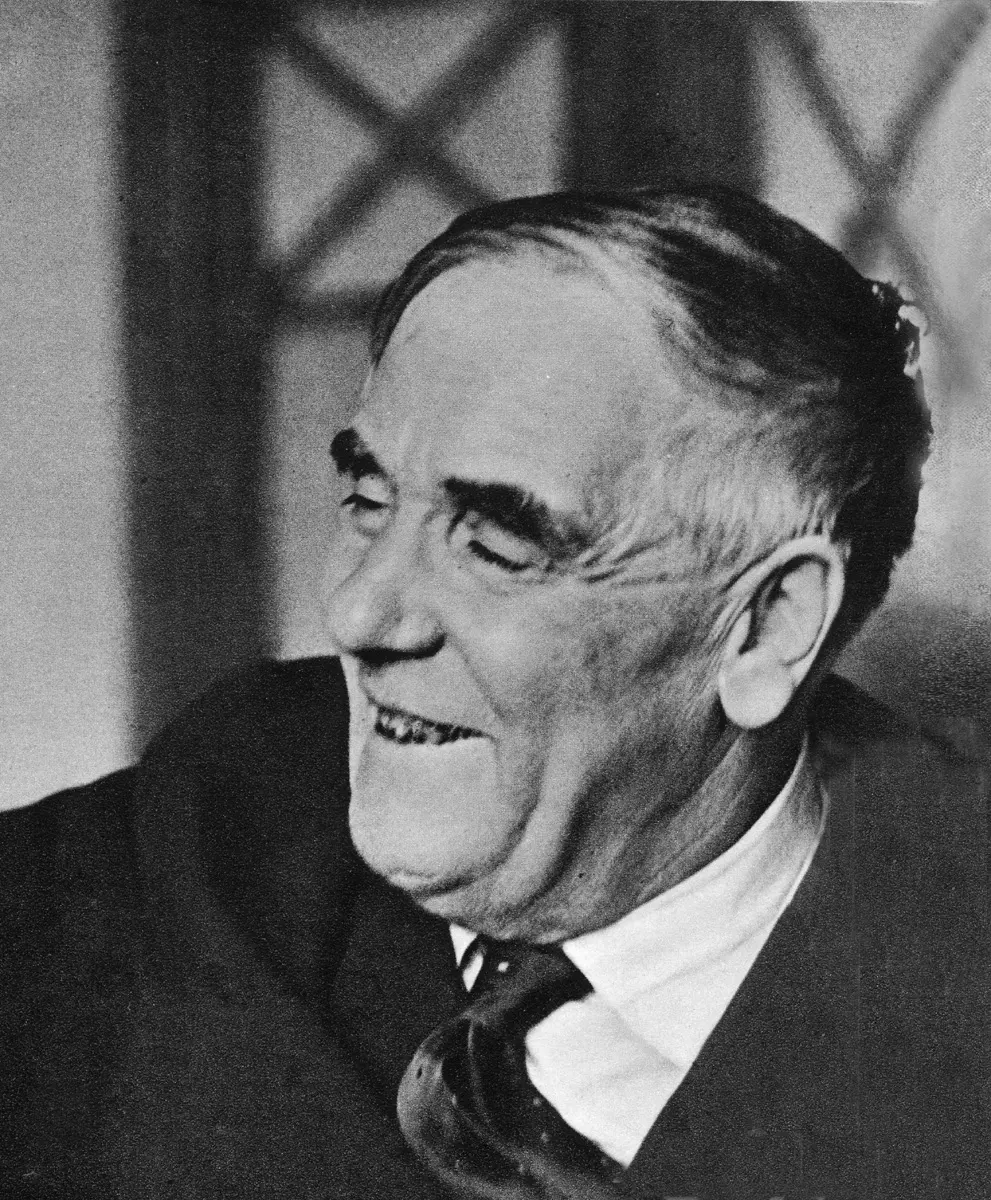
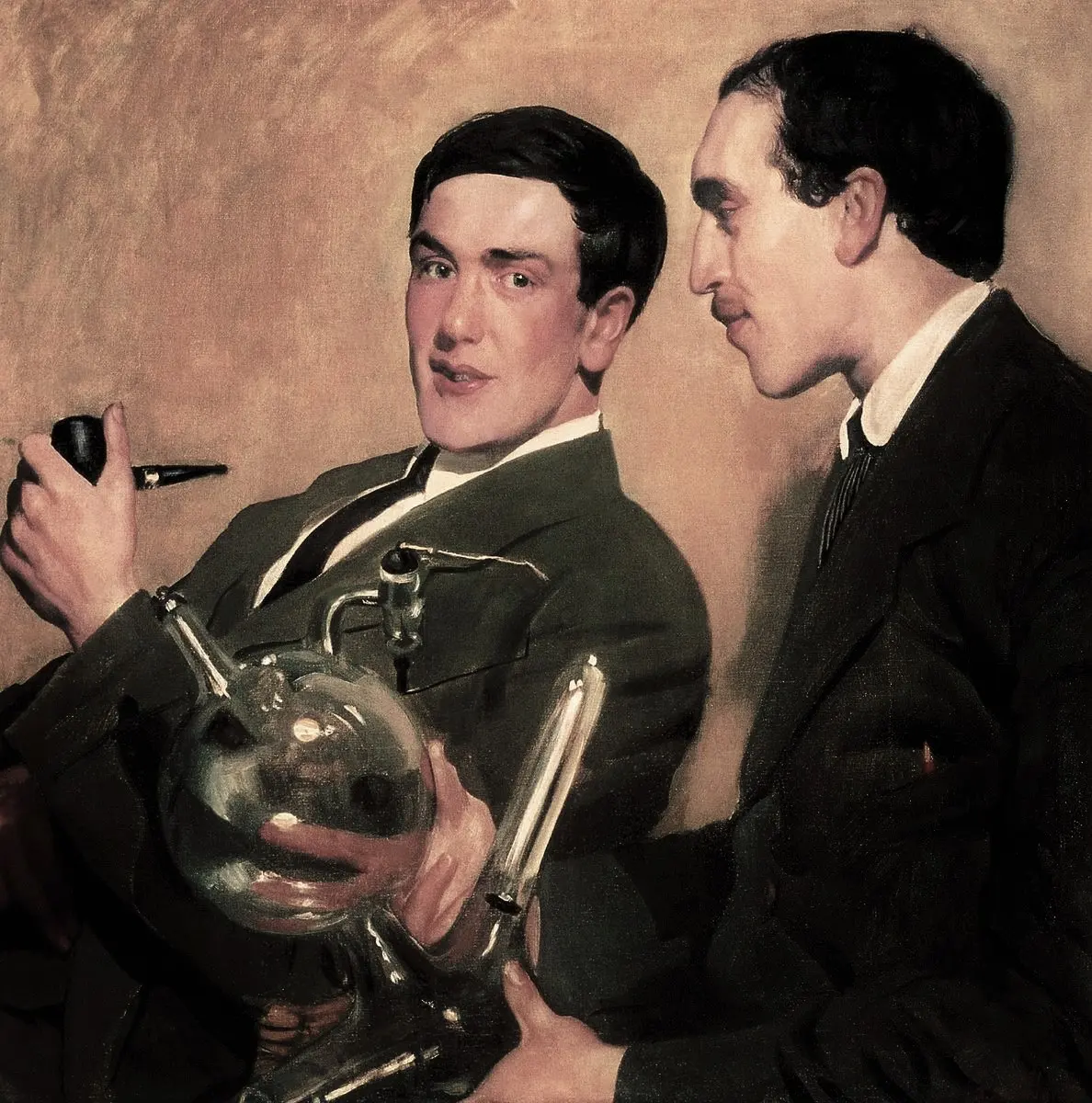
Pyotr Kapitsa
1894–1984, born in Kronstadt, Russia
He worked for 13 years in Cambridge, England, then was not allowed to leave the Soviet Union and built a new institute in Moscow. His prize came 40 years after his discovery.
Photo: photographer Piotr Barącz, Public domain
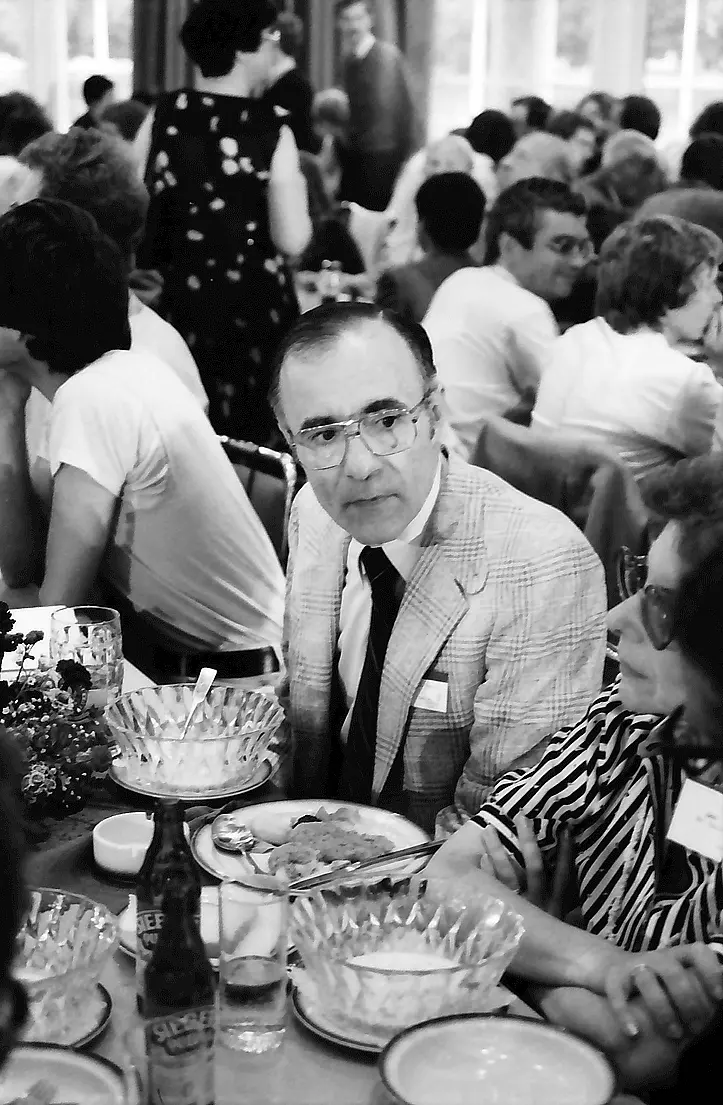
Arno Penzias
1933–2024, born in Munich, Germany
His Jewish family escaped from Nazi Germany when he was six. He grew up in New York, where his parents looked after an apartment building.
Photo: Willy Pragher, CC BY 3.0 de
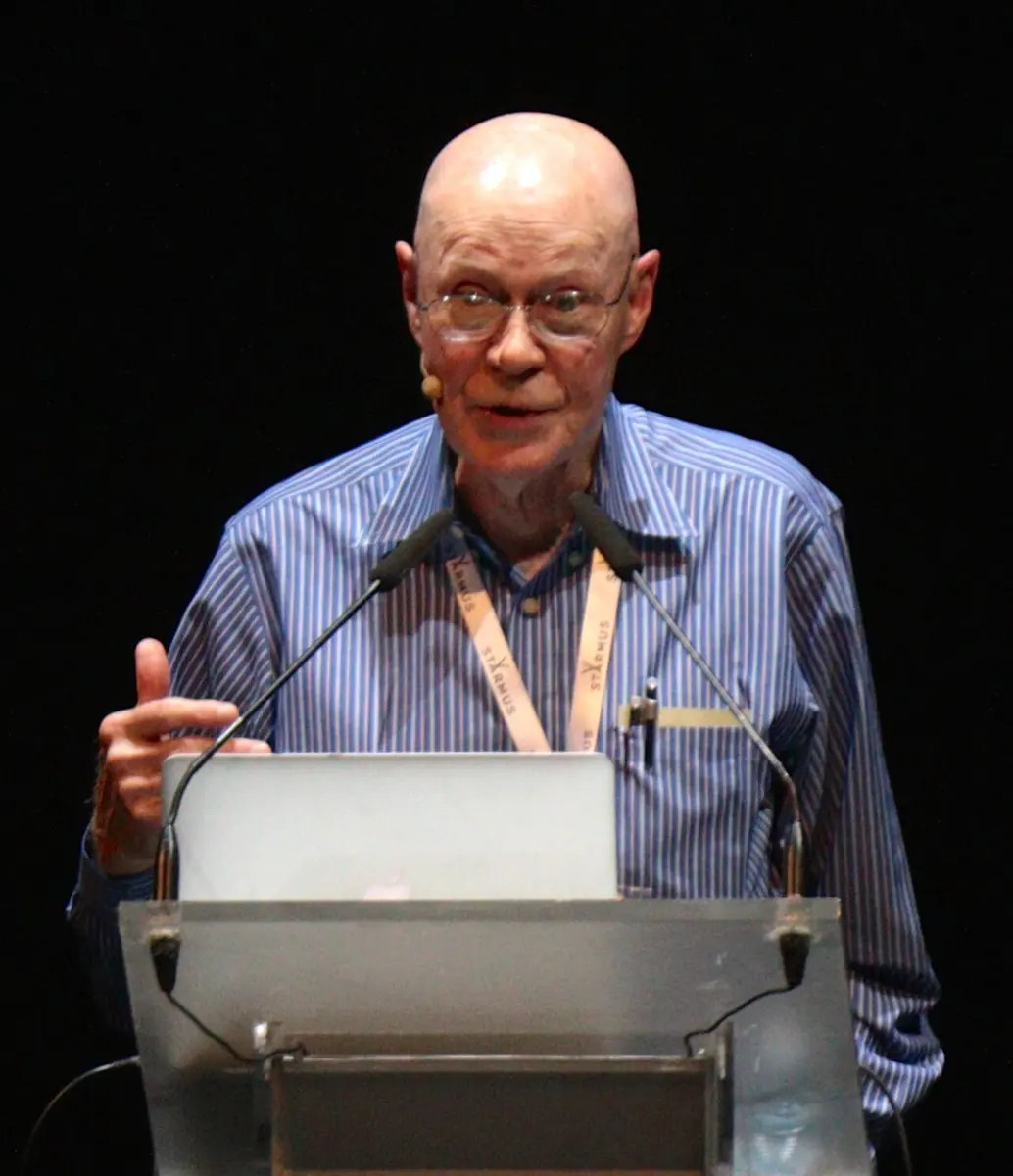
Robert Wilson
born 1936 in Houston, Texas, USA
As a boy he mended radios and television sets for pocket money. He helped build the receiver that heard the hiss.
Photo: Victor R. Ruiz from Arinaga, Canary Islands, Spain, CC BY 2.0
How cold is cold? A winter night in Jumla can fall to −15 °C. The top of Everest can reach −60 °C. The 1978 Nobel Prize in Physics went to two discoveries made at temperatures far colder than that: only 2 or 3 degrees above absolute zero, the coldest anything can ever be.
One half went to Pyotr Kapitsa, who found that liquid helium, cooled that far, flows with no friction at all. The other half went to Arno Penzias and Robert Wilson, two radio engineers who found that the whole of space glows faintly at almost the same temperature, a glow left over from the birth of the universe. The two discoveries have nothing to do with each other, except that cold.
Temperatures near absolute zero
Temperature is a measure of how fast the particles of a thing are moving. The colder something is, the slower its atoms and molecules move. At absolute zero, −273 °C, they would have the least energy they can possibly have. Nothing can be colder.
Scientists who work near absolute zero use the kelvin scale Grade 10: kelvin and absolute zero. It starts at absolute zero, 0 K, and each step is the same size as one degree Celsius. So 0 °C is 273 K, and 3 K is −270 °C.
Part 1: helium that flows without friction
The problem: the hardest gas to turn into a liquid
Every gas becomes a liquid if you cool it enough. Oxygen turns liquid at −183 °C (90 K), nitrogen at 77 K. Helium is the hardest of all: it boils at only 4.2 K. In 1908 the Dutch physicist Heike Kamerlingh Onnes became the first to make liquid helium, and for years his laboratory in Leiden was almost the only place in the world that could. Making it took liquid hydrogen to cool the helium first, and liquid hydrogen is dangerous.
Scientists had also noticed something odd. Below about 2.2 K, liquid helium changed into a different form, which they called helium II. It carried heat away astonishingly well. Nobody knew why.
What Kapitsa did, step by step
- 1921, to Cambridge. Pyotr Kapitsa came from Russia to work with Ernest Rutherford at the Cavendish Laboratory in Cambridge, England. He became famous for building machines that made magnetic fields stronger than anyone had made before, for a split second.
- 1934, a better helium machine. He invented a new machine for liquefying helium. The helium gas cooled itself by pushing a piston as it expanded, so no liquid hydrogen was needed. For the first time, liquid helium could be made safely and in large amounts. Low-temperature laboratories everywhere grew from this.
- 1934, kept at home. That year Kapitsa visited the Soviet Union, as he had done several times before, and the government did not let him go back to Cambridge. With Rutherford’s help, the Soviet government bought the equipment of his Cambridge laboratory, and Kapitsa built a new institute in Moscow, the Institute for Physical Problems.
- 1937, the gap between two discs. Kapitsa wanted to measure how “sticky” helium II was. Every liquid has some viscosity: honey has a lot, water little. He let helium II flow through the gap between two very flat glass discs pressed together, a gap about half a thousandth of a millimeter wide. Ordinary helium could barely seep through such a gap. Helium II rushed through it.
- January 1938, a new word. From his measurements, the viscosity of helium II was at least 1,500 times smaller than that of hydrogen gas, too small to measure at all. By comparison with superconductors, metals in which electricity flows without any resistance, he called it a superfluid. His letter was printed in the journal Nature on 8 January 1938. On the next page was a letter from John Allen and Don Misener, in Kapitsa’s old Cambridge laboratory, who had found the same thing in a different way.
Why did Kapitsa’s experiment need such a narrow gap?
Pick an answer to see why.
Stranger and stranger
A superfluid does things no ordinary liquid does. It can flow up and over the wall of its container as a film too thin to see. It flows straight through tiny cracks that hold back any other liquid. Heat it at one end and it can shoot up as a fountain. Over the next years Kapitsa studied these effects one by one and showed that helium II carries heat in a completely new way.
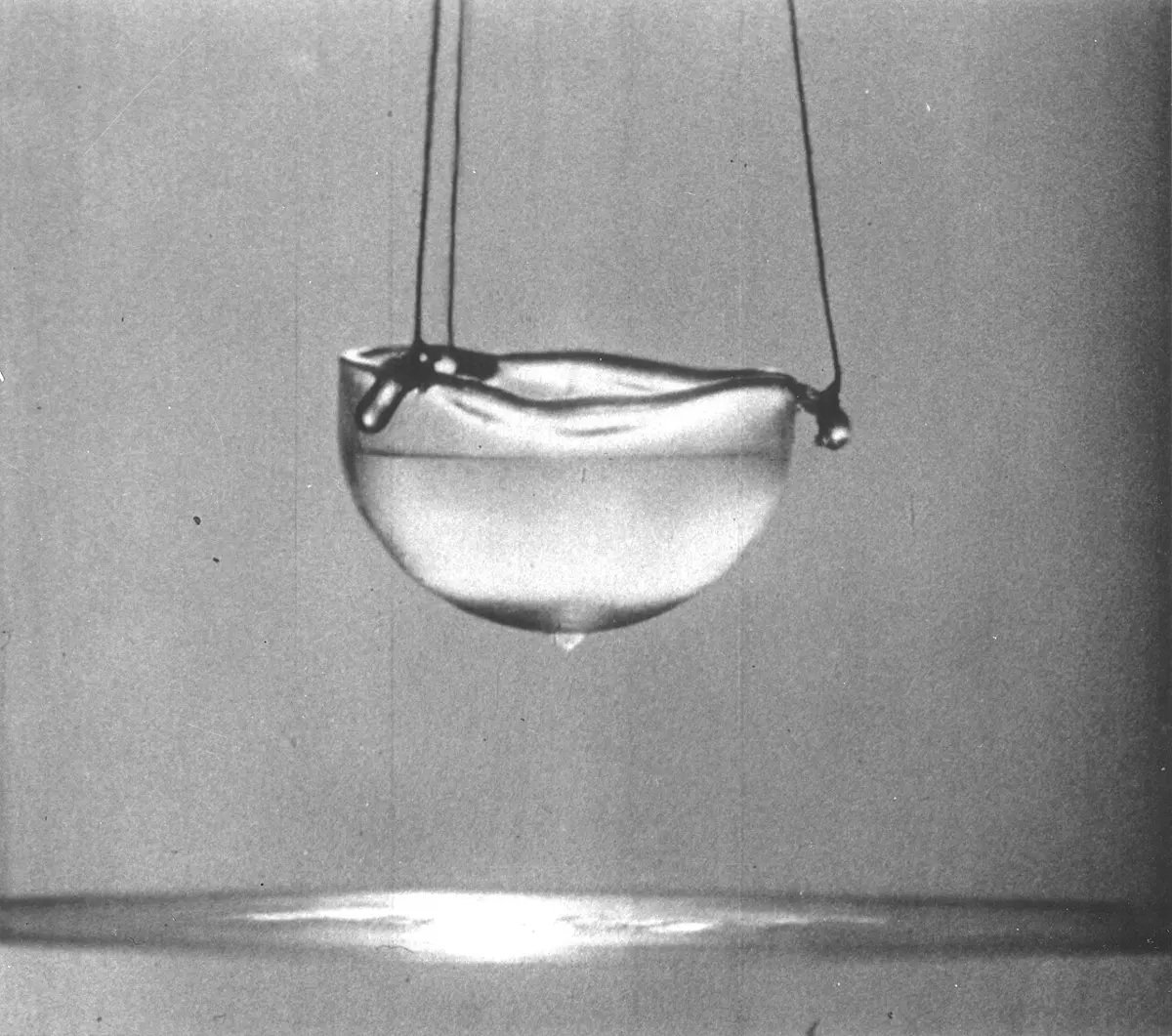
The explanation came from quantum physics, the physics of the very small. Below 2.17 K, many of the helium atoms drop into the very same lowest-energy state and move together as one, like a crowd marching perfectly in step. A crowd in step doesn’t jostle, so there is no friction. Kapitsa’s colleague Lev Landau worked out the theory, and won the Nobel Prize for it in 1962. In 1938 Landau had been arrested in Stalin’s purges; Kapitsa wrote to the government again and again until he was released a year later.
Part 2: the hiss from every direction
The problem: where did everything come from?
By the 1960s astronomers knew that the galaxies are rushing apart: the universe is expanding Grade 10: the Big Bang theory. Run the film backwards and everything was once squeezed together, very hot and dense. That idea, the Big Bang, had a rival: the steady state theory, in which the universe had no beginning and new matter kept appearing as it expanded.
In 1948 the scientists Ralph Alpher and Robert Herman, working with George Gamow, made a prediction. If the universe began hot, the light from that time should still be around, filling all of space. As space expanded, the light would have been stretched to long wavelengths and cooled to only a few kelvin, about 5 K by their estimate. But they thought such a faint glow could never be measured, and the prediction was forgotten.
Why it was hard
Cold things glow too, but not with light we can see. Something at a few kelvin gives out microwaves, radio waves a few millimeters or centimeters long Grade 9: microwaves. Every radio receiver hisses with its own noise, from the warm metal of the antenna and the electronics, and the air itself glows with microwaves. To hear a faint glow from space, you must know every other source of hiss, down to a fraction of a kelvin.
What Penzias and Wilson did, step by step
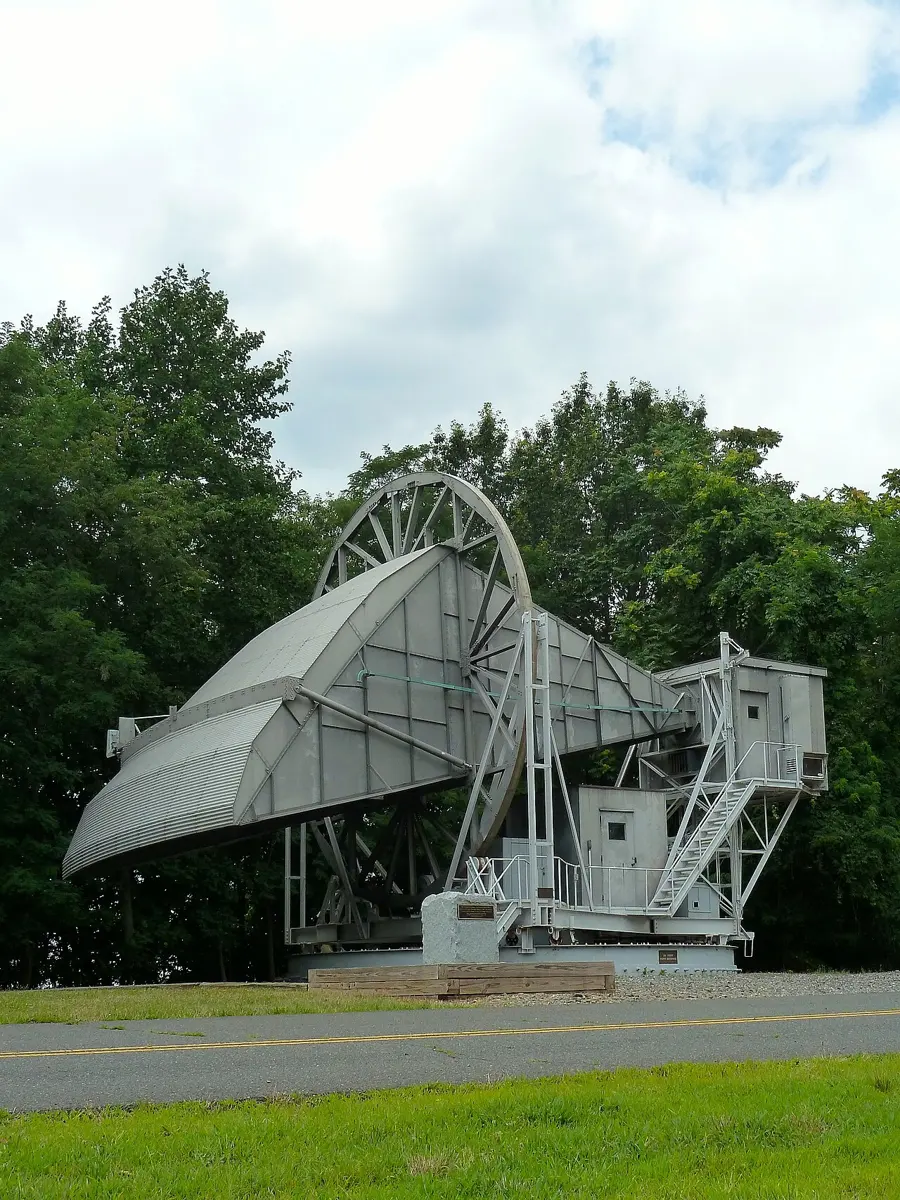
- 1963, a special antenna. At Bell Telephone Laboratories in Holmdel, New Jersey, USA, there was a large horn antenna, built around 1960 to talk to the first communication satellites. Its shape kept out almost all noise from the ground. Arno Penzias and Robert Wilson, two young radio astronomers, were allowed to use it for astronomy.
- A cold reference. They fitted a receiver for microwaves 7.35 cm long, with a switch that compared the sky with a source of known temperature: a piece of absorber cooled in liquid helium. Kapitsa’s cold, in a way, became their ruler.
- 1964, too much hiss. Pointed straight up, the antenna gave a temperature of 6.7 K. The air should give 2.3 K and the antenna itself 0.9 K. That left about 3.5 K that should not have been there. It was the same whichever way they pointed, by day and by night.
- Hunting the noise. They pointed the antenna at New York City: no change. It wasn’t from the Milky Way or the Sun. A pair of pigeons was nesting in the narrow end of the horn and had coated it with what Wilson politely called “a white material familiar to all city dwellers”. They removed the pigeons and cleaned the horn. The hiss dropped only a little. In early 1965 they taped over every joint in the metal. Still the hiss remained. After almost a year it had not changed with the seasons, so it couldn’t come from anything in the solar system.
- 1965, the answer down the road. Penzias mentioned the problem to a radio astronomer, Bernard Burke, who had heard about work at Princeton University, not far away. There Robert Dicke’s team, with the young James Peebles, had just calculated that a hot Big Bang should have left a glow of a few kelvin, and were building their own receiver to look for it. Penzias phoned Dicke. When Dicke put the phone down, the story goes, he told his team: “Boys, we’ve been scooped.”
- Two papers, side by side. In 1965 the two teams published together in the same journal: Penzias and Wilson reported the measurement, carefully without any explanation, and the Princeton team explained what it meant.
Penzias and Wilson pointed their antenna at New York City, and the hiss didn’t get stronger. What did that tell them?
Pick an answer to see why.
How it works: the oldest light
For about the first 380,000 years after the Big Bang, the universe was a glowing fog of hot gas: light couldn’t travel far before bumping into a free electron. When the universe had cooled to about 3,000 K, electrons joined atoms, the fog cleared and the light set off in straight lines. That light has been traveling ever since.
Since then space has expanded about 1,100 times, and the light’s waves have been stretched with it (how we know the universe is expanding). Glowing light at 3,000 K became microwaves at about 2.7 K. That is the cosmic microwave background, or CMB: the oldest light we can see, and it reaches us from every direction.
In your life today
- The snow on old TVs. An old television tuned between channels showed flickering “snow” and a hiss. A small part of it, about one per cent, was this afterglow of the Big Bang.
- Hospitals. The magnets of MRI scanners are cooled by liquid helium at 4 K, the liquid Kapitsa learned to make in quantity. Superfluid helium, at 1.9 K, cools the magnets of the Large Hadron Collider at CERN (the 2003 prize).
- Oxygen. In 1939 Kapitsa invented a better machine, a small turbine, for liquefying air, so that its oxygen can be separated by cooling. Large plants that cool air with turbines make much of the oxygen used by hospitals and industry today.
What came next
- Mapping the glow. In 1989 NASA’s COBE satellite showed that the afterglow has exactly the spectrum of a glowing hot body, at 2.725 K, and found tiny ripples in it, the seeds of the galaxies (the 2006 prize). James Peebles, of the Princeton team, won the prize in 2019 for working out what those ripples tell us (the 2019 prize).
- Another superfluid. In 1972 the rare kind of helium, helium-3, was found to become a superfluid too, at a thousand times colder (the 1996 prize).
- Open question. The afterglow shows that the universe is made mostly of things we cannot see, dark matter and dark energy. What are they? Nobody knows yet.
In your science books
- Grade 8: the origin of the universe and the Big Bang theory.
- Grade 9: how the universe began, microwaves and the electromagnetic spectrum.
- Grade 10: the Big Bang theory and Hubble’s study; temperature and the kelvin scale.
- Going further: the afterglow, in “How do we know the universe is expanding?”
Learn more
- The Nobel Prize’s speed read, press release and presentation speech.
- The laureates’ Nobel lectures: Kapitsa (on plasma), Penzias and Wilson.
The official reason
The prize was given “for his basic inventions and discoveries in the area of low-temperature physics.”
The prize was given “for their discovery of cosmic microwave background radiation.”