
Electrons in magnets and in glass
Nobel Prize in Physics, 1977: Philip Anderson, Nevill Mott, and John Van Vleck
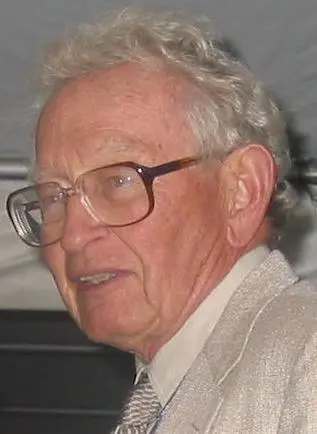
Philip Anderson
1923–2020, born in Indianapolis, USA
Van Vleck’s student at Harvard. He spent most of his career at Bell Telephone Laboratories, and loved the board game Go, which he learned in Japan.
Photo: JdH, CC BY-SA 3.0
-
Nevill Mott
1905–1996, born in Leeds, England
His parents had met as researchers in the famous Cavendish Laboratory in Cambridge; he later became its head. The work that won him the prize began when he was about 60.
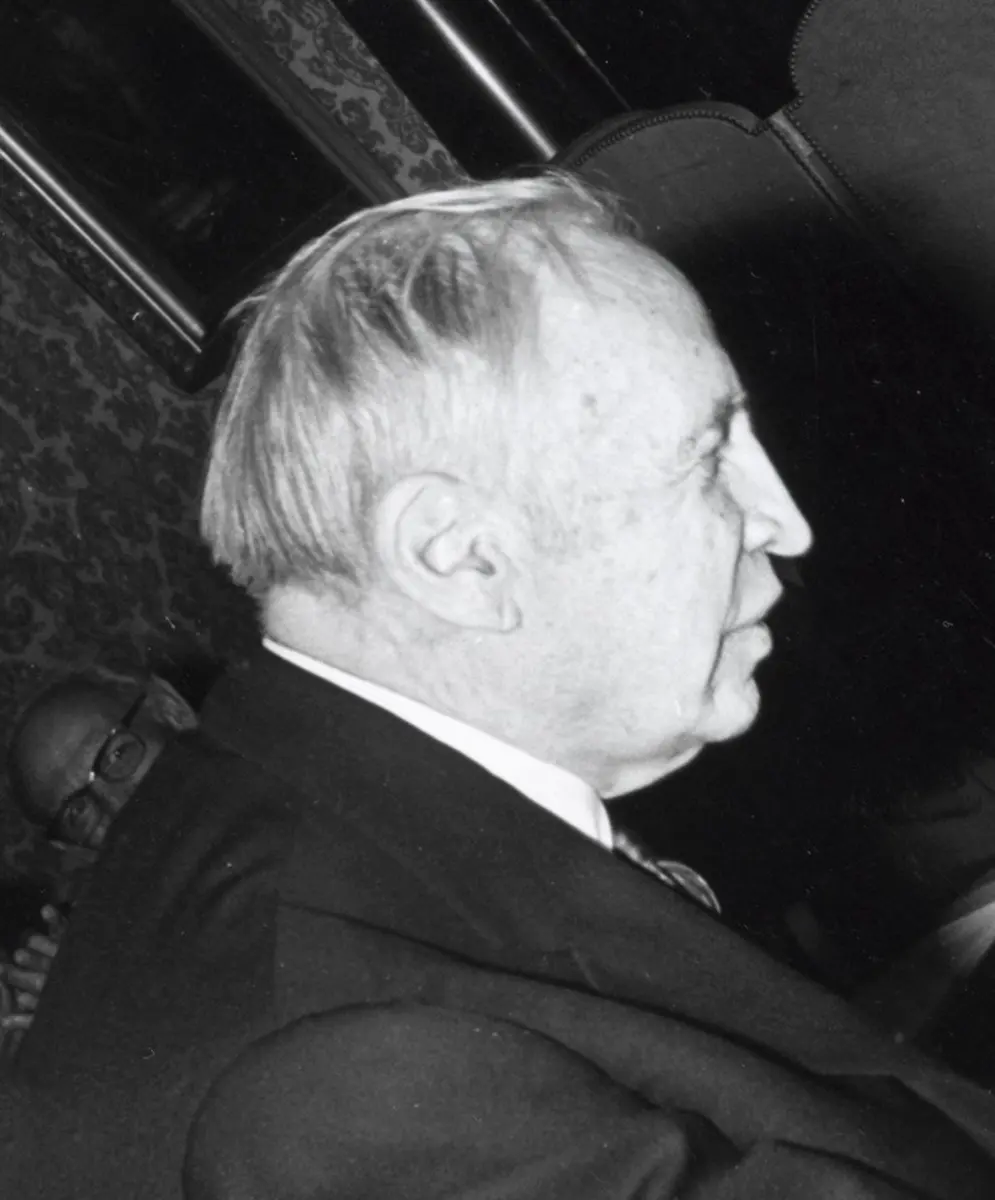
John Van Vleck
1899–1980, born in Middletown, Connecticut, USA
Called “the father of modern magnetism”. As a child he vowed never to become a professor like his father and grandfather; he changed his mind after one term at Harvard.
Photo: JH_van_Vleck_and_HBG_Casimir,_1974.jpg : Unknown derivative work: Materialscientist, CC BY-SA 3.0 nl
Hold a piece of copper wire in one hand and a piece of window glass in the other. The copper carries electricity easily; the glass does not carry it at all. A fridge magnet sticks to a steel door, but not to an aluminium pot. A ruby is red and an emerald is green, yet both get their color from the same metal, chromium.
All of these differences come from one thing: what the electrons in a material are doing. The 1977 Nobel Prize in Physics was shared by three theorists, scientists who work with ideas and calculations rather than apparatus, who explained what electrons do in two kinds of material that the older theories could not handle: magnetic materials, and disordered (messy, glassy) ones.
The problem: theories made for perfect crystals
Every atom has a tiny, heavy nucleus with electrons around it Grade 9: structure of an atom. In a solid, the atoms are packed together, and their outer electrons feel the pull of many neighboring atoms at once.
By the 1930s physicists had a theory, band theory, that explained a great deal. It pictured a crystal, a solid whose atoms sit in perfect rows, like soldiers on parade. In a metal such as copper, some electrons are free to move through the whole crystal, so it conducts electricity Grade 9: what is inside a metal. In an insulator such as salt, every electron is held in place.
But band theory had two weak points.
- It treated each electron as if it moved on its own, ignoring the fact that electrons, all negatively charged, repel each other.
- It needed the perfect rows of a crystal. Many useful materials have no rows at all. In glass, the atoms are jumbled, like people in a crowd at a mela. In a mixture of metals, atoms of two kinds are scattered at random.
The three laureates showed what happens when these two things, electrons pushing each other and atoms out of order, are taken seriously.
Which of these is a disordered material, with no regular rows of atoms?
Pick an answer to see why.
What they did, step by step
John Van Vleck: tiny magnets and the colors of jewels
Each electron behaves like a tiny magnet. In most atoms the electrons sit in pairs, with their magnets pointing opposite ways, so they cancel. But some atoms, such as iron, nickel and chromium, have electrons without a partner. Each such atom is a small magnet of its own. When many of them line up, you get a magnet you can hold Grade 8: molecular theory of magnetism.
- 1920s, the new quantum physics. Van Vleck was one of the first Americans to use quantum mechanics, the new physics of atoms, which arrived in 1925–1926. In 1932 he published a book that explained, with it, how strongly different materials are pulled by a magnet. It was used for decades.
- Early 1930s, the neighbors matter. Building on a 1929 idea of the German physicist Hans Bethe, Van Vleck worked out what happens to a metal atom’s electrons when it sits in a crystal, surrounded by other atoms. The neighbors’ electric charges push on its electrons and change their energies. This is now called crystal field theory, and, when the chemical bonds to the neighbors are included, ligand field theory.
- What it explains. The energies of those electrons decide which colors of light the atom absorbs, and how strong a magnet it is. So the same atom can have different colors and magnetism in different surroundings.
That is the secret of ruby and emerald. Both are colorless minerals with a few chromium atoms in place of the usual ones: ruby is aluminium oxide, emerald is a mineral called beryl. In ruby, the oxygen atoms around each chromium atom push harder on its electrons, so it absorbs yellow-green light and looks red. In emerald they push a little less, so the absorbed light shifts towards yellow and red, and the stone looks green.
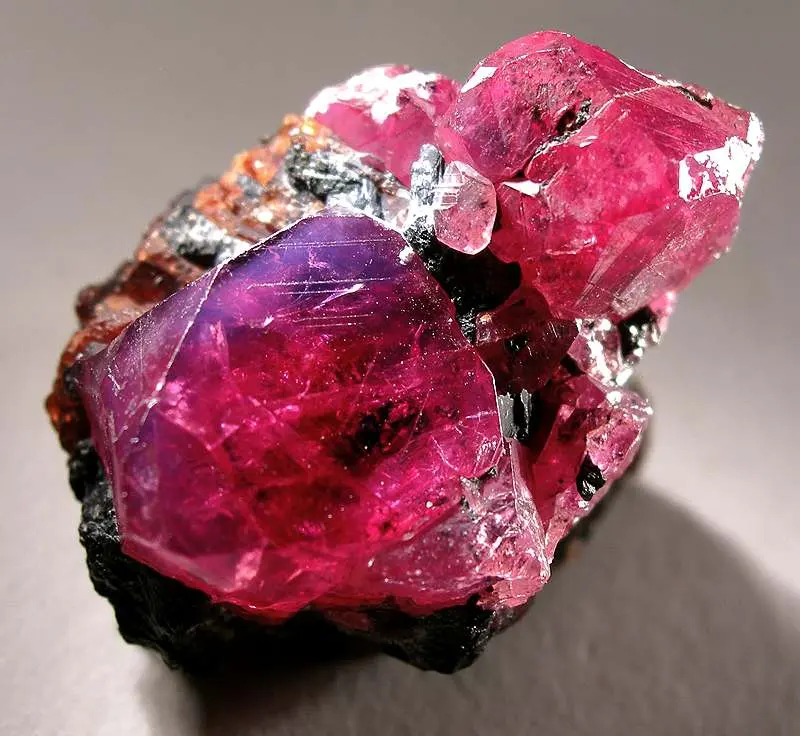
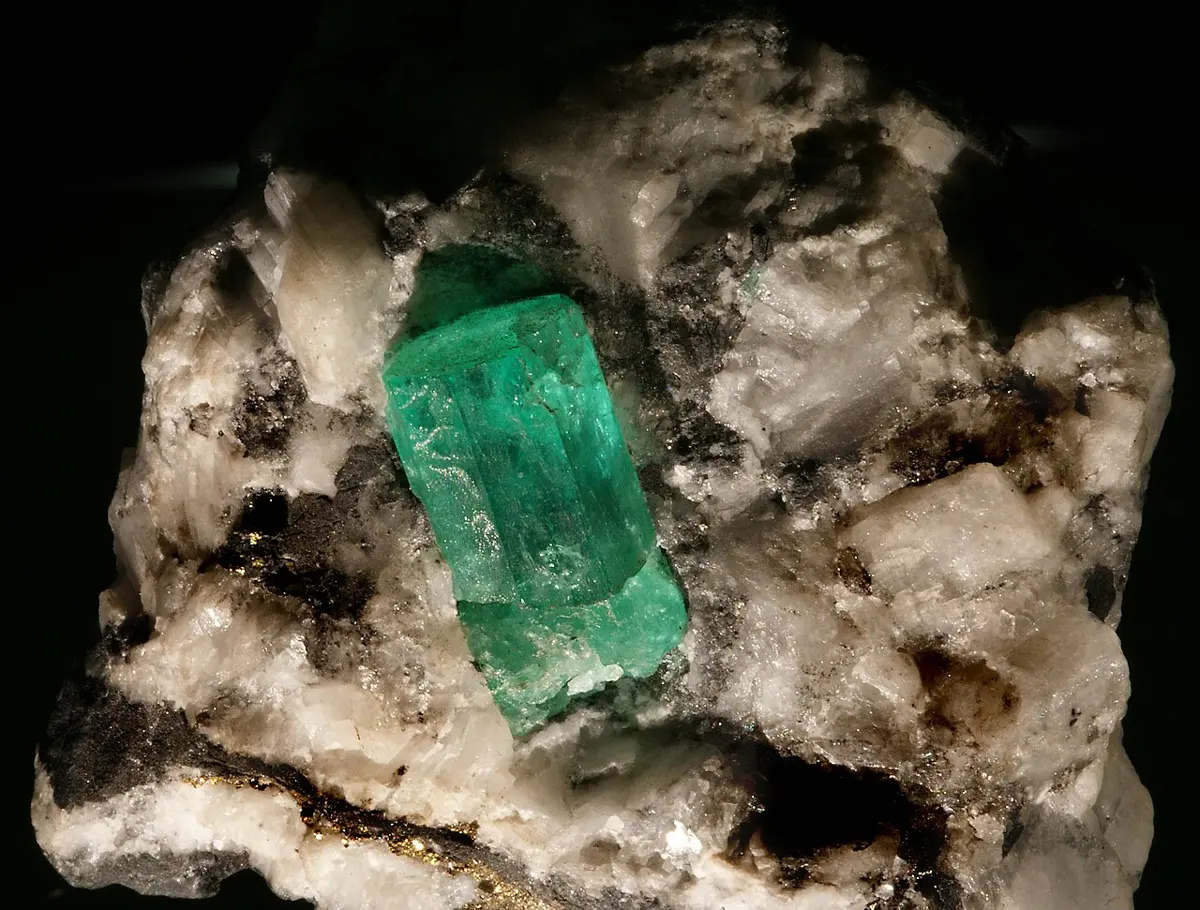
The first laser, built in 1960, was a rod of ruby. The Nobel committee said that Van Vleck’s ideas played a central part in developing lasers. Ligand field theory is also used to understand why your blood changes color when it takes up oxygen: the iron atom in hemoglobin has different neighbors with and without oxygen.
Nevill Mott: when electrons get in each other’s way
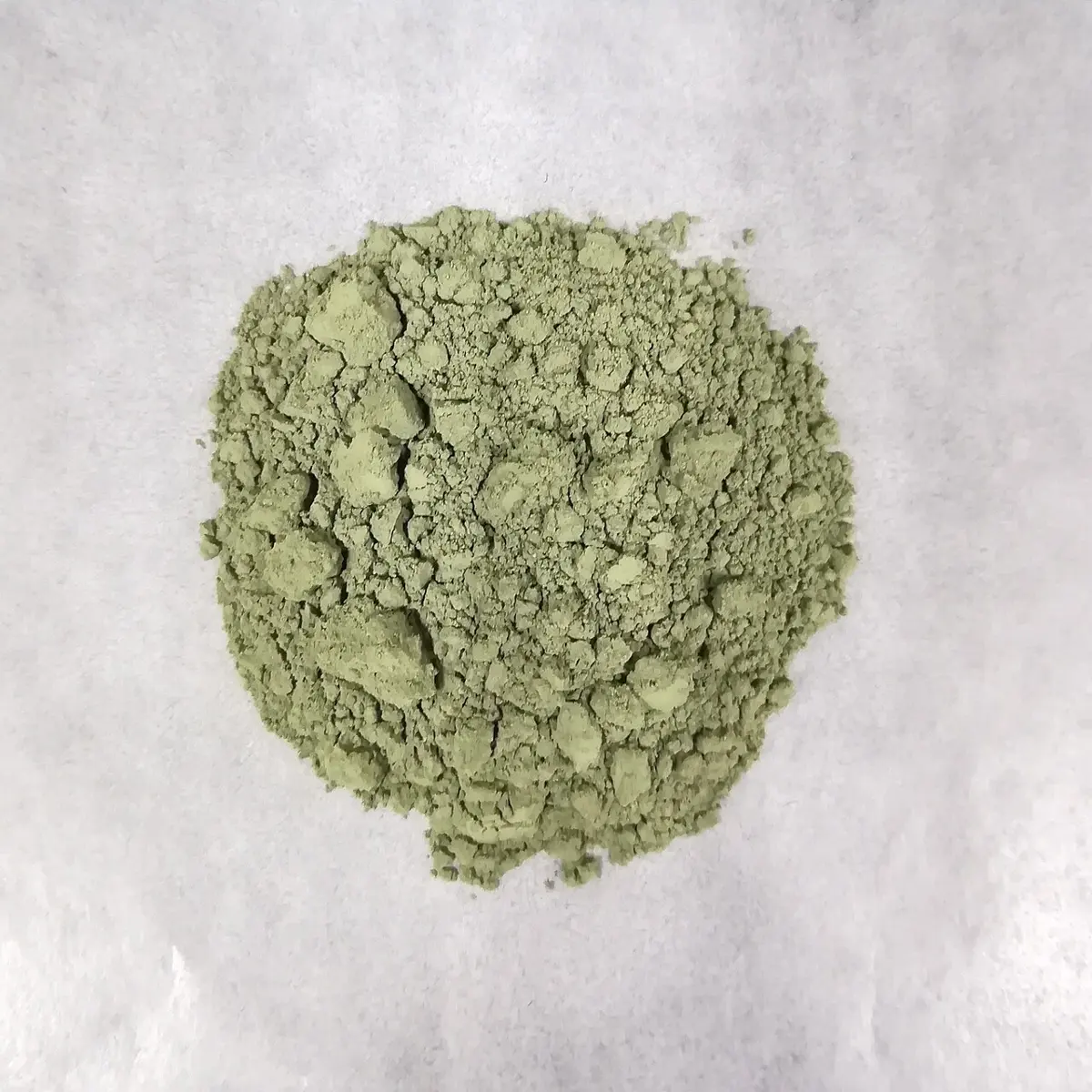
- 1937, a puzzle. Two Dutch scientists, Jan de Boer and Evert Verwey, pointed out that nickel oxide, a green powder, should be a metal according to band theory. It is actually an insulator. That same year Mott and Rudolf Peierls suggested why: band theory had ignored the way electrons repel each other.
- 1949, Mott’s explanation. Picture a row of atoms, each with one outer electron. To carry a current, an electron must hop onto the next atom. But that atom already has an electron, and the two repel. If the push is strong enough, it costs too much energy to squeeze in, and no electron moves. Every electron is stuck at home, and the material is an insulator. Such a material is now called a Mott insulator.
- The switch. Mott showed that if the atoms are pushed close enough together, the electrons spread out over many atoms, and suddenly the material conducts. This sudden change from insulator to metal is called a Mott transition.
- From about 1965, glassy semiconductors. Mott turned to disordered materials. Using Anderson’s ideas (below), he explained how electricity flows, slowly, through glassy semiconductors. With Edward Davis he wrote the standard book on them in 1971.
In a Mott insulator, why can’t the electrons move?
Pick an answer to see why.
Philip Anderson: electrons trapped by disorder
- 1958, the paper. Anderson asked what happens to an electron in a material whose atoms are scattered at random. In quantum physics an electron also behaves as a wave. In a perfect crystal, the wave rolls on through the whole material. In a disordered one, the wave is bounced back a little by each atom it meets. Anderson showed that if the disorder is strong enough, all the bounced parts can cancel the wave everywhere except in one small region. The electron is trapped there, even though nothing walls it in. This is now called Anderson localization.
- Ignored, then famous. For several years almost nobody understood the paper. It was Mott, who kept asking Anderson what it meant, who made other physicists take notice. It is now seen as one of the foundations of the science of disordered materials.
- 1961, magnets inside metals. Copper is not magnetic. But add a few iron atoms, and each one can act as a tiny magnet, or not, depending on its surroundings. Anderson made a simple model that explains when this happens.
Why it was hard
An electron in a solid feels millions of atoms and millions of other electrons, all at once. Nobody can solve the equations for all of them. The art of a theorist is to find a simple model that keeps what matters and throws away the rest. Band theory threw away the push between electrons, and the jumble of atoms, because that made the sums possible. The three laureates found ways to keep exactly those things and still get answers that could be tested.
Disorder was especially hard. The neat mathematics of crystals depends on the pattern repeating. In a glass there is no pattern to use. Anderson’s 1958 paper was so new that even experts could not follow it.
How it works now
Glassy semiconductors became important because they are cheap. A perfect crystal of silicon must be grown slowly, in a furnace, and cut into slices. A film of amorphous (glassy) silicon can be sprayed onto a large sheet of glass or metal, thinner than a hair. It doesn’t conduct as well, for the reasons Mott and Anderson explained, but for many jobs it is good enough.
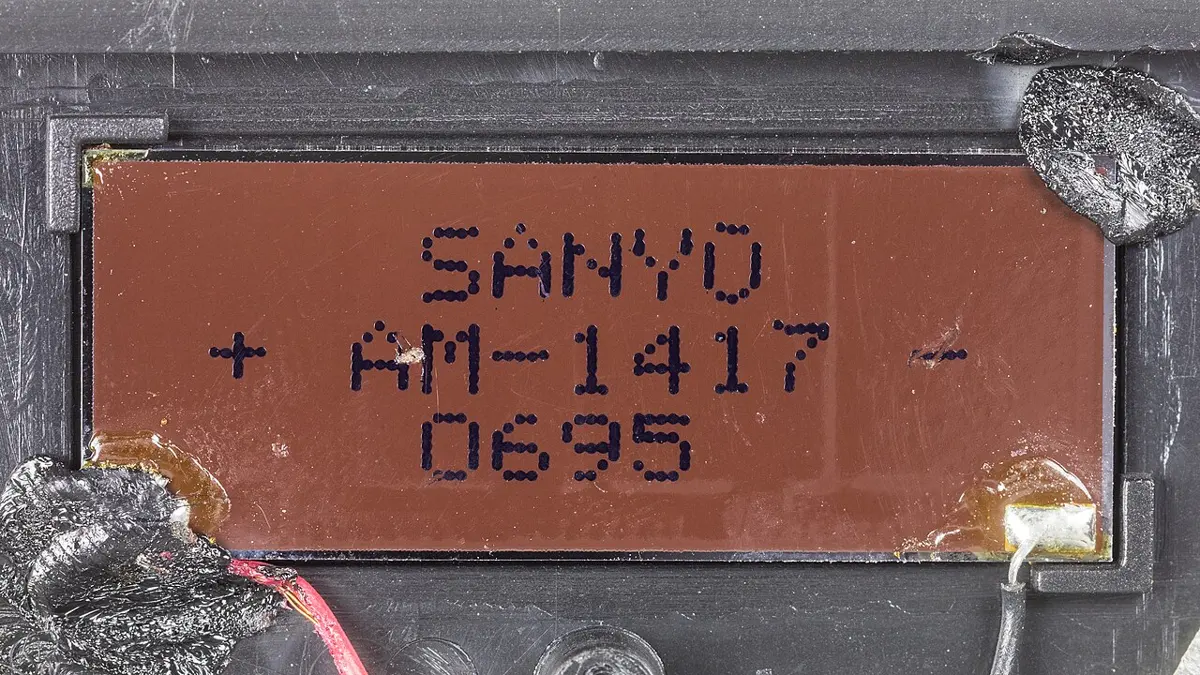
- Solar calculators. The brown strip on a solar calculator is usually a film of amorphous silicon. It turns even the weak light of a room into enough electricity to run the calculator Grade 9: solar electricity.
- Flat screens. In many LCD screens, every tiny dot is switched on and off by its own transistor, made of a thin film of amorphous silicon on the glass.
- Photocopiers and laser printers. Their drums were long coated with glassy selenium, which conducts electricity only where light falls on it.
In your life today
- A solar calculator in your school bag, the screen of a television or a laptop, and the photocopies you study from all use glassy semiconductors, which work as Mott and Anderson explained.
- Hard drives, MRI scanners in hospitals and the magnets in motors all rely on the physics of magnetism that Van Vleck put on a quantum footing.
- Jewelers and geologists use ligand field theory to understand the colors of gemstones and minerals, and chemists to understand the colors of compounds such as blue copper sulfate and green nickel salts.
Why are glassy (amorphous) semiconductors used in solar calculators instead of perfect crystals?
Pick an answer to see why.
What came next
- Spin glasses. In 1975 Anderson and Sam Edwards described spin glasses: materials whose tiny atomic magnets point every which way, frozen in a jumble. The mathematics invented for them later helped in computer science and the study of brain-like networks, and was part of Giorgio Parisi’s prize in 2021 (the 2021 prize).
- Superconductors. In 1986 copper oxides were found that carry electricity with no resistance at all at fairly “warm” temperatures. When not doped, they are Mott insulators. Anderson worked on them for the rest of his life.
- Open question. Nobody yet fully understands how these copper oxides superconduct. It is one of the biggest unsolved problems in physics: an answer might lead to wires that carry electricity with no loss at room temperature.
In your science books
- Grade 8: the molecular theory of magnetism, tiny magnets inside a magnet.
- Grade 9: structure of an atom, what is inside a metal and solar electricity.
- Grade 10: dispersion of light, white light as a mixture of colors.
Learn more
- The Nobel Prize’s press release and presentation speech.
- The laureates’ Nobel lectures: Anderson, Mott and Van Vleck.
The official reason
The prize was given “for their fundamental theoretical investigations of the electronic structure of magnetic and disordered systems.”