
The universe’s story, and a new planet
Nobel Prize in Physics, 2019: James Peebles, Michel Mayor, and Didier Queloz
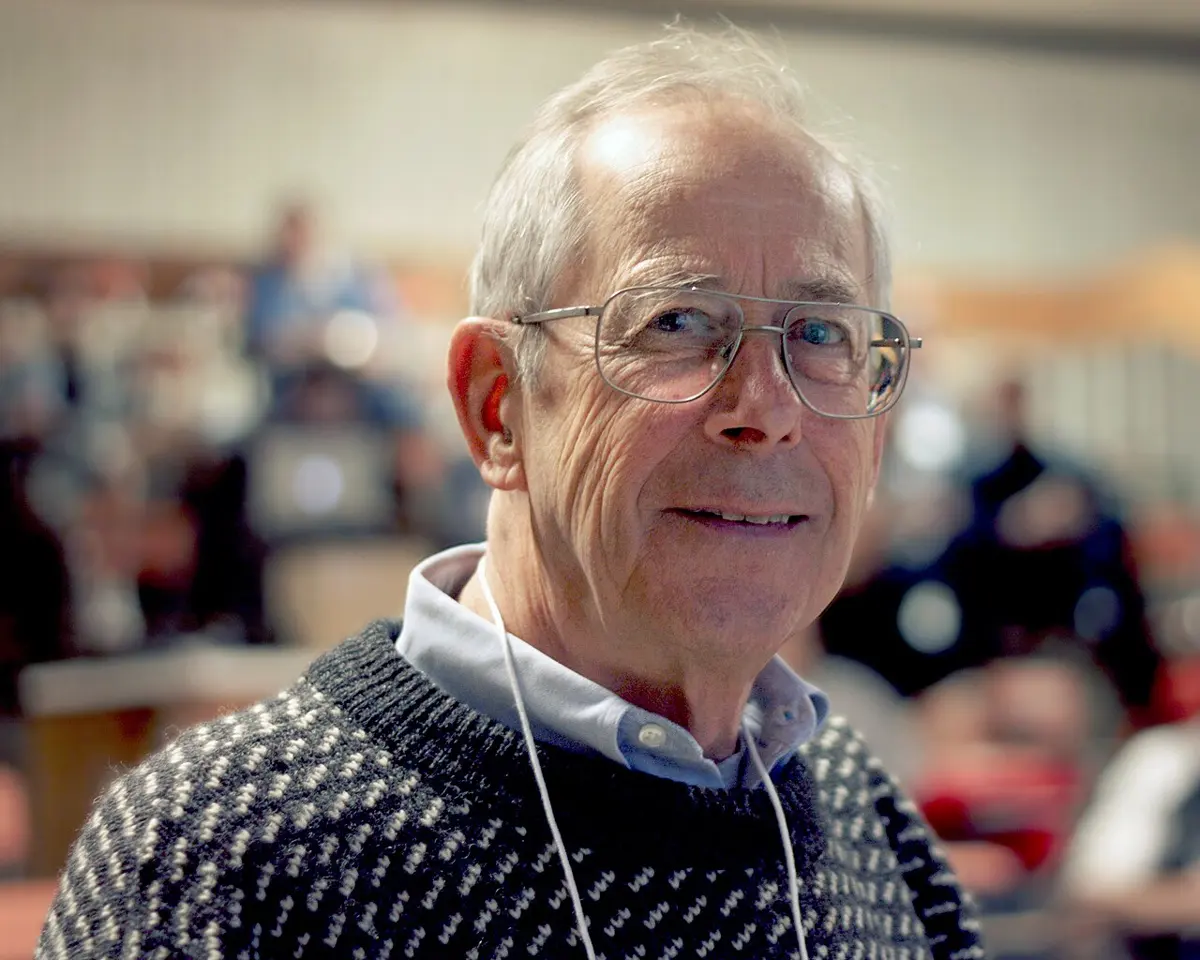
James Peebles
born 1935 in Canada
Went to Princeton in 1958 meaning to study particle physics, but his teacher, Robert Dicke, drew him into gravity, and in 1964 asked him to think about the early universe. He has worked on it ever since.
Photo: Juan Diego Soler, CC BY 2.0
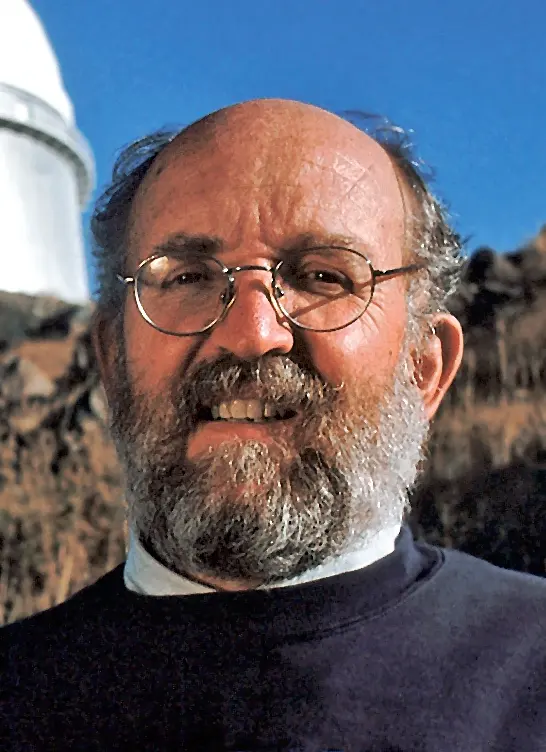
Michel Mayor
born 1942 in Switzerland
Spent decades building instruments to measure how fast stars move, each one more precise than the last.
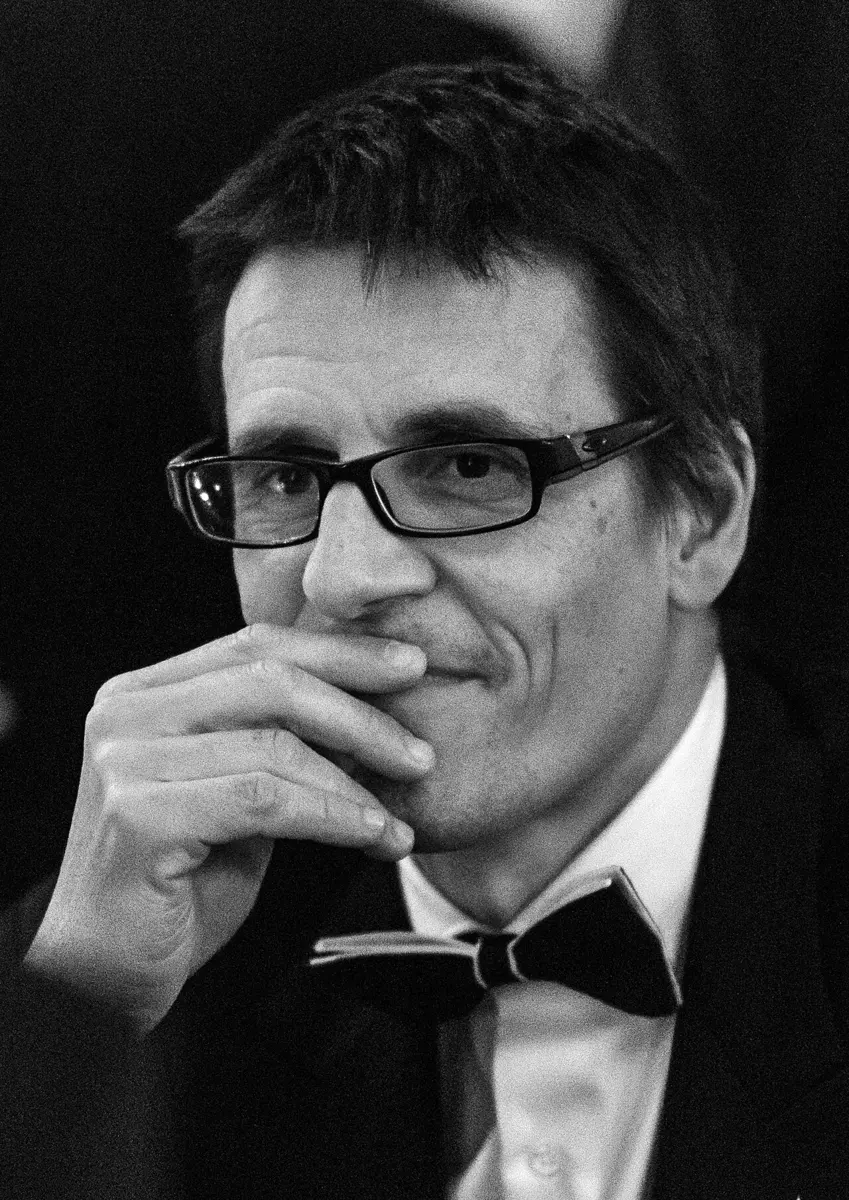
Didier Queloz
born 1966 in Switzerland
Was a PhD student in his late twenties, writing the computer program for a new instrument, when it showed him the first planet around a star like the Sun.
Photo: M.McCaughrean (ESA)/ESO, CC BY 4.0
On a clear night in the hills, away from the lights of the city, you can see thousands of stars. Two of the oldest questions people have asked while looking up are: where did all this come from? and are there other worlds like ours out there?
For most of history these were questions for stories and philosophy. The 2019 Nobel Prize in Physics went to three scientists who helped turn them into questions science can answer. One half went to James Peebles, who worked out, with pencil, paper and later computers, how the universe grew from a hot, smooth beginning into the galaxies we see. The other half went to Michel Mayor and Didier Queloz, who in 1995 found the first planet going round a star like our Sun.
Part 1: the story of the universe
The problem: a universe without a history
Until about a hundred years ago, most scientists thought the universe had always been the same. Then, in the 1920s, astronomers found that the galaxies are moving apart: the universe is expanding Grade 10: Hubble’s study. If it is getting bigger, it must once have been smaller, denser and hotter. Run the film backwards far enough and everything was squeezed into a tiny, extremely hot state: the Big Bang, about 13.8 billion years ago Grade 10: The Big Bang theory.
But in the early 1960s there was very little evidence for this, and almost no way to test it. Cosmology, the study of the whole universe, was more guesswork than science. Peebles was one of the people who changed that.
The oldest light
Think of a coal fire. When it is very hot it glows white; as it cools it glows yellow, then red, and then it gives out only invisible infrared rays, which you can still feel as heat on your hands.
The early universe was like that, but everywhere at once. For its first 380,000 years it was a hot, glowing fog of particles, so dense that light could not travel far before bumping into something, like a torch beam in thick fog. Then the universe cooled to a few thousand degrees, and the particles joined into atoms of hydrogen and helium gas. The fog cleared, and the light was free to travel.
That light is still arriving at Earth from every direction. But the universe has stretched about a thousand times since then, and the light has stretched with it: from glowing visible light into microwaves, waves a few millimeters long, like those in a microwave oven, but extremely weak. It is now so cold that it matches a temperature of only 2.7 degrees above absolute zero, about −270 °C. It is called the cosmic microwave background: the afterglow of the Big Bang (The afterglow).
Why does the afterglow of the Big Bang reach us as microwaves, not as visible light?
Pick an answer to see why.
What Peebles did, step by step
- 1964–1965: predicting the afterglow. At Princeton University in the USA, Peebles’s teacher Robert Dicke asked his young team to think about the early universe. Peebles calculated that a hot Big Bang should have left an afterglow that fills all of space, and his colleagues began building a radio antenna to look for it. Just then, two radio astronomers at the nearby Bell Telephone Laboratories, Arno Penzias and Robert Wilson, found a faint hiss in their antenna that came equally from every direction and would not go away. When they heard about Peebles’s calculation, they realized what they had found. (Penzias and Wilson received the Nobel Prize in 1978.)
- 1965–1970: what the afterglow tells us. Peebles showed that the temperature of the afterglow tells you how much ordinary matter the universe contains, and how much helium the first few minutes should have made. Both matched what astronomers measured.
- 1970: ripples in the fog. If the early universe had been perfectly smooth, it would have stayed a smooth, thin gas for ever, and there would be no galaxies, stars or people. Peebles, with his student Jer Yu, worked out that tiny differences in density would have rippled through the hot fog like sound waves, and that these ripples should leave a pattern of slightly warmer and slightly cooler spots in the afterglow.
- 1982: dark matter. There did not seem to be enough ordinary matter for gravity to pull the galaxies together in time. Peebles suggested that most matter is a kind of invisible, slow-moving particle, now called cold dark matter, which feels gravity but does not give out or block light. His calculations with it matched how galaxies are spread across the sky.
- 1984: something more. The numbers still didn’t add up: there was not enough matter of any kind to make space “flat”, as the afterglow suggested it was. Peebles helped bring back Einstein’s old cosmological constant, an energy of empty space itself, which is now called dark energy.
Checking the story
In 1992 the COBE satellite found the warm and cool spots in the afterglow, differing by only about one part in 100,000, just as the theory needed. Later satellites, WMAP and Planck, mapped them in fine detail, and the pattern matches Peebles’s kind of theory extremely well. In 1998 astronomers found that the universe’s expansion is speeding up, the evidence for dark energy (the Nobel Prize in 2011: the universe is speeding up).
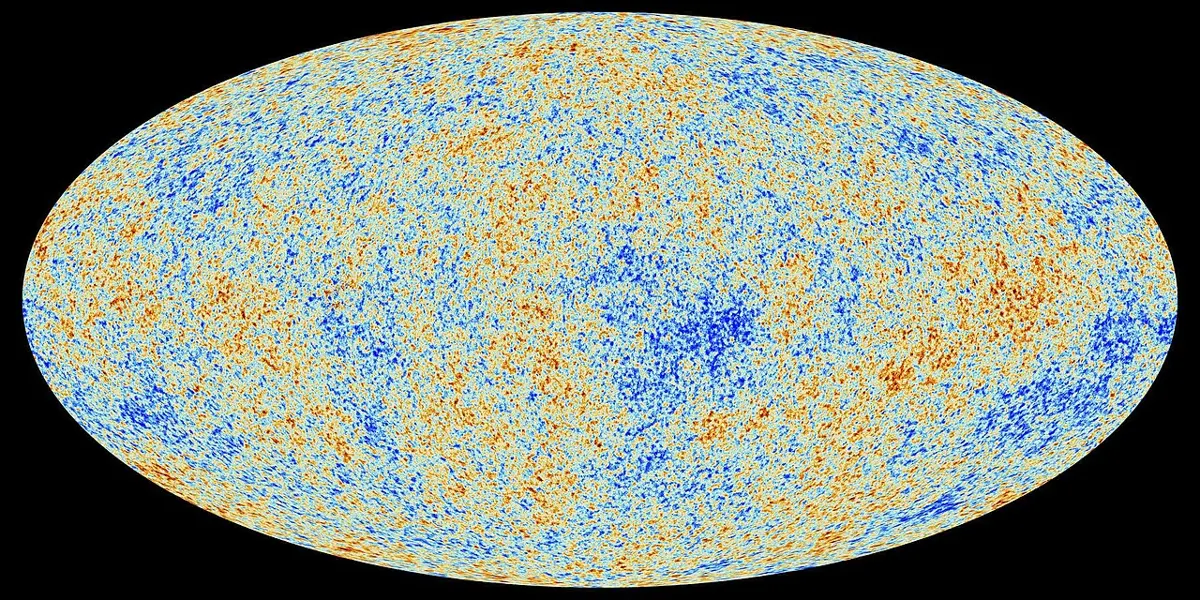
The result is a story of the universe told in numbers. Only about 5 per cent of it is the ordinary matter that stars, planets and you are made of. About 27 per cent is dark matter, and about 68 per cent is dark energy Grade 10: What the universe is made of. The story fits the evidence remarkably well, yet we still don’t know what 95 per cent of the universe actually is.
Part 2: a planet around another sun
The problem: planets are too faint to see
There are hundreds of billions of stars in our galaxy, the Milky Way. Do any of them have planets, as the Sun does? For centuries people guessed, but nobody could check. A planet gives out no light of its own; it only reflects a tiny amount of its star’s light. Seen from far away, a planet beside its star is like a firefly next to a huge searchlight, and the searchlight is many light-years away.
So astronomers looked not for the planet, but for its effect on its star.
The wobble
You may think a planet goes round its star while the star stays still. In fact, they both go round a point between them, their center of mass, like two children of very different weights holding hands and spinning round. The heavy child moves in a small circle, the light one in a big circle. A star is much heavier than its planet, so it moves in a very small circle, but it does move: it wobbles.
Seen from Earth, a wobbling star moves a little towards us, then a little away, again and again. When it moves towards us, its light waves are squeezed slightly closer together, so they are a tiny bit bluer. When it moves away, they are stretched, a tiny bit redder. This is the Doppler effect, the same effect you hear when a bus sounding its horn comes towards you and then drives away: the horn sounds higher as it comes and lower as it goes (Lines that move). A star’s light contains thousands of dark lines (each element makes its own: the barcode in sunlight), and astronomers can measure tiny shifts in where those lines are.
The difficulty is how small the wobble is. Jupiter, the biggest planet, makes the Sun wobble at only about 12 meters per second, the speed of a fast bicycle. The Earth makes it wobble at just 9 centimeters per second, a slow crawl.
How did Mayor and Queloz find a planet they could not see?
Pick an answer to see why.
What Mayor and Queloz did, step by step
- 1970s–1980s: better and better instruments. At the University of Geneva, in Switzerland, Michel Mayor built instruments to measure how fast stars move towards or away from us. His first, in 1977, could measure speeds down to about 300 meters per second: far too rough to notice a planet.
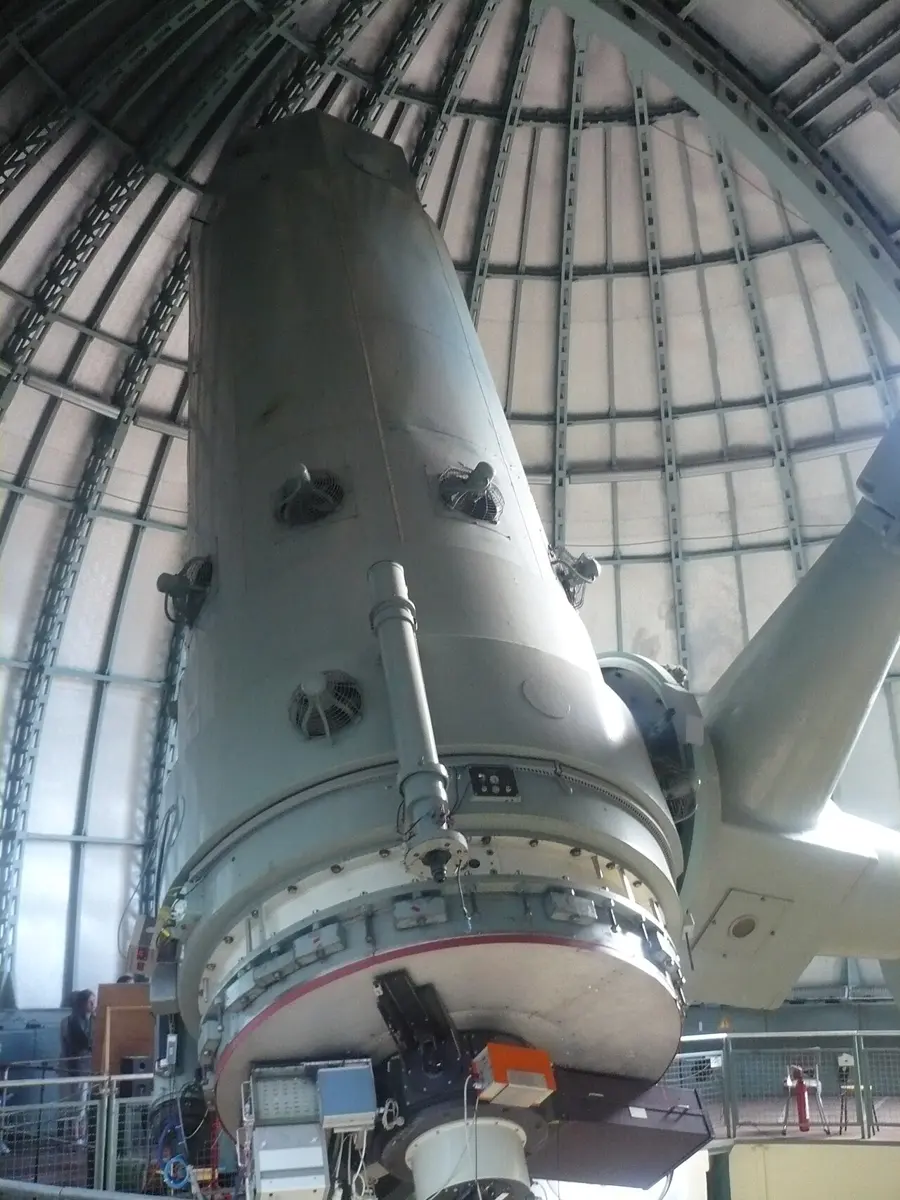
- Early 1990s: ELODIE. With Didier Queloz, then a PhD student, and colleagues, Mayor built a new instrument, ELODIE, for a telescope at the Haute-Provence Observatory in southern France. Optical fibers carried the starlight into it, a sensitive electronic camera (a CCD) recorded it, and Queloz wrote the computer program that measured each star’s speed. It was finished in 1994 and could measure speeds of about 10–15 meters per second.
- The search. They began measuring about 140 Sun-like stars, again and again, looking for any that wobbled.
- The surprise. Queloz soon noticed that one star, 51 Pegasi, in the constellation Pegasus about 50 light-years away, was moving towards us and away from us every 4.2 days, at about 55 meters per second, about 200 kilometers an hour. It made no sense at first: a planet that heavy circling so fast would have to be extremely close to its star. They spent months checking that it was not a mistake or something else, such as the star itself pulsing.
- 6 October 1995. They announced their discovery at a meeting of astronomers in Florence, Italy. Within days, two American astronomers, Geoffrey Marcy and Paul Butler, pointed their own telescope at 51 Pegasi and saw the same wobble.
A planet nobody expected
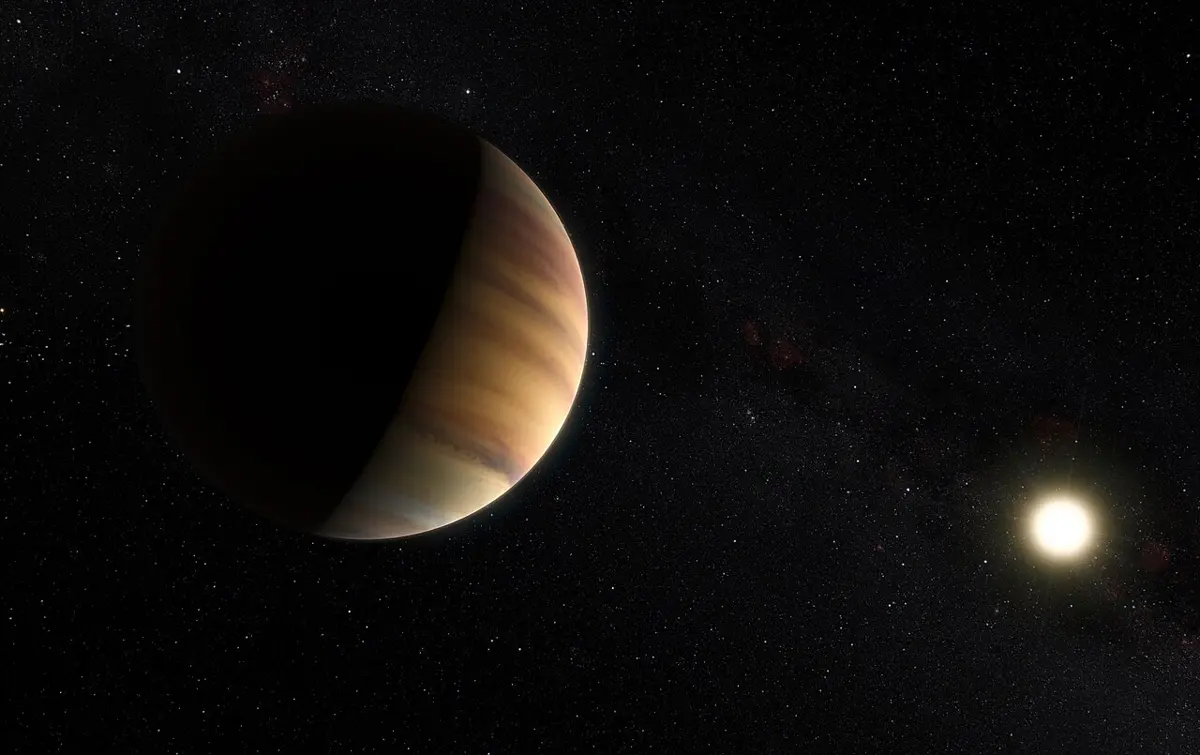
The planet, 51 Pegasi b, was nothing like the planets of our solar system. It is a giant ball of gas at least half as heavy as Jupiter, but it goes round its star in just over four days, about 8 million kilometers from it, far closer than Mercury is to the Sun (about 58 million kilometers). Its surface must be hotter than 1,000 °C. Planets like it are now called hot Jupiters. According to the theories of the time, a giant planet could only form far from its star, where it is cold. So astronomers had to work out how giant planets can move inwards after they form.
In your life today
- More than 6,000 planets. Since 1995, astronomers have found more than 6,000 planets around other stars Grade 9: Planets around other stars. Most are found today by watching a star dim very slightly as a planet passes in front of it, with satellites such as NASA’s Kepler and TESS. Some are rocky and about the size of the Earth.
- A star with a Nepali name. In 2019, the year of this prize, the International Astronomical Union invited every country to name a star and its planet. Nepal named the Sun-like star HD 100777, in the constellation Leo, Sagarmatha, and its giant planet Laligurans, after the national flower, the rhododendron. That planet was found in 2007 by the same wobble method, with HARPS, an instrument in Chile built by a team led by Mayor’s group in Geneva.
- Your place in the universe. Every atom in your body other than hydrogen was made inside stars (Where did the atoms in your body come from?), from ordinary matter that is only 5 per cent of the universe.
What came next
- Measuring planets’ air. When a planet passes in front of its star, a little starlight shines through the planet’s atmosphere. Telescopes such as the James Webb Space Telescope can now tell what gases some planets’ air contains.
- Earth-like planets. Finding a planet like the Earth, around a star like the Sun, at the right distance for liquid water, is still very hard: its wobble is only centimeters per second. New instruments are being built to try.
- The open questions. What are dark matter and dark energy, the 95 per cent of the universe we can’t see? And is there life on any of the planets around other stars? Didier Queloz has said he hopes that within a few decades we will be able to look for signs of life in the air of planets like the Earth.
In your science books
- Grade 9: How the universe began, What the universe is made of and Planets around other stars, with Sagarmatha and Laligurans.
- Grade 10: The Big Bang theory, Hubble’s study and Future of the universe.
- Going further: How do we know the universe is expanding?, with the afterglow and the Doppler effect, and What stars are made of, on the lines in starlight.
Learn more
- The prize at nobelprize.org: The Nobel Prize in Physics 2019, with the popular information, “New perspectives on our place in the universe”.
- The laureates’ Nobel lectures: James Peebles, Michel Mayor and Didier Queloz.
The official reason
The prize was given “for theoretical discoveries in physical cosmology.”
The prize was given “for the discovery of an exoplanet orbiting a solar-type star.”