
Plastic that conducts electricity
Nobel Prize in Chemistry, 2000: Alan J. Heeger, Alan G. MacDiarmid, and Hideki Shirakawa
-
Alan J. Heeger
born 1936 in the USA
A physicist. His father died when he was nine, and his mother, who had given up university to support her family, made sure he went.
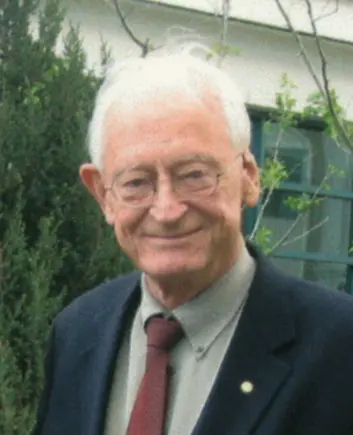
Alan G. MacDiarmid
1927–2007, born in New Zealand
His family was poor, and he went to school barefoot. At 16 he left school to work as a “lab boy”, washing glassware in a university chemistry department.

Hideki Shirakawa
born 1936 in Japan
The chemist whose laboratory made the first shiny film of the plastic, by a happy mistake.
Photo: The Japan Academy, CC BY 4.0
Look at the cable of a phone charger or the wiring in your house. Inside is copper, which carries the current. Outside is plastic, which stops it. We cover wires in plastic precisely because plastic does not conduct electricity: it is an insulator.
So it was a great surprise when three scientists showed, in 1977, that a plastic can be made to conduct electricity almost like a metal. In 2000 they shared the Nobel Prize in Chemistry. Their discovery began with a mistake in a laboratory in Tokyo.
The problem: why plastic doesn’t conduct
Plastics are long chains
A plastic is made of polymers: enormous molecules made by joining thousands of small molecules (monomers) end to end, like beads on a string (From oil to a plastic bucket). Polythene, the plastic of shopping bags, is a long chain of carbon atoms, each holding two hydrogen atoms.
What a current needs
An electric current is a flow of charge. In a metal wire, the charges that flow are electrons. A metal conducts because some of its electrons are free: they are not tied to any one atom, so they can drift along the wire when a battery pushes them (Metals conduct electricity, What is moving).
In polythene, every electron is held in a covalent bond, shared by two atoms Grade 9: Covalent bond. None is free to move. That is why polythene insulates so well.
Why does copper conduct electricity, while polythene does not?
Pick an answer to see why.
Was there a plastic that could conduct?
Chemists had an idea where to look. Some chains have single and double bonds taking turns along their whole length. The simplest is polyacetylene, made by joining molecules of acetylene (ethyne, C₂H₂), the gas used for welding Grade 10: Ethyne. In such a chain the electrons of the double bonds are held less tightly. Perhaps they could be made to move.
But for a long time, polyacetylene could only be made as a dull black powder, which was hard to study and conducted poorly.
What they did, step by step
Shirakawa: a silver film, by mistake (1967)
Hideki Shirakawa worked at the Tokyo Institute of Technology in Japan. He was making polyacetylene from acetylene gas, using a catalyst of the kind invented by Karl Ziegler and Giulio Natta for making plastics.
- 1967, too much catalyst. A visiting researcher in the laboratory made the polyacetylene using about a thousand times more catalyst than the recipe intended. The recipe should have said millimoles; he used moles. Shirakawa later wrote that he may have left the “m” out of his written instructions, or the visitor may have misread it. Nobody is sure.
- A surprise. Instead of the black powder, a shiny, silvery film grew on the surface of the liquid. With so much catalyst, the acetylene joined up so fast that it formed a film where the gas met the catalyst.
- Learning to make it on purpose. Shirakawa studied what had happened, and learned to make thin films of polyacetylene whenever he wanted. By changing the temperature, he could make a silvery form or a copper-colored form, with the chain shaped slightly differently.
The film looked like a metal. But it did not conduct like one.
MacDiarmid: a meeting over tea (1975)
Alan MacDiarmid was a chemist at the University of Pennsylvania in Philadelphia, USA. With the physicist Alan Heeger he was studying a different shiny chain, made of sulphur and nitrogen, which did conduct electricity.
- 1975, a lecture in Tokyo. On a visit to Japan, MacDiarmid gave a lecture at Shirakawa’s institute and showed his golden-looking film. Afterwards, over a cup of green tea (some accounts say coffee), Shirakawa showed him his silvery polyacetylene.
- An invitation. MacDiarmid was fascinated, and invited Shirakawa to come and work in Philadelphia for a year. Shirakawa arrived in September 1976.
Heeger, MacDiarmid and Shirakawa: the jump (1976–77)
The three now worked together: two chemists and a physicist.
- Purer films. At first they tried to make the polyacetylene purer, hoping that would help it conduct. It didn’t help much.
- Adding a halogen. They knew that bromine and iodine, which pull electrons towards themselves, changed the color of the film. So they exposed the film to bromine and iodine vapor, and Heeger’s group measured how well it conducted.
- 23 November 1976. Shirakawa remembered the day exactly. With C. K. Chiang, a young physicist in Heeger’s group, he added bromine to a film. The conductivity rose so fast that the meter couldn’t keep up. It had become about ten million times better at conducting. With iodine the result was even better.
- 1977, the paper. In the summer of 1977 they published their discovery: “Synthesis of electrically conducting organic polymers”. A plastic had become a conductor.
This process of adding a small amount of another substance to change how a material conducts is called doping.
What did adding iodine do to the polyacetylene film?
Pick an answer to see why.
How a plastic conducts
Picture a crowded bus where every seat is full. Nobody can change seats. Now one passenger gets off, leaving an empty seat. The person next to it moves in, leaving their own seat empty; the next person moves into that one, and so on. The empty seat travels down the bus, even though each person moves only one seat.
A polyacetylene chain is like the full bus. Its electrons are all paired in bonds, and none can move. Doping makes the empty seat:
- Iodine takes an electron out of the chain. That leaves a hole: a place missing an electron, with a positive charge.
- An electron from the next bond moves into the hole, leaving a new hole a little further along.
- So the hole moves along the chain. When a battery is connected, holes drift one way along the chains, and that is an electric current.
Doping can also work the other way: a metal like sodium can add extra electrons to the chain, which then move along it.
A plastic is made of a great many tangled chains, so the charge must also hop from one chain to the next. That is why later researchers worked hard to line the chains up neatly: the better packed the chains, the better the plastic conducts. The best doped polyacetylene films came close to copper.
Some of these plastics are semiconductors when they are not doped, like the silicon in a computer chip. And some semiconducting plastics glow when a current flows through them.
In your life today
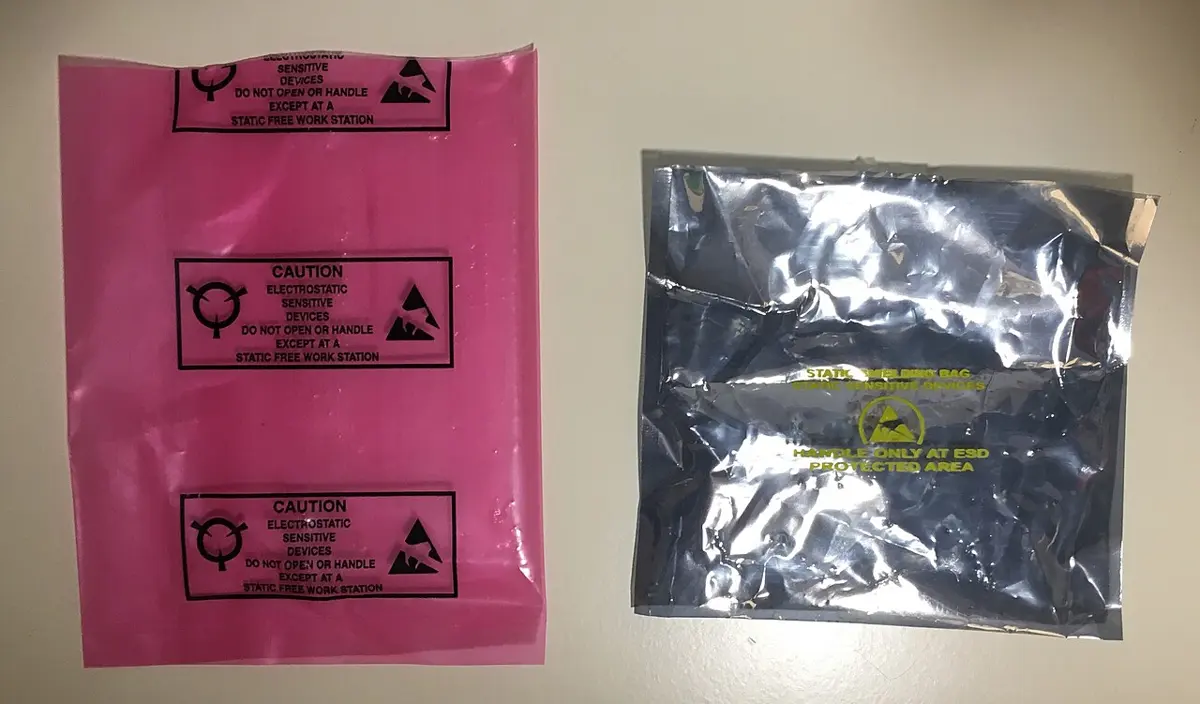
- Anti-static coatings and bags. Electronic parts can be damaged by a tiny spark of static electricity, like the one you feel touching a door handle on a dry winter day. They are packed in bags and trays made slightly conducting, so static charge leaks away harmlessly. Conducting polymers are used in some of these coatings, and in floor coverings for operating theaters, where a spark could be dangerous. Conducting polymers also coat photographic film and screens to keep dust from clinging.
- Capacitors. Many of the small capacitors inside phones, laptops and computer power supplies use a conducting polymer instead of a liquid. They last longer and don’t leak.
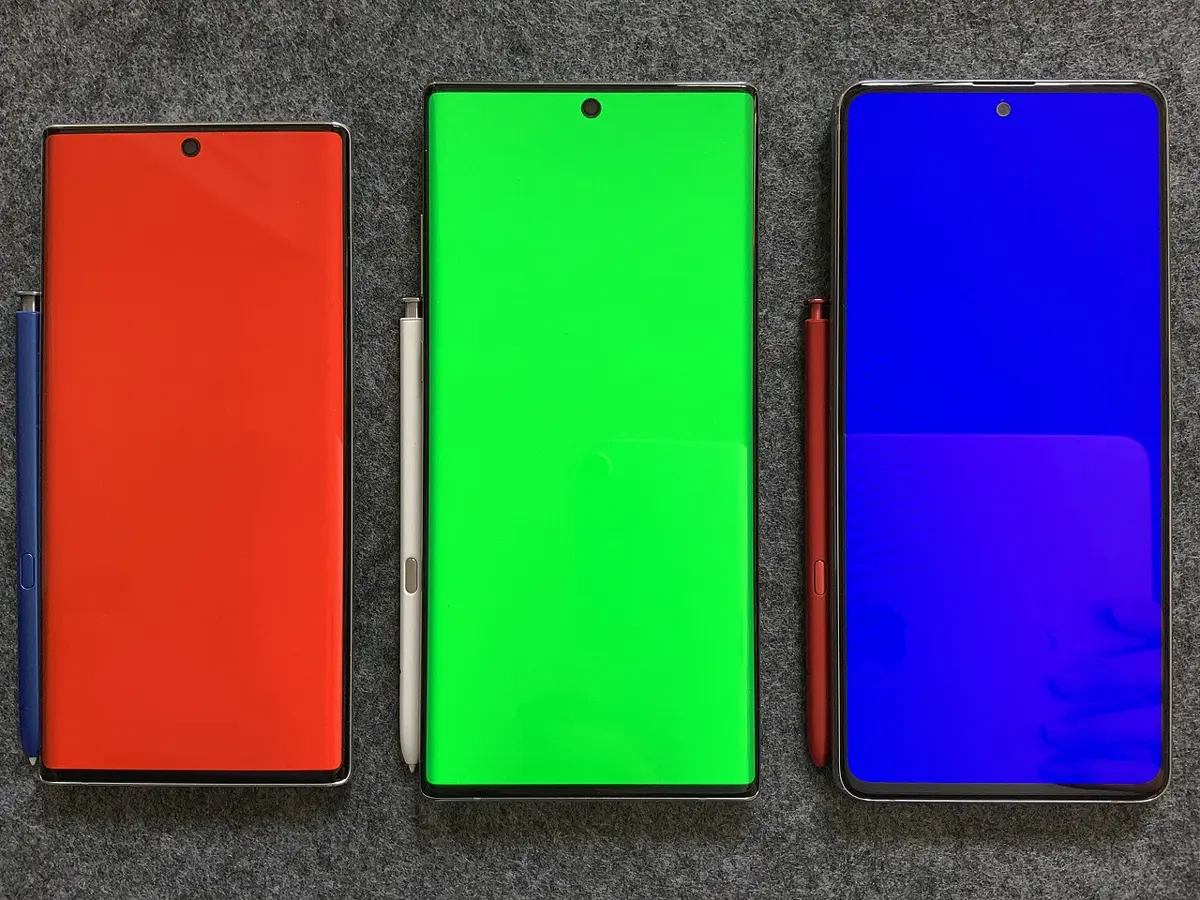
- Glowing plastics. In 1990 a team at Cambridge, England, made the first light-emitting diode (LED) from a polymer. Today’s OLED screens (O for “organic”, made from carbon compounds) are in many phones, watches and televisions. Most phone OLEDs use small carbon molecules rather than long polymers, but they grew from the same idea: carbon compounds that carry a current and give out light.
What came next
- Plastic solar cells. Heeger and others showed that semiconducting polymers can also turn light into electricity. Plastic solar cells can be printed on thin, bendable sheets, though they still don’t last as long as silicon panels.
- Printed electronics. Because polymers can be dissolved like ink, simple circuits, sensors and labels can be printed rather than built in a factory for chips.
- In medicine. Soft conducting polymers are being tested to coat electrodes placed in the body, for example in the brain or the heart, because they are gentler on living tissue than bare metal.
In your science books
- Grade 8: conductors and insulators (of heat), and the live, neutral and earth wires.
- Grade 9: covalent bonds and double bonds, what moves in an electric current, and why metals conduct.
- Grade 10: ethyne (acetylene) and catalysts.
- Going further: how plastic is made, and why wires are metal inside and plastic outside.
Learn more
- The Nobel Prize’s own explanation: Plastic that conducts electricity (nobelprize.org).
- The laureates’ Nobel lectures: Heeger, MacDiarmid and Shirakawa.
The official reason
The prize was given “for the discovery and development of conductive polymers.”