
ATP: the spinning motor and the sodium pump
Nobel Prize in Chemistry, 1997: Paul D. Boyer, John E. Walker, and Jens C. Skou
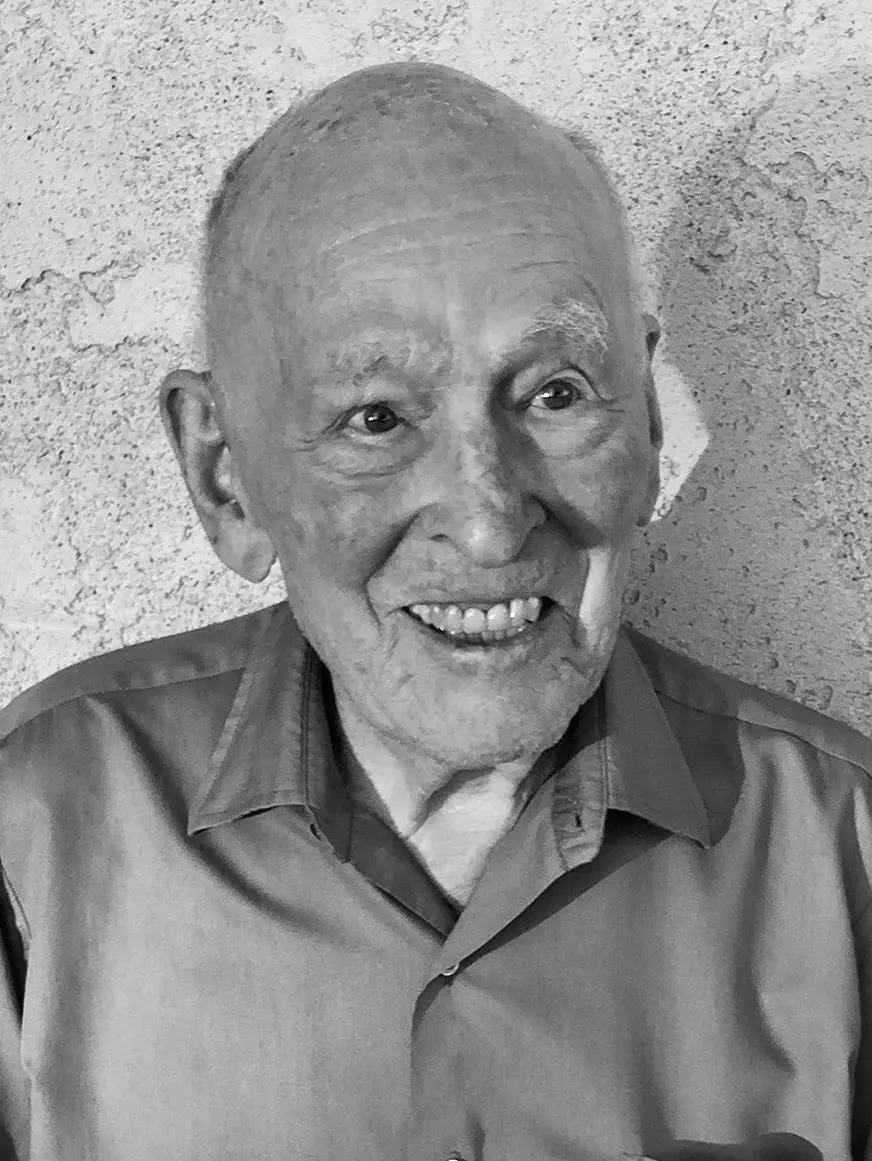
Paul D. Boyer
1918–2018, born in the United States
A doctor’s son from Provo, Utah, who loved climbing mountains, spent decades asking how cells make ATP, and guessed that part of the enzyme must spin.
Photo: GBHayes, CC BY-SA 4.0
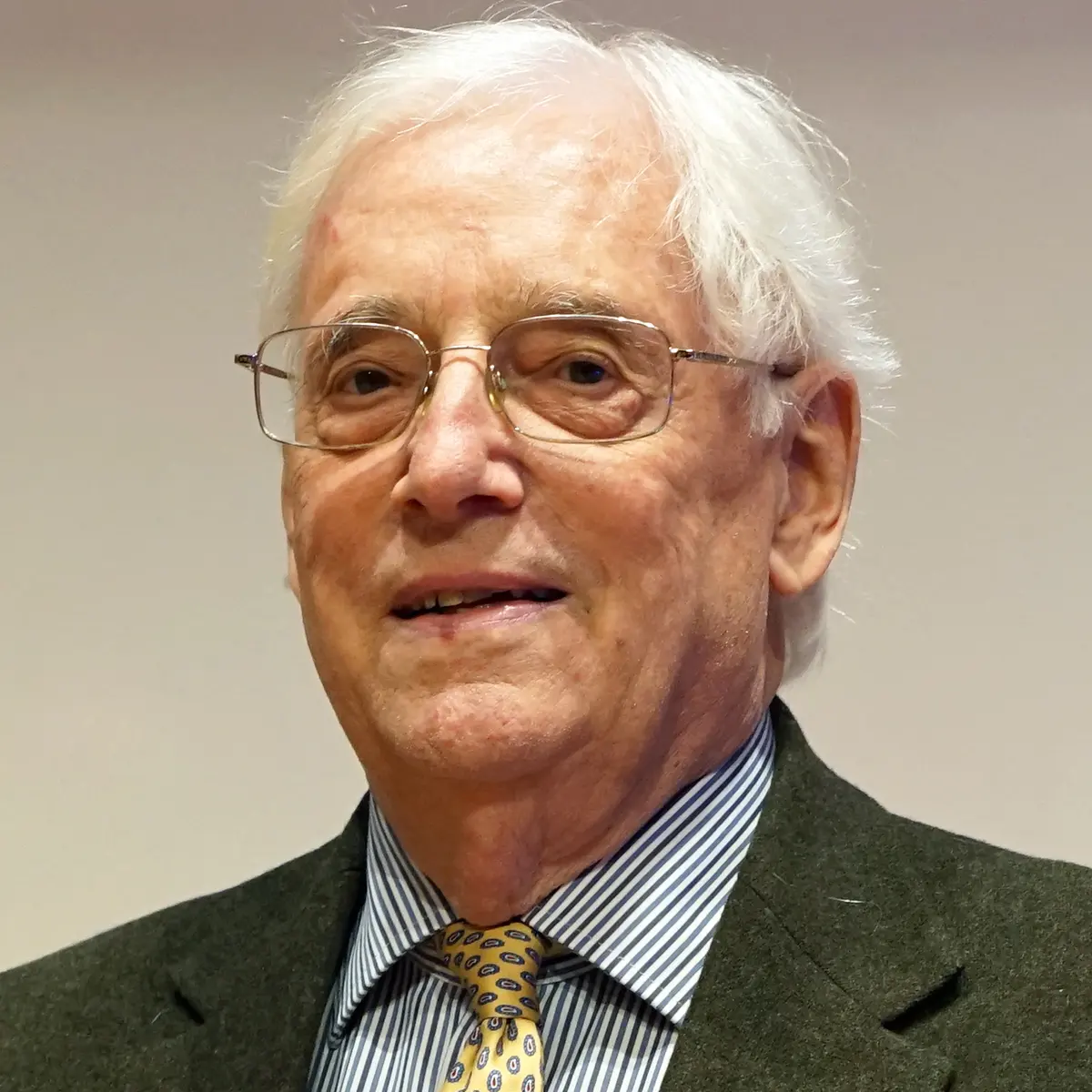
John E. Walker
born 1941 in England
A chemist who took the enzyme apart, protein by protein, until he could see its shape atom by atom.
Photo: Mogens Engelund, CC BY-SA 3.0
Jens C. Skou
1918–2018, born in Denmark
A surgeon who became a scientist by studying how anesthetics work, and found the first pump in a cell, in the nerves of crabs.
Photo: Skou2008.jpg : Lars Kruse derivative work: Materialscientist, CC BY-SA 2.5
After a plate of dal bhat, you can run, think, grow and keep warm. The energy for all of it comes from your food, but your cells cannot use food directly. First they must change its energy into a small molecule called ATP, short for adenosine triphosphate. ATP is the energy “coin” of life. Bacteria, rice plants, buffaloes and you all use the same coin.
You make a huge amount of it. The prize committee estimated that an adult makes and uses between half and all of their own body weight in ATP every day, and far more on a day of hard work. Yet at any moment your whole body holds less than 100 grams of it, so each molecule is used and remade hundreds of times a day.
The 1997 Nobel Prize in Chemistry was about this coin. One half went to Paul Boyer and John Walker, who found how ATP is made: by a tiny molecular motor that spins. The other half went to Jens Skou, who found the first pump in a cell that spends ATP, to move sodium and potassium.
The problem: where does the coin come from?
ATP was discovered in 1929. By the early 1940s, scientists knew it was the cell’s energy carrier. It is made of a part called adenosine joined to a chain of three phosphate groups (tri means three).
- When a cell needs energy, it breaks off the last phosphate. ATP becomes ADP, adenosine diphosphate (di means two), and energy is released for the cell to use.
- To recharge, the cell joins a phosphate back on to ADP, making ATP again. This needs energy.
It is like a phone battery: used, then charged again, over and over. The energy to charge it comes from respiration, the slow “burning” of food with oxygen, which happens in the mitochondria, the cell’s power stations Grade 8: mitochondria. In plants, the energy also comes from sunlight, in the chloroplasts.
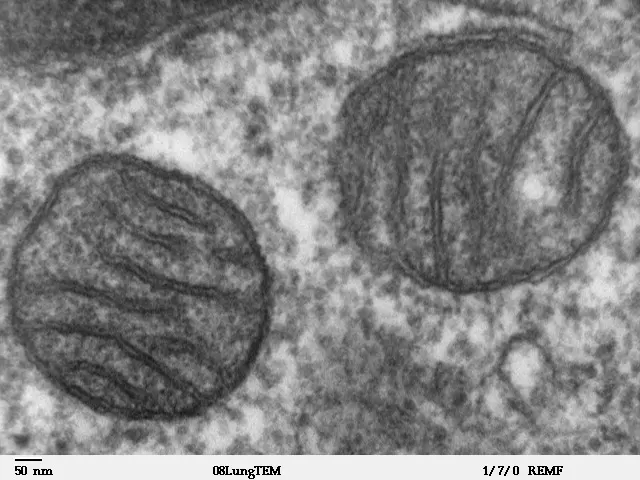
By 1960 scientists had found the enzyme that does most of the charging. An enzyme is a protein that speeds up one particular chemical reaction. This one is now called ATP synthase: the ATP maker. In 1961 the British scientist Peter Mitchell proposed how it is driven. As food is burnt, the mitochondrion pumps hydrogen ions (H⁺) across its inner membrane, so they pile up on one side, like water behind a dam. The hydrogen ions then flow back through ATP synthase, and their flow drives the making of ATP. (Mitchell won the 1978 Chemistry prize.)
But how could a flow of hydrogen ions be turned into new chemical bonds? Nobody knew.
Why it was hard
- Too small to see. ATP synthase is about 20 nanometers long, about 5,000 times thinner than a hair. No microscope of the time could show how its parts moved.
- Too big to work out easily. It is made of more than twenty protein pieces, of at least eight kinds, each a long chain of hundreds of amino acids. Working out the shape of such a giant, atom by atom, had never been done.
- It was strange. The enzyme’s head has three places where ATP is made, but they are joined to the rest of the enzyme in three different ways. How could three different sites all work the same way?
What they did, step by step
Boyer: the energy goes in a surprising place (1950s–1980s)
Paul Boyer began studying how ATP is made in the 1950s, at the University of Minnesota, and continued at the University of California in Los Angeles from 1963. He used isotopes, atoms of oxygen that are slightly heavier than usual, as labels that let him follow which atoms went where during the reaction.
- A surprise about the energy. Everyone assumed the hard step was joining the phosphate to ADP. Boyer found that the joining needs almost no energy at all, if it happens while the two are held tightly inside the enzyme. The energy is needed for something else: to make the enzyme let go of the finished ATP, which it holds very tightly.
- Three sites taking turns. He proposed that the three sites take turns, changing shape one after another. At any moment one is open (empty, or letting go of ATP), one is loose (holding ADP and phosphate), and one is tight (squeezing them together into ATP). With each step, every site moves on to its next shape. He called this the binding change mechanism.
- The spin. How could the three sites change shape in turn? Boyer suggested that a central part of the enzyme rotates inside the ring of sites, pushing each one into its next shape as it goes round, and that the flow of hydrogen ions drives the turning.
It was a bold idea. No enzyme was known to spin like a motor, and many chemists doubted it.
Walker: the shape of the machine (1981–1994)
John Walker, at the Medical Research Council’s laboratory in Cambridge, England, believed you can understand a machine only by seeing exactly how it is built.
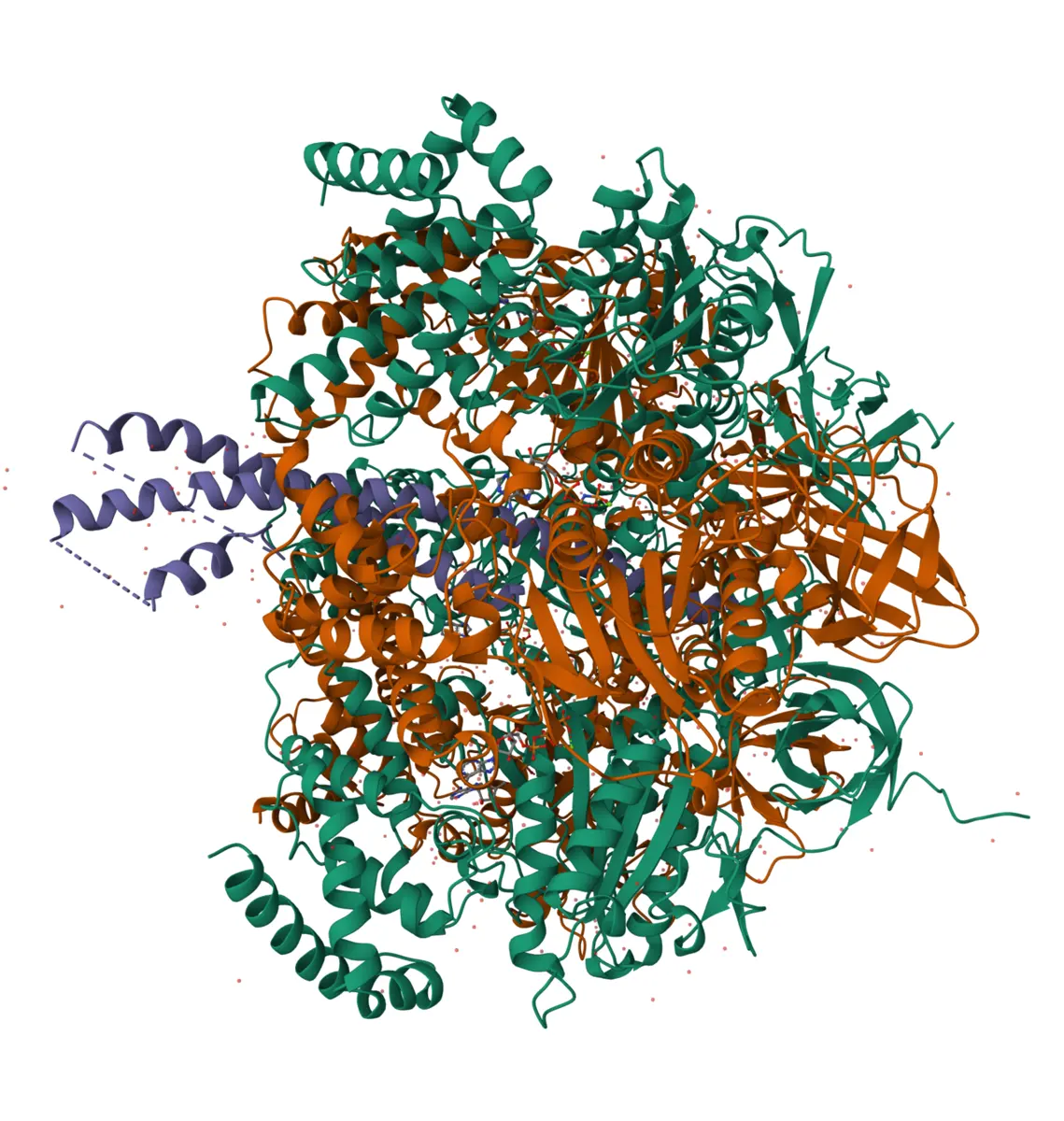
- Reading the parts (1980s). From the early 1980s, his team worked out the order of the amino acids in every protein part of ATP synthase from cow hearts. They found that the head is a ring of six parts, three of one kind (alpha) and three of another (beta), with a bent central part (gamma) poking up into the middle.
- Growing crystals. To see the shape in 3-D, you need a crystal of the protein: billions of copies lined up in a regular pattern. Getting a giant protein to crystallize can take years.
- The picture (1994). Using X-rays shone through the crystals, Walker and his colleagues worked out the shape of the enzyme’s head, atom by atom. They published it in August 1994. It showed exactly what Boyer had predicted: the bent gamma axle sits off-center in the ring, and the three beta parts each have a different shape: one held a molecule like ATP, one held ADP, and one was empty.
The motor, caught spinning (1997)
If the axle really turned, could anyone watch it? In 1997, a team in Japan led by Masasuke Yoshida fixed ATP synthase heads upside down on a glass slide, and glued a long thread of protein, much longer than the enzyme, to the gamma axle. Under a microscope, when they added ATP (which makes the motor run backwards, like a pump), the thread turned round and round like the hand of a clock. The more ATP, the faster it turned. Boyer’s spinning motor was real.
How it works now
Think of a hydropower station like the ones on Nepal’s rivers. Water stored behind a dam rushes down through a turbine and turns it; the turning shaft drives a generator. ATP synthase works in the same way:
- The dam. Respiration pumps hydrogen ions across the inner membrane of the mitochondrion, so many more of them crowd on one side.
- The turbine. The only easy way back is through the rotor of ATP synthase, a ring of protein parts in the membrane. Each hydrogen ion that passes through turns the ring a small step.
- The shaft. The ring turns the bent gamma axle, which reaches up into the head.
- The stator. A side arm holds the ring of three alpha and three beta parts still, so the axle turns inside it.
- The press. As the bent axle turns, it pushes each beta site through its three shapes in turn: open, loose, tight. One full turn makes three ATP, one at each site.
In Boyer’s mechanism, what does the energy from the turning axle mainly do?
Pick an answer to see why.
The other half: Skou’s pump
Your cells are full of potassium ions (K⁺) and have few sodium ions (Na⁺). The liquid around them, like your blood, is the other way round: lots of sodium, little potassium. Scientists knew this by the 1920s. But ions slowly leak through the cell membrane, so something must keep pushing sodium out and potassium in, against the flow, all the time. And by the early 1950s they knew it was this difference that lets nerves carry messages: when a nerve fires, sodium ions rush in, and afterwards they must be pumped out again Grade 9: nerve fibers.
Jens Skou, a Danish doctor at Aarhus University, had trained as a surgeon. He was studying how local anesthetics (the injections that numb a tooth before the dentist drills) stop nerves working, when he started looking at an enzyme in nerve membranes that breaks down ATP.
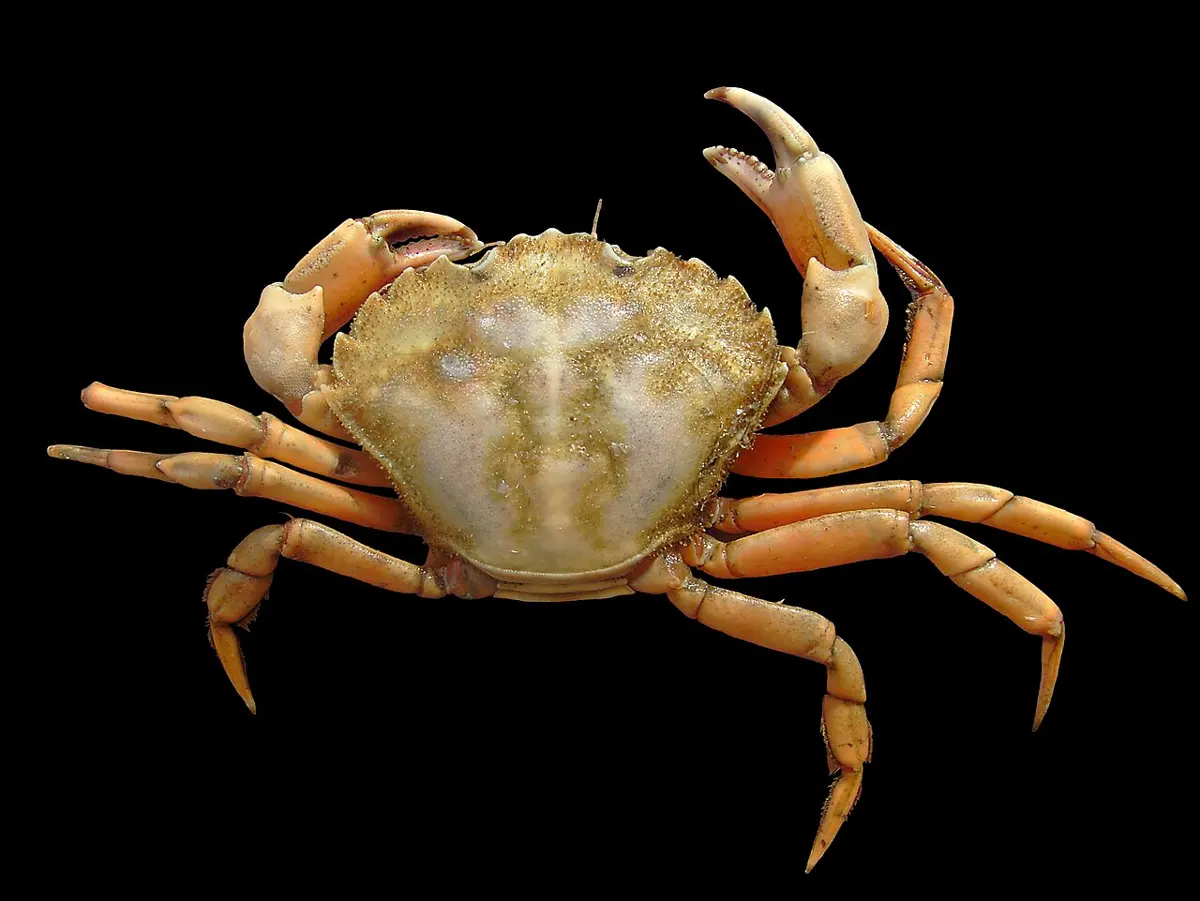
- Crab nerves (1957). He ground up nerves from shore crabs, which have long nerves in their legs, and tested the enzyme with different salts. It needed magnesium. Sodium made it work faster, up to a limit. Then a little potassium made it work faster still.
- The clue. It worked best at exactly the amounts of sodium and potassium found in a living nerve. And a medicine known to block the movement of sodium and potassium, ouabain, also blocked the enzyme.
- The conclusion. The enzyme and the pump were the same thing. Skou had found the first enzyme that carries something across a membrane in one direction. We now call it the sodium–potassium pump.
Skou was careful: his 1957 paper left the word “pump” out of its title. He realized only slowly how important his find was.
How the pump works
Later work, by Skou and many others, showed each cycle of the pump:
- Facing the inside of the cell, the pump picks up three sodium ions and an ATP.
- It breaks the ATP, keeping its phosphate stuck to itself. This makes the pump change shape and open to the outside, where it lets the three sodium ions go.
- Facing outward, it picks up two potassium ions. It drops the phosphate, changes back, and lets the potassium go inside.
Three positive charges go out, two come in, and one ATP is spent. The pump repeats this many times a second.
Why does the sodium–potassium pump need ATP?
Pick an answer to see why.
In your life today
- Every thought. At rest, about a third of all the ATP you make is spent by sodium–potassium pumps. In your brain the share is even bigger. Without them, nerves cannot fire again, and cells swell with water and burst. That is one reason a brain without oxygen fails within seconds to minutes: no oxygen, no ATP, no pumping.
- Jeevan Jal. The packets of oral rehydration salts given to children with diarrhea work because of the sodium the pump keeps low inside cells. Cells lining the gut take in sodium and sugar together, carried by the inward rush of sodium, and water follows. The right mix of salt and sugar lets the gut soak up water even during diarrhea.
- Heart medicines. Digoxin, from the foxglove plant, slows the sodium–potassium pump in heart muscle, which makes the heart beat more strongly. It has been used for heart failure for more than two hundred years, long before anyone knew what it acted on.
- Stomach medicines. A cousin of Skou’s pump in the stomach lining pumps hydrogen ions out to make stomach acid. Common medicines for ulcers and acid reflux work by blocking this proton pump.
- Plants too. The same kind of ATP synthase, in the chloroplasts of every rice and maize leaf, makes the ATP that turns sunlight into food.
What came next
- The whole machine. Walker’s 1994 picture showed only the head. Since then, with a newer method called cryo-electron microscopy, the whole ATP synthase, rotor and all, has been seen. In the mitochondria, the enzymes pair up in long rows that help to bend the inner membrane into its folds.
- How many ions per turn? The rotor ring has a different number of parts in different living things: 8 in cows and people, more in yeast and in plants’ chloroplasts. That changes how many hydrogen ions are needed to make one ATP. Why living things differ like this is still being studied.
- The open question. Molecular motors are far smaller and more efficient than any motor people can build. Can we copy them to build machines the size of molecules? Chemists have begun (the 2016 Chemistry prize was for molecular machines), but nothing yet comes close to ATP synthase.
In your science books
- Grade 8: mitochondria, where ATP synthase works, and the covering of the cell, the membrane the pump sits in.
- Grade 9: nerve fibers and the neuron, which depend on the sodium–potassium pump.
- Going further: Catching the energy: ATP, with a worked example of how much ATP you make in a day, and messages along nerves.
Learn more
- The prize at nobelprize.org: The Nobel Prize in Chemistry 1997, with the press release, which explains both enzymes with diagrams, and the presentation speech.
- The three Nobel lectures: Boyer, Walker and Skou.
The official reason
The prize was given “for their elucidation of the enzymatic mechanism underlying the synthesis of adenosine triphosphate (ATP).”
The prize was given “for the first discovery of an ion-transporting enzyme, Na+, K+ -ATPase.”