

Ahmed Zewail
1946–2016, born in Damanhur, Egypt
He grew up by the Nile, where his family hung a sign reading “Dr. Ahmed” on his study door long before he was one. He was the first Egyptian, and the first Arab-born scientist, to win a Nobel Prize in a science.
Photo: Simon Fraser University - University Communications, CC BY 2.0
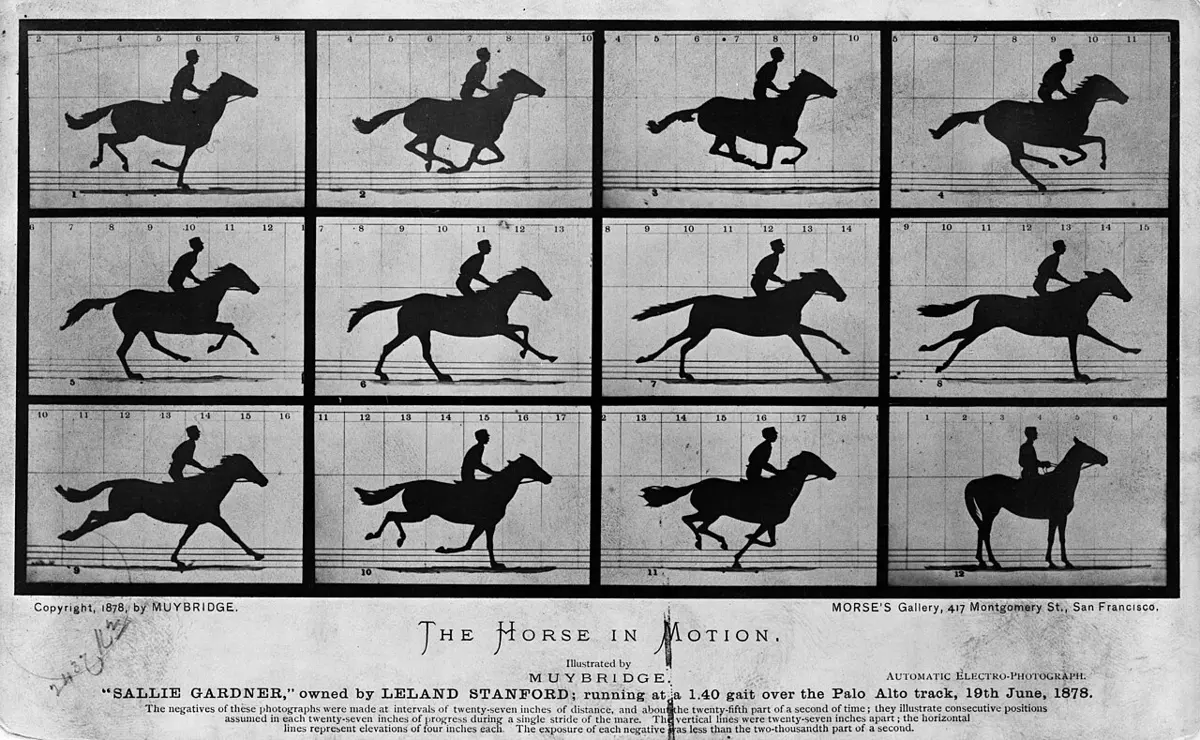
Watch a cricket match on TV. A batsman hits the ball, and a moment later the replay shows it again in slow motion: the bat bending, the ball squashing against it, the bails flying. At normal speed your eyes can’t see any of that. A camera that takes many pictures each second, played back slowly, lets you see what really happened.
Chemists had the same wish for chemical reactions. When wood burns or iron rusts, bonds between atoms break and new bonds form. But this happens so fast that for a hundred years nobody could watch it. In the late 1980s Ahmed Zewail built what has been called the world’s fastest camera, using flashes of laser light, and watched atoms move during a reaction for the first time. This started a new science, femtochemistry, and in 1999 Zewail won the Nobel Prize in Chemistry.
The problem: a misty no-man’s land
In a chemical reaction, the reactants change into new substances, the products Grade 9: Chemical reaction. Some reactions are slow, like a nail rusting. Some are fast, like a firecracker at Tihar. And most go faster when they are hotter: dal cooks faster in a pressure cooker, where the water boils hotter.
In 1889 the Swedish chemist Svante Arrhenius explained why heat matters. Molecules bump into each other all the time, and usually they just bounce apart. To react, they need a hard enough bump to break their old bonds, as if they had to climb over a hill of energy first. In a hotter substance, more molecules have enough energy to get over the hill Grade 10: Why reactions happen at all.
At the very top of the hill, the molecule is half old and half new: old bonds half broken, new bonds half made. Chemists called this the transition state. Every reaction passes through one. But for a century nobody had seen one, and it was only an idea in chemists’ heads: “a misty no-man’s land”, as the presenter of the Nobel Prize put it.
Why does a reaction usually go faster at a higher temperature?
Pick an answer to see why.
How fast is a reaction, really?
A slow reaction such as rusting isn’t slow because each molecule reacts slowly. It is slow because the hard bumps that get molecules over the hill are rare. Once a molecule gets its bump, it crosses the hill astonishingly fast.
How fast? Atoms in a molecule move at about 1,000 meters per second, as fast as a rifle bullet. But they only need to move a tiny distance, a fraction of the width of an atom. So the crossing takes about as long as one shake of a bond: typically 10 to 100 femtoseconds.
A femtosecond (fs) is a millionth of a billionth of a second:
- One femtosecond is to one second as one second is to about 32 million years.
- In one femtosecond, light, the fastest thing there is, travels only 0.0003 mm, less than the width of a bacterium.
About how long does it take a molecule to cross the top of the energy hill?
Pick an answer to see why.
Why it was hard
- No camera was fast enough. To see something move, you need pictures taken faster than it moves. In 1967 a Nobel Prize went to chemists who studied reactions using flashes lasting about a millionth of a second. Crossing a transition state is tens of millions of times faster than that.
- Molecules react at random times. In a jar of gas, each molecule reacts whenever it happens to get a hard enough bump. Even with a fast camera you would see a blur of molecules at every stage at once.
- Atoms are invisible. You can’t photograph a molecule directly with light. You can only see how it absorbs light, its spectrum, which changes as its shape changes.
What Zewail did, step by step
Ahmed Zewail studied chemistry at Alexandria University in Egypt. In 1969 he went to the United States to do his doctorate, at the University of Pennsylvania, and in 1976 he joined the California Institute of Technology (Caltech), where he worked for the rest of his life.
1. A laser with very short flashes
In the 1980s, new lasers could make flashes of light only some tens of femtoseconds long. Zewail saw that these were short enough to catch atoms on the move.
2. Pump and probe
He used two flashes, one after the other.
- A strong pump flash hits the molecules and starts the reaction. Because the flash is so short, it starts all the molecules at the same instant, so they move in step instead of at random times.
- A weaker probe flash comes a few femtoseconds later. The light it lets through, its spectrum, works like a fingerprint of the molecule’s shape at that moment.
How do you delay a flash by just a few femtoseconds? You make it travel a little farther. Light covers 0.03 mm in 100 femtoseconds, so Zewail sent the probe flash on a detour over mirrors and made the detour a tiny bit longer for each new picture. Many such pictures, each a few femtoseconds later than the one before, make a film of the reaction.
3. 1987: the first transition state
Zewail’s team shone their flashes on iodine cyanide, ICN, a molecule that breaks into an iodine atom and a CN group. They caught the molecule at the moment the iodine–carbon bond was about to break: the first time anyone had seen a transition state. The whole break took about 200 femtoseconds (Figure 1).
4. 1988–1989: the molecule that couldn’t decide
Next they studied sodium iodide, NaI. In salt-like compounds, sodium gives an electron to its partner, and the two charged atoms (ions) hold each other with an ionic bond Grade 9: Electrovalent bond. Atoms that share electrons instead have a covalent bond Grade 9: Covalent bond.
After the pump flash, the sodium and iodine atoms swung apart and back together, again and again. When they were close together the bond was covalent; when they were far apart, it was ionic. Each time the two atoms swung out to about two and a half times their normal distance apart, a few of the molecules broke up into separate atoms, and the rest swung back. The probe flashes showed this as a series of pulses of free sodium atoms, one for each swing.
5. Many surprises
Zewail then turned his “camera” on more and more reactions, the way Galileo turned his telescope on everything in the sky. Often the atoms did not move the way chemists had expected.
- In a molecule with two identical bonds (C₂I₂F₄, which loses two iodine atoms), chemists expected both bonds to break together. They broke one after the other.
- In another well-known reaction, which turns one ring-shaped molecule into two smaller ones, chemists had argued for years about whether both bonds break at once or one by one. Zewail found an in-between molecule, lasting about 700 femtoseconds: one by one.

How it works now
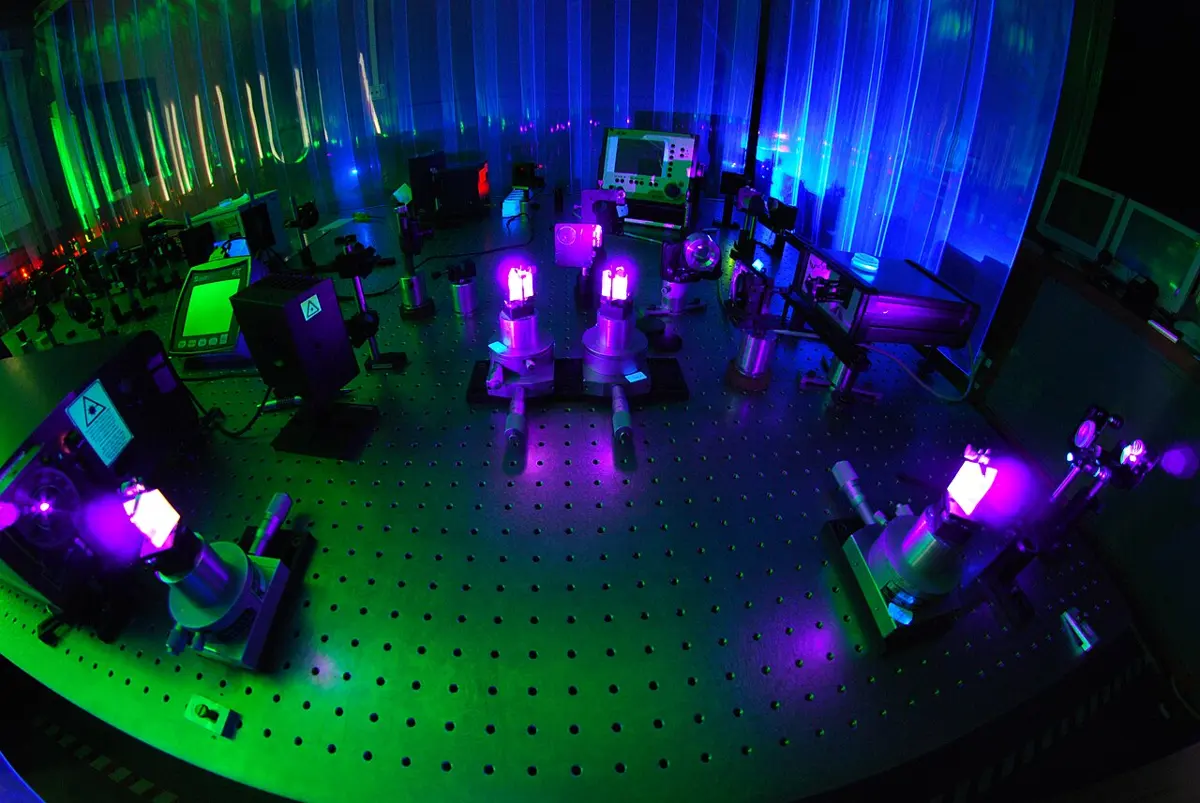
Today, femtosecond lasers are in laboratories all over the world. The pump–probe idea is the same: start everything at once with one flash, then take pictures with a second, delayed one.
Scientists now use them to watch:
- Seeing. When light reaches your eye, it hits a molecule called retinal in the cells of your retina. The light makes the molecule twist around one of its bonds, like a hinge, in about 200 femtoseconds. The twist starts the nerve signal to your brain Grade 10: The human eye. It is so fast and so efficient that it helps explain why your eyes work even in dim light.
- Photosynthesis. In a leaf, chlorophyll catches light and passes its energy on within a tiny fraction of a billionth of a second, before it can be wasted.
- Catalysts. A catalyst speeds up a reaction by giving it a lower hill to climb Grade 10: Catalyst. Watching reactions on a catalyst’s surface helps chemists design better ones.
In Zewail’s method, how is the probe flash made to arrive later than the pump flash?
Pick an answer to see why.
In your life today
- Medicines and materials. Knowing exactly how a reaction goes lets chemists steer it towards the product they want and away from waste. This matters in making medicines, plastics and fuels.
- Eye surgery. Femtosecond lasers, the same kind of very short flashes, are now used in some eye operations, to cut very precisely with very little heating of the tissue around the cut Grade 10: Laser eye surgery.
What came next
- Movies made with electrons. Later, Zewail’s team used very short pulses of electrons instead of light, to take pictures of how atoms move in crystals and large molecules, in four dimensions: three of space, and time.
- Even faster. Flashes have since become a thousand times shorter, attoseconds (a thousandth of a femtosecond), short enough to watch electrons themselves move inside atoms. That work won the Nobel Prize in Physics 2023, and the lasers that made such strong, short flashes possible won the Physics prize of 2018.
- The open question. Can chemists not only watch a reaction but control it, using shaped laser flashes to break exactly the bond they choose? It works for some simple molecules. For most reactions, it is still a dream.
In your science books
- Grade 8: chemical reactions, reactants and products.
- Grade 9: chemical reactions, chemical bonds, electrovalent bonds and covalent bonds.
- Grade 10: rate of chemical reaction, why reactions happen: collisions, temperature and light as factors, and the human eye.
- Going Further (Grades 9–12): what makes a reaction go faster, why a little warmer is a lot faster and catalysts.
Learn more
- The Nobel Prize’s own explanation: the press release, with drawings of the experiments (nobelprize.org).
- Zewail’s Nobel lecture, and his own life story, in his autobiography on nobelprize.org.
The official reason
The prize was given “for his studies of the transition states of chemical reactions using femtosecond spectroscopy.”